Categories
Uncategorized


Did you know?

World’s first earthquake detector was invented 2000 years ago in China

A seismograph is an instrument that detects and measures the motions of the ground as a result of seismic waves gushing from an earthquake, volcanic eruption or powerful explosion.

Today, there are thousands of such instruments dispersed in key places around the world that constantly keep watch, gather data and help seismologists better their understanding of how earthquakes work.

You might be surprised to find, however, that the first seismograph was invented in China in 132 AD by a Chinese astronomer, mathematician, engineer, and inventor called Zhang Heng.

The instrument was said to resemble a wine jar nearly two metres in diameter, with eight dragons positioned face down along the outside of the barrel, marking the primary compass directions. In each dragon’s mouth was a small bronze ball. Beneath the dragons sat eight bronze toads, with their broad mouths gaping to receive the balls.

When the instrument sensed an incoming seismic wave, one of the balls would drop and the sound would alert observers to the earthquake, giving a rough indication of the earthquake’s direction of origin.

. The device is said to have been very accurate and could detect earthquakes from afar, and did not rely on shaking or movement in the location where the instrument was positioned. The first ever earthquake recorded by this seismograph was supposedly somewhere in the east. Days later, a rider from there reported this earthquake

The insides of the seismometer was filled with a sensing mechanism of some sort, the contents of which have been lost in time. In all likelihood, a simple or inverted pendulum was employed, according to experts

In 2005, scientists in Zengzhou, China built a replica of Zhang’s seismograph, estimating the content of the inner mechanism by using technology that was available during the great inventor’s time. They used the replica to detect simulated earthquakes based on waves from four different real-life earthquakes in China and Vietnam. The seismograph detected all of them. As a matter of fact, the data gathered from the tests corresponded accurately with that collected by modern-day seismograph.

Book about Zhang Heng’s invention is available from Amazon – could be an interesting read

https://www.amazon.com/Zhang-Heng…/dp/1641701684

They don’t make scientific instruments like they used to!

Categories
Uncategorized


SEMINAR – SAFE CHRISTMAS AND NEW YEAR FESTIVE PERIOD


MUSEU DO TRAJE SÃO BRÁS DE ALPORTEL FRIDAY 17TH NOVEMBER 17.00 to 19.00 HRS

The aim of the gathering is to learn more about the operations of the Guarda Nacional Republicana (GNR) and the Autoridade Nacional de Segurança Rodoviária (ANSR) (National Road Safety Authority) over the Christmas and New Year festive period, in terms of their priorities and tips we can learn from them in order to have a safe festive period. Information will also be provided by Camara do Municipal de Sāo Brás de Alportel.

The focus will be on: Security of property over Christmas period especially if property will be empty, safe driving, Police enforcement and processes, reporting suspicious activities and crime, on-line scams especially shopping scams and safety tips.

Apart from the presenters we are honoured that Coronel Carlos Almeida Comandante Comando Territorial de Faro da GNR, as well as Presidente da ANSR, Professor Doutor Rui Ribeiro will be present, so this will be a good opportunity to meet them personally.

There will be plenty of time for engagement with the presenters, as one of the aims is to discuss and answer your questions, on topics of interest to you. As we know during this period, people maybe away on holiday leaving their property unoccupied, pre-Christmas shopping on-line with the potential for scams, as well as a seasonable increase in road accidents and issues such as drink driving.

The location is: R. Dr. José Dias Sancho 61, 8150-141 São Brás de Alportel and there is adequate parking nearby.

To ensure there is adequate seating for all, please confirm that you will be attending contacting admin@amigosdomuseu.com no later than 14th November. We look forward to meeting you.


Categories
Uncategorized


ACTION TO TAKE BY THOSE WITH MOBILITY DISABILITIES DURING EARTHQUAKES


In promoting actions to take during an earthquake, much of the promotional material is for those who are mobile; the recommended actions to take being, to DROP, COVER, HOLD ON preferable under a heavy table.

But what should you do if you are not fully mobile?

If an earthquake occurs one occurs you will need to adapt for your situation:

If you have difficulty getting onto the ground, to move under a table i.e. DROP COVER HOLD or cannot get back up again without the help of a caregiver or someone else, then follow these recommendations:

If you are in a recliner or bed: do not try to transfer during the shaking. Cover your head and neck with your arms or a pillow until the shaking stops.

If you use a cane: follow the Drop, Cover, and Hold On instructions on the previous page, or sit on a chair, bed, etc. and cover your head and neck with both hands. Either way, keep your cane near you so it can be used when the shaking stops.

If you use a walker: LOCK your wheels (if applicable) and carefully get as low as possible. If your walker has a seat, sit and COVER your head/neck with your arms, a book, or a pillow. If no seat, try to get down with your head lower than the top of the walker. Bend over, then HOLD ON until shaking stops.

If you use a wheelchair: LOCK your wheels. COVER your head and neck with your arms, a book, or a pillow. Bend over and HOLD ON until the shaking stops.


Categories
Uncategorized


“A TERRA TREME” NATIONAL EARTHQUAKE AWARENESS EXERCISE – NOVEMBER 14TH


The National Authority for Emergency and Civil Protection (ANEPC) promotes the national seismic risk awareness exercise, called “A TERRA TREME”.

This initiative is part of the activities that form part of the National Strategy for Preventive Civil Protection and aims to empower the population to know how to act before, during and after an earthquake, sensitizing citizens to the fact of living in a risk society, and challenging themselves o to get involved in the process of building safer and more resilient communities.

The exercise comprises the practice of 3 simple gestures that can make a difference to those who practice them in the face of an earthquake.

The action takes place during one (1) minute, in which the participants, individually or collectively, are invited to perform the 3 self-protection gestures: DROP, COVER, HOLD.

WHO IS INVOLVED?

Everyone can and should participate: individually or in groups, wherever they are.

HOW?

People/organizations/schools/etc are invited to register in the dedicated area of the website. At the date and hour do the exercise and share it on social media afterwards

HOW TO PARTICIPATE

1 – REGISTRATION – Register on the site, expressing your interest in this campaign. Refer to the number of expected participants and contacts for possible sending of more information.

2 – PLAN – Define the dimension you want to give to the exercise, which can go from the simplest level with the practice of the 3 gestures, to the elaboration of a more complete exercise that even tests an Emergency Plan, involving different entities.

3 – DISCOVER – Involve everyone in your family and organization and share information about A TERRA TREME through your contact list, encouraging them to participate.

4 – CONSULT – Share the dissemination materials available on the site, reinforcing individual and collective preparation for an earthquake situation.

5 – EXERCISE – On the date and hour do the exercise and share it on social media afterwards

The “A Terra Treme” site https://www.aterratreme.pt/

Categories
Uncategorized


Is the deal too good to be true?


For retailers this is the best time of the year, but also the most profitable time for scammers. What I am talking about is Black Friday and Cyber Monday. This is something we should be aware off, regardless of where we live, as the internet does not respect national boundaries.

Although there are some fantastic bargains to be made on what is known as Black Friday (this year 24th November) and Cyber Monday 27th November, unfortunately there are criminals who take advantage of this through various scams and on-line fraud.

According to a survey undertaken by GFK a marketing organisation, 63% of consumers are eager to take advantage of Black Friday promotions and a third will start searching for offers a month before the event.

The volume of ecommerce business invoiced during Black Friday week in Portugal should be between 120 and 130 million euros. According to the study, the majority of people (72%) plan to spend an average of 290 euros during Black Friday, which is an 11% increase in value compared to 2022.

Forty-two percent of respondents indicate the fashion sector (clothing, footwear and accessories) as the one in which they intend to take advantage of Black Friday promotions, with the top three of preferences being completed by household appliances (29%) and books (27 %)

Just over half of consumers (54%) plan to shop on Black Friday, both online and offline during the event, with 25% saying they prefer to buy online and 16% opting for physical stores.

Therefore with a greater emphasis on on-line shopping it is important that consumers are aware of the scams that exist and how to avoid them.

Buy from traders you know and trust

When it comes to shopping online, it’s always safest to stick to familiar shops and brands that you know you can trust. If you feel you must shop with an unknown trader, make sure you research them first, by looking at independent reviews.

The most obvious things to look out for that signal a scam website are, firstly, website quality and copy/editorial quality. If something about a website’s design feels less than professional it’s worth being suspicious.

If you’re not sure of a website, make sure you have a look at the URL when you’re paying for your purchase. Any transaction you make should be on a page with an HTTPS link rather than an HTTP link as this ensures the transaction is safely encoded.

Deals too good to be true might be a sign of a scam. Read the fine print on who is behind the bargain, total price including delivery, policies on cancellation and refunds, and warranty terms.

Don’t assume all is good if you see no complaints. Often, scammers set up shop just as quickly as they close down their fraudulent operations and make off with their proceeds. Don’t be sold solely on the fact that a company or individual seller has no complaints. Do your homework and research unfamiliar vendors before offering up your personal info and credit card number.

Don’t shop from a free Wi-Fi connection. Protect your personal information when shopping online. The more private your Wi-Fi connection, the more secure your shopping transaction. Avoid coffee shops, airports, libraries, and anywhere that offers free (and vulnerable) connectivity without a password for online shopping. The same goes for online banking.

Pay securely No matter where you’re shopping, always use a secure form of payment. This means opt for a credit card or PayPal over any direct money transfers.

It’s also a good idea to use two-factor authentication on your online shopping accounts wherever possible. It’s not every retailer that has these, but it’s worth noting that Amazon does. Two-step authentication simply adds another layer of security to your account, requiring you to enter a security code sent via text or call as well as your password when you’re signing in.

Don’t click on strange links – It doesn’t matter whether you’re on your laptop or on your phone or whether the link appears in your email inbox, WhatsApp messages, or pops up on your Facebook News Feed, don’t click any strange or unfamiliar ad links.

It seems obvious but you don’t know where that link is going to go and what kind of malware is lying in wait there. There are few modern embarrassments quite like clicking one of those links that posts its deal from your account to every one of your Facebook friends or WhatsApp contacts.

Check returns policies – Although return periods are usually extended during the holiday season, some retailers might not take part in this and some could have shorter return windows specifically for electronics, so it’s worth being aware of how long you have to make up your mind. If you do decide to return something make sure you know exactly what you need for proof of purchase as well as how and where you need to return it.

Lastly- Keep track of your spending – Identity thieves bank on the fact that shoppers get caught in the holiday frenzy and pay little mind to whom and for what they’ve paid. Record your purchase details (order confirmation numbers, date and time of purchase, etc.) and regularly eagle-eye your banking and credit card statements. Then, be on the lookout for purchases, especially small ones, you might not have made. Often, fraudsters won’t immediately go big in the hope of going undetected.

Lastly do not assume the price advertised is actually a bargain. DECO PROteste Portugal’s largest consumer organisation, has a very useful features including the “Compare Prices tool” which helps you understand whether discounts announced during times like Black Friday or Cyber ​​Monday are good purchasing opportunities. This research tool records the evolution of product prices in online stores, to advise whether or not to purchase them.

Take this advice and enjoy your Christmas shopping safely.


Categories
Uncategorized


SEMINAR – SAFE CHRISTMAS AND NEW YEAR FESTIVE PERIOD

MUSEU DO TRAJE SÃO BRÁS DE ALPORTEL FRIDAY 17TH NOVEMBER 17.00 to 19.00 HRS

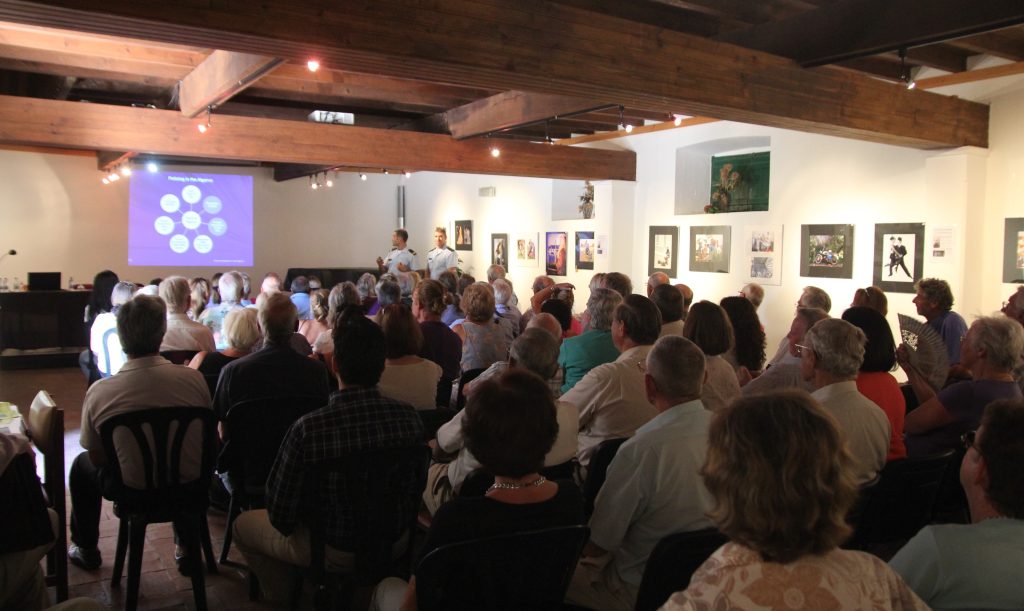
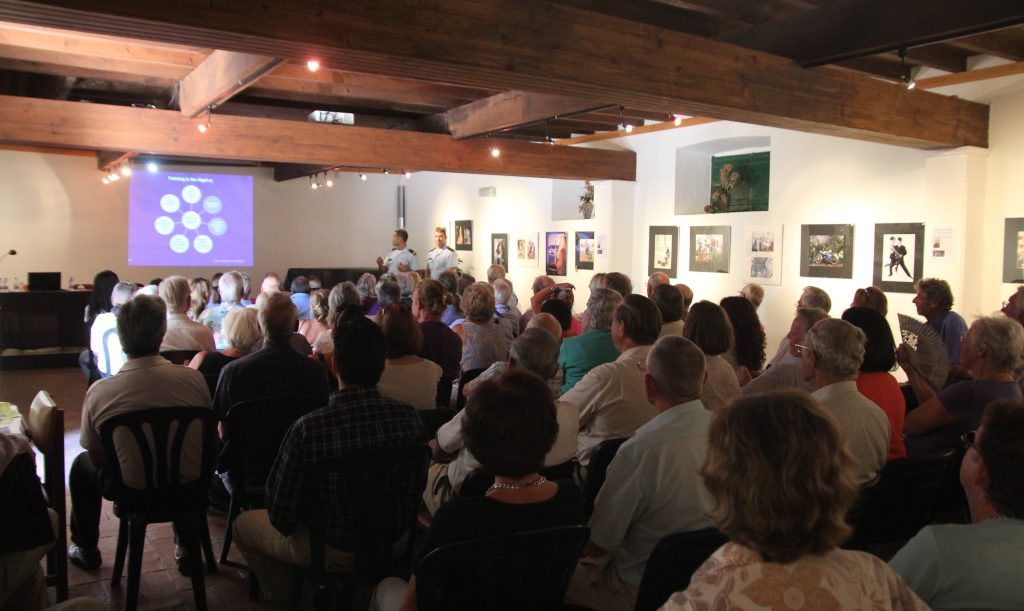
Safe Communities Portugal and Amigos do Museu do Traje in Sāo Brás de Alportel have joined forces in holding a “Safe Christmas and Festive Period Seminar”. This will take place at Museu do Traje in Sāo Brás de Alportel on Friday 17th November from 1700 hrs to 1900 hrs, and everyone is welcome to attend.

The aim of the gathering is to learn more about the operations of the Guarda Nacional Republicana (GNR) and the Autoridade Nacional de Segurança Rodoviária (ANSR) (National Road Safety Authority) over the Christmas and New Year festive period, in terms of their priorities and tips we can learn from them in order to have a safe festive period. Information will also be provided by Camara do Municipal de Sāo Brás de Alportel.

The focus will be on: Security of property over Christmas period especially if property will be empty, safe driving, Police enforcement and processes, reporting suspicious activities and crime, on-line scams especially shopping scams and safety tips.

Apart from the presenters we are honoured that Coronel Carlos Almeida Comandante do Comando Territorial de Faro da GNR, as well as Senhor Presidente da ANSR, Professor Doutor Rui Ribeiro will be present, so this will be a good opportunity to meet them personally.

There will be plenty of time for engagement with the presenters, as one of the aims is to discuss and answer your questions, on topics of interest to you. As we know during this period, people maybe away on holiday leaving their property unoccupied, pre-Christmas shopping on-line with the potential for scams, as well as a seasonable increase in road accidents and issues such as drink driving.

The location is: R. Dr. José Dias Sancho 61, 8150-141 São Brás de Alportel and there is adequate parking nearby.

To ensure there is adequate seating for all, please confirm that you will be attending contacting admin@amigosdomuseu.com no later than 14th November. We look forward to meeting you.

Categories
Uncategorized


Reducing the risks with high wind gusts today


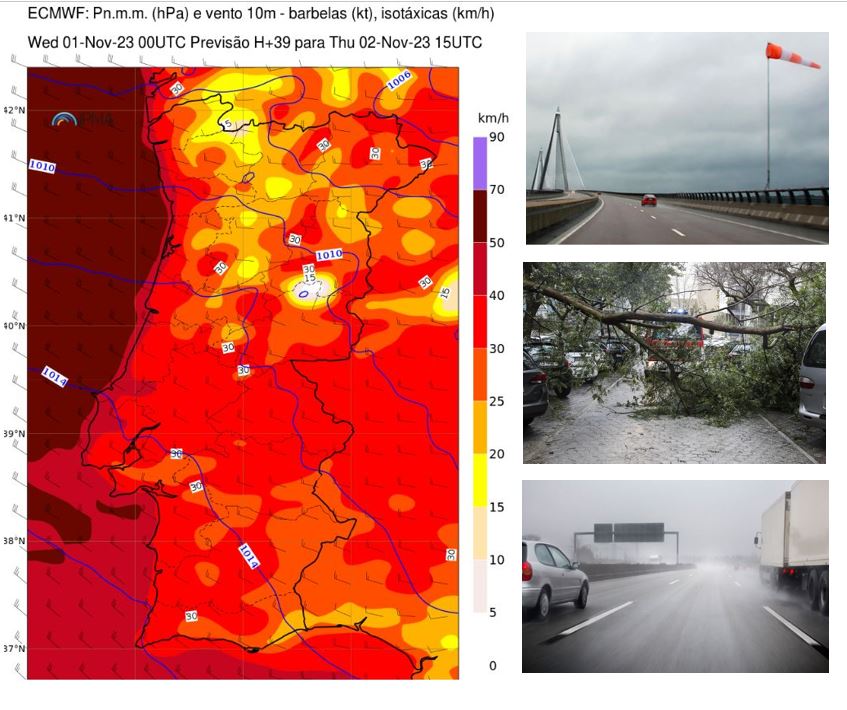
With IPMA and other forecasters predicting maximum wind gusts of 75 km/h to 100 km/h, together with very high coastal waves (with red warnings in some places), we offer the following reminders to reduce the risk of damage and becoming a casualty:

SEA FRONTS – Stay away from sea fronts to avoid being swept away, or hit by debris carried by the coastal winds. Avoid cliff edges.

ON THE ROADS: Take care if driving high sided vehicles and overtaking such vehicles especially in cross wind situations – bridges can be affected by crossed winds.  25 de Abril Bridge Lisbon has speed limitations in place due to wind

Take particular care in towing caravans – maybe better to wait until winds subside

Leave extra space when overtaking vehicles, especially cyclists.

Keep a safe distance from cars in adjacent lanes as strong gusts could push a car outside its lane of travel.

CYCLISTS – Avoid areas which have a high exposure to strong wind gusts.

TREES – Avoid parking your vehicle if possible under trees which appear in poor condition. Soil may have been saturated by recent rains

AROUND THE HOUSE – Move or secure terrace furniture and outdoor items that could be damaged by the winds

PEDESTRIANS – Be particular alert for items that may have become dislodged in the winds and flying debris

SELFIES: Do not place yourself at risk taking selfies of weather conditions – many people have been injured or worse in these situations

Maps: IPMA Sustained wind speed for today – the highest we have seen this year


Categories
Uncategorized
1ST NOVEMBER 1755 THE GREAT LISBON EARTHQUAKE
BRITISH NUN’S SURVIVING LETTER DESCRIBES THE CATASTROPHE.

The 1755 Lisbon earthquake impacted Portugal, the Iberian Peninsula, and Northwest Africa on the morning 1 November, Feast of All Saints, at around 09:40 local time.

Till this day the location of the epicentre is still in a scientific debate with several theories around. The historical is in the Atlantic Ocean about 200 km (120 mi) west-southwest of Cape St. Vincent and about 290 km (180 mi) southwest of Lisbon. The same applies to the magnitude, being also the historical magnitude estimated at 8.5 to 9 Richter scale.

Several buildings that had suffered little earthquake damage were destroyed by the subsequent fire and/or tsunami. The new Lisbon opera house (the “Ópera do Tejo”), opened just six months before, and was burned to the ground.

The Royal Ribeira Palace, which stood just beside the Tagus River in the modern square of Terreiro do Paço, was destroyed by the earthquake and tsunami. Inside, the 70,000-volume royal library as well as hundreds of works of art, including paintings by Titian, Rubens, and Correggio, were lost.

The royal archives disappeared together with detailed historical records of explorations by Vasco da Gama and other early navigators.

The royal family escaped unharmed from the catastrophe: King Jose I and the court had left the city, after attending mass at sunrise, fulfilling the wish of one of the king’s daughters to spend the holiday away from Lisbon, they were in Belem area.

Many survivors rushed to the open space of the docks for safety and watched as the sea receded, approximately 40 minutes after the earthquake, a tsunami engulfed the harbour and downtown area.

Lisbon was not the only Portuguese city affected by the catastrophe.

Throughout the south of the country, in particular the Algarve, destruction was rampant. The tsunami destroyed some coastal fortresses in the Algarve and, at lower levels, it razed several houses. Almost all the coastal towns and villages of the Algarve were heavily damaged.

THE LETTER

Letter reveals that “it hit whilst she was doing the washing up”!

A rare letter has been found, written by a British nun Sister Witham, dated 27 January 1756, describing how she was present in Lisbon on 1st November 1755.

She described – “I looked about me and saw the walls a-shaking, and a-falling down then I got up and took to my heels, with Jesus in my mouth, and to the quire I run, thinking to be safe there, but there was no entrance but all falling round us, and the lime and dust so thick there was no seeing…. We spent the day in prayers but with a great deal of fear and apprehension as we had shakings and trembles all that day and night”.

Here is more about the parchment (with copies of it), found by a researcher from the University of Exeter during cataloguing of the records of Syon Abbey. Writing to her aunt, Sister Witham told of how she survived the ordeal which killed around 60,000 people, starting with how she was washing dishes when the tremors began.

Categories
Uncategorized


Life When Water ceases to flow


A few months ago the electricity in our area of the central Algarve failed for around six hours. One of the consequences was that water ceased to flow through the taps!🚰


But what if this was not temporary and the drought situation meant that we had to limit our use of water in the longer term?

With the severe level of drought in parts of the Portugal especially in the south it is important to conserve water. These are some tips to do just this:

Turn off the tap while you are not using the water.

🪥During your hygiene, while brushing your teeth, washing your hands, hair or body. In the shower while soaping or shampooing, the tap can be turned off.

In the kitchen.

🪣 If you have to wash the dishes by hand, do it without running water, use the dishwashing sink and/or a double bowl if you have one

🍇Avoid washing vegetables under running water, do it in a container and use this water for other uses (watering plants, toilet, etc.)

These are some of the moments when you can turn off the faucet and save a lot of water that applied daily, at the end of the month can mean a very significant saving.

Steam cooking. In addition to being healthy, steamed vegetables or some fish are very easy to make. So, with the same water (and energy) you can cook two things.

🚿Save the shower water

There are few people who use this trick, but it is one of the most effective for saving water. While you wait for it to heat up, store those litres of water that would otherwise be wasted. You can then reuse it for the toilet, to water the houseplants, or even to wash the floor.

🚽Take care of your toilet

With flush toilets we can also save enough water to significantly reduce consumption.

🚽With flush toilets we can also save enough water to significantly reduce consumption.

🚽First, checking if it has any water leaks. To do this, put dye inside the toilet. If you see coloured water in the toilet without flushing it, then it is a sign that there are leaks to be treated.

The next step is to reduce the volume of water that is released with each flush. If you don’t have a double flush toilet or simply putting a full plastic bottle into the toilet flush tank.

🐕Pets

Do not throw away your pet’s drinking water when you give it fresh water. Reuse it to water the plants.

These are just a few there are many other measures we can all take including governments, local government, businesses – everyone!

#drought #watershortage

#savingwater


Categories
Uncategorized


Hawaii officials were warned years ago that Maui’s Lahaina faced High Wildfire Risk


Wall Street Journal 12th August 2023
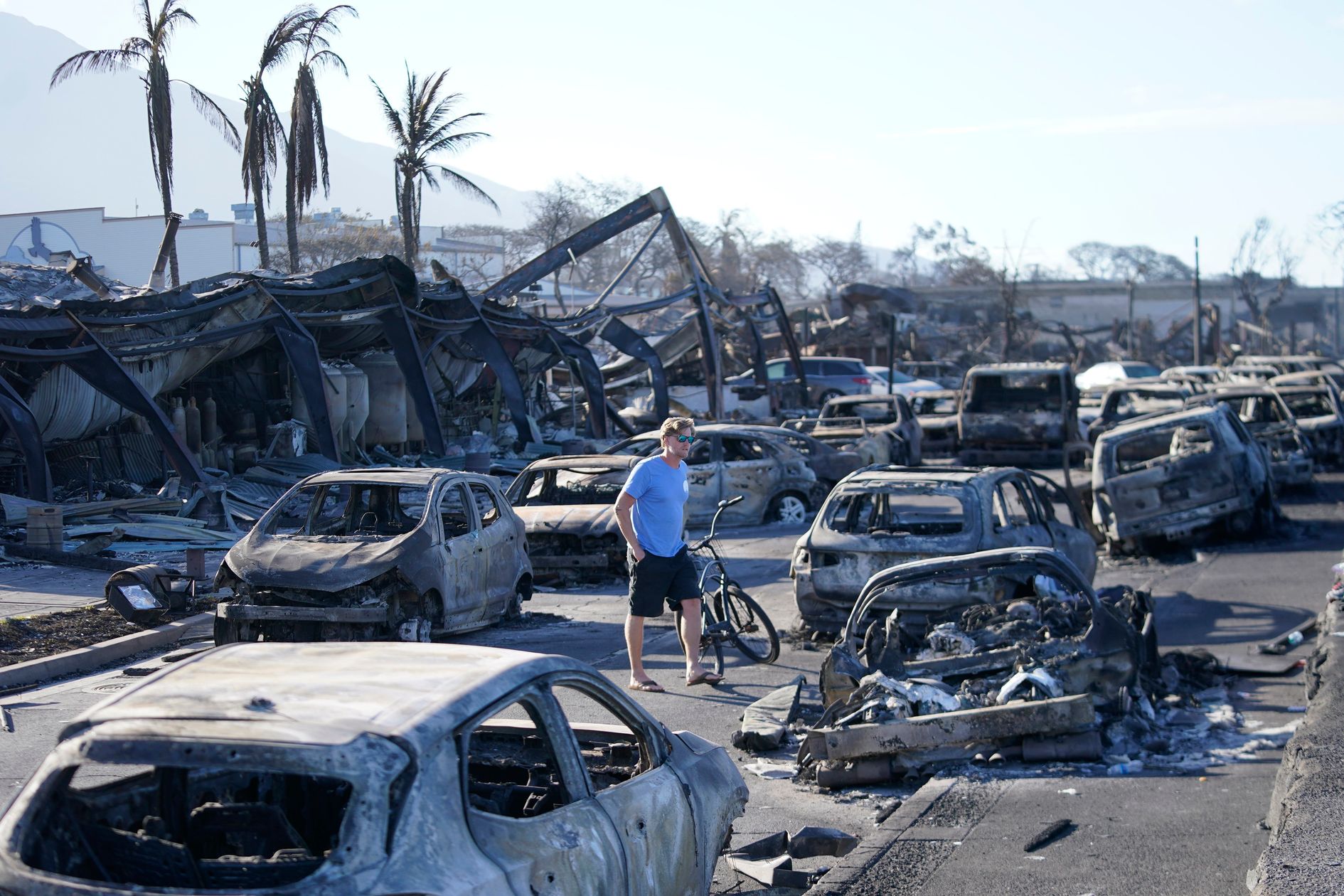
Nearly a decade before a wildfire destroyed the coastal Maui town of Lahaina this week, killing at least 89 people, a report by Hawaiian fire researchers warned that the area was at extremely high risk of burning.

Another report, in 2020, tied fires to winds from a passing hurricane—similar to the ones that fanned the Lahaina blaze.

And the state’s electric utility had for years worried about wildfire risk in the area. It even flew drones to monitor conditions.

Yet local authorities said in the aftermath of this week’s devastation that though they knew wildfires were becoming more frequent in Hawaii, they weren’t prepared for one to roar through Lahaina.
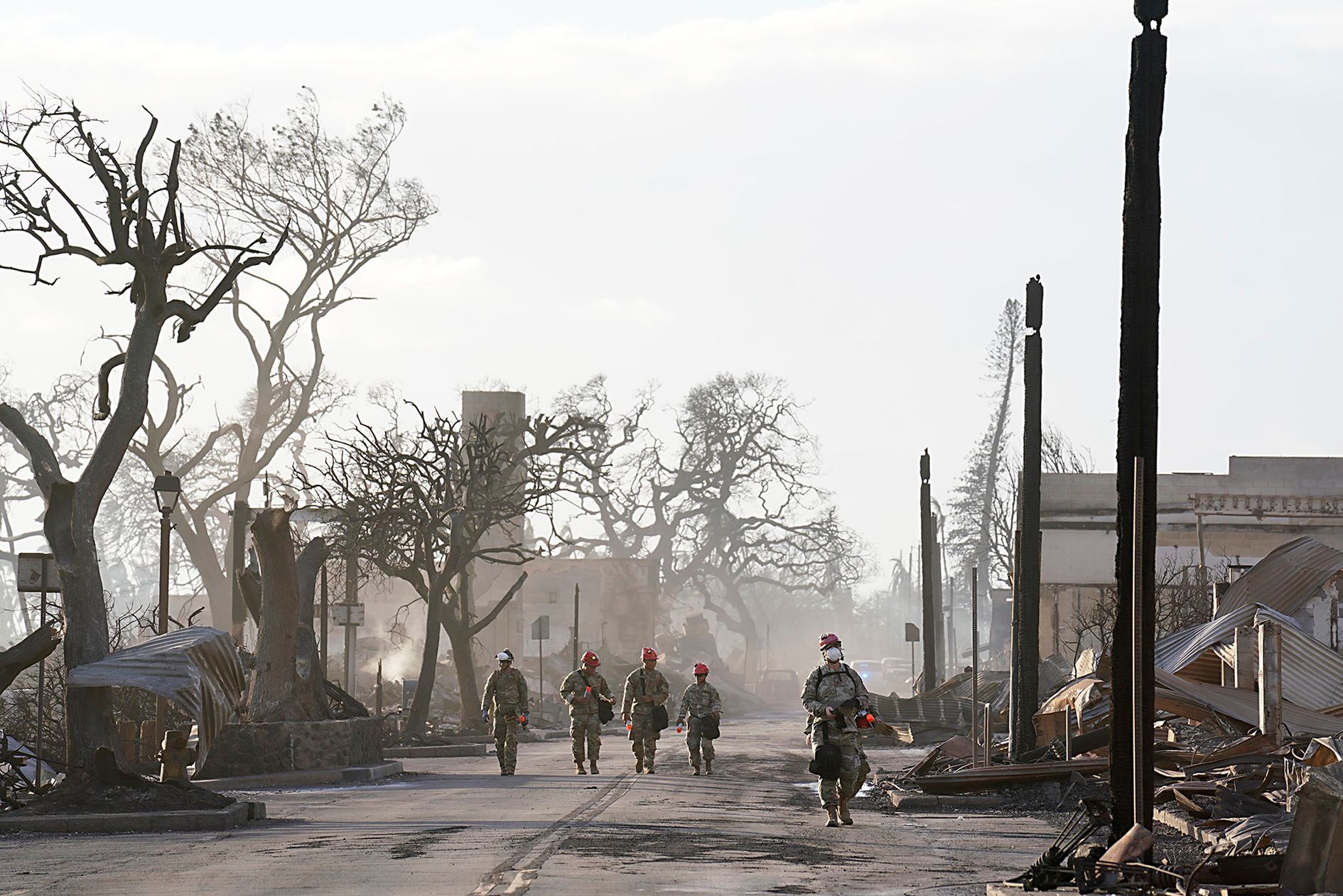
The fire hit the coastal town so quickly and caught officials so off-guard that emergency sirens didn’t sound. Many panicked residents were unable to flee on the town’s one clogged highway and took boats or swam to safety, if they were able to escape at all.

In 2014, a wildfire-protection plan for the area was written by the Hawaii Wildfire Management Organization, a non-profit that works with government agencies. It warned that Lahaina was among Maui’s most fire-prone areas because of its proximity to parched grasslands, steep terrain and frequent winds.

The plan, which involved Maui and state officials, laid out a multitude of mitigation measures that needed to be undertaken to shield the area around Lahaina from fires. They included thinning vegetation near populated areas, improving wildfire-response capabilities and working with landowners and utilities to help reduce fire risk on their property.

Some of the recommendations from the 2014 plan, which was devised after more than a half-dozen community meetings, were implemented, like brush thinning efforts and public education for landowners, said the report’s lead author, Elizabeth Pickett. But others, such as ramping up emergency-response capacity, have been stymied by a lack of funding, logistical hurdles in rugged terrain and competing priorities, said Pickett, co-executive director of the wildfire non-profit.

“We’ve been hammering this home, and it’s just really frustrating and heart breaking to see that some things could have been done, but we couldn’t find money,” she said. “We are living through what happens when there’s a lag and everyone’s still catching up.”

Representatives for the Hawaii State and Maui county governments didn’t respond to requests for comment.

Asked at a press conference Thursday why the state wasn’t more prepared, Hawaii Gov. Josh Green said, “We’ve never experienced a wildfire that affected a city like this before.

He said officials were particularly surprised that Hurricane Dora, which passed by Hawaii this week, caused winds as strong as 60 miles an hour (100 km/h) , driving the blaze into Lahaina faster than emergency responders and residents could keep up.

“This was, of course, a shock to see a hurricane and its winds and trade winds cause collateral damage, which was the spread of fire,” he said.

But that risk was known too.

The fire danger from passing hurricanes in Hawaii was documented in a 2020 report by researchers at the University of Hawaii and the East-West Center, which tied a 2018 outbreak of fires on both Maui and Oahu to winds from Hurricane Lane.

Like Hurricane Dora, Hurricane Lane passed the islands to the south, but sparked four fires—three on West Maui and one on Oahu—which blackened about 3,000 acres.

Over the past decade, an average of 20,000 acres have burned annually in Hawaii, more than quadruple the pace from a century ago, according to the Pacific Fire Exchange, a wildfire research group.

One of the main causes has been the proliferation of non-native grass and shrubs, the group said.

The researchers in the 2020 hurricane report said the fires tied to Lane ignited in areas dominated by non-native grasses, which are exceptionally flammable and have proliferated in recent years, now covering one-quarter of the state.

Non-native grasses blanketed the sloped terrain around Lahaina.

Utility Lines

Jennifer Potter, a former state public utility commissioner who lives on Maui, said she began hearing growing concern from community members about fire activity on the island beginning in 2019. That same year, Hawaiian Electric, the state’s main utility, said it would fly drones over areas including West Maui to identify utility lines prone to wildfires.

Documents show Hawaiian Electric submitted a request for funding in 2022 from the public utilities commission to help offset the $189.7 million it said it needed to bolster its power grid across the state, including wildfire-prevention measures. The request is still being processed.

A spokesman for the utility didn’t respond to requests for comment.

“There was absolutely knowledge within the state and within the electric industry that fire was a huge, huge concern on the island of Maui, and even more so than any of the other islands,” Potter said. “I don’t think it’s fair to say we’ve never seen this coming.”

Residents of Lahaina said they didn’t see the fire coming just hours before it reached their town Tuesday.

Around 9 a.m. local time that day, Maui officials said the wildfire outside Lahaina had been 100% contained. By midafternoon, however, it had grown out of control, driven by winds as strong as 60 miles an hour.

The Wildfire
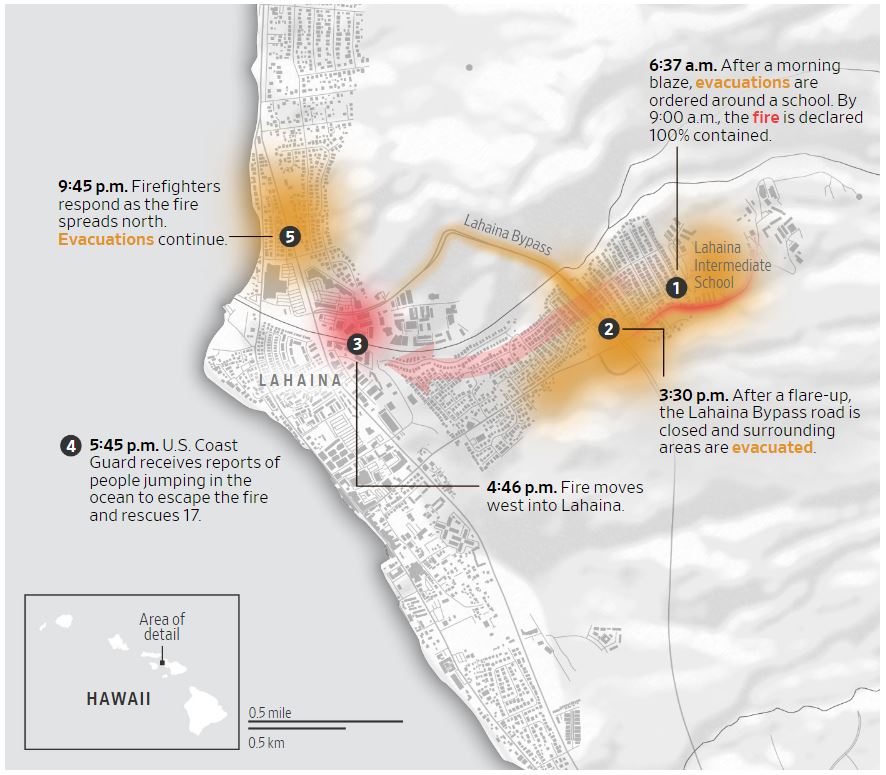
 

“The fire that day moved so quickly, that from where it started in the brush to where it moved into the neighbourhood, communications back to those who make [emergency] notifications were physically nearly impossible,” he said.

Some Lahaina residents said they received emergency alerts, but many didn’t. The fire disabled cellular service in the city, as well as power and water.

Hawaii has what it says is one of the world’s largest siren systems to warn people of all kinds of events, including wildfires and hurricanes. Maui County has 80. State records don’t indicate that the sirens sounded in Lahaina, according to the Associated Press.

“Normally there’d be, like, a hurricane siren or something. None of that stuff went off,” said Kevin Campbell, who escaped Lahaina with his pregnant wife, Tasha.

When he tried to persuade friends to leave, he said, some argued that it was pointless for them to go. The single-lane Honoapi’ilani Highway, the main road out of town, was jammed with cars. Portions of it were closed because of downed power lines from the earlier windstorms.
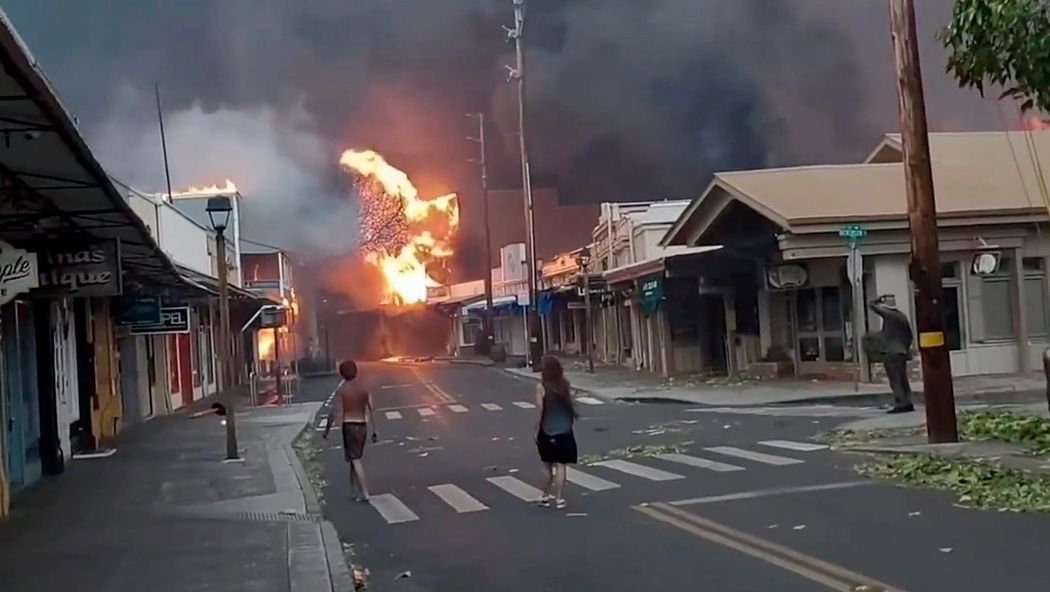
Some residents and tourists abandoned their gridlocked cars on foot, while others rammed vehicles through gates, fled by boat, or waited out the fire in the ocean, witnesses said.

“It was so damn fast, by the time I realized, it was like a rainstorm of red sparks going sideways,” said Jo Ann Hayashi, who spent hours wading in the water of Lahaina Harbor to escape the flames.

Ginger Adams Otis, Suryatapa Bhattacharya and Christine Mai-Duc contributed to this article.