Categories
Uncategorized


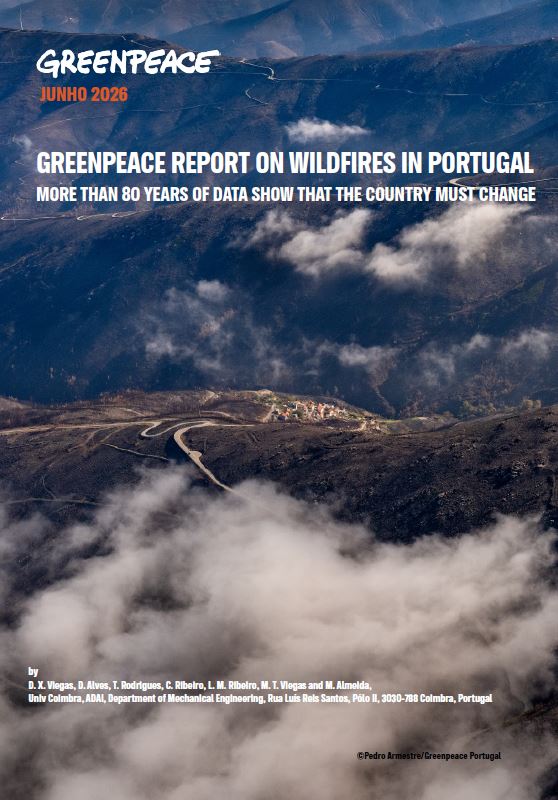
Fires: 2025 among the “worst years” of recent decades in meteorological terms


The director of the Centre for Forest Fire Studies at the University of Coimbra admits that the rains at the beginning of the year have worsened the situation, as they caused “a lot of vegetation to grow, which is now dry and “ready to burn.”

This year, in meteorological terms, is “very close” to the “worst years” in recent decades and could be “more serious” than 2017, when tragic fires were recorded in the country, warned forest fire expert Domingos Xavier Viegas.

“Taking as a reference some of the worst years on record” – for example, 2003, 2005, 2017, 2022 -, which “are among the worst years” in recent decades, “this year is very close to those” and “is following very closely the year 2017” and “being, ultimately, more serious in terms of indicators”, said Viegas.

The director of the Centre for Studies on Forest Fires (CEIF) , at the University of Coimbra, explained, in statements to Lusa, that based on data from the Portuguese Institute of the Sea and Atmosphere (IPMA) and other indicators, he has been monitoring the evolution of conditions in the centre of the country that may favour the occurrence of rural fires.

Although he emphasizes that the IPMA will have “more complete and more extensive data”, Xavier Viegas said that, based on an indicator “from the Canadian fire danger indexing system”, called “dryness index, which measures the state of soil dryness”, cumulatively, practically ” it has not rained in the country for several weeks, at least” in the central region, and, therefore, “the state of soil dryness is worsening”.

“The fuels, not just the fine, dry, dead ones, which dry out very quickly, but others,” the “shrubs, which have a longer response time, also dry out and their dryness increases as we progress” through the season, he stressed, noting that, “therefore, they become increasingly available to burn.”

This year, he said, “this index has been increasing at a rate equal to or greater than that which increased in 2017”, when there were “two very bad periods” in June, causing fires that killed six dozen people, with “an improvement in mid-August”, but then with “a period of heat without rain” and, in October, again “very high values of the dryness index”.

The retired professor from the University of Coimbra admitted that the rains at the beginning of the year worsened the situation, as they caused “a lot of vegetation to grow, which is now dry and “ready to burn” , in addition to “some vegetation cleaning actions” carried out having ended up “having no effect”, as the “vegetation has grown back”.

“What I said, (…) based on data from Coimbra, therefore from the central region, is only valid for a part of the territory, because there are certainly other parts of the territory where conditions are worse than these”, stressed Domingos Xavier Viegas.

In this sense, given the high temperatures in the northern and central interior, “in a consecutive manner”, and also in the Alentejo and the south, the conditions may be “in relative terms even worse” than in the center, he admitted.

“Quite dangerous” year

One of the University of Coimbra’s programs for measuring the moisture content of forest fuels is carried out with a sample in Lousã, with fuels representative of the center and north of the country, and Xavier Viegas highlighted that the “moisture content of dead fuels is already very, very low.”

“The data my colleagues provided me indicates moisture levels of around 4 or 6%, which are values that indicate an extreme danger index. And the moisture levels of the bushes” are “among the lowest 5% since we have records for over 20 years,” he noted.

” It’s actually been a pretty bad year from this point of view , and therefore quite dangerous. Hopefully the conditions will change,” stressed the CEIF director, adding that the situation can only change with increased humidity and rain.

The expert also called for “people to be very careful”, to avoid the use of fire and to prevent new ignitions, because, as he has seen in previous weeks, “unfortunately, there continue to be new ignitions every day and this is completely inexplicable.”


Categories
Uncategorized


Marking 80 years since U.S. dropped atomic bomb on Hiroshima


The city of Hiroshima, in southwestern Japan, has marked the 80th anniversary of the US atomic bombing of the city. Many elderly survivors attended the memorial service for the victims of the first military use of nuclear weapons, expressing their frustration at world leaders’ growing support for these weapons as a deterrent.


With the number of survivors rapidly declining and their average age exceeding 86, this is considered the last major memorial event for many of them.

“In 10 or 20 years, there will be no one left to share this sad and painful experience,” said Minoru Suzuto, a 94-year-old survivor, after kneeling to pray at the cenotaph. “That’s why I want to share my story as much as I can.”

The dropping of the atomic bomb

On August 6, 1945, the bomber “Enola Gay” dropped the first atomic bomb on Hiroshima. The detonation that caused the instant death of around 80,000 people and sparked a legacy of nuclear weapons research that endures to this day.

August 6, 1945. Victory in Europe had been agreed upon three months earlier, but the United States and Japan were prolonging World War II. President Truman wanted to end the war, but Japan refused to surrender. Until, on a Monday morning, the bomber “Enola Gay,” commanded by Colonel Paul W. Tibbets, took off from the Mariana Islands, heading for Hiroshima.

On board was “Little Boy,” the world’s first atomic bomb to be dropped in a wartime context.

About 80,000 people died instantly, while tens of thousands would die months and years later from the effects of radiation.

More than a square kilometre of Hiroshima city was obliterated, crushed by the impact of the “Little Boy” bomb, which detonated 580 meters above ground. Nearly everyone within the fireball’s radius of approximately 198 meters died instantly. Further out, within a 2-kilometer radius, everyone suffered third-degree burns, and within a 4-kilometer perimeter, 45% of people would eventually die from the effects of radiation.

In the end, around 100,000 people died and more than half of the city’s buildings, many up to 9 kilometres away from the point of impact, were left in ruins.

At that time, Hiroshima was an important centre of Japanese military life and had about 300,000 inhabitants.

Photo; Hiroshima, Japan, in 1954, nine years after the atomic bomb was dropped. Photo: IMAGO/piemags via Reuters Connect

Japanese Prime Minister Shigeru Ishiba lays flowers at the Memorial Cenotaph during a ceremony marking the 80th anniversary of the bombing of Hiroshima, Japan, Wednesday.

Read more

The ” Little Boy” bomb was the result of years of research, but was only tested once. The concept was simple: gathering uranium or plutonium at sufficiently high speeds would create a “critical mass” so quickly that it would trigger an uncontrolled, near-instantaneous chain reaction of neutrons destroying atomic nuclei.

The lost mass of each atom is converted into energy at an astonishing rate. Only 1.09 kg of the 64 kg of uranium in “Little Boy” was converted into energy. This was the equivalent of detonating 15,000 tons of TNT, according to calculations by the Los Alamos National Laboratory in the United States.

Since World War II, no country has attacked another with a nuclear weapon. But at least eight have developed such weapons, and as scientists theorized new designs—including the much more powerful fusion weapons, so-called “hydrogen bombs”—tests began around the world. More than 2,000 nuclear detonation experiments have taken place since Oppenheimer saw the fireball from the Trinity test in the New Mexico desert.

For decades, many of these tests were atmospheric, meaning the weapons were detonated above ground and sometimes even in space. Others were underground, detonated in vaults deep below the surface, intended to contain the blast and prevent radioactive fallout, while instruments measured the performance of the new designs.

These tests have human consequences. Even when things went according to plan, early atmospheric tests released radioactive fallout into the atmosphere, which could travel hundreds of kilometers.

But when the plan went wrong, the results could be catastrophic. The “Castle Bravo” test, conducted by the United States in 1954, was intended to evaluate the design of a 5-megaton weapon—the equivalent of 5 million tons of conventional explosives.

Instead, the device exploded with a yield of 15 megatons, vaporizing many of the test instruments and releasing radioactive fallout into the atmosphere. Several hours later, it engulfed a Japanese fishing vessel called the Daigo Fukuryū Maru. All 23 crew members became ill from radiation, and one died.

Hundreds of indigenous people were removed from their homes in and around the South Pacific atolls, where the United States conducted most of its atmospheric testing.

The US atomic bomb attacks on Japan remain the only military use of nuclear weapons.

Currently, there are nine countries that possess nuclear weapons: the US, Russia, France, China, the UK, Pakistan, India, Israel, and North Korea. The US and Russia together possess about 90% of the world’s nuclear warheads.


Categories
Uncategorized


Rural Fires – Situation of Alert – Further extended to  23.59 hrs 19th August 2025


The Alert Status covers the period between 00:00 on August 8, 2025, and 23:59 on August 19, 2025.

Within the scope of the Alert Status declaration, a set of exceptional measures will be extended.

Given the weather forecasts for the coming days, which point to a significant increase in the risk of rural fires, the Government, through the Ministers of

National Defense, Infrastructure and Housing, Internal Administration, Health, Labor, Solidarity and Social Security, Environment and Energy, Culture, Youth and Sports, and Agriculture and the Sea, has determined the extension of the Alert Status Declaration across the continent. The Alert Status will now cover the period from midnight on Friday, August 8th, until 11:59 pm on Wednesday, August 19th.

The declaration results from the elevation of the special alert status of the Integrated Protection and Relief Operations System (SIOPS) and the need to adopt preventive and special measures to respond to the fire danger, as predicted by the Portuguese Institute of the Sea and Atmosphere (IPMA), across much of mainland Portugal.

Under the scope of the Alert Status Declaration, as provided for in the Civil Protection Framework Law, the following exceptional measures will be implemented:

  • Prohibition of access, circulation, and permanence within forest areas previously defined in the Municipal Forest Fire Protection Plans, as well as on forest trails, rural roads, and other roads that cross them;
  • Prohibition of burning cut and piled waste and extensive burning, as well as the suspension of any issued permits;
  • Prohibition of work in forest areas using any type of machinery, except those associated with firefighting;
  • Prohibition of work in other rural areas using brush cutters with metal blades or discs, brush cutters, shredders, and machines with blades or front shovels;
  • Prohibition of the use of fireworks or other pyrotechnic devices, regardless of their combustion method, as well as the suspension of any issued permits.

The prohibition does not cover:

  • Work associated with feeding and watering animals, phytosanitary or fertilization treatment, irrigation, pruning, harvesting, and transportation of agricultural crops, provided they are essential and cannot be postponed and are carried out in irrigated areas or areas devoid of forests, woods, or flammable materials, and do not pose a risk of ignition;
  • Manual cork extraction and honey extraction (creasing), provided they are carried out without the use of fumigation methods obtained with incandescent material or heat generators;
  • Civil construction work, provided they cannot be postponed and appropriate measures are adopted to mitigate the risk of rural fires; – Harvesting agricultural crops using machinery, namely combine harvesters, and carrying out forestry operations for cutting, trimming, and transport, between sunset and 11:00 a.m., provided that rural fire risk mitigation measures are adopted and their implementation is communicated to the territorially competent Municipal Civil Protection Service.

The Declaration of a State of Alert implies:

  • An increase in the level of readiness and operational response by the National Republican Guard (GNR) and the Public Security Police (PSP), with increased resources for surveillance, inspection, deterrent patrols, and general support for protection and rescue operations that may be launched, considering the interruption of vacation leave and the suspension of days off and rest periods authorized for this purpose; – Increased readiness and mobilization of emergency medical, public health, and social support teams by the competent health and social security authorities;
  • Permanent mobilization of Forest Firefighting teams affects the Firefighting System;
  • Permanent mobilization of the National Forestry Agents Corps and Nature Watchers, who are part of the fire prevention and firefighting system, by the Institute for Nature and Forest Conservation (ICNF);
  • Increased readiness of response teams from entities with a special duty of cooperation in the areas of communications (fixed and mobile network operators) and energy (transportation and distribution);
  • The National Republican Guard (GNR) carrying out patrols (surveillance) and aerial surveillance by the Armed Forces in districts on special alert, focusing on areas identified as posing a risk.
  • The National Republican Guard (GNR) will conduct patrols (surveillance) and aerial surveillance using the Armed Forces in districts on special alert, focusing on areas identified as a risk;

Exemption from service or justification for absences of public or private sector workers who simultaneously perform the duties of volunteer firefighters, except for those working in the Armed Forces, Security Forces, and the National Emergency and Civil Protection Authority (ANEPC), as well as in public health care services in emergency situations, particularly pre-hospital emergency technicians and nurses from the National Institute of Medical Emergency.

ANEPC will issue warnings to the public about the danger of rural fires.

The Armed Forces provide air resources to, if necessary and depending on existing availability, operate in locations to be determined by ANEPC


Categories
Uncategorized


Climate change worsens extreme events worldwide


More intense heat waves, devastating wildfires, deadly floods, and record-breaking typhoons marked a year of extremes. The planet has already warmed more than 1.5°C, and the trend is not slowing down.

The year 2024 was the hottest in history, exceeding 1.5°C above pre-industrial levels for the first time. Scientists warn that without urgent cuts in greenhouse gas emissions, extreme weather events will become even more frequent and devastating.

Global temperatures in 2024 will exceed 1.5°C above pre-industrial levels for the first time, bringing the world closer to failing to meet the commitment governments made in the 2015 Paris Agreement, scientists say.

The World Meteorological Organization confirmed the failure to meet the 1.5°C target after analysing data from scientists in the US, UK, Japan and the European Union.

Extreme weather events ravaged the world in 2024, with severe droughts followed by floods hitting Italy and South America, deadly floods in Nepal , Sudan and Europe, heat waves in Mexico , Mali and Saudi Arabia that killed thousands of people, and disastrous cyclones in the US, the Philippines or Mozambique .

Scientists say human-induced climate change is making extreme weather events like heat waves, floods, and storms more frequent and deadly, and this trend will continue if the world continues to burn fossil fuels.

“All the climate extremes we’re seeing are occurring in a warmer atmosphere, and also warmer oceans, and in an atmosphere that can carry more moisture. All of this contributes to heat waves, like those we’ve experienced in the past, becoming more intense and, of course, also more frequent,” climate scientist Eric Fischer of ETH Zurich explained to Reuters.

Heavy precipitation episodes can also be more intense because the atmosphere can carry more moisture, and “the fact that the atmosphere can carry more moisture also means that it can actually extract more moisture from vegetation and the surface, and therefore can also make droughts more intense.”

Climate change makes heat waves hotter and more frequent.

This occurs in most regions on Earth and has been confirmed by the UN’s Panel of Global Climate Scientists (IPCC).

On average globally, a heat wave that would occur once every 10 years in the pre-industrial climate will now occur 2.8 times over 10 years, and will be 1.2°C warmer, according to an international team of scientists from the World Weather Attribution (WWA) group.

Climate change is making wildfires more frequent and severe.

Dozens of people died in the Los Angeles wildfires of January 2025. The flames reduced entire neighbourhoods to smoldering ruins, leaving an apocalyptic landscape. Officials said at least 12,300 structures were damaged or destroyed.

Climate change increases droughts.

A drier climate helps fires spread faster, burn longer, and spread more intensely. Warmer weather also saps moisture from vegetation.


“Forest fires are a complex event. Therefore, there are many factors to consider, such as forest management, where we build our homes, and how they are affected. But climate change can also play a role in all of this. And it’s mainly the fact that forest fires, which involve very hot temperatures and a very dry atmosphere, are becoming more frequent,” explained Erich Fischer.

Forest management and ignition sources are also important factors. In Europe, more than nine out of ten fires are caused by human activities, such as arson, carelessness, power lines, or scattered glass, according to EU data.

Climate change makes storms worse

Climate change is worsening storms and torrential rains, as a warmer atmosphere can hold more water, leading to intense rainfall. Atmospheric water vapor reached a record high in 2024, and the U.S. National Oceanic and Atmospheric Administration (NOAA) said it was the third wettest year on record.

Six typhoons hit the Philippines in 30 days in 2024, a record storm season in the Pacific Ocean, according to World Weather Attribution (WWA), a global team of scientists examining the role of climate change in extreme weather events.

The likelihood of worsening events like this series of typhoons, or Hurricanes Helene and Milton, which hit the United States consecutively in late September and October, will increase with global warming, according to the WWA.

Without drastic cuts in the greenhouse gases that cause climate change, heat waves, wildfires, floods and droughts will worsen significantly, scientists warn.


Categories
Uncategorized


Fires of criminal origin are almost all in the North and Centre


The following was sent to Safe Communities Portugal by AGIF

The agency that manages fires warns of the need to combat alcoholism and mental health problems in order to reduce fires, most of which occur in the North and Centre.

Arson is already the leading cause of fires in Portugal, accounting for 84% of the area burned with a known cause last year (a little over 84,000 hectares). Almost all of these occurred in the North and Centre of the country, regions that account for 97% of the total burned area (134,000 hectares). Combating risky behaviour during burning and slash-and-burn activities has reduced the number of incidents in the country, but addressing the alcoholism and mental health issues that drive many to set fires is still a priority, in situations that, combined with severe weather, lead to tragedies like the one experienced last September.

In 2024 alone, arsonists—including those responsible for and those not responsible for, whether or not they had intentional intent—were responsible for 84% of the burned area and 42% of incidents. The remaining incidents were caused by the use of fire, such as burning and slash-and-burn (41%), accidental causes, and natural causes. The North (57% of incidents and 48% of the burned area) and the Centre (17% of incidents and 49% of the burned area) suffered the most from the September fires.

This trend, as reflected in reports from the Agency for Integrated Rural Fire Management (AGIF), has been evident in recent years (see infographic). In 2023, for example, arson accounted for 31% of incidents, and fires caused by improper use accounted for 50%.

“Before 2018, there were many fires, around 20,000 per year, and most were the result of burning and slash-and-burn,” but awareness campaigns and mechanisms aimed at landowners (the ICNF Burns and Burns app or by calling 808 200 520) have led to a “significant reduction” in fires, explains Tiago Oliveira, president of AGIF. As a result, there has been a percentage increase in arson, and the need to combat the phenomenon has gained visibility. According to the AGIF leader, to achieve this, it is urgent to prioritize preventive measures “against alcoholism and mental health problems,” as well as monitoring repeat offenders and behavioural monitoring.

The AGIF president emphasizes that, to continue reducing fires, it is necessary to address arson and forest management (see text opposite), as “firefighting is very robust.” In recent years, he adds, “as we have reduced the number of fires, our firefighting capacity has been further leveraged, meaning we will have more resources for each fire.”

They understand fireworks

According to Avelino Lima, head of the Permanent Monitoring and Support Group for forest fires at the Judicial Police (PJ), most arson attacks are “involuntary,” meaning there is no intention to commit arson, but some actions do have this consequence. Some are “difficult to resolve because they stem from cultural issues,” such as the improper clearing of brush “by emigrants” during summer vacation, he explains.

As for those with malicious intent, the profile drawn up by the PJ indicates that they are generally men (last year there was an increase in the number of women), socially dysfunctional individuals, with alcohol problems, social or psychological weaknesses, and dazzled by the spectacle of fire. And some are becoming more “competent.” “We’ve already arrested individuals who clearly master aspects of fire, and this is dramatic, because they can achieve their goals more violently,” says Lima.

Last year, the Judiciary Police arrested 53 suspects and charged 191 individuals with intentional arson. The GNR arrested 36 individuals and identified 551 for committing forest fires, primarily due to negligent behaviour.

Notify tourists

Xavier Viegas, coordinator of the Center for Forest Fire Studies at the Faculty of Science and Technology of the University of Coimbra, warns that public behavior is also important to prevent fires from causing significant damage. “Clearing vegetation around homes must be a priority, because despite the warnings the country has received and efforts by authorities and municipalities to be more cautious, there is still much to be done,” says the expert. This is one of the major problems when fires occur, “because [the flames] easily reach close to homes.” If these “are not protected, they cause serious problems for residents, firefighting forces, and the country.”

Xavier Viegas also emphasizes that there must be “care in risk communication,” not forgetting tourists and immigrants, who “are not accustomed to the fire environment we have in the country and may be surprised.”

Parliament must legislate to improve forest management

The Agency for Integrated Rural Fire Management (AGIF) warns that measures must be implemented to improve forest management, many of which are supported by Parliament. Proposals from the Rural Property Working Group, which could help in this process, are slow to materialize.

The AGIF report highlights the “positive progress of property registry projects, which mapped 58% of the area of the 153 municipalities in mainland Portugal without land registry records,” but little else. There are “key projects to be implemented—some under the exclusive jurisdiction of the Assembly of the Republic—that would address the root causes of the problem.” Specifically, “there remains a need for political implementation, through the approval of legislation in the Assembly of the Republic, based on the results prepared by the Rural Property Working Group” (GTPR) and the completion of the National Forest Inventory.

Between inheritance, emigration, and profitability issues, among others, there are many plots of land that are not “taken care of,” warns Tiago Oliveira.

Former GTPR coordinator Rui Gonçalves says the proposals drafted two years ago resulted from “in-depth work on forest problems,” and the measures “should be taken as quickly as possible,” as they would impact rural property management and, consequently, the spread of fires. He acknowledges that there has been political instability, but “information circulating suggests there would be a consensus for these measures to be implemented.”

Rui Gonçalves adds that the proposals, which include measures on inheritance law to prevent “property immobility” and facilitate land consolidation, among others, should not be taken “in isolation.” “If we don’t make rural areas attractive for investment, the rest won’t be resolved, and the difficulties will persist.”

Lack of incentives

Regarding legal and financial incentives that would help improve the economic viability of land, “very little” has been done, the AGIF leader believes, emphasizing that this is also “a matter for Parliament.” “When discussing corporate income tax (IRC), personal income tax (IRS), and the State Budget, where are the incentives for landowners or those who exploit the forest to benefit? This would allow the forest to be leveraged on a new scale,” he warns.

The report highlights the importance of moving forward with the special contribution for the conservation of forest resources, creating Forest Savings Plans and reviewing the rural taxation model.”

Way to go

Investigation
About 99% of rural fires in 2024 were investigated by police forces.

Raising awareness among the population
Experts advocate campaigns to continue raising awareness of risky behavior, particularly when handling agricultural machinery.

Diversifying the forest
Xavier Viegas advocates for forests with different species of trees, which have different behaviors when faced with flames.

Encouraging pastoralism
Tiago Oliveira approves incentives to increase the number of animals that eat vegetation and the valorization of products resulting from silvopastoralism, such as milk and cheese.

Combating smallholdings
AGIF argues that it is necessary to resize rural properties in the North and Center, increase areas of integrated management, qualify the rural economy, and expand incentives for land development.

Hectares consumed
According to the ICNF, this year (as of yesterday) 10,345 hectares have already burned in rural areas, as a result of 3,403 incidents.


Categories
Uncategorized


Azores Situation Report Wednesday 2nd July 2025

Overnight stays in tourist accommodation in the Azores increased by 3.1% in May

The Azores recorded more than 444.8 thousand overnight stays in tourist accommodation in May, an increase of 3.1% compared to the same period last year, according to data revealed today by the Regional Statistics Service (SREA).

“In May, 444.8 thousand overnight stays were recorded in all tourist accommodation establishments (hotels, local accommodation and rural tourism) in the Azores, a figure 3.1% higher than that recorded in the same month of the previous year”, reads the SREA Tourism Activity report, released today.

According to the document, the increase is higher than that recorded at national level (1.3%).

In the first five months of the year, the Azores exceeded one million overnight stays in tourist accommodation (1.4 million), an increase of 7.3% compared to the same period last year.

In May, the region recorded 136.5 thousand guests (up 5.2%), with an average stay of 3.26 nights, which increased by 2% year-on-year.

Residents abroad accounted for more than half of overnight stays in May (70.6%), totalling 313.9 thousand, 5.2% more than in the same period last year.

With 130.9 thousand overnight stays (29.4%), the national market registered a drop of 5.8%.

Cory’s shearwater is a bioindicator of marine pollution in the Atlantic, as proposed by Portugal

A proposal presented by Portugal for the adoption of the Cory’s Shearwater as a common bioindicator of floating plastic pollution in Region V of OSPAR (Wider Atlantic) was approved, in an initiative led by the Government of the Azores.

The new environmental indicator will allow the evaluation of the quantity, composition and temporal evolution of plastic ingested by juvenile shearwaters found dead during the period when they leave their nests.

This species, abundant in Macaronesia, appears as an alternative to the Arctic fulmar (Fulmarus glacialis), used in other OSPAR regions, but absent in the southernmost latitudes, the Azorean executive added.

On the Regional Government’s website, it is stated that the Cory’s Shearwater “belongs to a group formed by several species of seabirds (Procellariiformes) that includes albatrosses, shearwaters (…) and storm-petrels. (…) The Cory’s Shearwater is the most characteristic seabird of the Azores and one of the oldest on the planet. Cory’s Shearwaters spend a large part of their lives at sea (pelagic birds), coming ashore only when it is time to breed, to build their nests, mate, incubate their eggs and care for their young.”

This is a proposal presented by Portugal for the adoption of the Cory’s Shearwater (Calonectris borealis) as a common bioindicator of floating plastic pollution in Region V (Greater Atlantic).

It is led by the Regional Government of the Azores, through the Regional Secretariat for the Sea and Fisheries – Regional Directorate for Maritime Policies, with scientific support developed by Yasmina Rodríguez and Christopher Pham, researchers at the OKEANOS Institute for Marine Sciences Research (University of the Azores) and is the result of a monitoring program initiated in 2015, within the scope of the internationally recognized “SOS Cagarro” citizen science campaign.

In addition to the Cory’s Shearwater as a bioindicator, an environmental assessment threshold was also approved: a maximum of 20% of the birds analysed must contain more than four plastic particles in their stomachs, based on a minimum sample of 200 juvenile birds collected over five consecutive years.

It is now expected that the ministerial meeting will reaffirm the political commitment to the implementation of this new indicator, reinforcing regional collaboration and contributing to the objectives of the Environmental Strategy for the Northeast Atlantic 2030 (NEAES 2030)”.

Categories
Uncategorized


ALGARSAFE’25 – Portimão International Civil Protection and Rescue Fair


Presentation to the foreign community 1400 hrs 22nd May 2025

Between the 22nd and 25th of May, Portimão Arena and the Parque de Feiras e Exposições will be the venue for ALGARSAFE’25 – Portimão International Civil Protection and Relief Fair at the Portimão Arena.

This is the 4th edition of what is considered the largest civil protection and relief fair south of the Tagus, which has been held every two years since 2016, marking the calendar when it comes to this important area of ​​society.

Event tailored for the foreign community

Included in the presentations will be an event in English tailored for the foreign community on the subject of risk awareness and preparedness against various disasters such as rural fires, earthquakes and storms. This will take place at 1400 hrs on Thursday 22nd May 2025. Safe Communities Portugal will be presenting together with the GNR, Civil Protection and ICNF. This will include how to recognize the risks brought about by various extreme weather conditions which Portugal faces and, by understanding these risks take steps to reduce the impacts, such by minimizing damage to property and avoiding loss of life. The GNR will be presenting land cleaning. There will be opportunities to ask questions as well as tour the various exhibits on display. The event is free. Registration eventos@ahbvp.pt

This fair once again brings together in a single space more than fifty public and private entities

The exhibition space inside the Portimão Arena will have a direct connection to the outside, in the Fair and Exhibition Park, where the public will be able to watch demonstrations and training activities, and be able to visit the exhibition of resources and equipment from the different Civil Protection Agents and participating exhibitors. There will also be live demonstrations, training sessions, and drills carried out by operators in simulated emergency scenarios, including extrication and fighting urban fires.

With an exhibition area of 4,000m2 inside the Portimão Arena, plus a further 30,000m2 in the Fair and Exhibition Park, this event is co-organised by Portimão City Council and Portimão Firefighters, with the support of the National Emergency and Civil Protection Authority (ANEPC), the National Firefighters School, the National Institute of Medical Emergency (INEM), and the Portuguese Firefighters League, in addition to other Civil Protection Agents and cooperating entities.

Categories
Uncategorized


Recipe to minimize the impacts of a “blackout”


By Duarte Costa Former President of ANEPC


Let’s start from the beginning. We are never prepared for low-determinism, high-impact contingency situations, but planning and implementing well-worked and tested routines prevent wasting time, guide actions and, in crisis and catastrophe situations, save lives.

The situation that Portugal experienced this Monday cannot be called a crisis or anything like that, but for citizens who have become accustomed to living dependent on a set of resources and capabilities, the lack of one of them ends up creating disruptions where everyone complains and no one is right, not forgetting that the proximity of elections exacerbates the desire to take advantage of what happened, both positively and negatively. And seeing this from the outside, as is my case now, ends up providing me with the necessary distance to analyse the model of action in a situation like this.

Let’s be pragmatic and leave value judgments to those who seek causes and not solutions. Personally, I prefer solutions.

Portugal has an organized response structure that, when used under the correct conditions as per the legislation, allows us to avoid deviations in the response and the consequent loss of time. Thus, in a situation like the one that occurred or a similar one, there are 4 fundamental actions foreseen in our organization as a State. Namely:

  1. Immediately convene the National Security Office in order to understand how what is happening may impact the protection profiles to be applied to infrastructures, especially those that are critical.
  2. Convene the Higher Council for Internal Security, which operates within the scope of the Internal Security System (SSI) and assists the Prime Minister and the Government (which has members present) in the exercise of their powers in the area of ​​internal security, namely in adopting the necessary measures in situations of serious threat to internal security (it worked excellently during the World Youth Days and would be a way of integrating all the information and operational conduct of all security and civil protection agents and forces).
  3. Immediately hear the President of the National Council for Civil Emergency Planning, to assess what was done previously to safeguard the continuity of institutional normality (The National Civil Emergency Planning System, created by Decree-Law No. 43/2020, of July 21, aims to guarantee the organization and preparation of the strategic sectors of the State to face crisis situations, with the aim of ensuring, in particular, the freedom and continuity of government action, the regular functioning of essential State services and the safety and well-being of the population. This President is inherently the President of the National Emergency and Civil Protection Authority (ANEPC) and participates in the meeting of the Superior Council for Internal Security, mentioned in the previous point, hence the relevance of the SSI in this response system).
  4. Within the scope of the Internal Security System, promote only one single point of institutional communication in order to maintain the connection with the Government, coordinate the communication manoeuvre, and avoid alarmism and misinformation.

All four of these actions can and should be carried out simultaneously, and actions 2, 3 and 4 have already been tested (with excellent results) and trained during the organization of the World Youth Days. The key word is “coordination”, which avoids scattered, inconsequential manoeuvres that waste resources and can generate confusion and chaos.


From this point on, it is a matter of conduct and contingency, and everything must be managed, at this level of crisis, by the Secretary General of the SSI and with the presence of those responsible for the institutions mentioned above and others that may become necessary. Always bear in mind that more serious crises may require another type of decision-making process.

In terms of government action and for this specific case that occurred this Monday, it is important to highlight the following aspects that help to minimize the impacts of what happened:

  1. Activate the Energy Emergency Plan and declare a state of energy emergency if the crisis continues, or if it has a major initial disruptive impact, while simultaneously prioritizing essential sectors: hospitals, public safety, communications, water supply, civil protection.
  2. Provide transparent, centralized and frequent communication, informing the population immediately about the situation, explaining, if possible, the causes, expected duration, and above all what is being done to maintain normality. Above all, disseminate clear instructions for responsible energy use.
  3. Mobilize emergency power sources, activating available power stations that can be quickly operationalized and informing people of their availability in case of need, in order to reassure people. Also use emergency generators in hospitals, public transport and logistics centers (which must be tested in normal times and subject to fines if this is not observed).
  4. Ensure strategic reserves of diesel, natural gas and gasoline for essential services and, if necessary, control and prioritize the sale of fuels.
  5. Support the vulnerable population, creating Population Concentration and Support Zones (ZCAP), support centers for people without access to energy, especially the elderly, the sick and vulnerable families (ANEPC already has a long history and experience in creating emergency ZCAP, with guaranteed food, water and shelter, especially in the event of a worsening crisis).


  1. Prepare for the restoration and safeguard against future crises, immediately initiating a critical analysis of the electrical infrastructure through the CNPCE and investing in strengthening the electrical grid, energy storage and redundancy of energy dependence (for a country that occupies the westernmost tip of the European continent, this redundancy must be a strategic objective of the Portuguese State).


If everything mentioned above is done, will the crisis situation be resolved? Of course not, but the impact on people will be largely minimized, and that is what we should strive for as civil servants, that is, to serve the people. And when we serve the people in general, we are also serving the State. And because, at the end of the day, it is the people who pay for the State.


Former president of ANEPC


Categories
Uncategorized


Fake accident scams on the rise: advice and appeals from the PSP


Since the beginning of 2025, 111 reports have been registered, representing 58% of the total number of incidents in 2024. The victims, usually elderly or vulnerable, are coerced into paying through intimidation. The PSP provides advice on how to avoid these situations and calls for immediate reporting.

The PSP warned this Friday about the increase in scams involving fake vehicle accidents, in which victims are asked to pay for damages for which they are not responsible. Since the beginning of the year, the authorities have received more than 100 reports of this type of fraud.

In a statement, the PSP explains that in these cases the fraudsters approach the victim when they are performing some maneuver – most often reversing -, especially in large commercial parking lots, say that they crashed into their vehicle and demand immediate cash compensation for the damages, using manipulation and intimidation.

Reports of these types of cases have increased and in the first quarter of this year 111 were received, “which corresponds to around 58% of the total occurrences recorded throughout 2024 “(190).

The PSP explains that the victims, usually elderly people, vulnerable due to age, illness or economic fragility, end up being coerced into handing over sums of money using intimidation and/or physical threats.

The victim may be approached immediately, when the victim is stopped inside the vehicle, or when the victim has already started to walk away, in which case the suspect may be followed in another vehicle and the victim may be forced to stop, using light or sound signals or just gestures, to understand what is happening.

Sometimes, according to the security force, there are “situations in which there is no direct involvement of vehicles”, but “the suspect claims a run over, in which the damage allegedly caused was physical or material”, for example, with cell phones or glasses.

After the first approach, the fraudster requests payment for the damages caused (physical or material), pressuring the victim to hand over money immediately, without the need to report the accident and without the presence of the police, and claiming that this way they avoid activating the insurance and deal with the matter more quickly.

Authorities have recently detected the existence of some situations in which the perpetrator presents the victim with an automatic payment terminal (TPS), insisting on immediate payment.

When it comes to damage to a vehicle, while still with the victim – explains the PSP -, the suspect simulates a voice telephone contact with a car repair shop or a communications operator, reporting the damage and pretending to receive a quote, which he then passes on to the victim.

In the last four years, the PSP registered a total of 625 reports of this crime, which last year increased by 47% compared to 2023 (129).

The PSP note also states that the preferred period for this type of crime is between 10:00 and 16:00 and that the preferred locations are commercial parking lots and roads with little traffic flow, which normally do not include video surveillance systems.


POLICE ADVICE – WHAT TO DO IF APPROACHED

Do not make any cash payment for a situation that you are certain you did not commit;

Be wary of approaches in which the scammer assumes the type of plot described above and insistently presses for immediate cash payment;

Be wary of approaches in which the perpetrator does not want to activate the insurance or contact the Police, only wanting payment in cash, offering to accompany you to an ATM;

Do not give your bank card to strangers, nor make any payment using a POS that is presented to you by strangers;

In any situation involving the method described or similar ones, contact the PSP and request accident reporting;

Do not make any payment without first contacting a family member or friend to explain the situation, as this may help to explain the fraud and at the same time create some fear in the perpetrator of the crime;

When you notice that you are being followed by another vehicle, which signals to pull over, preferably do not stop. However, if you decide to stop, do not do so in a deserted place or with little traffic, but rather go to a place that is familiar to you, where you are aware of the existence of a greater number of people.

If you are faced with a similar situation, if possible, try to retain as much information as possible, such as the physical characteristics of the suspect (age, height, clothing, way of speaking, accent, signs, tattoos or others), the name he gives himself by and the telephone number he can provide, the characteristics of the vehicle used (colour, make, model, license plate) and also the characteristics of his companions.

The PSP ends the statement with several appeals, one of which is: ” Always be alert and be cautious in your decisions!”. It also calls on the population to pass on the information to those around them: “As more people become aware of scams, the less successful the scammers will become!”

“The  PSP  also calls for the reporting of all crimes of which one is aware, whether as a victim or witness, and reminds that the faster this reporting is done, the faster steps will be taken to identify the perpetrator(s) of the crime(s).”


The police also offer a series of tips for the public to avoid being scammed in this way:

  • Not making any cash payment for a situation that you are certain you did not commit;
  • Be wary of approaches in which the author assumes the type of plot described above and insistently presses for immediate cash payment;
  • Be wary of approaches in which the perpetrator does not want to activate the insurance or contact the Police, only wanting payment in cash, offering to accompany you to an ATM;
  • Do not give your bank card to strangers, nor make any payment using a POS that is presented to you by strangers;
  • In any situation involving the method described or similar ones, contact the PSP and request accident reporting;
  • Do not make any payment without first contacting a family member or friend to explain the situation, as this may help to explain the fraud and at the same time create some fear in the perpetrator of the crime;
  • When you notice that you are being followed by another vehicle, which signals to pull over, preferably do not stop. However, if you decide to stop, do not do so in a deserted place or with little traffic, but rather go to a place that is familiar to you, where you are aware of the existence of a dense population;
  • If you are faced with a similar situation, if possible, try to retain as much information as possible, such as the physical characteristics of the suspect (age, height, clothing, way of speaking, accent, signs, tattoos or others), the name he gives himself by and the telephone number he can provide, the characteristics of the vehicle used (color, make, model, license plate) and also the characteristics of his companions.
Categories
Uncategorized


More than 400 Portuguese beaches have a blue flag this year: find out where they are


For the first time, the municipalities of Cuba and Alcanena nominated their beaches, which were awarded

More than 400 Portuguese beaches have a blue flag this year, six more than last year, with the beaches of Sintra being highlighted as receiving the award, the Blue Flag Association for the Environment and Education (ABAAE) announced today.

The distinction of good quality was awarded to 404 beaches – of which 354 are coastal and 50 are inland beaches -, 18 marinas and 22 ecotourism vessels, in a total of 444 awards given to Portugal by the international jury in 2025.

According to the president of ABAAE, José Archer, all Portuguese coastal municipalities have award-winning beaches this year.

The beaches of Sintra, which had not participated in the program for ten years, were also distinguished, allowing “the entire coast to be covered with a blue flag, from north to south and in the autonomous regions”, highlighted José Archer.

For the first time, the municipalities of Cuba and Alcanena nominated their beaches, which were awarded.

The 404 beaches are distributed among 105 promoters.

The North, with five fewer in the overall count, and the Algarve, with one fewer, were the regions that lost blue flag beaches in total this year compared to last year.

In total, the North has 75 award-winning coastal beaches (last year it had 79) and nine inland beaches (one less than in 2024).

The beaches of Árvore (Vila do Conde), Frente Azul, Seca and Silvalde (all in Espinho), Vila Praia de Ancora (Caminha) and the river beach of Merelim São Paio (Braga) no longer have a blue flag in the North. On the other hand, a new beach, Cavadinho (river beach), in Braga, has been added to the list.

The Algarve has 85 distinguished coastal beaches, having lost, compared to last year, the blue flag of Batata beach (Lagos).

In the Center, a total of 33 coastal beaches (one more than in 2024) and 16 inland beaches have been awarded.

New to the Center’s list are the river beaches of Ançã, Olhos de Fervença and Sete Fontes (Cantanhede) and Cornicovo (Penacova) and the coastal beaches of Barra do Sul (Aveiro) and Costa Nova Sul (Ílhavo).

In the Center, São Pedro da Maceda (Ovar) and the river beaches of Côja (Arganil), Louçainha (Penela), Mâmoa (Santa Maria da Feira) and Bogueira (Lousã) no longer have a blue flag.

In the Tagus river basin, 66 coastal beaches have been awarded (five more than last year) and 15 river beaches (one more).

According to EBAAE, the Olhos d’Água do Alviela river beach (Alcanena) has a blue flag for the first time in this hydrographic region and the Alvares river beach (Góis) has been reinstated.

The coastal beaches of Adraga, Grande, Maçãs and Magoito, in Sintra, and São Julião, in the municipality of Mafra, also re-entered.

The river beach of Sesmo, in the municipality of Castelo Branco, has lost its blue flag in this region.

In Alentejo, there are 31 award-winning coastal beaches (two more) and 10 inland beaches (one more).

The river beaches of Albergaria dos Fusos (Cuba) and the coastal beaches of Monte Velho and Porto das Carretas/Albarquel, in Santiago do Cacém, are new beaches with a blue flag.

In the Azores, 46 coastal beaches have been awarded, one more than the previous year, Calheta dos Lagadores beach, on Terceira Island.

In Madeira there are 18 coastal beaches with a blue flag, including Prainha, in Caniçal, Machico.

The official ceremony of raising the first blue flag on a coastal beach will take place this year in Santa Cruz da Graciosa, in the Azores, on June 3rd.

The first blue flag on a river beach will take place at the Quinta do Barco river beach, in Sever do Vouga, on June 15th.

The first marina to fly the blue flag will be Vilamoura, on June 20th.

23 Blue Centers (information structures and environmental education activities located near beaches) distributed throughout all regions were also recognized.

Portugal ranks sixth among the 51 countries that develop the Blue Flag Program, taking into account the awarded locations.

The announcement of the Blue Flag Association was made today at the Vasco da Gama Aquarium, in Dafundo, Oeiras, district of Lisbon.