Portugal Situation Report Wednesday 22nd December 2021

Introduction

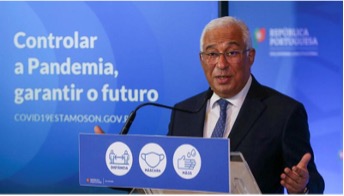
Good morning- Yesterday evening the Prime Minister António Costa announced the main measures that will be in place to help contain the further spread of Covid-19, with the main focus being the Christmas and New Year periods.

He explained that the strategies adopted about a month ago are showing results. He added that the Government had decided to move forward with a new package of measures, among them the extension of free tests from four to six per person each month. The Government has decided to bring forward the special measures planned for January 2nd-9th. According to the new rules, this period will start at 00h00 on 25th December (namely midnight 24th/25th).

The prime minister announced that the containment period scheduled for January 2 to 9 will be brought forward to December 25, which in practice determines the early closure of clubs, bars, day care centers and ATL, and mandatory telecommuting. Tests will be needed for almost everything, except stores, but these are also reduced in capacity. On New Year’s Eve, gatherings are prohibited. Government has stated that they are expanding test capacity which will certainly be required to meet the heavy demand.

The official Communique of the Council of ministers was published overnight and as is normal we await the decree with full details. This will provide the information many of you are asking at present, and as soon as it is available we will produce an Informal English translation highlighting the main details.  This will need to be published before these changes are implemented, so this could be as early as today or tomorrow. COM here: https://www.safecommunitiesportugal.com/council-of-ministers-communique-21st-december-2021/

As with similar announcements in the past (nearly always made at dinner times) my thanks go to our volunteers Eliana Taveras and Fernanda Gonçalves for preparing this. Trust me it is not easy, and certainly I compliment Fernanda in all the work she undertakes in answering many of the questions that you have.

In that respect I would like to emphasise a point that when we say “more details will be available later”, there is little point in asking detailed questions as the answers are not there – all hopefully will be revealed very soon – thank you for your understanding.

Clearly as some of you have commented the restriction could have been a lot worse. For instance no travel restricts have been announced during Christmas nor New Year’s Eve. There will be some disappointment, and a loss of income to some businesses affected, but when we see the situation elsewhere in Europe I am thankful that I am here in Portugal. The Prime Minister has guaranteed that the companies will be supported through “the layoff and the Apoiar program”. In the first case, support is 100% of the salary of employees and employers with the business closed due to the measures.  If everyone follows the measures and limits gatherings during the festive season we should be much better placed in the New Year.

Some advice that will help reduce the risk of infection are whenever possible, ventilate the house and have the windows open. It is a cold night, but the ventilation of closed spaces is of the utmost importance to avoid the concentration of viruses and reduce the risk of contamination. It is also important to wear masks whenever possible, even indoors, during the Christmas dinner (except when eating or drinking) and advice from Government is for everyone to test themselves before gathering for the Christmas Eve meal or lunches. This is particularly important before visiting relatives, who themselves maybe vulnerable.

The Covid-19 Digital Certificate of the European Union (EU) is, as of yesterday is valid for 270 days for travel within the community and includes information on booster doses of vaccines, it was announced yesterday by Brussels. The statement includes “Today, the Commission adopted rules relating to the EU Digital COVID Certificate, establishing a binding acceptance period of 9 months (precisely 270 days) of vaccination certificates for the purposes of intra-EU travel”.

As far as we can see for this this extension is ONLY for travel within the EU.

As many of you have experience we are in for a week of bad weather (not unusual for this time of the year) so please take care especially when driving. We are posting Safe Driving information on our Facebook page to remind drivers accordingly. Please monitor the weather reports over the next days as more rain some heavy at times is expected.

Our team at Safe Communities wish you a very safe and Happy Christmas and New Year

Headlines

WHO says 2022 should be the one in which “the pandemic ends

The year 2022 should be the year in which “the pandemic is put to an end”, stressed this Monday, December 20, the leader of the World Health Organization (WHO), calling for prudence at the festivities.

“We are all fed up with this pandemic. We all want to be with our families, but to better protect them and protect ourselves, in some cases, this means cancelling an event,” said WHO Director General Tedros Adhanom Ghebreyesus.

Speaking at a press conference at the UN in Geneva (Switzerland), the WHO official recommended that families and people who intend to be together during the end of the year to think twice: “a cancelled event is better than live less».

On the other hand, next year, “WHO is committed to doing everything in its power to end the pandemic,” he said.

As the fifth wave of the covid-19 pandemic hits many countries in force and the emergence of the Omicron variant puts the planet back in emergency, the leader of the WHO, now one of the most familiar faces in the fight against the coronavirus, declared: “2022 must be the year we end the pandemic”.

Again, he called for better access to vaccines in disadvantaged countries.

“If we want to end the pandemic next year, we must end inequality, ensuring that 70% of the population in each country is vaccinated by mid-year,” he said.

The director of WHO considered that countries that administer booster doses to adults or children in perfect health would do better to share these vaccines or convince unvaccinated people to adhere.

“We are faced with a very harsh reality, but we must be solidary,” he insisted.

Covid-19 DGS Situation reported on 21st December 2021

Confirmed: 1.233.608 (+ 5754 / + 0.47 %)

Admitted: 904 (-39 /-4.14 %)

Admitted to ICU: 153 (+ 1 / + 0.66 %)

Deaths: 18.812 (+ 16 / + 0.09 %)

Recovered: 1.141.909 (+ 6551 / + 0.58 %)

Active cases: 72,887 (-813 / -1.1%)

Trends

Deaths marginally below last week’s daily average (17)

New cases above last week’s daily average (4402). Yesterday’s figure was well below

A moderate reduction in hospitalisation compared to yesterday and a marginal increase in ICU

On the same day in 2020 there were: 57 deaths, 3158 in hospital, and 502 in ICU, which shows the considerable importance in vaccinations in saving life, reducing serious illness and reducing the tremendous pressure on the health services. 

Health

Omicron already represents almost 50% of new infections in Portugal

The Omicron variant represented 46.9% of cases of SARS-CoV-2 infection in Portugal this Monday. This is the value of the estimated proportion for advanced Omicron in the most recent report on the situation of the genetic diversity of the SARS-CoV-2 coronavirus in Portugal, released this Tuesday by the National Institute of Health Doctor Ricardo Jorge (Insa).

 “Since December 6, there has been an exponential growth in the proportion of probable cases of the Ómicron variant, having reached an estimated proportion of 46.9% on December 20”, refers to the Insa report, which adds that data obtained since last Wednesday (December 15) – the day on which the growth trend was projected until the end of the year – “has a large overlap with the projection”. This means that there is a consolidation for the analysis that Ómicron will be dominant in the country during this week. The prevalence of the variant will thus exceed 50% in the week of Christmas this week.

At a press conference, the Minister of Health, Marta Temido, announced that this variant represented 20% of new SARS-CoV-2 infections in Portugal. It also announced that in the week of Christmas – this week – the prevalence of Ómicron should increase to 50% and that it would rise to 80% in the week of the end of the year.

The “sudden increase” of Ómicron’s community circulation is parallel to the scenario observed in other countries, such as Denmark and the United Kingdom, according to the report. 

Vaccination update

Lisbon, December 21, 2021 (Lusa) – More than 88,000 people were vaccinated in the last 24 hours against covid-19 (complete primary scheme and booster) and against influenza, says today’s vaccination report released by the General Directorate of Health (DGS).

In the last 24 hours, more than 68,064 people were vaccinated with the booster against covid-19, which makes a total of 2,393,088 booster vaccines against the new coronavirus so far.

Today’s data from the DGS further indicates that 8,657,229 people have completed primary vaccination against covid-19, and 2,323,632 have been vaccinated against the flu.

According to DGS data, 86% of people aged 80 and over have already received a booster dose of the covid-19 vaccine, 83% of people aged between 70 and 79, 45% of people aged between 60 and those aged 69, and 15% of people aged between 50 and 59 years.

Hotels and restaurants worried about cancellations for Christmas and New Years

The tourism sector in Portugal, which in the summer saw signs of recovery, is worried about cancellations for the next few days. They were counting on Christmas and New Year to have a little oxygen to withstand the first trimester, hoping that Easter 2022 was already normal. But, for the second year, the Christmas season and New Year will be lived all over Europe with renewed fears about the pandemic. If in 2020, vaccination was not a widespread reality, which raised concerns about the spread of the virus and generation of serious disease, in 2021 the emergence of a new variant, Ómicron, once again sounded the warning bells. Several governments decided to implement measures to try to control the pandemic, discouraging the gathering of people and mobility.

Cristina Siza Vieira, executive vice president of the Hotel Association of Portugal (AHP), recognizes to DN/Dinheiro Vivo that hotels in Portugal are feeling “a lot” of the effects of both the spread of Ómicron and the restrictions applied by the Portuguese government upon entry into the country. The effects are being felt “especially with foreign tourists. We were feeling a return of these tourists, especially in large urban centers, however the new measures are now in force, not only in Portugal, but throughout Europe, and in the world , plus the mandatory presentation of tests when entering and leaving Portugal and in various places, including hotels and restaurants, interrupted this principle of recovery”.

The operations of the hotel units have already been affected, confirming the person in charge that “there have already been cancellations, especially at Christmas dinners and lunches, whether by families or companies. Furthermore, demand for this period has also decreased and there has been a drop in reservations”.

The Portuguese Hotel, Catering and Similar Association (AHRESP) is also receiving the same reaction. Still listening to the members and, therefore, with no numbers yet to allow for a faithful portrait, Ana Jacinto, secretary general of AHRESP, assumes that “as soon as new health rules were announced on December 1, we immediately had reports of cancellations of group dinners and Christmas. “Trust” and “predictability” are crucial and whenever there are more restrictive rules,

Covid-19: Lisbon closes two homeless centers due to lack of conditions

Lisbon, December 21, 2021 (Lusa) – Two of the four homeless emergency shelters that opened during the pandemic in Lisbon will be closed, for lack of “dignified conditions”, announced today the mayor, Carlos Moedas.

“We had two centers without decent conditions that have to be deactivated”, said Carlos Moedas (PSD), who guaranteed that the people who were installed in these spaces are being “accompanied and forwarded”.

The mayor was speaking this afternoon at the Municipal Assembly of Lisbon and thus confirmed an information put forward by the deputy of People-Animals-Nature (PAN) Isabel Castro.

According to a source from the PAN parliamentary group to Lusa, the municipal emergency accommodation centers (CAEM) Pousada da Juventude, in Moscavide, and the Casa dos Direitos Sociais, in Marvila, are in the “closing phase”.

Carlos Moedas defended, in the same answer to the PAN deputy, that the homeless problem is “very serious” and that “Lisbon must change this strategy” of a response based on reception centers where more than 100 people gather in a same space.

For the new mayor of Lisbon, elected in September 2021, the city should adopt in the future a “more Nordic model” and have “smaller” solutions, in terms of spaces for people living on the streets.

Isabel Castro had stated, in her speech, that there is an increase in the number of homeless people in Lisbon and regretted that in the winter season, in a pandemic situation and when there are no more vacancies in the reception responses, the Lisbon City Council (CML) is closing two of the four emergency centers created in the city to support this population in the context of covid-19 

WHO lists 10th COVID-19 vaccine for emergency use : Nuvaxovid

The World Health Organization issued an emergency use listing (EUL) for NuvaxovidTM, following its assessment and approval by the European Medicines Agency (EMA) earlier today.

The new vaccine was developed by Novavax and the Coalition for Epidemic Preparedness Innovations (CEPI), and is the originator product for the CovovaxTM vaccine that received WHO emergency use listing on 17 December.

Both vaccines are made using the same technologies. They require two doses and are stable at 2 to 8 °C refrigerated temperatures.

WHO’s Strategic Advisory Group of Experts on Immunization has also issued policy recommendations for NuvaxovidTM / CovovaxTM.

The emergency use listing (EUL) procedure assesses the suitability of novel health products during public health emergencies. The objective is to make medicines, vaccines and diagnostics available as rapidly as possible to address the emergency while adhering to stringent criteria of safety, efficacy and quality. The assessment weighs the threat posed by the emergency as well as the benefit that would accrue from the use of the product against any potential risks.

The EUL pathway involves a rigorous assessment of late phase II and phase III clinical trial data, as well as substantial additional data on safety, efficacy, quality and a risk management plan. These data are reviewed by independent experts and WHO teams who consider the current body of evidence on the vaccine under consideration, the plans for monitoring its use, and plans for further studies.

As part of the EUL process, the company producing the vaccine must commit to continue to generate data to enable full licensure and WHO prequalification of the vaccine. The WHO prequalification process will assess additional clinical data generated from vaccine trials and deployment on a rolling basis to ensure the vaccine meets the necessary standards of quality, safety and efficacy for broader availability. 

Tourism unemployed grow 9% in November

Despite complaints about the lack of manpower, the shortage of workers is not reflected in last month’s IEFP data, which follow the usual trend of rising unemployment in this sector at the start of the autumn.

The number of unemployed people in the tourist sector with active enrollment in job centers increased by 9% in November compared to the previous month, interrupting a cycle of seven consecutive months of improvements in data from the Employment and Vocational Training Institute (IEFP) for accommodation workers, catering and other similar activities such as cafeterias.

Last month, unemployment registered in this sector rose by 2,723 individuals, to a total of 32,916 in the mainland regions (the breakdown by activities of origin of unemployment does not include data for the Azores or Madeira), according to statistics released yesterday.

Tourism was, in fact, one of the few sectors with an increase in unemployment in a month that marked a new minimum of active unemployment records, at 345 884, in continuous decline since March of this year. In addition to this sector, agriculture increased unemployment registrations by 1.4% (over 167) and the sector of electricity, gas, water, sanitation and waste by 1.1% (over 11).

The rise in tourism unemployed in November is in line with the behavior of previous years, with and without a pandemic, given the strong seasonality of employment in the sector. A year ago, for example, registered unemployment globally also fell, but accommodation and catering accounted for another 8% of unemployed. Agriculture, another highly seasonal activity, also accounted for over 1.1% of the unemployed.

Other news

CARRIS changes services until 7th January and Lisbon Metro closes earlier on Christmas Eve

December 21, 2021 (Lusa) – CARRIS will make service changes between December 24th and January 7th and the Metropolitano de Lisboa will close earlier on Christmas night due to the reduction in demand, the companies reported today.

In a statement, Metropolitano de Lisboa said that it would close the service at 22:00 on 24th December and will resume circulation at 08:00 on 25 December.

“As in previous years, given the sharp reduction in demand usually seen on Christmas Eve and Christmas Day, Metropolitano de Lisboa will close its operating service at 22:00 on December 24th and will resume operating at 08: 00 on December 25th”, indicates the company.

CARRIS also said, in a statement, that it was going to make changes to the service between December 24th and January 7th to adapt the offer to the expected reduction in demand during the Christmas and New Year period.

Schedules and changes here:

https://www.carris.pt/descubra/noticias/horarios-natal-e-fim-de-ano/?fbclid=IwAR0H6aTdtO4Vos8L6lp7314JW1Wq-mq3EgSuxk-_J1wfyfdveQ0op4jle2I


Algarve Situation report Wednesday 22nd December 2021

Algarve reinforces the regional strategy to combat COVID-19 for the coming months.

The Secretary of State Coordinator of the Calamity situation for the Algarve Region, Jorge Botelho, meets this week by sector with each intervention zone (Barlavento, Central and Sotavento), involving mayors, authorities and health services for a full articulation with the structure Civil Protection, with a view to designing the line of action for the coming months.

 Meetings are scheduled for Monday and Tuesday with each of the intervention sectors provided for in the organization implemented in the region, resulting from the activation of the Civil Protection Emergency Plan, which coincide with the areas of influence of each Health Center Group (ACES) of the Regional Health Administration (ARS) of the Algarve.

The first sector coordination meeting took place on December 20, and was dedicated to the ACES Barlavento sector, in which, in addition to the president of the Regional Health Administration Paulo Morgado, the Regional Emergency and Civil Protection Commander Vítor Vaz Pinto and the regional health delegate Ana Cristina Guerreiro, the mayors, as municipal authorities for Civil Protection, from the municipalities of Aljezur, Lagoa, Lagos, Monchique, Portimão, Silves and Vila do Bispo, the executive director of ACES Algarve II – Barlavento and respective Health Delegates.

The main objective of the working day is, based on an epidemiological situation and predictable evolution, to anticipate measures and adjust the support that has been materialized by the civil protection structures to the bodies of the National Health Service (NHS) that are committed to combating this international public health emergency.

Vaccination will also be a dominant theme due to the important phase in which it is now and the recently known designs in its planning.

Tomorrow, Tuesday, will follow the sectorial coordination meetings of ACES Central in which the mayors of Albufeira, Faro, Loulé, Olhão and São Brás de Alportel and ACES Sotavento participate, which will count on the participation of the mayors of Alcoutim, Castro Marim, Tavira and Vila Real de Santo António.

This Christmas, 350 families from São Brás de Alportel receive solidarity baskets

This Christmas marked again by the pandemic and the crisis, the “Cabaz Solidário da Consoada” is reaching three and a half hundred homes in São Brás de Alportel, integrating in this edition a greater number of families.

The Consoada Solidarity Basket is an initiative promoted, in partnership, by the Municipality and the Parish Council of São Brás de Alportel, coordinating entities of the Local Platform for Food Aid, which is headquartered in the Social Store of São Brás de Alportel, with collaboration from all platform partners – local nucleus of Cáritas, Salvation Army, CCD – Center for Culture and Sports of Workers of the City Council and Parish Council and Santa Casa da Misericórdia of São Brás de Alportel.

Through the “Natal Solidário” program, in addition to food and essential goods, families also receive gifts for the little ones. In a press release, the Chamber explains that this solidarity action is made possible “by hosting the “Anjinhos de Natal” project, made possible thanks to the committed collaboration of the local Salvation Army nucleus, which counts on the generosity of a group of Algarvian groups from social beneficence’.


Azores Situation Report Wednesday 22nd December 2021

From our colleague in the Azores

Omicron 

The Regional Health Authority informs that two positive cases of infection by SARS-CoV-2 with SGTP (S Gene Target Failure) profile were identified in the Autonomous Region of the Azores, with molecular profiles compatible with strain B.1.1.529 (Omicron) and that the samples have already been sent for genomic sequencing and confirmation at the INSA – Doctor Ricardo Jorge National Health Institute.

These positive cases were identified yesterday on the island of Terceira and today on the island of São Miguel, respectively by the Specialized Service of Epidemiology and Molecular Biology of the Hospital de Santo Espírito da Ilha Terceira and by the Genetics and Molecular Pathology Unit of the Hospital do Divino Espírito Santo de Ponta Delgada.

15th December 

37 new positive cases of covid-19 were diagnosed, 34 in São Miguel, one in Faial, one in Pico and one in Terceira, resulting from 873 tests performed.

In São Miguel, 16 new positive cases were registered in the municipality of Ponta Delgada, six in the municipality of Lagoa, six in the municipality of Ribeira Grande, three in the municipality of Povoação, two in the municipality of Vila Franca do Campo and one in the municipality of Nordeste.

In Terceira, a positive case was registered in the municipality of Angra do Heroísmo, in Pico there is also a new positive case in the municipality of Lajes and in Faial there is also a new positive case corresponding to the municipality of Horta.

Admissions:

On the 15th December there were six inpatients, five at the Divino Espírito Santo Hospital, in Ponta Delgada (with two in the Intensive Care Unit) and one at the Santo Espírito Hospital, in Angra do Heroísmo.

Recoveries:

42 recoveries were registered.

16th December 

34 new positive cases of covid-19 were diagnosed, 32 in São Miguel and two in Santa Maria, resulting from 724 tests performed.

In São Miguel, 19 new positive cases were registered in the municipality of Ponta Delgada, eight in the municipality of Ribeira Grande and five in the municipality of Lagoa.

In Santa Maria, two new positive cases were registered, corresponding to the municipality of Vila do Porto.

Admissions:

On the 16th December there were nine inpatients, eight at the Divino Espírito Santo Hospital, in Ponta Delgada (two at the Intensive Care Unit) and one at the Santo Espírito Hospital, in Angra do Heroísmo.

Recoveries:

23 recoveries were registered.

17th December 

53 new positive cases of covid-19 were diagnosed, 49 in São Miguel, two in Terceira, one in Faial and one in Santa Maria, resulting from 954 tests performed.

In São Miguel, 31 new positive cases were registered in the municipality of Ponta Delgada, eight in the municipality of Ribeira Grande, eight in the municipality of Lagoa and two in the municipality of Vila Franca do Campo

In Terceira, a new case was registered in the municipality of Angra do Heroísmo and another in the municipality of Praia da Vitória. In Santa Maria, a new positive case was registered, corresponding to the municipality of Vila do Porto, and in Faial, a new positive case was also registered, corresponding to the municipality of Horta.

Admissions:

On the 17th December there were 10 inpatients, nine at the Divino Espírito Santo Hospital, in Ponta Delgada (three in the Intensive Care Unit) and one at the Santo Espírito Hospital, in Angra do Heroísmo.

Recoveries:

17 recoveries were registered.

18th December 

36 new positive cases of covid-19 were diagnosed, 30 in São Miguel, two in Terceira, two in Santa Maria, one in Faial and one in São Jorge, resulting from 1,060 tests performed.

In São Miguel, 21 new positive cases were registered in the municipality of Ponta Delgada, four in the municipality of Ribeira Grande, two in the municipality of Lagoa, two in the municipality of Povoação and one in the municipality of Vila Franca do Campo.

In Terceira, two new cases were diagnosed, both in the municipality of Angra do Heroísmo.

In Santa Maria, in the municipality of Vila do Porto, two cases were registered. Faial has a new positive case corresponding to the municipality of Horta and São Jorge has an active case again, in the municipality of Calheta.

Admissions:

On the 18th December there were nine inpatients, eight at the Divino Espírito Santo Hospital, in Ponta Delgada (two at the Intensive Care Unit) and one at the Santo Espírito Hospital, in Angra do Heroísmo.

Recoveries:

34 recoveries were registered.

19th December 

66 new positive cases of covid-19 were diagnosed, 57 in São Miguel, six in Santa Maria and three in Terceira, resulting from 1,026 tests performed.

In São Miguel, 32 new positive cases were registered in the municipality of Ponta Delgada, nine in the municipality of Ribeira Grande, nine in the municipality of Lagoa, six in the municipality of Povoação and one in the municipality of Vila Franca do Campo.

In Santa Maria, in the municipality of Vila do Porto, six cases were registered.

In Terceira, three new cases were diagnosed, two in the municipality of Angra do Heroísmo and one in the municipality of Praia da Vitória.

Admissions:

On the 19th December there were eleven inpatients, ten at the Divino Espírito Santo Hospital, in Ponta Delgada (two in the Intensive Care Unit) and one at the Santo Espírito Hospital, in Angra do Heroísmo.

Recoveries:

37 recoveries were registered.

20th December 

62 new positive cases of covid-19 were diagnosed, 45 in São Miguel, six in Terceira, five in Santa Maria, four in Graciosa and two in Flores, resulting from 587 tests performed.

In São Miguel, 31 new positive cases were registered in the municipality of Ponta Delgada, six in the municipality of Lagoa, five in the municipality of Vila Franca do Campo and three in the municipality of Ribeira Grande.

In Terceira, six new positive cases were diagnosed, five in the municipality of Angra do Heroísmo and one in the municipality of Praia da Vitória.

In Santa Maria, five positive cases were registered corresponding to the municipality of Vila do Porto.

In Graciosa there are four new cases corresponding to the municipality of Santa Cruz and in Flores there are two new positive cases in the municipality of Santa Cruz.

Admissions: 

On the 20th December there were eleven inpatients, ten at the Divino Espírito Santo Hospital, in Ponta Delgada (two in the Intensive Care Unit) and one at the Santo Espírito Hospital, in Angra do Heroísmo.

Recoveries: 

20 recoveries were recorded.

21st December 

Sixty new positive cases of covid-19 were diagnosed, 33 in São Miguel, eight in Santa Maria, eight in Graciosa, five in Terceira, three in Faial, two in Pico and one in Flores, resulting from 976 tests performed.

In São Miguel, 24 new positive cases were registered in the municipality of Ponta Delgada, five in the municipality of Lagoa, two in the municipality of Vila Franca do Campo, one in the municipality of Ribeira Grande and one in the municipality of Povoação.

In Santa Maria, eight positive cases were registered corresponding to the municipality of Vila do Porto, and in Graciosa there are also eight new cases corresponding to the municipality of Santa Cruz.

In Terceira, five new positive cases were registered, all in the municipality of Angra do Heroísmo

In Faial there are three new positive cases that correspond to the municipality of Horta and in Pico there are two new positive cases, one in the municipality of Lajes and the other in the municipality of Madalena. In Flores, there is a new positive case registered in the municipality of Lajes.

Admissions: 

On the 21st of December there were eleven inpatients, ten at the Divino Espírito Santo Hospital, in Ponta Delgada (two in the Intensive Care Unit) and one at the Santo Espírito Hospital, in Angra do Heroísmo.

Recoveries: 

six recoveries have been recorded.

Current situation:   

The archipelago currently has 449 active positive cases, 373 in São Miguel, 28 in Terceira, 23 in Santa Maria, 12 in Graciosa, six in Faial, four in Flores and three in Pico.

From December 31st, 2020 to December 7th, 197,309 people completed the primary vaccination course (83.4 percent) and 27,316 received the vaccine booster (3rd dose).

There have been 49 deaths from Covid in the region.

Vaccinations for children 

In January of next year, the vaccination of children against covid-19 starts in the Azores, the Regional Secretary for Health and Sports said today in Angra do Heroísmo.

“In early January, the vaccination of children will become available, for those that parents understand and that doctors understand, as we said, after we have made significant progress in vaccinating the most vulnerable”, said Clélio Meneses.

The government official also announced a mass testing of schools in the archipelago, also in early January.

“A massive testing operation is also being prepared, using saliva tests for all students, at all levels of education, with priority for those from Terceira and São Miguel, right at the beginning of the next school term”, he stated.

Faced with the entry of the new variant of the virus in the Azores, the Regional Secretary for Health and Sports reiterates the call for vaccination: “this variant is entering intensely”, he said, without specifying the numbers, but justifying the appeal with the fact that most of those admitted to Azorean hospitals are “unvaccinated”.

Clélio Meneses announced that the vaccination centre at Pavilhão do Mar, in Ponta Delgada, will reopen.

“The vaccination centre at Portas do Mar is once again operational so that the booster dose is applied to as many people as possible,” he said.

“Right now, we are approaching 30,000 people with the booster dose. We are already in the 50s age group. Therefore, any Azorean, aged 50 or over, who has not yet been called for the booster dose, can go to the respective health unit to, if given the opportunity at the time, take the vaccine, or schedule it”, he said.

As part of the fight against the pandemicalso announced that rapid antigen tests will now be available at the archipelago’s airports, for those who want to carry out screening on their return to the islands, regardless of the presentation of the digital vaccination certificate, or other documents required. Also, according to Clélio Meneses, the bureaucratic and administrative process of holding conventions with laboratories for carrying out rapid tests is in its final phase.

Clélio Meneses said, on the other hand, that the regional government will meet in council this week “to, if necessary, take some more measures in this period and impose some type of control”.

The Overseas Situation Report Tuesday 21 December 2021

by Mike Evans

“Don’t give up! It’s not over. The universe is balanced. Every set-back bears with it the seeds of a come-back”  

– Steve Maraboli

With the holidays drawing even closer this report is looking at the latest situation in many parts of the world with the surge in new infections with the Omicron variant. The World Health Organization reported Saturday that the Omicron variant of the coronavirus has been detected in 89 countries, and Covid cases involving the variant are doubling every 1.5 to 3 days in places with community transmission and not just infections acquired abroad. This variant seems to be spreading a lot faster than the previous strains and it is for this reason that many countries are looking to close their borders as well as put their citizens under a lock down during the Christmas period.

Nations across Europe moved to reimpose tougher measures to stem a new wave of Covid infections spurred by the highly transmissible Omicron variant, with the Netherlands leading the way by imposing a nationwide lockdown.

All non-essential stores, bars and restaurants in the Netherlands have closed until 14 January 2022, caretaker prime minister Mark Rutte said at a hastily arranged press conference Saturday night. Schools and universities will shut until 9 January, he said.

In what is surely to prove a major disappointment, the lockdown terms also rein in private holiday celebrations. Residents only will be permitted two visitors except for Christmas and New Year’s, when four will be allowed, according to Rutte. The Netherlands is going into lockdown again from tomorrow,” he said, adding that the move was “unavoidable because of the fifth wave caused by the Omicron variant that is bearing down on us. “In the Netherlands, shoppers fearing the worst swarmed to commercial areas of Dutch cities earlier Saturday, thinking it might be their last chance to buy Christmas gifts.

Rotterdam municipality tweeted that it was “too busy in the centre” of the port city and told people: “Don’t come to the city.” Amsterdam also warned that the city’s main shopping street was busy and urged people to stick to coronavirus rules. “I can hear the whole of the Netherlands sighing,” Rutte said in his lockdown announcement.

“All this, exactly one week before Christmas. Another Christmas that is completely different from what we want. Very bad news again for all those businesses and cultural institutions that rely on the holidays.”

It wasn’t just the Dutch seeking to slow the spread of Omicron. Alarmed ministers in France and Austria tightened travel restrictions. France, having already banned UK travellers, banned concerts and fireworks displays on New Year’s Eve.

Prime Minister Jean Castex called on people to limit the size of holiday gatherings this Christmas during a news conference in a bid to curb rising “fifth wave” infections. Paris cancelled its New Year’s Eve fireworks.

Denmark has closed theatres, concert halls, amusement parks and museums. Ireland imposed an 8 pm curfew on pubs and bars and limited attendance at indoor and outdoor events.

Germany is the latest country after France to impose a ban on UK arrivals into the country, and it is not just in Europe where countries are banning travellers.  As the omicron coronavirus variant takes hold across the world, Israel has placed a ban on all travel to the United States. Germany has also been added to the “no-fly” list. Israel announced on Monday that its citizens would be banned from traveling to the US without special permission as of midnight local time on Wednesday (22:00 UTC Tuesday).

A statement issued by Prime Minister Naftali Bennett’s office cited concerns over the spread of the omicron variant of the coronavirus as the reason for the ban, which also now includes Germany, Italy, Belgium, Hungary, Morocco, Portugal, Canada, Switzerland and Turkey.

The statement said Cabinet ministers had voted to instate the ban on these countries on Monday following advice from the Health Ministry.

Israeli citizens are now banned from traveling to more than 50 countries. Israeli citizens and permanent residents will not be able to travel to the US unless they have special permission.

All travellers, including those who are vaccinated or recovered and carry a valid COVID-19 certificate, will have to go into isolation for 14 days upon their return from the US. Those who are not vaccinated or recovered will have to isolate in a managed facility unless they have a negative result from a PCR test taken on arrival. In that case, they will be permitted to complete their isolation period at home if they declare that no one other than them lives or stays where they are isolating.

Non-Israeli citizens coming from the US will not be allowed to enter Israel unless they have special permission. The same rules apply to all the countries on Israel’s “red list” of countries considered to pose a high coronavirus risk.

In Germany, German Health Minister Karl Lauterbach warned on Friday of a “massive fifth wave” of the coronavirus the country is facing with the arrival of the omicron variant. At a press conference in Hanover, Lauterbach said, “We must prepare for a challenge that we have not yet had in this form.”

Although omicron may be milder than other variants, this might “keep deaths low for two to three weeks, before the growth of the virus would eat up this advantage,” Lauterbach said, underlining that a difficult period ahead was “inevitable.” With an eye toward the approaching Christmas holiday, Lauterbach appealed to those traveling this holiday season to get tested frequently.

Germany has reimposed health restrictions following high case numbers, barring unvaccinated individuals from restaurants and non-essential commerce. The government has also placed an advance order for 80 million doses of omicron-specific vaccines being developed by Pfizer and BioNTech.

All of this comes on the back of a drop in new cases in the past week according to the Robert Koch Institute. The Institute registered a continuing decline in infections. On Friday, 50,968 new infections were reported, making that over 10,000 less than one week ago.

The nationwide seven-day incidence rate also dropped further to 331.8 from 340.1 the previous day. Germany recently implemented several new restrictions, particularly applying to unvaccinated people.

Germany also registered neighbouring France and Denmark as well as Andorra, Lebanon, and Norway as “high-risk” areas. The classification means people who are not vaccinated or have not recently recovered from a COVID-19 infection are required to quarantine for a minimum of five days.

In Austria, the health ministry said it was tightening rules on entry to the country. As of Monday, only those with proof they have received three jabs or recovered from COVID-19 will be permitted to enter the country.

Those lacking a third booster will have to show negative PCR test results or quarantine for five days on arrival in Austria.

Denmark announced it will close all cinemas, theatres and concert halls, and restrict restaurant opening hours over a record number of daily cases. The government also plans to close other gathering places such as amusement parks and museums.

“Theatres, cinemas and concert halls, they will have to close,” Prime Minister Mette Frederiksen told a press conference. “We need to limit our activity. We all need to limit our social contacts,” she added.

Meanwhile on the other side of the World, The Australian state of New South Wales reported a record 2,213 new infections on Friday, the highest number since the pandemic began. However, state Premier Dominic Perrottet said he had no plans to return to the lockdowns and restrictions that were previously imposed to keep the spread of the virus in check, now that 93.3% of the eligible population is vaccinated.

The new peak followed the 1,742 cases reported in New South Wales state on Thursday, which had topped the previous record set in September. The state government is using hospital admissions, particularly the number of patients in intensive care, as a gauge of the pandemic’s severity. There were 24 people in ICUs on Friday. New South Wales on Wednesday eased rules on mask-wearing and the need to provide proof of vaccination at some venues, allowing the unvaccinated to participate more fully in social events.

Finally, to end this report we look at the USA, where infections are also on the increase due to the Omicron variant. Following the Federal mandate on vaccinations for the armed forces, all US military services have now begun taking disciplinary action and discharging troops who have refused to get the mandated coronavirus vaccine, officials said, with as many as 20,000 unvaccinated forces at risk of being removed from service.

On Thursday, the Marine Corps said it had discharged 103 Marines so far for refusing the vaccine, and the Army said it had reprimanded more than 2,700 soldiers and will begin discharge proceedings in January. The Air Force said earlier this week that 27 airmen had been discharged for refusing the vaccine order.

According to the services, at least 30,000 service members are not yet vaccinated, but several thousand of those have gotten temporary or permanent medical or administrative exemptions approved.

Until the next time Stay Safe.

Total Cases Worldwide – 275,137,925

Total Deaths Worldwide 5,372,873

Total Recovered Worldwide – 246,910,593 

Total Active Cases Worldwide – 22,854,459 (8.3% of the total cases) 

Total Closed Cases Worldwide – 252,283,466

Information and Resources:

https://www.worldometer.info/coronavirus/

https://www.theguardian.com/world/2021/dec/19/netherlands

https://www.dw.com/en/coronavirus

https://who.it


The Overseas Situation Report Friday 17 December 2021

by Mike Evans

“Stay safe, stay healthy and above all, stay positive!”

– Anonymous

With the Christmas holidays getting ever closer this report is bringing you the latest news on travel around Europe and even further afield.

We start with the latest news from France where the fear of the Omicron variant has forced the Government to impose new restrictions on travellers from the United Kingdom from midnight tomorrow. (18 December 2021). All non-essential travel between the two countries has been banned, so anyone looking to visit friends or take a skiing holiday in France over Christmas are going to be unlucky.

Currently only French or EU citizens will be allowed to enter France from the UK from Saturday. According to a list on the French Government website the only Britons allowed in are those with registered homes in France plus Transport workers and students. These new rules apply to both vaccinated and non-vaccinated people. Anyone able to make the journey from the UK are required to register prior to travelling on a digital platform to record their address in France where they will have to be isolated for 7 days. This isolation requirement may be lifted to 48 hours subject to being able to justify a negative PCR or TAG (antigen) test.

Meanwhile in Italy, the number of hospitalisations dropping in Italy and with the vaccination rates increasing each day, the COVID-19 situation has somewhat improved in the country. However, the country is currently in an emergency state as it emerged from a lockdown that lasted for a couple of months after battling with a third wave of the COVID-19 pandemic. Even though the country has shown positive figures, it’s unclear whether the emergency state will end anytime soon as the new COVID-19 Omicron variant has already reached Italy.

To keep the Coronavirus situation under control, Italy launched its EU COVID-19 Passport on June 15, which means that the country has long ago started to issue and accept proof of vaccination, proof of recovery, or negative COVID test certificates.

Nonetheless, due to the widespread of the virus and the detection of the new Omicron variant, the country has made several modifications regarding the entry rules as well as the documents that are required to be permitted entry to the country.

European Union nationals travelling to Italy will have to test for COVID-19 before their trip and present negative test results upon arrival in Italy, regardless of their vaccination and recovery status.

The move was taken on Tuesday, December 14, in a meeting of the Italian Council of Ministers, who also agreed that travellers from other EU and Schengen Area countries should be subject to the obligation of quarantine in cases when they haven’t been vaccinated or recovered from COVID-19.

“For those who also come from EU countries but are not vaccinated, it will not be enough to show the negative swab to circulate in Italy, but they will incur the obligation of quarantine.  The vaccinated will also be asked to show a negative swab result,” the Ministers agreed.

Through a provision of the decree approved by the Council, the obligation to carry a super Green pass in the white zone has been extended until March 31 as well. The same was set to expire on January 15. Italy permits entry to most European countries, more precisely to Austria, Andorra, Belgium, Bulgaria, Croatia, Cyprus, Denmark, Estonia, France, Finland, Germany, Greece, Hungary, Ireland, Iceland, Latvia, Lithuania, Liechtenstein, Luxembourg, Monaco, Malta, the Netherlands, Norway, Portugal, Poland, Czech Republic, Romania, Slovenia, Slovakia, Spain, Sweden, and Switzerland.

All persons arriving in Italy from any country mentioned above can enter Italy for non-essential purposes if they have not stayed in South Africa, Lesotho, Botswana, Zimbabwe, Mozambique, Namibia, Eswatini and Malawi in the last 14 days before entering Italy.

Travellers from countries that are permitted entry to Italy need to present the COVID-19 Certificate, which proves whether the travellers have been vaccinated, recovered, or have e negative COVID-19 test result.

All people entering Greece must present a PCR test taken 48 hours before entry, authorities in the Hellenic Republic have announced. The measure, which applies to vaccinated and unvaccinated travellers, will enter into force on December 19 and has been introduced in an effort to keep the COVID-19 situation under control, SchengenVisaInfo.com reports.

“As part of the Covid-19 pandemic control effort, our country will receive visitors from all countries with the demonstration of negative molecular control (PCR) for 48 hours. Excluded from the measure are travellers who have stayed in the countries for less than 48 hours,” the Greek Ministry of Health announced.

According to the World Health Organisation (WHO), earlier this week, 4,801 positive cases with COVID-19 have been reported in Greece, in addition to 77 deaths and 683 hospitalised patients. In comparison, the report of the National Public Health Organization EODY published on Tuesday showed that there were reported 5,736 cases COVID-19 cases, the second-highest death toll ever of 130, and 700 hospitalised, with 80.97 per cent of them being unvaccinated or partially vaccinated and the remaining patients (130, or 19.03 per cent) being fully vaccinated.

The highest number of infections, 1,486 of those, was registered in Attica, which represents the country’s most populated region, with the northern port city of Thessaloniki reporting 817. According to the World Health Organisation (WHO) data, 34,257 positive cases with COVID-19 have been registered in the country during the last seven days, in addition to 660 deaths.

Furthermore, the European Centre for Disease Prevention and Control (ECDC) shows that five positive cases with the Omicron variant have been confirmed in Greece. Presently, Denmark (310), France (170) and Germany (102) hold the highest records of Omicron cases in the EU.

Across the Atlantic in Canada, people thinking of travelling overseas for the Christmas holidays have been given a bleak reminder by the Government, and that is “don’t travel”. Since early November, Canada has seen a steady rebound in coronavirus cases, according to a Dec. 10 epidemiology report published by the country’s public health agency. Now, with the rise of the Omicron variant — which spurred travel restrictions around the globe connected to several countries in southern Africa — the Canadian government has issued an advisory against all nonessential travel just over a week before Christmas.

“To those who were planning to travel, I say very clearly, now is not the time to travel,” the country’s health minister, Jean-Yves Duclos, said at a news conference on Wednesday afternoon. The advisory will be in effect for four weeks and will then be re-evaluated. The government also plans to increase testing at the border, Mr. Duclos said, and will provide more detail in future announcements.

The December 10 epidemiology report also shows that fewer than 1 percent of Covid-19 infections were contracted during international travel and that fewer than 1 percent were linked to an exposure to someone who had travelled.

Yet Mr. Duclos said avoiding travel was smart because Canadians abroad may not be able to gain access to health care if they get sick during travel.

“The situation abroad is already dire in many places,” Mr. Duclos said. “Once they have left Canada, there is very little we can do to help them.”

Fully vaccinated Canadians traveling by air or land for less than 72 hours will still be able to return home without providing proof of a negative coronavirus test, the country’s transportation minister, Omar Alghabra, said.

Over 76 percent of Canadians are fully vaccinated, according to federal data, with unvaccinated patients accounting for more than three-quarters of hospitalizations and deaths reported to the public health agency as of November. As the holidays near, the country’s most populated province, Ontario, is recommending that personal gatherings be limited to 25 people as cases mount, fuelled in part by the spread of new variants, including Omicron, which is estimated to infect 7.7 times as many people as the Delta variant, provincial health experts reported.

Provinces are racing to offer booster doses and free rapid antigen tests to Canadians through the holiday season, with an inventory of 16 million booster doses currently available and 35 million rapid tests scheduled for distribution by the federal government.

As the Omicron variant moves around the world many places will start to close their borders; the situation can, as we have highlighted here, change rapidly. Anyone thinking of travelling over the Christmas period should always contact their airline or the Embassy of the country they are travelling to in advance to get the latest advice.

Until the next time Stay Safe.

Total Cases Worldwide – 272,845,615

Total Deaths Worldwide – 5,349,796

Total Recovered Worldwide – 245,120,593 

Total Active Cases Worldwide – 22,375,226 (8.2% of the total cases)

Total Closed Cases Worldwide – 250,470,389

Information and Resources:

https://www.worldometer.info/coronavirus/

Madeira Sitiation Report Wednesday 15th December 2021 

By Daniel Fernandes

Covid-19 update

There were 1,343 new Covid-19 cases, 1,167 recoveries and 15 deaths from Covid-19 in Madeira since the previous Madeira Situation Report, which was published two weeks ago. Once again, there was a vast increase in the number of new cases, most of which were cases of local transmission. For the first time, there was information on the Covid-19 vaccination status of most patients who had died from Covid-19 in the last two weeks.

On December 1st, there were 73 new Covid-19 cases (1 imported case & 72 cases of local transmission), 80 recoveries and 2 deaths. An 83-year-old female patient and a 75-year-old male patient died from Covid-19 at Hospital Dr. Nélio Mendonça. They had pre-existing conditions. The number of patients in hospital increased to 42, 2 of whom in intensive care.

On December 2nd, there were 88 new Covid-19 cases (9 imported cases & 79 cases of local transmission) and 74recoveries and 1 death. A 94-year-old female patient, who had pre-existing conditions, died from Covid-19 at Hospital Dr. Nélio Mendonça. The number of patients in hospital and in intensive care remained the same as the day before. 

On December 3rd, there were 79 new Covid-19 cases (1 imported case & 78 cases of local transmission), 79recoveries and 4 deaths. Three male patients (aged 88, 84 and 60) and a male patient (aged 77), who had pre-existing conditions, died from Covid-19 at Hospital Dr. Nélio Mendonça. The number of patients in hospital decreased to 36, 1 of whom was in intensive care. 

On December 4th, there were 87 new Covid-19 cases (2 imported cases & 85 cases of local transmission), 86recoveries and 2 deaths. Two female patients, aged 49 and 88, died from Covid-19 at Hospital Dr. Nélio Mendonça. Both patients had pre-existing conditions. The number of patients in hospital increased to 37, 1 of whom was in intensive care.

On December 5th, there were 120 new Covid-19 cases (4 imported cases & 116 cases of local transmission) and 89 recoveries. The number of patients in hospital decreased to 35, 1 of whom was in intensive care. 

On December 6th, there were 85 new Covid-19 cases (1 imported case & 84 cases of local transmission), 72 recoveries and 2 deaths. A 79-year-old female patient and a 74-year-old male patient died from Covid-19 at Hospital Dr. Nélio Mendonça. They were vaccinated against Covid-19 but also had pre-existing conditions. The number of patients in hospital decreased to 30, 1 of whom was intensive care. 

On December 7th, there were 65 new Covid-19 cases (8 imported cases & 57 cases of local transmission), 100 recoveries and 1 death. An 85-year-old female patient, who was vaccinated against Covid-19 and had pre-existing conditions, died from Covid-19 at Hospital Dr. Nélio Mendonça. The number of patients in hospital decreased to 25, 2 of whom were in intensive care. 

On December 8th, there were 88 new Covid-19 cases (4 imported cases & 84 cases of local transmission) and 75 recoveries. The number of patients in hospital decreased to 23, 1 of whom was in intensive care. 

On December 9th, there were 90 new Covid-19 cases (5 imported cases & 85 cases of local transmission) and 86 recoveries. The number of patients in hospital increased to 25, 2 of whom were in intensive care.

On December 10th, there were 58 new Covid-19 cases (1 imported case & 57 cases of local transmission), 52 recoveries and 1 death. An 80-year-old female patient, who was not vaccinated against Covid-19 and had pre-existing conditions, died from Covid-19 at Hospital Dr. Nélio Mendonça. The number of patients in hospital increased to 26, 2 of whom were in intensive care.

On December 11th, there were 169 new Covid-19 cases (10 imported cases & 159 cases of local transmission) and 120 recoveries. The number of patients in hospital increased to 29, 2 of whom were in intensive care.

On December 12th, there were 118 new Covid-19 cases (8 imported cases & 111 cases of local transmission), 88 recoveries and 1 death. A 44-year-old female patient, who was vaccinated against Covid-19 and had pre-existing conditions, died from Covid-19 at Hospital Dr. Nélio Mendonça. The number of patients in hospital increased to 31, 2 of whom were in intensive care.

On December 13th, there were 112 new Covid-19 cases (2 imported cases & 110 cases of local transmission), 83 recoveries and 1 death. A 48-year-old male patient, who was vaccinated against Covid-19 and had pre-existing conditions, died from Covid-19 at Hospital Dr. Nélio Mendonça. The number of patients in hospital increased to 33, 4 of whom were in intensive care.

And on December 14th, there were 111 new Covid-19 cases (7 imported cases & 104 cases of local transmission) and 83 recoveries. The number of patients in hospital increased to 34, 4 of whom were in intensive care.

There were 937 active cases on Tuesday, of which 47 had been imported while the other 890 cases had been a result of local transmission. As of Tuesday, there had been 15,199 cases, 14,142 recoveries and 120 deaths.

As of Tuesday, there were 39 patients in isolation in a dedicated hotel, 864 patients in isolation in their own accommodation and 34 patients in hospital, 4 of whom in intensive care. On Sunday, half to the hospitalised patients had not been inoculated. 

On the same day, there were 350 suspected cases under epidemiological investigation and analysis, which were all linked to patients who tested positive for Covid-19, to calls made to the SRS24 helpline, to referrals by SESARAM (Madeira Regional Health Service) and to airport screening. 

,

Also on the same day, there were 25,186 travellers under monitoring by the health authorities. Monitoring is being carried out through the ‘MadeiraSafe’ app. There were also 384 people, who had contact with positive cases, being monitored by the health authorities of several Madeira municipalities and of Porto Santo. 

As for Covid-19 testing on passengers who had arrived at Funchal and Porto Santo airports, 321,315 samples had been collected until Tuesday (at 15h30).

As for Covid-19 rapid antigen tests, a total of 590,769 tests had been carried out by November 28th, 516,558 of which as part of mass testing campaigns.

By Tuesday, 744,540 samples from RT-PCR tests had been processed in the Autonomous Region of Madeira.

The SRS 24 helpline (Regional Health Service – 800 24 24 20) received 2,242 calls in the last 2 weeks. Overall, it had received 72,491 calls. 

The Covid-19 mental health helpline (Linha de Acompanhamento Psicológico da Direção Regional de Saúde – 291 212 399 – available every day from 09h00 to 21h00), which was set up to provide emotional and mental support to anyone in Madeira received 10 calls in the last 2 weeks. Overall, it has received 3,962 calls. 

https://funchalnoticias.net/2021/12/01/73-novos-casos-de-covid-19-767-casos-activos-entre-nos/

https://funchalnoticias.net/2021/12/01/morreram-mais-duas-pessoas-na-ram-com-covid-19/

https://funchalnoticias.net/2021/12/02/88-novos-casos-de-covid-19-74-recuperados-780-activos-275-suspeitos/

https://funchalnoticias.net/2021/12/02/morreu-mais-uma-pessoa-com-covid-19-uma-mulher-de-94-anos/

https://funchalnoticias.net/2021/12/03/79-novos-casos-de-sars-cov-2-776-casos-activos/ 

https://funchalnoticias.net/2021/12/03/mais-quatro-mortos-com-covid-19-na-ram/ 

https://funchalnoticias.net/2021/12/04/87-novos-casos-de-covid-19-775-casos-activos-na-ram/

https://funchalnoticias.net/2021/12/04/madeira-com-mais-duas-mortes-com-covid-19/ 

https://funchalnoticias.net/2021/12/05/120-novos-casos-de-covid-19-806-casos-activos/

https://funchalnoticias.net/2021/12/06/85-novos-casos-de-coronavirus-817-casos-activos-entre-nos/

https://funchalnoticias.net/2021/12/06/mais-dois-mortos-com-covid-19-estavam-vacinados-mas-tinham-comorbilidades/

https://funchalnoticias.net/2021/12/07/65-novos-casos-de-sars-cov-2-781-casos-activos-na-ram-actualmente/

https://funchalnoticias.net/2021/12/07/mulher-de-85-anos-vacinada-e-a-117-a-vitima-mortal-com-covid-19-na-madeira/ 

https://funchalnoticias.net/2021/12/08/88-novos-casos-de-covid-19-ha-794-casos-activos-na-regiao/ 

https://funchalnoticias.net/2021/12/09/90-casos-de-covid-19-hoje-798-activos-330-suspeitos/

https://funchalnoticias.net/2021/12/10/58-novos-casos-de-covid-19-803-casos-activos/

https://funchalnoticias.net/2021/12/10/madeira-ja-vai-nas-118-mortes-hoje-faleceu-mais-uma-doente-com-covid-19/

https://funchalnoticias.net/2021/12/11/169-novos-casos-de-covid-19-hoje-852-activos-entre-nos/ 

https://funchalnoticias.net/2021/12/12/118-novos-casos-de-covid-19-casos-activos-na-comunidade-sao-881/

https://funchalnoticias.net/2021/12/12/mulher-de-44-anos-e-a-119-vitima-mortal-com-covid-19-na-madeira/

https://funchalnoticias.net/2021/12/13/909-casos-activos-na-ram-275-casos-suspeitos/

https://funchalnoticias.net/2021/12/13/ja-morreram-120-pessoas-na-ram-com-covid-19/

https://funchalnoticias.net/2021/12/14/111-novos-casos-de-covid-19-hoje-937-casos-activos-no-arquipelago/

Covid-19 vaccination for children aged 5 to 11

The schedule of Covid-19 vaccination for children (aged 5 to 11) has been published: 

Centro de Vacinação do Funchal (Funchal Vaccination Centre) – December 15th (14h00-18h00), 18th (09h00–18h00), 19th (09h00–18h00), 23rd (09h00–18h00) & 30th (09h00–18h00) 

Centro de Vacinação do Porto Santo (Porto Santo Vaccination Centre) – December 17th (09h00-13h00)

Centro de Vacinação de Câmara de Lobos (Câmara de Lobos Vaccination Centre) – December 21st (09h00-12h00)

Centro de Vacinação da Ribeira Brava-Centro de Saúde (Ribeira Brava Vaccination Centre-Health Centre) – December 21st (14h00-18h00)

Centro de Vacinação do Machico (Machico Vaccination Centre) – December 22nd (09h00-12h00 

Centro de Vacinação de Santa Cruz (Santa Cruz Vaccination Centre) – December 22nd (14h00-18h00)

Centro de Vacinação da Ponta de Sol (Ponta de Sol Vaccination Centre) – December 27th (09h00-12h00)

Centro de Vacinação da Calheta-Centro de Saúde (Calheta Vaccination Centre-Health Centre) – December 27th (14h00-18h00) 

Centro de Vacinação de São Vicente-Centro de Saúde (São Vicente Vaccination Centre-Health Centre) – December 28th (09h00-12h00)

Centro de Vacinação do Porto Moniz-Centro de Saúde (Porto Moniz Vaccination Centre-Health Centre) – December 28th (14h00-18h00)

Centro de Vacinação de Santana (Santana Vaccination Centre) – December 29th (09h00-12h00) 

All vaccination centres will be closed on December 24th, 25th, 26th, 31st and on January 1st.  

More information can be obtained by calling the Region’s Vaccine Hotline (SRS Vacina Covid-19 – 800 210 263) or the children’s support hotline (Linha de Apoio à Criança – 96 931 97 32

https://funchalnoticias.net/2021/12/13/srspc-divulga-calendario-de-vacinacao-de-criancas-dos-5-aos-11-anos/

Covid-19 vaccination update

As of December 9th, 85% of the Region’s population had been fully vaccinated against Covid-19 and 87% had started the Covid-19 vaccination process.  

Among the resident population aged 50 or older, 99% had been vaccinated, while more than 82% of those aged 12-17 had been vaccinated.

As for the municipalities, 80% the residents of the Municipalities of Câmara de Lobos and Santa Cruz had been fully vaccinated, while the remaining municipalities had a full vaccination rate of over 84%.

A total of 436,878 Covid-19 vaccine doses (216,978 1st doses & 209,937 2nd doses & 36,293 booster shots/3rd doses) had been administered 

On Sunday (December 12th), a shipment of 12,000 Pfizer Covid-19 vaccines arrived in Funchal. This shipment will be used to vaccinate children against Covid-19.

Martinha Garcia, the Director of Pharmaceutical Group the Madeira Health Service (Directora do Núcleo Farmacêutico do SESARAM), explained that the dosage of Covid-19 vaccine for children is different than that for adults. Children will be inoculated with a dose of 10 micrograms of the vaccine. Children will receive 2 doses of the Covid-19 vaccine, with the 2nd dose being administered 21 days after administration of the 1st dose.

https://funchalnoticias.net/2021/12/09/85-da-populacao-da-regiao-ja-tem-a-vacinacao-completa/

https://funchalnoticias.net/2021/12/12/sesaram-ja-recebeu-12-mil-vacinas-para-aplicacao-em-criancas-duas-doses/

Korean Ambassador wants to deepen Korea-Madeira ties 

Song Oh, the Ambassador of the Republic of Korea in Portugal, was hosted by José Manuel Rodrigues (President of the Madeira Legislative Assembly) on December 2nd. This was the first visit of a Korean ambassador to the Autonomous Region of Madeira. The visit took place on the 60th year of diplomatic relations between Korea and Portugal.

The aim of the visit was to promote Korean culture to the Madeiran people and to advertise the Madeira archipelago in Korea, in order to increase tourism and commercial ties between both regions.

Ambassador Song Oh highlighted that on January 18th, it will be 15 years since Madeira and Jeju Province became sister provinces. He wants this relationship to deepen.

https://funchalnoticias.net/2021/12/04/embaixador-da-coreia-quer-aprofundar-cooperacao-com-a-madeira/

Power cut

Empresa de Electricidade da Madeira (Madeira power supplier) announced there will be power cuts due to scheduled work on the electricity supply network. These cannot be postponed and will take place in the following day and places:

FUNCHAL

December 16th09h00 to 11h30 & 14h00 to 16h00 

– Estrada Monumental (numbers 245 to 249)

– Rua da Ponta da Cruz (number 66)

– Rua do Cabrestante (number 43)

December 16th14h00 to 15h00

– Terreiro da Luta

– Cabeço dos Louros

– Ribeira das Cales

– Miradouro do Pico Alto

FAJÃ DA OVELHA

December 16th13h00 to 13h10 & 15h50 to 16h00

– Raposeira (including the school)

December 16th13h00 to 16h00

– São Lourenço (including the Health Centre)

– Lombo dos Cedros

PAUL DO MAR

December 17th10h00 to 13h00

– Estrada Regional 223 (Tunnel)

FAJÃ DA OVELHA

December 17th10h00 to 13h00

– São Lourenço

– Precipício

– Massapee 

– Falcões

However, power could be restored during the time frame mentioned above. So, for safety purposes, it should be assumed that there will be power at any time during this period of time.     

If necessary, customers can contact the free Customer Support Service number (Serviço de Apoio ao Cliente): 800 221 187.

https://funchalnoticias.net/2021/12/15/publicidade-o-fornecimento-de-energia-sera-interrompido-nos-dias-horas-e-locais-abaixo-indicados-anuncio-109-2021/


Azores Situation Report Wednesday 15th December 2021 

From our colleague in the Azores

Covid -19 

Since the last Situation Report a week ago on the 8th of December there have been 161 new cases of Covid-19 registered, 9 fewer than last week, and 151 recoveries, 28 more than last week.

Admissions:

As of today, there are four inpatients, three at the Divino Espírito Santo Hospital, in Ponta Delgada, and one at the Santo Espírito Hospital, in Angra do Heroísmo, none of them in intensive care.

Current situation: 

As of yesterday, the archipelago currently has 284 active positive cases, 232 in São Miguel, 40 in Terceira, four in Faial, three in Pico, two in Corvo, two in Flores and one in Santa Maria.

From 31st December 2020 until 7th December, 175,830 people were vaccinated in the Azores with the first dose (74.3 percent) and 197,309 with full vaccination (83.4 percent), under the Regional Vaccination Plan. To date, 18,244 users have received a booster of the vaccine (3rd dose).

Azores Airlines will link New York to the Azores from June 2022 

Azores Airlines will start connecting, from June 4th to October 28th, 2022, New York to the Azores, with connections on Wednesdays, Thursdays, Fridays and Saturdays, between Ponta Delgada and the North American city.

Departures from Ponta Delgada, on the island of São Miguel, are scheduled for the end of the day, at 18:00, with arrival in New York at 19:55 local time.

Returning flights will leave New York at 21:20 and arrive in Ponta Delgada the following day, at 06:25.

SATA has said that reservations are already available and can be made through the airline (‘online’ or at any point of sale) or through travel agencies.

 Vaccinating Children 

The Regional Government of the Azores has not yet taken a decision on the vaccination of children against covid-19, revealed today the Secretary of Health, reiterating that the priority is the completion of the booster dose.

The decision would not be taken until the process of vaccinating the most vulnerable with the booster dose has been concluded.

Information for travellers wanting to go to the Azores can find useful information for travellers who wat to go there can be found, here: –

https://destinoseguro.azores.gov.pt/?page_id=8908


Portugal Situation Report Wednesday 15th December 2021

Good morning – This morning I would cover the topic of risk, the factors that influence risk and how to reduce the risk of contracting Covid-19, avoiding self-isolation, or worse, during the Christmas period.

In the lead up to Christmas we are undoubtedly planning for the occasion, with additional shopping and deciding what events, family gatherings and other events we will be attending. Compared to last year there are far fewer Covid-19 restrictions in place, so far greater freedom in deciding our activities. However some activities may present greater exposure to contracting Covid-19 than others. It is all to do with risk.

Nearly all the eligible population (except those 11 and under) have already been fully vaccinated and some have received the booster and flu vaccines. There are others, however, who still have no, or limited, protection against Covid-19, due to poor immune system for instance which is not capable to react to the vaccine stimulus.

There are activities and areas of the country that pose greater risk than others. We are learning to live with covid-19 among us. Even with some limitations, you can go to a restaurant, gym or cinema.

However, the emergence of new variants of the virus and current increases in incidence rates again pose a challenge and may force the cancellation of some of this seasons events, as has already happened in some municipalities. For now, the number of admissions, both in intensive care and in wards, remains far from the limit established by experts consulted by the Government and far below the same period last year. The Christmas and New Year periods will be decisive.

The desire for a gradual return to normality does not mean that the virus has disappeared from our lives. Every trip to the restaurant, supermarket, cinema or participation in a social event carries a risk, which varies depending on your health condition, whether you have already been vaccinated, where you live and, of course, how many people will be with you and how they behave.

If you undertake these activities, the above risk factors determine the level to which you may become exposed to contracting Covid-19 and the potential level of seriousness. A major factor is health and if you suffer from: hypertension, diabetes, asthma, kidney disease, heart disease, lung disease or cancer these are the types of conditions that according to DGS increase the risk; plus factors such as being overweight or if you smoke.

A low risk does not mean that you cannot suffer any harm from the disease, just as a high risk does not mean that you will suffer.

Keep in mind that, even if you are not at high individual risk, there is always the risk of infecting others who are more vulnerable and causing them harm (the extent and severity of which you cannot predict or foresee). Precaution in managing the risk of SARS-CoV-2 infection is a collective responsibility.

For example, if you are over 70 years of age, have various diseases and have not fully completed a Covid-19 vaccination and thinking of going to a gathering in a group with others, in a municipality with a high incidence rate, where people may not all be wearing masks all the time and social distancing is not possible, then the risk is likely to be very high.

However, if you are going shopping, in a municipality with a low incidence rate, are younger in age, no health conditions, fully vaccinated and will be wearing a mask all the time then, the risk in comparison is low.

These are just two examples, the purpose being to illustrate when considering what activities you wish to undertake in the lead up to, and over the festive season, to also consider the risk factors together with your potential exposure to others who maybe more vulnerable.

Please have Safe Day

Headlines

Covid-19: Over 50s will receive third dose of vaccine – Government

Lisbon, December 14, 2021 (Lusa) – The third dose of the vaccine against covid-19 will begin to be administered to people aged 50 and over, announced today the Assistant Secretary of State for Health.

“The update of the standard of DGS 002/2021 will be carried out during today, changing the eligibility range from 65 years old or over to 50 years old or more”, said António Lacerda Sales, on the side lines of the ceremony for the taking of possession of the first president of the Order of Physiotherapists, António Lopes.

Thus, he indicated, “people over 50 years old will also be boosted with the vaccine” against covid-19.

2021: Three waves of covid-19, three variants and mass vaccination of Population

Lisbon, December 14, 2021 (Lusa) – Three waves of infections, which put professionals and health services to the test, new variants of the more transmissible coronaviruses and the mass vaccination of the Portuguese marked the covid-19 pandemic in 2021 in Portugal.

Portugal is ending 2021 as it started: a wave of cases that has already led to more measures to contain the growth of infections and the threat of a new variant, despite doubts whether it causes more severe forms of covid-19 and whether its effectiveness is diminished of vaccines.

If in January 2021 the threat was the Alpha variant, associated with the United Kingdom, now the concern is with Omicron, detected in dozens of countries after being reported in southern Africa.

In between, Portugal faced the Delta variant, associated with India, considered 60% more transmissible than the original virus, and responsible for all infections in the country and which in 2021 gained ground to all others in Europe and the world.

But 2021 is also marked by the biggest wave since the beginning of the pandemic, in the first two months of the year, with Portugal surpassing, at the end of January, 300 daily deaths and 16 thousand cases.

With vaccination still in its infancy, the pressure on hospitals has been increasing since the beginning of the year, which most experts attributed to the easing of restrictions during the Christmas period, culminating in a peak of more than 6,600 inpatients and 850 patients in intensive care at the end of January.

Read more here: https://www.safecommunitiesportugal.com/2021-three-waves-of-covid-19-three-variants-and-mass-vaccination-of-the-population/

Covid-19 DGS Situation 14th December 2021

Confirmed: 1.200.193 (+ 3591 / + 0.30 %)

Admitted: 953 (-41 /-4.12 %)

Admitted to ICU: 142 (-2 /-1.39 %)

Deaths: 18.687 (+ 14 / + 0.07 %)

Recovered: 1.115.749 (+ 6358 / + 0.57 %)

Active cases: 65,757 (-2781 /-4%)

Trends

Deaths (14) decreased compared to yesterday, and is slightly below the average of the last 30 days (14.4 deaths).

Welcome moderate decrease in the number of Covid-19 patients hospitalised

Also reduction of those in ICU

Active cases decrease considerably by 4% after several days of increases.

Very high level of recovered cases for a single day – over six thousand

Health

Vaccination of 10 – 11 year olds – about: “about 27 thousand” appointments have already been made

The self-scheduled vaccination for children was available late yesterday afternoon.

Until 1:30 pm on Tuesday, “about 27 thousand online requests” were made for the vaccination of children between 11 and 10 years old. An option that, it should be noted, was available at the end of the day yesterday on the Online Scheduling Portal for vaccination.

These appointments were set for the next weekend, December 18th and 19th, which will be exclusive to the vaccination of this age group.

Pfizer’s covid-19 drug reduces hospital admissions and deaths by 90%

Pfizer confirmed this Tuesday that its pill against covid-19 reduces hospitalizations and deaths in people at risk by about 90% when taken in the first days of symptoms appear.

The drug maker says, in a statement, that the conclusion about the drug’s effectiveness resulted from clinical trials involving more than 2,200 people, and supports what was announced in early November based on preliminary results.

According to Pfizer, no deaths were recorded among those who received the treatment.

Participants in clinical trials were unvaccinated and were at high risk of developing a severe case of covid-19.

Pfizer also announced that the antiviral treatment, which will be marketed under the name Paxlovid, should maintain effectiveness against the Omicron variant of the SARS-CoV-2 coronavirus, which causes covid-19 disease.

“This underscores the potential of this (drug) candidate to save the lives of patients around the world,” said Albert Bourla, head of Pfizer, quoted in the statement.

“Concerning variants such as Omicron have exacerbated the need for affordable treatment options for those who contract the virus,” he added.

Antivirals work to decrease the ability of a virus to replicate, which also alleviates the disease.

These treatments represent a key complement to vaccines in protecting against covid-19, namely because they are very easy to administer.

69 cases of the Omicron variant in Portugal and possible community circulation

Portugal registers 69 cases of the Omicron variant of the SARS-CoV-2 coronavirus, with the latest data revealing a “trend strongly indicative of the existence of community circulation”, said this Tuesday (December 14) the National Institute of Health Doctor Ricardo Jorge (INSA).

“To date, a total of 69 cases of the Omicron variant have been identified by targeted search for mutations and/or viral genome sequencing,” says the INSA report on the genetic diversity of SARS-CoV-2, which causes covid disease. -19.

According to the institute, within the scope of real-time monitoring of the “failure” in the detection of the S gene, which allows the identification of the Omicron variant, carried out in collaboration with several laboratories, it was possible to gather data for the period from November 25th to 12thDecember.

“This analysis points to an increasing trend in the proportion of positive cases with S gene failure since December 6th, reaching a relative frequency of 9.5% by December 12th,” the report said.

According to INSA, this trend, particularly that observed in the last three days, is “strongly indicative of the existence of community circulation of the Omicron variant in this period, in strong parallel with the scenario observed in other countries” that are using the same approach for surveillance of this variant, the case of Denmark and the United Kingdom.

This new variant, classified as “worrying” by the World Health Organization (WHO), has been detected in southern Africa, but since the South African health authorities raised the alert on 24 November, infections have been reported in more than 60 countries from all continents, including Portugal.

Schools

Government has already updated the school calendar, affected by measures to combat the pandemic

The Government confirmed through a dispatch in Diário da República the school calendar announced by António Costa. The prime minister, when he informed the country that new restrictions would be imposed to contain the advance of covid-19, said that there would be changes to the Christmas and New Year holidays that would have repercussions in the remaining school year.

With the forced closure of schools in the first week of January — motivated by the prevention of contacts after the end-of-year festivities period — the Government had to make changes to the school calendar. These were confirmed through an order in the Diário da República, published this Monday.

According to the document, the Government considers that “it is still possible to accommodate the suspension of in-person teaching and non-teaching activities”, so “it is chosen to adapt the 2nd and 3rd academic periods to the said suspension” – not moving forward, thus, for distance learning.

This order changes the calendar for the functioning of educational and teaching activities in public establishments of pre-school education and basic and secondary education and the school calendar for private establishments of special education”, it reads.

The 1st period ends on December 17th and classes will only resume on January 10th. As a result of this increase in Christmas holidays, the Carnival holidays will be limited to just one day — March 1st — with the 2nd period running until April 8th.

The interruption between the 2nd and 3rd periods will be reduced to one week, between April 11th and April 18th. The end of the school year will be determined by the level of education and whether or not exams are taken:

9th, 11th and 12th grades end on June 7, 2022

5th, 6th, 7th, 8th and 10th grades end on June 15, 2022

Pre-school education and 1st cycle of basic education ends June 30, 2022

Special education follows the same rules as regular education, but with one formal exception, as it can “ensure face-to-face teaching activities in the period between December 27, 2021 and January 7, 2022”, that is, to continue the classes, but only “at the request of the guardians” and “provided that the necessary safety conditions are guaranteed in accordance with the guidelines of the General Directorate of Health”.

Enforcement

Covid-19 GNR closes cafe in Viana do Castelo with around 150 people inside

The GNR closed a cafe in Santa Leocádia de Geraz do Lima, in Viana do Castelo, with about 150 people in the interior, in disregard for measures to prevent the Covid-19 pandemic, the GNR stated on Monday.

In a statement sent to the newsrooms, the Territorial Command of the GNR of Viana do Castelo, said that the operation was initiated following “a complaint of noise in the aforementioned establishment”.

At the site, the GNR military verified that there were about 150 people inside the cafe, which “worked outside the permitted hours, and where a party was also taking place with the use of an unlicensed dance space, in complete disrespect for the measures in force in the scope of the Covid-19 pandemic”.

According to the GNR, “all the interveners were identified in order to proceed with the issue of the respective infraction notices.

To those responsible for the cafe “for failure to comply with the duty to verify the digital certificate or covid-19 test, and to the 137 customers for failure to comply with the duty to present and hold a European Union (EU) digital certificate in the form of proof of test or recovery or laboratory test with negative result”.

The action, which was attended by 32 GNR soldiers, was reinforced by the territorial detachments of Arcos de Valdevez and Valença and the intervention detachment of Viana do Castelo.

Other news

UN validates record temperature of 38°C in June 2020 in the Arctic

A new “Climate Change Warning Sign”.

The World Meteorological Organization (WMO) today validated the record temperature of 38° Celsius in the Arctic, recorded in the Russian city of Verkhoyansk in Serbia on June 20, 2020, a new “warning sign on climate change” “.

“This new Arctic record is one of the observations reported to the WMO Extreme Weather Archive, a UN agency, which is sounding the alarm about the changes our climate has undergone,” noted WMO Secretary General Petteri Taalas, noting that in the same year Antarctica also registered a record 18.3°C.

Verkhoyansk lies about 115 kms north of the Arctic Circle and temperatures have been measured there since 1885.

This region of Eastern Siberia has a very dry continental climate, resulting in very cold winters and very hot summers.

“This survey highlights the rise in temperatures in a region that is important to the rest of the world in terms of climate”, so it is important to monitor it continuously, said WMO rapporteur on climate and climate extremes, Randall Cerveny.

WMO researchers are trying to “verify a temperature of 54.4°C recorded in 2020 and 2021 in the hottest place on Earth, Death Valley in California, and also validate a new European heat record of 48.8°C C established in Sicily this summer,” said Taalas.

The group of experts responsible for certifying these records examines the validity of the instruments used for measurement and their consistency with current weather.

Algarve Situation Report Wednesday 15th December 2021

COVID-19: Algarve Regional Health Authority Advises against events, parties and dinners that promote the gathering of people

This regional recommendation is in line with the “common sense” that has already been requested by Graça Freitas, general director of Health

The Algarve Regional Health Authority advises against, “with immediate effect”, the holding of events, parties and dinners that “promote the agglomeration of people” due to the situation of the pandemic.

In a communiqué, issued this Monday, December 13, and signed by Ana Cristina Guerreiro, Regional Health Delegate, it is explained that the “current national and regional epidemiological situation is characterized by a high degree of uncertainty, bearing in mind the dynamics of circulation of several viruses in the winter months and the emergence of a new strain of concern for SARS-CoV2”.

Added to this is the fact that, “regardless of full compliance with all public health measures, the risk of transmission is real and cannot be eliminated.”

This is because, according to the Algarve Regional Health Authority, “cases/outbreaks related to social events that promote the aggregation of people continue to occur, given the circulation of infected people, with or without symptoms, even with an effort of prior testing”.

Therefore, it is requested that those who carry out events “during the pandemic, even within the limits of the legal framework”, should consider “the risk”.

For the rest, this regional recommendation is in line with the “common sense” that has already been requested by Graça Freitas, general director of Health, during the festive season.

The Northern Regional Health Administration has also given similar advice. 

Loulé Municipality distributed 6,000 reusable masks to 1st Cycle students in the municipality

At a time when many of the Covid-19 infections have arisen in children and young people, the Municipality of Loulé has distributed more than 6000 masks to schools.

According to the Municipality in a statement, each student in the 1st cycle of the public school system was offered two reusable children’s masks. “The initiative aimed to strengthen the protection of the little ones and remind that the pandemic is not over and that it is imperative to reinforce care to prevent its spread”, adds the municipality.

 In total, 3000 students from public schools in the 1st cycle of the municipality were benefited. This is yet another action that joins others already implemented in schools since the beginning of the pandemic, highlighting, for example, the creation of the Solidary Education Line, measures to support distance learning or the joint preparation with ABC and the groups of schools, of the “Adaptation Strategy of the Educational Community of the Municipality of Loulé in Times of the COVID-19 Pandemic.

VRSA mourns the death of former mayor Alfredo Graça

He led the municipality’s destinies for six years.

The municipality of Vila Real de Santo António (VRSA) issued a note in which it expresses “the deepest regret” for the death of Alfredo Graça, Mayor of Vila Real de Santo António between January 1980 and January 1986.

Alfredo Graça took office at the Vila Real de Santo António City Council in January 1980, following the second municipal elections of 1979, elected by the APU coalition between the Portuguese Communist Party, of which he was a militant until the end of his life, and the MDP /CDE

“The six years he spent his municipal mandate were intense years of dedication to work, applying avant-garde thinking at a time when local authorities had practically no political and financial autonomy”, praise the VRSA municipal officials.

During his presidency, he was responsible for the construction of a Municipal Master Plan (PDM), the eighth to be implemented in Portugal, and developed important urban planning initiatives, valuing not only the quality of buildings, but also urban planning. .

“Alfredo Graça carried out his mandate under difficult conditions. A law on local finance had just been approved and the local authorities still did not have sufficient financial means for the great needs of the population, namely in water supply, in the construction of sewage networks and in the construction of roads and paths», recalls the Chamber Municipality of VRSA.

During his years of governance, initiatives linked to social housing and support for families also stand out, having led processes such as the change from the municipal market to a strategic area of ​​development or the creation of general guidelines for the PDM and the Sports Complex.

He was also responsible for strengthening ties with neighbouring Spain, through the twinning with Ayamonte. «For its important legacy», the municipality «decrees two days of municipal mourning, which are fulfilled today and tomorrow, and puts the flag at half-mast during this period».

To the bereaved family, colleagues and friends, the municipality extends its most heartfelt condolences and a profound message of solidarity. The windward team also expresses its deepest condolences.


The Overseas Situation Report Tuesday 14 December 2021

by Mike Evans

“In the midst of winter, I found there was, within me, an invincible summer” 

– Albert Camus

In this report we are looking at what has happened over the past week in Germany with regards to the emergence of the new Omicron Strain of the Covid 19 virus and look at one industry which is thriving in the Netherlands during the pandemic, and we look at the situation in Canada and news of a upsurge in infections and what they are doing to combat the new variant.

First to Germany, Germany is facing a massive fourth COVID-19 wave even though two-thirds of its population is vaccinated. Germany counted a staggering 50,196 new COVID-19 infections last Thursday, its highest count since the pandemic began. It is the first time the country has been battling a major wave despite a majority of its population being doubly vaccinated. About 67% of people in Germany are fully vaccinated against COVID-19. But experts have warned from the beginning of the rollout that the number is not high enough to keep the virus under control.

“Our vaccination rate is still under 75% of the German population,” said Dr. Christine Falk, president of the German Society for Immunology. “Combined with the lack of contact restrictions, this is allowing the virus to spread almost exclusively among the unvaccinated.”

According to the Robert Koch Institute, the incidence of hospitalizations for unvaccinated COVID-19 patients between 18 and 59 is currently about four times higher than for vaccinated ones. For patients over 60, it’s about six times higher. While the jabs significantly lower the risk of serious illness and death, they don’t fully protect against infection. With soaring case numbers, the risk of getting COVID-19 also rises for vaccinated people.

“The growing numbers are also increasing the pressure on vaccinated people, but the portion of breakthrough infections is miniscule,” Dr. Falk says. The vaccinated who could face a higher risk, she says, are the older ones with weaker immune systems, especially if some time has passed since their second shot. The country is now administering booster shots to people who were fully immunized more than six months ago.

Compared to early 2021, Germany has lax distancing measures in place during this fourth wave.  About a year ago, the government introduced rules that would eventually develop into a hard lockdown: All nonessential businesses were closed and a night-time curfew was imposed temporarily. There were varying restrictions about how many households could meet.  In combination with the vaccine rollout, these measures caused Germany’s incidence to drop in the spring. Nowadays, people in Germany face fewer rigid rules: They have to wear medical, so-called FFP-2 masks on public transport and in stores, and most venues will only let them in if they are vaccinated, have recovered from COVID-19 or were tested.

This year Delta, a more contagious mutation of the coronavirus, has become the predominant variant in Germany and much of the world. It is more than twice as contagious as previous variants, according to the CDC. It might also cause unvaccinated people to experience worse symptoms. Another factor fuelling Germany’s fourth wave is that winter is just around the corner. “The delta variant virus loves the cold. We spend more time indoors which makes it easier to spread the virus,” said Dr. Falk.

Other European countries like Austria, the Netherlands and Belgium are also seeing soaring infection incidences as these factors come together.  Dr. Falk pleads for people to be smart during this fourth wave and consistently wear masks and to take antigen tests as soon as symptoms appear. But most of all, she encourages the unvaccinated to get their shots.

“If we don’t increase the vaccination rate urgently, it will become difficult to control the situation,” she said. “The vaccines are the best thing that could’ve happened to us, but there are still too many people refusing them.”

Meanwhile across the border from Germany in the Netherlands, one side of their economy which is booming is the Coffeeshops. Since 1976, the Netherlands has tolerated the smoking of cannabis and hashish, weed and other products which can be bought at coffee shops. The Hague, the seat of the Dutch government, has around 30 shops.  At the No Limit Coffeeshop in The Hague the customers stream in and out endlessly, as the cannabis trade booms despite Covid restrictions. Whether it is to calm their anxiety or ease the boredom of the past two years, many buyers say their consumption has increased during the pandemic.

“Covid has been good for us,” smiles Carmelita, the boss of No Limit who asked for her full name not to be published. Before coronavirus, the shop had 300 to 350 customers a day, she says. “Now it is 500. The only profession which is happy with Covid is coffeeshops.”

When the Netherlands first locked down in March 2020 there were scenes of “weed panic”, with long queues outside coffeeshops, the Dutch term for cannabis cafes.

But while access to bars, restaurants and nightclubs has been sharply limited, coffeeshops have been able to stay open, mostly for takeaway. “Before, they were going to the disco. But now everything is closed, so now they stay home, where they smoke more,” says Carmelita, adding that her clientele includes “many housewives, who buy weed to sleep well.”

“There’s nothing to do in town, so you just smoke joints” with friends, says Sophia Dokter, 18, who used to smoke two or three times a week, but now says it’s six or seven times.

A survey by Trimbos, a research institute on mental health and addictions, found that 90 percent of Dutch cannabis users were smoking as much or more since the start of the pandemic. Three-quarters were smoking every day.

“So, it is not about people wanting to get high, to escape. It is more a way to cope with everyday anxiety,” says Stephen Snelders, a historian of drug use. Similar changes in the use of tobacco and opium were seen in historic plague outbreaks in the Netherlands, he said.

During the stress of a pandemic, “a little brain holiday is always nice,” agrees Gerard Smit, who runs the Cremers coffeeshop in The Hague. “There’s nothing wrong with having one (a joint) while you watch Netflix.”

However, Covid restrictions have emptied many of the coffeeshops’ famed, fume-filled smoking rooms. “We like each other, but we don’t give each other joints anymore,” says Smit. Takeaway sales are booming though. Trade is busy at Waterworld, another coffeeshop in the city. Different types of weed with evocative names like “fruti punch”, “gelato” or “amnesia haze” are on display in large plastic containers.

“Careful, only three people at a time inside!” says Mesut Erdoğan, a cashier. A sign on the door says that “To stop the spread of the Covid-19 virus, the smoking area is closed until further notice. “Nobody is coming inside anymore” to smoke, says boss Abdoel Sanhaji, who is also president of the Alliance of The Hague Coffeeshops.

He says he respects the coronavirus rules but is hoping for a change in the law when the pandemic is over. In a somewhat stoner-esque paradox, the consumption and sale of cannabis have been decriminalised in the Netherlands, but the rest of the supply chain remains illegal.

The weed — which the coffeeshops sell by the kilo every day, and for which they pay tax to the Dutch treasury — is effectively still forbidden in the Netherlands, as is its cultivation. “We are illegal for nearly everything, except for paying taxes,” jokes Carmelita. “Covid will have no impact on our drug policies,” says John‑Peter Kools of the Trimbos institute. “Even Covid, with its 18 months of life, is nothing compared to 30 years of a heated debate.”

And finally, across the Atlantic to Canada, where according to New modelling released last Friday by the Public Health Agency of Canada (PHAC) suggests the number of COVID-19 cases could increase sharply in the coming weeks as the country grapples with another wave of delta infections and the highly transmissible Omicron variant.

While there is a lot of uncertainty about how many cases might be reported, an increase from the current level of over 3,300 cases a day is likely, PHAC said, because Canada is experiencing a “gradual but steady increase” in infections.

The national “rT” — the metric that tracks the average number of people one infected person subsequently will infect — is now over one. That means the pandemic is again in growth mode.

Pointing to early findings from South Africa, where Omicron was first identified and case counts have skyrocketed, PHAC said cases could quadruple to 12,000 a day in January if “Omicron successfully establishes” and the current levels of transmission are maintained.

Omicron’s “greater transmissibility” and the potential for “reduced protection from prior infection/vaccination” could drive this resurgence, PHAC said. The effectiveness of the current slate of COVID-19 vaccines against Omicron is still under review. As of December 9, there have been 87 confirmed cases of Omicron reported in seven Canadian jurisdictions. To date, all reported cases of Omicron in Canada have been asymptomatic or mild.

Even without Omicron circulating widely, PHAC modelling suggests Canada could still be dealing with another wave of Delta cases in the new year.

If the current level of transmission is maintained, cases stand to double to between 6,000 and 7,000 a day in January. If transmission levels increase, a Delta-driven wave of roughly 12,000 cases a day is also possible, PHAC said.

While the modelling is concerning, Dr. Howard Njoo, Canada’s deputy chief public health officer, said people shouldn’t go into “panic mode.”

“We should all respect the virus. It’s a formidable foe and it’s obviously evolving as we fight against it,” he said. “We need to respect it but not be panicked or scared. We have a great number of tools now and we know a lot more about the virus. We know vaccines protect against serious illness.

While the new strain is now multiplying rapidly across the world, we should all remember that this strain does seem to be affecting people in a much milder way than the previous strains so we can all be hopeful that this trend continues as we draw ever closer to the Christmas holidays where traditionally families and friends mix closely together.

Until the next time Stay Safe.

Total Cases Worldwide – 270,533,063

Total Deaths Worldwide – 5,324,691

Total Recovered Worldwide – 243,317,805

Total Active Cases Worldwide – 21,890,567 (8.1 % of the total cases) 

Total Closed Cases Worldwide – 248,642,496

Information and Resources:

https://www.worldometer.info/coronavirus/

https://www.dw.com/en/coronavirus-digest

https://www.france24.com/en

https://www.cbc.ca/news/politics/covid-infections-rising-federal-modelling-1.6281026