Portugal Situation Report Wednesday 9th June 2021
Good morning – So we woke up on Tuesday to the announcement that Spain had overnight decided to make anyone crossing the border to show a negative PCR test. Without consultation with the Portuguese Government it seemed. Within hours, we saw a very contrite Minister for Foreign affairs say that this was all a mistake and that it would be redacted within hours. This story obviously effected a lot of people and by 2 O’clock there was confirmation that indeed it was not happening.
 What has happened though is that the long alliance of working together by the two respective governments seems to have hit a bad patch. At the same time, Spain has also gone out on a limb from the rest of the EU by allowing any third country citizens who have been vaccinated twice to enter Spain without any form of test certificate. However yesterday, the Head of State declared that after all “there was no diplomatic problem, there was just a technical lapse”. We shall see what happens in the days to come but in the meantime anyone travelling in a foreign car in Spain could be stopped and asked to show either their vaccine certificate or a negative PCR test result.
With the increasing temperatures and higher risk levels, it is important to be aware that fires have been caused through negligence in the use of motorized gardening equipment. Please note that when the fire risk is at MAXIMUM as it is in some municipalities today, the use of “strimmers” (unless they have a nylon line), brush cutters and stubble shredders is PROHIBITED. Avoid the use of metal discs. Special care must be taken when using machinery to clean land especially in high temperatures. More details on our website here
The fire risk will increase further over the next few days, so it is important to be aware of this – especially what to do should a fire approach your home. More information about what to do can be downloaded from our website. Remember especially for those living in high fire risk areas is to have an action plan should a fire approach your home..
Yesterday there were around 75 fires with one in particular at Sertao, Castelo Branco burning for 5 hours before being brought to a resolution stage, despite a fast response and the mobilization of nearly 180 personnel, supported by over 40 vehicles and sight aircraft/helicopters – one of the largest responses this year. This  operation was under the command of Francisco Peraboa, responsible for the District Command of Relief Operations (CDOS) of Castelo Branco, whom I had the pleasure of meeting some two years ago. A very experienced Commander indeed.
Some good news announced yesterday is that the European regulation that obliges all digital platforms with a presence in the European Union to remove terrorist content from the Internet in less than an hour after an alert from the authorities, has entered into force. This is important to help contain the spread of extremist ideologies online. The increasing spread of texts, images, sound or videos, in particular live broadcasts that “incite, request or contribute to terrorist offences” or provide instructions or encourage people to participate in a terrorist group, is a global problem that needs to be contained. This will greatly help the security forces in combatting terrorism.
 Lastly, please see our headlines that people over 60 years of age who have not yet been vaccinated against Covid-19 can go this Wednesday and Thursday, 9th and 10th June, between 3 pm and 5 pm, to the vaccination centres in Albufeira, Lagoa , Lagos, Loulé, Faro, Portimão, Silves and Olhão to receive your vaccine.
Please have a Safe Day
Headlines
Are you over 60 years old and not yet vaccinated? Go to “Happy Days” in 8 centres in the Algarve
People over 60 years of age who have not yet been vaccinated against Covid-19 can go this Wednesday and Thursday, 9th and 10th June, between 3 pm and 5 pm, to the vaccination centres in Albufeira, Lagoa, Lagos, Loulé, Faro, Portimão, Silves and Olhão to receive your vaccine.
According to the Regional Health Administration (ARS) of the Algarve, there is no need to make prior appointments: just bring ‘your citizen card, be eligible and appear on the Ministry of Health’s vaccination lists (valid for the 1st dose and for those who have not yet) have made the appointment).
This action comes within the scope of the initiative announced last week by the task force for the vaccination plan against Covid-19, whose objective is to create specific days and hours for people from more advanced age groups who, for some reason, were left out of the process, can be vaccinated without marking.
http://www.arsalgarve.min-saude.pt/noticias/tem-mais-de-60-anos-e-ainda-nao-foi-vacinadoa/
Covid-19
Covid-19 Situation report published by DGS 8th June 2021
Confirmed Cases: 853,632 (+ 598 / + 0.07 %)
Number of admitted: 296 (+ 5 / + 1.72 %)
Number of ICU admitted: 66 (+ 7 / + 11.86 %)
Deaths: 17.037 (+ 1 / + 0.01 %)
Recovered: 812,964 (+ 790 / + 0.10 %)
Active cases: 23,631 (-193 /-0.81%)
Safe Communities comparisons/trends show that deaths were In line with last weeks’ average; there was a decrease in new cases compared to yesterday but above last weeks’ daily average (570); recoveries more than new cases and that 58% of new cases were in Lisbon and Vale do Tejo higher percentage than Monday. There was a small increase of those in hospital for the second day highest total since 5th May 2021. Covid-19 Patients reduced by 6552 compared to number in hospital 1st February 2021 and in ICU there was another moderate increase for one day. Highest total since 15th May 2021
NEW CASES ARE INCREASING: It is important not to let our guard down at this crucial time. This means complying with the basic hygiene, social distancing and facemask rules.
Health
Covid-19: Portugal welcomes first foreigners with vaccination certificate next week.
Arouca, Aveiro, 08 Jun 2021 (Lusa) – The Minister of Economy and Digital Transition announced today that Portugal will spend next week receiving foreign citizens in the country who present the proper vaccination certificate, as recommended by the Council of Europe.
 The measure was announced this afternoon in Arouca, in the district of Aveiro, during the presentation of the national and international promotion campaign for the destination Portugal.
“This week we will ensure the reopening of non-essential travel from the United States to Portugal, for people who have a vaccination certificate, as recommended by the recently approved European Council,” said Pedro Siza Vieira.
This means that visitors from the North American territory “with two complete vaccinations of a brand recognized by the European Medicines Authority will be able to make non-essential trips [to Portugal] starting next week”.
The measure follows the approval by the Portuguese presidency of the European Union of the regulation of travel certificates relating to Covid-19, which, according to the official, aims above all to “ensure that there are uniform criteria for the movement of people” within European territory.
“What we wanted to ensure is that citizens who fulfilled the same requirements within the European Union could recover this freedom of movement”, declared Pedro Siza Vieira.
The minister believes that air mobility will return to normality “in the coming weeks or months” because the vaccination plans “are being carried out at great speed throughout Europe”, but he says that, in the meantime, the focus of sector entities must be another.
“We have to continue to do our work regardless of the decisions of other states”, defended the official, referring to the decision of the United Kingdom to remove Portugal from its green list.
“We will continue to work to create the best conditions so that those who want to visit us can come safely. There is a demand for travel that, at this moment, is repressed by administrative, health and other decisions. When we normalize the health situation and if we have the capacity to resume air mobility, which everyone estimates could happen during the summer, we are going to recover some tourist activity this year,” he explained.
The Government estimates that, by the end of 2021, Portugal may have “a level of foreign visitors and tourist income slightly higher than last year”.
Vaccinations
Almost 40% of the Portuguese population has already received a vaccine against Covid-19.
According to the weekly vaccination report released by the DGS, 3,986,585 people are already vaccinated with the first dose, which corresponds to 39% of the population, and 2,315,000 have completed vaccination (23%).
 The data show that in the last week 226,341 more people were vaccinated with the first dose and 333,769 with the second, totalling 560,110.
Vaccination of the age group of people over 80 years is now 97% (654,368 elderly) with the first dose already administered and 92% (619,596) with the two doses taken.
In the range between 65 and 79 years old, 94% of people in this group (1,515,874) have already received the first dose, a percentage that drops to 51% (811,974) with regard to complete vaccination – a considerable increase compared to 43% from last week.
In the group between 50 and 64 years old, 59% (1,278,890) have already been vaccinated for the first time and another 26% (550,352) have already received the two doses of vaccine against Covid-19.
Since the start of vaccination against Covid-19, on December 27, 2020, Portugal has already received 7,263,540 vaccines, with 6,299,315 doses distributed by vaccination posts in mainland Portugal and the autonomous regions.
By region, data from DGS indicate that the North continues to lead in the number of vaccines administered, with a total of 2,183,751 doses, closely followed by Lisbon and Vale do Tejo, where 2,081,872 doses have already been administered.
The Center is the third region in the country where more people have received the vaccine (1,146,385), followed by Alentejo (342,972), Algarve (246,379), Madeira (163,079) and Azores (132,395).
Weekly Vaccination Report.
With regard to vaccination coverage of the population by region, Alentejo leads the percentage of people who have already received a dose of the vaccine (47%), while the Centre has 44%.
The report also indicates that 40,372 young people (5%) between 18 and 24 years old are already vaccinated with the first dose with the first dose and 25,709 (3%) with the two doses of the vaccine against Covid-19.
According to the DGS, vaccination by decreasing age groups, up to 16 years old, and for people aged 16 or over, applies to those who have diseases with increased risk of severe Covid-19 or death, such as diabetes, severe obesity, active oncological disease, transplantation and immunosuppression, severe neurological diseases and mental illnesses.
There are still 1,293 children and young people, from zero to 17 years old, vaccinated with the first dose, while 413 already have the complete vaccination, need the data from the General Directorate of Health.
Last week, according to data from DGS, Portugal received about one million vaccines against Covid-19.
People aged 43 or over can, from Monday, make an appointment to take the vaccine on the self-scheduling platform of the Directorate-General for Health.
Tests
Covid-19: Portugal has already performed around 12 million tests, more than half this year.
“January was the month in which we tested the most, more than 1.6 million”, said Fernando Almeida at the Occasional Commission for monitoring the application of response measures to the Covid-19 disease pandemic and the economic and economic recovery process, where he was heard today at the request of the PSD.
 The coordinator of the ‘task force’ for the promotion of the “Plan for the Operationalization of the Testing Strategy in Portugal” stated that January 22 was the day on which more tests were carried out (77,000), adding that at that time the positivity rate had reached the 20.2%.
He highlighted the “great effort” that the ‘task force’ has made to maintain the testing levels: “In April we reached almost 99,000 tests, but here with a significant difference in which the positivity was only 0.8%”.
On average, 40 to 50 thousand tests were performed per day, an average that has been maintained weekly, said Fernando Almeida.
Between March 16 and June 4, 541,335 tests were carried out in education and teaching establishments, of which 728 were positive, resulting in a positivity rate of around 0.13%.
In Higher Education, 160,393 tests were performed, of which 88 were positive, which means a 0.05% positivity rate.
Portuguese Spanish Border issue.
The President of the Portuguese Republic today described Spain’s request for proof of vaccination against Covid-19 or a negative test at the land borders with Portugal as a “technical error”, and ruled out any “diplomatic problem”.
“That’s right, it was a mistake, a technical mistake. Just last night [Monday], first the Minister of State and Foreign Affairs, then the Prime Minister, warned me that the Spanish authorities had already clarified that this morning they would say that it was a rectification”, he said. Marcelo Rebelo de Sousa.
The Head of State declared that “there was no diplomatic problem, there was only a technical lapse”.
“It was a rectification that was done, thankfully. We started today with good news. It happens, technical lapses happened to us in the management of the pandemic”, he referred, in statements broadcast by RTP and SIC.
Asked if he had any contact with Spain, he replied: “The executive Portuguese authorities spoke with the Spanish authorities and it was immediately clear that it was all a mistake”.
Marcelo Rebelo de Sousa was also asked if he expected the same to happen with the United Kingdom, which removed Portugal from its so-called “green list” of tourism, and replied: “Everything in its own time, today we are talking about Spain”.
The Minister of Foreign Affairs, Augusto Santos Silva, announced today that Spain will amend the rule that required the presentation of proof of vaccination against Covid-19 or negative test at land borders with Portugal.
Enforcement
Covid-19 – GNR closed establishments in Albufeira due to illegal parties.
In a statement, the GNR – Guarda Nacional Republicana informs that it closed three establishments due to non-compliance with the measures in force to contain the Covid-19 pandemic, in the municipality of Albufeira.
During a patrol action last Saturday afternoon, the guards verified that a party was taking place in the outer precinct of a catering establishment, with around 200 people meeting inside, “who were not to respect measures of social distancing and the use of masks”. Following the action, the GNR closed the space, and the respective administrative offense was prepared.
The same statement goes forward that, on the same day, at night, two other establishments were closed, one for non-compliance with the rules of occupation, permanence and physical distance, “where there were dozens of people dancing inside”, and the other for being in full operation after hours allowed, both situations having been terminated by the military who drafted the respective administrative offence.
The Public Security Police (PSP) will carry out, from Wednesday to Sunday, “some access control” in the central axis of Lisbon, especially in areas linked to parties popular, with “limitations to road and pedestrian circulation”.
“We will have a strong police presence, in which we will be particularly attentive to the areas that are usually connected with these festivities”, said the superintendent of the Metropolitan Command of Lisbon of PSP Domingos Antunes, within the context of the Covid-19 and the cancellation of popular festivals in Lisbon.
The measures to be implemented during the period of the popular saints in the city of Lisbon were presented today at a joint press conference, by the Regional Health Administration of Lisbon and Vale do Tejo (ARSLVT), the Lisbon City Council, through the Municipal Police, and of the Metropolitan Command of Lisbon of the PSP.
In this context, the intervention of the PSP has as “absolute priority” the central axis of Lisbon, namely the Bairro Alto, Cais do Sodré and Avenida 24 de Julho areas, “where the police will, also in co-ordination with the Municipal Police, carry out some access control, so there will be limitations to road and pedestrian circulation”.
Rail strike
CP carried out just 284 of the 979 rail journeys it had scheduled until 6:00 pm yesterday, due to the impact of the strike by ticket inspectors and workers, according to an official company source.
 According to the same source, of the 284 trains that circulated, 242 were carried out within the scope of the defined minimum services.
CP ticket office workers and inspectors yesterday carried out the third and last day of the strike in protest against the proposed career regulation and for salary increases and compliance with the company agreement.
These CP workers started a three-day national strike on Sunday in protest against the proposed career regulation presented by the company, which they say predict “an increase in the versatility of functions” and the “joining and extinction of professional categories”, considering that this “will jeopardize present and future jobs”.
They also demand the “improvement of the base salary, which is currently at the threshold of the national minimum wage”, and the “replacement of wage losses suffered by operational railway workers who were infected by the pandemic caused by Covid-19, as well as by those who had to comply with confinement prophylactic by being in contact with infected colleagues”.
Region Reports
Madeira Situation Report Wednesday 9th June 2021
By Daniel Fernandes
Covid-19 update
There were 14 new Covid-19 cases, 57 recoveries and no deaths from Covid-19 in Madeira since the previous Madeira Situation Report.
On Saturday, there were 3 new Covid-19 cases (all cases of local transmission) and 16 recoveries. The number of patients in hospital decreased to 6 and none were in intensive care.
On Sunday, there were 3 new Covid-19 cases (all cases of local transmission) and 12 recoveries. The number of patients in hospital decreased to 4, none of whom were in intensive care.
On Monday, there were 4 new Covid-19 cases (from 1 passenger who had arrived from the Lisbon and Tagus Valley Region and 3 cases of local transmission) and 14 recoveries. The number of patients in hospital decreased to 3 and none were in intensive care.
And on Tuesday, there were 4 new Covid-19 cases (all cases of local transmission) and 15 recoveries. The number of patients in hospital and in intensive care remained the same.
There were 97 active cases on Tuesday, of which 12 had been imported while the other 85 cases had been a result of local transmission. As of Tuesday, there had been 9,507 cases, 9,338 recoveries and 72 deaths.
On Tuesday, there were 10 patients in isolation in a dedicated hotel, 84 patients in isolation in their own accommodation and 3 patients in hospital, none of whom in intensive care.
On the same day, there were 61 suspected cases under epidemiological investigation and analysis, which were all linked to patients who tested positive for Covid-19, to calls made to the SRS24 helpline, to referrals by SESARAM (Madeira Regional Health Service) and to airport screening.
There were 22,164 travellers under monitoring by the health authorities. Monitoring is being carried out through the ‘MadeiraSafe’ app. There were also 393 people, who had contact with positive cases, being monitored by the health authorities of several Madeira municipalities and of Porto Santo.
As for Covid-19 testing on passengers who had arrived at Funchal and Porto Santo airports, 224,406 samples had been collected until Tuesday (at 15h30). By Tuesday, 458,509 samples from RT-PCR tests had been processed and 66,116 antigen rapid tests had been carried out in the Autonomous Region of Madeira.
The SRS 24 helpline (Regional Health Service – 800 24 24 20) received 620 calls from Thursday to Tuesday. Overall, it had received 52,066 calls.
The Covid-19 mental health helpline (Linha de Acompanhamento Psicológico da Direção Regional de Saúde – 291 212 399 – available every day from 09h00 to 21h00), which was set up to provide emotional and mental support to anyone in Madeira received 11 calls from Friday to Tuesday. Overall, it has received 3,620 calls.
https://funchalnoticias.net/2021/06/05/drs-anuncia-3-casos-de-Covid-19-ha-16-recuperados-e-53-suspeitos/
https://funchalnoticias.net/2021/06/06/3-novos-casos-de-Covid-19-12-recuperados-55-suspeitos/
https://funchalnoticias.net/2021/06/07/4-novos-casos-de-Covid-19-14-recuperados-54-suspeitos/
https://funchalnoticias.net/2021/06/08/4-novos-casos-de-Covid-19-15-recuperados-61-suspeitos/
Covid-19 Vaccination update.
The 100,000th Covid-19 inoculation in the Region took place on Sunday at around 11h00.
As of May 6th, 40% of the population had been administered the 1st vaccine dose while 24% of the population had been fully vaccinated. A total of 18,489 vaccine doses (7,557 1st doses & 10,932 2nd doses) were administered in the week ending on May 6th.
The plan for this week is to continue to administer vaccines throughout the Region. A highlight will be the continuing vaccination of bed-ridden patients and people with reduced mobility.
The following data was up to date on May 6th:
Number of inoculated people (1st dose) – 101,448 (39.9%) – an increase of 7,557 compared to the previous week
Number of inoculated people (2nd dose) – 61,631 (24.2%) – an increase of 10,932 compared to the previous week
Vaccine doses administered & vaccination rate by age (0-17) – 37-0.1% (1st dose) & 14-0.0% (2nd dose)
Vaccine doses administered & vaccination rate by age (18-24) – 1,149-5.1% (1st dose) & 592-2.7% (2nd dose)
Vaccine doses administered & vaccination rate by age (25-49) – 20,919-23% (1st dose) & 9,974-11% (2nd dose)
Vaccine doses administered & vaccination rate by age (50-59) – 21,687-55.1% (1st dose) & 6,919-17.6% (2nd dose)
Vaccine doses administered & vaccination rate by age (60-64) – 15,126-96.2% (1st dose) & 7,460- 47.4% (2nd dose)
Vaccine doses administered & vaccination rate by age (65-69) – 12,963-96.7% (1st dose) & 10,320-77% (2nd dose)
Vaccine doses administered & vaccination rate by age (70-79) – 18,996-100% (1st dose) & 16,150-86.3% (2nd dose)
Vaccine doses administered & vaccination rate by age (80-80+) – 10,571-95.6% (1st dose) & 10,202-92.2% (2nd dose)
Vaccine doses administered (females) – 59,702 (1st dose) & 36,821 (2nd dose)
Vaccination rate (females) – 44% (1st dose) & 27.2% (2nd dose)
Vaccine doses administered (males) – 41,746 (1st dose) & 24,810 (2nd dose)
Vaccination rate (males) – 35.2% (1st dose) & 20.9% (2nd dose)
Vaccine doses administered by Municipality (Porto Santo) – 2,888 (1st dose) & 1,453 (2nd dose)
Vaccine doses administered by Municipality (Funchal) – 45,759 (1st dose) & 26,929 (2nd dose)
Vaccine doses administered by Municipality (Câmara de Lobos) – 5,592 (1st dose) & 6,009 (2nd dose)
Vaccine doses administered by Municipality (Ribeira Brava) – 5,159 (1st dose) & 3,481 (2nd dose)
Vaccine doses administered by Municipality (Ponta do Sol) – 3,679 (1st dose) & 2,369 (2nd dose)
Vaccine doses administered by Municipality (Calheta) – 4,993 (1st dose) & 3,172 (2nd dose)
Vaccine doses administered by Municipality (Porto Moniz) – 1,329 (1st dose) & 830 (2nd dose)
Vaccine doses administered by Municipality (São Vicente) – 2,204 (1st dose) & 1,402 (2nd dose)
Vaccine doses administered by Municipality (Santana) – 3,325 (1st dose) & 2,258 (2nd dose)
Vaccine doses administered by Municipality (Machico) – 7,906 (1st dose) & 5,118 (2nd dose)
Vaccine doses administered by Municipality (Santa Cruz) – 14,564 (1st dose) & 8,580 (2nd dose)
As of May 8th, 167,800 Covid-19 vaccine doses (102,151 1st doses & 65,649 2nd doses/full vaccinations) have been administered in the Autonomous Region of Madeira.
And shipment of 5,000 AstraZeneca vaccine doses arrived in the Autonomous Region of Madeira on Tuesday afternoon.
A reminder that the SESARAM (Madeira Health Service) Covid-19 vaccination helpline (SRS VACINA COVID-19) in the Autonomous Region of Madeira is 800 210 263 and its email address is vacinacao@sesaram.pt
https://www.jm-madeira.pt/regiao/ver/130936/Madeira_ja_administrou_100_mil_primeiras_doses_da_vacina_contra_a_Covid-19_
https://covidmadeira.pt/publicacao/boletim-vacinacao-Covid-19-ram-de-07-06-2021/
https://web.sesaram.pt/COVID19_INFO
https://funchalnoticias.net/2021/06/08/chegaram-mais-5-mil-vacinas-da-astrazeneca/
President of the Madeira Regional Government invited Boris Johnson to honeymoon in Madeira.
Miguel Albuquerque (President of the Madeira Regional Government) wrote a letter to Boris Johnson (Prime Minister of the United Kingdom) inviting him to spend his honeymoon in Madeira. Miguel Albuquerque reminded that Margaret Thatcher (UK Prime Minister from 1979 to 1990) spent her honeymoon in Madeira in 1951. The letter gives Boris Johnson assurance that Madeira is a safe destination and has even been thought to be the safest destination in Europe.
 Miguel Albuquerque expressed his confidence that the policies adopted in Madeira have been shown to be successful in controlling the pandemic. He also explained that careful health policies such as Covid-19 testing on arrival and a booklet of good practices for the tourism sector were implemented in order to safely host tourists while safeguarding both residents and tourists. The letter reminds that there is passenger screening on arrival at airports in Funchal and Porto Santo, whether by presenting a negative PCR test or by testing passengers who don’t have it. Furthermore, the letter also mentioned the MadeiraSafe app that had been introduced in July 2020, which enables monitoring of the health status of travellers. President Albuquerque also mentioned the Madeira Safe to Discover Certificate, which proves compliance with all the relevant policies.
Boris Johnson is also told that on January 4th 2021, the Madeira Regional Government introduced a “Green Corridor” (Corredor Verde) for passengers who have been vaccinated or who had previously been infected with Covid-19.
The letter also mentions the huge amount of work that has been undertaken on testing for Covid-19 in the Region, and the large Covid-19 vaccination campaign that has already ensured more than 40% of the population has been inoculated with at least one vaccine dose.
Towards the letter, Miguel Albuquerque, stressed that the Region has committed to creating conditions to ensure the safety of all residents and travellers so as to protect everybody’s health and to rebuild Madeira’s small economy.
To end the letter, Boris Johnson was reminded of the historic ties that exist between the UK and the Madeira archipelago.
https://www.jm-madeira.pt/regiao/ver/131058/Albuquerque_convida_Boris_Jonhson__para_passar_a_lua-de-mel_na_Madeira
Portugal National Day celebrations.
Marcelo Rebelo de Sousa, the Portuguese President, arrived in Funchal on Monday evening. Miguel Albuquerque (President of the Madeira Regional Government) and Ireneu Barreto (Portuguese Republic’s Representative to Madeira) were among those who welcomed the Portuguese President at the airport. The main aim of this visit is to take part in the official celebration of Portugal Day (Dia de Portugal, de Camões e das Comunidades Portuguesas – Day of Portugal, Camões and the Portuguese Communities) on June 10th. This year’s ceremony will take place in Funchal and will once again include a military parade and a flypast by Portuguese Air Force F-16s. Another official ceremony will take place in Belgium. Each year, there are official Portugal Day celebrations in a Portuguese city and in a country that hosts a large Portuguese diaspora. The Portuguese President takes part in the ceremony in Portugal and then travels abroad to the take part in the official ceremonies. The Portuguese Prime-Minister has often joined the President in the ceremonies abroad. This dual format has been in place since 2016.
Preparations for the ceremony have been underway for several days. Work is taking place in downtown Funchal, military vehicles have been arriving on the island, NRP Álvares Cabral (a Vasco da Gama-class frigate) docked in Funchal on Tuesday and several F-16s landed in Funchal on Monday.
The military ceremony on Portugal Day will take place on June 10th at 11h00 and will have the following order:
– Military honours: National Anthem and review of the troops on parade
– Ceremony in honour of all Military dead
– Speech by Carmo Caldeira (President of the Organising Committee)
– Speech by Marcelo Rebelo de Sousa (Portugal’s President)
– Awards presentation
– Military Parade
– Salute to veterans who took part in military operations
https://funchalnoticias.net/2021/06/08/presidente-da-republica-chega-a-madeira-com-mensagem-de-esperanca-para-o-turismo/
https://funchalnoticias.net/2021/06/08/fragata-alvares-cabral-chegou-para-o-10-de-junho/
https://funchalnoticias.net/2021/06/07/preparativos-a-todo-o-gas-para-as-cerimonias-do-dia-10-de-junho/
https://funchalnoticias.net/2021/06/08/conheca-a-agenda-de-marcelo-rebelo-de-sousa-para-os-dias-9-e-10-de-junho/
New fire-fighting helicopter arrived in Madeira.
A new multi-mission helicopter arrived at the Port of Caniçal. It will be used to fight forest fires in the Region between June 15th and November 14th. A total of €695,000 was invested in this helicopter as part of the regional firefighting plan. Another helicopter arrived last week to enable training for firefighting teams that are deployed by air.
https://www.jm-madeira.pt/regiao/ver/131057/Helicoptero_para_combater_incendios_chegou_hoje_a_Madeira
Cruise ship crew member taken to Funchal for medical treatment.
A crew member from the Carnival Dream cruise ship was taken for medical treatment. The cruise ship was sailing from Miami to Marseille and did not dock in Madeira. It merely sailed near the south shore of Madeira, where a rescue vessel collected the crew member. He was then taken to Hospital da Luz. The Funchal Fire Service carried out this operation.
https://www.jm-madeira.pt/regiao/ver/131039/Sapadores_do_Funchal_transportaram_tripulante_de_navio_para_o_Hospital_da_Luz
https://www.dnoticias.pt/2021/6/7/264241-porto-do-funchal-recebe-hoje-a-estreia-do-navio-carnival-dream/
International school helps to attract foreigners to Madeira.
Filipe Ladeira Santos, the President of International Sharing School, said the school has helped attract foreign investment and residents to Madeira. He explained that although there are some Madeiran students at the school, most students are foreign citizens. Some of the foreign languages taught at the school include French, German, Mandarin and Russian. The school is capable of hosting up to 200 students aged 3 to 16.
https://www.jm-madeira.pt/regiao/ver/131048/Escola_internacional_e_mais_valia_para_captar_estrangeiros
Algarve Situation Report Wednesday 9th June 2021
Awareness raising action for the situation of refugees arrives at Mar Shopping.
The action is promoted by the IKEA Foundation which, in collaboration with several partners, has the mission to support and help people in vulnerable communities to have better living conditions.
 In a statement, the MAR Shopping Algarve and MAR Shopping Matosinhos shopping centers make it known that they will receive, until June 20, an installation by Better Shelter, an entity dedicated to building shelters for refugees and displaced persons forced.
This action includes installations of real shelters (Better Shelters), which will enable visitors to understand how this solution can help and improve the lives of people who, due to war, natural disasters, political instability or economic insecurity, are forced to leave their homes and to become refugees.
Additionally, it will be possible to follow, through the social networks of the MAR Shopping malls, real stories of people who, thanks to the work of the IKEA Foundation and its partners, now have a more positive outlook for the future.
The same statement goes forward that MAR Shopping Algarve and MAR Shopping Matosinhos are part of eight Ingka Centres shopping centres that will exhibit Better Shelter shelters, in order to raise awareness of the situation of 80 million people currently living displaced throughout the world. These shelters are temporary and versatile solutions that allow us to offer the basic conditions of housing, security and privacy for those in a refugee situation.
Arrested suspected of kidnapping man in Alcoutim for alleged debt.
A man suspected of kidnapping another in Alcoutim as a result of an alleged debt was arrested and presented to the Faro Court, subject to presentations to the authorities.
The 34-year-old defendant was present on Monday at the first judicial interrogation at the Faro Criminal Instruction court, which also determined the prohibition of contact with the 31-year-old victim, according to a statement from the Faro District Attorney.
The suspect’s arrest followed a warrant issued by the Department of Investigation and Criminal Action (DIAP) of Faro, after an investigation by the Judiciary Police, which carried out the arrest.
The abduction, which took place at the end of April, will be the result of the sale of a high-end vehicle to the victim and the fact that his payment “is in default”, he adds.
According to the Public Prosecutor’s Office, “the suspect and three individuals went to the victim’s workplace” in Alcoutim, and on the spot they approached the victim, “punching and kicking” him.
The men “introduced the victim into a car” and transported her to Loulé.
The victim managed to flee when the suspect and the other three men tried to get hold of a vehicle.
Albufeira creates “Cabinet SOS Empresas” in partnership with ACRAL.
The municipality of Albufeira signed a co-operation protocol with ACRAL – Association of Commerce and Services of the Algarve, for the creation of the “Cabinet SOS Empresas”.
 It is a structure that aims to support, guide, inform, monitor and promote the economic fabric of the municipality of Albufeira, improving the response to the serious problems that local entrepreneurs are experiencing, due to the Covid-19 pandemic.
A situation that, in the opinion of the mayor of Albufeira, “has uncovered the weaknesses of the economic sector that was most prospering”.
Following the experience acquired with the “Cheque-Prenda” program, an initiative carried out with ACRAL, José Carlos Rolo underlined that “that association promoted a consultation with its members to understand the difficulties they have felt in evaluating the measures that have been taken being decreed by the government over time, as well as to inquire about the need to implement new measures to support the regional economy”.
The mayor justifies that to overcome the urgent need to support companies in the municipality that suffer from a too gradual recovery and without financial return for long periods, the need arose to create the “Cabinet SOS Empresas”, an initiative based on a multi-disciplinary team that “aimed at providing answers in sensitive areas such as legal, accounting or financial, banking, support and applications, among others fundamental to the survival of companies”.
The Office is dedicated to providing quick information, with guidance on the incentives and support available to companies in financial difficulties, presenting solutions in various aspects, streamlining procedures and developing partnerships that can enhance economic activity, encouraging the recovery of suffocated companies by the economic crisis caused by Covid-19.
Vodafone expands optical fibre in Vila Real de Santo António and in the municipality of Lagos.
Vodafone Portugal announced in a statement that it has extended the coverage of its fibre service in the centre of Vila Real de Santo António, and to the parishes of Luz, Santa Maria, São Sebastião and Odiáxere in the municipality of Lagos.
According to the company, this expansion is part of the commitment assumed to take its fibre optic network to 5.3 million families and companies in the country, “allowing consumers greater freedom of choice and ensuring access for all to the benefits of digital economy”.
The expansion of Vodafone Portugal’s optical fibre in Vila Real de Santo António and Lagos also enables companies to access integrated telecommunications and information technology services, such as fixed internet solutions, cybersecurity, cloud applications, Internet of Things, among other innovative services, was said in the same statement.
Azores Situation Report Wednesday 9th June 2021
From our colleague in the Azores
Daily Totals
Saturday 5th June
23 new positive cases of Covid-19 were diagnosed in the Azores, all in São Miguel, in a context of community transmission, resulting from 1,977 tests carried out in reference laboratories in the Region and one in an unconventional laboratory.
The municipality of Ribeira Grande registered 13 cases (four in Rabo de Peixe, one in Matriz, three in Maia, three in Fenais da Ajuda, one in Ribeira Seca and one in São Brás). In the municipality of Ponta Delgada there were six new cases (three in Fajã de Baixo, one in São José, one in São Roque and one in Fajã de Cima). In the municipality of Lagoa, two new cases were diagnosed (one in Santa Cruz and one in Água de Pau). In the municipality of Vila Franca do Campo there were two new cases, both in São Pedro.
There was a total of 24 recoveries.
Sunday 6th June
22 new positive cases of Covid-19 were diagnosed in the Azores, all in São Miguel, resulting from 2,975 tests carried out in reference laboratories in the Region. One of the diagnosed cases refers to a traveller with a positive test on the 6th day, and the rest are in the context of community transmission.
The municipality of Ribeira Grande registered 13 cases (three in Rabo de Peixe, two in Matriz, one in Pico da Pedra, one in Conceição, one in Porto Formoso and five in Maia). In the municipality of Ponta Delgada there were seven new cases (one case for each of the parishes of São José, São Pedro, Capelas, São Roque, Fajã de Cima, Fajã de Baixo and Pilar da Brittany). In the municipality of Lagoa, a new case was diagnosed in Água de Pau.
There was a total of 31 recoveries.
Monday 7th June
26 new positive cases of Covid-19 were diagnosed in the Azores, all on the island of São Miguel, following 959 tests carried out in the reference laboratories of the Region. Two of these cases refer to travellers who tested positive upon arrival, a resident and a non-resident. All the other cases are related to the context of community transmission.
The municipality of Ribeira Grande registered 15 cases (six in Rabo de Peixe, five in Maia, two in Porto Formoso, one in Ribeirinha and one in Ribeira Seca). In the municipality of Ponta Delgada, there were nine new cases (four in São Pedro, and one in each of the parishes of Fajã de Baixo, Livramento, São Sebastião, Arrifes and Fenais da Luz). In the municipality of Lagoa, a new case was diagnosed in the parish of Rosário, and in the municipality of Vila Franca do Campo a new case was reported in the parish of São Miguel.
No recoveries registered today.
Tuesday 8th June
19 new positive cases of Covid-19 were diagnosed in the Azores, one on the island of Faial and 18 on the island of São Miguel, following 2,760 tests carried out in the reference laboratories of the Region, and one in an independent laboratory. Three of the cases are related to travellers who tested positive on the 6th day and the remaining cases were registered in the context of community transmission.
On the island of Faial, the positive case was diagnosed in the parish of Feteira, municipality of Horta, concerning a traveller, resident, who tested positive on the 6th day.
On the island of São Miguel, there are 16 new cases in the context of community transmission and two involving travellers, non-residents, who tested positive upon arrival. The municipality of Ribeira Grande registered 10 cases (four in Rabo de Peixe, four in Conceição and two in Porto Formoso). There are eight new cases in the municipality of Ponta Delgada (three in São Pedro, two in São Roque, two in Fenais da Luz and one in São Sebastião).
Also there was a total of 53 recoveries have been registered and as of today 10 patients are in hospital, all at the Divino Espírito Santo Hospital in Ponta Delgada, with three of them in intensive care.
The archipelago currently has 260 active positive cases: 259 on the island of São Miguel and one on the island of Faial. There are no active local transmission chains and 203 have been extinguished so far. There were 1,375 people under active surveillance yesterday.
Since the beginning of the pandemic, 5,742 positive cases of Covid-19 have been diagnosed in the Azores and 5,319 people recovered from the disease. There were 33 deaths, 79 people who left the archipelago and 51 cases with history of previous cure. Up to now, 523,236 tests have been carried out in the archipelago for SARS-CoV-2 virus, which causes Covid-19 disease.
Since December 31st, 2020 and until June 4th, 146,999 doses of Covid-19 vaccine have been administered in the Azores, corresponding to 92,036 people aged 16 years or more who received the first dose, and 54,963 people who received both doses, under the Regional Vaccination Plan.

 “We believe that by the end of July, if things don’t go faster, we could have 70% or more of people vaccinated on every island, which means that by August 15th will be, at most, the predictable date for a return to normality throughout the Autonomous Region of the Azores”, said the president of the Special Commission for Monitoring the Fight against the Pandemic, Gustavo Tato Borges, at a press conference in Angra do Heroísmo.
 In São Miguel, there was one case referring to a non-resident passenger, with a positive test on arrival, and another two to resident passengers, with a positive test on the 6th and 12th day. The rest are in the context of community transmission. Thus, the municipality of Ribeira Grande registers nine new cases (three in Ribeira Seca, two in Rabo de Peixe, two in Matriz, one in Maia and one in Ribeirinha). In the municipality of Ponta Delgada there are 23 new cases (seven in Pilar da Brittany, seven in Fajã de Cima, four in São Pedro, one in Fajã de Baixo and one in Ajuda da Brittany). In the municipality of Nordeste there are two new cases in Santo António de Nordestinho, in the municipality of Lagoa there are four new cases (two in Santa Cruz, one in Rosário and one in Cabouco) and in the municipality of Vila Franca do Campo there was a new case, in Saint Michael.
 Like aviation pilots, the Algarve’s health professionals will be able to train procedures over and over again without an error being fatal.
 In the Algarve, in all, there are 14 beaches, in six municipalities, with this classification of water, sand and air without any pollution. Thus, de Tavira (4 beaches) are in the list Barril, Cabanas-Mar, Ilha de Tavira-Mar and Terra Estreita; Faro (3), the beaches of Barreta, Culatra-Mar and Ilha do Farol-Mar, while Vila do Bispo (3) are considered Castelejo, Cordoama and Martinhal.
 The Japanese government is considering ending a State of Emergency in Tokyo and several other prefectures, as scheduled on June 20, but keeping some curbs such as on restaurant hours until the Olympics start in July, local media reported. New coronavirus infections in Olympics host Tokyo have inched down during the last month of emergency restrictions, although authorities remain concerned about the spread of variants and the continued strain on medical resources.
 U.S. President Joe Biden was due to announce on Thursday that the U.S. will buy hundreds of millions more doses of the Pfizer vaccine to share with poorer countries over the next year. The figure mentioned is expected to be 500 million.
 “The measures for the hospitality sector are no longer included in the document, and those for nightlife…are now recommendations,” she said at a news conference. “It doesn’t mean that (clubs) will open everywhere, but rather that each region, depending on its epidemiological situation, will decide how to open,” she added.
 Meanwhile, in the Middle East, starting on June 15, Abu Dhabi will restrict access to shopping malls, restaurants, cafes and other public places to those who have been vaccinated or who have recently tested negative.
 That doesn’t go far enough, said members of the European Parliament on Thursday, as it passed an amendment calling for a temporary waiver of the WTO’s TRIPS Agreement, the global intellectual-property rulebook, in relation to Covid-19 vaccines, treatments, and equipment. The amendment passed by 355 votes to 263, with 71 abstentions. The European Parliament cannot tell the Commission to change its influential tune on the issue, but the vote sent a strong political message nonetheless: Europe, with its many national votes at the WTO, is gradually shifting to the pro-waiver camp.
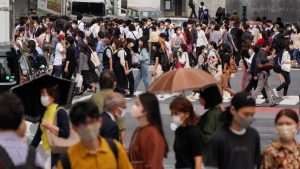 The Japanese government is considering ending a state of emergency in Tokyo and several other prefectures as scheduled on June 20, but keeping some curbs such as on restaurant hours until the Olympics start in July, local media reported. New coronavirus infections in Olympics host Tokyo have inched down during the last month of emergency restrictions although authorities remain concerned about the spread of variants and the continued strain on medical resources.
 The plan, which would have allowed areas with low infection rates to open nightclubs until 3 a.m., drew the ire of several regions and a legal challenge from Madrid’s conservative leader Isabel Diaz Ayuso. After a week of tension, health chiefs from Spain’s 17 regions unanimously approved a revised version of the document on Wednesday in which the rules are reduced to non-binding guidelines, Health Minister Carolina Darias told reporters.
 Meanwhile, In the Middle East, starting June 15, Abu Dhabi will restrict access to shopping malls, restaurants, cafes and other public places to those who have been vaccinated or who have recently tested negative.
 While airports across Europe, with the exception of Faro, are very quiet places the hope is that the vaccine passport will bring back the tourists to the hotspots of Europe and worldwide.
 “It’s about trying to digitize a process that happens now and make it into something that allows for more harmony and ease, making it easier for people to travel between countries without having to pull out different papers for different countries and different documents at different checkpoints,” said Nick Careen, Senior Vice President for airport, passenger, cargo and security at I.A.T.A. Mr. Careen has been leading I.A.T.A. ‘s travel pass initiative.
 “One key element vital for the restart of tourism is consistency and harmonization of rules and protocols regarding international travel,” he said in an email. “Evidence of vaccination, for example, through the coordinated introduction of what may be called ‘health passports,’ can offer this. They can also eliminate the need for quarantine on arrival, a policy which is also standing in the way of the return of international tourism.”
 “Everybody who has travelled internationally to countries that require vaccination against malaria, diphtheria and other things has had yellow cards,” said Brian Behlendorf, Executive Director of Linux Foundation Public Health, a technology-focused organization helping public health authorities combat Covid-19 around the world.
 Technologists and travel industry experts said that although it is possible to rush tech solutions that allow people to have one-use apps, creating long-lasting ethical technology or systems that will not store people’s data, or make it possible to track where they are, takes time. “The global passport system took 50 years to develop,” said Drummond Reed, chief trust officer for Evernym. “Even when they wanted to add biometrics to make it stronger, it took over a decade to agree on just how you’re going to add a fingerprint or a facial biometric to be verified on a passport. Now, in a very short period of time, we need to produce a digital credential that can be as universally recognized as a passport and it needs an even greater level of privacy because it’s going to be digital.”
 On Tuesday, a shipment of 5,500 Johnson & Johnson vaccines arrived in the Region. The vaccines arrived in “good condition” and will allow the continuing implementation of the Regional Vaccination Plan (Plano Regional de Vacinação).
 From June 18th, ITAKA (Polish tour operator) will provide flights from Poland to Porto Santo. DMC and Blandy Travel (tour operators) will also be involved. ITAKA had also resumed flights between Warsaw and Funchal in August 2020, after the Polish Government had lifted restrictions on flights to Portugal.