Portugal Situation Report Wednesday 5th May 2021
Good morning – In the last few says there has been much focus on Odemira municipality, located in Beja District, which is Portugal’s largest municipality in terms of land area.
This follows the decision of the Council of Ministers last Thursday to impose a health cordon in the parishes of São Teotónio and Longueira – Almograve, due to the high incidence of cases of Covid-19, especially among agricultural sector workers.
 The Prime Minister highlighted at the time that “some of the population in the municipality live in situations of unacceptable unhealthy housing, with overcrowding of dwellings”, reporting situations of “enormous risk to public health, in addition to a stark violation of human rights”.
The Mayor of Odemira, José Alberto Guerreiro, revealed over the weekend that he had filed a complaint about the situation and that there is “enough material” for the creation of a parliamentary commission of inquiry. In addition, the Judiciary Police is investigating several complaints made regarding possible cases of human trafficking and slavery related to the arrival of immigrant workers to the plantations in Odemira. These investigations go beyond what has already been denounced by the local mayor. The Odemira Public Prosecutor’s Office has had 11 inquiries on aiding illegal immigration for the purposes of labour exploitation, according to a source from the Attorney General’s Office (PGR) told Lusa.
This situation concerning agricultural workers has been a continuing problem for some years and although enforcement action has been taken by SEF, clearly a more overarching review and more importantly, solutions are needed. According to the Minister of Territorial Cohesion, Ana Abrunhosa, a large part of Odemira’s agricultural workers live in ‘dignified’ situations, but there are “about 20% to 30% of workers” who, in fact, live in overcrowded garages and houses”.
“We are talking about a huge amount, but that percentage was much higher a few years ago, so it is a problem that takes time to resolve,” said the Minister for Territorial Cohesion.
With people sharing overcrowded situations, reports of those sharing the same beds, this is a breeding ground for the spread of the pandemic. Certainly we welcome a parliamentary of commission of enquiry to address issues of exploitation in all its forms.
 In the past week we have seen the border with Spain open up, although there seems to be some confusion as to whether travelling through it is for essential reasons only. In Galicia, the most Northerly part of Spain which adjoins Portugal, the Mayor is reported to be very unhappy as his region is still in a state of pandemic with their municipal borders in lockdown.
With the lack of control at the borders there are fears that those people who are arriving from parts of Europe where quarantine is required may not be adhering to the rules. We saw the figures issued on the first day of the border being open of Spanish vehicles coming into Portugal of 6000 cars. When travel is still supposed to be for essential reasons many were quoted as “coming over for lunch!” or to enjoy the shopping.
Also this week we heard of the proposal from the EU about a vaccine card for travel throughout Europe. This proposal, and it has to be agreed by EU nations before anything can happen, is to help open up the countries to tourists, who have been vaccinated or have immunity, before the end of the summer.
 There has also been a focus on vaccinations and in particular the self-scheduling system over the last few days. Certainly many people have contacted us both to say the system worked well for them and they received the vaccination as scheduled. There are however those that are encountering problems either awaiting SMS messages regarding confirmation or other issues.
Yesterday, the Task Force Coordinator acknowledged that there had been scheduling disruptions over the last few days which “are already identified”, estimating that this mixed process will work “without significant problems” next week. All issues had already been identified, with the correction being carried out as expeditiously as possible.
This new system, according to the “task force” that coordinates vaccination, consists of a “local part and a centrally controlled part, where it is possible, for example, to carry out self-scheduling by the user”.
According to the structure coordinated by Gouveia e Melo, this change has led to a “very significant increase in schedules” and to the release of health professionals who were involved in local scheduling, contributing to the increase in the rate of vaccination.
From what we have learned from the official reports, and general feedback, the vast majority of vaccinations have gone ahead as scheduled. We are in a health crisis and given the magnitude of the problem, everything will not go as planned on occasions. We are only a week or so into the new scheduling system and now that the problems have been identified at an early stage, we hope for an early resolution. The fact that these centres were established, and operational in just a few weeks in itself an achievement. For those who have encountered problems the Parish Councils are there to help.
The good news is that a quarter of the Portuguese population have received at least one dose of the vaccine against Covid-19, indicated by the weekly report released this Tuesday. Between 27th December and 2nd May, 2,568,000 million people received at least one vaccine, equivalent to 25% of the population.
With that positive note please have a Safe Day.
Headlines
Covid-19. A quarter of European adults already have the first dose of the vaccine
A quarter of adults in the European Union (EU) have already received their first dose of the Covid-19 vaccine, the European Commission announced today, celebrating the milestone of the 150 million vaccines administered in the community.
“Vaccination is gaining speed across the EU – we have just passed the 150 million vaccines administered”, announces European Commission President Ursula von der Leyen in a message on the social network Twitter.
Along with a commemorative video of the landmark, with photographs of European citizens vaccinated against Covid-19, Ursula von der Leyen disclosed that “a quarter of Europeans [adults] have already taken their first dose”.
“We will have enough doses to vaccinate 70% of adults in the EU by July”, she guaranteed”.
Still, the official goal of the European Commission is that, by the end of the summer, 70% of European adults are immunized with the vaccine.
Currently, four vaccines are approved in the EU: Comirnaty (trade name of the Pfizer/BioNTech vaccine), Moderna, Vaxzevria (new name of the AstraZeneca drug) and Janssen (Johnson & Johnson group).
Covid-19
The Covid-19 statistics presented by DGS on Tuesday 4th May show the following:
Confirmed Cases: 837.715 (+ 258 / + 0.03 %)
Number of admitted: 296 (-26 /-8.07 %)
Number of ICU admitted: 87 (-3 /-3.33 %)
Deaths: 16.981 (+ 4 / + 0.02 %)
Recovered: 797.901 (+ 777 / + 0.10 %)
Active cases: 22,833 (- 523 – 2.2%)
Safe Communities comparisons/trends: show that: deaths were above last week’s average;- new daily cases were the 4th lowest since 7th September and recovered cases were almost 3 times higher than new cases. The number in hospital with Covid-19 was the lowest for over a year since 26th March 2020 (then 191) and in ICU they were the second lowest since 25th August 2020 (lowest 27th April (86). Active cases saw a large decrease for one day. Lowest since 24th September 2020.
Health
Odemira vaccination progress
About 9,500 vaccines against Covid-19 have already been administered in the Alentejo municipality of Odemira, the municipality announced today, indicating that “almost” the entire population over 60 has already received the first dose.
In a statement sent to the Lusa agency, the municipality of the district of Beja explains that “in the space of a week” almost 6,000 vaccines were administered”, with” 2,035 citizens “already having the second inoculated dose”.
“In the coming days, efforts will be continued to vaccinate as many people as possible, in the shortest possible time, and thus increase the protection of the community against the disease”, the document reads.
Covid-19: Tourist resorts and local accommodation closed in São Teotónio and Almograve.
Lisbon, 04 May 2021 (Lusa) – The Government ordered the closure of the activity of tourist enterprises and local accommodation establishments in the parishes of São Teotónio and Longueira – Almograve, which are in a health cordon.
According to an order from the Minister of State, Economy and Digital Transition published in Diário da República, at least 275 companies are located in these two parishes that are prevented from working, as many of their employees live outside the circumscribed area. The cordoned area is in place because of the high incidence of Covid- 19 among immigrants working in agriculture.
With regard to the accommodation sector, “many economic operators have seen their ‘staff’ be reduced, no longer being able to provide their guests with the quality service for which they are governed”, states the order published on Monday in a supplement.
According to the dispatch, the closure of the activity of tourism enterprises and local accommodation establishments located in the perimeter of the sanitary fence is considered desirable, “taking into account the concerns expressed by the entrepreneurs of the region”.
It also says that the operating entities of the tourist undertakings and the local accommodation establishments located in the perimeter of the sanitary fence must communicate to the security forces and the health authorities the identity of the eventual guests for the purposes of authorization to leave.
On Friday, the Government ordered “the temporary requisition, for reasons of urgency and of public and national interest”, of the “totality of properties and the rights inherent to them” that make up the ZMar Eco Experience tourist complex, in the parish of Longueira -Almograve (Odemira), to accommodate people in compulsory confinement or allow their “prophylactic isolation”.
Portugal strengthens support to Cape Verde in the fight against the pandemic.
The Portuguese Government is sending a team from the National Institute of Medical Emergency (INEM) to Cape Verde, between 4 and 11 May, to support the efforts of Cape Verdean health authorities in combating the Covid-19 pandemic.
The INEM team, composed of two elements – a doctor and a logistics official, will be accompanied by an official from Camões, Cooperation and Language Institute, and aims to identify the needs of Cape Verde’s health structures in response to the pandemic situation, at the request of the Cape Verdean Government. In addition to the island of Santiago, a trip to the island of São Vicente is planned.
The diagnosis carried out by the INEM team will serve to prepare the future mission of a Portuguese medical team, with a view to strengthening the response capacity of the national health service of Cape Verde, through the provision of human and technical resources.
This action is part of the execution of the Action Plan for the Sanitary Response to the Covid-19 Pandemic between Portugal and the Portuguese-speaking countries and Timor-Leste.
Health Survey
Lisbon, 04 May 2021 (Lusa) – More than half of the respondents over the age of 18 years in a national study that was presented yesterday in Lisbon, consider their health status to be good (29%) or very good (23%).
 According to the conclusions of the study, which had as its scientific advisor the President of the Disciplinary Council of the Order of Doctors, Maria do Céu Machado, 52% of the respondents, over 18 years old, evaluate their health status in this way, while 31% consider it “reasonable” and only 17% say it is “unhealthy”.
With the title “The Health of the Portuguese: A BI in its Own Name”, the research aims to be “a sociological portrait of health in Portugal” and is the first of a new Médis project, which says it aims to “open new doors and points of view that enrich and broaden the public discussion around the health of the Portuguese ”.
Based on two indicators, “the health you have”, which assesses the current health status of the respondents, and “health potential”, which measures the effort they make to maintain or improve their health status, the work concluded that almost half of the respondents (46%) are below the average level of the scale of personal commitment to health promotion.
This means, according to the summary to which the Lusa agency had access, that “an important part of the population considers to have a pro-health attitude that is less than desirable”, that is, “it integrates few effective behaviours to defend or improve their health status and welfare”.
On the other hand, the research also reinforces the thesis that mental health is an area still very undervalued by the Portuguese and that physical health is tended to be worse than mental health, being the one that people consider most in their self-assessment.
Other news
SEF Inspectors and Employees to strike on Friday 7th May 2021.
Lisbon, 04 May 2021 (Lusa) – SEF inspectors and employees will hold a strike in all workplaces on Friday 7th May 2021 to protest the Government’s intention to extinguish this security service, announced today one of the unions that convenes stoppage.
The strike, which will take place between 00:00 and 24:00 on Friday (all day Friday), was announced by the Union for the Investigation and Inspection of the Foreigners and Borders Service (SCIF / SEF) and is supported by the Employees Union. the SEF (SINSEF) and the Union of Investigators, Inspection and Borders Inspectors (SIIFF).
The union guarantees that the strike will “suspend all activity” and is motivated by the formalization in the Council of Ministers and made public in Diário da República “of the Government’s intention to extinguish the SEF”.
“This stoppage is a protest against the Government’s intention to extinguish the SEF. SEF needs to be restructured internally and strengthened, dissolution is not a solution. We demand a wide-ranging and in-depth debate between political parties with parliamentary seats and civil society on the reform of the SEF” the president of SCIF / SEF told Lusa.
Acácio Pereira considered that “the extinction of the SEF would have the immediate effect of distributing its functions to five or more entities, which would degrade the service provided to citizens, nationals and foreigners, with more bureaucracy, more delay, less security and less respect for human rights”.
According to the union, the creation of a new entity “will not bring an answer to the problems that have long been identified and which resulted from a stark lack of investment in SEF in the last twenty years”.
Region Reports
Madeira
Situation Report Madeira, May 1st – May 4th, by our Special Correspondent, Daniel Fernandes
Covid-19 update.
There were 64 new Covid-19 cases, 58 recoveries and no deaths from Covid-19 in Madeira since the previous Madeira Situation Report. There have been no deaths from Covid-19 for over 0 days.
On Saturday, there were 17 new Covid-19 cases (from 1 passenger who had arrived from Switzerland and 16 cases of local transmission) and 20 recoveries. The number of patients in hospital decreased to 14, 4 of whom were in intensive care.
On Sunday, there were 22 new Covid-19 cases (all cases of local transmission) and 14 recoveries. The number of patients in hospital increased to 15, 4 of whom were in intensive care.
On Monday, there were 9 new Covid-19 cases (from 1 passenger who had arrived from France, 1 passenger who had arrived from the Lisbon and Tagus Valley region and 7 cases of local transmission) and 13 recoveries. The number of patients in hospital decreased to 13, 4 of whom were in intensive care.
And on Tuesday, there were 16 new Covid-19 cases (all cases of local transmission) and 11 recoveries. The number of patients in hospital remained at 16, 4 of whom were in intensive care.
There were 267 active cases on Friday, of which 14 had been imported while the other 247 cases had been a result of local transmission. As of Tuesday, there had been 9,035 cases, 8,697 recoveries and 71 deaths.
On Tuesday, there were 25 patients in isolation in a dedicated hotel, 226 patients in isolation in their own accommodation and 16 patients in Covid-19 units, 4 of whom in intensive care.
On the same day, there were 97 suspected cases under epidemiological investigation and analysis, which were all linked to patients who tested positive for Covid-19, to calls made to the SRS24 helpline, to referrals by SESARAM (Madeira Regional Health Service) and to airport screening.
There were 9,026 travellers under monitoring by the health authorities. Monitoring is being carried out through the ‘MadeiraSafe’ app. There were also 627 people, who had contact with positive cases, being monitored by the health authorities of several Madeira municipalities and of Porto Santo.
As for Covid-19 testing on passengers who had arrived at Funchal and Porto Santo airports, 193,012 samples had been collected until Tuesday (at 15h30). By Tuesday, 388,918 samples from RT-PCR tests had been processed and 46,371 antigen rapid tests had been carried out in the Autonomous Region of Madeira.
The SRS 24 helpline (Regional Health Service – 800 24 24 20) received 406 calls from Friday to Tuesday. Overall, it has received 47,691 calls.
The Covid-19 mental health helpline (Linha de Acompanhamento Psicológico da Direção Regional de Saúde – 291 212 399 – available every day from 09h00 to 21h00), which was set up to provide emotional and mental support to anyone in Madeira received 24 calls from Friday to Tuesday. Overall, it has received 3,459 calls.
https://funchalnoticias.net/2021/05/01/17-novos-casos-de-covid-19-20-recuperados-159-suspeitos-quatro-nos-cuidados-intensivos/
https://funchalnoticias.net/2021/05/02/22-novos-casos-de-covid-19-14-recuperados-86-suspeitos/
https://funchalnoticias.net/2021/05/03/9-novos-casos-de-covid-19-13-recuperados-116-suspeitos/
https://funchalnoticias.net/2021/05/04/16-novos-casos-de-covid-19-11-recuperados-97-suspeitos/
Vaccination update.
 A shipment of 23,400 Pfizer vaccine does arrived in the Region on Monday. So far, 105,297 Pfizer vaccine doses have been received.
As of May 2nd, 91,293 vaccine doses (68,897 1st doses & 22,396 2nd doses) had been administer in the Region. This means 27.1% of the population have been vaccinated with at least 1 dose of the vaccine, while 8.8% have been fully vaccinated. A total of 9,617 vaccine doses ( 8,817 1st doses & 800 2nd doses) were administered in the previous week.
On May 1st, 18 bed-ridden patients in Porto Santo were inoculated against Covid-19. Teams from the Porto Santo Fire Service and from the Porto Santo Health Centre transported them to the vaccination centre. So far, 1,008 vaccine doses (131 of which were 2nd doses) have been administered in Porto Santo. Planning for the vaccination of bed-ridden patients in the island of Madeira is underway, with the direct cooperation of the Fire Service in transporting them to the vaccination centres.
https://funchalnoticias.net/2021/05/03/chegaram-hoje-mais-23400-vacinas-da-pfizer-a-ram/
https://funchalnoticias.net/2021/05/04/mais-de-91-mil-vacinas-contra-a-covid-19-ja-foram-administradas-na-madeira/
University of Madeira students to be tested on May 13th
Students from the University of Madeira (Universidade da Madeira) will be tested for Covid-19 on May 13th. This will be the second mass testing campaign on these students. The first mass testing campaign took place in April. The aim of the testing campaign is to ensure a safe return to teaching on campus. Testing will take place at Campus da Penteada, on the -2 floor (Piso -2), in a designated area at the car park.
https://www.jm-madeira.pt/regiao/ver/127248/Alunos_da_UMa_voltam_a_ser_testados_no_dia_13_de_maio
Power cut
Empresa de Electricidade da Madeira (Madeira power supplier) announced there will be power cuts due to planned work on the electricity supply network. These works cannot be postponed.
FUNCHAL – May 6th – 09h00 to 11h00
– Estrada da Vitória (numbers 28 to 37)
– Caminho da Ribeira dos Socorridos (numbers 4 to 34)
– Caminho das Quebradas (numbers 43 to 80)
– Caminho das Quebradas de Baixo (number 1)
– Caminho da Lombada (numbers 47 to 118)
– Caminho da Cova do Til (numbers 2 to 50)
 – Rua Pico da Lombada (numbers 1, 5, 18B, 28 and 44)
– Travessa de Santa Rita (number 13)
– Travessa do Pico da Lombada (numbers 4,8 and 18)
– Vereda do Pico da Lombada (number 10 to 38)
– Vereda do Pico da Lombada (Microprodutor)
– Levada dos Piornais (numbers 356 to 541)
– Beco de Santa Rita (number 16)
May 6th & 7th – 09h00 to 11h30 & 14h00 to 16h00
– Caminho dos 3 Paus à Viana (numbers 7 to 204)
– Travessa da Viana (numbers 7 to 38)
– Travessa dos Três Paus (numbers 3 to 81)
– Vereda da Viana (numbers 18 to 50)
– Escadinhas da Viana (number 11 to 20)
– Impasse dos Três Paus (numbers 1 to 21)
May 7th – 0h00 to 07h00
– Rua da Urbanização da Torrinha (numbers 4 to 19)
– Rua da Carne Azeda (numbers 28 to 91)
– Rua da Cidade do Cabo (numbers 4, 10, 12 and 24)
– Rua do Dr. Ângelo Augusto da Silva (numbers 26 and 28)
– Rua Nova do Til (numbers 3 to 24)
– Rua do Padre Lopes (numbers 1 and 2)
– Rua do Til
– Rua da Torrinha (numbers 52 and 54)
– Beco do Sales
– Beco do Sousa (numbers 1 to 8)
– Travessa do Costa Dias
– Travessa das Voltas (numbers 3 to 23)
– Impasse 1 from Rua do Til (numbers 1 to 5)
– Bairro do Til
However, power could be restored during the time frame mentioned above. So, for safety purposes, it should be assumed that there will be power at any time during this period of time.
If necessary, customers can contact the free Customer Support Service (Serviço de Apoio ao Cliente): 800 221 187.
https://funchalnoticias.net/2021/05/05/publicidade-o-fornecimento-de-energia-sera-interrompido-nos-dias-horas-e-locais-abaixo-indicados-anuncio-36-2021/
Algarve
Algarve Situation Report, Wednesday 5th May 2021.
Covid-19: Portimão Vaccination Centre today exceeds five thousand inoculated vaccines.
In a statement, the municipality states that, since it started operating on April 26, the Portimão Vaccination Centre has administered 4,924 vaccines against Covid-19.
 According to the same source, the goal is to cover the entire population of the municipality over 60 years old by next Friday, May 7.
These figures reflect that, the municipality was covered by a booster vaccine and obtained extraordinary authorization to start vaccinating locals over 60 years of age, due to the outbreaks that led to the setback in the process of deflation and the consequent autarchic request for the opening of the Vaccination Centre in Portimão.
Installed in the Sports Pavilion of Portimão, the structure started with an average of 300 vaccines/day, evolving to 1,000 vaccines/day since the reinforcement in the meantime verified, and it is estimated that a total of 10,000 vaccines will be reached by the end of this phase.
The municipality advances that, in the maximum exponent of its capacity, the Centre is vaccinating a greater number of people than that found in any other similar structure in the Algarve region; it should be noted that in the moments of queuing the average waiting is between at 7 and 10 minutes, with an average vaccination peak in the order of 130 inoculations/hour.
Municipal Vaccination Centre of Loulé with capacity for 400 inoculations daily.
The Municipal Vaccination Centre of Loulé, installed in the Municipal Sports Pavilion of the city, which went into operation on the 27th of April, has a capacity for 400 daily inoculations, which may be higher if necessary and the  number of vaccines to be administered so justify, the municipality assured in a statement.
According to the same document, the Centre has 5 vaccination points, with the possibility of expansion. It also includes a reception area, pre-vaccination space and recovery area, where users must remain up to 30 minutes after inoculation.
It operates daily, including weekends and holidays, from 8:00 am to 8:00 pm, and, in addition to health professionals, it also relies permanently on elements of the Civil Protection Service, security forces and municipal officials “who provide support, whether in terms of cleaning space, psychological, administrative support or even monitoring users “, notes the city council.
The Loulé Vaccination Centre was born out of a partnership between the municipality, which provided the space and supported all the logistics necessary for the installation, the ARS and the services of the Ministry of Health.
Remember that, in order to be immunized against Covid-19, residents must be invited for vaccination by contacting the Health Centre, but may, at this stage, make an online request for scheduling through the Directorate-General for Health website ( https://covid19.min-saude.pt/pedido-de-aghecimento/ )
Covid-19: VRSA already has a Vaccination Centre in operation.
Equipment has a capacity for 250 inoculations daily.
 The Covid-19 Vaccination Centre in Vila Real de Santo António (VRSA) is already in operation, complying with all the guidelines of the Directorate-General for Health with a view to effecting massive vaccination of the population.
Installed in the Ilídio Setúbal Pavilion, next to the Sports Complex of VRSA, the new equipment will have the capacity to administer 250 vaccines daily, with a clinical and technical staff of about 15 professionals and respecting all the rules of the national vaccination protocol.
Access is reserved for people who have already been contacted and have a valid appointment (with date and time), intended to receive residents from all parishes in the municipality, according to the priorities and stages established by the vaccination plan. The place has easy access and parking, being properly adapted for people with reduced mobility, and the entry is made through Avenida Ministro Duarte Pacheco, next to the commercial area there.
The structure has six distinct areas, namely the area for admission, reception, pre-vaccination, vaccination, post-vaccination/recovery and emergency, with pre-defined circulation corridors and complying with all the prevention and hygiene measures provided by the authorities of health. It operates from Monday to Saturday, from 9:00 am to 4:00 pm, remaining in operation until the National Vaccination Plan against Covid-19 is completed.
https://barlavento.sapo.pt/algarve/covid-19-vrsa-ja-tem-em-funcionamento-um-centro-de-vacinacao
Faro Council offers free transportation to the local vaccination centre.
Faro Council has announced that it is offering free transportation to the local vaccination centre for citizens aged over 60 or with mobility problems.
To benefit from this service, citizens can call a taxi by telephone (800 219 019) between 9am and 6pm.
The citizen’s name must be provided, as well as their address and the date and hour of their vaccination.
Lagos Municipal Police is already in operation.
In this initial phase, 12 agents are on the ground.
The Mayor of Lagos, Hugo Pereira, received yesterday, Monday, May 3, the first agents who were part of the Municipal Police Service and started to exercise their functions in this new administrative police body in that city.
The Regulations for the Operation of the Municipal Police Service provide that this new structure will have, during the installation period, a staff of 26, consisting of a commander, a graduate (Chief Coordinator) and up to 24 agents.
 In this first phase, the twelve trainee agents who have completed their training start their duties, to which seven more will subsequently join, currently attending the training given by the FEFAL Foundation, followed by the training given by the PSP School and a period of six months of internship.
At the reception, the 12 trainee agents who started functions in the field attended, in uniform, but also the seven elements who are already in training, because, as mentioned by Paulo Reis, the vice-president of the Chamber who has this area assigned, despite being in different phases of internship, “these agents are all part of the same team, where the spirit of camaraderie and understanding must prevail”.
Mayor Hugo Pereira left words of encouragement to the new agents, confident that “they will be up to the task of overcoming the challenges inherent to the role”.
Underlining the context of a pandemic, the President of Lagos underlined “the important role of the Municipal Police in enforcing public health measures in force, especially in this phase of lack of definition and resumption of economic and tourist activity, as well as restoring respect for space public, especially in the area of the historic centre, which will be another of the priorities for action”.
The staff of the Municipal Police Corps will be provisionally accommodated in the Old Town Halls and, in the future, in the building of the old Tourism Office, where they will move after carrying out the necessary adaptation works for this new function.
https://barlavento.sapo.pt/algarve/policia-municipal-de-lagos-ja-esta-em-funcionamento
Azores
Situation Report Azores – 5th May 2021 – From our colleague in the Azores
The outermost regions (ORs) of the European Union
The outermost regions (ORs) of the European Union (EU) have proposed to the Commission the “acceleration” of vaccination against Covid-19 in their territories, after the appeal made by its President, the Azorean José Manuel Bolieiro.
“In this joint declaration, approved by all the outermost regions, we signalled a proposal for a new EU approach to the ORs, an appeal to the European Commission and the European Council to keep an eye on health developments in  the ORs and even to propose accelerating vaccination strategies”, said the president of the Conference of Presidents of the ORs, José Manuel Bolieiro, who also heads the Regional Government of the Azores.
He was speaking to journalists in Ponta Delgada, after having chaired, by videoconference, the interim meeting of the presidents of the ORs.
The EU includes nine ORs: French Guiana, Guadeloupe, Martinique, Mayotte, Réunion and São Martinho (France), Azores and Madeira (Portugal) and the Canary Islands (Spain).
The leader of the Conference of Presidents of the ORs confirmed that he had sent a letter to the European Commissioner for Health and Food Security on this matter, taking into account the specific characteristics of these regions and their health systems in combating the Covid-19 pandemic.
He said that, in this way, “the mission of defending the populations” of the ORs is being carried out with zeal and determination, with the intention of “insisting on making the Member States see, but also on their own EU, the importance of finding an accelerated vaccination solution for the ORs”.
In the final declaration of the meeting, it is easy to see that the “vulnerability of the ORs, recognized in article 349 of the European Treaty, was exacerbated by the covid-19 pandemic, compromising the socio-economic development of these regions”.
“This health crisis has had serious consequences for the economic sectors, namely the sectors of tourism, events and culture, which are particularly fragile and exposed to uncertainties regarding the future of their activities. The recovery is made more difficult by the structural constraints of their markets “.
In the document, the Conference of Presidents of the ORs “invites the Council to ask the European Commission to prepare a new strategy for the benefit of the ORs, taking full account of the new situation resulting from the pandemic and the challenges that remain for these regions”.
Those responsible for these territories also recall the “specific characteristics of the ORs, spaces that are particularly sensitive to international events in their respective geographical areas: epidemic outbreaks in neighbouring countries, restrictions on the movement of people and goods, supply disruptions, among others”.
For this reason, the Conference of Presidents of the ORs also called on the Council to “be particularly vigilant with regard to the evolution of the health situation in the ORs and to apply appropriate and accelerated vaccination strategies”.
In the context of the reform of the Common Agricultural Policy (CAP), the “preservation of the POSEI budget beyond 2022” is advocated and the “negative effects that a possible reduction of that budget could have on the ORs” are recalled.
This is the case of “production losses, abandonment of agricultural holdings and degradation of the agricultural landscape and, in particular, of rural areas”.
Covid-19
The Regional Health Authority has said that in the last four days the number of new positive cases of Covid-19 resulting from 5,176 tests is 53. These tests were carried out in reference laboratories in the Region, in private laboratories with conventions, in the Regional Health Service, through rapid tests (mass screening), in the laboratory of Terceira University and by means of tests carried out in the scope of occupational medicine.
São Miguel registered most of the cases with 46. Santa Maria had 1 and Flores had 6
There have been some recoveries, 81 in total. Most of them on the island of São Miguel with 76. 2 on Santa Maria and Terceira had 3.
There are currently 869 people on active surveillance.
12 patients are hospitalized, 11 in the Hospital of Divino Espírito Santo in Ponta Delgada, with one in the Intensive Care Unit, and one in the Hospital of Santo Espírito on Terceira Island.
As of today, the Region has 191 positive cases, 181 in São Miguel, seven in Flores, two in Santa Maria and one in Terceira.
Since the beginning of the pandemic, 4,946 positive cases of Covid-19 have been diagnosed in the Azores, 4,602 people recovered from the disease and 31 died.

 On Wednesday, there were 20 new Covid-19 cases (all cases of local transmission) and 11 recoveries. The number of patients in hospital decreased to 13, 3 of whom were in intensive care.
 The announcement by Grant Shapps (UK Transport Secretary) that Portugal will be on the green list of countries from May 17th has undoubtedly been welcomed by many in Madeira, due to its potential to enable a quicker recovery of the regional economy and tourism. This means that leisure travel from England will be allowed without a requirement for quarantine upon return. However, for the time being, only essential travel from the UK is currently allowed into Portugal.
 MadeiraShopping has new opening hours and will open at 09h00 and close at 22h00 (Mondays to Sundays). Some shops may opt to open sometime between 09h00 and 10h00 in order to give visitors more time for shopping. The extended closing time (22h00) allows customers to shop more safely and more calmly. Customers wishing to find out the opening hours of specific shops can visit the following website: www.madeirashopping.pt.
 “An external person has already been identified, with international experience in terms of health logistics, who will be responsible for the logistics process in vaccination”, he said.
 São Miguel registered most of the cases with 50. Santa Maria had 1 Terceira 1 and Flores had 1.
 It should be noted that the resolution was published in the Diário da República at about 10 pm on Thursday, May 6, allowing the entry into force, already today, of the following rules: reopening of restaurants, cafes and pastry shops (with a maximum capacity of six people) , or ten per table on terraces); reopening of cinemas, theatres, auditoriums and concert halls; all sports are allowed; permission for physical activity in the open air and in all gyms (which may work with group classes, observing the rules of safety and hygiene); large outdoor and indoor events are allowed with reduced capacity; authorized weddings and baptisms with 50% capacity; reopening of all stores and shopping centres.
 Hugo Pereira says he has “total confidence in the sense of responsibility of the people of Lacobrigenses”, so that the municipality returns to the level of moderate risk again.
 Good morning – The news over the last day or so is very positive: with continued reduction in transmission and incidence rates; the continuing reduction in hospital and ICU cases; vaccinations reaching 100,000 per day ahead of schedule; the reduction in the number of municipalities that are not at the last phase of de-confinement, and the announcement by the UK yesterday evening the Portugal has been included in its so called Green List concerning travel from England”
 The Prime Minister considers that the fundamental problems in access to vaccines against covid-19, more than in the lifting of patents, are in the production capacity and in the regulation of the drug market worldwide. “The crucial problem is focused on production capacity. And there is a fundamental problem related to the regulation of the medicine market and that States have to organize themselves globally to find other ways with the pharmaceutical industry to finance research” , stated António Costa in an interview with Lusa.
 The Directorate-General for Health of England (PHE) has announced that the number of infections with variant B.1.617.2 has more than doubled, from 202 to 520 in a week, which is causing concern among health authorities.
 The World Health Organization (WHO) approved this Friday the emergency use of Sinopharm’s covid-19 Chinese vaccine, recommending its administration to people over 18 years old. t is the first Chinese vaccine to be approved by the WHO and the sixth of all vaccines against covid-19 approved by the organization.
 For the second successive week, the number of Covid-19 cases globally remains at the highest levels since the beginning of the pandemic, with over 5.7 million new weekly cases, following nine consecutive weeks of increases. New deaths continue to increase for the seventh consecutive week, with over 93,000 counted. The South-East Asia Region continues to report marked increases in both case and death incidences. India accounts for over 90% of both cases and deaths in the region, as well as 46% of global cases and 25% of global deaths reported in the past week. Case incidence in the regions of Europe, Eastern Mediterranean, Africa and the Americas decreased, while rates in the Western Pacific Region were comparable to the previous week. The number of deaths decreased in Europe, Africa and the Western Pacific region, while slight increases were reported in the Americas and Eastern Mediterranean regions.
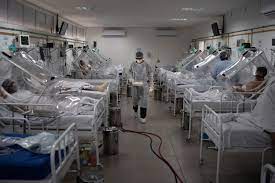 For the demand on hospital beds and critical equipment, WHO is procuring mobile field hospitals with a capacity of maximum 50 beds to set up in the most affected areas. WHO is also chartering flights to deliver 4,000 oxygen concentrators to help meet increased demand of medical oxygen. Over 2,600 WHO technical staff working in various programmes such as polio tuberculosis and neglected tropical diseases have been repurposed to support the Covid-19 response in India with rapid situational analyses and the implementation of tailored responses.
 WHO Director-General, Dr Tedros Adhanom Ghebreyesus, praised the commitment by the United States administration of President Joe Biden and Vice-President Kamala Harris. “This is a monumental moment in the fight against Covid-19. The commitment by the President of the United States Joe Biden and Ambassador Katherine Tai, the US Trade Representative, to support the waiver of IP protections on vaccines is a powerful example of American leadership to address global health challenges,” said Dr Tedros.
 “Adults of all ages – including young people – are becoming seriously ill. Many of them are dying,” Dr. Etienne said during her weekly media briefing. In the past week, nearly 40% of all global Covid-19 deaths took place in the Americas.
 She reported that infections are increasing rapidly in the Guyanas and across Argentina and Colombia, “where weekly case counts are five times higher than they were this time last year.” In Central America, Guatemala is experiencing a significant increase in infections while Costa Rica is reporting record-high infections.
 The Carribean is made up of 20 different countries and in 2020 their economy saw a drop of 8.6% compared to the previous year, due to the pandemic. Figures for 2021 will be similar unless the tourists return.
 Jamaica set up a so-called ‘resilient corridor’, outside of which tourists were not permitted. St John does not think the return of tourism is the main driver behind the recent spike in cases. She points out that several countries managed to re-open their borders for several months, with few cases and no deaths. Still, it might well have been a tourist who brought the highly transmissible B.1.1.7. variant of SAR-CoV-2 to the Caribbean late last year. “There has also been a certain amount of Covid fatigue among the people here, so they have let down their guard a bit”, adds St John. Gatherings at Christmas probably contributed to a subsequent rise in cases, and there might have been too strong a focus on testing visitors, to the exclusion of the local population.
 In a recent report from The Inter-American Development Bank (IDB) it has found that the Covid-19 pandemic has led to the worst economic decline in Latin America and the Caribbean in two hundred years. In addition to its economic toll, the pandemic has had a devastating impact on the region’s society and health systems. Although the region represents just 8 percent of the global population, it has reported 28 percent of all deaths.
 commercial suppliers, those now starting to receive vaccines through the WHO’s COVAX facility, the variation in the receipt of vaccines from donors including China and India, or their subsequent sharing between nations.