Portugal Situation Report Saturday 20th February 2021
Introduction
Good morning – Again we start with the very good news concerning the Covid-19 figures; in particular that the number of daily deaths at 67, is the lowest since the first of January and that those in hospital from Covid-19 are nearly half that than since the beginning of this month. In addition, the (Rt) of the SARS-CoV-2 virus is now 0.66 down from 0.77 a month ago.
 Despite this good news, it is clear from our headline story quoting the Minister of State and Presidency Mariana Vieira da Silva that the “extremely high” number of intensive care admissions due to Covid-19 does not allow any expectation of relaxing measures soon.
It seems likely therefore that parliament when it comes to debate the extension of the emergency laws next week will be extremely cautious on easing restrictions too quickly.
Yesterday however, the main story was the apparent change in priority in the administration of vaccinations in Phase One. In this phase, the bulk of vaccines available will be administered to two groups: people aged 80 and over and people aged 50 to 79 with one of the four diseases most at risk for Covid-19 (cardiac, coronary, renal and severe respiratory)
According to a report in Expresso newspaper, however, the scarcity of vaccines and the need to protect those most vulnerable to Covid-19 has led the new task force coordinator to redefine vaccination priorities.
 Henrique Gouveia e Melo told the newspaper that 90% of the vaccines available are now intended to “save lives” and only 10% to “reinforce the state’s resilience in a pandemic period”, the latter being firefighters, PSP and GNR. However according to Government, more than 7000 members of the security forces and more than 11,000 firefighters have already received the first dose of the vaccine against Covid-19, in compliance with the vaccination plan for essential functions of the State. Nevertheless, regarding the changes in the priorities foreseen in the plan, António Lacerda Sales asserts that “vaccination is carried out in parallel lines and there is no overtaking by anyone in front of anyone”.
The President of the Portuguese Firefighters League (LBP) told Lusa yesterday after contacting the Secretary of State, that the first phase of vaccinations against Covid-19 of the approximately 15,000 firefighters will continue. “I also contacted the task force coordinator who guaranteed, and I believe in his word, that there is no change in relation to the 15,000 firefighters scheduled for vaccination in this first phase,” Jaime Marte Soares told Lusa.
Both the PSP and GNR associations also expressed concern, with the Head of the GNR staff association suggesting that if there are any delays then frontline GNR personnel should be tested every 15 days given their nature of work and close contact with the public. This seems a very sensible suggestion.
Clearly government can only work with the number of vaccines available in the country and faces difficulty in implementing priorities when there are shortfalls compared to demand. There are very difficult choices that have to be made.
When there are setbacks, it is always good to find positive news, and what can be more positive than NASA’s Perseverance rover safely landing on Mars on Thursday after its 292.5 million mile journey from Earth. The rover landed itself flawlessly, according to the mission’s team.
“Perseverance” is certainly an appropriate name inspiring determination and hope which is what we need at this time in combatting this pandemic.
 Another positive note for Portugal came in the findings of what was described as the first comprehensive survey on the crime experience among the population of the EU (including the United Kingdom) conducted by the European Union Fundamental Rights Agency). This revealed that 9% of people in the EU have experienced some form of violence in the past five years, with national percentages varying between 3% and 18 percent. However in Portugal, only 4% said they were physically assaulted, a percentage only surpassed by Malta and Italy. This reflects Portugal’s standing currently the 3rd most peaceful country in the world according the Global Peace
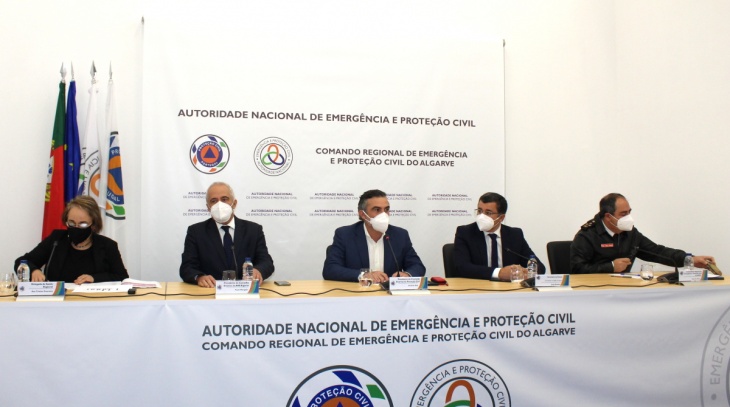
Lastly, please be aware that the ANEPC have issued a Notification to the Population concerning bad weather for this weekend. The IPMA have also issued Yellow rain warning for several districts. We posted all the details last evening so please read the bulletin and precautions you may need to take. If this was not enough, a cloud of dust from the Sahara desert is expected to pass over Europe again this weekend, according to the European atmospheric observation service, Copernicus. At present its trajectory appears northwards passing just to the east of Portugal, but we are monitoring.
So with that please have a Safe Weekend.
Headlines
Covid-19: Transmission at 0.66 indicates reduction of cases across the country
The average transmissibility index (Rt) of the SARS-CoV-2 virus is 0.66, representing a tendency of reduction in new cases of Covid-19 in all regions of the country, announced today the National Institute of Health Ricardo Jorge (INSA).
“The results indicate a decreasing trend of new cases at the national level in all regions of the country”, says INSA in the situation report on the epidemic curve of infection by the new coronavirus.
On January 11th, the average Rt stood at 0.77, a figure that the Prime Minister, António Costa, considered at the time to be “the lowest the country has had since the beginning of the pandemic”, in the spring of 2020.
According to the INSA data now released, all regions of the country have an Rt – the average number of secondary cases resulting from a case infected by the virus – below 1.
Epidemiological estimates point to a Rt of 0.64 in the North, Center and Alentejo regions, of 0.66 in the Lisbon and Vale do Tejo region, of 0.65 in the Algarve region, of 0.63 in the autonomous region of the Azores and 0.88 in the autonomous region of Madeira.
According to INSA, from January 18th there was a sharp reduction in Rt, but, from February 11th, there was a slight increase, which suggests “a deceleration in the trend of decreasing incidence of SARS- CoV-2 ” in that period.
“From the beginning of August to the middle of November, the Rt was above 1 for 107 days, revealing a phase of sustained growth. From mid-November to 25th December, the Rt remained below 1, representing a phase of sustained decrease in the incidence of SARS-CoV-2 infection, ” says INSA.
Minister of State and Presidency – Too soon to come out of confinement
The Minister of State and Presidency, Mariana Vieira da Silva, warned this Thursday, February 18th, that the “extremely high” number of intensive care admissions due to Covid-19 does not allow any expectation of coming out of confinement soon.
 In the briefing after the Council of Ministers, Mariana Vieira da Silva was asked about the evolution of the numbers of the pandemic in Portugal.
Despite considering that the numbers of infected people show “the success of the measures” in force, the official recalled that this is not the only factor to take into account, since it is necessary to analyse the response capacity of the NHS and the number of deaths. , variables that, in spite of the downward trend, do not allow to anticipate relaxing measures soon.
Mariana Vieira da Silva warned of the issue of managing the expectations of the Portuguese and referred that, today, Portugal has 680 people hospitalized in intensive care units.
“It is a very high number, it remains, with the exception of the last month, the highest number we have had throughout this year”.
Thus, the Government maintains the discourse of the Prime Minister, António Costa, who a week ago, also at a press conference after the Council of Ministers, defended that this was not yet the time for the country to focus on the lack of definition, but to continue comply with the containment rules.
“There is technical work to be done, there will be articulation work with the other parties. This is the time to appeal again to all Portuguese women and men that we must consider that we have very high numbers of hospitalisation in hospitals and intensive care units and being encouraged on the path we are taking, it is still too early to think that it is close to the end” she reiterated.
Second contract with Moderna to ensure additional vaccine doses
The European Commission approved a second contract with the pharmaceutical company Moderna, which provides for an additional purchase of 300 million doses (150 million in 2021 and an option to purchase an additional 150 million in 2022) on behalf of all EU Member States. The new contract also provides for the possibility to donate the vaccine to lower and middle-income countries or to re-direct it to other European countries.
Covid-19
Yesterday’s figures reflected again the very positive signs that have been seen over the last two weeks.
Confirmed Cases: 794.769 (+ 1940 / + 0.24 %)
Number of admitted: 3.584 (-235 /-6.15 %)
Number of ICU admitted: 669 (-19 /-2.76 %)
Deaths: 15.821 (+ 67 / + 0.43 %)
Recovered: 691.866 (+ 4404 / + 0.64 %)
Active cases: 87,082 (-2531 / – 2.8%)
The trends in these key areas are as follows:
– Lowest daily deaths since 1st January (49 days)
– New cases – 6th lowest since 20th October (4 months)
– Recovered cases more than double that of new cases
– Hospitalisations lowest since January 9, when 6869 cases were registered. Decreased by 47.8% since 1st February
– Lowest in ICU since 19th January – decreased by 22.6% since 1st February
– Number of active cases lowest since 6th January, decreasing for 18th consecutive day and 52% less than 31st January (in 17 days)
– Those under surveillance lowest since 10th January
Health
Covid-19: Hospital Amadora-Sintra registers 199 inpatients and peak in intensive care
Amadora, Lisbon, 19th Feb 2021 (Lusa) – Hospital Amadora-Sintra, in the district of Lisbon, currently has 199 Covid-19 patients hospitalised, almost half the maximum recorded on 26th January, with 385 patients, but the peak in the unit’s intensive care (ICU) was registered this week.
 In response to the agency Lusa, a source from Hospital Fernando da Fonseca (HFF), also known as Hospital Amadora-Sintra, said that 199 patients are currently in hospital infected by the new coronavirus SARS-COV-2, “of which 36 are hospitalized in the ICUs (out of 42 beds available)”.
“At the end of January 26th, the HFF registered 385 hospitalised Covid patients, its maximum”, revealed a hospital source, indicating that this peak represents a Covid effort rate of 62% of the total available beds of this hospital, which serves a population of more than 600,000 people.
Two weeks ago, this hospital had, on February 3rd, 368 inpatients, of which 350 in the HFF and 18 in the HFF ward, which was operated exclusively by its professionals at Hospital da Luz, in Lisbon.
“The peak of patients admitted to the ICUs of this hospital was recorded this week, on February 14th, 15th and 16th, with the maximum capacity of 42 patients in critical condition”, revealed a hospital source, recalling that the contingency plan of the HFF predicted, at its maximum level, that the capacity of the ICU was 12 beds dedicated to Covid patients, so at this moment the situation is “350% of the maximum level”.
Health centres held 11.4 million fewer face-to-face consultations in 2020
Health centres held 11.4 million fewer face-to-face consultations in 2020 (-38%), while distance contacts doubled from 2019 to 2020, from 9.1 million to 18.5 million.
The data released on Thursday night by the Saúde em Dia Movement, led by the Order of Doctors (OM) and the Portuguese Association of Hospital Administrators (APAH), also reveal a decrease of 3.6 million in face-to-face nursing contacts at the Health Centres (18% less) which, together with medical consultations, totalled 11.4 million less compared to 2019.
The analysis made by the consultant MOAI, based on the official numbers of the SNS Transparency Portal, also indicates a “sharp drop” in face-to-face medical care in hospitals, with 3.4 million fewer contacts in 2020, between consultations, surgeries and emergencies. .
The emergency episodes dropped by 31%, 11% outpatient visits and surgeries 18%, says the motion, pointing the same panorama in supplementary diagnostic and therapeutic cases, where data is only available until the end of November 2020.
“Even so, globally, less than a quarter of the exams and analyses were performed in 2020”, which translates into less than 25 million acts performed. In Physical and Rehabilitation Medicine alone, there were 12.4 million fewer.
Covid-19 was responsible for more than 40% of deaths from January to February
More than 40% of deaths in Portugal between the end of January and the beginning of February were attributed to Covid-19, according to data from the National Statistics Institute (INE).
Of the 8,536 deaths recorded between January 25th and February 7th, 3,633 were due to the disease caused by the new coronavirus, which is equivalent to 42.5% of the total.
 During this period, “the number of deaths decreased, despite continuing to be much higher than that observed since the beginning of the pandemic”, points out the INE, indicating that the week from 25th to 31st January was the worst in terms of deaths (4,711) since the beginning of the pandemic.
In the week of 25th to 31st, there were 2,036 deaths associated with Covid-19 (43.2% of the total) and in the following week 1,597 (41.8%).
The excess of mortality in relation to the average of the same weeks between 2015 and 2019 was 66.3% in the week from 25th to 31st of January and 42% in the week from 1st to 7th of February.
“The number of deaths from Covid-19 was, in weeks 4 and 5, higher than the excess of mortality, which means that, excluding deaths by Covid-19, the mortality registered in these two weeks would be below the average of 2015-2019 period “, points out the INE.
More than 75% of deaths in these two weeks were of people aged 75 years and over and the greatest excess of mortality was in people over 90 years, of whom 74.1% died more than the average of the last five years for the same period.
Variants of Covid-19
Covid-19: Variant detected in the United Kingdom already represents 48% of cases in Portugal
The variant of the SARS-CoV-2 virus detected in the United Kingdom is already responsible for almost half of cases of Covid-19 in Portugal, when in early January it represented 8% of infections, said today Ricardo Jorge National Health Institute (INSA).
“As of February 16th [Tuesday], we estimate that this variant represents around 48% of all Covid-19 cases in Portugal,” João Paulo Gomes, INSA researcher and coordinator of the study on diversity, told Lusa genetics of the new coronavirus in Portugal.
According to INSA data, the incidence in the country of this variant of the virus that causes Covid-19, considered more contagious, has been growing since the beginning of the year, registering a constant increase over several weeks, in the period in which the highest number of infections was registered in Portugal.
João Paulo Gomes estimates that the variant originating in the United Kingdom represented around 8% of cases of the Covid-19 disease in the first week of the year, increasing to 13.4% in the second week of January and to 24.7% in the third week.
According to the expert, this growing incidence of the variant “certainly contributed” to the emergence of the so-called `third wave ‘that occurred in January with the exponential increase in cases of covid-19 across the country, although it was not the“ factor that weighed more ”.
“In the contribution he made, not only the high number of introductions of this variant that took place during the second half of December – the return of Portuguese immigrants for Christmas and tourists from the United Kingdom – but also its high transmissibility”, explained the specialist.
Regarding the variant originating in South Africa, INSA only identified four cases in Portugal, and no case of the SARS-CoV-2 variant initially discovered in Manaus, Brazil, was registered until Thursday.
Vaccinations
“There is no overtaking of anyone ahead of anyone” in the changes to the vaccination plan, says Lacerda Sales
The Assistant Secretary of State and Health argues that the vaccination plan against Covid-19 “is being well executed” and “in alignment with most countries in Europe”. Immunisation is being carried out “according to what has arrived”, says António Lacerda Sales, and stresses that “all vaccines that arrive quickly are administered”.
 Speaking to the media, Lacerda Sales said that “about 6.3% of the population is covered by vaccination, with 2.3% having already taken both doses, which is in line with most countries in Europe”.
The Assistant Secretary of State and Health recognizes that “we are always dependent on what is the production capacity [of vaccines] and the mechanisms of European acquisition”, adding: “We need them to arrive so that we can execute our plan later”.
Regarding delays in deliveries, Lacerda Sales says that “instead of the total of 11 million vaccines that would be expected at the end of the first half, we will have an order of 8 or 9 million”. Even so, he believes, “it may arrive to vaccinate 3.6 million people” and “it will correspond to what was the initial phase of the plan”.
Regarding the changes in the priorities foreseen in the plan, António Lacerda Sales asserts that “vaccination is carried out in parallel lines and there is no overtaking by anyone in front of anyone”.
“At the same time that we vaccinate people over 80 years old, people over 50 and with known comorbidities, we still continue to vaccinate health professionals”, he stresses.
For now, António Lacerda Sales does not want to hear about suspicions. “The word now is confinement. That’s where we should focus. It is premature to speak of lack of definition. What we want is to ensure that all Portuguese, in terms of collective conscience, follow the rules”, he added.
7,000 members of the security forces and 11,000 firefighters have already received the first dose of the vaccine
More than 7 000 members of the security forces and more than 11,000 firefighters have already received the first dose of the vaccine against Covid-19, in compliance with the vaccination plan for essential functions of the State.
The vaccination process for 15,000 firefighters began on February 11th and 11 061 firefighters have already been vaccinated.
Firefighters, given the operational dimension of the pre-hospital transport they perform, play an essential role in the State and are therefore being vaccinated over two weeks. The order of vaccination of these firefighters was defined by the National Emergency and Civil Protection Authority based on operational criteria and covers the universe of volunteers, sappers and municipalities.
The vaccination of members of the Security Forces – 10,000 from the Republican National Guard (GNR) and 10,000 from the Public Security Police (PSP) – began last Saturday, February 13th, and will last for four weeks.
By the end of yesterday, 3418 members of the GNR and 3638 of the PSP had already been vaccinated.
The planning of this vaccination process was prepared in an articulated manner between the GNR and the PSP, coordinated by the Ministry of Internal Administration.
The order of the members to be vaccinated was defined by the GNR and the PSP, based on operational criteria – prioritising military personnel and agents in the front line and most exposed to the risks of Coronavirus – and also health criteria – with priority to elements suffering from comorbidities / pathologies listed by the General Health Directorate.
Covid-19: Security forces and firefighters with less vaccination priority
Lisbon, February 19th, 2021 (Lusa) – However, according to news reports, vaccination of the security forces and firefighters will no longer lead the way due to the scarcity of vaccines, with administration being strengthened for people aged 80 and over and between 50 and 79 years old with chronic conditions.
 According to the Expresso newspaper, which cites statements by the new task force coordinator, Henrique Gouveia e Melo, the shortage of vaccines led to a change in the initial vaccination plan, delaying vaccination to the Armed Forces and security forces, firefighters, members of sovereign bodies, like courts and parliament, and even doctors who are not on the front lines.
The bulk of vaccines available will be administered to two groups: people aged 80 and over and people aged 50 to 79 with one of the four diseases most at risk for Covid-19 (cardiac, coronary, renal and severe respiratory).
According to the newspaper, the scarcity of vaccines and the need to protect those most vulnerable to Covid-19 led the new task force coordinator to redefine vaccination priorities.
Henrique Gouveia e Melo told the newspaper that 90% of the vaccines available are now intended to “save lives” and only 10% to “reinforce the state’s resilience in a pandemic period”.
According to the newspaper, this is equivalent to “removing more speed in the rate of vaccination of professionals of essential services of the State, who also integrate the first phase of the plan and which include the Armed Forces and security forces, firefighters, members of sovereign bodies , like courts and Parliament, and even doctors who are not on the front lines. ”
Covid-19: Vaccination of about 15,000 firefighters will continue – Liga
The first phase of vaccination against the Covid-19 of the approximately 15,000 firefighters will continue, the President of the Portuguese Firefighters League (LBP) told Lusa today.
Jaime Marta Soares stated that there will be no changes in relation to the plan for this first phase of vaccination against Covid-19, which provides for the vaccination of half of the firefighters.
The statements of the President of the LBP came after the League demanded more clarification about the vaccination process to the firefighters, following today’s news from the weekly Expresso that, citing the task force coordinator, Henrique Gouveia e Melo, the vaccination security forces and firefighters will no longer lead the way due to a shortage of vaccines, with administration being strengthened for people aged 80 and over and between 50 and 79 with chronic illnesses.
“I contacted the task force coordinator who guaranteed, and I believe in his word, that there is no change in relation to the 15,000 firefighters scheduled for vaccination in this first phase,” Jaime Marte Soares told Lusa.
According to the President of the LBP, in this first phase, 15,000 firefighters are expected to be vaccinated, 50 percent of the global population, with 12,000 vaccinated so far.
On the vaccination of the remaining staff, Jaime Marta Soares stated that, starting next week, the discussion on how this second phase will be carried out will begin.
The vaccination of about 15,000 volunteer firefighters and municipal firefighters began on February 12th and will continue for another week.
Covid-19: Association of PSP professionals is concerned with delaying vaccination and asks the political power to “solve the problem”
This Friday, the Association of Police Professionals (ASPP / PSP) expressed “some concern” about delaying the vaccination of security forces against Covid-19 and argued that the Government should give “a sign of solving the problem”.
 Expresso reported on Friday that the vaccination of the security forces and firefighters will no longer lead the way due to the scarcity of vaccines, with administration being strengthened for people aged 80 and over and between 50 and 79 with chronic diseases.
Contacted by the Lusa agency, the president of ASPP / PSP, Paulo Santos, affirmed that it is a “sensitive issue”, but nevertheless “showing some concern, since this vaccination model was already being applied in PSP.
“There are policemen who have already been vaccinated in the first phase” and “there are others who are notified to be vaccinated this weekend”, he said.
The President of ASPP / PSP defended that it is a group of professionals who, being on a set of missions and inspections to correspond to what are the needs of fighting the pandemic, where they are in the first line, should already be vaccinated.
“The process should be more accelerated and more developed and now it aggravates everything with this obstacle that is placed and that somehow makes us worried”, he lamented.
Covid-19: GNR Association calls for testing if vaccination is delayed
The President of the Guard Professionals Association (APG / GNR) defended this Friday that tests should be carried out frequently on the security forces if the vaccination plan against Covid-19 is changed.
César Nogueira’s statements to the Lusa agency follow a news story released today by the Expresso newspaper, according to which the vaccination of the security forces will no longer lead the way due to the shortage of vaccines, with the administration of people aged 80 or over being strengthened together with those between 50 and 79 with chronic diseases.
“Since the vaccination plan is going to be changed, at a minimum, what the Government must do is perform tests every 15 days or month by month on these professionals” so that there can be “a better screening” and the military “does not to infect other people “because they have to walk on the ground every day.
According to César Nogueira, these tests on Covid-19 were never carried out, giving his example: “yesterday [Thursday] I was vaccinated, but until yesterday I never took a test and I walk every day on the field, I am a patrolman, have contact with people and I have no idea if I got infected and it’s gone “.
César Nogueira said he realized that due to the scarcity of vaccines there are other priority people, namely the elderly and people with some pathologies, but he regretted being “relegated back”.
“What we think is that all of this is a little badly outlined, we don’t know the reason for this delay in the vaccine, certainly it will be due to the supplier’s delay, but this is proof that the front line professionals, including security forces and services, once again, as is already a prerogative, are relegated to a later plan “, lamented the President of APG / GNR.
Covid-19. PSD suggests Costa creates a permanent scientific commission to support response to the pandemic
The PSD wants the Government to create a permanent scientific committee to support and monitor the response to the Covid-19 pandemic. In a draft resolution (without force of law) announced today, the PSD defends that “the success of any strategy and the measures to fight the Covid-19 pandemic depends – and a lot – on the correctness, reliability and sufficiency of technical information and epidemiological information that, at each moment, is made available to the competent public authorities, in particular those of the governmental sphere “.
“Political decisions and health measures must be solid, clear, grounded and based on the best existing scientific evidence”, reads the document.
The Social Democrats consider that, in Portugal, we have witnessed “the repeated taking of erratic, late, inappropriate decisions, sometimes even blind, often aggravating the social anxiety that the Portuguese understandably have been experiencing for about a year”.
For the PSD, a permanent scientific commission would contribute “to improving the quality of the authorities’ response to the pandemic crisis facing the country”.
In the resolution, the project argues that this commission should support “the response and the decision-making process of the competent public authorities for its control and eradication, also issuing the scientific opinions requested by the Government or by the health and proposing the measures deemed necessary or advisable in that area “.
For Social Democrats, this body must include “an adequate number of specialist technicians of recognised merit, with competences, especially in the field of epidemiology, mathematics and applied health, designated through a process involving the Assembly of the Republic and the Council of Rectors of Portuguese Universities “.
Enforcement
Authorities investigate movement certificates between municipalities for sale on the Darknet
Authorities have detected the existence of a specialised website that sells illegal certificates for 40 euros.
The national authorities have detected ‘the Darknet’, a website specializing in the sale of travel certificates between municipalities. According to Expresso, the certificates that allow to avoid the limitations dictated by the State of  Emergency have been marketed through a Darknet website, which was created with this specific objective.
Sources linked to the investigation say that the site sold certificates for travelling between municipalities at 40 euros each. The copy shown to potential buyers had associated the graphics and the name of a company and was written in the English version of Portuguese, as well as the website that was developed for that purpose. It is unknown how many counterfeit denominations are available for purchase on this website created by con artists.
Those who followed the case say that the site has shown intermittent operation. The fake certificates could be purchased through a simple electronic transaction. The case is under investigation. The fact that the site is on Darknet – an area of the Internet that is often associated with the criminal underworld for facilitating anonymity and eliminating digital tracks – may also make it more complex to identify the creators of this site.
Travel certificates between municipalities are issued by employers to ensure that the respective professionals, due to the functions they perform, can move between municipalities, without being subject to the limitations imposed by the State of Emergency.
The Public Ministry has already opened 33 criminal investigations regarding irregularities related to the Covid-19 vaccination plan.
According to data sent by the Attorney General’s Office, seven inquiries were opened in the area of the Regional Attorney General of Lisbon, eight in the area of the Regional Attorney General of Porto, ten in the area of the Regional Attorney General of Coimbra and eight in the area of the Évora Regional Attorney General.
“It is clarified that, in addition to previously confirmed situations, investigations were initiated in relation to facts reported on private social solidarity institutions in Castelo Branco, Farminhão, Resende and Trancoso or related to the vaccination of local authorities in Lisbon, Portimão and Reguengos de Monsaraz ” , says the PGR.
One of the recent cases of alleged improper vaccination involved the Councilor of the Lisbon municipality, Carlos Manuel Castro. According to the magazine ” Saturday “, which found that among the doses of vaccine left over from administration in the homes, 26 were” administered to members of the teams directly involved in the inoculation operation of the homes “, including the councilman himself, and the rest, a hundred, were administered to 56 volunteer firefighters and the commander and sub-commander of the Firefighters Regiment and 42 members of the Municipal Police.
Three weeks ago, the PGR indicated that it had opened nine investigations regarding the Social Security of Setúbal, INEM in Lisbon, INEM in Porto and facts also reported in Portimão (Elderly Support Center), Vila Nova de Famalicão, Arcos de Valdevez, Bragança, Seixal and Montijo .
 According to the Regional Health Authority, there were three recoveries, two on the island of São Miguel (one in Matriz and the other in Rabo de Peixe) in the municipality of Ribeira Grande, and one in Lajes da Terceira, municipality of Praia of Vitória.
 The sanitary fence in Rabo de Peixe, in the municipality of Ribeira Grande, will remain, but in a more restricted area, until 23:59 on the 1st of March.
 “In a village with almost 10 thousand inhabitants, many are compliant with the restrictive measures imposed by the Regional Government, they have been confined for five consecutive weeks”. “The economy of Rabo de Peixe is increasingly weak, there are businesses that have been closed since the beginning of the sanitary fence, on January15th, and that have no idea when they will open again”.
 Pandemic prevention and containment measures should be maintained and strengthened, whenever possible, by citizens and public, private and social sector organizations.
 As from Friday the 12th February, all of the Boroughs on all of the islands in the region are in the ‘Low’ risk category, all apart from the sanitary fence which still exists surrounding a part of the town of ‘Rabo de Peixe’.
 According to a note from the Regional Health Authority, a 76-year-old man died Tuesday morning at the Santo Espírito Hospital on Terceira Island, a victim of Covid-19.
 minister. Thus, the fence “will get tighter inside the village of Rabo de Peixe and will extend to the north of the circular road of Rabo de Peixe and within the boundaries of the parish”.
 SATA Air Azores has reported on Monday that flight S4 160 from Ponta Delgada (São Miguel) to Madeira made an emergency descent following a technical problem associated with the pressurisation of the aircraft.
 There are 1,342 patients recovering at home, plus 99 hospitalized, 18 in the Intensive Care Units and 12 ventilated. The same source said that since the beginning of the pandemic, 315 deaths have been registered in the region.
 Between January 9th and February 9th, GNR imposed fines in the global amount of 3,540 euros, with the vast majority of violations detected in Faro (55), three in Odemira (district of Beja) and two in Moita (district of Setúbal).
 education.
 The works allowed the expansion of the Electrophysiology area and the creation of an Echocardiography Room and a Recovery Room, next to the Coronary Unit, with the objective of supporting these two areas. In terms of comfort and improvement of facilities, the general intervention in the entire service also covered the painting of spaces, replacement of ceilings, lighting and electrical installation, modernization of patient call systems and fire detection, air conditioning installation in corridor and replacement of the floor, in a total remodelling area of 780 square meters.
 difficult challenge for the government is at what stage to relax measures, balancing the need to avoid any increase in cases but at the same time not prolonging more than necessary measures which clearly effect the economy and people livelihoods.
 Concerning Vaccinations the Government has started Phase 1 for the general public and to date, under Phase 1, over half a million vaccines have been administered. Under Phase 1 it is important that those over the age 50 with certain pathologies, who are registered under the SNS system with a 9 digit Numero de Utente (Health Number), but have been using a private doctor rather than the Centro de Saude, now contact your doctor. This is to ensure that a statement of any pathologies is uploaded by the doctor onto the SNS system, thus ensuring your eligibility and that you are contacted through SMS for your vaccination appointment.
 Number of admitted: 4.482 (-350 /-7.24 %)
 These are the Minister of State and the Presidency of the Council of Ministers, Mariana Vieira da Silva, the Minister of Foreign Affairs, Augusto Santos Silva, the Minister of Internal Administration, Eduardo Cabrita, the Minister of Justice, Francisca Van Dunem, the Minister of Health, Marta Temido, the Minister of Infrastructure, Pedro Nuno Santos, and the Minister of the Environment, João Pedro Matos Fernandes. They all received – like the Prime Minister – the AstraZeneca vaccine, since they are under 65 years old.
 “By the time we are gathered here, the process must be formalised with the European Medicines Agency ” (EMA) of the vaccine produced by Janssen, said Rui Santos Ivo in the Eventual Commission for monitoring the application of measures to respond to the disease pandemic Covid-19 and the economic and social recovery process.
 “The occupancy rate in the Covid wards in the region’s hospitals is 72% and in the Covid ICU [Intensive Care Unit] is 75%” in the public hospitals in the area of influence of the ARS Centro, reveals a press release.
 Some countries have started to demand a [vaccination] certificate, as we do now with (Covid-19) tests before travelling,” he explained, speaking to the British ITV TV station.
 and teachers, in the context of the modernisation of the digital school, which will have a total investment of 500 million euros.
 At the fortnightly press conference of the Civil Protection District, in Loulé, in the district of Faro, the regional health delegate stated that the region is going through a “good time” with a “drop in the number of cases”.
 Applications are open until June 30th or until “the estimated budget is used up” and the measure aims to “revitalise the county’s business fabric, mitigate the harmful effects of the serious economic crisis, keep companies in business and ensure maintenance jobs”, justified the Faro District Council.
 is studying the use of saliva in the collection of samples to detect the new coronavirus; a less invasive method compared to the classic test against the mucosa of the nose, one Portuguese told Lusa investigator.
 “Of these [12 infected], 10 were wage earners and two were volunteers, who had no direct connection with them, but as they are from the firefighters they are also quantified,” he added, correcting the data initially put forward by the Humanitarian Association on Sunday.
 Vítor Aleixo, president of the municipality.
 It is clear that these existing measures, the latest border restrictions and the closure of schools has reduced the movement of people and therefore the risk of transmission. In fact, the latest figures show RT [transmissibility ratio] of 0.77. If this is maintained therefore the number of new infections will continue to decrease, thereby placing less pressure on the health service.
 The situation is also more complicated than previously, as there are a number of different variants of the coronavirus in circulation and these behave in different ways, so the task facing the health services has become far more complex.
 Mamer thus led a news item published on Friday by the Euractiv news portal, which cited statements by Czech Prime Minister Andrej Babis that the pharmaceutical company AstraZeneca had proposed a parallel purchase of vaccines to his government.
 other vaccines, we will have to keep in mind and we will consider if possible in terms of storage and the availability of partners ”, he said.
 capacity to significantly increase, both in tests of classic method, or in rapid antigen tests and availability for new methodologies “, he said.
 “As at the end of the year we will have another week of classes, the school calendar has moved forward and we will have a first phase of examinations to take place in July, instead of in June, and a second phase of examinations to take place, in September, instead of happening in July, as it traditionally does, “explained the Minister of Education in an interview with Rádio Renascença’s As Três da Manhã program.
 “My friends, resistance is necessary. Open your business. Freedom is not asked for, it is exercised”, says the owner while listening to Zeca Afonso’s Grândola Vila Morena, inside the restaurant. The people inside are waving, without a mask or physical distance. At least one child is seen in the middle of the group.
 Some respondents appeared surprised by the diversity of our work – this being amply demonstrated in a period of just 3 hours on Monday this week, when we posted six urgent posts in around an hour covering; a landslip blocking a railway line; a small earthquake epicentre close to Portimão; the latest daily Covid-19 statistics; the 14 day Covid-19 averages by municipality; DGS announcement of creation of an on-line vaccine simulator and the ANEPC bad weather warning to the public.
 one of the best in the world to control the third wave of the pandemic.
 vaccination plan against Covid-19.
 The Wuhan Institute of Virology, one of China’s leading virus research laboratories, built an archive of genetic information about coronaviruses in bats after the outbreak of Severe Acute Respiratory Syndrome, which emerged in the Asian country in 2003.
 The models indicate that it is necessary to maintain the confinement measures equivalent to March and April, with schools closed, for two months, in order to achieve lower levels of incidence and hospitalisations in intensive care.
 15% of respondents said they admitted to leaving home.
 Employment developments have been better than anticipated, thanks to government support, the minister said. “The provisional unemployment rate for December is expected to be around 6.5% and 7% for the year as a whole,” he added. And despite the drop in GDP, the IRS still grew 3%.
 The new rules will enable the European Commission to “close gaps in the field of transport and logistics” and, in urgent cases, “to directly acquire certain additional capabilities of ‘rescEU’”, which, alongside the capabilities organised by Member States, will be “fully financed by the EU budget”.
 education, adjusted the “Team UAlg” initiative to the new reality.
 providing psychological support to the collateral damage of the Covid-19 pandemic, which opened on April 6, 2020.
 nearly 30 thousand people with many responses stating that they had done this, or were considering doing so. This in my view brings out all the best in voluntarism among the community. If you wish to do so please check the details through the link
  Taking into account the number of new cases, deaths and recoveries there are now 156,758 active cases 4,684 less than on Thursday.
 and 21st, the date on which practically total new confinement was determined, including the closing of schools.
 According to the same source, among the residents of Casa do Artista there are “21 active cases, eleven of which are in the institution, duly separated from the negative ones, and 10 are hospitalized”. In addition, there are 21 active cases among employees, who are “fulfilling isolation in their homes”.
 “These centres have a national capacity to accommodate 2,300 people and are designed to receive Covid patients who no longer require hospitalization,” he explained.
 Next week, the State of Emergency in Portugal should be renewed for another 15 days, extending until March 1st, and everything indicates that the general duty of retention and the closure of a wide range of activities to contain the spread of the new coronavirus.