Categories
Latest news


RUSSIAN INVASION OF UKRAINE – SITREP 1700 HRS 2ND MARCH 2022

Here is a round-up of the main news today from various sources: The SITREP can be read in full here in summary format, divided for ease of reading into the following headings: Military operations; Casualties; Peace talks; Russian prisoners; Prime Minister Ukraine; Humanitarian Aid; Communications; Air industry; Cyber security; Portugal; UN Security Council; Financial; Sport, US President; Overseas:

https://www.safecommunitiesportugal.com/russian-invasion…/

MILITARY OPERATIONS

On the two main fronts in the east and north, Russia so far has little to show for its advance, with Ukraine’s two biggest cities, Kyiv and Kharkiv, holding out in the face of increasingly intense bombardment. (NDTV)

Ukraine’s south-eastern port of Mariupol was under constant shelling from Russia and unable to evacuate the injured while Kherson, on the Black Sea to the west, was completely surrounded by invading forces. A statement from the Mariupol City Council says the city is still under the control of Ukraine. However, they say civilians are being targeted by Russian shelling. (Reuters)

The Ukrainian military says Russian paratroopers have landed in Kharkiv, with the BBC reporting there were immediate clashes as the troops attacked a hospital.

Moscow claims control of the area of the Zaporizhzhia Nuclear Power Plant and the city of Kherson, but Ukrainian forces guarantee that this port on the Black Sea has not yet fallen into the hands of the invaders. (SIC)

Ukraine said it destroyed two Russian planes in an airborne battle over the capital. Kyiv’s mayor said Russia is gathering forces “closer and closer” to the Ukrainian capital after a long convoy of military vehicles stalled around 20 miles northwest of the city in the early hours of Wednesday. (SkyNews)

CASUALTIES

The Russian military on Wednesday announced the destruction of 1,502 Ukrainian military installations since the start of the “special operation” in Ukraine, without mentioning casualties on its side, with Ukraine saying that 5,840 Russian soldiers have already been killed in the first days of the conflict.

Ukraine has sharply raised the number of civilians killed in the Russian invasion to over 2,000.

Up to 15,000 people are currently hiding from bombs in the Kyiv metro stations. The figure was provided by Viktor Brahinsky, head of the Ukrainian capital’s metro, and says stations can accommodate up to 100,000 people. At the stations there is water, toilets, food and medicines available.

PEACE TALKS

Russia said it had sent delegates for a second round of peace talks in Belarus. Ukrainian President Volodymyr Zelenskiy said Russia must stop bombing if it wanted to negotiate.


Categories
Latest news


Feature – Russian Invasion of Ukraine – A perspective


By David Thomas, President Safe Communities Portugal

Good morning – Having served in the police for over 30 years and subsequently worked in INTERPOL, I, like many others in policing and the military took an oath of office to protect my country, life and property. Indeed when I formed Safe Communities Portugal some 10 years ago it was mainly because the threat to life and property was threatened in the Algarve through armed overseas gangs targeting isolated residences torturing those concerned to extract details of their bank accounts.

Upon establishing Safe Communities, the association adopted that ethos to do all we could to help the security forces protect citizens of whatever nationality.

Having worked in policing and security for this period; having undertaken projects in Russia and meeting with police and security officials there; having been in the same room as Vladimir Putin (about 5 metres away) in St Petersburg and having listened to him trying to convince top security officials and ministers; that, quote “Russia would be a world leader in fighting corruption”, you can perhaps understand why the current situation concerns me a great deal – particularly where we may be heading.

Putin is an imperialist and wants to make Russia great again – probably whatever the cost. He has an ability to say something, but do the opposite. His demeanour when he spoke about raising Russia’s deterrence forces to a “special regime of combat duty”, was similar to when he spoke about corruption years ago – in simple terms not a person to cross swords with.

The response to this barbaric invasion by Russia, on the orders of President Putin, has resulted in more than 100,000 displaced people and more than one million refugees in Poland, Hungary, Moldova and Romania, including Portuguese citizens. According to the UNHCR (at the time of writing), it has resulted in 227 civilian deaths, including 15 children, and another 525 wounded, including 28 minors, in Ukraine since the beginning of the armed conflict. It has also resulted in massive damage to infrastructure, public buildings, universities and civilian residences in various towns and cities throughout the country. It has had a devastating impact on the population.

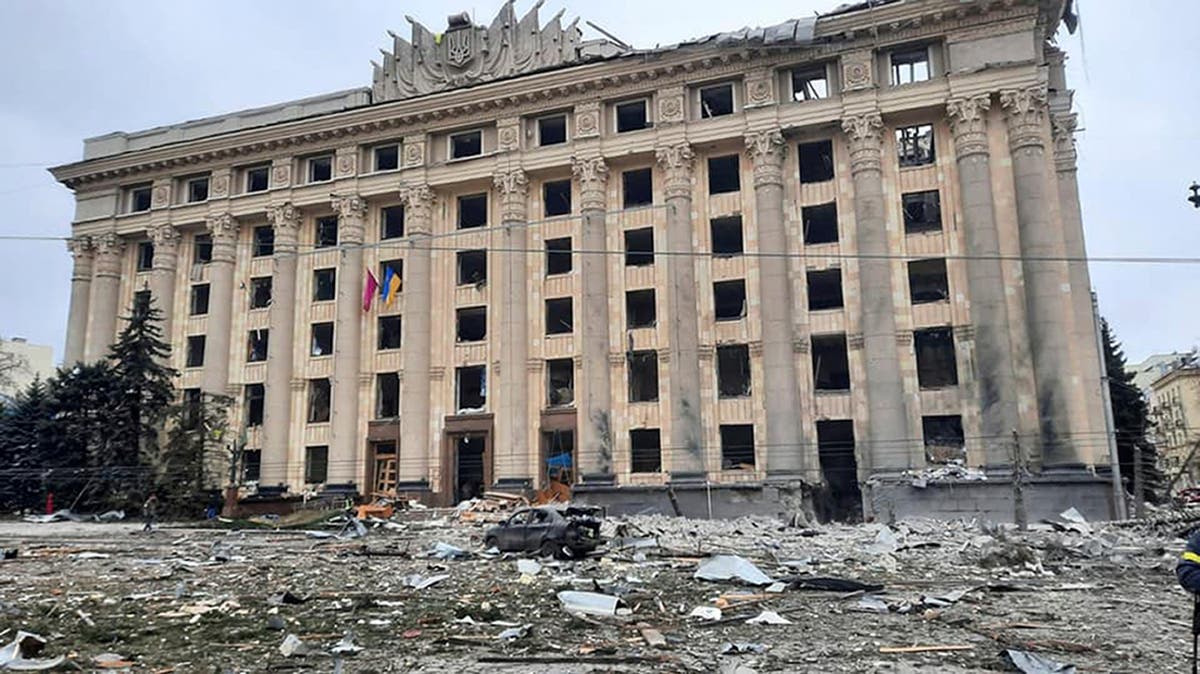
Inevitably in a war situation there will be civilian casualties as a result of residences being located close to military installations, for example, but in this case there is overwhelming evidence of Russian military strikes against residences and public buildings – an example being Freedom Square in Kharkiv a cosmopolitan city with 20 universities which was hit by a cruise missile with over 20 dead. An adviser to the President of Ukraine said on Tuesday that Russia’s attacks on residential areas were deliberate and aimed at creating panic. “The veil has fallen. Russia is actively attacking several cities, launching missiles and attacks on residential areas and administrative infrastructure. Russia’s objective is clear: to unleash panic, inflict civilian casualties and destroy infrastructure”, Mykhailo Podolyak said. 

As the Ukrainian President said: Be of little doubt “Ukraine is fighting for its survival” and needs all the support possible – time is running out.

There is some evidence of the use of cluster bombs in civilian areas and more worrying reports that according to the Ukrainian ambassador to the United States of America Oksana Markarova, that one of the worst weapons of war ‘vacuum bombs’ have been used by the Kremlin during the air strikes. The bomb in question, also known as ‘the father of all bombs’ or ‘thermobaric bomb’, was banned by the Geneva Conventions because of its devastating capacity. The longer the war lasts the likelihood is that Putting will resort to the greater use of such lethal weapons.

I therefore welcome the initiative of an International Criminal Court (ICC) prosecutor Karim Khan QC announcing yesterday announcing yesterday that an investigation has commenced into possible war crimes or crimes against humanity in Ukraine.

Karim Khan said that although Ukraine was not a member of the ICC, it had awarded jurisdiction to the court. He said that there were grounds to open an investigation based on a previous preliminary investigation on Crimea and the Donbas published last year, and on current events in Ukraine.

This will take time, but the most immediate concern is to restore peace in Ukraine and the withdrawal of Russian forces. Clearly from all accounts the invasion is not going to plan, and with considerable resistance by the Ukrainians on the streets defending their country, Russian forces are suffering a higher number of casualties than was likely expected by Vladimir Putin. A possible consequence of this could be the greater use of missile strikes used in an in-discriminatory way causing additional civilian casualties.

Time is of the essence therefore in avoiding the fall of Ukraine to Russian forces, without resulting in a military escalation by Russia that could have European or even global consequences. What happens if Ukraine falls into Putin’s hands?

Putin’s next steps are anyone’s guess, but could possibly be a blockade of Kyiv, remaining in place until Ukraine surrenders on terms demanded by Putin. His aim as recorded yesterday in a call with the French President Emmanuel Macron, was to “de-Nazify Ukraine” which was taken as meaning as seizing control of the whole country, “with worst to come”. Certainly the increase in the intensity of bombardments and increasing areas affected appears to bear this out.

Putin, however, has clearly underestimated the resolve of the global community, which is united and mobilised in its support of Ukraine, through unprecedented sanctions levied against any country, ironically in this case, one that has membership of the UN Security Council. If anyone needs any evidence of this then listen to the speech of European Parliament President Roberta Metsola at the special European Council meeting – a truly empowering speech. She said afterwards “What has to emerge tonight is that the European Union and its member states will continue to act in unison, that we have the political will and the strategic capacity to stand up to the threat posed by Russia and that we will not leave Ukraine alone. That we show solidarity with Ukraine”.

“Doubt, fear and instability are part of Putin’s arsenal. Our shields must be our fundamental principles, our determination and our solidarity with Ukraine and among member states. The fact is that this was not our making. We did not provoke. We did not start a new war on our continent”.

The effect on the Ukrainian population has been devastating. Apart from the casualties, families have been torn apart, women, children and the elderly that cannot escape, living in bunkers underground and many psychologically traumatised.

Apart from the tragedy in Ukraine, all countries are affected by this invasion including Portugal, for example through receiving refugees from Ukraine; our commitment to NATO, and through closures of airspace with Russia. But the effect on the Russian people is far greater. The Kremlin is cracking down on any form of opposition to the invasion with many already being detained. Russia is suffering as well in this senseless war; its people are suffering economically as well as through non-participation in international sports and many other forms of international collaboration. The invasion of Ukraine has already left Russia isolated internationally and will pose a reputational problem for several decades and generations to Russia.

Russia, and in particular Putin, has become a pariah and this will have long term global security, as well as economic, political and social, consequences regardless of the outcome of the Ukraine invasion. We are at a changing point in history!

This article appears in the Portugal News on Thursday 4th February, for which I thank the Editor.


Categories
Latest news


SUPPORT UKRAINE – A HUMANITARIAN CRISIS

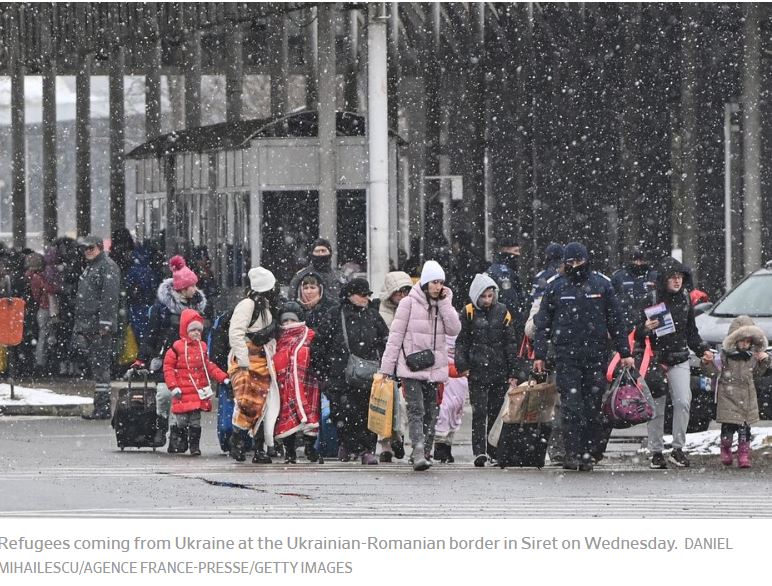
We are witnessing in Ukraine a humanitarian crisis with the number of people fleeing the country now reaching 368,000, according to the UNHCR.


More than 150,000 people have entered Poland since the start of the conflict – while more than 43,000 Ukrainians fled to Romania in the three days after Russia invaded.

Women and children form long queues at borders with Poland and Romania trying to escape this brutal act of war, whilst men aged 18 – 60 years remain to help the security forces fight the attackers.

Ukrainians are spending nights in underground shelters to escape the bombardment. According to the Ukraine Government over 200 civilians have been killed and around 1100 wounded. Damage to residences and infrastructure is rising by the hour.

Demonstrations of solidarity with Ukraine and against Russian intervention have multiplied in recent days around the world, including in Russia itself.

LET US TODAY SHOW OUR SUPPORT TO THE UKRANIAN PEOPLE through a goodwill comment on this page hoping that they keep safe, hostilities cease and a there is a return to normality and peace as soon as possible.

The UN High Commissioner for Refugees, Filippo Grandi has stated that the humanitarian consequences on civilians of this conflict will be devastating. “Countless lives will be torn apart. We have already seen reports of casualties and people starting to flee their homes to seek safety.”

“We urgently need your help to continue providing life-saving protection to families forced to flee their homes”

The UNHCR Donation page is here – Your support can help ensure that Ukrainians forced to flee their homes are sheltered and safe.https://donate.unhcr.org/int/en/ukraine-emergency…

Categories
Latest news

Russian Invasion of Ukraine Update 28th February

UNITED NATIONS

The United Nations General Assembly observed a minute of silence for Ukraine Monday as it opened a special emergency session to discuss whether to condemn Russia’s invasion of its neighbour. Assembly president Abdulla Shahid led the UN’s 193 members in the moment of meditation before calling for “an immediate ceasefire” in the conflict. (AFP)

OPERATIONS

1710 hrs – A few minutes ago, a strong explosion lit up the skies of the Ukrainian capital and the sirens sounded again. Kyiv is under rocket fire. A short video of the moment is already being shared on social networks. https://twitter.com/i/status/1498343325610528770

At least 11 civilians have been killed in Russian shelling on Ukraine’s second most populated city Kharkiv on Monday, the regional governor said, adding dozens more had been injured.

Guards intercepted a group of saboteurs plotting a suspected attack on one of Ukraine’s best known religious sites, the St. Michael’s Golden-Domed Monastery in Kyiv, a spokesman for the site has said. Ukrainian church leaders have been at odds with Russia after Ukraine formed a new Orthodox church in January 2019, pushing away centuries of ties to Moscow.

Rights groups have called on Russia to stop using cluster munitions in Ukraine, saying fatal strikes using the indiscriminate weapons on a hospital and a school could constitute war crimes. 

ARMS SUPPLY

European Union defence ministers are set to discuss plans later to jointly finance deliveries of weapons worth 500 million euros ($560m) to Ukraine, and these will include a range of defensive arms aimed at helping assist Kyiv’s efforts to repel Russian forces, the bloc’s foreign policy chief says. “Member states have to provide these arms, they have to coordinate with what they are doing … with these resources,” Josep Borrell said ahead of the virtual meeting of the bloc’s defence ministers.

All Russian banks will have their assets frozen within days, UK Foreign Secretary Liz Truss said Monday, as part of plans to ramp up economic sanctions. “We will bring in a full asset freeze on all Russian banks in days, looking to coordinate with our allies,” Truss told parliament, saying it was designed to prevent the Kremlin funding its invasion of Ukraine. (AFP)

UKRAINE – RUSSIAN TALKS

The Ukraine – Russian talks have now ended for today – the outcome is as yet unknown. A second round of talks is planned, but no date has yet been set.

Al Jazeera’s Bernard Smith, reporting from Moscow this afternoon, says Ukraine and Russia “seem very, very far apart on what they want out of the talks”. “Russia, we already know, has asked for an unconditional surrender of the Ukrainian forces,” Smith said.

INTERNATIONAL COLLABORATION

The President of Ukraine, Volodymyr Zelensky, signed the application for membership of the European Union, it was announced this Monday on the official account of the Ukrainian Parliament via Twitter. The announcement comes after the Ukrainian president asked this Monday for the country’s immediate accession to the EU under a simplified procedure, reported this Monday Politico (open access / content in English).

“We ask the European Union for the immediate accession of Ukraine through a new special procedure,” Zelensky said via Telegram. “Our aim is to be with all Europeans and, more importantly, to be on an equal footing. I’m sure it’s fair. I am sure it is possible,” he added.

Earlier a top EU official said Monday there were disagreements among the 27 member states on enlarging the bloc, as Kyiv appealed for membership in the face of a Russian invasion. “There are different opinions and sensitivities within the EU on enlargement,” European Council chief Charles Michel said. He said that Kyiv would have to submit an official request to join, then member states would have to come up with a unanimous position. (AFP) 

HUMMANITARIAN AID

More than 500,000 people have fled Ukraine since the start of Russia’s invasion, Filippo Grandi, the UN’s high commissioner for refugees, says. The latest and still growing count had 281,000 people entering Poland, more than 84,500 in Hungary, about 36,400 in Moldova, more than 32,500 in Romania and about 30,000 in Slovakia, UN refugee agency (UNHCR) spokeswoman Shabia Mantoo said.

Ukraine’s president says Japanese Prime Minister Fumio Kishida has agreed to provide Kyiv with $100m of aid, on top of existing financial support.

Pakistan’s foreign ministry says it has evacuated at least 499 of the country’s citizens from Ukraine in recent days.The ministry said in a statement that a further 160 citizens were awaiting evacuation at the Ukraine-Poland border, and an additional 21 were currently en route to the Ukraine-Hungary border.

The European Union is preparing to grant Ukrainians who flee the war the right to stay and work in the 27-nation bloc for up to three years, senior EU and French officials said, thanking volunteers at the borders for helping those who arrive.(AFP)

AIR TRAVEL

Russia this Monday banned airspace to airlines from 36 countries, including Portugal, in response to sanctions imposed by several countries, advances Russian news agency RIA Novosti.

Russian Foreign Minster Sergei Lavrov has cancelled a trip to Geneva for disarmament talks because his plane would not be able to pass through airspace that the European Union has closed to Russian aviation as part of sanctions against Moscow, RIA news agency quoted a diplomatic source as saying on Monday. (Reuters)

SHIPPING

The United Kingdom on Monday banned Russian-flagged ships from docking in its ports. The ban extends to ships registered in Russia or owned by Russian citizens.

“The maritime sector is fundamental to international trade and we must do our part to constrain economic interests”, said Secretary of State for Transport, Grant Shapps, in a letter addressed to British citizens.

UTILITIES – UKRAINE

About 322,000 Ukrainian citizens are experiencing disruptions (partial or complete) in access to electricity, the Ukrainian Ministry of Energy advances through Facebook.

In the publication, the Ministry guarantees that the authorities are working to restore the normality of services.

HACKING ATTACKS

The website of Russian state news agency TASS appears to have been hacked, the Reuters news agency reports, with its regular site replaced with an anti-war message and calls to stop Putin’s invasion of Ukraine.

“We urge you to stop this madness, do not send your sons and husbands to certain death,” the message read, Reuters reported, citing checks from several different devices.

After several Russian ministries were attacked by hackers in recent days, the latest target was Russia’s biggest bank Sberbank became inoperable this Monday (TASS)

RUSSIAN ECONOMY

The sanctions imposed by the European Union on Russia are causing economic turmoil. The ruble, the Russian currency, has never been worth less and there is already a run on ATMs. In Moscow, the stock exchange did not open this Monday. All trading on the markets is suspended until further notice. The ruble plummeted after the announcement of new economic sanctions on Vladimir Putin. A ruble is worth less than a cent. To get an idea, to buy something that cost just one euro, you would need 110 rubles.

INTERNATIONAL SPORTS

The International Olympic Committee (IOC) says its executive board has recommended that international sports federations ban Russian and Belarusian athletes and officials from participating in events. The board said in a statement that in cases where it proves impossible to prevent athletes from the two countries competing, such as if there is insufficient time to give notice or for other “organisational or legal reasons”, they should be prevented from doing so under their nations’ banner.

TRANSPORT

The trains are free and everyone can enter up to the maximum limit. Even so, several families were being separated as only children and women could pass.  The capital’s central train station is completely packed. This comes after the Russian Defence Ministry said civilians can safely leave Kyiv.

SANCTIONS

Switzerland, a traditionally neutral country, will adopt all European Union sanctions against Russia, “without any exception”, the government announced on Monday, after the president had given this possibility as “very likely”.

Ignazio Cassis admitted that this is an “unprecedented and difficult step” that needed “careful consideration”.

Finance Minister Ueli Maurer added that “there will not be a single exception” to European sanctions and that “it is essential” to maintain the integrity of the Swiss financial centre.

NETFIX AND SPOTIFY

Some Netflix and Spotify members in Russia say they are having trouble paying their subscription fees.

As SkyNews reports, some service users say they are receiving error messages related to their bank cards, especially from banks such as Sberbank, Tinkoff and Alfa-Bank.

It is possible that these difficulties are related to the exclusion of these banks from the SWIFT financial system but, for the moment, none of the companies has commented on the situation.

RUSSIAN BANKING

All Russian banks will have their assets frozen within days, UK Foreign Secretary Liz Truss said Monday, as part of plans to ramp up economic sanctions. “We will bring in a full asset freeze on all Russian banks in days, looking to coordinate with our allies,” Truss told parliament, saying it was designed to prevent the Kremlin funding its invasion of Ukraine. (AFP)

Russia has a system that can replace the SWIFT global payments system internally, the governor of the country’s central bank says.Elvira Nabiullina added that all banks in Russia will fulfil their obligations and all funds on their accounts are secured.

Categories
Latest news


STADE DE FRANCE TO HOST UEFA CHAMPIONS LEAGUE FINAL ON 28 MAY INSTEAD OF SAINT PETERSBURG

The UEFA Executive Committee today held an extraordinary meeting following the grave escalation of the security situation in Europe.

The UEFA Executive Committee decided to relocate the final of the 2021/22 UEFA Men’s Champions League from Saint Petersburg to Stade de France in Saint-Denis. The game will be played as initially scheduled on Saturday 28 May at 21:00 CET.

Together with the French government, UEFA will fully support multi-stakeholder efforts to ensure the provision of rescue for football players and their families in Ukraine who face dire human suffering, destruction and displacement.

At today’s meeting, the UEFA Executive Committee also decided that Russian and Ukrainian clubs and national teams competing in UEFA competitions will be required to play their home matches at neutral venues until further notice.
European parliamentarians wrote to Uefa demanding an end to their relationship with Russian company Gazprom, as the German club Schalke removed the gas company from their shirts.

The football associations of Poland, the Czech Republic and Sweden refused to travel to Russia for the World Cup play-offs.https://www.uefa.com/…/0272-148740475a92-1b97baa3e9d7…/

Categories
Uncategorized


Russia attacks Ukraine


On 24th February 2022 Russian forces attacked Ukraine by land, sea and air at multiple points, causing deaths, injuries and damage to infrastructure.

In view of the global impact of the attack, including Portugal’s role as a NATO member, Safe Communities Portugal has created a major incident page where you can find a summary of updates.

The updates can be followed on this page here

Categories
Latest news


What do Russia and Ukraine represent for the Portuguese trade balance


Exports of Portuguese goods to Russia increased 0.6% in 2021, and 16.7% to Ukraine, from where Portugal imports large amounts of maize.

MOSCOW

Last year, exports of goods and services to Moscow grew by 7.8% in 2021 to 269.6 million euros and imports doubled (102.5%) to 1,071.9 million euros, year on year, with a negative trade balance for Lisbon by around 802 million euros, according to data from the National Institute of Statistics (INE). Exports of Portuguese goods to Ukraine rose 16.7% last year, compared to 2020, to 35.9 million euros, according to the National Statistics Institute (INE). In the same period, imports of goods from Ukraine by Portugal rose 44% to 296.5 million euros, which represents a negative trade balance for Lisbon of 260.7 million euros.

In 2021, Moscow was Lisbon’s 37th customer and its 13th supplier. A year earlier, Portugal was Russia’s 86th customer and its 54th supplier. In 2020, Portuguese companies that exported to that market totalled 572, 54 fewer than in 2019 (626), when there was the highest number of national exporters since 2016.

The five groups of products most sold to Moscow are agricultural (16.6% of total exports in 2021), wood and cork (15.8%), machinery and equipment (13.3%), food (13%) and footwear (7.6%).

UKRAINE

Exports of Portuguese goods to Ukraine rose 16.7% last year, compared to 2020, to 35.9 million euros, according to the National Statistics Institute (INE). In the same period, imports of goods from Ukraine by Portugal rose 44% to 296.5 million euros, which represents a negative trade balance for Lisbon of 260.7 million euros.

Last year, Ukraine was Portugal’s 68th customer and its 30th supplier. In 2020, Portugal was Ukraine’s 43rd customer and its 62nd supplier.

According to the data, in 2020 there were 374 companies exporting to Ukraine, a progressive increase that has been registered since 2017, when there were 251.

The main five groups of products exported to Kiev include machinery and equipment (with a total weight of 20.6% in 2021), food products (16.3%), wood and cork (16.2%), cellulosic pulp and paper (11.6%) and base metals (7.2%).

Thus, total exports (goods and services) last year totalled around 79.2 million euros (an increase of 57.3%) and imports amounted to 296.5 million euros (+43.3%). , a negative trade balance for Lisbon of 217.3 million euros.What do

Categories
Latest news


UN experts warn of increasing intensity and frequency of wildfires


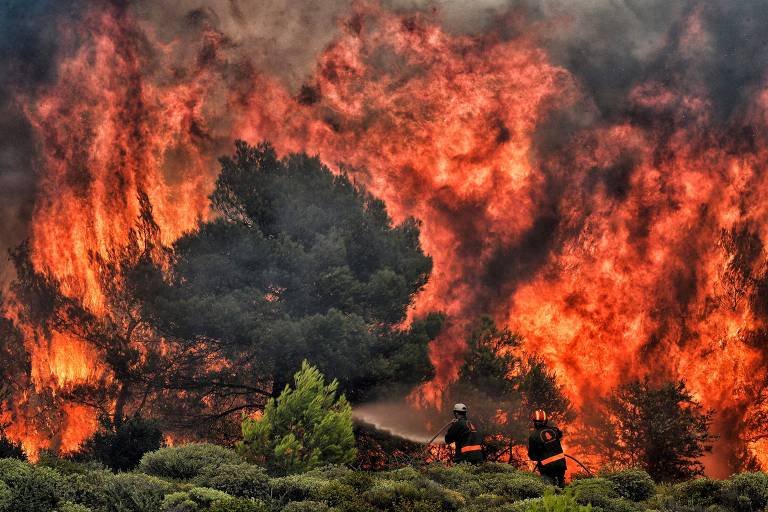
Climate change and changes in land use are making wildfires more frequent and intense, with extreme fires predicted to increase by up to 50% by the end of the century, warns a United Nations report.
According to the experts who produced the report by the United Nations Environment Program (UNEP), based in Nairobi, even the Arctic, until now virtually immune, faces a growing risk of wildfires.

According to the document, released today, the climate crisis and land use change will result in a global increase in extreme fires of up to 14% in 2030, 30% by the end of 2050 and 50% by the end of the century.

“Lightning and human carelessness have always caused wildfires, but climate change caused by human activity, changes in land use, and mismanagement of land and forests mean that wildfires more often find the right conditions to be destructive”, says the study, which had the participation of the Norwegian Environmental Centre GRID-Arendal.

“Forest fires burn longer and impose more heat on places where they have always occurred, but they are also appearing in unexpected places, such as dry peat bogs or during permafrost thaw,” added the UNEP report, which involves all continents.

In addition to destroying large parts of some of the planet’s last havens of biodiversity, such as Brazil’s Great Pantanal, the fires are also emitting huge amounts of polluting gases into the atmosphere, facilitating rising temperatures, drier and more fires.

Experts advise governments to involve indigenous leaders in fire management, as well as invest in forest fire planning, prevention and recovery, rather than just focusing on putting them out.

They also ask governments to adopt a new investment formula, with two-thirds of spending devoted to planning, prevention, preparedness and recovery, and the remaining third to the response.

Currently, direct responses to wildfires receive more than half of related expenditures, while planning and prevention receive less than one percent.

“Current government responses to wildfires are often putting money in the wrong place,” said Inger Andersen, UNEP Executive Director, adding: “We have to minimize the risk of extreme fires by being better prepared – investing more in reducing the fire risk, work with local communities and strengthen the global commitment to combating climate change.”

Likewise, the report underlined the importance of the international community, through the United Nations, also getting involved in fire management, which until now is almost the exclusive responsibility of national governments.

“Wildfires should be placed in the same category of global humanitarian response as major earthquakes and floods,” the UNEP study noted.

From 2002 to 2016, around 423 million hectares were burned each year, a total area equivalent to that of the European Union.

Africa is the continent most affected by these fires, accumulating about 67% of the annual global area burned.

“We must learn to better manage and mitigate the risk of wildfires that threaten human health and our livelihoods, biodiversity and the global climate,” said Susan Gardner, director of UNEP’s Division of Ecosystems.

The experts further warn that wildfires disproportionately affect the world’s poorest nations and have an impact that spans days, weeks and even years after the flames subside, impeding progress towards the UN’s sustainable development goals and deepening social inequalities.

In the document, they argue that ecosystem restoration is “an important way” to mitigate the risk of forest fires. Restoration of wetlands and reintroduction of species such as beavers, recovery of peat bogs, maintenance of distance between vegetation and preservation of buffer zones with open spaces are some examples of essential investments in prevention, preparation and recovery.

The report was released a few days before the 5th session of the United Nations Environment Assembly (UNEA), which will take place from 28 February to 2 March in Nairobi.


Categories
Latest news


DATA FROM MORE THAN 3,200 PORTUGUESE BANK CARDS SOLD ON THE “DARK WEB”

According to the cybersecurity solutions company, Portuguese bank card data has been sold at an average price of 10.8 euros per card.

The cybersecurity solutions company NordVPN went to listen to the traffic of bank cards on the dark web and found some numbers revealing the potential embezzlement underway around the world – and also in Portugal. According to experts, data from more than four million bank cards from 140 countries have been transacted by cybercriminals on the dark side of the Internet. This batch of data includes 3,281 Portuguese payment cards.

Among the cards issued in Portugal, 1,002 were issued by Visa, 367 by Mastercard and nine by Maestro.

According to NordVPN, bank cards have been sold with average prices per unit of 10.5 dollars (9.26 euros) – and this is the average calculated when the calculation focuses on the cards found. NordVPN also reveals that, for Portuguese bank cards, each unit has been transacted with a higher average cost: 12.26 dollars (10.80 euros) for each card.

“The answer is that hackers can easily make a lot of money. Even if a card costs just $10 on average, a hacker can earn $40 million selling a single database like the one we analysed.”

NordVPN reports that credit card fraud has been on the rise since 2014. The US leads the way among the most affected countries, with more than 1.5 million bank cards identified in NordVPN’s analysis. The experts of the cybersecurity brand classify the USA as one of the countries with the most reliable bank card systems, but they also recall that it is one of the countries with the highest rate of adhesion and use of credit and payment cards, and this factor may have contributed to the fact that about a third of the cards analysed are American.

Categories
Latest news


SUPPORTING VICTIMS OF CRIME

APAV supports victims of all crimes.

If you have been a victim of crime or violence, contact us through the Victim Support Line 116 006 (8am to 10pm).

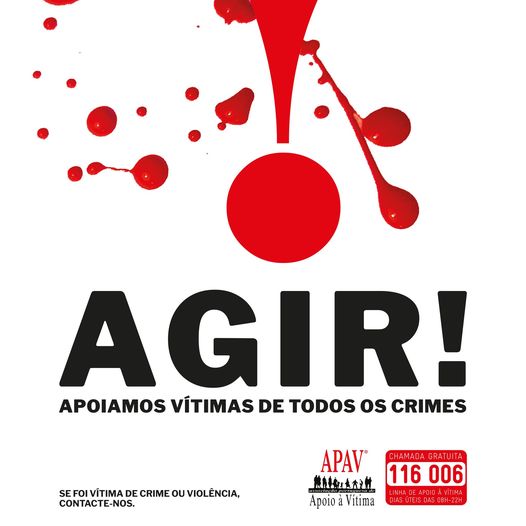
Marking the European Day of the Victim of Crime, on February 22, the Portuguese Victim Support Association presents a new awareness campaign. This new campaign focuses on a call to action, with the motto: “Take action! “.

The campaign was developed by Ana Sofia Olivença, in the context of the Communication Design course of the Superior Institute Miguel Torga – Coimbra.

This anniversary was instituted by Victim Support Europe (VSE), an organization that brings together 61 victim support institutions from 31 European countries, to remember the rights of victims of crime. The Portuguese Association for Victim Support was one of the founding members of the VSE and currently the presidency is held by João Lázaro, also President of APAV.

Among the objectives that are part of APAV’s mission, stands out the investment in the protection and recognition of specific rights, needs and interests of victims of crime and, in particular, of particularly vulnerable victims

http://www.apav.pt/