Categories
Uncategorized


LISBON – ELEVADOR DA GLÓRIA DERAILMENT RESULTS IN 15 DEATHS

FIRST news about nationalities:

“Portuguese authorities have just informed us that two Spanish citizens are among the injured,” diplomatic sources in Madrid said.

The Spanish Consulate in Lisbon is in constant contact with Portuguese authorities, and, for now, the possibility of any Spanish citizen having died has been ruled out, the same sources said.”

“The Portuguese authorities have already informed us that one of our compatriots was among those injured in the accident. Our consul general is visiting her and remains in constant contact with the Portuguese authorities in case other nationals are affected.” said the french authorities

One of the deaths is the driver, portuguese nationality.

Update – number of injured rises to 23.

CASUALTIES

In a local operations assessment conducted at 20:30, the National Institute of Emergency Medicine (INEM) confirmed 15 deaths in the accident. Another 23 people were injured, five of whom were seriously injured and transported to various hospitals in Lisbon. The PSP (Public Security Police) has also confirmed 15 deaths and 23 injuries, five in serious condition.

Santa Maria Hospital received a total of eight injured people, one of them in critical condition. Earlier it was reported that three seriously injured people were transported to Santa Maria Hospital, the largest in Lisbon.

Among the slightly injured is a three-year-old child. He is in stable condition and will be transferred with his father to Dona Estefânia Hospital. The mother, pregnant and with minor injuries, was transferred to the Alfredo da Costa Maternity Hospital (MAC).

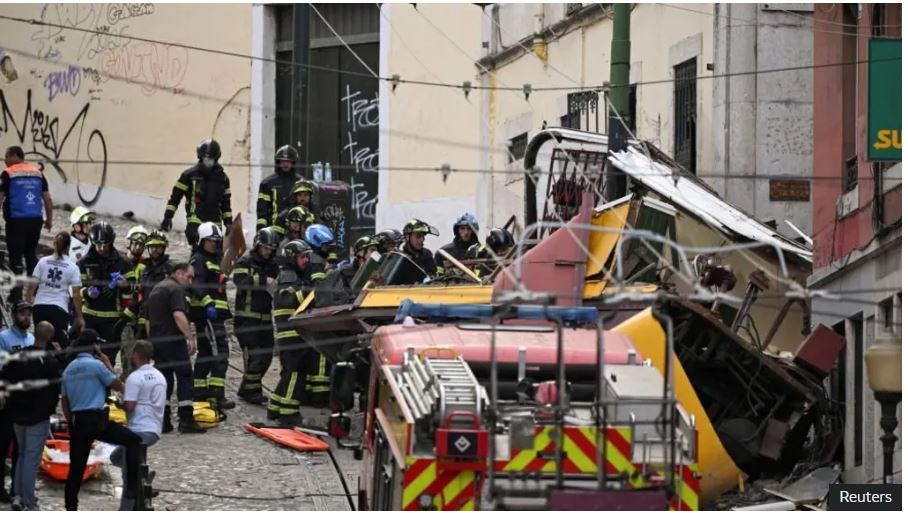
All passengers have been removed from the vehicle, which was completely destroyed after crashing into a building.

OVERALL

“The Elevador da Glória, the iconic funicular that connects Restauradores to Príncipe Real, derailed late Wednesday afternoon on Calçada da Glória in Lisbon . The mayor of Lisbon, who canceled Thursday’s event, is on site, as is the Minister of Infrastructure. The government assures that it has been monitoring the situation “from the very beginning.”

MOURNING

“The Mayor stated Lisbon is in mourning; this is a tragic time for our city, ” he stressed. He stated that firefighters received the alarm at 18:11 and thanked them for their “readiness.”

Unfortunately, it’s extremely serious. It’s an accident that shouldn’t have happened, but we’ll be here to answer all your questions in due course ,” he continued, without giving many details “out of respect for the families” of the victims.

The President of the Republic has already responded, expressing “deep regret” over the accident involving the Glória funicular in Lisbon, and “in particular the fatalities and serious injuries, as well as several minor injuries”, Marcelo Rebelo de Sousa also hopes that “the accident will be quickly clarified by the competent authorities.”

Government declares national mourning after accident at Elevador da Glória

European Commission President Ursula von der Leyen expressed her condolences in Portuguese to the families of the victims of the accident that occurred on the iconic Lisbon funicular.

LOCAL RESTRICTIONS

The Elevador da Glória, Lisbon’s iconic funicular connects Restauradores to Príncipe Real in Lisbon.

Avenida da Liberdade is closed to traffic from the intersection with Rua da Alegria to Rossio Square, following the accident with the Glória elevator.

The PSP (Public Security Police) is making several appeals to the public. In a statement, it asks that people not go to the accident area to ” not hinder ongoing operations” and that they respect the authorities’ instructions.

We also ask that you use alternative routes and avoid driving in the area until further notice.

RESOURCES DEPLOYED

In Praça dos Restauradores, where one end of Calçada da Glória, the street where the Glória funicular runs, ends, there’s dozens of vehicles from INEM, firefighters and police.

A total of 59 operatives and 21 vehicles are at the scene at 2100 hrs

Carris, the operator of the Glória funicular in Lisbon, assured that it has already “activated all resources” and is on site with its teams.

In a response sent to the Lusa news agency, the company said that it “immediately contacted the emergency and security forces.”

“The priority is to monitor the situation and everyone involved,” he stressed.

OUR CONDOLENCES

A very tragic accident and our deepest condolences go to the families of all those who have died. RIP

Categories
Uncategorized


Marcelo hopes that fire response measures will become more agile and warns:


“Those who make decisions at the last minute often arrive too late.”


The President of the Republic spoke with journalists at the Porto Book Fair this Friday and commented on the measures adopted by the government in response to the fires of recent weeks. The head of state hopes that the fires are already “passing” and, if this situation is confirmed in the coming days, “the idea is, regardless of what happens in September or October, to approve measures that can be implemented with greater flexibility.” This is because decisions taken in the past have proven to be “very slow and bureaucratic.”

In 2017, the head of state believes, it was more difficult to define compensatory measures “because there was no legal basis whatsoever.” Now, however, the situation is different. “It was already applied last year in relation to material damages,” he explained.

For this year, Marcelo says the government has defined “enlargement, taking into account the lessons of the last eight years.” However, the president identifies three distinct types of measures among those announced by Montenegro: those that need to go to Parliament, those that require presidential approval, and those that can be approved by the Council of Ministers.

Fire prevention is something the President believes requires greater action. After the massive Pedrógão Grande fire in 2017, the Socialist government took measures to prevent a repeat, but not all of them “went well.” Marcelo mentioned, for example, the attempt to “replace the existing forest type” with one that “burns less,” as well as decisions about “clearing forest land,” which were hampered by numerous factors, such as the limited capacity of families living in the affected areas.

Now, the head of state will oversee the most urgent projects announced by the government. However, the 25-year pact to prevent new fires like this year’s, mentioned by Montenegro on Thursday night, will not be one of the president’s focuses. “I will monitor it, but my term is six months away,” he explains.

Marcelo didn’t want to, but he commented on the Government’s communication

The President stated more than once that he did not wish to comment on the Government’s announcement, but he nevertheless expressed his opinion. At yesterday’s press conference, Montenegro acknowledged that the perception may have been created that the Government was not closely monitoring the fires. Marcelo agreed with the Prime Minister, emphasizing that the situation worsened very quickly.

“I truly believe that those who are executing and making last-minute decisions often arrive late or don’t fully understand the scope of the situation,” said the head of state, recalling the meeting he had with the government leader on August 13th. He then predicted that the 15th could be “complicated,” due to the persistence of several adverse factors, such as high temperatures and low humidity. “It could not have happened, but it did. From that moment on, the situation worsened. (…) Suddenly, [the fires] spread to the centre, where several fires broke out, concentrating into one enormous one,” he emphasized. Only at the end of the 15th would the European Union’s Civil Protection mechanism be activated.

Marcelo dismissed criticism of the performance of the Minister of Internal Administration, Maria Lúcia Amaral. “It was a difficult challenge for a minister who had just taken office two months ago,” he explained. In previous years, the head of state believes, other, more experienced ministers also “had difficulties.”

Choose “protect lives” and combat difficulty

In 2017, fires left dozens dead, a situation that hasn’t been repeated this year. However, the area burned by 2025 has already surpassed that of eight years ago. “It was a choice that was made,” and it was the right one, says Marcelo Rebelo de Sousa. One could ” try to reduce the burned area and, at the same time, look after people and villages,” something that “failed” in the past, or “try to protect human lives, protect villages, even if that means a larger burned area.”

Another factor contributing to the large area burned was the difficulty of fighting the flames. In many cases, Marcelo believed the smoke made it impossible for air resources to operate, making ground combat the only option.

The worsening of the situation was also “sudden.” During the day, the President says, Civil Protection demonstrated optimism in the fight. “I was updating the situation with the Secretary-General of Civil Protection, and he said, ‘It’s getting better, unless there are problems overnight.’ And, in many cases, there were problems overnight.”

Categories
Uncategorized


PORTUGAL RURAL FIRE SITUATION 1830 HRS 20TH AUGUST 2025


OVERALL- The fire risk is expected to ease in the coming days, but today the situation in the various theatres of operations continues to be quite complicated, especially in the Castelo Branco region, where the Fundão fire has been described as “quite critical” by the mayor. Even with lower temperatures, the winds remain strong and people are confined indoors in some areas on Covilhã. Arganil is still active with an increase deployment of 1607 operatives, 534 vehicles and 13 aircraft.

DEPLOYMENT – Deployment at 1730 hrs were 4017 operatives (52 less than yesterday) 1300 vehicles and 32 aircraft. There were 49 fires at different stages (two less than yesterday) including seven active, 2 in despatch 7 in resolution and 32 in conclusion. A total of eight fires are at significant occurrence and of these only two are is from today – a more positive sign.

CASUALTIES –There have been three deaths since the fires began, but the total number of casualties has not been announced.

RESOURCES – The two Canadair planes provided by Morocco to help fight the fires in Portugal returned to their country of origin today, according to the ANEPC.

Within hours, a new firefighting reinforcement will arrive in Portugal and is expected to begin operations as early as Thursday morning. This time, Civil Protection announced, it will be a Super Puma helicopter, sent by France, and will be deployed under the auspices of the European Civil Protection Mechanism. The helicopter is expected to arrive at Monte Real Air Base this afternoon, according to a statement sent to newsrooms. It’s a heavy-duty device, capable of discharging 3,000 litres of water, and will arrive accompanied by a team of five

LAND BURNED – The fire that started in Piódão, Arganil, on the 13th and is still burning, is “very likely” the largest ever in Portugal, said specialist Paulo Fernandes, estimating a burned area of around 60 thousand hectares. The fire spread to the districts of Castelo Branco and Guarda has already consumed around 60 thousand hectares, the fire specialist and member of the technical committees analysing the major fires of 2017 told the Lusa news agency. The fire that started in Freches, Trancoso, on August 9 and was resolved on Sunday, has a burned area of 49,324 hectares

POLITICAL – The Assembly of the Republic today unanimously approved requests to hold an extraordinary debate in the standing committee with the Prime Minister next Wednesday afternoon on the coordination of firefighting.

The proposals from Chega and the PCP were put to a vote at an extraordinary meeting of the leaders’ conference and approved unanimously, the President of the Assembly of the Republic, José Pedro Aguiar-Branco, told reporters at the end of the meeting. The debate will take place next Wednesday, the 27th, at 3:00 pm.

SUPPORT MEASURES – Prime Minister Luís Montenegro has called an extraordinary Council of Ministers meeting for this Thursday to approve support measures for populations affected by the forest fires

COMMUNICATIONS – The restoration of fixed and mobile communications services and electricity supply in areas affected by the fires is underway, conditioned by some access difficulties and still-active fires, Anacom and E-Redes told Lusa.

“The extensive burnt areas have destroyed many fiber optic cable routes that can only be restored after firefighters have completed the rescue work and after safety conditions have been met for operator technicians to access the sites,” explained the National Communications Authority (Anacom), in a written response to Lusa, confirming that “rural fires have, in fact, affected electronic communications service, particularly fixed and mobile services.”

FUNDÃO

The rural fire raging in Fundão worsened in the early afternoon , especially on the fire line to Castelo Novo, and the Souto da Casa front is out of control , the mayor told Lusa.

“The situation worsened significantly in the early afternoon and made the fire much more serious than it was in the morning,” said Paulo Fernandes.

Mayor says situation in Fundão is “quite critical”: “we are operating with our own resources” to fight the fires The Mayor of Fundão said today that the lack of resources on the ground could seriously compromise the fight against the fire raging in the municipality, if nothing changes by the end of the morning.

Speaking to the Lusa news agency earlier today Paulo Fernandes explained that direct combat during the night managed to “mitigate some risk” on the slopes of Boxinos and in the village of Açor. “The most serious situation is in Serra da Gardunha, with the fire moving slowly but very dangerously towards Castelo Novo,” he said. According to the mayor, the northern front, near Souto da Casa, is very unstable.

Paulo Fernandes emphasized that all fire fronts are very unstable and there are numerous hot spots that could complicate the situation at any moment.

“Structurally, we lack resources. Basically, we are operating with Fundão’s own resources. The air resources are not yet operational at this time. We were told in the briefing [on the third day] that we could have air resources. We still don’t have any operating at this time,” he maintained. The mayor stressed that the situation in his municipality is “quite critical” and that the arrival of more land resources, tracked machines, and “more resources” is urgent.

“If these failures are not addressed, we run the risk of repeating the terrible and tragic scenes that occurred yesterday [Tuesday] and early this evening, with several locations surrounded by fire,” he said.

MONTALEGRE, VILA REAL

The fire that entered Chaves, in the district of Vila Real, coming from Galicia, suffered a strong reactivation this Wednesday afternoon near companies in the business park, Lusa observed on site. The fire had entered the resolution phase at 10:35 hrs today, after “a night of hard work”, with “all resources committed” and “the use of crawler machines”.

However, after 14.30 hrs, there was a strong reactivation at the back of a mushroom factory, extending through the Chaves business district, where, according to the Lusa news agency, ground resources are being concentrated and two planes are in action. Motorway 24 (A24) is closed to traffic in the Chaves area, between the Casino and Vila Verde da Raia interchanges, due to the reactivation of a fire that crossed the border from Galicia. Deployment 434 operatives, 138 vehicles and 4 aircraft

CASTELO BRANCO

The fire raging in Castelo Branco destroyed, in the early hours of the morning, a first home in the town of Casal da Serra, in the parish of São Vicente da Beira.

According to the municipality, during the night and early morning, the fight against the flames took place, mainly, in the perimeter of Casal da Serra, Torre, Louriçal do Campo, in the Bairro do Caldeira, in São Vicente da Beira and in the area surrounding the Chapel of Senhora da Orada. “Despite the milder evolution of the fire, there is some concern in the fight against the flames in the Ribeira de Eiras and Vale da Figueira areas.”

SABUGAL

The fire remains active with a total of operatives, vehicles and aircraft deployed.The fire that has been raging in the municipality of Sabugal since Friday, August 15th, is in the extinguishing phase this afternoon but ONLY in respect of the two remaining active fronts, in Santo Estêvão and the municipality of Penamacor.

Operators remain on the ground carrying out surveillance and consolidation work to prevent rekindling, as happened on Tuesday afternoon, but we can now say that the fire is in the extinguishing phase.  Sabugal City Council Mayor Vítor Proença told the Lusa news agency. According to the mayor, the significant drop in temperatures and the rise in relative humidity overnight helped in fighting the flames.

However, Vítor Proença remains cautious because, in recent days, the situation has changed late in the morning, with rising temperatures and increasing winds. A hospital source reports a serious condition that is “very unstable, aggravated by the comorbidities he previously had.” The 45-year-old operator was injured during firefighting operations. Deployment 427 operatives, 114 vehicles and one aircraft


ARGANIL fire has more than 1,607 operators, 534 vehicles and 13 aerial resources

The fire that has been raging since August 13th in the municipality of Arganil, in Coimbra, and has spread to the municipalities of Pampilhosa da Serra, Seia, Covilhã, Fundão and, more recently, Castelo Branco, is, by far, the most worrying. At 11:00 hrs, 1,624 personnel were already mobilized, supported by 542 ground resources and 15 air resources.

The fire in Pampilhosa da Serra is not actively burning this morning, but there are still small pockets of fire that could become new fronts, the mayor said. “Once again, during the night, extraordinary work was done here to try to reduce the fire lines, and it was successful. At the moment, we don’t see any fire,” Jorge Custódio told Lusa news agency.

COVILHA

In a note sent to the Lusa news agency, the municipality of Covilhã, in the district of Castelo Branco, said that the conditions for fighting the fire “are even more difficult” and that the Taliscas front is progressing towards the towns of Dominguizo and Vales do Rio “with great intensity”.

The municipality also appealed to the population, especially in the most affected areas, to remain in safe places and to adopt self-protection behaviors.

The population of Vale de Cerdeira, in the parish of São Jorge da Beira, Covilhã, is confined to their refuge, and the fire has worsened, particularly near Peso, Vales do Rio, Dominguizo, and Tortosendo, the City Council reported.

“Given the fire situation in the municipality [of Covilhã], it is reported that conditions on the ground have worsened, and therefore the population in the affected areas is asked to exercise maximum caution,” the Covilhã municipality reported on its Facebook page. According to the statement published at 13.35 hrs, the municipality also issued a precautionary alert for the localities of Peso, Vales do Rio, Dominguizo, and Tortosendo .

The Covilhã City Council reports that firefighting conditions are even more difficult due to the weather conditions and that the Taliscas front is progressing towards the towns of Dominguizo and Vales do Rio with great intensity.

In light of the fire raging in the municipality, the municipality is asking people in the affected areas to remain in a safe place, adopt self-protection practices, and always follow the authorities’ instructions.



Categories
Uncategorized


Portugal Rural Fire Situation 1800 hrs 19th August 2025


OVERALL

The fire risk is expected to ease in the coming days, but today the situation in the various theatres of operations is still quite complicated, especially in the Castelo Branco region, where the Fundão flames have violently invaded the neighbouring municipality. Even with lower temperatures, the winds remain strong. Around Pampilhosa da Serra, there are still uncontrolled fires, as well as in Sabugal and Mirandela.

Deployment at 1800 hrs were 4069 operatives (749 less than yesterday) 1300 vehicles and 40 aircraft. There were 51 fires at different stages (16 less than yesterday) including six active, 2 in despatch 8 in resolution and 35 in conclusion. A total of nine fires are at significant occurrence and of these only two are is from today – a more positive sign. The fires of concern remain in Arganil with an increased total deployment of 1520 operatives, 504 vehicles and 13 aircraft

There are closed roads in the districts of Bragança, Castelo Branco and Guarda. (See separate post)

The Army has already deployed more than 3,700 soldiers and 1,600 vehicles to fight rural fires and is currently present in 36 municipalities, that branch of the Armed Forces said on Tuesday. According to a note released by the Portuguese Army, to date, 3,752 soldiers and 1,610 vehicles have been involved in 9,916 hours of mission, in 16 districts, in which 301,011 kilometres have been covered.

The funeral of firefighter Daniel Agrelo this Tuesday morning at the Covilhã Volunteer Fire Department headquarters, where the mass was held. The Prime Minister Luís Montengro accompanied by Minister of Internal Affairs, Maria Lúcia Amaral, attended the ceremony. Daniel Agrelo was a member of the Covilhã Fire Department and died following a traffic accident late Sunday afternoon, when he was heading to a rural fire that had broken out in the region.

ARGANIL

The voracity of the Arganil fire, which began a week ago tomorrow, has not yet subsided. The fire continues to rage through mountains and valleys, having already taken over Serra da Gardunha, in Fundão, Castelo Branco district.

This Tuesday morning, the fire is raising many concerns because it’s spreading across multiple fronts and there’s strong winds. For now, no populations are at risk, as Miguel Gavinhos, vice-president of the Fundão City Council, has already stated.

This fire has now also spread to the municipalities of Pampilhosa da Serra then to Fundão and Oliveira do Hospital (Coimbra district), Seia (Guarda) and Covilhã and Castelo Branco (Castelo Branco). To the north, the flames reached Seia and Oliveira do Hospital By Sunday, 21,000 hectares of agricultural land and forest had already been burned in this fire alone—the equivalent of an area twice the size of the city of Lisbon.


SEIA, GARDA DISTRICT

The municipality of Seia, in the Guarda district, continues to experience difficulties in controlling the fire, said the mayor, who criticized the lack of aerial resources to slow and contain the flames. “We are once again facing difficulties, particularly because the air resources are a nightmare to deploy, and they have excuses that are difficult for those on the ground to understand, as, apart from the fire front, everything else is clear,” Luciano Ribeiro told Lusa news agency.

For the mayor, all the work done at night to contain and control the flames, with crawler machines, firefighters, and “firefighters, who literally hang from ravines to create firebreaks,” ends up having no effect.

“The front is so large that surveillance becomes increasingly difficult due to the lack of resources and the recovery of men and women. Without air resources to help and slow down the reactivations, all the work done goes to waste,” he said. At 1:00 pm, the fire was affecting the area between Barriosa and Vasco Esteves, and was confined to the valley that separates national roads 230 and 231

PENAMACOR

The ongoing forest fire in Sabugal, Guarda district, entered the municipality of Penamacor, in the Castelo Branco district, during Monday afternoon, where several people have already been evacuated from isolated homes, as a precaution.

Speaking to the Lusa news agency at 2:15 pm, the mayor of Penamacor, António Luís Beites, said that the fire entered his municipality during the afternoon of Monday, near the town of Vale de Senhora da Póvoa. “This area has already been completely engulfed in flames. Now, the fire is approaching the town of Quintas do Anascer, in the parish of Benquerença,” he explained.

The mayor also added that several people (without specifying the number) living in scattered homes in the area have already been evacuated. We had to evacuate several people from their homes, which are scattered. It was a precautionary evacuation,” he stated. This fire originated from a rural fire that has been burning in Sabugal, in the Guarda district, since Friday.


FUNDAO, CASTELO BRANCO DISTRICT

Reported 1645 hrs – Flames threaten several homes in Vale de Mendinho, Fundão. The SIC journalist reports that the situation is “quite distressing” in the area this Tuesday afternoon. Many residents are preparing to evacuate. “The flames are raging with an intensity I’ve never seen before,” reports SIC reporter Catarina Terroso on the scene.

Some residents are preparing to leave everything behind to escape the flames. Many are fighting the fire with what they have. In addition to homes, businesses and animals are at risk. When asked where the owners of the threatened homes are, a resident told SIC that they are trying to put out the fire and that she doesn’t know how they are doing.

“The flames are spreading at a worrying rate. It’s very difficult to get around. Sometimes we can’t even tell where we are on these streets. The smoke is very black and dense,” reports Catarina Terroso. The situation is “quite distressing” as the fire is “moving to the other side of the road”, he adds.

In Fundão, flames have surrounded several villages, burning abandoned homes and agricultural storage areas in recent days..

COVILHA

The Fundão City Council reports that there are several active fire fronts in the municipality, with the front affecting the towns of Açor, Vale d’Urso and Casal Álvaro Pires being the most worrying at this time.

The municipality urges all people in these locations to remain in safe areas, adopt self-protection practices, and follow the instructions of the authorities on the ground.

The Covilhã City Council reports that the work during the night went well, but it will be necessary to maintain all attention and efforts on the ground during the afternoon, taking into account that, normally, in the afternoon the conditions and risks worsen. The Council reiterates its call for the populations of the affected areas to remain in safe places and to take precautions and adopt safety and self-protection behaviours.

MIRANDELA

The fire in the municipality of Mirandela is “completely under control,” but there remains an active front in the municipality of Vila Flor, which is now causing more concern, the sub-regional commander of Civil Protection told Lusa.

The fire started at 4:00 pm on Sunday, in Frechas and Valverde da Gestosa, in the municipality of Mirandela, but spread on Monday to the municipalities of Vila Flor and Alfândega da Fé, all in the district of Bragança. According to the sub-regional commander of Trás-os-Montes, Noel Afonso, the municipality that now inspires the most concern is Vila Flor, with an active front in Vale Frechoso, a village that was in the crosshairs of the fire on Monday.

As for Santa Comba da Vilariça, the town seven kilometers from Vale Frechoso, which was severely damaged by fire overnight, things are “under control.”

In the municipality of Alfândega da Fé, more specifically Vilares da Vilariça, which was surrounded by flames, the fire was also put out.  The commander clarified to Lusa that no houses burned down, only “some annexes” and “an abandoned house.”

There is only one firefighter with minor injuries, who was taken to Mirandela hospital. Deployment 343 operatives, 115 vehicles and 4 aircraft

FREIXO DE ESPADA A CINTA AND TAROUCA FIRES

After days of worry and fighting the flames, the fires in Freixo de Espada a Cinta and Tarouca are now in the resolution phase.

It had already been considered under control, but a violent reactivation required a new effort from firefighters. It wasn’t until late Monday morning that the Tarouca fire was brought under control. Mostly scrubland and pine forests have been burning since Saturday, but some villages were in the line of fire.

In the village of Estevais, Mogadouro, people are already breathing a sigh of relief, but the flames that came from Freixo de Espada à Cinta, in the heart of the Douro International Natural Park, surrounded the town. The church served as shelter. “There wasn’t a place where we didn’t see fire. It was horrible.” Many lost their “life’s work.” The fire had three large fronts  in three municipalities, consumed more than 10 thousand hectares of land.

MONTALEGRE , VILA REAL

The firefighting resources that entered northern Portugal from Spain have been reinforced to 250 firefighters, 79 vehicles and 2 aircraft, causing concern today in the Cambedo, Chaves area, according to Civil Protection.

In Portugal, the alert for this fire was issued at 10:25 a.m. on Monday for Vilar de Perdizes, in the municipality of Montalegre, and is causing further concern today in Cambedo, in the neighbouring municipality of Chaves. This fire has been affecting the Galicia region of Spain for several days and has been burning in the border area of northern Portugal. A source from the Alto Tâmega e Barroso sub-regional command stated that the fire is burning in scrubland and forest, in an area of steep slopes, where strong winds are experienced, with two fronts burning intensely, and added that firefighting resources are being reinforced Deployment 273 operatives, 83 vehicles and 5 aircraft


PORTUGAL RURAL FIRES SITUATION REPORT 0800 HRS 19TH AUGUST 2025

Deployment at 0800 hrs were 3543 operatives and 1200 vehicles. Aircraft will shortly be deployed dependent on the weathe

Categories
Uncategorized


We burn because we neither learn nor comply


Opinion: Valentina Marcelino DN

Following the tragic fires of 2017, considerable progress was made in developing a strategy for preventing and combating wildfires in Portugal. Public policy measures were implemented, discussed with experts, participated in by local stakeholders, and monitored by regular reports from the Forest Fire Management Agency (AGIF).

The results were, at least until the end of 2024, fewer ignitions, less burned area, more resources, more budget.

The average burned area fell by 59%, the number of fires decreased by 63%, and the annual budget increased by 4.5%. Funding distribution also changed, moving away from the model focused almost exclusively on firefighting (80%) to a more balanced approach, with 55% allocated to prevention and 45% to firefighting. There was also a 45% increase in human resources, while “major fires” remained within the historical average.

But this summer has once again shown that the underlying problem persists. Extreme weather conditions—and so far, there have been 22 consecutive days of extreme severity, with temperatures above 40 degrees Celsius in several regions and minimum relative humidity below 20%—increase the risk of fires, but the main vulnerability lies in the difficulty in controlling those fires that escape initial intervention.

As Paulo Fernandes, a researcher at UTAD, pointed out in an interview with DN in this edition, “when fires become large, we never manage to improve.” Successive rekindlings, the lack of perimeter consolidation, and the lack of sufficient specialized teams explain why similar fires last fewer days in Spain than in Portugal.

We have the largest deployment ever – 14,155 personnel, 3,162 vehicles, and 72 aircraft. Never before has so much been invested in prevention, surveillance, and technology. But despite everything, we continue to see villages surrounded by brush, fires that aren’t combated in time, populations feeling abandoned, and mayors reporting a lack of coordination. We continue to repeat familiar mistakes.

By the end of Sunday, 173,000 hectares had burned in 6,346 fires. Compared to similar periods, this area is already the second largest in the last 10 years – the first was in 2017.

We burn because we haven’t learned or accomplished everything. Because, beyond planning, we still need to implement on the ground what’s outlined in the reports and approved in the strategies. The expenditure trends described in the Integrated Rural Fire Management System (SGIFR) show that between 2020 and 2024, expenditure reached 2.5 billion euros, 808 million euros less than anticipated.


In six years, the National Action Plan to prevent rural fires, which includes 97 projects, has achieved 42% of its objectives, but still has 58% to be implemented by 2030.

If there’s one lesson the summer of 2025 has already taught us, it’s this: the firefighting force may be larger than ever, but simply adding resources isn’t enough. Fighting rural fires requires a warlike approach: advance planning, studied scenarios, guaranteed logistics, flawless coordination, and resources available at the right time. If a failure occurs in any of these areas, the “enemy”—the fire—quickly gains ground. SGIFR reports confirm that progress has been made in implementing planned actions, but they also reveal delays.

In 2024, for example, several fuel management and landscape reorganization measures fell short of targets, meaning that part of the “battle plan” was not implemented on time.

This discrepancy between planning and implementation continues to be one of the system’s Achilles’ heels: more is invested, better planning is done, but it isn’t always implemented on the ground. Advance planning, mobilization capacity, specialized training, field discipline, and ongoing evaluation are all required.

We need to join forces, perhaps create a single unit that eliminates miscoordination. Regarding 2024, a year with fewer fires than the previous average, the burned area was more than double the five-year average. AGIF elegantly noted that the “operational response faced challenges in anticipation, communication, and resource mobilization” that “contributed to the spread of large-scale fires, especially in the North and Central Coast.”

He noted that “the response still presented some weaknesses, namely in the installed capacity to effectively manage several complex events simultaneously, aggravated by the incomplete management of rural areas, the need for more monitoring, especially in urban-rural interface areas, and also for more effective community safety programs.”

If we don’t want each summer to be just another endurance test, we must recognize that fires aren’t fought only in August. They’re fought in January, through land management, forest management, and team training. Without this, each year will be the same, only with more resources and more expenses—but also with more ash.


Categories
Uncategorized


Fires: 2025 among the “worst years” of recent decades in meteorological terms


The director of the Centre for Forest Fire Studies at the University of Coimbra admits that the rains at the beginning of the year have worsened the situation, as they caused “a lot of vegetation to grow, which is now dry and “ready to burn.”

This year, in meteorological terms, is “very close” to the “worst years” in recent decades and could be “more serious” than 2017, when tragic fires were recorded in the country, warned forest fire expert Domingos Xavier Viegas.

“Taking as a reference some of the worst years on record” – for example, 2003, 2005, 2017, 2022 -, which “are among the worst years” in recent decades, “this year is very close to those” and “is following very closely the year 2017” and “being, ultimately, more serious in terms of indicators”, said Viegas.

The director of the Centre for Studies on Forest Fires (CEIF) , at the University of Coimbra, explained, in statements to Lusa, that based on data from the Portuguese Institute of the Sea and Atmosphere (IPMA) and other indicators, he has been monitoring the evolution of conditions in the centre of the country that may favour the occurrence of rural fires.

Although he emphasizes that the IPMA will have “more complete and more extensive data”, Xavier Viegas said that, based on an indicator “from the Canadian fire danger indexing system”, called “dryness index, which measures the state of soil dryness”, cumulatively, practically ” it has not rained in the country for several weeks, at least” in the central region, and, therefore, “the state of soil dryness is worsening”.

“The fuels, not just the fine, dry, dead ones, which dry out very quickly, but others,” the “shrubs, which have a longer response time, also dry out and their dryness increases as we progress” through the season, he stressed, noting that, “therefore, they become increasingly available to burn.”

This year, he said, “this index has been increasing at a rate equal to or greater than that which increased in 2017”, when there were “two very bad periods” in June, causing fires that killed six dozen people, with “an improvement in mid-August”, but then with “a period of heat without rain” and, in October, again “very high values of the dryness index”.

The retired professor from the University of Coimbra admitted that the rains at the beginning of the year worsened the situation, as they caused “a lot of vegetation to grow, which is now dry and “ready to burn” , in addition to “some vegetation cleaning actions” carried out having ended up “having no effect”, as the “vegetation has grown back”.

“What I said, (…) based on data from Coimbra, therefore from the central region, is only valid for a part of the territory, because there are certainly other parts of the territory where conditions are worse than these”, stressed Domingos Xavier Viegas.

In this sense, given the high temperatures in the northern and central interior, “in a consecutive manner”, and also in the Alentejo and the south, the conditions may be “in relative terms even worse” than in the center, he admitted.

“Quite dangerous” year

One of the University of Coimbra’s programs for measuring the moisture content of forest fuels is carried out with a sample in Lousã, with fuels representative of the center and north of the country, and Xavier Viegas highlighted that the “moisture content of dead fuels is already very, very low.”

“The data my colleagues provided me indicates moisture levels of around 4 or 6%, which are values that indicate an extreme danger index. And the moisture levels of the bushes” are “among the lowest 5% since we have records for over 20 years,” he noted.

” It’s actually been a pretty bad year from this point of view , and therefore quite dangerous. Hopefully the conditions will change,” stressed the CEIF director, adding that the situation can only change with increased humidity and rain.

The expert also called for “people to be very careful”, to avoid the use of fire and to prevent new ignitions, because, as he has seen in previous weeks, “unfortunately, there continue to be new ignitions every day and this is completely inexplicable.”


Categories
Uncategorized


Marking 80 years since U.S. dropped atomic bomb on Hiroshima


The city of Hiroshima, in southwestern Japan, has marked the 80th anniversary of the US atomic bombing of the city. Many elderly survivors attended the memorial service for the victims of the first military use of nuclear weapons, expressing their frustration at world leaders’ growing support for these weapons as a deterrent.


With the number of survivors rapidly declining and their average age exceeding 86, this is considered the last major memorial event for many of them.

“In 10 or 20 years, there will be no one left to share this sad and painful experience,” said Minoru Suzuto, a 94-year-old survivor, after kneeling to pray at the cenotaph. “That’s why I want to share my story as much as I can.”

The dropping of the atomic bomb

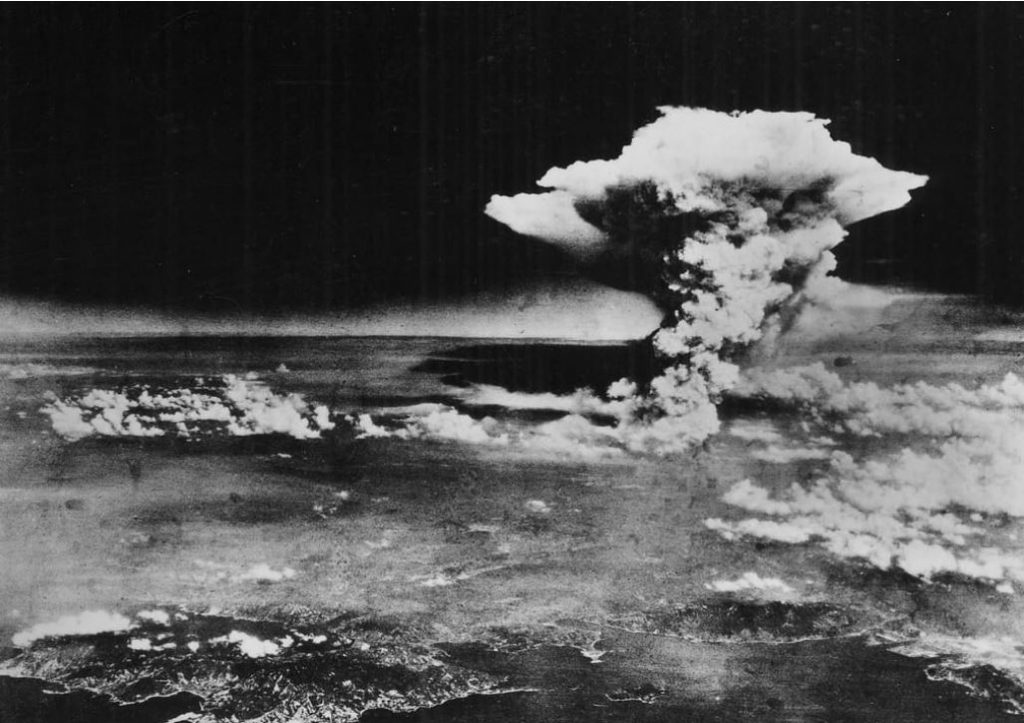
On August 6, 1945, the bomber “Enola Gay” dropped the first atomic bomb on Hiroshima. The detonation that caused the instant death of around 80,000 people and sparked a legacy of nuclear weapons research that endures to this day.

August 6, 1945. Victory in Europe had been agreed upon three months earlier, but the United States and Japan were prolonging World War II. President Truman wanted to end the war, but Japan refused to surrender. Until, on a Monday morning, the bomber “Enola Gay,” commanded by Colonel Paul W. Tibbets, took off from the Mariana Islands, heading for Hiroshima.

On board was “Little Boy,” the world’s first atomic bomb to be dropped in a wartime context.

About 80,000 people died instantly, while tens of thousands would die months and years later from the effects of radiation.

More than a square kilometre of Hiroshima city was obliterated, crushed by the impact of the “Little Boy” bomb, which detonated 580 meters above ground. Nearly everyone within the fireball’s radius of approximately 198 meters died instantly. Further out, within a 2-kilometer radius, everyone suffered third-degree burns, and within a 4-kilometer perimeter, 45% of people would eventually die from the effects of radiation.

In the end, around 100,000 people died and more than half of the city’s buildings, many up to 9 kilometres away from the point of impact, were left in ruins.

At that time, Hiroshima was an important centre of Japanese military life and had about 300,000 inhabitants.

Photo; Hiroshima, Japan, in 1954, nine years after the atomic bomb was dropped. Photo: IMAGO/piemags via Reuters Connect

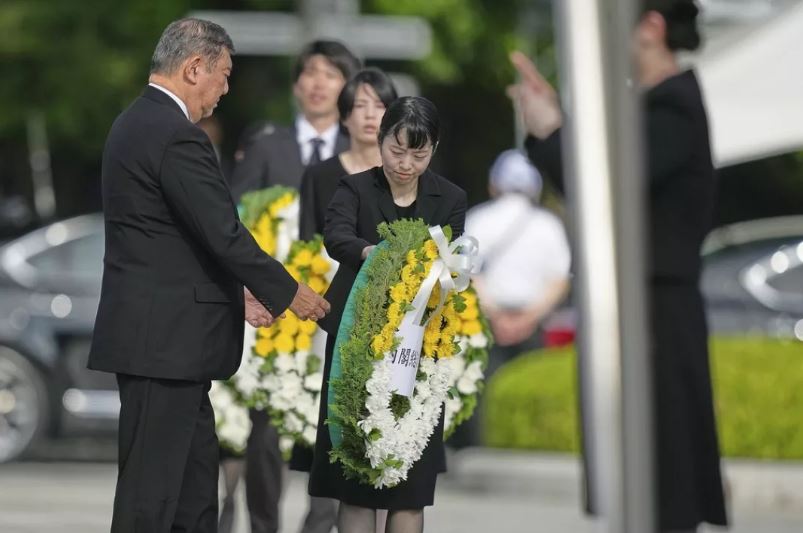
Japanese Prime Minister Shigeru Ishiba lays flowers at the Memorial Cenotaph during a ceremony marking the 80th anniversary of the bombing of Hiroshima, Japan, Wednesday.

Read more

The ” Little Boy” bomb was the result of years of research, but was only tested once. The concept was simple: gathering uranium or plutonium at sufficiently high speeds would create a “critical mass” so quickly that it would trigger an uncontrolled, near-instantaneous chain reaction of neutrons destroying atomic nuclei.

The lost mass of each atom is converted into energy at an astonishing rate. Only 1.09 kg of the 64 kg of uranium in “Little Boy” was converted into energy. This was the equivalent of detonating 15,000 tons of TNT, according to calculations by the Los Alamos National Laboratory in the United States.

Since World War II, no country has attacked another with a nuclear weapon. But at least eight have developed such weapons, and as scientists theorized new designs—including the much more powerful fusion weapons, so-called “hydrogen bombs”—tests began around the world. More than 2,000 nuclear detonation experiments have taken place since Oppenheimer saw the fireball from the Trinity test in the New Mexico desert.

For decades, many of these tests were atmospheric, meaning the weapons were detonated above ground and sometimes even in space. Others were underground, detonated in vaults deep below the surface, intended to contain the blast and prevent radioactive fallout, while instruments measured the performance of the new designs.

These tests have human consequences. Even when things went according to plan, early atmospheric tests released radioactive fallout into the atmosphere, which could travel hundreds of kilometers.

But when the plan went wrong, the results could be catastrophic. The “Castle Bravo” test, conducted by the United States in 1954, was intended to evaluate the design of a 5-megaton weapon—the equivalent of 5 million tons of conventional explosives.

Instead, the device exploded with a yield of 15 megatons, vaporizing many of the test instruments and releasing radioactive fallout into the atmosphere. Several hours later, it engulfed a Japanese fishing vessel called the Daigo Fukuryū Maru. All 23 crew members became ill from radiation, and one died.

Hundreds of indigenous people were removed from their homes in and around the South Pacific atolls, where the United States conducted most of its atmospheric testing.

The US atomic bomb attacks on Japan remain the only military use of nuclear weapons.

Currently, there are nine countries that possess nuclear weapons: the US, Russia, France, China, the UK, Pakistan, India, Israel, and North Korea. The US and Russia together possess about 90% of the world’s nuclear warheads.


Categories
Uncategorized


Rural Fires – Situation of Alert – Further extended to  23.59 hrs 19th August 2025


The Alert Status covers the period between 00:00 on August 8, 2025, and 23:59 on August 19, 2025.

Within the scope of the Alert Status declaration, a set of exceptional measures will be extended.

Given the weather forecasts for the coming days, which point to a significant increase in the risk of rural fires, the Government, through the Ministers of

National Defense, Infrastructure and Housing, Internal Administration, Health, Labor, Solidarity and Social Security, Environment and Energy, Culture, Youth and Sports, and Agriculture and the Sea, has determined the extension of the Alert Status Declaration across the continent. The Alert Status will now cover the period from midnight on Friday, August 8th, until 11:59 pm on Wednesday, August 19th.

The declaration results from the elevation of the special alert status of the Integrated Protection and Relief Operations System (SIOPS) and the need to adopt preventive and special measures to respond to the fire danger, as predicted by the Portuguese Institute of the Sea and Atmosphere (IPMA), across much of mainland Portugal.

Under the scope of the Alert Status Declaration, as provided for in the Civil Protection Framework Law, the following exceptional measures will be implemented:

  • Prohibition of access, circulation, and permanence within forest areas previously defined in the Municipal Forest Fire Protection Plans, as well as on forest trails, rural roads, and other roads that cross them;
  • Prohibition of burning cut and piled waste and extensive burning, as well as the suspension of any issued permits;
  • Prohibition of work in forest areas using any type of machinery, except those associated with firefighting;
  • Prohibition of work in other rural areas using brush cutters with metal blades or discs, brush cutters, shredders, and machines with blades or front shovels;
  • Prohibition of the use of fireworks or other pyrotechnic devices, regardless of their combustion method, as well as the suspension of any issued permits.

The prohibition does not cover:

  • Work associated with feeding and watering animals, phytosanitary or fertilization treatment, irrigation, pruning, harvesting, and transportation of agricultural crops, provided they are essential and cannot be postponed and are carried out in irrigated areas or areas devoid of forests, woods, or flammable materials, and do not pose a risk of ignition;
  • Manual cork extraction and honey extraction (creasing), provided they are carried out without the use of fumigation methods obtained with incandescent material or heat generators;
  • Civil construction work, provided they cannot be postponed and appropriate measures are adopted to mitigate the risk of rural fires; – Harvesting agricultural crops using machinery, namely combine harvesters, and carrying out forestry operations for cutting, trimming, and transport, between sunset and 11:00 a.m., provided that rural fire risk mitigation measures are adopted and their implementation is communicated to the territorially competent Municipal Civil Protection Service.

The Declaration of a State of Alert implies:

  • An increase in the level of readiness and operational response by the National Republican Guard (GNR) and the Public Security Police (PSP), with increased resources for surveillance, inspection, deterrent patrols, and general support for protection and rescue operations that may be launched, considering the interruption of vacation leave and the suspension of days off and rest periods authorized for this purpose; – Increased readiness and mobilization of emergency medical, public health, and social support teams by the competent health and social security authorities;
  • Permanent mobilization of Forest Firefighting teams affects the Firefighting System;
  • Permanent mobilization of the National Forestry Agents Corps and Nature Watchers, who are part of the fire prevention and firefighting system, by the Institute for Nature and Forest Conservation (ICNF);
  • Increased readiness of response teams from entities with a special duty of cooperation in the areas of communications (fixed and mobile network operators) and energy (transportation and distribution);
  • The National Republican Guard (GNR) carrying out patrols (surveillance) and aerial surveillance by the Armed Forces in districts on special alert, focusing on areas identified as posing a risk.
  • The National Republican Guard (GNR) will conduct patrols (surveillance) and aerial surveillance using the Armed Forces in districts on special alert, focusing on areas identified as a risk;

Exemption from service or justification for absences of public or private sector workers who simultaneously perform the duties of volunteer firefighters, except for those working in the Armed Forces, Security Forces, and the National Emergency and Civil Protection Authority (ANEPC), as well as in public health care services in emergency situations, particularly pre-hospital emergency technicians and nurses from the National Institute of Medical Emergency.

ANEPC will issue warnings to the public about the danger of rural fires.

The Armed Forces provide air resources to, if necessary and depending on existing availability, operate in locations to be determined by ANEPC


Categories
Uncategorized


Climate change worsens extreme events worldwide


More intense heat waves, devastating wildfires, deadly floods, and record-breaking typhoons marked a year of extremes. The planet has already warmed more than 1.5°C, and the trend is not slowing down.

The year 2024 was the hottest in history, exceeding 1.5°C above pre-industrial levels for the first time. Scientists warn that without urgent cuts in greenhouse gas emissions, extreme weather events will become even more frequent and devastating.

Global temperatures in 2024 will exceed 1.5°C above pre-industrial levels for the first time, bringing the world closer to failing to meet the commitment governments made in the 2015 Paris Agreement, scientists say.

The World Meteorological Organization confirmed the failure to meet the 1.5°C target after analysing data from scientists in the US, UK, Japan and the European Union.

Extreme weather events ravaged the world in 2024, with severe droughts followed by floods hitting Italy and South America, deadly floods in Nepal , Sudan and Europe, heat waves in Mexico , Mali and Saudi Arabia that killed thousands of people, and disastrous cyclones in the US, the Philippines or Mozambique .

Scientists say human-induced climate change is making extreme weather events like heat waves, floods, and storms more frequent and deadly, and this trend will continue if the world continues to burn fossil fuels.

“All the climate extremes we’re seeing are occurring in a warmer atmosphere, and also warmer oceans, and in an atmosphere that can carry more moisture. All of this contributes to heat waves, like those we’ve experienced in the past, becoming more intense and, of course, also more frequent,” climate scientist Eric Fischer of ETH Zurich explained to Reuters.

Heavy precipitation episodes can also be more intense because the atmosphere can carry more moisture, and “the fact that the atmosphere can carry more moisture also means that it can actually extract more moisture from vegetation and the surface, and therefore can also make droughts more intense.”

Climate change makes heat waves hotter and more frequent.

This occurs in most regions on Earth and has been confirmed by the UN’s Panel of Global Climate Scientists (IPCC).

On average globally, a heat wave that would occur once every 10 years in the pre-industrial climate will now occur 2.8 times over 10 years, and will be 1.2°C warmer, according to an international team of scientists from the World Weather Attribution (WWA) group.

Climate change is making wildfires more frequent and severe.

Dozens of people died in the Los Angeles wildfires of January 2025. The flames reduced entire neighbourhoods to smoldering ruins, leaving an apocalyptic landscape. Officials said at least 12,300 structures were damaged or destroyed.

Climate change increases droughts.

A drier climate helps fires spread faster, burn longer, and spread more intensely. Warmer weather also saps moisture from vegetation.


“Forest fires are a complex event. Therefore, there are many factors to consider, such as forest management, where we build our homes, and how they are affected. But climate change can also play a role in all of this. And it’s mainly the fact that forest fires, which involve very hot temperatures and a very dry atmosphere, are becoming more frequent,” explained Erich Fischer.

Forest management and ignition sources are also important factors. In Europe, more than nine out of ten fires are caused by human activities, such as arson, carelessness, power lines, or scattered glass, according to EU data.

Climate change makes storms worse

Climate change is worsening storms and torrential rains, as a warmer atmosphere can hold more water, leading to intense rainfall. Atmospheric water vapor reached a record high in 2024, and the U.S. National Oceanic and Atmospheric Administration (NOAA) said it was the third wettest year on record.

Six typhoons hit the Philippines in 30 days in 2024, a record storm season in the Pacific Ocean, according to World Weather Attribution (WWA), a global team of scientists examining the role of climate change in extreme weather events.

The likelihood of worsening events like this series of typhoons, or Hurricanes Helene and Milton, which hit the United States consecutively in late September and October, will increase with global warming, according to the WWA.

Without drastic cuts in the greenhouse gases that cause climate change, heat waves, wildfires, floods and droughts will worsen significantly, scientists warn.


Categories
Uncategorized


Fires of criminal origin are almost all in the North and Centre


The following was sent to Safe Communities Portugal by AGIF

The agency that manages fires warns of the need to combat alcoholism and mental health problems in order to reduce fires, most of which occur in the North and Centre.

Arson is already the leading cause of fires in Portugal, accounting for 84% of the area burned with a known cause last year (a little over 84,000 hectares). Almost all of these occurred in the North and Centre of the country, regions that account for 97% of the total burned area (134,000 hectares). Combating risky behaviour during burning and slash-and-burn activities has reduced the number of incidents in the country, but addressing the alcoholism and mental health issues that drive many to set fires is still a priority, in situations that, combined with severe weather, lead to tragedies like the one experienced last September.

In 2024 alone, arsonists—including those responsible for and those not responsible for, whether or not they had intentional intent—were responsible for 84% of the burned area and 42% of incidents. The remaining incidents were caused by the use of fire, such as burning and slash-and-burn (41%), accidental causes, and natural causes. The North (57% of incidents and 48% of the burned area) and the Centre (17% of incidents and 49% of the burned area) suffered the most from the September fires.

This trend, as reflected in reports from the Agency for Integrated Rural Fire Management (AGIF), has been evident in recent years (see infographic). In 2023, for example, arson accounted for 31% of incidents, and fires caused by improper use accounted for 50%.

“Before 2018, there were many fires, around 20,000 per year, and most were the result of burning and slash-and-burn,” but awareness campaigns and mechanisms aimed at landowners (the ICNF Burns and Burns app or by calling 808 200 520) have led to a “significant reduction” in fires, explains Tiago Oliveira, president of AGIF. As a result, there has been a percentage increase in arson, and the need to combat the phenomenon has gained visibility. According to the AGIF leader, to achieve this, it is urgent to prioritize preventive measures “against alcoholism and mental health problems,” as well as monitoring repeat offenders and behavioural monitoring.

The AGIF president emphasizes that, to continue reducing fires, it is necessary to address arson and forest management (see text opposite), as “firefighting is very robust.” In recent years, he adds, “as we have reduced the number of fires, our firefighting capacity has been further leveraged, meaning we will have more resources for each fire.”

They understand fireworks

According to Avelino Lima, head of the Permanent Monitoring and Support Group for forest fires at the Judicial Police (PJ), most arson attacks are “involuntary,” meaning there is no intention to commit arson, but some actions do have this consequence. Some are “difficult to resolve because they stem from cultural issues,” such as the improper clearing of brush “by emigrants” during summer vacation, he explains.

As for those with malicious intent, the profile drawn up by the PJ indicates that they are generally men (last year there was an increase in the number of women), socially dysfunctional individuals, with alcohol problems, social or psychological weaknesses, and dazzled by the spectacle of fire. And some are becoming more “competent.” “We’ve already arrested individuals who clearly master aspects of fire, and this is dramatic, because they can achieve their goals more violently,” says Lima.

Last year, the Judiciary Police arrested 53 suspects and charged 191 individuals with intentional arson. The GNR arrested 36 individuals and identified 551 for committing forest fires, primarily due to negligent behaviour.

Notify tourists

Xavier Viegas, coordinator of the Center for Forest Fire Studies at the Faculty of Science and Technology of the University of Coimbra, warns that public behavior is also important to prevent fires from causing significant damage. “Clearing vegetation around homes must be a priority, because despite the warnings the country has received and efforts by authorities and municipalities to be more cautious, there is still much to be done,” says the expert. This is one of the major problems when fires occur, “because [the flames] easily reach close to homes.” If these “are not protected, they cause serious problems for residents, firefighting forces, and the country.”

Xavier Viegas also emphasizes that there must be “care in risk communication,” not forgetting tourists and immigrants, who “are not accustomed to the fire environment we have in the country and may be surprised.”

Parliament must legislate to improve forest management

The Agency for Integrated Rural Fire Management (AGIF) warns that measures must be implemented to improve forest management, many of which are supported by Parliament. Proposals from the Rural Property Working Group, which could help in this process, are slow to materialize.

The AGIF report highlights the “positive progress of property registry projects, which mapped 58% of the area of the 153 municipalities in mainland Portugal without land registry records,” but little else. There are “key projects to be implemented—some under the exclusive jurisdiction of the Assembly of the Republic—that would address the root causes of the problem.” Specifically, “there remains a need for political implementation, through the approval of legislation in the Assembly of the Republic, based on the results prepared by the Rural Property Working Group” (GTPR) and the completion of the National Forest Inventory.

Between inheritance, emigration, and profitability issues, among others, there are many plots of land that are not “taken care of,” warns Tiago Oliveira.

Former GTPR coordinator Rui Gonçalves says the proposals drafted two years ago resulted from “in-depth work on forest problems,” and the measures “should be taken as quickly as possible,” as they would impact rural property management and, consequently, the spread of fires. He acknowledges that there has been political instability, but “information circulating suggests there would be a consensus for these measures to be implemented.”

Rui Gonçalves adds that the proposals, which include measures on inheritance law to prevent “property immobility” and facilitate land consolidation, among others, should not be taken “in isolation.” “If we don’t make rural areas attractive for investment, the rest won’t be resolved, and the difficulties will persist.”

Lack of incentives

Regarding legal and financial incentives that would help improve the economic viability of land, “very little” has been done, the AGIF leader believes, emphasizing that this is also “a matter for Parliament.” “When discussing corporate income tax (IRC), personal income tax (IRS), and the State Budget, where are the incentives for landowners or those who exploit the forest to benefit? This would allow the forest to be leveraged on a new scale,” he warns.

The report highlights the importance of moving forward with the special contribution for the conservation of forest resources, creating Forest Savings Plans and reviewing the rural taxation model.”

Way to go

Investigation
About 99% of rural fires in 2024 were investigated by police forces.

Raising awareness among the population
Experts advocate campaigns to continue raising awareness of risky behavior, particularly when handling agricultural machinery.

Diversifying the forest
Xavier Viegas advocates for forests with different species of trees, which have different behaviors when faced with flames.

Encouraging pastoralism
Tiago Oliveira approves incentives to increase the number of animals that eat vegetation and the valorization of products resulting from silvopastoralism, such as milk and cheese.

Combating smallholdings
AGIF argues that it is necessary to resize rural properties in the North and Center, increase areas of integrated management, qualify the rural economy, and expand incentives for land development.

Hectares consumed
According to the ICNF, this year (as of yesterday) 10,345 hectares have already burned in rural areas, as a result of 3,403 incidents.