Portugal Safety and Security Report Wednesday 15th October 2025

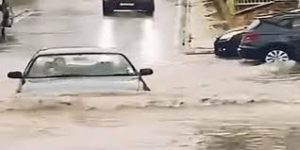
Good afternoon. If you have been monitoring the weather forecasts over the last week, you will see that whereas Portugal has had generally fine weather, this is not the case with our neighbours Spain. Yesterday AEMET raised to a red level warning for torrential rain in the south of the province of Valencia, in effect until at least 15:00 (local time).

The best news is the announcement by Civil Protection is that no one is missing, a circumstance almost surprising given the magnitude of the storm and the images of the streets of several municipalities turned into flooded rivers. Despite this, 18 injuries have been reported, one of them seriously injured after falling, fracturing his hip, and being taken to the hospital. The rest received minor treatments. The Generalitat’s Fire Brigade responded to 340 calls between 17:30 on Sunday (Oct 12) and 7:00 (Oct 13). Thirty-one people were rescued, most of them in their cars on flooded roads.

The powerful DANA was an unprecedented event of torrential rain that broke historical records, for instance with 280 l/m2 in Mas de Barberans, Tarragona.

On the 10th October the Region of Murcia experienced a complicated day due to the heavy rainfall caused by DANA Alice, especially along the Cartagena coast, where up to 120 l/m2 accumulated in just a few hours. Due to this situation, 101 people were forced to evacuate from a campsite that was at risk of flooding, as well as residents of the Bahía Bella and La Algameca residential areas, who were also affected by accumulated rain.

We advise, therefore,  those travelling to parts of Spain, especially areas that have a history of intense rain to check forecasts carefully before heading out. We publish heavy rain and storm warnings on this page and in more detail on our Facebook Group “Safe Communities Portugal Protection again Natural Hazards.

CP railways has opened an investigation, following “internal procedures”, to determine “possible causes and possible improvement actions” that led to Monday’s incident in which an Intercidades (Inter City) train lost one of its carriages midway through a journey between Lisbon and Faro.

CP in a statement said that “Passenger safety was not affected, as the trains are designed to brake and immobilize vehicles in these situations, as happened,” CP said. As for the passengers, they were “safely taken to the remaining carriages” and, “after checking all the carriages and their safety conditions, the train continued its journey to Faro”.

Publico stated: “There were no injuries, nor is the situation potentially very dangerous, as a broken coupling causes a rupture in the main brake line, bringing the train to an immediate stop. On all CP trains, the carriages are always connected by automatic brake lines. If the train accidentally splits (as was the case with the coupling break), both separate sections of the train stop automatically, regardless of the line’s gradient”. “Everything indicates that some maintenance failure led to the coupler’s failure, as CP has been having difficulty performing general overhauls on its carriages. Currently, one in five Intercidades carriages is parked in workshops awaiting maintenance or repairs”.

It is important that the investigation is completed quickly and thoroughly given the large number of passengers that travel daily on the Inter City trains throughout the mainland.

Lastly please remember that the fire risk remains very high in places so we much not be complacent when it comes to fire prevention. The ground is still very dry in some places and yesterday much of the mainland had a minimum relativity of under 30%. Remember a small spark can cause a very large fire. Follow the regulations in place.

Have a good week ahead 

News:

CP opens investigation to “determine the causes” of “anomaly” that separated train carriage

In a clarification to SIC, CP confirmed the incident that occurred this Monday at “around 4 pm” indicating that the train in question “had an anomaly when leaving Grândola station”.

CP has opened an investigation, following “internal procedures”, to determine “possible causes and possible improvement actions” that led to Monday’s incident in which an Intercidades train lost one of its carriages midway through a journey between Lisbon and Faro.

In a clarification to SIC, CP confirmed the incident that occurred this Monday “around 4 pm” indicating that the train in question “had an anomaly when leaving Grândola station”.

The problem was caused by “a rupture in the coupling between two trains, which resulted in the train’s carriages separating.” According to the company, “there are no previous records of this failure occurring in the mechanical element that broke.”

“Passenger safety was not affected, as the trains are designed to brake and immobilize vehicles in these situations, as happened,” CP said.

As for the passengers, they were “safely taken to the remaining carriages” and, “after checking all the carriages and their safety conditions, the train continued its journey to Faro”.

As for the carriage that separated from the train, the company indicates that “it was rescued in Grândola with the help of a Medway locomotive”.

The company guarantees that “periodic maintenance of all rolling stock is scrupulously carried out by the company” and the inspection plan “is being carried out as planned”.

As reported this morning, the Aircraft and Railway Accident Prevention and Investigation Office has also opened an investigation to gather more information about the incident.

According to the newspaper Público, which broke the news this Tuesday, one in every five Intercidades carriages is stopped waiting for maintenance or repairs.

Theranostics: medicine’s latest investment in cancer diagnosis and treatment

It allows doctors to pinpoint the location of tumour cells and deliver radiation treatment to them to kill them. The Porto IPO was the country’s largest medical centre to invest in this technology, with encouraging results for patients.

It’s just a feeling, but exactly the one you’re looking for after years of cancer treatments. “I think my disease has practically disappeared with this treatment,” Albano Soares tells SIC.

“I’m much better. I didn’t eat, I didn’t sleep, I didn’t walk – I went through all those phases – and now I eat, I sleep, I breathe well and I’m much better. I can get dressed by myself and everything, and back then I couldn’t even do that.”

This is a successful case of prostate cancer resulting from a nuclear medicine therapeutic and diagnostic approach: theranostics. This is a highly personalized approach to the patient and the tumour. It’s only possible with highly qualified professionals and cutting-edge technology like this Gama Digital Camera. It’s been at the Porto IPO since July and is one of two in the entire country.

But not all cancer patients are suitable for this approach. For now, the radiopharmaceuticals prepared here at the Porto IPO are used as a second-line treatment for neuroendocrine tumours and as a last-line treatment for prostate tumours.

The Porto IPO’s investment in the theranostics field has already exceeded five million euros. It was the Portuguese unit that invested most heavily in this area. Last year, Porto’s nuclear medicine service performed approximately 16,000 procedures, 300 of which were therapeutic.


Azores Situation Report Wednesday 8th October 2025

Economic and Business Concerns in the Azores

The Azores Chamber of Commerce and Industry (CCIA) has called for the development of a contingency plan in case Azores Airlines is forced to close. This comes amid ongoing negotiations for the airline’s privatization with the Newtour/MS Aviation consortium. The Regional Government has indicated that, if no agreement is reached, the company may be closed.

Business leaders stress the importance of maintaining current air routes and frequencies and recommend that SATA Air Açores increase its inter-island flight capacity, especially during peak periods, to ensure the smooth movement of both tourists and residents.

The CCIA Forum, which brought together businesspeople and associations from across the Azores, has also highlighted several pressing economic issues. They urge that the region’s 2026 Plan and Budget prioritize the private sector and introduce measures to consistently reduce current expenses. The Forum warns of a worsening imbalance between revenues and expenditures, which is contributing to the region’s growing public debt. To address this, they propose a medium-term plan to reverse the debt trajectory and emphasize that continuous growth of regional public debt is unsustainable.

Additionally, the Forum draws attention to the low implementation rates of key European funding programs, such as the Azores 2030 Operational Program (PO) and the Recovery and Resilience Plan (PRR). With the PRR’s implementation rate at just 42.7%, more than twice the amount already completed since 2021 must be achieved in less than a year. The Forum insists that accelerating the implementation of these funds should be a top priority for Azorean society in 2026.

Other recommendations include developing a robust strategy to address seasonality in tourism, reviewing the maritime transport model, and reforming both the Regional Finance Law and regional public administration. The Forum concludes that the Azores need a more agile, streamlined, and less bureaucratic administration, and should not remain isolated from national reforms.

Public Health Incident: Flea Infestation in Rabo de Peixe

A flea infestation has affected several schools in Rabo de Peixe, including the Ribeira Grande Vocational School, Luísa Constantina School, and Rui Galvão de Carvalho School. In response, the municipality has hired a company to disinfect the schools and surrounding streets as a precautionary measure. According to Mayor Alexandre Gaudêncio, there have been no reports of the infestation spreading to residential areas or public roads.

The outbreak was first reported near the Centre for Arts and Crafts (CAO), a municipal building used by the vocational school. The school conducted a general disinfection of the building and its surroundings, resulting in a temporary closure to ensure thorough cleaning. Later, the Rui Galvão de Carvalho School reported that the infestation had reached the area around Luísa Constantina School, affecting some teachers and students.

The municipality’s public health team, led by its full-time veterinarian, responded promptly, initiating intervention within 24 hours. Both Luísa Constantina and Rui Galvão de Carvalho schools will be closed for disinfection, with plans to resume activities the following day. The mayor noted that the spread of the infestation to another public school was unexpected, and the municipality hopes the hired company will identify the source of the problem.

While there is speculation about the possible link to illegal animal exploitation near the vocational school, as occurred in previous years, the mayor has not confirmed this as the cause. He explained that, in the past, municipal inspections resolved similar issues after giving deadlines for corrective action.


Portugal Safety and Security Report Wednesday 8 October 2025

Good morning. It was sad to learn that just five months into the 2025 Bathing Season, the National Maritime Authority recorded, between May 1 and September 30, 1,120 rescues, 3,787 first aid actions and 18 fatalities on Portuguese beaches. Eleven of the facilities were at unsupervised beaches.

A reminder that the new border management system – the Input/Exit System (EES) – will soon start. The EES is the new European system for automated external border control of the Schengen space that will gradually replace traditional passport stamps with centralized electronic registrations. It is intended for third country citizens traveling to Europe, for short-term stays.

The new Entry/Exit System (EES) will start operations on 12 October 2025. European countries using the EES will introduce the system gradually at their external borders. This means that data collection will be gradually introduced at border crossing points with full implementation by 10 April 2026.

In case you are not aware the French air traffic controllers have called off a three-day strike that threatened to disrupt European flights from, 7th – 10th October, a top union said on Saturday. We mention this because at least one online news organisation does not appear to be aware of this stating this afternoon that “the strike appears to be having little effect!”

The main union in the sector, the SNCTA, announced the suspension of its strike notice for Tuesday to Thursday following consultations with the Civil Aviation Authority and “agreements” with the management. The union, which represents around 60 percent of workers, has pushed for better pay and conditions. The statement also referred to a promise by new Prime Minister Sebastien Lecornu not to ram his austerity budget through parliament without a vote, seen as a key concession to the opposition.

The main French air traffic control union, SNCTA, has announced a strike from 7 to 10 October 2025, which is expected to cause tens of thousands of flight cancellations and delays across Western Europe.

A reminder concerning scams. Fake emails and SMSs are circulating in the name of ANSR (National Road Safety Authority) with summit notifications and payment requests. BE CAREFUL! THE ANSR WILL NEVER: Send notifications by email or SMS; Request payments through links; Use digital media for official communications. All notifications are always sent by PHYSICAL MAIL. If you receive a suspicious message: Do NOT click on any links; DO NOT provide personal data; DO NOT make payments. In case of any doubt, contact ANSR 214 236 800

This is not the only scam. Another one concerns an alleged debt owed to SNS. If you receive a message asking you to pay for a supposed emergency room visit, do not click on the link, do not make any payment, and do not enter any personal or banking information. The Viseu Dão-Lafões Local Health Unit (ULS) warned, last Friday, about the circulation of mobile phone messages (sms) in the name of the National Health Service (SNS) about outstanding amounts and with a ‘link’ to pay.

According to a press release, the ULS states that “fake SMS messages are circulating in the name of the SNS and the Ministry of Health” and these messages “refer to the existence of outstanding amounts relating to the emergency, which must be paid within five days”.

Our team wish you all the very best for the week ahead.

News

Case of pulmonary tuberculosis detected in a hotel in the Lisbon region

The case is undergoing clinical and therapeutic monitoring at the Community Respiratory Consultation in the area of ​​residence, according to the DGS, which, for now, rules out “evidence of increased risk” for the population.

Health authorities are monitoring a case of pulmonary tuberculosis detected in a hotel in the Lisbon region, identifying high-risk contacts and referring them for screening. The information was released this Tuesday by the Directorate-General for Health (DGS).

In a response to the Lusa news agency, following a report of tuberculosis cases in a hotel, the DGS clarifies that, “to date, a case of pulmonary tuberculosis has been confirmed in a professional linked to a hotel establishment in the Lisbon region”.

According to the DGS, this case is undergoing clinical and therapeutic monitoring at the Community Respiratory Consultation in the area of ​​residence.

“To date, there is no evidence of an increased risk to the general population. All recommended isolation and treatment measures have been followed by the case,” he emphasizes.

The DGS states that The DGS states that health authorities and other partners are identifying “at-risk contacts based on their exposure to the case and referring them for screening,” following public health standards and guidelines applicable to these cases.

Airborne transmission

Pulmonary tuberculosis is transmitted mainly through the air, when a person with the disease releases small infected particles when coughing, talking or sneezing, says the DGS, highlighting that the risk of contagion depends on the severity of the disease, the proximity and duration of contact and the conditions of the location.

“Only tuberculosis that affects the respiratory tract is contagious. When a case is identified, health authorities track close contacts—people who spent several hours with the patient—to detect possible infections,” he emphasizes.

The health authority explains that screening begins by ruling out active disease, through symptoms and a chest X-ray, and continues with a blood test (IGRA) that assesses whether there has been previous contact with the bacteria.

Screening aims to ensure early detection of disease cases and prevention of transmission. 

SPAIN – AEMET names the first major storm/dana (cut-off low) of the 2025-2026 season: storm/dana Alice.

From now on, the most adverse Dana will also have their own names. The name Dana comes from the acronym DANA (Depresión Aislada en Niveles Altos – Cut-off low in English). By nature, these systems develop in a complex manner and are difficult to predict. In conjunction with other factors, they are capable of generating very intense, locally torrential, precipitation (rain and snow) and high-impact storms.

Storm/Dana ALICE – Will cause very heavy and persistent downpours in areas of the eastern Iberian Peninsula and the Balearic Islands in the coming days.

 Take extreme precautions and check the current warnings on the AEMET website and the AEMET app.

Start: Late Wednesday Oct 8th

Duration: At least until Sunday Oct 12th

Probability: High (70%)

Tomorrow, Wednesday Oct 8th, a trough with an associated cold mass air at mid-levels will enter the western Iberian Peninsula and advance eastward, forming several vortices within it over the following days, giving rise to Storm/Dana Alice.

At surface level, a powerful northerly high pressure system will foster an easterly and north easterly flow with a maritime path that will bring abundant moisture to the Mediterranean coast.

This configuration will be fairly stationary, leading to a blocking situation that will cause the DESCRIBED CONDITIONS TO PERSIST FOR SEVERAL DAYS, WITH VERY HEAVY AND PERSISTENT RAINFALL AFFECTING MAINLY THE EASTERN THIRD OF THE PENINSULA AND THE BALEARIC ISLANDS from late tomorrow, Wednesday Oct 8th, and at least until Sunday Oct 12th.

The area with the highest accumulations throughout the episode will be THE AREA AROUND CABO DE LA NAO, PARTICULARLY THE COASTAL AND PRE-COASTAL AREAS OF SOUTHERN VALENCIA AND NORTHERN ALICANTE. The showers could lead to local flash flooding in low-lying areas, streams, and drainage channels, so the potential danger level of this situation is high.

 As of today, the highest accumulations, the most adverse situation, is expected in the south of the province of Valencia (Sueca, Cullera, Gandía, Oliva), the north of Alicante (Denia, Pego, Vall de Ebo, Ondara), and the extreme southeast of Murcia (Cabo de Palos and Mar Menor). These areas are highly exposed to north easterly winds, which are expected to predominate. Elsewhere, rain is also expected, but intermittent and less intense.

West Antarctica hides almost a hundred volcanoes under the ice:

The colossal West Antarctic ice sheet hides what appears to be the largest volcanic region on the planet, according to the results of a study carried out by researchers at the University of Edinburgh (UK) and reported in the journal Geological Society.

Experts have discovered as many as 91 volcanoes under Antarctic ice, the largest of which is as high as Switzerland’s Eiger volcano, rising 3,970 meters above sea level

According to o experts, the area has many similarities to the East African volcanic ridge, which currently holds the record for the densest concentration of volcanoes in the world. They remotely surveyed the underside of the ice sheet to detect hidden peaks of basaltic rock, like those of other volcanoes in the region whose tips or spikes press above the ice.

By analysing the land beneath the ice, the ice and comparing the results with satellite and database records, as well as geological information from aerial assessments, the geologists found 91 previously unknown volcanoes, ranging in height from 100 to 3,850 meters.

“We found 180 peaks, but we discounted 50 because they didn’t match the other data,” explains Robert Bingham, co-author of the paper. They eventually found 138 peaks under the West Antarctic ice sheet, including 47 volcanoes already known because their peaks protrude through the ice, leaving the figure of 91 newly discovered.

 

Azores Situation Report Wednesday 1st October 2025

Father and son share the ‘kingdom’ of Azorean cheeses

In the ‘kingdom’ of award-winning cheese in the Azores, father and son share the business in different establishments in Ponta Delgada, on the island of São Miguel, being sought after by locals, tourists and emigrants.

Carlos Bernardo founded the Reis dos Queijos establishment 47 years ago, which has been managed for 15 years by one of his sons, Mário Bernardo, and sells 47 varieties of cheese, all of Azorean origin.

The establishment has since developed its own cheese, in a project in partnership with Lactaçor, which is “pasteurized and similar” in its characteristics to the Topo cheese from São Jorge.

Mário Bernardo also mentioned that emigrants “take whole wheels of cheese abroad,” as do mainland tourists.

Another son of the Rei dos Queijos, Milton Bernardo, has shared the cheese market with his father and brothers since he decided to leave and found Príncipe dos Queijos, also in Ponta Delgada.

His typical customer, including many from the mainland, is looking for “a strong, older cheese,” but spicy cheeses aren’t just sitting on the shelves.
Milton Bernardo says that emigrants in the United States and Canada are regular customers, who take the cheese vacuum-packed for the trip and transport it in a box, with the corresponding receipt and certificate due to the demands of the North American market.

“Many of them come to our store already referred by other emigrants who have been here,” he said.

Regarding his brother’s decision to start his own business and create Príncipe dos Queijos, Mário Bernardo says, “there’s business between both parties and a market for everyone,” making it “a consolidated market.”

Azorean cheeses have gained an international reputation thanks to their numerous awards, with São Jorge DOP cheese and its cured cheeses receiving gold medals and recognized for their quality and uniqueness in several categories at the World Cheese Awards.

São Miguel Old Cheese, aged for nine months, also received gold medals at the World Cheese Awards.

Azorean Milhafre Cheese, from Terceira and Graciosa Islands, was recognized with the Superior Taste Award 2022 and 2023, awarded by international judges, and was also named one of the country’s best cheeses in 2024.

Jury asked for “a few more days” to try to privatize Azores Airlines

The Government of the Azores guaranteed “permanent” respect for SATA workers and revealed that the jury for the privatization of Azores Airlines asked for “a few more days” to conclude the process and give “another chance” to the consortium.

On September 9, the Finance Secretary said he was committed to presenting a proposal for the privatization of Azores Airlines by the end of the month, warning that if this did not happen, the option would be “private negotiation” or the closure of the company.

This Tuesday, the governor admitted that “there was an expectation” of having by the end of September a “firm proposal or the final outcome of the process”, but said he respected the performance of the jury led by Augusto Mateus.

According to Duarte Freitas, the jury “intends to schedule a meeting by the end of the week” with the company’s management and the Newtour/MS Aviation consortium.

“As soon as the jury president can confirm this meeting, we will naturally have an idea of ​​the final date for the outcome,” he added.

The regional secretary recalled that the agreement with the European Commission obliges the region to “sell more than 50% of Azores Airlines and 100% of the handling”, highlighting the work of the Azorean executive in the negotiations to grant another guarantee to the group.

On the same day, the Government of the Azores authorized the airline SATA Air Açores to take out two new loans, totalling 40 million euros, to “support treasury resources”.Sure, I can help with that! Here is a rewritten version of your document:


Portugal Safety and Security Report Wednesday 1st October 2025

Good afternoon. When reviewing our Facebook performance on this, our main page, we found that in the 28 days up to yesterday our posts during that period obtained a total 7,599,645 views. This represented a 149% growth on the previous 28 day period. Two of our highest views were both on 27th September, one being the approach of Gabrielle which obtained 795,203 views and earlier in the day, when a post on the forecast of wind speed and precautions to take, obtained 564,377 views. This shows that our key messages concerning risk awareness and preparedness for hazards are reaching a high number of people, which is important in ensure people are aware and can plan accordingly. In can be life-saving in some situations!

After the passing of Gabrielle, you would be right in asking, will there be more of the same this year? The answer is most likely “yes”.

The 2025 Atlantic hurricane season officially began on June 1, and will end on November 30. After a slow start, there has recently been back-to-back tropical cyclones expected to whip up the Atlantic Ocean and produce dangerous waves.

But it is not only waves that we should be concerned about. The second issue is how the close passing or a direct hit on the mainland would have if we were experiencing active wild fires at the time, as was the case in October 2017.

Gabrielle hit the Azores as a Hurricane Category 1, causing nearly 200 occurrences, but soon lost strength, eventually arriving on the mainland as a post tropical cyclone. By this time the wind speeds had decreased considerably, but still on 27th September there was a wind gust of almost 100 km/h recorded.

A week earlier the fire in Aljezur was burning with intensity to the point where the fire commander stated “that it had reached a level at which it was out of control and beyond the capacity of resources, both on the ground and in the air to extinguish”. This begs the question what would have been the effect if the tropical cyclone had arrived a week earlier and had not lost its intensity! Read more about this in our feature in the Portugal Resident out tomorrow Thursday.

Once again Spain has been hardest hit by Gabrielle. Yesterday the Army UME emergencies unit has been activated in Ibiza due to a torrential rain storm Red level warnings in place. The Emergency Department sent an alert message via the EsAlert system to all mobile phones in Ibiza and Formentera, warning of the risk of flooding and urging the public to avoid travel and flood-prone areas, not to stay in basements and to go to upper floors in case of flooding.

AEMET maintains the red level warning in Ibiza and Formentera, where up to 200 millimetres of rain have accumulated in some areas. The storms, initially centred on Ibiza, have moved towards Formentera.

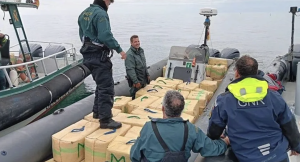
In an unprecedented operation in Galicia, Spain: police officers intercepted a large shipment of cocaine delivered to the coast by a narco-submarine. The operation resulted in the arrest of 14 people involved in unloading and further distribution of the drugs. The total weight of the seized cargo was approximately 3.5 tons.

The drugs landed on September 13, prompting a coastal chase. Officers intercepted one vehicle carrying cocaine bales. Local police found the remaining cargo the next morning. This is the first time such a seizure has taken place on land in Spain. Another example of excellent co-operation on this occasion by the Spanish police and the US Drug Enforcement Agency (DEA)

Our team wish you a nice week ahead.

News

Six deaths and more than 7,700 incidents of domestic violence in three months

In the second quarter of this year alone, six people died, comprising five women and one man, as victims of homicide in the context of domestic violence.

Six people died between April and June 2025, while the PSP and GNR recorded 7,713 incidents, 657 more than in the previous quarter, according to data released this Monday.

According to data from the Domestic Violence Portal, managed by the Commission for Equality and Citizenship (CIG), in the second quarter of this year, six people died, including five women and one man, as victims of homicide in the context of domestic violence.

In total, since the beginning of the year, 13 people have died as a result of domestic violence, the majority of whom (11) were women.

In the same period, PSP and GNR reported 7,713 incidents, a number 9.3% above the 7,056 complaints registered in the first quarter of this year, but 0.3% below the same period in 2024 .

Regarding support measures for victims of domestic violence, there were 5,939 people with tele assistance measures, 81 more than in the first quarter of 2025.

On the other hand, there were 1,401 people welcomed into the National Support Network for Victims of Domestic Violence (RNAVVD), including 733 women, 643 children and 25 men .

There was a need to transport victims in 231 situations, totalling 392 people, including 229 women, 160 children and two men.

In the second quarter of 2025, there were 1,461 inmates serving sentences for the crime of domestic violence, including 395 in preventive detention and 1,066 serving effective sentences.


Azores Situation Report Wednesday 24th September 2025

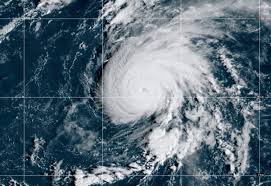
Hurricane Gabrielle has intensified to a Category 4 storm and is projected to reach the Azores later this week. According to the US National Hurricane Centre (NHC), Gabrielle has reached Category 4 on the Saffir-Simpson scale (out of a maximum of 5) and is expected to approach the Azores by the end of the week.

The NHC advises residents of the Azores archipelago to monitor Hurricane Gabrielle’s progress, as it is now a Category 4 hurricane in the Atlantic Ocean. On Monday afternoon, Gabrielle had maximum sustained winds of 140 mph (220 kph) as it moved east-southeast of Bermuda. The hurricane was located 180 miles (290 kilometers) from Bermuda and was moving north-northeast. Although the high-intensity hurricane was still more than 2,000 miles (3,230 kilometers) west of the Azores, forecasters predict that the system will continue to move north and east in the coming days, potentially approaching the Azores islands by the end of the week.

Forecasters noted that Gabrielle’s wind strength was not expected to change significantly on Monday night, and the system could gradually weaken on Tuesday and Wednesday. The system was also expected to increase its forward speed over the next few hours. The NHC reported that Gabrielle would continue to impact the east coast of the United States, from North Carolina northwards, as well as Atlantic Canada, with large waves causing dangerous conditions and rip currents.

Currently, there are no coastal watches or warnings in effect, although authorities have advised Bermuda residents to remain vigilant as the cyclone evolves. The NHC warned that storm surges would continue to affect Bermuda in the coming days. According to the latest update, the cyclone’s center is expected to pass between the Western (Flores and Corvo) and Central (Terceira, Graciosa, Pico, São Jorge, and Faial) groups on Friday, classified as a Category 1 Hurricane, said meteorologist Elsa Vieira from the IPMA Azores delegation. If the trajectory continues, the weather is expected to worsen across all the islands as the cyclone approaches the archipelago.

Recreational Fisherman Dies in Poça dos Frades on the Island of São Jorge

A 33-year-old recreational fisherman died on Sunday after allegedly diving while practicing underwater fishing in Poça dos Frades, in the municipality of Velas, on the island of São Jorge, according to a statement from the National Maritime Authority. The alert was received at 3:50 p.m. on Sunday by the PSP (Public Security Police), and officers from the Horta Maritime Police Local Command and the Velas Volunteer Fire Department were immediately dispatched to the scene.

The victim was removed from the water and transported to the port of Velas, where the Health Officer issued a death certificate. After contacting the Public Prosecutor’s Office, the body was subsequently transported to the Calheta health center morgue by firefighters. The Maritime Police Psychology Office was activated, and the Horta Maritime Police Local Command handled the incident.

Azorean Government Welcomes Ryanair’s Intention to Reopen Base in Ponta Delgada

The Government of the Azores expressed great pleasure upon hearing the news about Ryanair’s interest in reopening its base in Ponta Delgada, on the island of São Miguel. The Azorean government welcomes Ryanair’s position and interest in reopening the base on São Miguel Island and is available to collaborate in developing the process, which is currently taking place within national government bodies.

The Regional Secretariat for Tourism, Mobility, and Infrastructure of the Azores, under the supervision of Berta Cabral, recognizes that these investment decisions and their underlying processes are complex and depend on various factors, involving legal requirements and coordination between entities such as the Government of the Republic, the Civil Aviation Authority (ANAC), and ANA Aeroportos. However, Ryanair’s intention is seen as a clear sign of the attractiveness and potential of the Azores as a tourist destination and a positive region for investment.


Azores Situation Report Wednesday 17th September 2025

Three tourists rescued after attempting to circumnavigate Lagoa do Fogo along the ridges

On Sunday night, Ribeira Grande Volunteer Firefighters rescued three young Spanish women, aged 28 to 31, who got lost on an unauthorized trail in the Lagoa do Fogo area. The rescue operation, which lasted over six hours and involved more than 10 firefighters from Ribeira Grande and Vila Franca do Campo, raises the question of whether rescues on unapproved trails should be paid for.

The alert was given at 4:35 pm on Sunday. The tourists began their route at Pico da Barrosa, aiming to circumnavigate the Lagoa do Fogo crater along the ridges. However, they got lost in the Lombadas area at Pico da Vela, without appropriate clothing or essential items like a portable charger or flashlight. They descended to the waterline but then climbed back up to the ridges, eventually stopping at a point where further ascent was impossible. Firefighters instructed them to return to the waterline due to the steep ravine. When found, the tourists were physically fine, with only a few scratches.

José Nuno Moniz, the commander of the Ribeira Grande Volunteer Firefighters, emphasized that people should pay for rescues on unapproved trails. He noted that there are many approved trails on the island, making it difficult to understand why rescues on non-approved trails occur. He also highlighted the risks involved in such rescues, especially in adverse weather conditions.

The rescue operation involved a first team from Lombadas and another team from Barrosa. The first team eventually found the tourists after navigating through dense vegetation. The ridges of Lagoa do Fogo have abandoned shortcuts that may mislead tourists into thinking they are trails.

Air Force rescues man on Pico Mountain

Last Saturday, the Air Force rescued a 51-year-old man who needed urgent medical assistance while hiking on Pico Mountain. The alert was issued by the Azores Regional Civil Protection and Fire Service. The man was at an altitude of approximately 2,150 meters on a steeply sloping cliff, making rescue operations difficult. Despite the challenging conditions, the rescue mission was successful, and the man was transported to Ponta Delgada hospital for medical care.

IPMA raises the warning for the islands of the Western Azores group to orange

The Portuguese Institute of the Sea and Atmosphere (IPMA) raised the warning level to orange in the Western group of the Azores due to heavy rainfall, which may be accompanied by thunderstorms. The approach of a cold frontal surface with waves will worsen weather conditions in the Western (Flores and Corvo) and Central (Faial, Pico, São Jorge, Graciosa, and Terceira) groups. Heavy rainfall is expected in the Western group, especially in the early hours of Wednesday, prompting the orange warning.


Portugal Safety and Security Report Wednesday 17 September 2025

Good afternoon. As far as the weather is concerned the summer is not yet over!

Since yesterday, the maximum temperatures have been increasing to levels that will be above normal for the time of year. According to IPMA maximum temperatures expected in the Alentejo will be between 35 and 39°C and in the interior North and Centre they will be between 34 and 37°C”. By Friday 70% of the mainland is forecast to be at very high and maximum fire risk! It is extremely important therefore that we do everything possible to avoid any action that may cause a fire, particularly in the use of garden/agricultural machinery.

The Prime Minister Luís Montenegro warned this Monday of the high risk of fires, taking into account the high temperatures, calling for an effort to prevent occurrences. He stated, “I want to warn the country not to let our guard down, so that in the coming weeks we can act responsibly and respectfully following the guidance that the competent authorities may issue”. “We still have before us the possibility of having, again, some adverse weather conditions and the collaboration of factors that could increase and elevate the level of risk” of fire, he warned.

This period of hot weather is expected to persist until Friday, with a sharp drop in temperatures expected over the weekend, according to the IPMA, to normal or slightly below normal values ​​for the time of year, with a possible drop of 8 to 10 degrees in the maximum temperature in some places.

Although there has been some rain in the north and south it has not been sufficient to dampen vegetation to a level that reduces the risk, particularly in the south, where there has been little or no rain for several weeks in some places. This means that when fires do start there is a high risk they can burn with intensity and spread quickly. Even when finally extinguished there is always the risk of  re-ignitions as we saw earlier this week in the Murça fire in Vila Real District, which reignited twice, once when the fire was in “Vigilance” stage.

The Judicial Police have dismantled a network that allegedly profited more than 15 million euros through online fraud, primarily targeting the elderly. The group sent victims links to fake websites that resulted in the theft of personal and banking information. A total of 64 people suspected of belonging to a transnational organized crime group were arrested this Tuesday. As part of Operation “Pivot,” which involved 400 inspectors, 73 house searches were conducted across various areas of the country, the police force announced in a statement.

The criminal scheme consisted of recruiting victims, all of Swedish nationality, generally over the age of 65, who, through various schemes, were convinced to provide access codes to their bank accounts, with the subsequent unauthorized transfer of funds to bank accounts in Portugal and other countries. Safe Communities Portugal gave advice on KissFm radio 14th September regarding on line fraud known as Phishing. This is on the rise in Europe and people need to be more aware of this.

We reported the tragic case this week of two Canadian citizens in Mesão Frio who died after being hit by a train. According to the GNR they were taking photos of an approaching train near a level crossing, when the accident occurred. The same day an 86-year-old woman and died after being hit by an Alfa Pendular train, for reasons still unclear. The accident, in the occurred at a level crossing in Ribeira de Santarém, which was reported as “in perfect working order.” This is an opportune time to remind everyone to follow the signs in place at railway lines, especially at pedestrian/road crossing points. Avoid selfies at dangerous places, and when crossing lines regardless of the signal, to always be on the lookout for approaching trains.

News

Prime Minister urges people not to let their guard down in face of high temperatures

The Prime Minister Luís Montenegro warned yesterday 15th September of the high risk of fires, taking into account the high temperatures, calling for an effort to prevent occurrences.

The prime minister was speaking to reporters after a symbolic ceremony handing over aid to farmers affected by the fires that occurred a month ago, held at the Sernancelhe City Hall in the district of Viseu.

“Today, September 15th, I want to warn the country not to let our guard down, so that in the coming weeks we can act responsibly and respectfully” following the guidance that the competent authorities may issue, he warned.

“We still have before us the possibility of having, once again, some adverse weather conditions and the collaboration of factors that could increase and elevate the level of risk” of fire.

In this regard, he urged “everyone to make an effort” so that everyone can “be even more efficient in the future to prevent major fires like those that occurred in August.” During the ceremony, the Prime Minister had already issued the same warning, stating that “the current high temperatures are very hot again, and humidity is low,” which “still poses a risk” of fire.

Government authorizes video surveillance at Mafra National Palace

Given the high national value, a video surveillance system will be installed in areas close to the Mafra Palace due to the growing number of passers-by, such as tourists.

The installation and use of a video surveillance system in the area surrounding the Mafra National Palace has already been authorized by the Government, according to a dispatch published this Monday in the Official Gazette.

In the order, the Secretary of State for Internal Administration, Telmo Correia, authorizes the installation and operation of a video surveillance system, consisting of four cameras, “operated in such a way as to guarantee the effective safeguarding of privacy and security”.

The video surveillance system is expected to operate “24 hours a day, uninterruptedly” for three years, with the possibility of renewal upon authorization from the Government.

When questioned by Lusa, the Lisbon district municipality clarified that, “following the authorization granted, it is already operationalizing the launch of the acquisition process for the necessary technological solution, with a view to its entry into production,” without, however, providing dates.

In 2019, the City Council invested more than nine thousand euros in the acquisition of physical support infrastructure and cabling.

“Given the growing influx of passers-by, particularly tourists, in the area bordering the Mafra National Palace, and given that this is a heritage site of recognized historical and cultural value, it is considered that the installation of a video surveillance system contributes to greater security for people and property,” the municipality explained.


Situation Report Azores Wednesday 10th September 2025


By our correspondent from the Azores

The Azores lack sufficient mountain guides to meet tourism demand.

The Azores do not have enough guides to meet the demand for visitors to Pico Mountain, which saw an 18% increase in 2024.

Data collected since 2022 – the moment from which management of Casa da Montanha, in Pico, passed to the Regional Secretariat for the Environment and Climate Action – reveal that demand “has been growing, with an increase of around 18% in 2024 compared to 2023”.

Although 22 natural park guide courses were held in the Azores, across all the islands, and three mountain guide courses were held on Pico between 2015 and 2020, enabling the training of “more than fifty mountain guides to date”, the Ministry states that, “for various reasons, many of the mountain guides trained during that period do not work as guides on Pico”.

According to the regional secretariat, this factor “has been causing a shortage of human resources for companies to meet the demand for visitors, especially during the high season.”

Pico Mountain is very popular with tourists during peak season, and the climb can be done with a guide or independently, provided certain rules are followed to ensure visitor safety.

The Regional Secretariat for the Environment and Climate Action has opened pre-registration for the Pico Island Natural Park Guide and Mountain Guide courses, and registration is also open for the Azores Natural Park Guide training, scheduled to take place “in the last quarter of this year”.

Currently, the regulations for access to Pico Mountain define a maximum capacity of 320 visitors per day and 160 visitors simultaneously, with overnight stays in the crater limited to 32 visitors per day.

Rita Rico is the new United States Consul in the Azores

Last week, Rita Rico took office as Consul at the United States Consulate in Ponta Delgada.

Since last August, the diplomatic mission of the United States of America (USA) in Portugal has had new faces and, at the Consulate in Ponta Delgada, Rita Rico succeeded Meg Campbell as the new Consul for the Azores.

A native of Chicago, Illinois, Rita Rico holds a PhD from the University of California, Los Angeles (UCLA) in the USA, a master’s degree from the University of Guadalajara in Mexico, and a bachelor’s degree from Stanford University, also in the USA.

Before joining the State Department in 2010, the new U.S. Consul in the Azores served as a senior advisor in the U.S. Senate.

In recent years, Rita Rico served as Strategic Communications Advisor and Speechwriting Supervisor for the U.S. Ambassador in London, United Kingdom.

In 2022, the US Consul completed a one-year Transatlantic Diplomatic Fellowship (TDF) program and a mission to the Office of the Prime Minister of the United Kingdom.

Prior to her assignment in the UK, Rita Rico was Special Advisor to the Under Secretary for Public Diplomacy in Washington, DC.

He subsequently held diplomatic posts in Belo Horizonte (Brazil), Caracas (Venezuela), Nairobi (Kenya) and Santiago (Chile).

Around 400 operators from four countries will train in search and rescue in the Azores until Friday.

Around four hundred military personnel and civilians are participating, from today (Monday) until Friday, in an advanced search and rescue exercise in the Azores, which brings together entities from Portugal, Spain, the United States and Canada.

“To ensure that the procedures in place are adequate to accomplish the intended mission, the only reasonable way is to conduct an exercise that brings together these training audiences to work for a week in a location that will be our area of ​​operations if there is a major accident,” Major General António Moldão, commander of the Azores Air Zone, has said.

Since 2015, the ASAREX exercise has been held annually in the Azores, with alternating coordination between the Maritime Search and Rescue Coordination Centre (MRCC) of Ponta Delgada, on the island of São Miguel, and the Search and Rescue Coordination Centre (RCC) of Lajes, on the island of Terceira.

This year, the exercise departs from Air Base No. 4, in Lajes, and involves air assets from three countries.

From Spain, a Super Puma arrives from the Canary Islands and a C-235 from Madrid, and from Canada a C-295.

In addition to the resources assigned to BA4, in Lajes, the exercise also involves a C-130 from Air Base number 6, in Montijo, and a P3 Cup, a long-range aircraft, from the Portuguese Air Force.

Between Spanish and Canadian military personnel, Portuguese and American military personnel from Lajes Base, Portuguese Navy personnel, and personnel from other entities, “between 350 and 400 people” will be directly involved in the exercise.

According to António Moldão, Portugal “has a very broad area of ​​responsibility,” bordering eight countries, so it is important to involve entities from those countries in this exercise.

The objective is to test the “coordination of search and rescue resources if there is a need for a more muscular intervention, resulting from a serious accident with an aircraft or a ship, which requires the collaboration of friendly and neighbouring countries”.

“The procedures we have in place are generally sound and will allow us to resolve the situations we have identified, but opportunities for improvement may arise and will be implemented,” the commander noted.

For a week, search and rescue scenarios will be tested at night, with the Canadian C-295 aircraft, and high-altitude rescue scenarios, on Pico Island, with the Canary Islands helicopter.

Search and rescue missions at sea are also planned, which will also involve naval resources from the Portuguese Navy, and simulated air accidents, with multiple casualties, to train coordination with Civil Protection and other entities in the Azores.

“The scenarios were built to meet the primary mission training needs of each of the search and rescue units involved,” explained António Moldão.

For the commander of the Azores Air Zone, “the strategic relevance of the archipelago is linked to geography, and it is immutable.”

“It is essential for Portugal to have a robust Air Force presence in the archipelago, and that is what we have been doing and will continue to do,” he stressed.

Regardless of the geostrategic importance that the Lajes Base may have for foreign countries, the archipelago is strategic, first and foremost, for Portugal, argued António Moldão.

“We are primarily responsible for search and rescue, but we are also an essential entity for transporting patients between islands and to the mainland. When someone needs to be extracted from the sea quickly, there’s only one way to do it: a helicopter,” he emphasized.

In addition to the Air Force and Navy, the GNR, PSP, Regional Civil Protection Service and Firefighters of the Azores, Firefighters of Madalena, Pico Island, Atlânticoline, Azores Sea School and Mutualista Açoreana also participate in the exercise.


PORTUGAL SAFETY AND SECURITY REPORT WEDNESDAY 10TH SEPTEMBER 2025

Good afternoon. Almost serving as a reminder that we are not yet out of the fire season, was the fire on Monday in Santo António De Monforte, Chaves in the north of Portugal which at one stage required the deployment of around 250 operatives and 11 aircraft. Actually which I say fire season, I mean the time of year when the fire risk is generally higher; although as we know there is a tendency for fires to start at any time of the year, especially during periods of heatwaves.

Portugal has just experienced its longest heatwave lasting 20 days. The effects of this allowed fires (over 95% caused by human hands) to develop and spread quickly, due to dryness of the vegetation, high temperatures and winds. The situation was exacerbated by the difficulty in accessing fire scenes by firefighters on the ground in some areas. Also on occasions due to the large amount of smoke, it was unsafe for firefighting aircraft to operate. The quick aerial response during the daytime was not available during the night time, when several fires broke out.

Studies show that the hot, dry, and windy conditions that fuelled the fires in Spain and Portugal are now about 40 times more frequent and about 30% more intense than they would be in a world without climate change.

The wildfires in Europe show that the current 1.3°C of warming is already incredibly dangerous. If we don’t move away from fossil fuels, which release large amounts of carbon dioxide more quickly, we could reach 3°C this century. Wildfires at this level would be catastrophic.

Read more about this in our Feature in the Portugal Resident out tomorrow 11th September

Turning from land to sea. Four months into the 2025 Beach Season, the National Maritime Authority has recorded 1,007 rescues, 3,561 first aid operations, and 16 fatalities on Portuguese beaches between May 1st and August 31st. of the fatalities. This is a very large number and most are preventable if people simply followed the warnings that are in place. We ask people to take care and use beach where there are lifeguards.

Last week  we warned that whenever  there is heavy rain following rural fires, is the instability of slopes, increased by the removal of vegetation cover, or by artificial soil development, which also leads to the risk of mass movements (landslides, collapses and others), increased by water infiltration.  Locations that are downhill and downstream from burned areas are also in the following circumstances susceptible to flash flooding and debris lows, especially in and near steep terrain.

There was in face less rain than expected so it is important therefore that when we do finally get heavy rain to be on the lookout for slope instability. In particular be especially care when driving in roads where there are steep burned slopes.

Finally a reminder that the Judicial Police has created an official information hotline dedicated to officials and the families of the victims of the tragic Elevador da Glória accident: Phone: 211 968 000; E-mail chefepiquetelx@pj.pt For effective and agile performance of this service, it is requested that only family members, close friends and official entities use it.

We wish you a good week ahead

News

Almost half of Portuguese adults can only understand simple, short texts

You have to get almost to the end of the table published in the report “Education at a Glance 2025”, released this Tuesday by the Organization for Economic Cooperation and Development (OECD), to find Portugal

Four in 10 Portuguese people aged between 25 and 64 can only understand simple, short texts, according to a report released this Tuesday that shows Portugal among the countries with the lowest levels of literacy proficiency.

Second among 30 countries with the lowest level of literacy proficiency, 46% of Portuguese people aged between 25 and 64 have great difficulty interpreting texts and can only understand very short texts with minimal irrelevant information.

The conclusion comes from the survey of adult skills, conducted within the framework of the OECD’s Programme for the International Assessment of Adult Competencies (PIAAC)

With five proficiency levels, ranging from the ability to identify information in short texts (level 1) to the ability to synthesize and critically evaluate complex information (level 5), nearly half of Portuguese people scored at level 1 or below, a percentage much higher than the OECD average (27%).

Behind Portugal was only Chile, where 57% of respondents also did not go beyond level 1.

On the other hand, around a third of respondents in Portugal are able to integrate information from multiple sources, and 18% went a little further and demonstrated that they were able to interpret and evaluate complex texts.

At the highest levels (4 and 5) only 3% of Portuguese scored, the same percentage in Poland and Slovakia and lower only in Chile and Lithuania (both 2%), while the OECD average is 12%.

The analysis of these results within the scope of Education at a Glance 2025 also reveals that the level of education and skills are closely linked.

In Portugal, for example, adults with higher education demonstrated greater ease in understanding and analysing texts, achieving, on average, 36 points more than those with only secondary education and nearly 70 points more than those surveyed without completing the 12th grade.

Literacy proficiency levels are also related, on the other hand, to the commitment to training, with adults with better skills being more likely to participate in education or training.

According to the survey’s findings, by 2023, 80% of adults at literacy proficiency levels 4 or 5 had completed some formal or informal course or training in the last year, while only 22% of those at level 1 or below had done so.

The trial of the couple accused of triple homicide in Bragança has begun.

Nélida Guerreiro and Sidney Martins, who became known as the Portuguese Bonnie & Clyde, are facing charges of a triple homicide between parents and son, which occurred in the parish of Donai, near Bragança, in 2022. The pair had devised a scheme to steal drugs and valuables.

The trial of the couple accused of robbing and murdering a family began this Monday in Bragança, Bragança. The crime is particularly shocking and includes charges of setting fire to the victims’ homes in an attempt to cover their tracks and dispose of the bodies.

They became known as the Portuguese Bonnie & Clyde and are now serving nine-year prison sentences for robbery and kidnapping in several gas station robberies in the Algarve.

They are also the perpetrators of several armed robberies in Spain, where they were captured after having fled.

Nélida Guerreiro and Sidney Martins are responding to a new triple homicide case that occurred in the parish of Donai, near Bragança, in 2022.

The crime victimized a family—parents and son. According to the prosecution, the defendant had an apparent romantic relationship with the couple’s son, a 40-year-old man, who supplied her with drugs, even though she was living in a de facto relationship with the defendant, both of whom were drug users.

The duo devised a scheme to steal drugs, valuables, and money from the victim. This plan was attempted on July 9, 2022.

The crime

Taking advantage of the victim’s absence, the defendant entered his residence, but was surprised by his mother, who stabbed him 10 times, causing fatal injuries.

Ten days later, on the night of July 19, the defendant, intending to eliminate evidence of the previous crime and carry out the planned robbery, returned to the same residence. He went to the couple’s son’s room, where the defendant was already.

Together, the pair killed the man with 17 stab wounds. They then attacked the father, who had woken up to the noise, stabbing him 24 times, which were also fatal.

Then, in order to hide the evidence and dispose of the bodies, the defendants set fire to two rooms in the house.

For all these reasons, they are accused of murder, desecration of a corpse, theft, assault on physical integrity and arson.