
Situation Report Azores Wednesday 10th September 2025
By our correspondent from the Azores
The Azores lack sufficient mountain guides to meet tourism demand.
The Azores do not have enough guides to meet the demand for visitors to Pico Mountain, which saw an 18% increase in 2024.
Data collected since 2022 – the moment from which management of Casa da Montanha, in Pico, passed to the Regional Secretariat for the Environment and Climate Action – reveal that demand “has been growing, with an increase of around 18% in 2024 compared to 2023”.
Although 22 natural park guide courses were held in the Azores, across all the islands, and three mountain guide courses were held on Pico between 2015 and 2020, enabling the training of “more than fifty mountain guides to date”, the Ministry states that, “for various reasons, many of the mountain guides trained during that period do not work as guides on Pico”.
According to the regional secretariat, this factor “has been causing a shortage of human resources for companies to meet the demand for visitors, especially during the high season.”
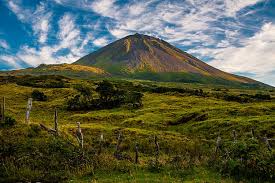 Pico Mountain is very popular with tourists during peak season, and the climb can be done with a guide or independently, provided certain rules are followed to ensure visitor safety.
The Regional Secretariat for the Environment and Climate Action has opened pre-registration for the Pico Island Natural Park Guide and Mountain Guide courses, and registration is also open for the Azores Natural Park Guide training, scheduled to take place “in the last quarter of this year”.
Currently, the regulations for access to Pico Mountain define a maximum capacity of 320 visitors per day and 160 visitors simultaneously, with overnight stays in the crater limited to 32 visitors per day.
Rita Rico is the new United States Consul in the Azores
Last week, Rita Rico took office as Consul at the United States Consulate in Ponta Delgada.
Since last August, the diplomatic mission of the United States of America (USA) in Portugal has had new faces and, at the Consulate in Ponta Delgada, Rita Rico succeeded Meg Campbell as the new Consul for the Azores.
A native of Chicago, Illinois, Rita Rico holds a PhD from the University of California, Los Angeles (UCLA) in the USA, a master’s degree from the University of Guadalajara in Mexico, and a bachelor’s degree from Stanford University, also in the USA.
Before joining the State Department in 2010, the new U.S. Consul in the Azores served as a senior advisor in the U.S. Senate.
In recent years, Rita Rico served as Strategic Communications Advisor and Speechwriting Supervisor for the U.S. Ambassador in London, United Kingdom.
In 2022, the US Consul completed a one-year Transatlantic Diplomatic Fellowship (TDF) program and a mission to the Office of the Prime Minister of the United Kingdom.
Prior to her assignment in the UK, Rita Rico was Special Advisor to the Under Secretary for Public Diplomacy in Washington, DC.
He subsequently held diplomatic posts in Belo Horizonte (Brazil), Caracas (Venezuela), Nairobi (Kenya) and Santiago (Chile).
Around 400 operators from four countries will train in search and rescue in the Azores until Friday.
Around four hundred military personnel and civilians are participating, from today (Monday) until Friday, in an advanced search and rescue exercise in the Azores, which brings together entities from Portugal, Spain, the United States and Canada.
“To ensure that the procedures in place are adequate to accomplish the intended mission, the only reasonable way is to conduct an exercise that brings together these training audiences to work for a week in a location that will be our area of operations if there is a major accident,” Major General António Moldão, commander of the Azores Air Zone, has said.
Since 2015, the ASAREX exercise has been held annually in the Azores, with alternating coordination between the Maritime Search and Rescue Coordination Centre (MRCC) of Ponta Delgada, on the island of São Miguel, and the Search and Rescue Coordination Centre (RCC) of Lajes, on the island of Terceira.
This year, the exercise departs from Air Base No. 4, in Lajes, and involves air assets from three countries.
From Spain, a Super Puma arrives from the Canary Islands and a C-235 from Madrid, and from Canada a C-295.
In addition to the resources assigned to BA4, in Lajes, the exercise also involves a C-130 from Air Base number 6, in Montijo, and a P3 Cup, a long-range aircraft, from the Portuguese Air Force.
 Between Spanish and Canadian military personnel, Portuguese and American military personnel from Lajes Base, Portuguese Navy personnel, and personnel from other entities, “between 350 and 400 people” will be directly involved in the exercise.
According to António Moldão, Portugal “has a very broad area of responsibility,” bordering eight countries, so it is important to involve entities from those countries in this exercise.
The objective is to test the “coordination of search and rescue resources if there is a need for a more muscular intervention, resulting from a serious accident with an aircraft or a ship, which requires the collaboration of friendly and neighbouring countries”.
“The procedures we have in place are generally sound and will allow us to resolve the situations we have identified, but opportunities for improvement may arise and will be implemented,” the commander noted.
For a week, search and rescue scenarios will be tested at night, with the Canadian C-295 aircraft, and high-altitude rescue scenarios, on Pico Island, with the Canary Islands helicopter.
Search and rescue missions at sea are also planned, which will also involve naval resources from the Portuguese Navy, and simulated air accidents, with multiple casualties, to train coordination with Civil Protection and other entities in the Azores.
“The scenarios were built to meet the primary mission training needs of each of the search and rescue units involved,” explained António Moldão.
For the commander of the Azores Air Zone, “the strategic relevance of the archipelago is linked to geography, and it is immutable.”
“It is essential for Portugal to have a robust Air Force presence in the archipelago, and that is what we have been doing and will continue to do,” he stressed.
Regardless of the geostrategic importance that the Lajes Base may have for foreign countries, the archipelago is strategic, first and foremost, for Portugal, argued António Moldão.
“We are primarily responsible for search and rescue, but we are also an essential entity for transporting patients between islands and to the mainland. When someone needs to be extracted from the sea quickly, there’s only one way to do it: a helicopter,” he emphasized.
In addition to the Air Force and Navy, the GNR, PSP, Regional Civil Protection Service and Firefighters of the Azores, Firefighters of Madalena, Pico Island, Atlânticoline, Azores Sea School and Mutualista Açoreana also participate in the exercise.
 Turning from land to sea. Four months into the 2025 Beach Season, the National Maritime Authority has recorded 1,007 rescues, 3,561 first aid operations, and 16 fatalities on Portuguese beaches between May 1st and August 31st. of the fatalities. This is a very large number and most are preventable if people simply followed the warnings that are in place. We ask people to take care and use beach where there are lifeguards.
 In Portugal, for example, adults with higher education demonstrated greater ease in understanding and analysing texts, achieving, on average, 36 points more than those with only secondary education and nearly 70 points more than those surveyed without completing the 12th grade.
 Watershed management plans for the lakes on São Miguel Island—including Sete Cidades, the site of two deaths in the space of 12 days—expressly prohibit bathing. The Regional Secretariat for the Environment and Climate Change has placed several signs on the banks of the lakes warning of this prohibition. The Parish Council President appeals to the public for common sense and responsibility.
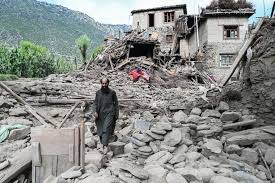 Although a Mag 6 earthquake in Portugal is unlikely to result in the same level of casualties and destruction as in Afghanistan, due to the fact that most modern buildings are built to earthquake standards, there are still many people living in older buildings that do not meet these standards. Also factors such as the timing of the earthquake, its location, and the depth of the earthquake are some of the factors that can determine the level of impact. Generally speaking earthquakes at night can result in higher casualties. It is important therefore to follow the posts we make on our Facebook concerning this topic as well as our website here:
 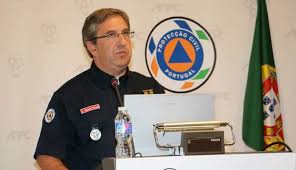 The head of Civil Protection wants to change the organization of firefighting commands. The Secretary of State for Civil Protection promises to make the change, but only after the fire season.
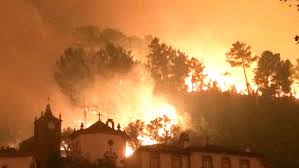 An example is the Aganil fire which started on 13th August, spread to many municipalities and became Portugal’s largest fire in terms of area burned, 64,451 hectares of land. It is now in the conclusion stage with 378 operatives still deployed to deal with any re-ignitions. At its height, however, the deployment stood at some1700 operatives and 20 aircraft fighting the fires.
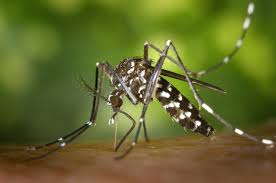 Although no cases of diseases associated with this vector have been recorded in mainland Portugal, it is important to highlight that the tiger mosquito is a potential transmitter of viruses such as dengue, Zika, and chikungunya, causing painful bites and allergic reactions in sensitive individuals. One of the main preventive steps is to avoid prevention and control measures, which include eliminating stagnant water in flowerpots, tires, bottles, drains or other containers. Although this is aimed at Pombal, the advice also applies to any area where there are mosquitoes.
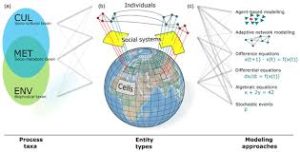 An artificial intelligence (AI) model can accurately simulate Earth’s current climate and interannual variability over periods of up to 1,000 years in just one day, according to a study released Tuesday by Europa Press.
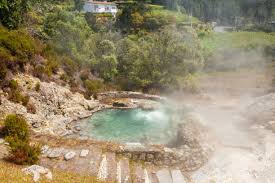 The association’s president, Luísa Pereira said that last year, “mainland spas registered around 80,000 users,” and in the Azores, around 150,000 were registered, demonstrating “the extraordinary success of thermalism” in the archipelago.
 The Faial drone track, which will be 300 meters long and 20 meters wide, is being built on land donated by the Horta City Council, which was used as the island’s landfill in recent decades. This land will now be enhanced by an investment integrated into a broader plan.
 At the national level, he added, the rate of waste preparation for reuse and recycling was 23%, compared to 48% in the Azores.
 The Portuguese Professional Football League (LPFP) released, last Friday, the schedule for the second round of the I Liga, where the “encarnados” from Ponta Delgada will play the first match at home, on August 17, against Moreirense.
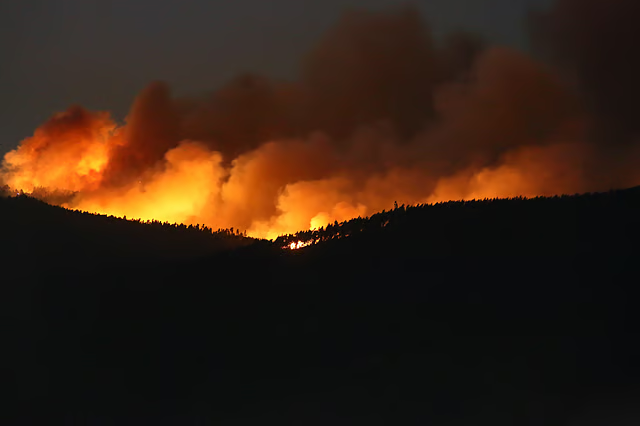 There is speculation whether or not Portugal will extend the State of Alert for the second time. It is currently due to expire on 13 the August at 23.59 hrs. However, the fire risk for the days ahead are not good with the fire risk forecast being particularly high at 90% of the mainland at very high or above. A decision will need to be reached today.
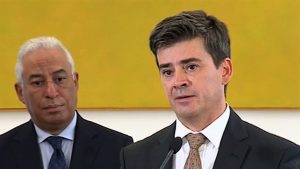 Tiago Oliveira, chairman of the agency’s board of directors, emphasized that, after 2023, the sense of urgency that politicians and society in general placed on fighting the fires has been deflated. “It’s essential that the country re-discuss what needs to be done,” he warned, noting that “the difficult things” remain to be done. “Politicians don’t want to discuss the Gordian knots” of the sector in the Assembly. Which ones? Changes to the inheritance system that perpetuates undivided inheritances and abandonment, the financing model for municipalities based on their forest area, or multi-year program contracts with forest producer organizations.