Algarve Situation Report Wednesday 16th February 2022

CHUA opens new Electroencephalography Laboratory

The Cento Hospitalar Universitário do Algarve CHUA inaugurated today, Monday, February 14th, the new facilities of the Electroencephalography Laboratory (EEG) of the Neurophysiology Unit, as well as a new high-tech EEG equipment.

This new equipment helps in the diagnosis of various neurological diseases, allowing EEGs to be performed in an outpatient setting, continuous EEGs in the Intensive Care Unit (ICU), Video-EEG monitoring with night sleep, among other tests.

“The new laboratory will be an asset for CHUA and above all for its users, improving the response of Neurophysiology to the entire population of the Algarve. The new features of electroencephalography allow CHUA to become a reference centre in the area, focusing on innovation and qualification of the offer in Neurophysiology and responding to the needs of the adult and paediatric population”, said the Coordinating Technician, Ana Magalhães.

Present at the ceremony, the Clinical Director of CHUA, Horácio Guerreiro, highlighted “the importance of investing in cutting-edge technology as a key aspect for quality in the provision of differentiated care”, as well as for “the retention and attraction of health professionals, who are now beginning to find in CHUA more opportunities for clinical and technical differentiation».

São Brás de Alportel celebrates the centenary of the first air crossing of the South Atlantic

São Brás de Alportel is on the map of the national celebrations of the centenary of the air crossing of the South Atlantic (100TAAS), carried out by two aviators of the Portuguese navy Gago Coutinho and Sacadura Cabral. As important as the trip was the fact that the navigation devices, designed by Gago Coutinho, which marked the history of world aviation, were tested.

On the 17th of February, the 153rd anniversary of the birth of Gago Coutinho will be celebrated in the municipality of São Brás de Alportel with an opening ceremony of the commemorative program, a lecture and the inauguration of the traveling exhibition “1st aerial crossing of the Atlântico Sul” which will be on display until February 27, at the atrium of the Covered Municipal Swimming Pools, at 17:00. This exhibition was prepared by the Air Naval Commission for the Centenary Celebration of the South Atlantic Air Crossing (100TAAS).

On the 27th of February, the Nature Walk Cycle will also be dedicated to Gago Coutinho, showing the “Rota Gago Coutinho – Geodesy in São Brás de Alportel”, a route through the 14 geodesic landmarks of the São Brasense territory, recently requalification.

The opening ceremonies of this program take place right next to the artistic replica of the seaplane “Santa Cruz, by Carlos de Oliveira Correia, which since March 30, 2017, the date that marked the 95th anniversary of Travessia, is located next to Rua Dr. Alberto de Sousa, in the outer space of the Municipal Covered Swimming Pools.

With more than 20 tons of iron and a wingspan of more than 14 meters, the replica of the “Santa Cruz” appears as a reference in São Brás de Alportel, dignifying the History of Portugal. The replica of one of the seaplanes used by Gago Coutinho and Sacadura Cabral for the first aerial crossing of the South Atlantic is part of the program to celebrate the centenary of the crossing.

Drought: Irrigation in the Algarve divides environmentalists from authorities and producers

Newsroom, Feb 15, 2022 (Lusa) – The lack of water is causing concern in the agricultural sector in the Algarve, but while environmentalists demand limitations on irrigation, especially for avocados, authorities and producers are calling for diversification of reserves and greater efficiency in consumptions.

Speaking to Lusa, Cláudia Sil, from the Sustainable Water Platform (PAS), considered that the growing focus on avocado crops is “harmful” for the water reserves that exist in the Algarve and warned that this “is not an autochthonous species” and represents “a culture that needs water permanently”.

“The avocado tree is not autochthonous, it is a species that evolved adapting to a tropical climate, and one of the characteristics of a tropical climate is that it has a lot of water, therefore, it is a crop that needs water permanently. At this moment, it is already possible to see yellowed avocado crops in the Algarve, so the avocado tree is suffering from a lack of water,” he said.

For Cláudia Sil, the avocado “is a crop that effectively consumes a lot of water”, considering that it is necessary to “analyse the cultivation methods” of these irrigated plantations, because “the more plants per hectare” there are “the more resources and the more water” there is, while the profit remains only for the producers.

“Irrigated agriculture is totally discouraged in the region, orchards with great irrigation needs should not be developed, what we advocate are alternative crops, with other cultivation methods, such as relishing the rain fed crop”, he said.

The regional director of Agriculture and Fisheries, Pedro Monteiro, acknowledged that the region is in a “complicated situation”, with “a substantial part of the Algarve already in extreme drought”, but underlined that “agriculture is increasingly dependent on water, as like other economic activities”, and that the lack of water is also felt in rain fed fruit trees, such as almonds, carob or figs.

“This poses a huge challenge for agriculture, it has to be more efficient in the application of water to the plot, to the plant, more efficient also in the distribution of water, namely, in hydro-agricultural uses”, he considered, quantifying the 2,050 hectares of land, existing avocado orchards in the region, with an annual production of 15,000 tons.

On the producer side, he added to Lusa, there is an “increasing focus on technology that allows for intelligent water monitoring” to “measure the amount of moisture that exists in real time in the soil” and “apply only water to the soil “and plant according to what is strictly necessary”.


The Overseas Situation Report Tuesday 15 February 2022

by Mike Evans

“There’s no place like home”

Dorothy, The Wizard of Oz

Since the pandemic first started, the world has had to rely on shipping to get goods and services delivered to all parts of the globe. These ships loaded with cargo are a vital part of keeping the majority of the world stocked up. The people who crew these ships have since the start of the pandemic been largely forgotten as an essential part of the supply chain and for some it has meant spending months on end onboard a ship without the chance to get off in ports around the world due to the fact that for many of them the opportunity to be vaccinated has not been given.

In this report we are relaying a couple of stories about this vital part of the world’s economic survival and what is being done to help the seaman.

Inside the gates of Victoria’s Port of Portland in Australia, out of public view, unfolds the plight of the international seamen who work aboard cargo ships importing and exporting goods around the world.

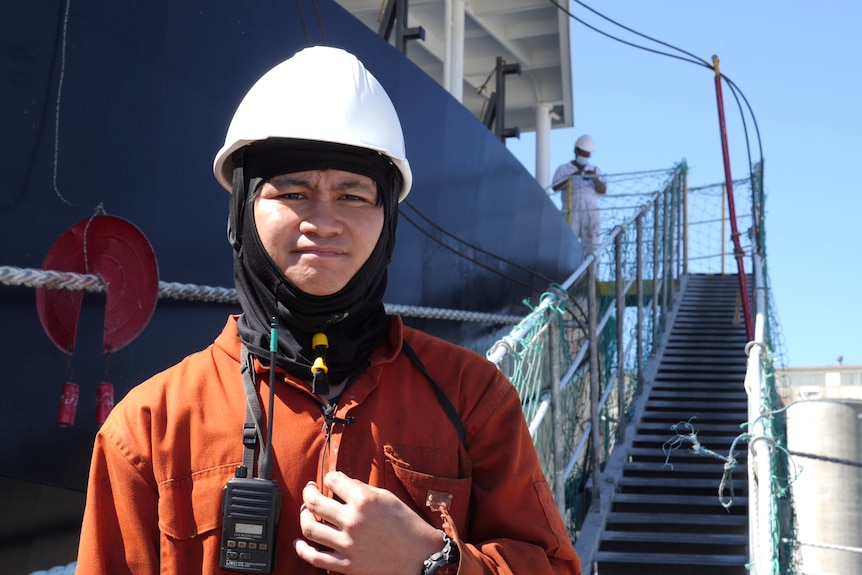
For the last two years of the COVID-19 pandemic, seafarers haven’t been allowed off their ships any further than this long, empty gangway. The Ocean Jubilee has been loading wheat grain from Victoria’s west for the past nine days.

But its crew of 20 haven’t set foot in the town or even in the port’s Mission to Seafarers centre, a special respite room for international seamen.

Kevin Hernando and his crew are Filipino and have been away from their families for seven months. “When you stay on board a long, long time, your mind becomes lonely,” he said. “You feel homeless, homesick.” During the months at sea, what the crew say they most look forward to is disembarking from the ship in each new port, to see the sights, buy a phone card to call home, and refresh their minds.

“Before, [when there was] no pandemic, you will go visit a seaman centre like that [Portland’s Mission to Seafarers], you will go sightseeing, shopping,” Mr Hernando said.

But for two years, the seafarers’ only link to Portland’s comforts has been via one man: Neville Manson. He runs the Mission to Seafarers centre inside the Port of Portland, just 100 metres from the gangway.

It temporarily shut at the start of the pandemic in March 2020 and has been closed since. “Seafarers haven’t been able to come to the centre … haven’t been able to leave their ship,” Mr Manson said. “The Port of Portland and the government have given us access to the ship’s gangway so we can deliver items to the ship,” he said.Mr Manson has been accepting orders from crews for fresh groceries, treats and items like phone cards.

He often makes several trips a day buying and delivering items and is showered in thanks from the men who would otherwise have no way of accessing these prized goods.

Port of Portland chief executive Greg Tremewen said the port conducted a six-month study of ships arriving at the city in 2021 and found that most ships had been out at sea for an average of 17 days.

After two years of their prohibited movement, Mr Manson is advocating for the international seafarers to be allowed an hour or two of recreation in his centre. “In Victoria, the vaccination rate is over 90 per cent. We want to see the same for seafarers,” he said. “If seafarers were vaccinated, then they should be able to leave their vessels again, that’s what we’re looking for.” Mr Manson is also advocating for seafarers to have access to vaccines.

He said he had emailed Victoria’s Department of Health and Human Services (DHHS) and the Minister for Ports but received no reply. “These guys [the seafarers] are really low risk. They’ve been on the ship. They haven’t been anywhere,” Mr Manson said. “I’ve sent off letters to government ministers, to DHHS, and those have not had a reply at all, which is really frustrating.”

Mr Manson said some of the seafarers he met were desperate for a COVID-19 vaccine, telling him that supplies in their country of origin were low and they had no way to access protection.

“They know they’re not going to be able to come off unless they’re double-vaxxed and we wouldn’t expect them to come off unless they were double-vaxxed, as well,” he said. “But they’re more worried about getting COVID from us than we are from them. And they want to be vaccinated so that they can come ashore.”

Filipino seaman Kevin Hernando said while most of his crew were vaccinated, four of them missed out due to restricted supplies in the Philippines. “Supply is locked, there is a lack of suppliers,” he said. “We hope that when we go back [to Portland] again, we can go ashore, very much,” Mr Hernando said.

The DHHS declined to comment, saying it was a matter for the Department of Transport. Meanwhile the seamen continue to be locked out of the port.

The pandemic caused chaos within global shipping and crew members from some of the poorest nations paid a high price.

Among the hundreds of thousands of seafarers left stranded by Covid-19, perhaps none have faced an ordeal as extreme as that of the i-Kiribatis.

Finally at the end of December 2021, after a year-long odyssey across continents – shuttled between foreign nations and locked out of their homeland as waves of coronavirus closed previously safe routes – that ordeal finally came to an end.

In a palm-fringed courtyard in Tarawa, the capital of the small Pacific Island nation of Kiribati, tears and shouts of joy greeted 141 seafarers during an emotional reunion with families they had not seen for almost two years.

Temware Iotebwa, 39, said that at first, he did not spot his children – his son, Tawati, 15, and daughters Sherlene, 11, Eilene, 6, and three-year-old AyMe – in the crowd. But their shouts quickly drew tears to his eyes.

“When my younger kids first saw me, they were shouting and calling my name,” says Iotebwa, who last saw his children in February 2020. “Hearing their voices and seeing their faces brought tears of joy to my eyes. That Sunday was one of my happiest days. We laughed and we cried, and I got a lot of hugs.”

Iotebwa, an able seaman, had worked a month of a nine-month contract on the Hamburg Süd/Maersk container ship MV Monte Pascoal, when the pandemic was declared. He disembarked in Belgium, before being flown to Fiji.

He and his crewmates have spent the past nine months in limbo, sharing cramped hotel rooms and unable to tell their families when they would see them again.

Of the estimated 1.7 million seafarers worldwide, more than half are from developing countries such as Kiribati, a low-lying nation of 33 islands with one of the lowest standards of living in Oceania and a poor healthcare system. Concerned that it might not be able to cope, Kiribati responded to the pandemic in 2020 by closing its borders. The strategy successfully kept Covid cases at zero.

But for Iotebwa and his fellow i-Kiribati seafarers, it meant a year of hell, caught in the middle of protracted negotiations between the shipping companies, the International Chamber of Shipping, and a Kiribati government fearful of the risks of allowing the return of seafarers who may have been exposed to Covid.

Finally, in April 2021, after months of talks, the Kiribati government agreed to repatriate the seafarers, who would first be quarantined in Fiji. But then Fiji saw a sudden spike in coronavirus cases and the Kiribati government reversed its policy. After allowing about 60 seafarers back into the country, the authorities closed the border again, with no exceptions.

Iotebwa had just been told he was about to be flying home when it happened. It was his lowest moment, he says. “My excitement turned to hopelessness when I heard the news,” he says over a video link from Tarawa. “The waiting time turned from days to months. My kids missed me very much and I missed them.” His family were worried too; the Grand Melanesian Hotel in the Fijian town of Nadi, paid for by the shipping company, was overcrowded and uncomfortable with no privacy.

“It felt like a prison,” he says. “My wife, Takentemwanoku Matiota Iotebwa, constantly reminded me to be careful and to stay away from people to avoid getting infected. She was very worried. “They kept their spirits up by playing games of croquet and tug-of-war in the lobby.

He is happy now he is back at home, but there is sadness, too. One of his friends lost his father, another his wife. Marriages broke up under the strain of waiting and the ordeal has taken a financial toll on the families. The seafarers are often their families’ main breadwinners and a source of remittances. They stopped being paid in early 2021, and now worry about their employment prospects with borders remaining closed.

“I don’t blame anyone because this pandemic can happen anytime and anywhere,” says Iotebwa. “But if my government was smart, it could have found other ways to bring us seafarers home sooner. Other poorer countries arranged their seafarers’ return immediately while still on lockdown.”

As we start to see the end of the pandemic, we should all remember that there are many people around the world who are doing very important jobs to keep the economies of the world running who perhaps are forgotten by many when we tend to think about ourselves and how our own lives have been impacted by the pandemic.

Until the next time stay safe.

Total Cases Worldwide – 412,840,763

Total Deaths Worldwide – 5,836,943

Total Recovered Worldwide – 333,451,445

Total Active Cases Worldwide – 73,552,375 (17.8% of the total cases)

Total Closed Cases Worldwide – 339,288,388

Information and Resources:  

https://www.worldometer.info/coronavirus/

https://www.abc.net.au/news/2022-02-14

https://www.theguardian.com/environment/2021/dec/


The Overseas Situation Report Friday 11 February 2022

by Mike Evans

“No matter what happens, or how bad it seems today, life does go on, and it will be better tomorrow”

Maya Angelou

This week saw a number of new milestones in the long fight against Covid 19. On Wednesday the number of reported cases around the world reached 400 million. In the USA the death toll reached 900,000 and in France the number of reported cases since the start of the pandemic reached 20 million.

Global COVID-19 cases surpassed 400 million on Wednesday, as the highly contagious Omicron variant dominates the outbreak, pushing health systems in several countries to the brink of capacity.

The Omicron variant, which is dominating the surge around the world, accounts for almost all new cases reported daily. While cases have begun to level off in many countries, more than 2 million cases are still being reported on average each day. Deaths, which tend to lag cases, have increased by 70% in the last five weeks based on the seven-day average.

While preliminary evidence from several countries have shown that Omicron is milder than previous variants, a large volume of cases can potentially overburden healthcare systems globally.

It took over a month for COVID cases to reach 400 million from 300 million, compared to five months for the cases to reach 300 million from 200 million. The pandemic has killed over 6 million people worldwide.

The top five countries reporting the most cases on a seven-day average – United States, France, Germany, Russia, and Brazil – account for roughly 37% of all new cases reported worldwide. The United States leads the world in the most cases reported each day, with a million new cases reported in the country every three days. Cases and hospitalizations in the country are slowing down from its peak in January this year. On Friday, the country surpassed 900,000 deaths related to COVID.

In France, the seven-day average of new infections has held at over 210,000 per day, adding about a million new cases every five days. The cumulative total for confirmed COVID cases in France since the start of the pandemic passed 20 million this week.

About half of all new infections reported worldwide were from countries in Europe, with 21 countries still at the peak of their infection curve. The region has reported over 131 million cases and over 2 million deaths related to COVID since the pandemic began. Despite Europe reporting a million new cases almost every day, some countries are gradually lifting restrictions as the outbreak eases locally. Spain has scrapped a requirement for people to wear masks outdoors, extending a wider rollback of restrictions as the contagion slowly recedes in the country. On Monday, Greece started allowing tourists with a European vaccination certificate to enter the country without having to show a negative test for COVID.

Last Friday, India’s death toll from COVID-19 crossed 500,000, a level many health experts say was breached last year but obscured by inaccurate surveys and unaccounted deaths. An estimated 3 million people have died from COVID-19 in the south-Asian nation until mid-2021, according to one study published in the journal Science that relied on three different databases.

Roughly 62% of the world population has received at least one dose of a COVID vaccine, while only 11% of people in low-income countries have received at least one dose, according to figures from Our World in Data.

Let’s look at some of these stories in more detail. The coronavirus pandemic reached a grim new milestone in the United States on Friday with the nation’s cumulative death toll from COVID-19 surpassing 900,000, even as the daily number of lives lost has begun to level off. The latest tally marks an increase of more than 100,000 U.S. COVID-19 fatalities since Dec. 12, coinciding with a surge of infections and hospitalizations driven by the highly contagious Omicron variant of the virus.

Preliminary evidence has shown that Omicron, while far more infectious, generally causes less severe illness than earlier iterations of the virus, such as Delta. But the sheer volume of Omicron cases fuelled a surge in hospitalizations that has strained many U.S. healthcare systems to their limits in recent weeks.

Experts have said the bulk of Omicron patients requiring hospitalisation were unvaccinated individuals and people with other underlying chronic health conditions. Data also suggests that Omicron may have hit the United States harder than other countries with younger overall populations, such as in Africa.

U.S. President Joe Biden, whose first year in office has been dogged by a pandemic that has proven more implacable than was expected – due in part to many Americans’ hesitancy to get vaccinated – used this significant milestone to urge greater vaccine uptake.

Some 250 million Americans have received at least one shot, “and we have saved more than one million American lives as a result,” he said in a statement.

The latest tally stands as the highest number of COVID-19 deaths reported by any nation, followed by Russia, Brazil, and India with more than 1.8 million deaths combined. In terms of coronavirus fatalities per capita, the United States ranks 20th, well below the top two – Peru and Russia.

Nevertheless, the U.S. COVID-19 death rate appears to be slowing as the Omicron surge wanes. The seven-day average fell for two days in a row to 2,592, compared with a peak average of 2,674 in the current wave of infections. By comparison, the peak during the Delta wave in January 2021 was an average of 3,300 deaths a day.

Nationally, confirmed COVID-19 cases are now averaging 354,000 a day, half of what was reported less than two weeks ago and down from the peak of nearly 806,000 infections a day on Jan. 15. Many infections, however, go uncounted because they are detected by home-testing kits and not reported to public health authorities.

In France where the cumulative total of reported cases reached 20 million this week. Since mid-January the country has seen a rise of over 6 million cases, the seven-day average of new infections has held at over 300,000 per day, adding about a million new cases every three days.

Health Minister Olivier Veran said earlier this week that the current wave seems to have peaked. He also said that a confirmed infection was equivalent to a COVID vaccine injection, provided that one has had at least one COVID shot. Some 54 million of France’s more than 67 million citizens have now received at least one vaccination shot.

The ministry does not detail how many cases of double or triple infection might be included in its tally of cases.

Despite Europe reporting a million new cases almost every day, some countries are gradually lifting restrictions as the outbreak eases locally. Spain has scrapped a requirement for people to wear masks outdoors, extending a wider rollback of restrictions as the contagion slowly recedes in the country. On Monday, Greece started allowing tourists with a European vaccination certificate to enter the country without having to show a negative test for COVID.

The Swedish government at an extraordinary meeting on Monday decided to remove all entry restrictions from the Nordic countries and other EU/EEA countries on February 9th, the same day it also scrapped nearly all its domestic Covid rules and recommendations. “The decision follows an assessment by the Public Health Agency of Sweden that the entry restrictions are no longer a proportionate infection control measure,” read a government statement. The lifting of the entry restrictions is a great relief for many travellers, not least for those living and working in the Nordic border regions.

Today’s decision also reduces the burden on the Swedish Police Authority, which no longer need to set aside staff to check Covid-19 certificates at the border.  It said the current entry restrictions for non-EU/EEA countries would however remain in place for now, “in accordance with EU recommendations regarding entry from third countries”.

This means that people travelling to Sweden from these countries will still not be able enter the country directly unless they are covered by one of a series of exemptions from the entry ban. The entry ban on non-EU/EEA arrivals is currently in force until March 31st. A Health Ministry spokesperson reported last week that the entry restrictions would first be removed for the Nordic countries (although as of Monday’s decision it has been extended to the rest of the EU and EEA) as a “first step” and that more information would come. “The government is continuously reviewing the entry restrictions introduced due to the pandemic. It is important that the restrictions do not go beyond what is justified,” the spokesperson said at the time.

Finally in Asia, India’s official COVID-19 death toll crossed 500,000 on Friday, a level some data analysts said was breached last year but was obscured by inaccurate surveys and unaccounted dead in the hinterlands, where millions remain vulnerable to the disease.

The country, which has the fourth-highest tally of deaths globally, recorded 400,000 deaths by July 2021 after the devastating outbreak from the Delta variant of the coronavirus, according to official data. Some believe the figures were much higher. “Our study published in the journal Science estimates 3 million COVID deaths in India until mid-2021 using three different databases,” Chinmay Tumbe, an assistant professor at the Indian Institute of Management, Ahmedabad, who co-authored the study,

Last month, the Indian government dismissed the study as baseless in a notification saying there is a robust system of birth and death reporting. India’s states record deaths from COVID after collating data from their districts. In the last few months, several states have updated the number of deaths, some under pressure from the country’s top court. In most instances, authorities said there were lapses due to delayed registrations and other administrative errors.

India is currently in the midst of a third wave of the coronavirus led by the Omicron variant, which some top experts say is already in community transmission although federal officials say most cases are mild. Last month, the government eased testing norms and told states to drop mandatory testing for contacts of confirmed cases unless they were old or battling other conditions. But, with the number of tests falling, the government issued a revised circular warning states they would miss the spread of the virus.

According to official figures, India’s overall number of COVID infections has reached 41.95 million, the second highest globally behind the United States.

To prevent new surges, the government has vaccinated three-fourths of the eligible 939 million adult population with the mandatory two-dose regime.

India’s cumulative tally of 500,055 deaths on Friday included 1,072 fatalities reported over the last 24 hours, according to the federal health ministry. Out of this, 335 deaths were reported from the southern state of Kerala that has, for weeks, been updating data with deaths from last year.

Kerala, with less than 3% of India’s 1.35 billion population, accounts for nearly 11% of the total deaths reported in the country.

Until the next time Stay Safe.

Total Cases Worldwide – 404,431,058

Total Deaths Worldwide – 5,798,613

Total Recovered Worldwide – 324,413,108 

Total Active Cases Worldwide – 74,219,337 (18.3% of the total cases)

Total Closed Cases Worldwide – 330,211,721

Information and Resources:

https://www.worldometer.info/coronavirus/

https://www.reuters.com/business/

The Madeira Situation Report Wednesday 9 February 2022  

Brief Covid-19 update 

Since the start of February, updates on the Covid-19 situation will be published monthly. However, hospitalisation information, such as the number of hospital admissions, admissions to Covid-19 Units and Covid-19 Intensive Care Units, will be issued daily by the Madeira Health Service. 

On Tuesday, there there were 60 patients in hospital, 4 of whom in intensive care.

There were also 3 deaths on Tuesday. Overall, there were 19 deaths in the last 7 days. There have now been a total of 183 deaths. 

https://covidmadeira.pt/novas-regras-sanitarias-a-partir-do-dia-1-de-fevereiro-na-ram/ 

https://funchalnoticias.net/2022/02/08/mais-tres-mortes-com-covid-19-na-ram/

New Covid-19 rules

The following new Covid-19 rules have been in place in the Autonomous Region of Madeira since the start of February:

ISOLATION OF PATIENT WHO TESTED POSITIVE  

All positive cases, regardless of age, must undergo isolation for 5 days and will be discharged at the end of the 5th day. On the 6th day, they can resume their usual activity, without carrying out a COVID-19 test; 

The Health Authority may order a period of isolation of more than 5 days, depending on the clinical situation of the citizen.

ISOLATION OF THOSE WHO HAD CONTACT WITH PATIENTS WHO TESTED POSITIVE 

All people who had contact with a positive case, regardless of age, are no longer required to isolate;  

Citizens aged 18 or older, who have been inoculated with 3 doses of the Covid-19 vaccine, will not have to isolate and test on the 5th day;  

Citizens aged 18 or older, who are not vaccinated or who have incomplete vaccination, will not have to isolate, but must carry out a rapid antigen test on the 5th day after contact with a positive case. This test is free of charge and will be made available through the S-ALERT/CITIZEN application. A text message will be sent with a code. The test can be carried out at one of the adhering testing sites in the Region. 

Professionals, residents or visitors from critical sectors such as Education, Care Homes and Health Care will not have to isolate or be tested on the 5th day, if they have been inoculated with 3 doses of the Covid-19 vaccine;

COVID-19 CONTROL ON ARRIVAL IN THE REGION

Airport, Ports and Marinas Travellers will be required to provide the following documents: 

1- Complete vaccination certificate (3 doses of the Covid-19 vaccine); 

Or

2- Incomplete vaccination certificate (2 doses of the Covid-19 vaccine) and a certificate of recovery within 180 days  

Or

3- Incomplete vaccination certificate (1 dose of vaccine) and a certificate of recovery within 180 days 

Or 

4- Certificate of recovery within 180 days 

Covid-19 screening at airports and ports/marinas will end. A Covid-19 vaccination/recovery certificate will continue to be required.

VACCINATION AGAINST COVID-19 

Vaccination against COVID-19 is crucial to the continuing return to normal life. As such, all people aged 5 or older, who are able to do so, are advised to start or to continue the Covid-19 vaccination process, in accordance with international recommendations.

– People aged 16 or older will be able to inoculated with the 4th dose of the Covid-19 vaccine if they have the following pre-existing conditions: immunocompromised, cancer, dialysis, transplants;  

– The Covid-19 booster dose will be provided to those aged 5 or older (upon approval from the European Medicines Agency); 

 TESTING STRATEGY 

This is the end of mass testing and the start of a move into a strategy of Sentinel Surveillance, through the testing of those who are symptomatic and asymptomatic, in the community, by sampling. 

– Mass weekly Covid-19 testing for the population is no longer a policy  

– Covid-19 testing will only be advised for those who show symptoms, who have a fever (38ºC or more), regardless of their Covid-19 vaccination status;  

– An internal platform for monitoring of the Covid-19 situation in the Region (VeSentinela-RAM); 

– The creation of the Internal VeSentinela-RAM platform to monitor the Covid-19 situation in the Region; 

The remaining health and social care units are advised to strengthen their contingency plans and to implement an adequate surveillance system, through regular testing by sampling;

GENERAL COMMUNITY POLICIES

This is the end of weekly rapid antigen testing. A vaccination/recovery certificate will now be required. The use of face masks in outdoor and indoor areas, 1.5m distancing, and regular hand and surface disinfection will continue to be recommended. 

– The following rules must be complied with in all indoor and outdoor areas (if not eating or drinking): the use of face mask, hand disinfection, 1.5m distancing;

–  Access to restaurants, bars, nightclubs, gyms, sports, and other cultural, social and similar activities: a full Covid-19 vaccination certificate (with 3 doses of the vaccine – 14 days after the booster shot) must be provided; 

Or  

– A recovery certificate within180 days 

Or  

– A rapid antigen test, valid for a week, will be required for those who are not vaccinated or have incomplete vaccination. This test must be paid for.

– Covid-19 tests and vaccination/recovery certificates are not required for essential activities such as: public services, supermarkets, public transport; pharmacies, markets, places of worship, and healthcare providers. 

–  Citizens living outside the European Union: Must use the sanitary pass for access to all activities during their stay in the Region;

–  Citizens living in the European Union: Must the digital certificate for access to all activities during their stay in RAM;

COMMUNICATION OF SURVEILLANCE RESULTS 

–  Updates on the Covid-19 situation will now be published monthly, through the Internal VeSentinela-RAM platform (Vigilância Sentinela – VeSentinela-RAM).

–  Hospitalisation information, showing the number of hospital admissions, admissions to COVID-19 Units and COVID-19 Intensive Care Units, will be issued daily by the Madeira Health Service.

The Regional Government asks citizens to use the S-Alerta Cidadão app (https://s-alerta.pt/CIDADAO/) for self-management of care and communication of symptoms.

https://covidmadeira.pt/novas-regras-sanitarias-a-partir-do-dia-1-de-fevereiro-na-ram/

Power cut

Empresa de Electricidade da Madeira (Madeira power supplier) announced there will be power cuts due to scheduled work on the electricity supply network. These cannot be postponed and will take place in the following days and places:

QUINTA GRANDE

February 10th09h00 to 13h00

– Estrada Municipal da Partilha-Cruz das Moças

QUINTA GRANDE

February 11th09h00 to 13h00

– Estrada Municipal da Partilha-Cruz das Moças

RIBEIRA BRAVA

February 11th09h00 to 13h00

– Barreiro (partial) 

– Vale (partial) 

However, power could be restored during the time frame mentioned above. So, for safety purposes, it should be assumed that there will be power at any time during this period of time.     

If necessary, customers can contact the free Customer Support Service number (Serviço de Apoio ao Cliente): 800 221 187.

https://funchalnoticias.net/2022/02/09/publicidade-o-fornecimento-de-energia-sera-interrompido-nos-dias-horas-e-locais-abaixo-indicados-anuncio-16-2022/


Portugal Situation Report Wednesday 9th February 2022

Introduction

Good morning – Yesterday was Safer Internet Day, the same day that Vodafone announced that it had been subject to a major Cyberattack, which caused major disruption to customers throughout the country. The CEO of Vodafone “Mário Vaz, described it as a “terrorist and criminal act to the network”, with the “objective of making the network unavailable”. The company admits that the attack was serious and deliberate, but there are no indications that the hackers accessed customer data.

For a leading communication company such as this, with millions of customers, this had a major impact in disrupting various forms of communications, including, telephone, SMS and email services. Attacking a telecommunications operator at this level can be very serious for any country. Fortunately at the time there were no major emergencies, such as a major fire for example, where timely communication to the public is essential.

It was further announced that this had also affected some banking operations with a report that the SIBS ATM network was affected, although this was restored some hours later.

It also affected INEM and other essential services.  As a consequence INEM implement its contingency plans to ensure essential services, through the use of the SIRESP network in the provision of assistance by fire brigades. Later the ANEPC made a statement confirming that operational communications are in full operation and that firefighters’ associations have the SIRESP communications network and/or the Firefighters’ Operational Network.

The National Unit to Combat Cybercrime and Technological Crime (UNC3T) of the Judicial Police is investigating the cyberattack on Vodafone. SIS, intelligence services, as well as the National Cybersecurity Centre are also monitoring the case.

So far, the attack has not been claimed by any group of computer hackers.

This attack is the latest in succession of attacks that have taken place over the last  weeks including the hacking of Expresso and SIC, more recently the alleged attack on the Portuguese Government website and TAP’s Twitter account. In the case of Expresso and SIC there sites were down for a number of days before temporary sites were established.

Clearly the latest attack raises a number of important issues, such as the diversity of the role of Vodafone and in the event of a cyberattack, or a technical malfunction, its vulnerability and the potential impact this can have on communications throughout the country, affecting the general public, businesses, essential services and banking.

As with any attack on this scale there will be a review of the incident itself, adequacy of contingency planning and whether there are any lessons to be learned as far as risk mitigation, damage limitation and recovery of services.

This is certainly a wake-up call. If you are operating a business to regularly review security of your services for instance, do you have a backup in case your site is either hacked into or goes down for whatever reason? This is worth thinking about, what are the financial implications if this happened to you, and do you have the information available to recreate your site should it not be backed up? Something to check with your hosting company.

Safer Internet Day was therefore somewhat overshadowed by the above event – which is a pity, as it is important that youngsters are fully aware of how to use the internet safely. There is plenty of material available and we encourage parents to help guide their children, particularly the dangers of cyberbullying and sextortion for instance. This is a very good site in many languages. https://www.betterinternetforkids.eu/policy/insafe-inhope

According to experts, Portugal is about to take another important step on the path to normality, without a pandemic. “We are working on a proposal to lift restrictions”, says Raquel Duarte, coordinator of the group of experts that has been advising the Government on the strategy against the virus. For the pulmonologist, “we have a favourable situation and it is time to change the paradigm, with caution”. A new meeting of experts at Infarmed is expected in the coming days. We wait and see.

Lastly it was my pleasure to meet the visiting British Consular Regional Director for Southern Europe, Fleur Wilson, who was in Portimão on Monday visiting the team at the Vice Consulate and others. We had a very interesting meeting in which I briefed her on the work of Safe Communities Portugal, our partnerships with various government entities, work we have undertaken and projects planned for the future. British Consul in Portugal, Simona Demuro, and Vice Consul in Portimão, Clive Jewell were also present.

Please have a Safe Day.

Headlines

President of the Republic in answer to journalist question replies that he will swear in the new government on 23rd February

The President of the Republic said this Tuesday that he will swear in the new Government on February 23 and that until then he will not talk about the political situation resulting from the legislative, which the PS won with an absolute majority.

Asked by journalists, on the balcony of Palácio de Belém, in Lisbon, about his role in this political situation, Marcelo Rebelo de Sousa replied: “They will not hear me until the 23rd, when I will give the inauguration speech of the new Government “.

We await the formal announcement

COVID-19 DGS Situation Tuesday 8th February 2022

Confirmed: 2,967,747 (+30757)

Admitted: 2.419 (-141)

Admitted to ICU: 171 (-7)

Deaths: 20,302 (+44)

Recovered: 2,343.448 (+38863)

Active cases 599,997 (-8,150)

TRENDS

For four days, active cases of SARS-CoV-2 infection have been falling.

After the decreases recorded on Saturday and Sunday (minus 4972 and 9011, respectively) and on Monday (minus 20,663), this Tuesday’s report reveals that existed 8,150 less active cases of covid19.

Admissions decreased in the last 24 hours, 141 people left the inpatient services.

This Tuesday there are also seven fewer patients in intensive care units, there are now 171.

Health

Covid-19: More than 55,000 people received a booster dose on Monday

Lisbon, Feb 8, 2022 (Lusa) – More than 55,000 people received the booster vaccine against covid-19 on Monday, bringing the total number of vaccinated with this dose to around 5.3 million, the Directorate- General Health (DGS) announced yesterday.
According to the DGS daily bulletin, the dose to reinforce immunization against the SARS-CoV-2 coronavirus has already been administered to 616,043 elderly people aged 80 and over, who represent 93% of this age group, as well as 923,778 between 70 and 70 years old. 79 years (96%).

According to data released today, 1,124,506 people between 60 and 69 years old (89%), 1,093,274 between 50 and 59 years old (77%), 873,054 between 40 and 49 years old (59%), 453,765 between 30 and 39 years old (38%) and 305,360 between 18 and 29 years old (24%) have also taken the booster dose.

With the primary vaccination completed, there are now 80,073 children between the ages of five and 11 and 327,707 have already received the first dose, indicates the DGS.

In total, 8,864,750 people have already completed the primary vaccination in Portugal since the immunization plan against covid-19 started, on December 27, 2020, and 2,581,030 have already taken the seasonal flu vaccine. 

Outbreak of Bird Flu at a farm in Torres Vedras

An outbreak of bird flu was detected in a turkey and chicken farm in A-dos-Cunhados, a parish in the municipality of Torres Vedras, this municipality in the district of Lisbon said in a statement.

“The risk to human health is limited to people who work on the farm where the cases were identified, due to the continuity of contact with a high number of sick animals”, clarifies the municipality.

In the note, it is also mentioned that “the risk of transposition of the virus to humans is low, but it can happen when there is continued exposure and associated with the handling of animals or waste produced”.

In this sense, it is added, “exposed and at risk people are already under surveillance”.

Taking into account the transmission of the disease between birds and its high mortality, the Directorate-General for Food and Veterinary Medicine (DGAV) determined that poultry and captive birds — including domestic ones — should remain confined to their respective housing, “so to prevent their contact with wild birds”.

DGAV also defined a protection zone and a surveillance zone, with measures aimed at establishments located there.

Covid-19: Extended vaccines accepted by the Portuguese authorities

Until now, Infarmed has only validated vaccines approved by the European Medicines Agency for the use of the digital certificate: Moderna, Pfizer, Janssen, AstraZeneca and India’s Covovax

The Portuguese authorities started to accept, for the purpose of issuing a covid-19 certificate, the Chinese vaccines from Sinopharm (Vero Cell) and Sinovac (Coronavac), as well as from the Indian multinational Bharat Biotech International (Covaxin).

According to a joint circular from Infarmed and the Directorate General for Health (DGS), authorized in third countries, sublicensed by the same holder of the Marketing Authorization, will also be accepted for the issuance of a covid-19 certificate, including in this group vaccines from producers Verity Pharmaceuticals (Canada), Fiocruz (Brazil) and R-Pharm (Russia).

Until now, Infarmed has only validated vaccines approved by the European Medicines Agency (EMA) for the use of the digital certificate: Moderna, Pfizer, Janssen, AstraZeneca (Vaxzevria – under the name AZD1222) and Indian Covovax.

“The completion of primary vaccination schedules initiated in other countries and/or the administration of booster doses after completion of primary vaccination schedules carried out in other countries, as well as the transcription of the corresponding vaccination acts should follow the recommendations of the DGS”, reads the statement.

The circular also recalls that, currently, several vaccines against covid-19 are used with different regulatory frameworks, “which means that citizens vaccinated with vaccines and vaccination schedules different from those recommended in Portugal can reach the national territory”.

Since Monday, a negative test is no longer required to enter Portugal, simply presenting the Covid-19 digital certificate from the European Union or other recognized proof of vaccination.

Fines for failing to fill in a passenger location form

Failure to comply with the obligation to present and verify the passenger location form with destination or stopover in mainland Portugal constitutes an administrative offense for airlines and passengers, the Government said today.

In a joint statement, the ministries of Economy and Digital Transition, Internal Administration, Health and Infrastructure and Housing state that the passenger location form (PLF) must be completed by all passengers on flights to or from mainland Portugal, including passengers on flights from the Autonomous Regions of the Azores and Madeira.

According to the Government, the PLF must be filled in electronically after ‘check-in’ and before boarding time.

“The non-compliance with the obligations to present and verify the completion of the PLF constitutes an administrative offence, sanctioned with a fine that can vary between 20,000 and 40,000 euros, when practiced by the airlines or the entities responsible for the management of the respective airports or between 300 and 40,000 euros. 800 euros, when practiced by passengers”, says the statement.

The executive also emphasizes that the completion and presentation of the PLF by all passengers allows the health authorities, “with full respect for the personal data protection regime, to carry out the tracing of contacts regarding confirmed cases of covid-19, and from this way to interrupt, early, possible chains of transmission”.

More than 3,200 passengers and 41 companies fined at air borders

All passengers who arrived in Portugal by air, between December 1st and February 6th, were required to present a negative test for covid-19 or a recovery certificate on disembarkation within the scope of measures to combat the pandemic.

In a final balance sent to the Lusa agency, the Ministry of Internal Administration (MAI) indicates that, between December 1st and February 6th, PSP and SEF inspected 2,191,138 passengers and 20,583 flights, which resulted in 3,273 offences.

According to the MAI, 41 airlines were fined for having transported passengers without a negative test for covid-19 or a recovery certificate.

Airlines carrying passengers without a negative test were subject to a fine of between 20,000 and 40,000 euros per passenger and travelers were also subject to an administrative offence, between 300 and 800 euros, for not presenting a test on arrival.

The MAI also states that the 3,273 infractions include eight foreigners who were refused entry into the country because they did not present a test on arrival, since it is only allowed to carry out the test at the airport to citizens of Portuguese nationality, foreigners residing in Portugal and diplomatic personnel.

MAI data also show that 3,337 diagnostic tests were carried out at airports for passengers who entered the country without this document.

At land borders, also between December 1st and February 6th, citizens of countries outside the European Union and EU countries considered to be at red or dark red risk required a negative test or a recovery certificate.

The GNR and the Foreigners and Borders Service carried out 22,528 random surveillance operations at land borders to ensure tests for covid-19, according to the MAI.

Within the scope of these operations, 135,307 inspections were carried out on light and goods vehicles, motorcycles, trains, buses, which gave rise to 42 administrative offense notices for lack of a test or recovery certificate.

Azores Situation Report Wednesday 9th February 2022

From our colleague in the Azores

9th February 2022 

1,376 new positive cases of covid-19 were diagnosed, with 914 on the island of São Miguel, 305 on the island of Terceira, 39 on the island of Faial, 39 on the island of São Jorge, 29 on the island of Pico, 27 on the island of Santa Maria, 19 on the island of Graciosa and four on the island of Flores, following 4,444 tests carried out.

Recoveries:

A total of 795 recoveries were registered.

Death:

In the last 24 hours, a 93-year-old man residing in the parish of Arrifes, municipality of Ponta Delgada, on the island of São Miguel died from covid-19. He was not vaccinated.

3rd February 2022 

1,594 new positive cases of covid-19 were diagnosed, with 1,059 on the island of São Miguel, 346 on the island of Terceira, 57 on the island of Graciosa, 41 on the island of Pico, 38 on the island of Faial, 27 on the island of São Jorge, 15 on the island of Santa Maria and 11 on the island of Flores, following 4,979 tests carried out.

Recoveries: 

A total of 909 recoveries were registered.

Deaths: 

In the last 24 hours, three people died at the Divino Espírito Santo Hospital on the island of São Miguel, all from the municipality of Ribeira Grande: a 74-year-old man, resident in Rabo de Peixe, who had been hospitalised since January 26th and had received booster vaccination, an 81-year-old man, resident in Ribeirinha, who had been hospitalised since January 31st, and a 96-year-old woman, resident in Ribeira Seca, who had been hospitalised since January 26th and had received booster vaccination.

4th January 2022 

1,423 new positive cases of covid-19 were diagnosed, with 1,095 on the island of São Miguel, 234 on the island of Terceira, 28 on the island of Faial, 26 on the island of São Jorge, 20 on the island of Pico, 12 on the island of Santa Maria, six on the island of Graciosa and two on the island of Flores, following 4,941 tests.

Recoveries: 

A total of 855 recoveries were registered.

Deaths: 

In the last 24 hours, two people died at the Divino Espírito Santo Hospital in Ponta Delgada, both from the municipality of Ponta Delgada: an 84-year-old woman, resident in Relva, vaccinated, but without booster dose, and a 91-year-old woman, resident in Arrifes, vaccinated with a single dose.

5th January 2022 

1,404 new positive cases of covid-19 were diagnosed, 947 in São Miguel, 293 in Terceira, 43 in Graciosa, 37 in Pico, 34 in São Jorge, 25 in Santa Maria, 19 in Faial and six in Flores, resulting from 4,875 analyses.

Recoveries: 

378 recoveries were recorded.

6th January 2022 

1,051 new positive cases of covid-19 were diagnosed, with 707 in São Miguel, 217 in Terceira, 39 in Faial, 33 in São Jorge, 27 in Pico, 16 in Santa Maria, 10 in Graciosa and two in Flores, resulting from 3,477 analyses.

Recoveries: 

In the last 24 hours, 1,043 recoveries were recorded.

Deaths: 

Two deaths were recorded in the archipelago, one in Terceira, a 68-year-old man, vaccinated with a booster dose, resident in Parish São Sebastião, municipality of Angra do Heroísmo, who had been hospitalized at the Hospital de Santo Espírito since 25th January. The other death occurred in São Miguel and corresponded to an 80-year-old woman, unvaccinated, residing in the parish of São Miguel, Vila Franca do Campo, hospitalized at Hospital do Divino Espírito Santo, since last January 17th.

7th January 2022 

1,140 new positive cases of covid-19 were diagnosed, with 1,012 on the island of São Miguel, 83 on the island of Terceira, 25 on the island of Graciosa, 10 on the island of Santa Maria, seven on the island of Pico, two on the island of Flores and one on the island of Faial, following 2,061 tests carried out.

Recoveries:  

A total of 1,087 recoveries were registered in the last 24 hours.

Deaths:  

In the last 24 hours, a 73-year-old man and a 79-year-old woman died at Ponta Delgada Hospital. Both were residents of Lomba da Maia, municipality of Ribeira Grande. The man had been hospitalised since February 2nd and had complete primary vaccination; the woman, who had not been vaccinated, had been hospitalised since February 5th.

8th January 2022 

1,247 new positive cases of covid-19 were diagnosed, with 667 on the island of São Miguel, 360 on the island of Terceira, 67 on the island of Faial, 53 on the island of Pico, 38 on the island of Graciosa, 28 on the island of Santa Maria, 26 on the island of São Jorge and eight on the island of Flores, following 4,383 tests carried out.

Hospitalisations:

As of yesterday, there were 65 patients in hospital, 45 of them at the Divino Espírito Santo Hospital on the island of São Miguel (three in intensive care), 14 at the Santo Espírito Hospital of Terceira Island (two in intensive care) and six at the Horta Hospital.

Recoveries: 

A total of 858 recoveries were registered.

Current situation: 

The archipelago currently registers 17,080 active positive cases: 13,854 on the island of São Miguel, 2,302 on the island of Terceira, 281 on the island of Faial, 186 on the island of Graciosa, 181 on the island of Pico, 180 on the island of São Jorge, 78 on Santa Maria and 18 on the island of Flores.

From December 31st, 2020, to February 7th, 2022, 208,184 people in the Azores already have complete primary vaccination (88.0%) and 96,307 people have already received the booster dose (40.7%).

As of February 4th, 5,731 children had been inoculated with the first dose of the vaccine, corresponding to 33.6% of 17,033 children between the ages of 5 and 11.

Tanker runs aground on islet in Graciosa 

The tanker “São Jorge” ran aground this morning on the islet of Praia, in Graciosa, Azores, but the authorities managed to seal “all the fuel tanks”, ensuring and preventing an environmental accident along the coast.

The accident resulted in extensive damage to the ship’s propellers and side, which led to water entering the engine room which was contained by sealing.

All fuel tanks containing diesel and gasoline were also sealed.

Man has heart attack while swimming 

A 43-year-old man died on Monday after going into cardiac arrest after allegedly feeling unwell while swimming in the Pesqueiro pool, in Ponta Delgada.

The man was rescued ashore by the lifeguard on duty, with the help of people nearby, resuscitation manoeuvres were immediately started by the Ponta Delgada Volunteer Firefighters and an Immediate Life Support nurse, with the help of elements of the Maritime Police.

The victim was later transported, in a very serious condition, by the Ponta Delgada Volunteer Firefighters to the Hospital do Divino Espírito Santo, where he died.


Algarve Situation Report Wednesday 9th February 2022

Covid-19: Demand for the Algarve rises with end of test on arrival

The end of the obligation to present a negative test for covid-19 on arrival in Portugal is “very positive” and is causing a “significant” increase in demand in the region, the president of the main regional hotel association told Lusa today.

The president of the Association of Hotels and Tourist Enterprises of the Algarve (AHETA), Hélder Martins, said that the upward trend is confirmed in areas such as meetings and congresses or golf, but acknowledged that it is too early to quantify the increase, because the tourists who arrived today to Faro airport “they still didn’t know” that the measure is already in force.

“For our part, we see it as very positive and it is one of several measures that will have to appear. It is a sign, first, that the pandemic is losing ground and that we are able to resume our freedoms and, on the other hand, towards a destiny tourist destination such as the Algarve, it is extremely important that tourists have the least barriers to entry to the destination”, he said.

The mandatory negative test for the SARS-CoV-2 virus to enter Portugal ended at 00:00 today, with the presentation of a covid-19 digital certificate or a recognized proof of vaccination.

According to the new president of AHETA, elected at the end of January and replacing Elidérico Viegas, who was president of the association for 26 years, despite the low season, “the indicators that exist for the coming times are positive”, because “demand has grown”.

The same source said he hopes that the lifting of restrictions will continue and “that this will bring the stability that the Algarve needs to continue the recovery of a destination that has been so affected in the last two years” by the restrictive measures applied to travel and entry into the country due to the covid-19 pandemic.

Centro Hospitalar do Algarve fined for leaving compress on user’s body

Lisbon, Feb 08, 2022 (Lusa) – The Health Regulatory Entity (ERS) has opened an administrative offense against Centro Hospitalar do Algarve EPE for forgetting a compress on the body of a user during a caesarean, a failure that the hospital had already also committed in 2018.

According to the text of the deliberation, the ERS says that the case dates back to January 2021, when a user underwent a caesarean section. Days after discharge, the patient returned to the hospital twice, with complaints of malaise and increasing pain.

The ERS explains that after the second return to the hospital, after examinations, the user underwent surgery to remove “a stranger” (a compress) that had been forgotten during the caesarean section, a fact assumed by the hospital with the user, who admitted that “the existence of an instrumental nurse in the teams could minimize this type of incident”.

The regulator also recalls that the health unit had already been the subject of another lawsuit for a similar situation (forgetting a compress in the mouth of a patient after surgery) and, since it did not respect the previous instructions of the ERS, it was decided to open an infringement process.

Since failure to comply with a rule or decision by the ERS is punished with a fine of between 1,000 euros and 44,891.81 euros, “an administrative offense proceeding was initiated against the Centro Hospitalar Universitário do Algarve, EPE”, explains the regulator, insisting that “the provider again committed the same negligent conduct and disrespect for the users’ right to access quality health care”.

“With his conduct, the provider disrespected the instruction that was previously issued to him due to identical facts”, underlines the ERS, insisting on the need for the hospital to “provide for the adequate allocation of instrumental nurses to the surgical teams”.

PSP caught burglar of houses in Portimão

A 24-year-old man, who was detained by the Public Security Police – PSP, was presented yesterday at the Criminal Investigation Court of Portimão, for first interrogation, for evidence of the practice of an attempted aggravated theft crime and two crimes of aggravated burglary.

According to a statement from the Faro District Attorney’s Office in March 2019, “in an urbanization in Portimão, the detainee went to a house, broke the glass in a kitchen window, entered the house and went to the living room, in which he was surprised by the owner’.

During this month, in the same urbanization, the individual went to a house, “climbed the surrounding wall and went to the back of the building where the glass in a kitchen window broke. After being able to enter the house, he remained inside for several days, having appropriated goods and drinks.

On February 5, in that urbanization, he went to another house, “opened the gate of the wall that enclosed it, accessed the main door and entered the house, having appropriated clothes and a cell phone, from the entrance hall.

Present in court, the detainee with a criminal record for crimes against property, was awaiting trial in preventive detention.

GNR seizes about 700 kilos of hashish in Fuseta

The Coastal Control Unit of the National Republican Guard (GNR) yesterday seized around 700 kg of hashish in Fuseta.

The Coastal Control Unit of the National Republican Guard (GNR), through the Olhão Coastal Control Sub-detachment, yesterday, Sunday, February 6, seized about 700 kilograms (kg) of hashish at the Fuseta Fishing Port, in the municipality from Olhao.

As part of its mission of surveillance, control and patrolling of the coast and territorial sea, in particular in the fight against narcotics trafficking by sea, the Integrated Surveillance, Command and Control System (SIVICC) detected a vessel sailing in hiding of lights and with a suspicious behaviour near Barra da Fuseta.

In view of the suspicions raised, Guard resources were immediately mobilized to the place, with the aim of approaching the suspicious vessel that, moments later, entered the Fuseta Fishing Port.

Following the police action, it was possible to intercept the vessel, which contained approximately 700 kilos of hashish (20 bales), thus preventing the disembarkation of the narcotic product and safeguarding the evidence.

So far it has not been possible to identify the suspects, who fled on foot in the presence of the GNR means.


The Overseas Situation Report Tuesday 8 February 2022

by Mike Evans

“Patience is also a form of action”

– Auguste Rodin

As Portugal eased the requirements for vaccinated travellers to enter Portugal this report is looking at what travel restrictions are in place and where some are being eased as the pandemic gets less severe.

For many the big news of the week is that Australia is to reopen its international border to fully vaccinated travellers from the 21st of February 2022 after almost two years of closure. Prime Minister Scott Morrison said after new medical advice, the new border rules would come into place on February 21.

“The condition is you must be double vaccinated to come to Australia,” he said. “That’s the rule. Everyone is expected to abide by it.”

The news will be welcomed by tourism bodies, which have been crying out for movement on the border closure that has hampered some businesses. Home Affairs Minister Karen Andrews said unvaccinated travellers would still need to apply for a travel exemption to come to Australia and must undergo hotel quarantine if they were granted permission to enter the country.

Mr Morrison said the government’s definition was that people need to have a full course of a vaccine, which in most cases is two doses but for some international vaccines is only one, to be considered vaccinated. For example, the Johnson and Johnson vaccine — which is approved for use in Australia — involves only one dose.

The expert panel on vaccines, ATAGI, has flagged though that it is considering whether to still use the term “fully vaccinated” or instead move to “up to date with vaccinations” like is used with childhood vaccines. If the definition is changed, it could mean that booster shots are included when considering if someone is “up to date” or not.

Mr Morrison made it clear, with a reference to the recent Novak Djokovic saga, that even if people had the correct visa to enter Australia, if they were not fully vaccinated — or had an exemption — they would not be allowed to enter.

“I think events earlier in the year should have sent a very clear message to everyone around the world that (that) is the requirement to enter into Australia,” he said.

Meanwhile closer to home in neighbouring Spain, The Spanish Ministry of Health has extended travel restrictions on travellers from the other European Union and Schengen Area countries for another week, until February 13, due to the ongoing spread of the COVID-19 infection in the bloc.

Updating the list of European risk areas, the Ministry has explained that the list will remain unchanged for another week. Part of it are the following EU/Schengen countries: Austria, Belgium, Bulgaria, Czechia, Cyprus, Croatia, Denmark, Estonia, Finland, France, Germany, Greece, Hungary, Ireland, Iceland, Italy, Latvia, Liechtenstein, Lithuania, Luxembourg, Malta, Netherlands, Poland, Portugal, Romania, Slovakia, Slovenia, and Sweden.

If you come from a country/zone at risk in relation to COVID-19, you must present a certificate or document proving vaccination, diagnostic test for active infection (PDIA), or recovery from COVID-19. These certificates will be different if they have been issued in a country of the European Union (EU Digital COVID Certificate) or in a third country,” the Ministry explains regarding travel from countries in the EU which are listed as risk countries. It also points out that since February 1, travellers who haven’t received a COVID-19 booster dose must pay attention to the validity of their vaccinated certificates. Those who have been vaccinated before mid-May 2021 must take their booster shots and renew their vaccination certificates in order to be eligible to travel to Spain restriction-free.

The Spanish authorities continue to consider as high-risk countries all third countries except for: China (including administrative regions of Hong Kong and Macao) Indonesia, New Zealand, Rwanda, Saudi Arabia, South Korea, and Taiwan.

Regarding travellers from other third countries, which Spain lists as high-risk areas, they have to present their SpTH QR code together with a vaccination or recovery certificate as well as negative COVID-19 results of a test performed pre-departure.

Residents of these countries can travel to Spain with a vaccination certificate against COVID-19, a negative test performed within 72h(NAAT) / 24h(RAT) prior to arrival, or a certificate of recovery from COVID-19. Since last week, only negative results of Coronavirus antigen tests were that performed 24 hours before a traveller’s arrival in Spain will be accepted for entry into the country, instead of 48 hours as they have been accepted up until now. The QR code is obtained when completing the Sanitary Control Form through the Spanish Health portal, pre-departure. Completing the form is obligatory for all sea and air travellers. It is not mandatory to present the document for those reaching Spain by land.

In Germany, the country has followed the recommendation of the European Commission and have decided to shorten the validity of vaccination certificates to 270 days. The new rule on the vaccination passes entered into force on February 1 and affects everyone travelling within the EU. In line with this proposed rule, persons who reach Germany need to provide valid proof that they have received the last vaccine dose (of a two-dose vaccination scheme) within the last 270 days in order to be exempt from additional entry measures, such as testing and quarantine requirement.

It is believed that persons who have been vaccinated more than 270 days ago will be considered unvaccinated when reaching Germany if they haven’t yet received a booster shot.

Nonetheless, the German authorities haven’t yet given any information regarding booster doses and the corresponding interval times. Booster shot refers to the third vaccine that is given to persons who have already completed primary vaccination.

Apart from this change, Germany has also shortened the validity of recovery certificates. According to the German responsible body for disease prevention and control, Robert Koch Institute (RKI), recovery certificates are now valid for only a period of 90 days. Previously, recovery certificates were valid for 180 days. However, according to the German authorities, unvaccinated persons who have been infected with the virus are only temporarily protected from the disease. For this reason, they have decided to shorten its validity.

“The duration of the recovered status was reduced from 6 months to 90 days because the scientific evidence to date indicates that unvaccinated individuals who have had an infection have reduced and even more temporary protection against reinfection with the omicron variant compared to the delta variant,” RKI notes.

Germany also urged the EU to reduce the recovery certificates’ validity to 90 days. The German Health Minister Karl Lauterbach has called the European Union to make such a proposal in order to protect public health within the bloc.

All of these changes come after the EU Commission is set to extend the Digital Certificate for another 12 months to June 2023. At the end of last week, the Commission brought out a proposal for the Certificate’s extension for another year, after an evaluation that the Coronavirus is still highly prevalent throughout the block, thus determining that it is not possible to cease using the Certificate as a means of safe travel this summer.

According to a press release of the EU Commission announcing the proposal, extending the regulation will enable travellers to continue using their COVID Certificate when travelling to the EU Member States, which maintain entry restrictions.

There are proposals for a number of changes to the certificate. These include, making high-quality laboratory-based antigen tests acceptable for obtaining a certificate in a bid to widen the scope of acceptance tests due to the high demand for them. At the same time, the Commission intends to update the certificates so that they include the correct number of doses of COVID-19 vaccines that a person has been administered, including here the doses administered in the other Member States than the one issuing the Certificate. And finally, the Commission wants to issue certificates to citizens who are part of clinical trials for vaccines against COVID-19 in the hope that such a move will encourage the ongoing development and research of vaccines against the virus.

Whilst most countries in the EU are happy to continue with the Covid certificate, Finland has said in the last week that they do not feel it is justified under the current situation. Finland’s Minister of Justice Anna-Maja Henriksson has stressed that the certificate was projected as a mechanism to stop the further spread of the Coronavirus during the previous phases of the epidemic, taking into account the fact that the vaccinated persons were more unlikely to contract the virus.
According to Henriksson, with the spread of the Omicron variant, “it appears” that vaccines against the virus do not prevent infections but rather more severe forms of the disease. The Minister emphasised that all restrictions to the rights of people must be proportionate and necessary. “The coronavirus passport limits the basic rights of those people who haven’t got vaccinated, obtained a negative test result, or had the disease. The Coronavirus or vaccination passport isn’t well suited for use in these circumstances because its necessity and proportionality are difficult to justify right now,” the Minister pointed out in this regard.

For those travelling, Stay Safe until the next time.

Total Cases Worldwide – 396,596,256

Total Deaths Worldwide – 5,760,642

Total Recovered Worldwide – 315,336,753

Total Active Cases Worldwide – 75,498,861 (19% of the total cases)

Total Closed Cases Worldwide – 321,097,395

Information and Resources:

https://www.worldometer.info/coronavirus/

https://www.abc.net.au/news/2022-02-07/international-covid-borders-to-reopen-scott-morrison/100810580

https://www.schengenvisainfo.com/news

The Overseas Situation Report Friday 4 February 2022

by Mike Evans

If you’re walking down the right path and you’re willing to keep walking, eventually you’ll make progress.

– Barack Obama

As this report is written at the end of the first month of 2022, I have dedicated this particular report to the latest situation report from the World Health Organisation which details the situation across the world up to the end of January 2022. The reports which come out weekly show a detailed breakdown of each region in the world where the pandemic is prevalent and compares the current situation with a week previous.

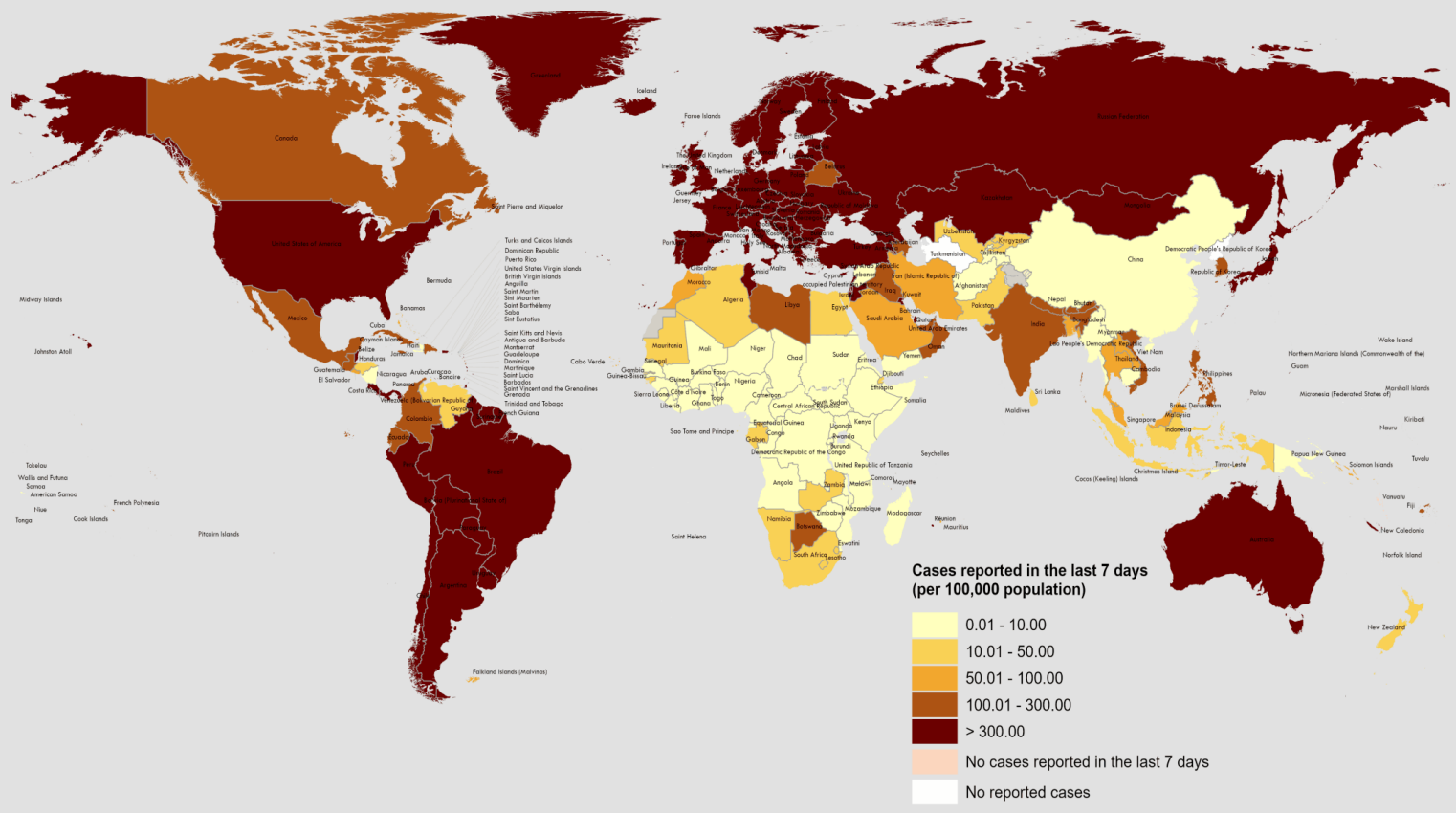
Globally, during the week of 24 to 30 January 2022, the number of new COVID-19 cases remained similar to the number reported during the previous week, while the number of new deaths increased by 9%. Across the six WHO regions, over 22 million new cases and over 59 000 new deaths were reported. As of 30 January 2022, over 370 million confirmed cases and over 5.6 million deaths have been reported globally.

At the Regional level, increases in the number of new cases were reported by the Western Pacific (37%) the Eastern Mediterranean (24%) and the European (7%) Regions, while decreases were reported by the Region of the Americas (20%) and the South-East Asia Region (8%). The number of new cases reported in the African Region remained similar to that of the previous week.
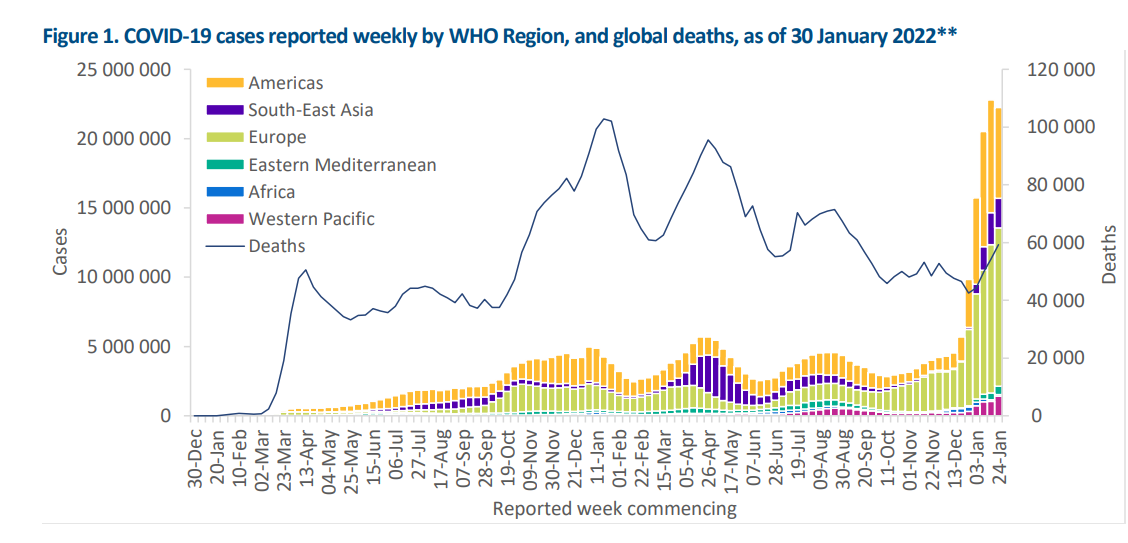
The number of new weekly deaths continued to increase in the South-East Asia Region (41%), the Eastern Mediterranean Region (32%) and the Region of the Americas (16%), while the African Region reported a decrease of 7%. The incidence of deaths remained similar to the previous week in the European and the Western Pacific regions.

At the country level, the highest numbers of new cases were reported from the United States of America (3 279 226 new cases; a 34% decrease), France (2 357 129 new cases; similar to the previous week’s figures), India (1 855 258 new cases; a 12% decrease), Brazil (1 283 024 new cases; a 56% increase), and Germany (1 055 768 new cases; a 48% increase). The highest number of new deaths were reported from the United States of America (13 558 new deaths; a 5% decrease), India (4682 new deaths; a 40% increase), the Russian Federation (4616 new deaths; like the previous week), Brazil (3321 new deaths; an 88% increase) and Italy (2618 new deaths; a 7% increase).

In the Africa Region there were over 125 000 new cases, like the number reported during the previous week. This follows on from a decreasing trend in new cases that has been observed for over a month. However, six countries (12%) reported increases of 20% or greater, with the highest increases reported from the Central African Republic (410 vs 190 new cases, a 116% increase), Lesotho (277 vs 165 new cases, a 68% increase) and Algeria.

The highest numbers of new cases continued to be reported from Réunion (46 914 new cases; 5240.0 new cases per 100 000 population; a 49% increase), South Africa (22 202 new cases; 37.4 new cases per 100 000; similar to the previous week’s figures), and Algeria (14 774 new cases; 33.7 new cases per 100 000; a 63% increase).

The number of new weekly deaths continued to decline in the Region with over 1600 new deaths reported, a 7% decrease as compared to the previous week. The highest numbers of new deaths were reported from South Africa (842 new deaths.
Since mid-January 2022, the Region of the Americas has continued to report a decrease in the number of new cases, with over 6.5 million cases reported this week, a 20% decrease as compared to the previous week.

Only four countries reported increases of 20% or greater including: the Falkland Islands (3 vs 1 new case, a 200% increase), Chile (157 937 vs 82 574 new cases, a 91% increase), El Salvador (6250 vs 3435 new cases, an 82% increase) and Brazil. The highest numbers of new cases were reported from the United States of America (3 279 226 new cases; 990.7 new cases per 100 000; a 34% decrease), Brazil (1 283 024 new cases; 603.6 new cases per 100 000; a 56% increase), and Argentina (619 108 new cases; 1369.8 new cases per 100 000; a 19% decrease).

Over 26,000 new weekly deaths were reported in the Region, corresponding to a 16% increase as compared to the previous week. The highest numbers of new deaths continued to be reported from the United States of America (13 558 new deaths.)

Since the end of December 2021, the Eastern Mediterranean Region reported a continued increase in new cases. During the last week, over 596 000 new cases were reported, a 24% increase as compared to the previous week. Over half of the countries (13/22, 59%) reported increases of 20% or greater, with the highest increases reported from the occupied Palestinian territory (33 080 vs 7293 new cases; 354% increase), the Islamic Republic of Iran and Libya (16 399 vs 6692 new cases; a 145% increase).

The highest numbers of new cases were reported from the Islamic Republic of Iran (76 837 new cases; 91.5 new cases per 100 000; a 189% increase), Jordan (63 153 new cases; 619.0 new cases per 100 000; a 72% increase), and Tunisia (54 346 new cases; 459.8 new cases per 100 000; an 18% decrease). Over 1600 new weekly deaths were reported in the Region, a 32% increase as compared to the previous week.

The highest numbers of new deaths were reported from Tunisia (275 new deaths; 2.3 new deaths per 100 000; a 55% increase).

Since mid-December 2021, the number of new cases has continued to rise in the European Region, with the Region reporting over 11.4 million new cases this week, a 7% increase as compared to the previous week. Twenty-three countries (38%) reported an increase greater than 20%, with the highest increases reported from Armenia (14 722 vs 4094 new cases; a 260% increase), Azerbaijan (19 307 vs 7116 new cases; a 171% increase), and Tajikistan (143 vs 59 new cases; a 142% increase).

The highest numbers of new cases were reported from France (2 357 129 new cases; 3624.2 new cases per 100 000; similar to the previous week’s figures), Germany (1 055 768 new cases; 1269.5 new cases per 100 000; a 48% increase), and Italy (1 040 184 new cases; 1744.1 new cases per 100 000; a 16% decrease). The number of weekly deaths in the Region remained similar to that of the previous week with over 21 000 reported.

The highest numbers of new deaths were reported from the Russian Federation (4616 new deaths; 3.2 new deaths per 100 000; similar to the previous week’s figures), Italy (2618 new deaths; 4.4 new deaths per 100 000; a 7% increase), and France (1881 new deaths; 2.9 new deaths per 100 000; a 19% increase).

Following an increase in the number of new cases over the past month, the number of new cases in the South-East Asia Region decreased, with over 2.1 million new cases reported this week, an 8% decrease as compared to the previous week. However, seven out of ten countries in the region reported an increase greater than 20% in the number of new weekly cases, with the largest increases reported from Timor-Leste (69 vs 5 new cases; a 1280% increase), Indonesia and Bangladesh.

The highest numbers of new cases were reported from India (1,855, 258 new cases; 134.4 new cases per 100 000; a 12% decrease), Bangladesh (100 196 new cases; 60.8 new cases per 100 000; a 49% increase), and Indonesia (56 807 new cases; 20.8 new cases per 100 000; a 286% increase). The number of new deaths in the Region increased by 41% as compared to the previous week, with over 5200 new deaths reported.

The highest numbers of new deaths were reported from India (4682 new deaths; <1 new death per 100 000; a 40% increase).

The number of new cases in Western Pacific Region increased by 37% as compared to the previous week, with over 1.4 million new cases reported. Half of the countries in the Region reported increases of over 20% in new cases, with the highest proportional increases reported from Papua New Guinea (339 vs 81 new cases; a 319% increase), Kiribati (142 vs 39 new cases; a 264% increase) and Palau (1021 vs 319, a 220% increase).

The highest numbers of new cases continued to be reported from Australia (499 935 new cases; 1960.5 new cases per 100 000; a 65% increase), Japan (463 354 new cases; 366.4 new cases per 100 000; a 73% increase), and the Philippines (141 339 new cases; 129.0 new cases per 100 000; a 36% decrease).

The number of new weekly deaths in the Region remained similar to that of the previous week, with over 2500 new deaths reported. The highest numbers of new deaths were reported from Viet Nam (951 new deaths; 1.0 new death per 100 000; an 15% decrease), Australia (565 new deaths; 2.2 new deaths per 100 000; a 31% increase) and the Philippines (465 new deaths; <1 new death per 100 000; a 15% decrease).

It is plain to see that whilst the figures are decreasing across the Globe we are still a fair way away from declaring this pandemic over so until the next time Stay Safe.

Total Cases Worldwide – 386,249,480

Total Deaths Worldwide – 5,721,616

Total Recovered Worldwide – 305,939,021

Total Active Cases Worldwide – 74,588,843 (19.3% of the total cases)

Total Closed Cases Worldwide – 311,660,637

Information and Resources:

https://www.worldometer.info/coronavirus/

https://www.who.int/publications/m/item/weekly-epidemiological-update-on-covid-19—1-february-2022


Madeira Situation Report Wednesday 2nd January 2022

By Daniel Fernandes

Brief Covid-19 update

On Tuesday (February 1st), there were 766 new Covid-19 cases (18 imported cases and 748 cases of local transmission), 1,189 recoveries and 2 deaths in the Region.

There are currently 546 suspected cases, 7,060 active cases (193 imported cases & 6,867 cases of local transmission), 83 patients in hospital (including 4 in intensive care), 14 patients in isolation in a dedicated hotel, and 6,963 patients in isolation in their own accommodation.

As of Tuesday, there had been a total of 64,718 cases, 57,594 recoveries and 164 deaths. 

https://funchalnoticias.net/2022/01/31/drs-da-conta-de-766-novos-casos-de-covid-19-ha-83-pessoas-internadas/

New Covid-19 rules

The Madeira Regional Government announce new and updated Covid-19 rules. These include: 

– The end of mass testing of the population for Covid-19 (applicable since February 1st).

– The end of mandatory weekly Covid-19 testing 

– Only people with Covid-19 symptoms and 38ºC+ fever will be tested. They will merely be advised to be tested. If they are tested, the test will be free of charge.

– A Covid-19 vaccination certificate (certifying inoculation with 3 vaccine doses) must be presented before entry to restaurants, gyms, nightclubs, bars, sporting or cultural events. Alternatively, customers can present evidence of a weekly Covid-19 test. Such Covid-19 test will not be free of charge and must be paid by the customer. It is also possible to present a Covid-19 Recovery Certificate.

– Passengers arriving by air or sea must present a Covid-19 vaccination certificate. If passengers have not been fully vaccinated, they must also present evidence of a rapid Covid-19 test. From Sunday onwards, there will be no more free Covid-19 testing for travellers.

https://funchalnoticias.net/2022/01/31/madeira-acaba-com-testagem-massiva-certificado-de-vacinacao-ou-teste-pago-para-desporto-cultura-e-lazer/

 Hospital visits allowed again

On February 1st, hospital visits were restored after being suspended as a result of the Covid-19 situation in the Region. Hospitalised patients can receive visitors who comply with the SESARAM Contingency Plan. This means visitors must ensure they take a PCR test every week.

It was also requested that the  name of the FAMILIAR DE REFERÊNCIA is provided to the health service. This can be donee at “Balcão do Cidadão”, at the entrance to Hospital Dr. Nélio Mendonça or at the reception of other hospitals.

https://funchalnoticias.net/2022/01/31/visitas-a-doentes-internados-retomadas-amanha-mas-com-obrigatorio-de-teste-pcr-semanal/

Power cut

Empresa de Electricidade da Madeira (Madeira power supplier) announced there will be power cuts due to scheduled work on the electricity supply network. These cannot be postponed and will take place in the following days and places:

FUNCHAL 

February 3rd09h00 to 11h30

– Rua Alferes Fernando Abreu (number 3) 

– Rua de D. João (numbers 22 to 41) 

– Beco do Forno (number 1 to 9)

– Beco do Sardinha (number 1A) 

SERRA DE ÁGUA 

February 4th09h00 to 11h00 

– Poiso

– Estrada Regional 104 (number 374)

CÂMARA DE LOBOS

February 4th13h00 to 14h00 & 16h00 to 17h00 

– Caminho São João (partial)

– Rua José Joaquim da Costa  

– Rua da Quinta do Lagar 

– Travessa das terças

CÂMARA DE LOBOS

February 4th13h30 to 17h00 

– Caminho do Ribeiro Real 

– Caminho do Ernesto Alves Pinto Correia 

– Caminho da Vargem 

– Rua Alferes Manuel Joaquim Lopes 

– Travessa do Ribeiro Real

However, power could be restored during the time frame mentioned above. So, for safety purposes, it should be assumed that there will be power at any time during this period of time.     

If necessary, customers can contact the free Customer Support Service number (Serviço de Apoio ao Cliente): 800 221 187.

https://funchalnoticias.net/2022/02/02/publicidade-o-fornecimento-de-energia-sera-interrompido-nos-dias-horas-e-locais-abaixo-indicados-anuncio-13-2022/