Algarve Situation Report Wednesday 8th September 2021

Accommodation in the Algarve reached 76% in August with the help of the Portuguese

The Association of Hotels and Touristic Enterprises of the Algarve – AHETA, made known the variations in the occupation of accommodation in the Algarve in August.

In terms of average occupancy, there was an increase compared to last year of 26.9%, in the provisional data sent in a statement.

The overall average / room occupancy rate decreased by 17.9% compared to 2019, being 76.2%. Compared to the same year, the domestic market increased 50.8%, while the foreign market decreased 58.6%.

In terms of sales volume, the decrease was 36.2% and 10.7%, compared to 2019 and 2020, respectively.

Since the beginning of the year, the average decrease in room occupancy was minus 59.3%. The volume of sales presented a decrease of minus 54.8%, compared to the same period of 2019.

By geographical areas, compared to August 2019, there were only decreases in Portimão / Praia da Rocha minus 24.6% and Faro / Olhão minus 11%. 

Man who shot his partner in Armação de Pêra was arrested

The Judiciary Police, with the collaboration of the GNR of Armação de Pera, detained a 59-year-old man for strong evidence of the crime of attempted murder, which occurred in Armação de Pera.

According to the PJ, the victim was the suspect’s partner. In a statement, it reads that the facts under investigation took place on September 4, “at the end of the afternoon, in the middle of a public street”, when the suspect, armed with a firearm, “shot the victim, who was transported to hospital, finding herself out of danger’.

Submitted to judicial interrogation, the detainee was placed in preventive detention. 

Woman suffers spinal injury after being rolled by wave at Praia da Rocha

A 55-year-old woman, who suffered a spinal injury after being overtaken by a wave at Praia da Rocha, in Portimão, was rescued yesterday, the 6th, by elements of the “SeaWatch” Project.

According to the National Maritime Authority, following an alert received at 2:46 pm by the lifeguards on the beach, the elements of the “SeaWatch” Project immediately moved to the site.

There, they provided first aid to the victim, who was then transported by an INEM ambulance to the Hospital de Portimão.


The Overseas Situation Report Tuesday 7 September 2021 

by Mike Evans

“The only thing that will redeem mankind is cooperation.”  – Bertrand Russell

With the signs around the world that we may start to see the end of the pandemic or people will learn to live with it better, this report is looking at the issues surrounding flying and how those who have to work in the Aviation Industry are having to cope with a totally different set of issues.

 Working as a flight attendant previously afforded Mitra Amirzadeh the freedom to explore the world — taking her from her home in Florida to destinations including Kenya, France and Spain.

As the pandemic spread, the perks of Amirzadeh’s job diminished. Now restricted to domestic US flights, her work involves navigating not only the fear of catching Covid-19, but also the recent uptick in disruptive passengers.

“I’m dealing with a lot of babysitting, which I never counted on doing,” Amirzadeh, who works for a low-cost US airline, says “The actual children on board behave better than the grown adults do.”

This summer, unruly passenger behaviour seems to have reached new heights. In one incident, a passenger punched a Southwest flight attendant and knocked out two of their teeth. Video also circulated of a passenger getting taped to their seat after they reportedly punched and groped Frontier Airlines flight crew.

The Federal Aviation Administration (FAA) said it has issued more than $1 million in fines to unruly airline passengers so far in 2021.

Many US flight attendants say the stress of the situation is taking its toll.

Susannah Carr, who works for a major US airline, says unruly incidents used to be “the exception, not the rule.” Now they’re “frequent. I come in expecting to get push back. I come in expecting to have a passenger that could potentially get violent,” she says.

Allie Malis, a flight attendant for American Airlines, says air crew are “exhausted — physically and emotionally. We’ve gone through worrying about our health and safety, worrying about our jobs — now we are worrying about our safety in a different way.”

Pre-pandemic, the issue of unruly passengers was becoming increasingly omnipresent — data from the International Air Transport Association (IATA) suggested incidents rose from 2012 to 2015, while whole conferences were dedicated to the problem.

This increase was often linked to cabins getting fuller, with increased security checks and processes adding to tension.

In 2019, Malis, who is also the government affairs representative at the Association of Professional Flight Attendants, a union representing American Airlines air crew, spoke about the decrease of personal seat space. She said her union believed it is “strongly correlated and in a large part to blame” for the rise in incidents.

Alcohol is also an often cited contributing factor — travellers drink at the airport and board the plane without crew realizing how inebriated they are. When it all kicks off at 30,000 feet, it’s too late. That said, it has always been hard to get an exact handle on whether passengers have actually become more unruly. Not every airline that’s part of IATA submits data, and not every airline records every instance of unruly behavior, while separate FAA data recorded oscillating numbers of investigated incidents between 1995 and 2019.

There have been suggestions that incidents just started to feel more ubiquitous in recent years because social media means videos of badly behaved passengers spread like wildfire.

But while FAA data might show fluctuating figures for much of the past 20 years, in 2021, incidents seem to have skyrocketed. In 2019, 146 investigations were initiated by the FAA. So far in 2021 that number is 727.

Covid-19 seems to have exacerbated an already existing issue to an unprecedented degree, at least in the US. Amirzadeh recalls the silent flights of spring 2020. People were too fearful to even look at other passengers or air crew, she says, let alone cause conflict.

By summer 2020, travel had recommenced and reports of in-flight disruptions were back. Masks — not yet mandated by the FAA, but enforced by some airlines — were becoming a sore topic among some travellers.

In recent months, unruly behaviour has reached new heights. “It just seems like every next incident is getting a little bit more extreme, things you just would have never imagined last year,” says Malis. “As a flight attendant, it’s really hard to imagine yourself being in a position that requires duct taping a passenger to their seats for the safety of everyone else on the plane, yet this is something that has happened numerous times in the last few months.”

Malis says she feels like incidents have been on a steady rise since the January 6 attack on the US Capitol. It also involved disruptive behaviour on planes and led to the Association of Flight Attendants-CWA (AFA) International — which represents American flight attendants at 17 airlines — stating rioters should not be allowed on flights home.

“I think the insurrection was kind of an eye-opening experience,” Malis says. “What do you do when you have multiple incidents happening on the plane at the same time with only four crew members?” A survey by the AFA released in July of this year found that, of the 5,000 flight attendants surveyed, 85% said they’d dealt with unruly passengers in 2021.

Disruptive passengers had used sexist, racist and/or homophobic language, according to 61%, while 17% said they’d been victim of a physical attack this year.

“I thought I had seen or done or heard at all,” says Amirzadeh, who has flown for six years and previously worked in customer service.”But as I’ve learned the past 18 months, that is definitely not the case, I am seeing, hearing and doing things I never thought in my life I would ever be doing.”

Many incidents are linked with mask non-compliance, which many flight attendants who spoke out about this problem say has been an issue throughout the pandemic.

Even though it’s now FAA-mandated and federal law, the wearing of masks remains the cause of the majority of inflight issues. In a recent August press release , the FAA says it had received approximately 3,889 reports of unruly behaviour by passengers since January 1. Of those reports, 2,867 were passengers refusing to comply with the mask mandate.

“In the beginning, I would sympathize and say, ‘Hey, you know, I get it, it’s hot, I’m hot. I’m wearing it too — I need you to wear it too. Can we please work together?'” says Amirzadeh. “But here we are, it’s been a year and a half, you’re wearing them everywhere. And we’re not the only ones that are asking you to wear them — every train station, every bus, every airline…”

Carr says she thinks the problem is that mask-wearing is sometimes viewed as a political issue in the United States. “The mask issue was less about public health and it was more politicised in the beginning. And that is something we’re still dealing with today.”

Amirzadeh says fraught mask-related interactions often come as a result of passengers removing their face covering to eat or drink, and then keeping it off. It’s one of the reasons she thinks alcohol shouldn’t be served on planes currently. Not serving alcohol can be the cause of issues too — as Malis has found on board American Airlines, which continues to ban alcohol in its main cabins on board most flights.

“On some of my flights it’s caused people to get upset, because they do want to feel like they have a right to have a drink — but at the same time if you’re getting so upset because you can’t have a drink right now, that’s the exact reason we’re kind of afraid to give you one, that kind of erratic behaviour,” says Malis.

For some passengers, travel may feel more stressful and anxiety-inducing in the age of Covid. Carr suggests this — and the stresses we’ve all been under during the pandemic — are a contributing factor to the rise in incidents.

“We’ve been isolated for the last 18-plus months,” she says. “So I think some of the social graces have kind of been put on the back burner, as far as what’s acceptable in public and on an airplane.”

Malis wants passengers to realize that the stresses and anxieties they might be feeling about traveling in the age of Covid-19 are also shared by many crew, even if they seem like “a very accessible punching bag.” The ubiquity of events on social media also leads Malis to suggest there could be a “copycat factor.”

To reverse this, Amirzadeh says it’s important for people to realize that the passengers who’ve gone viral are paying the price.

Flight attendants are safety professionals trained in dealing with everything from a medical emergency to a potential terrorist incident. “We’re not here to serve you a Coke, we’re here to save your life,” is how Amirzadeh puts it.

But there’s the concern, she says, that dealing with unruly passengers could prevent crew from dealing with other issues on board.

“We are the people that are going to give you CPR, we’re the people that are going to give you the Heimlich maneuver, we are the people that are going to put out the fire. But we might miss those things if we’re too busy arguing with someone else about putting their mask on.”

Malis says dealing with unruly passengers is a team effort — if a passenger seems to have taken against a particular flight attendant, another crew member stepping in could calm them down.

Carr says she keeps tabs on mask-wearing from the moment travellers step onto the plane, and will first offer a friendly reminder. If someone continues not to comply, there are several warning steps culminating in the traveller getting handed a card stating that if they continue, they’ll be reported to the airline and could lose travel privileges.

As Amirzadeh points out, a flight attendant can’t force someone to wear a mask. “But I can let him know that if he doesn’t, then I hope that wherever we’re landing is his final destination, because his return ticket is going to be cancelled, we’re going to file a report with the FAA, and you could face fines, and other legal ramifications.”

As many countries now require mandatory use of masks this issue will only get worse and until people start to treat mask wearing on airplanes  as a “normal thing” we will see this happen more and more.

Until the next time Stay Safe.

Total Cases Worldwide – 221,721,579 

Total Deaths Worldwide – 4,585,277

Total Recovered Worldwide – 198,263,551

Total Active Cases Worldwide – 18,872,751 (8.5 % of the total cases)

Total Closed Cases Worldwide – 202,848,828

Information and resources:

https://www.worldometers.info/coronavirus/


Overseas Situation Report Friday 3rd September 2021


By Mike Evans

In this report as the EU trumpets the fact that 70% of its citizens are now vaccinated we look at how the world is dealing with the vaccines. There is still a large gap between the “haves and the Have Nots’ ‘ regarding vaccines and this week we see that the WHO is calling on the rich nations to donate at least 1 billion doses of vaccine to the third world countries struggling to find vaccines for their citizens.

In July 2020 the WHO set up the Independent Panel on Pandemic Preparedness and Response. Ellen Johnson Sirleaf, former President of Liberia, and Helen Clark, former Prime Minister of New Zealand, expressed deep concern over the slow pace of vaccine redistribution from high-income to low-income countries.

The two former leaders served as co-chairs of the Independent Panel and published their final report in May of this year.

“The Independent Panel report recommended that high-income countries ensure that at least one billion doses of vaccines available to them were redistributed to 92 low and middle-income countries by 1 September, and a further one billion doses by mid-2022”, they declared.

“Ensuring that all those around the world most vulnerable to the impact of the virus, including healthcare workers, older people and those with significant comorbidities, can be vaccinated quickly is a critical step towards curbing the pandemic.”

To date, the global solidarity initiative COVAX has shipped 99 million donated doses, they said.  While 92 countries have received some 89 million vaccines, this is far short of the one billion called for in the report.

“High-income countries have ordered over twice as many doses as are needed for their populations. Now is the time to show solidarity with those who have not yet been able to vaccinate their frontline health workers and most vulnerable populations,” the former leaders stated.

“Reaching the goal of redistributing one billion doses by 1 September would be a vital step in protecting the five billion people aged 15 and over who live in low- and middle-income countries. The 600 million doses which have already been pledged now need to be delivered with urgency”, they added.

Additionally, rapid action is needed to step up vaccine production in low- and middle-income countries.

“Manufacturing capacity has to be increased and knowledge and technology shared in order to scale up production quickly,” the two experts recommended. “This pandemic has shown the global risks of locating the know-how and manufacturing facilities in just a handful of countries.”

The co-chairs have also welcomed the establishment of a COVID-19 mRNA vaccine technology hub in South Africa, adding that more such announcements are needed.

“Low and middle-income countries must be able to produce more of their own vaccines and thereby help increase in general the amount of vaccine available to the world”, they said.

What is COVAX? It is part of the drive by the WHO to see a greater equality of distribution of vaccines across the world. A part of this, The ACT-Accelerator was set up to contain the COVID-19 pandemic faster and more efficiently by ensuring that successful diagnostics, vaccines and treatments are shared equitably across all countries.

Key to achieving that goal is the design and implementation of a Fair Allocation Framework.

Equitable distribution is particularly important in the area of vaccines, which, if used correctly and equitably, could help to stop the acute phase of the pandemic and allow the rebuilding of our societies and economies.

Although the ACT-Accelerator will speed up development and production, initial supplies will be limited. If there is no international plan to manage vaccine distribution fairly, there will be hoarding in some places and life-threatening shortages in others. There will also be price spikes.

So WHO advises that once a vaccine(s) is shown to be safe and effective, and authorized for use, all countries receive doses in proportion to their population size, albeit initially in reduced quantities.  This will enable every country to start by immunizing the highest priority populations.

In the second phase, vaccines would continue to be deployed to all countries so that additional populations can be covered according to national priorities.

So who has contributed. The U.S. has delivered 110 million COVID-19 vaccine doses to 65 countries, from Afghanistan to Zambia, President Biden announced at the start of August 2021. The U.S. donations prove that “democracies can deliver,” Biden said. He added that the U.S. has acquired another 500 million Pfizer vaccines that will be donated to low- and middle-income countries by the end of the month, emphasizing that global vaccination is essential: “You can’t build a wall high enough to keep us safe from COVID in other countries.”

These initial U.S. donated doses are just a first step for the projected 11 billion vaccines needed to vaccinate 70% of the world’s population and bring the pandemic under control, according to the World Health Organization.

And providing doses to other countries is a quasi-Herculean task. “Sharing vaccine doses isn’t quite as easy as just putting them on a plane and calling somebody at the other end and telling them when they’ll arrive,” said Gayle Smith, the global COVID-19 response coordinator at the State Department.

There have been some delays. Biden first announced that the U.S. would distribute 80 million doses to countries in need by the end of June, only later to say the goal had simply been to “allocate” them by the end of June.

After the US, the next largest donor is the UK with 100 million pledged doses, followed by Japan, France, Germany, and China, all around the 30 million dose mark.  The top ten list of donors (by number of doses) include two middle-income countries. China (upper-middle income) has donated vaccines to the highest number of countries (our data shows 59, but other sources have suggested 80), primarily located in Africa and Asia. However, these tend to be small donations, with most donations around 200,000 doses per country and only three countries receiving more than 1 million doses. India (lower-middle income) has taken a similar approach, donating more than 11 million doses in relatively small numbers to 47 countries, with only a few countries receiving more than 1 million doses.

Looking by region, Asia is meant to receive the highest number (58 million doses), followed by Africa (20 million doses). COVAX is receiving more doses by far than any region, at 700 million doses. The US purchase of 500 million Pfizer-BioNTech doses for donation through COVAX means that the vast majority of donated doses are Pfizer-BioNTech. But after this, the second-most donated vaccine is Oxford-AstraZeneca, followed by Sinopharm-Beijing.

The EU has fallen significantly behind China and the U.S. in terms of coronavirus vaccine donations, according to an internal Council document seen by POLITICO Monday. The EU has donated just 7.9 million doses of COVID-19 vaccines — 4 percent of the total 200 million pledged by EU countries. That compares with 59.8 million doses already donated by the U.S. and 24.2 million doses donated by China. The figures come from a Council working paper dated August 2.

The document comes in the wake of comments from EU foreign policy chief Josep Borrell, who said last Friday that the bloc’s “insufficient” vaccine shipments to Africa and Latin America risked Europe losing influence to China. “China’s expansion in Africa and Latin America should concern us and should occupy us a great deal,” he said. In clear evidence that the EU is keenly aware of the importance of vaccine diplomacy, a series of slides presented to EU ambassadors detail how China, Russia, the U.S. and the EU compare on vaccine distribution around the globe.

The document maps out purchase agreements and donations, as well noting which regions are most strategically important to the EU, with highly detailed slides on vaccines delivered to North Africa, Turkey, the Balkans and the Eastern Partnership countries. These slides include information such as where the delivery came from, which vaccines they were and what percentage of the population in these countries is vaccinated.

The EU’s international vaccine distribution is more robust in terms of exports, however, with more than 503 million vaccines sent to 51 countries, most of which are wealthier economies. The EU also cites the fact that it has pledged €3.4 billion to COVAX.

As time goes on we can but hope that these vaccines get through to these poorer countries so the world can start to say the Pandemic is Over. Until the next time Stay Safe.

https://news.un.org/en/story/2021/08/1098882

https://www.politico.eu/article/europe-coronavirus-vaccine-donations-china-united-states/

https://www.worldometers.info/coronavirus/weekly-trends/#countries


Portugal Situation Report Wednesday 1st September 2021


Introduction

Good morning – We start today with the news that rural fires have already caused nearly 26 thousand hectares of burnt area in 2021, according to provisional data available on the website of the Institute for Nature Conservation and Forests (ICNF), which show an increase greater than 60% in two weeks.

In total, there have been 6,620 rural fires to date, resulting in 25,867 hectares of burned area, mostly in bush areas (72%), but also in forest stands (21%) and agriculture (7%).

The data available on the ICNF website, referring to the period between January 1st and August 30th, are provisional, but reveal that in just two weeks the burnt area more than doubled, increasing 62.5% since August 15th.

This increase in just two weeks shows how much weather plays a major role in how fires start, develop and spread. With increasing temperatures and very low relative humidity levels, plus strong and gusty winds, makes it very difficult to bring rural fires under control once they get a hold.

This is why we at Safe Communities, step up our preventive and self-protection advice when there are forecasts that indicate that we are heading towards these conditions. It is essential that everyone living in rural areas is aware of these measures, so please share this advice as widely as possible.

With regards to the IPMA daily Fire Risks and FWI maps, although at first glance they may look similar each day when published, often there are marked daily variations, determining the level of fire risk. So it is important to read these, particularly on days when there are other warnings in place as well.

Luckily we live in a country which has advance weather forecasting and importantly, close communications between the meteorologists at the IPMA and technicians at Civil Protection. They meet daily by video link where the weather forecasts are discussed and analysed together with various warnings. This enables the identification of conditions that may require special measures, such as increasing internal operational deployments of emergency services and/or the issuing of ANEPC Notifications to the public.

Arising from these meetings in extreme weather conditions, orange or red level warnings may be raised by the IPMA, and in the case of the latter, the ANEPC will issue SMS’s to the population of the districts involved to ensure awareness. This may be reinforced with a Situation of Alert which we have seen recently. These situations mean the weather conditions can be “life threatening” so special care is needed.

This is not just, however, for rural fires alone, but also for other conditions as well. With more extreme weather, we seem to be experiencing a greater incidence of isolated storms with thunderstorms and hail. Both of these can cause extensive damage. Experiencing these in August/September may appear unusual, but this is exactly what meteorologists are forecasting for today in four districts. So be prepared and take care.

As many of you know Safe Communities Portugal is not simply a Facebook page, but a registered non-profit organisation in Portugal, having gained qualification as a Civil Protection Volunteer Organisation (one of 15 in Portugal) as well as a  “utilidade pública” declared by the Council of Ministers in the area of public safety.

“Civil Protection” is a phrase which we use a lot on the website and on the Facebook page. It is a very important part of our “raison d’etre” and whilst it may not seem as important as some subjects, we know from experience that at some point, we could well be impacted. This subject encompasses a wide range of issues, which will become relevant to anyone who lives in Portugal and we encourage everyone to take an interest by being fully aware of what is happening with regards to Civil Protection in your area.

We do not have a crystal ball at Safe Communities, but we do have the qualifications and vast experience as an organisation to make informed and timely advice.

Whilst on the subject of rural fires a reminder to take care when using BBQs during periods of very high or maximum fire risk. There are laws on this subject in public areas. In your garden please follow the advice concerning safety available on our website and the Facebook post yester. Should use of a BBQ result in a fire the user can be held liable.

Lastly please take note of the thunderstorm and heavy showers warnings in place in some districts.

A last note – please take a read of our overseas report by Mike Evans today. A very sad Covid-19 story reflecting the situation in Indonesia – which shows how fortunate we are here in Portugal in comparison.

Have a safe day

Covid-19

Covid-19 DGS Report Tuesday 31st August 2021

Confirmed cases: 1.037.927 (+1908 / +0.18%)

Number in hospital: 677 (-28 / -3.97%)

Number in ICU: 136 (-13 / -8.72%)

Deaths: 17.743 (+13 / +0.07%)

Recoveries: 976.097 (+3389 / +0.35%)

Active cases 44,087 (-1494 / – 3.27%)

Hospital admissions show the biggest decrease in 24 hours, in absolute terms, since March 19th.

In ICU, is the lowest level since 8th July.

The numbers for infections are lower than any Tuesday in July and August (eight in total). In those eight days, infections varied between 2076 (August 3rd) and 2706 (July 20th) – the average in August is 2235.3 cases per day.

The average in August is 12.3 daily deaths. Of the 13 deaths reported in the DGS bulletin today, 11 occurred in people over 70 years of age.

For the 13th consecutive day, the North continues to be the region with the most cases in the entire national territory.

Health

Delta Variant accounts for 100% of all cases in Portugal

The Delta variant of the SARS-CoV-2 virus is the only one in circulation in Portugal, accounting for 100% of infections in all regions of the country, announced today the National Institute of Health Doctor Ricardo Jorge (INSA).

“The Delta variant (B.1.617.2) has a relative frequency of 100% in the week of August 16th to 22nd in all regions, according to data collected to date”, states the INSA report on diversity genetics of the virus that causes covid-19.

According to the institute, the various variants that have already circulated in the country – among which Beta, Gama and Alpha, which was the predominant one – have a prevalence of 0%, which means that no cases of these strains were detected. of the virus in the last few weeks.

As for Delta, initially identified in India and considered more transmissible than Alpha, of the total analysed sequences of this variant, 66 showed an additional mutation in the `spike’ protein, an underline known as Delta Plus which has “maintained a relative frequency below 1%” in recent weeks.

As part of the continuous monitoring of the genetic diversity of SARS-CoV-2, the INSA has analysed a weekly average of 559 sequences, obtained from samples collected at random in laboratories distributed throughout the 18 districts of mainland Portugal and the autonomous regions of the Azores and Madeira, covering an average of 123 counties per week.

In June, the institute announced a strengthening of surveillance of the variants of the virus that causes covid-19 in circulation in Portugal, through its continuous monitoring.


75% of young people aged 12 to 17 years vaccinated with the first dose

On Saturday and Sunday 86 thousand teenagers from 12 to 17 years old were vaccinated. Thus, the task force advances, after three weekends of vaccination, 75% of this age group received the first inoculation against covid-19.

In a statement sent to newsrooms, the structure, led by Vice Admiral Gouveia e Melo, announced that 75% of children have already received the first dose of the vaccine.

The task force also took the opportunity to recall that, under the “Open House” modality, users can be vaccinated “in any centre in mainland Portugal of their choice, using the digital password system”.

In addition, he added that, under this regime, the Portuguese can also “appear at vaccination centers, regardless of their situation in the self-scheduling process”.

It should be noted that users of Residential Structures for the Elderly (ERPI) or bedridden who, for some reason, have not yet been vaccinated, can report the case to the task force via the email address tf.comunicacao@emgfa.pt.

“At this stage, all eligible users who have not yet been vaccinated are called upon to go to any vaccination centre, thus contributing to their protection and that of the rest of the population”, the structure states.

 Study shows birth rates down due to pandemic – Portugal down 6.6%

The pandemic aggravated the declining birth rates in rich countries, with Italy seeing the sharpest decline in 2020. There were 16,000 fewer births and the country saw its birth rate reduce by 9.1%, according to a study of the Bocconi University of Milan published in PNAS magazine.

The study covered 22 countries (including Austria, Belgium, Bulgaria, Denmark, Sweden, Finland, USA, Germany, France, Spain, Hungary, Iceland and Israel).

“Countries like Norway, Sweden, Germany, the Netherlands, where there is more generous welfare and individuals are less afraid of employment and income, there has been no decline in births,” study author Letizia Mencarini told Ansa news agency.

“Countries like Italy, Portugal and the USA, on the other hand, have had more repercussions due to the economic and employment uncertainties linked to the pandemic” she added. According to Mencarini, the pandemic further exacerbated the socio-economic inequalities especially among the youngest, who are more likely to postpone starting a family.

According to the models of the study, “which take into account the fertility trends already underway in the various countries (caused for example by a reduction in potential mothers), the most significant falls in births occurred in Italy (- 9.1% of born compared to 2019), Hungary (- 8.5%), Spain (- 8.4%), Portugal (- 6.6%)” Mencarini said.

For Italy, the months with the fewest births were December 2020 (3,500 fewer births compared to December 2019) and January 2021 (5,000 fewer births), with a decline in conception linked to the first pandemic wave.

While the average drop in births in the other months of 2020 compared to the same month in 2019 was 3%, in December it was 21%, and the same in January 2021.


Other news

Twenty more Afghan Refugees arrive in Portugal today

Portugal will receive today about 20 more Afghan citizens who join the 66 refugees who are already in national territory, said the Minister of the Presidency, Mariana Vieira da Silva.

“We have received 66 people so far and today a group of around 20 people will arrive. And, therefore, we will already have a significant number”, said the minister, in Guarda.

The minister was speaking to journalists on the side lines of the public session for the signing of the financing contract for the New Generation of Social Equipment and Responses, within the scope of the Recovery and Resilience Plan, between the Social Security Institute and the Recuperar Portugal Mission Structure, which also it was attended by the minister of Labour, Solidarity and Social Security, Ana Mendes Godinho, and the Secretary of State for Social Action, Rita Mendes.

According to the government official, the Afghan citizens who arrived in Portugal are concentrated in two centers and, later on, will be received.

“We have, at this moment, an emergency situation, we have to wait for people to arrive so that we can complete their profiles. They are currently in two centers in a more centralized way, and then move on to more stable reception solutions. This is the work being done”, he explained.

Mariana Vieira da Silva said that people “came tired” because “the days were very difficult until we left Afghanistan”.

“[Now] is the time to welcome them… to give them a framework of stability and peace, so that we can continue with the welcome that should already be directed according to their characteristics (…) to try to find the best way to welcome them in Portugal”, he continued.

Many City Councils, social sector institutions, civil society organizations and also many families were willing “not only to host, but also to contribute to making the host more successful.

“This is an excellent sign that our country is giving at this difficult time and, now, it is time to get down to work on this reception”, admitted the Minister of the Presidency.



Overseas Situation Report Wednesday 1st September 2021


By Mike Evans

With the pandemic into its second year and after the world has seen over 4 million people lose their lives, today’s Overseas report is concentrated on one particular very sad story from Indonesia.

Since the start of the pandemic it was the older and more prone to infection that were the first to get the disease. We saw it in Care Homes throughout the world where once one person was infected it spread through the home like a wildfire and before any protocols could be set up many of the residents died.

Although we are now seeing the rate of infections increasing to the younger generation it is still the older who seem to succumb to the disease.

However, this is not the case in Indonesia. The death rate in Indonesia for under 18 year olds is three times higher than anywhere else in the world. Under-18s make up 1% of COVID deaths in Indonesia – compared to the worldwide average of around 0.3%. Pediatricians have seen a surge in cases since the Delta variant became prevalent.

A little round face stares out from a phone screen. Eyes alert, baby Beverly Alezha Marlein looks up at her cooing mother. Just three weeks old, she is the cherished first daughter of Erik Alexander, 34, and Tirza Manitik, 32. But unbeknown to her parents, in the video Beverly is already very sick. Her new born body is fighting COVID-19.

“We only had a cough, fever and it didn’t last long. Beverly was also in good condition and didn’t show any symptoms,” Tirza explains. “But one week later she began to show symptoms, one of them was she had difficulty sleeping and when she breast-fed, she vomited.” As Beverly’s condition worsened, the family doctor said she needed immediate hospital care. Her parents went from place to place, searching around 10 hospitals in the Jakarta area until they found one with space to take her.
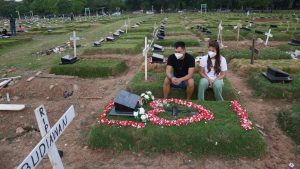
The problem in Jakarta has got worse with some hospitals resorting to makeshift means to cope with the surge.  Tents have popped up and spaces repurposed as hospitals in Jakarta find themselves barely coping with the soaring numbers of Covid-19 patients that have also left medical workers with fatigue and burnout.

Some hospitals have converted their emergency units into isolation sites for Covid-19 cases, as they tend to patients with urgent, non-Covid-19 conditions, such as those injured in accidents, in newly erected tents at their car parks.

Others are taking care of Covid-19 patients with mild and moderate symptoms in open tents.

Meanwhile for Beverly, by the time she was admitted, her oxygen levels had plummeted and her condition was critical.

Tirza explains: “The virus was attacking her lungs and causing her to have shortness of breath. “Erik adds: “There was a lot of fluid in her lungs. In one day, the hospital took 30 minutes to suck up the fluid and they took an X-ray almost every day.”

During her time in hospital, doctors successfully resuscitated Beverly three times. Her parents say her body had fought off the COVID but was severely weakened. When her heart stopped for the fourth time, they couldn’t save her.

Beverly was less than a month old when she died on 7 July. “The shadow in her lungs started to disappear but the doctor said she was exhausted,” says Erik, sitting by her little grave.

The small plot is decorated with rose petals in the shape of a heart. An angel figurine rests against the slate plaque. “It was her heart. Because her heart was pumped so many times her breathing was not stable,” says Beverly’s heartbroken mother. “In the end, she was exhausted and her heart suddenly stopped because her heart was very exhausted.”

More than 1,272 children have died in total according to figures from the Ministry of Health.

According to their statistics published on 24 August, deaths of under 18s account for around 1% of Indonesia’s total COVID death toll, much higher than the global average of 0.3% (reported by UNICEF based on available data from 79 countries).

“Health protocols are very difficult to apply to children,” explains Dr Agus Susanto, a paediatrician at a hospital in Jakarta.

“Second, the use of masks on children is very difficult to apply, masks are something that make children uncomfortable. Clean living behaviours such as washing hands are sometimes forgotten.

“Nutrition is also a trigger factor or risk factor for susceptibility to COVID-19. The next factor is comorbidity – in some children there are several comorbidities such as congenital heart disease, cancer, malnutrition, stunting and obesity. “This has an impact on the vulnerability of Indonesian children to COVID-19.”

Official figures show more than half a million Indonesian children have tested positive for the coronavirus since the start of the pandemic. The real figure could be much higher as testing among children is traditionally low.

While many have asymptomatic or mild symptoms, 10-year-old Charissa Ayumi Genji – or Caca – had to be admitted to hospital after her condition deteriorated. “The child’s condition when she first came in was symptoms like a fever, headache, cough and a cold. Since she arrived with a fever and was weak, [she] did not want to eat and drink so we had to treat her. After monitoring her condition for a few days, it is now much better,” says Dr Agus.

Caca’s mum and dad are in the beds either side of her. Almost all the family has the virus. “I am very afraid. It’s so easy to be infected, [it just goes] from one person to another person,” says Caca’s mother, Encum Sumiyati. “Delta is like that, so sometimes we wear double masks.”

Along the corridor, 18-day-old Seraphine is responding well to treatment. She was four days old when she was brought here. “When the baby first came in she had a fever and also looked yellow,” Dr Agus explains. COVID killed a record number of Indonesian children in August.

At least 228 people aged under 18 died before the month’s end, according to data supplied by the Ministry of Health. Survivors can also face potential complications. “Short-term impacts can cause disability and death. The long-term impacts affect children’s learning and how they perform their activities,” says Dr Agus.

The country began mass vaccinations in January 2021 and paediatricians say inoculating over-12s should be a priority. In June, President Joko Widodo announced 12 to 17-year-olds would be jabbed after the Chinese Sinovac Biotech vaccine was given the green light for use in children there. It’s reported a 30% COVID mortality rate among 10 to 18-year-olds contributed to the drug agency’s recommendations. While Indonesia’s daily infection rates have finally started to drop, for the families who have lost so much, it’s already too late.

When we see young people being offered the vaccine we can all but hope that they realise that they are not immune to this deadly virus and whether fit or not Covid 19 tries to reach everyone.

Until the next time stay safe.


Madeira Situation Report Wednesday 1st September 2021


by Daniel Fernandes

Covid-19 update

There were 167 new Covid-19 cases, 309 recoveries and no deaths from Covid-19 in Madeira since the previous Madeira Situation Report, which was published a week ago. There was a big fall in the number of active cases and a big increase in the number of recoveries.

On Wednesday, there were 25 new Covid-19 cases (1 imported case from the UK and 24 cases of local transmission) and 36 recoveries. The number of patients in hospital decreased to 7, 2 PF whom were in intensive care.

On Thursday, there were 30 new Covid-19 cases (10 imported cases – 5 from the UK, 2 from France, 1 from the Netherlands, 1 from the Lisbon and Tagus Valley Region and 1 from Northern Region & 20 cases of local transmission) and 34 recoveries. The number of patients in hospital decreased to 5, 1 of whom was in intensive care.

On Friday, there were 21 new Covid-19 cases (7 imported cases – 4 from the UK and 3 from the Lisbon and Tagus Valley Region & 14 cases of local transmission) and 40 recoveries. The number of patients in hospital remained the same as the day before (5) and none were in intensive care.

On Saturday, there were 21 new Covid-19 cases (7 imported cases – 3 from the UK, 1 from Croatia, 2 from Northern Region and 1 from the Lisbon and Tagus Valley Region & 14 cases of local transmission) and 57 recoveries. The number of patients in hospital remained the same as the day before (5).

On Sunday, there were 24 new Covid-19 cases (9 imported cases – 4 from the UK, 4 from the Lisbon and Tagus Valley Region and 1 from Northern Region & 15 cases of local transmission) and 57 recoveries. The number of patients in hospital remained the same as the day before (5), none of whom were in intensive care.

On Monday, there were 17 new Covid-19 cases (3 imported cases – 1 from Germany, 1 from the UK and 1 from Northern Region & 14 cases of local transmission) and 45 recoveries. The number of patients in hospital decreased to 4, none of whom were in intensive care.

And on Tuesday, there were 29 new Covid-19 cases (7 imported cases – 4 from the UK, 1 from the Canary Islands, 1 from France and 1 from the Lisbon and Tagus Valley Region & 22 cases of local transmission) and 40 recoveries. The number of patients in hospital decreased to 3, none of whom were in intensive care.

There were 231 active cases on Tuesday, of which 55 had been imported while the other 176 cases had been a result of local transmission. As of Tuesday, there had been 11,284 cases, 10,978 recoveries and 75 deaths.

On Tuesday, there were 56 patients in isolation in a dedicated hotel, 172 patients in isolation in their own accommodation and 3 patients in hospital, none of whom were in intensive care.

On the same day, there were 98 suspected cases under epidemiological investigation and analysis, which were all linked to patients who tested positive for Covid-19, to calls made to the SRS24 helpline, to referrals by SESARAM (Madeira Regional Health Service) and to airport screening.

There were 40,133 travellers under monitoring by the health authorities. Monitoring is being carried out through the ‘MadeiraSafe’ app. There were also 557 people, who had contact with positive cases, being monitored by the health authorities of several Madeira municipalities and of Porto Santo.

As for Covid-19 testing on passengers who had arrived at Funchal and Porto Santo airports, 299,583 samples had been collected until Tuesday (at 15h30). By Tuesday, 594,612 samples from RT-PCR tests had been processed in the Autonomous Region of Madeira.

The SRS 24 helpline (Regional Health Service – 800 24 24 20) received 663 calls in the last 7 days. Overall, it had received 62,559 calls.

The Covid-19 mental health helpline (Linha de Acompanhamento Psicológico da Direção Regional de Saúde – 291 212 399 – available every day from 09h00 to 21h00), which was set up to provide emotional and mental support to anyone in Madeira received 14 calls in the last 7 days. Overall, it has received 3,842 calls.

https://funchalnoticias.net/2021/08/25/25-novos-casos-de-covid-19-36-recuperados-196-suspeitos/

https://funchalnoticias.net/2021/08/27/30-novos-casos-de-covid-19-34-recuperados-e-173-casos-suspeitos/

https://funchalnoticias.net/2021/08/28/covid-19-21-novos-casos-40-recuperados-150-suspeitos/

https://funchalnoticias.net/2021/08/28/21-novos-casos-de-covid-19-57-recuperados-98-suspeitos-303-activos-no-total/

https://funchalnoticias.net/2021/08/29/24-novos-casos-de-covid-19-na-madeira-nas-ultimas-24-horas/

https://funchalnoticias.net/2021/08/30/17-novos-casos-de-covid-19-45-recuperados-116-suspeitos-242-activos/

https://funchalnoticias.net/2021/08/31/29-novos-casos-de-covid-19-22-sao-de-transmissao-local/


Covid-19 vaccination update

On August 28th, a shipment of 35,100 Pfizer Covid-19 vaccine doses arrived in Funchal.

As of August 29th, a total of 360,389 Covid-19 vaccine doses (197,206 1st doses & 181,470 2nd doses/full vaccination) had been administered since the start of the campaign on December 31st. This means that on that day, 78% of the population had been administered the first vaccine dose while 71% of the population had been fully vaccinated.

A total of 8,167 vaccine doses (2,811 1st doses & 6,276 2nd doses/full vaccination) were administered in the week up to August 29th.

The plan for this week is to continue to inoculate the population throughout the Region.

According to a real-time Covid-19 vaccination tracker, 78.77% of the Region’s population (197,762) have been administered 1 vaccine dose while 72.29% of the population (181,484) have been fully vaccinated.

https://funchalnoticias.net/2021/08/28/mais-35-100-vacinas-da-pfizer-chegaram-a-madeira/

https://funchalnoticias.net/2021/08/31/mais-de-360-mil-vacinas-anti-covid-19-administradas-na-regiao-ate-a-data/

https://web.sesaram.pt/COVID19_INFO

143rd Anniversary of the Madeira Regional Command of the PSP police force

Ireneu Barreto, the Representative of the Republic for the Madeira Region (Representante da República para a Região da Madeira), will lead the celebration ceremony of the 143rd anniversary of the Madeira Regional Command of the Public Security Police (Comando Regional da Polícia de Segurança Pública). Magina da Silva, the National Director of the PSP (Diretor Nacional da PSP), will also be attending the ceremony.

https://funchalnoticias.net/2021/08/31/ireneu-barreto-preside-amanha-a-dia-do-comando-da-psp/

HMS Scott docked in Funchal

HMS Scott, a British ocean survey vessel, docked in Funchal for refuelling on August 28th. It had sailed from Gibraltar. HMS Scott is “the largest survey vessel in Western Europe”, “the fifth largest vessel in the Royal Navy”, and “also has an auxiliary role as a mine countermeasures vessel”. She was “named for the famous Arctic explorer Robert Falcon Scott”.

https://funchalnoticias.net/2021/08/28/navio-de-pesquisa-oceanica-da-marinha-inglesa-reabastece-no-funchal/

https://www.royalnavy.mod.uk/our-organisation/the-fighting-arms/surface-fleet/survey/ocean-survey-ship/hms-scott

Power cut

Empresa de Electricidade da Madeira (Madeira power supplier) announced there will be a power cut due to planned work on the electricity supply network. This work cannot be postponed and will take place in the following day and place:

CÂMARA DE LOBOS

September 1st – 09h00 to 12h00

– Caminho do Ilhéu

However, power could be restored during the time frame mentioned above. So, for safety purposes, it should be assumed that there will be power at any time during this period of time.

If necessary, customers can contact the free Customer Support Service number (Serviço de Apoio ao Cliente): 800 221 187.

ttps://funchalnoticias.net/2021/08/31/publicidade-o-fornecimento-de-energia-sera-interrompido-nos-dias-horas-e-locais-abaixo-indicados-anuncio-71-2021/


Algarve Situation Report Wednesday 1st September 2021


Around 67,500 spectators will be able to watch MotoGP in Portimão in November – 

Will be able to watch the MotoGP Grand Prix live at the Autódromo Internacional do Algarve (AIA), in Portimão, between the 5th and 7th of November, it was announced today.

In the presentation of the event in Portimão, the administrator of the AIA revealed that in November the capacity of the events should be at “100%”, but as a “precaution”, the organization will only provide “%75% of the seats”, which translates to around 67,500 spectators, complying with the health rules in force.

This is the third time that Moto GP has been present at the Algarve circuit in a year, but the first in which the public will be able to watch “one of the last races” of the legendary Valentino Rossi and see Portuguese rider Miguel Oliveira (KTM) , “to fight for a victory”. Something that Paulo Pinheiro classified as “unique”.

For the official, this race is the recognition of a “long journey” of the project that makes it possible to carry out three MotoGP and two Formula 1 races “in the space of 12 months”, to which are added almost a dozen other events.

Present at the presentation, the rider Miguel Oliveira recalled the first official race in the Algarve, in November 2020, which he ended up winning and revealed the “happiness” he felt when he learned that MotoGP would return in April this year, but it will be even better now with audience.

“There was a lack of that special ingredient that both the drivers and the entire organization like to have, which is the warmth of the fans”, he assumed, something that will happen in the race in November.

MAR Shopping and Animal Rescue Algarve promote adoption campaign

On the next 3, 4 and 5 of September, MAR Shopping Algarve receives ARA – Animal Rescue Algarve – and invites you to join the animal cause.

The Responsible Adoption Action is a campaign that runs from 10:00 am to 6:00 pm, allowing visitors to the centre to meet or even take home a new family member.

Although visitors to the centre can choose their new pet, they will not take it home on the same day, until the bureaucratic issues are formalized, under the note issued by MAR Shopping.

For Ana Antunes, General Director of MAR Shopping Algarve, it is “with great appreciation that we once again support the responsible adoption campaign at MAR Shopping Algarve, it is an important social cause that transmits family and social values ​​with which we identify and to which we intend to raise awareness.”.

GNR seizes firearms during inspection of hunters

Three offences were detected for hunting game species within 100 meters of artificial feeding and drinking fountains.

The GNR Territorial Command of Faro, through its Environmental Protection Nucleus (NPA), carried out on Sunday, 29 August, an action to inspect the exercise of hunting in the municipality.

The elements of the NPA inspected several hunters, having been detected three offenses for hunting game species less than 100 meters from artificial feeding and drinking fountains, the fine of which can reach a maximum value of 3,316 euros.

During the action, the material resulting from the hunting was seized and delivered to the Centre for Recovery and Investigation of Wild Animals. Three firearms were also seized.

The action counted on the reinforcement of soldiers from the Environmental Protection Centre (NPA) of Loulé and Tavira and also from the Intervention Detachment (DI).


Azores Situation Report Wednesday 1st September 2021


From our colleague in the Azores

Covid -19 

Since the last Situation Report a week ago on the 25thth of August there have been 107 new cases of Covid-19 registered and 284 recoveries.

Death 

Sadly, a 76-year-old woman, resident in Ponta Delgada, who was admitted to the Intensive Care Unit of the Hospital do Divino Espírito Santo, in Ponta Delgada, died.

Current Situation 

The archipelago currently registers 189 positive active cases: 158 on the island of São Miguel, 17 on the island of Terceira, 4 on the island of Faial, 4 on the island of Pico, 3 on the island of Graciosa and 3 on the island of São Jorge.

Just one week ago there were 372 cases.

Since the beginning of the pandemic, 8,690 positive cases of COVID-19 have been diagnosed in the Azores and 8,291 people recovered from the disease. There have been 42 deaths, 94 people who left the archipelago and 74 cases with history of previous cure. To date, 678,166 tests have been carried out for SARS-CoV-2 virus which causes COVID-19 disease.

From 31st December 2020 to 30th August, 166,966 people in the Azores have been vaccinated with the first dose (70,6 per cent) and 171,510 with complete vaccination (72,5 per cent), under the Regional Vaccination Plan.

Green List 

The Government of the Azores welcomed the inclusion of the archipelago in the “green list” for international travel from the United Kingdom, considering it to be the “recognition of the evolution of the fight against covid-19 in the archipelago”.

This move acknowledges the evolution of the fight against covid-19 in the archipelago, at a time when more than 70% of the Azorean population is fully vaccinated against the disease.

The British decision “was communicated by letter to the president of the [Regional] Government, José Manuel Bolieiro, by the United Kingdom ambassador to Portugal, Christopher Sainty”.

The region was recognized as the “Safest Destination in Europe for 2021” (European Safest Destination 2021), presenting, “in an increasingly evident way, excellent conditions for tourism” and “a remarkable performance in the fight against the pandemic.

The UK Ministry of Transport announced on Thursday that the Azores, along with other territories and countries, will move to the “green list” of travel from Monday 30th August.

According to the list update, carried out every three weeks, the British government only requires passengers from the Azores to submit a test to covid-19 made before departure and another in the United Kingdom.

The Azores will thus join the Autonomous Region of Madeira which was added to the “green list” at the end of June.

Covid-19 Special Monitoring Commission 

The Government of the Azores announced that it will extinguish, as of September 1st, the Covid-19 Special Monitoring Commission for the Fight Against the Pandemic (CEALCPC), as it understands that its mission has been fulfilled.

As a result of the increase in the vaccination process, especially in a context of imminent group immunity, it is considered that the mission of CEALCPC has been fulfilled, recognizing the merit, competence and success with which it was pursued.

Cruise Ship Stopovers 

The company ‘Portos dos Açores’, which manages the port infrastructure in the region, revealed that 100 cruise ship stopovers are planned in the Azorean archipelago by the end of the year.

The company has said that in the last four months of 2021 there should be “a significant movement of cruise ships” in the region, due to the redefinition of routes by operators, which “unequivocally privileged the Azores destination”.

“Based on these assumptions, by the end of the year, the most recent forecasts point to the completion of around 100 cruise ship stopovers”.


Overseas Situation Report Monday 30th August 2021


By Mike Evans

As we come to the end of another month this report is looking at the situation over the past week around the world in respect to new infections.

To see this we look at the Worldometer.Info website and for context we have looked around the world news media.

Across the world there have been 5 million more cases reported in the past week. This is a 2% drop compared to the previous week. Over 20% of these new cases have come out of the USA with over 1 million new infections. While this is a big concern this is actually a 2% drop compared to the previous week. Other countries who have reported big numbers of infections are India, Iran and the UK with around 250,000 cases each. The concern for these three countries is that they have all seen an increase week on week.

For India the increase of 17% on the week is especially worrying as they have been seeing a steady drop of infections since the start of July and only in the last week have cases started to rise again.
India reported 45,083 new coronavirus infections on Sunday, according to data from the health ministry, driven by surging cases in the southern state of Kerala. In Kerala, where cases have spiked in the wake of a major festival, the state government reported 31,265 new infections late on Saturday – comprising nearly 70% of the country’s total new daily cases.

The state plans to lock down hard-hit areas and restrict public movement to mainly essential services and emergencies, according to an order issued on Saturday. This at a time when the number of vaccines administered across all of India is over 620 million.

The data also shows that 30% of intensive care unit beds in hospitals in the country are holding COVID-19 patients. The rapid rise of the virus and its variants comes as only 51.7% of the U.S. population is fully vaccinated and 61% have received at least one dose of the vaccine.

States in the South and Northwest are seeing worse rates than ever before. In Alabama, Florida, Louisiana, Mississippi, Oregon and Washington, new admissions of COVID-19 patients are at the highest levels since the start of the pandemic. And in both Florida and Georgia, more than 25% of the inpatient hospital beds are being used for COVID-19 patients. In Mississippi, more than 61% of ICU beds have COVID-19 patients.

Throughout the pandemic, the Black and brown communities were hit harder than white people. The more recent surge of hospitalizations is having the same impact. “Hospitalization rates for non-Hispanic Black people increased faster and have risen higher than other groups,” according to the Centers for Disease Control and Prevention. In the last week of July, the hospitalization rate for non-Hispanic Black people was the highest of any other racial group. Out of every 100,000 people 11.5 were hospitalized with COVID-19. For non-Hispanic white people, the rate is 4.2 out of every 100,000, a far lower number.

Across the world to the Middle East and Iran where cases have stabilized over the past week although according to one newspaper which is supposedly close to the Government the number of deaths reported is around 7 times less than what the actual number is purported to be.  Fatalities from Covid-19 are seven times the official figures, at least in some of Iran, Dr Kourosh Halakouei-Naeini, a professor of epidemiology at Tehran University of Medical Science, told Javan newspaper in an interview published Wednesday. He criticized the health ministry for underreporting deaths and said the pandemic had been allowed to spread as well-placed individuals made financial gains.

The publication of the story in a newspaper widely believed to be close to the  Revolutionary Guards (IRGC) may reflect factional rivalries over an already-politicized pandemic. While underreporting of deaths has been suggested by health professionals since April 2020

Japan’s story may suit the incoming administration of President Ebrahim Raisi (Raeesi) in blaming the government of former president Hassan Rouhani for any ills, including the extent of Covid. Halakouei-Naieni told Javan that Covid had been deliberately allowed to spread for financial gain. Health officials had “let the virus loose for the benefit of some people” with stakes in drugs companies: “It’s as if this disease ensures the interests of some people and the conflict of interests has prevented planning for containment of the coronavirus.”

While corruption allegations are a staple of Iranian politics, there have been repeated suggestions that Khamenei’s ban on importing US- and United Kingdom-made vaccines, served those with financial interest in developing a domestic vaccine. This, some argue, explained the ban rather than the track record of Western drugs companies in testing products in developing countries.

Haji-Deligani’s latest attack on Namaki accused him, among other sins, of ignoring Khamenei’s lead, even though the supreme leader’s ban slowed down Iran’s pandemic response. Khamenei recently gave the go-ahead to procure US-made Pfizer and Moderna vaccines, effectively lifting the ban. Covid infections and deaths have risen rapidly since early July, stretching the capacity of hospitals as families struggle to pay for medicines.

In Europe, Germany saw a big demonstration against the Covid rules. Marchers rallied through the streets of the German capital, with thousands of police officers on standby in case of violence. A court had allowed only one rally to go ahead.

This while it has been said by the Robert Koch Institute that Germany is entering a “fourth” wave of infections. Positive samples among PCR tests had risen from 4% to 6% within a week until mid-August, the RKI said in its weekly report on Thursday evening.

Rising infection numbers come as the more contagious delta variant becomes the dominant form of the virus, making up 99% of all cases in Germany, the RKI said. The institute said that younger age groups were particularly affected by the new wave of infections.

There has been an increase in the incidence rate in Germany since the beginning of July. This was particularly noticeable for people between the ages of 10 and 49, the RKI explained.The seven-day incidence rate in Germany on Thursday was around 44 cases per 100,000 inhabitants, but with strong regional fluctuations.


For example, the northern city of Kiel has a rate of 107.4 while the city-states of Hamburg and Berlin have recorded 68.8 and 50.3. In the states of Thuringia and Saxony-Anhalt cases per 100,000 remain below 10.

Until the end of June 2021, 100 cases per 100,000 people was the benchmark at which certain restrictions on public and private life came into force. But going forward, other values such as hospital admissions are set to be taken into account when determining when to bring in restrictions.


The Robert Koch Institute said in its Thursday report that hospital admissions were currently at a low level. Heading into a fourth wave, 63.7% of the population have received at least one vaccination dose, while 58.2% are fully immunized.


To end this report we look at the situation in Norway, where to date they have only recorded a total of 156,133 cases since the start of the pandemic. For a country with a population of 5.4 million they have fared fairly well compared to many across the world. However, they are also seeing a fourth wave of new infections. In April this year Norway was recording around 100 new cases a day. This week they hit a record of 1,552 cases in a day, the highest number of daily infections since the peak of its third wave in March, a Norwegian health chief said.

Espen Nakstad’s comment after statistics were released on Tuesday comes after Preben Aavitsland, chief physician in the infection control division at the Norwegian Institute of Public Health, declared in June that the pandemic in Norway was over.

Despite diagnosing a fourth wave, Mr Nakstad, assistant director of health at the Norwegian Directorate of Health, said the country was able to cope by dint of its vaccination programme, and did not raise the spectre of a delay to its planned lifting of restrictions in September. “We are definitely in a fourth wave of infection now, but the vaccination rates mean that we currently do not have a large wave of hospital admissions as of today,” he told newspaper Dagbladet.

There are 52 people in hospitals in Norway with Covid, 16 of whom are receiving intensive care, according to NIPH.  There is no data on how many of these patients are either fully or partially vaccinated, but Our World in Data figures show 48 per cent of Norwegians are fully vaccinated, placing it behind its Scandinavian neighbour Sweden, where 53 per cent of the population are fully vaccinated.

Mr Nakstad urged Norwegians “to keep control so that not so many people become infected that the admission numbers also increase a lot.” The Norwegian government will fully lift its Covid restrictions once everyone over the age of 18 has had their second vaccine dose. Ninety per cent have had their first shot, according to NIPH.

There is no concrete date set, but the government has previously said restrictions will be eased around September 12. After this point, local authorities will be able to implement their own safety measures as they see fit.

Until the next time Stay Safe.


Overseas Situation Report Friday 27th August 2021


By Mike Evans

While many countries around the world are seeing a drop in new Covid 19 cases, the delta variant has for many places around the world meant that they are facing a new and more intense outbreak of the virus.

In this report we will look at various places where things are not getting better. We start with Florida, home of theme parks, Disney and one of the top holiday venues in the world. More people in Florida are catching the coronavirus, being hospitalized and dying of Covid-19 now than at any previous point in the pandemic, underscoring the perils of limiting public health measures as the Delta variant rips through the state.

This week, 227 virus deaths were being reported each day in Florida, on average, as of Tuesday, a record for the state and by far the most in the United States right now. The average for new known cases reached 23,314 a day on the weekend, 30 percent higher than the state’s previous peak in January,

hospitalizations in Florida have almost tripled in the past month, according to federal data, stretching many hospitals to the breaking point. The surge prompted the mayor of Orlando to ask residents to conserve water to limit the strain on the city’s supply of liquid oxygen, which is needed both to purify drinking water and to treat Covid-19 patients.

Even as cases continue to surge, with more than 17,200 people hospitalized with the virus across Florida, Gov. Ron DeSantis, a Republican, has held firm on banning vaccine and mask mandates. Several school districts have gone ahead with mask mandates anyway.

Overall, 52 percent of Floridians are fully vaccinated, but the figure is less than 30 percent in some of the state’s hardest-hit counties.

On Monday, dozens of doctors and hospital employees in Palm Beach County gathered for an early morning news conference to beseech the unvaccinated to get shots, emphasizing that the surge was overwhelming the health care system and destroying lives.

“We are exhausted,” said Dr. Rupesh Dharia, an internal medicine specialist. “Our patience and resources are running low.”

A growing proportion of the people inundating hospitals and dying in Florida now are coming from younger segments of the population, particularly those ages 40 to 59, which were less vulnerable in earlier waves of the pandemic. The Delta variant is spreading among younger people, many who thought they were healthy and did not get vaccinated.

Dr. Chirag Patel, the assistant chief medical officer of UF Health Jacksonville, a hospital system in Northeast Florida, said the patients hospitalized with the virus during this latest surge tended to be younger and had fewer other health issues, but were nearly all unvaccinated. Of those who have died, including patients ranging in age from their 20s to their 40s, more than 90 percent were not inoculated, Dr. Patel said.

“We’ve had more patients this time around that have passed away at a younger age with very few if any medical problems,” he said. “They simply come in with Covid, and they don’t make it out of the hospital.”

Two months ago, the number of Covid-19 patients admitted at the system’s two University of Florida hospitals in Jacksonville was down to 14. On Tuesday morning, 188 coronavirus patients were in the hospitals, including 56 in the intensive care units.

One of the hardest parts of his job, Dr. Patel said, is having to tell family members that their unvaccinated loved one had succumbed to the virus. “It’s just such a senseless and preventable way of ultimately dying,” he said.

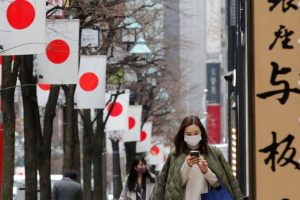
Meanwhile across the Pacific in Japan, hosts of the Paralympic games, the Prime Minister, has officially expanded the coronavirus state of emergency to cover 8 more prefectures where infections are spreading rapidly. As Tokyo hosts the Paralympics, nearly half of Japan’s prefectures will be under the measure.

Suga Yoshihide said on Wednesday, “The number of new infections across the country remains at a record high. The figure is especially high in the Aichi area. The highly contagious Delta variant is posing serious threats. I call on the public to cooperate more to overcome the crisis.”

13 prefectures — Okinawa, Tokyo, Saitama, Chiba, Kanagawa, Osaka, Ibaraki, Tochigi, Gunma, Shizuoka, Kyoto, Hyogo and Fukuoka — are currently under the state of emergency. From Friday until September 12, the measure is to cover eight more: Hokkaido, Miyagi, Gifu, Aichi, Mie, Shiga, Okayama and Hiroshima.

So-called quasi-emergency measures will be in effect in 12 other prefectures: Ishikawa, Fukushima, Kumamoto, Toyama, Yamanashi, Kagawa, Ehime, Kagoshima, Kochi, Saga, Nagasaki and Miyazaki.

Officials plan to urge restaurants and bars to stop serving alcohol and impose stricter procedures such as limiting the number of people allowed at shopping malls and events. But Japan’s measures do not resemble the strict lockdowns imposed in other countries. Earlier on Wednesday, officials confirmed that the Delta variant continues to sweep across the nation.

Hospitals are under enormous strain, with more seriously ill patients than ever. Officials say many people don’t know where they got infected. Officials plan to introduce anti-infection measures at schools, but not to force them to close. They also plan to give teachers and other staff priority access to vaccines and provide schools with virus test kits.

Finally we go to Malaysia, where the virus has been increasing daily since the start of July and amidst a change of government. Malaysia’s new prime minister, Ismail Sabri Yaakob, has been sworn in — but analysts warn that political and economic uncertainties remain as the country faces its worst Covid-19 outbreak.

Ismail Sabri took over as prime minister after Muhyiddin Yassin resigned last week, following a rocky 17 months in office wrought by political infighting within the ruling coalition. It ultimately cost Muhyiddin his position. The new prime minister now faces an immediate challenge of taming Malaysia’s surging Covid infections and rising death count, as well as reviving an economy that has suffered from multiple rounds of lockdowns.

“The political drama since last year has hit Malaysia at a most unfortunate time,” Wellian Wiranto, an economist at Singapore’s OCBC Bank.Daily Covid cases reported in Malaysia surged past the 20,000-mark earlier this month and have since stayed close to that level. The country reported more than 1.5 million cumulative Covid cases as of Sunday, while the death toll crossed 14,000, health ministry data showed.

Adjusting for population size, Malaysia’s daily reported Covid cases are among the highest globally, according to data compiled by online repository Our World in Data.

As it battles a deadly Delta variant-fuelled wave of coronavirus that has seen cases and deaths surge, Malaysia is racing to ensure all adults across the country receive two doses of the vaccine by October. In a bid to speed up the process and achieve herd immunity more quickly, it has recently made efforts to encourage migrants and refugees to come forward for the vaccine. But after a year marred by arrests and outbursts of anti-foreigner rhetoric, some migrants and refugees are wary.

Mohammad Zubair, a Rohingya refugee in Kuala Lumpur, told Al Jazeera that while he registered himself for the jab in early August, he is still trying to make up his mind whether to take his wife when the government opens a walk-in centre for undocumented migrants next week because she has not yet been recognised as a refugee and he fears she will be arrested.

“If I take her for the vaccine, the police might stop us on the way,” he said. “I can take her under one condition: if the government will assure that undocumented persons can get the vaccine and not be arrested on the way or at the vaccination centre.” Close to 40% of Malaysia’s population has received two doses of Covid vaccines as of Sunday, data by the health ministry showed.

There have been mixed messages from Government about the non documented immigrants. Earlier in the year they were told that all would be given a vaccine and not arrested but recently there has been talk about the health minister wanting to “round up” the non documented as they were the cause of the spread. The pandemic has seen increased hostility towards migrants and refugees, and particularly Rohingya who have for years seen mostly Muslim Malaysia as a place of refuge.

In early 2020, citing coronavirus prevention efforts, authorities pushed back boats carrying Rohingya asylum-seekers and detained the passengers of other boats for illegal entry. In April 2020, the home minister said that Rohingya had no status, rights or basis to make demands on the Malaysian government and two months later, Prime Minister Muhyiddin Yassin said the stress of the pandemic meant the country could “no longer take more” Rohingya.

Now, with the pandemic significantly worse, anti-foreigner and anti-Rohingya rhetoric is resurfacing.

We can but hope that politics is taken out of the equation and all those wanting a vaccine are offered one. Until the next time stay safe.