
The Overseas Situation Report Tuesday 7 September 2021
by Mike Evans
“The only thing that will redeem mankind is cooperation.” – Bertrand Russell
With the signs around the world that we may start to see the end of the pandemic or people will learn to live with it better, this report is looking at the issues surrounding flying and how those who have to work in the Aviation Industry are having to cope with a totally different set of issues.
 Working as a flight attendant previously afforded Mitra Amirzadeh the freedom to explore the world — taking her from her home in Florida to destinations including Kenya, France and Spain.
As the pandemic spread, the perks of Amirzadeh’s job diminished. Now restricted to domestic US flights, her work involves navigating not only the fear of catching Covid-19, but also the recent uptick in disruptive passengers.
“I’m dealing with a lot of babysitting, which I never counted on doing,” Amirzadeh, who works for a low-cost US airline, says “The actual children on board behave better than the grown adults do.”
This summer, unruly passenger behaviour seems to have reached new heights. In one incident, a passenger punched a Southwest flight attendant and knocked out two of their teeth. Video also circulated of a passenger getting taped to their seat after they reportedly punched and groped Frontier Airlines flight crew.
The Federal Aviation Administration (FAA) said it has issued more than $1 million in fines to unruly airline passengers so far in 2021.
Many US flight attendants say the stress of the situation is taking its toll.
Susannah Carr, who works for a major US airline, says unruly incidents used to be “the exception, not the rule.” Now they’re “frequent. I come in expecting to get push back. I come in expecting to have a passenger that could potentially get violent,” she says.
 Allie Malis, a flight attendant for American Airlines, says air crew are “exhausted — physically and emotionally. We’ve gone through worrying about our health and safety, worrying about our jobs — now we are worrying about our safety in a different way.”
Pre-pandemic, the issue of unruly passengers was becoming increasingly omnipresent — data from the International Air Transport Association (IATA) suggested incidents rose from 2012 to 2015, while whole conferences were dedicated to the problem.
This increase was often linked to cabins getting fuller, with increased security checks and processes adding to tension.
In 2019, Malis, who is also the government affairs representative at the Association of Professional Flight Attendants, a union representing American Airlines air crew, spoke about the decrease of personal seat space. She said her union believed it is “strongly correlated and in a large part to blame” for the rise in incidents.
Alcohol is also an often cited contributing factor — travellers drink at the airport and board the plane without crew realizing how inebriated they are. When it all kicks off at 30,000 feet, it’s too late. That said, it has always been hard to get an exact handle on whether passengers have actually become more unruly. Not every airline that’s part of IATA submits data, and not every airline records every instance of unruly behavior, while separate FAA data recorded oscillating numbers of investigated incidents between 1995 and 2019.
There have been suggestions that incidents just started to feel more ubiquitous in recent years because social media means videos of badly behaved passengers spread like wildfire.
But while FAA data might show fluctuating figures for much of the past 20 years, in 2021, incidents seem to have skyrocketed. In 2019, 146 investigations were initiated by the FAA. So far in 2021 that number is 727.
Covid-19 seems to have exacerbated an already existing issue to an unprecedented degree, at least in the US. Amirzadeh recalls the silent flights of spring 2020. People were too fearful to even look at other passengers or air crew, she says, let alone cause conflict.
 By summer 2020, travel had recommenced and reports of in-flight disruptions were back. Masks — not yet mandated by the FAA, but enforced by some airlines — were becoming a sore topic among some travellers.
In recent months, unruly behaviour has reached new heights. “It just seems like every next incident is getting a little bit more extreme, things you just would have never imagined last year,” says Malis. “As a flight attendant, it’s really hard to imagine yourself being in a position that requires duct taping a passenger to their seats for the safety of everyone else on the plane, yet this is something that has happened numerous times in the last few months.”
Malis says she feels like incidents have been on a steady rise since the January 6 attack on the US Capitol. It also involved disruptive behaviour on planes and led to the Association of Flight Attendants-CWA (AFA) International — which represents American flight attendants at 17 airlines — stating rioters should not be allowed on flights home.
“I think the insurrection was kind of an eye-opening experience,” Malis says. “What do you do when you have multiple incidents happening on the plane at the same time with only four crew members?” A survey by the AFA released in July of this year found that, of the 5,000 flight attendants surveyed, 85% said they’d dealt with unruly passengers in 2021.
Disruptive passengers had used sexist, racist and/or homophobic language, according to 61%, while 17% said they’d been victim of a physical attack this year.
“I thought I had seen or done or heard at all,” says Amirzadeh, who has flown for six years and previously worked in customer service.”But as I’ve learned the past 18 months, that is definitely not the case, I am seeing, hearing and doing things I never thought in my life I would ever be doing.”
Many incidents are linked with mask non-compliance, which many flight attendants who spoke out about this problem say has been an issue throughout the pandemic.
Even though it’s now FAA-mandated and federal law, the wearing of masks remains the cause of the majority of inflight issues. In a recent August press release , the FAA says it had received approximately 3,889 reports of unruly behaviour by passengers since January 1. Of those reports, 2,867 were passengers refusing to comply with the mask mandate.
 “In the beginning, I would sympathize and say, ‘Hey, you know, I get it, it’s hot, I’m hot. I’m wearing it too — I need you to wear it too. Can we please work together?'” says Amirzadeh. “But here we are, it’s been a year and a half, you’re wearing them everywhere. And we’re not the only ones that are asking you to wear them — every train station, every bus, every airline…”
Carr says she thinks the problem is that mask-wearing is sometimes viewed as a political issue in the United States. “The mask issue was less about public health and it was more politicised in the beginning. And that is something we’re still dealing with today.”
Amirzadeh says fraught mask-related interactions often come as a result of passengers removing their face covering to eat or drink, and then keeping it off. It’s one of the reasons she thinks alcohol shouldn’t be served on planes currently. Not serving alcohol can be the cause of issues too — as Malis has found on board American Airlines, which continues to ban alcohol in its main cabins on board most flights.
“On some of my flights it’s caused people to get upset, because they do want to feel like they have a right to have a drink — but at the same time if you’re getting so upset because you can’t have a drink right now, that’s the exact reason we’re kind of afraid to give you one, that kind of erratic behaviour,” says Malis.
For some passengers, travel may feel more stressful and anxiety-inducing in the age of Covid. Carr suggests this — and the stresses we’ve all been under during the pandemic — are a contributing factor to the rise in incidents.
“We’ve been isolated for the last 18-plus months,” she says. “So I think some of the social graces have kind of been put on the back burner, as far as what’s acceptable in public and on an airplane.”
Malis wants passengers to realize that the stresses and anxieties they might be feeling about traveling in the age of Covid-19 are also shared by many crew, even if they seem like “a very accessible punching bag.” The ubiquity of events on social media also leads Malis to suggest there could be a “copycat factor.”
To reverse this, Amirzadeh says it’s important for people to realize that the passengers who’ve gone viral are paying the price.
Flight attendants are safety professionals trained in dealing with everything from a medical emergency to a potential terrorist incident. “We’re not here to serve you a Coke, we’re here to save your life,” is how Amirzadeh puts it.
But there’s the concern, she says, that dealing with unruly passengers could prevent crew from dealing with other issues on board.
“We are the people that are going to give you CPR, we’re the people that are going to give you the Heimlich maneuver, we are the people that are going to put out the fire. But we might miss those things if we’re too busy arguing with someone else about putting their mask on.”
 Malis says dealing with unruly passengers is a team effort — if a passenger seems to have taken against a particular flight attendant, another crew member stepping in could calm them down.
Carr says she keeps tabs on mask-wearing from the moment travellers step onto the plane, and will first offer a friendly reminder. If someone continues not to comply, there are several warning steps culminating in the traveller getting handed a card stating that if they continue, they’ll be reported to the airline and could lose travel privileges.
As Amirzadeh points out, a flight attendant can’t force someone to wear a mask. “But I can let him know that if he doesn’t, then I hope that wherever we’re landing is his final destination, because his return ticket is going to be cancelled, we’re going to file a report with the FAA, and you could face fines, and other legal ramifications.”
As many countries now require mandatory use of masks this issue will only get worse and until people start to treat mask wearing on airplanes as a “normal thing” we will see this happen more and more.
Until the next time Stay Safe.
Total Cases Worldwide – 221,721,579
Total Deaths Worldwide – 4,585,277
Total Recovered Worldwide – 198,263,551
Total Active Cases Worldwide – 18,872,751 (8.5 % of the total cases)
Total Closed Cases Worldwide – 202,848,828
Information and resources:
 To date, the global solidarity initiative COVAX has shipped 99 million donated doses, they said. While 92 countries have received some 89 million vaccines, this is far short of the one billion called for in the report.
 Although the ACT-Accelerator will speed up development and production, initial supplies will be limited. If there is no international plan to manage vaccine distribution fairly, there will be hoarding in some places and life-threatening shortages in others. There will also be price spikes.
 Luckily we live in a country which has advance weather forecasting and importantly, close communications between the meteorologists at the IPMA and technicians at Civil Protection. They meet daily by video link where the weather forecasts are discussed and analysed together with various warnings. This enables the identification of conditions that may require special measures, such as increasing internal operational deployments of emergency services and/or the issuing of ANEPC Notifications to the public.
 Whilst on the subject of rural fires a reminder to take care when using BBQs during periods of very high or maximum fire risk. There are laws on this subject in public areas. In your garden please follow the advice concerning safety available on our website and the Facebook post yester. Should use of a BBQ result in a fire the user can be held liable.
 In a statement sent to newsrooms, the structure, led by Vice Admiral Gouveia e Melo, announced that 75% of children have already received the first dose of the vaccine.
 “We have received 66 people so far and today a group of around 20 people will arrive. And, therefore, we will already have a significant number”, said the minister, in Guarda.
 “We only had a cough, fever and it didn’t last long. Beverly was also in good condition and didn’t show any symptoms,” Tirza explains. “But one week later she began to show symptoms, one of them was she had difficulty sleeping and when she breast-fed, she vomited.” As Beverly’s condition worsened, the family doctor said she needed immediate hospital care. Her parents went from place to place, searching around 10 hospitals in the Jakarta area until they found one with space to take her.
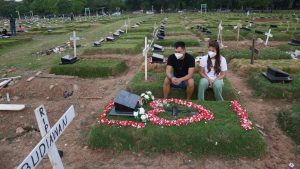 The small plot is decorated with rose petals in the shape of a heart. An angel figurine rests against the slate plaque. “It was her heart. Because her heart was pumped so many times her breathing was not stable,” says Beverly’s heartbroken mother. “In the end, she was exhausted and her heart suddenly stopped because her heart was very exhausted.”
 Ireneu Barreto, the Representative of the Republic for the Madeira Region (Representante da República para a Região da Madeira), will lead the celebration ceremony of the 143rd anniversary of the Madeira Regional Command of the Public Security Police (Comando Regional da Polícia de Segurança Pública). Magina da Silva, the National Director of the PSP (Diretor Nacional da PSP), will also be attending the ceremony.
 The Responsible Adoption Action is a campaign that runs from 10:00 am to 6:00 pm, allowing visitors to the centre to meet or even take home a new family member.
 The British decision “was communicated by letter to the president of the [Regional] Government, José Manuel Bolieiro, by the United Kingdom ambassador to Portugal, Christopher Sainty”.
 The company has said that in the last four months of 2021 there should be “a significant movement of cruise ships” in the region, due to the redefinition of routes by operators, which “unequivocally privileged the Azores destination”.
 For India the increase of 17% on the week is especially worrying as they have been seeing a steady drop of infections since the start of July and only in the last week have cases started to rise again.
 Japan’s story may suit the incoming administration of President Ebrahim Raisi (Raeesi) in blaming the government of former president Hassan Rouhani for any ills, including the extent of Covid. Halakouei-Naieni told Javan that Covid had been deliberately allowed to spread for financial gain. Health officials had “let the virus loose for the benefit of some people” with stakes in drugs companies: “It’s as if this disease ensures the interests of some people and the conflict of interests has prevented planning for containment of the coronavirus.”
 In this report we will look at various places where things are not getting better. We start with Florida, home of theme parks, Disney and one of the top holiday venues in the world. More people in Florida are catching the coronavirus, being hospitalized and dying of Covid-19 now than at any previous point in the pandemic, underscoring the perils of limiting public health measures as the Delta variant rips through the state.
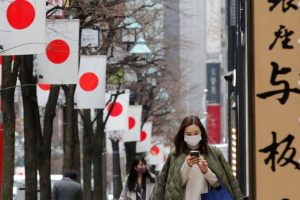
 Meanwhile across the Pacific in Japan, hosts of the Paralympic games, the Prime Minister, has officially expanded the coronavirus state of emergency to cover 8 more prefectures where infections are spreading rapidly. As Tokyo hosts the Paralympics, nearly half of Japan’s prefectures will be under the measure.
 Ismail Sabri took over as prime minister after Muhyiddin Yassin resigned last week, following a rocky 17 months in office wrought by political infighting within the ruling coalition. It ultimately cost Muhyiddin his position. The new prime minister now faces an immediate challenge of taming Malaysia’s surging Covid infections and rising death count, as well as reviving an economy that has suffered from multiple rounds of lockdowns.
 mapping quality, together with basic information. At present it provides only the number of resources deployed – my reaction to this is “so what”. Reporting updates of the number of operatives, supporting vehicles and aircraft every few minutes on its own is not of great help. For this reason, although we monitor closely, the fact that these statistics are available directly from ANEPC or Fogos.pt, we do not report this, except when a fire has developed to a stage where it has a potential to become a major fire incident, or close to property for example.
 According to a press release from the National Maritime Authority, “the elements of the local Command of the Maritime Police of Figueira da Foz, in collaboration with the PSP, interrupted a gathering of about 200 people who were in the Praça do Forte, in Figueira da Foz”.
 It is now the final phase of the “race” – the emergency plan to vaccinate around 9 million people in the shortest possible time. The country surpasses the stage in which adolescents aged between 12 and 15 are being vaccinated. From a universe of 380 thousand, almost 50% received the first dose last weekend, announces the coordinator – and “in a period of vacation”.