Portugal Situation Report Wednesday 18th August 2021


By David Thomas, President Safe Communities Portugal

Good morning – This morning we are only producing general reports for Madeira, Azores and Algarve due the fire at Castro Marim over the last two days. This Portugal report will therefore focus on important points concerning prevention, self-protection and reporting of fires, as this a high priority at present.

The fire in Castro Marim (or had it been anywhere else in the Algarve) was not unexpected, given the weather conditions.

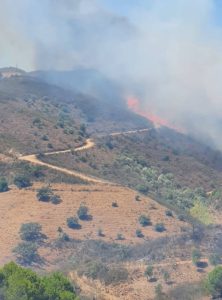
Although relatively few fires start at 01.00 hrs in the morning, this one did and spread fairly quickly. Being at night time, air means could not be deployed and for fire fighters on the ground access was extremely difficult, resulting in the fire to spread quickly driven by moderate winds. It was brought under control early on 16th, but re-ignited and is now under conclusion. Our major incident page here has all the updates.

OUR ROLE

Our role at Safe Communities, as it was when I spent over 30 years as a police officer, is to protect life and property. For that reason SCP trained for and became Portugal’s only Civil Protection Voluntary Organisation under Portuguese law in the area of communication in particular to the international community living and visiting here.

We attended numerous civil protection exercises, visited command posts during incidents, and entered into formal agreements with the ANEPC, as well as becoming part of the National Civil Protection plan, plus working closely with fire behavioural experts. As such in times of crisis we can call upon the relevant authorities for guidance, advice and information when required as in carrying out our statutory duties. As a legal entity we can provide advice; whereas many other try to do so, with no accepted qualification in Portugal to do so. When you see this on social media please therefore take care.

PREVENTION AND SELF-PROTECTION

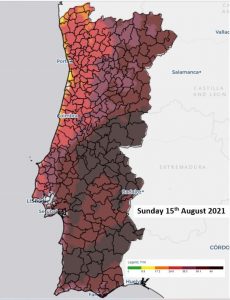
In the weeks leading up to the Castro Marim fire we have been posting both the normal fire risk map and chart, as well as the rural fire hazard in other words the FWI.  With the latter we have drawn comparisons with the Monchique fire of 2018 as the current conditions are similar with the FWI then, which determine how quickly fires can start and spread, at Extreme 64 and above.

With these reports we have added links to our website and provided information on self-protection in the event of fires. I hope you seen these, shared this information, and are by now fully aware of what steps to take should a fire approach your home.

Judging by the number of shares and reaches on our Facebook page, what it shows is that fires themselves once started, become far more newsworthy and are as consequence shared more widely, well beyond the communities affected. If preventive advice was as widely shared, people would become more informed and the risk of fires would decrease, because behaviour would change.

I give an example; yesterday we published posts cornering the dangers of smoke and the importance of self-protection and they were widely shared, simply because a major fire was taking place, and for some people it had unfortunately become a reality.

It is easy to become complacent and think “well it will never happen to me”, but in doing this, one can become exposed to danger, due to not understanding the risks. In extreme cases the consequences could be fatal. If you have every experienced a fire you will know that fires can burn with great intensity and spread very quickly. It was reported that at one stage the Castro Marim fire was consuming some 650 hectares an hour! In these situations there is no time to make plans, so it is important to plan well ahead.

WHY SELF-PROTECTION IS NECESSARY

The second point I wish to make is that fire fighters may not always be able to reach you quickly should a fire approach your home. This could be due to difficulty of access in isolated areas, with no proper roads, especially at night time, or during a major fire covering a large area with a long perimeter. In the Castro Marim fire yesterday the perimeter was stated at 43 Kms! At some stages yesterday some 600+ fire fighters were deployed.  However, not all of those are actively fighting fires!  For example the total includes drivers, logistics, those taking a well-deserved rest, meal breaks, change of shift for example – so for all these reasons in a large fire you may find yourself alone for a period of time. Learning about self-protection is therefore vitally import ant.

When you next see our messages on this subject please share, because by doing so you are helping others.

REPORTING OF FIRES

Each day at this time of the year there can upwards of around 40 fires sometimes reaching over one hundred. This is too many, but a vast reduction compared to over 300 per day during the worst of the 2017 fire period. The vast majority of rural fires take place in isolated areas and do not pose a threat to life or property, and the vast majority are extinguished quickly, normally within one hour due to the great work of the emergency services.

These fires are monitored by Civil Protection through their dashboard and through Fogos.pt https://fogos.pt/ which has an automatic link to the ANEPC dashboard downloading information, but with more features, including location maps. This is important as it ensures accuracy, and avoids human error. We have been requesting for some time to the ANEPC headquarters for more information concerning fires particularly maps showing the extent of areas burned, and the direction of active fires etc. We are very pleased therefore that starting recently this is now being done.

Although we monitor all rural fires, we do not report each and every one, such as stating the number of operatives, vehicles and aircraft as that alone provides very little information concerning the fire situation, especially where exactly the fire is and which direction it is moving in for example. Our criterial for creating SITREPS (situation reports), is when the fires has exceed the initial attack stage; and or if it poses a threat to life or property; it becomes a major incident declared by the ANEPC or there multiple fires in a close area. In such cases we create a Facebook post updated regularly, linked to a major incident page (in serious cases) on our website with as much relevant and accurate information available.

This ensures that there is a proper audit of communication from start to finish in major incidents, as well as consistency in reporting using a well-defined criteria.

We thank our colleagues at Brits in Portugal, various organisations and groups for sharing this important safety information.

Have a Safe Day.


Azores Situation Report  Wednesday 18th August 2021


From our colleague in the Azores


Covid -19 

Since the last Situation Report a week ago on the 11th of August there have been 260 new cases of Covid-19 registered and 354 recoveries.

Another death has been registered in São Miguel, an 87-year-old woman who was admitted to the Hospital do Divino Espírito Santo. She was resident in the parish of Remedios, municipality of Ponta Delgada.

The archipelago currently registers 456 positive active cases: 386 on the island of São Miguel, 28 on the island of Terceira, 17 on the island of São Jorge, 10 on the island of Faial, seven on the island of Santa Maria, six on the island of Graciosa and two on the island of Pico.

Since the beginning of the pandemic, 8,390 cases of COVID-19 have been positively positive in the Azores and 7,737 people recovered from the disease. There were 39 deaths, 89 people who left the archipelago and 69 with history of previous cure. To date, 666,197 tests have been carried out for SARS-CoV-2 virus which causes COVID-19 disease.

Nearly two thirds of the region’s population have been vaccinated with two doses or a complete single dose of a vaccine. From 31st of December 2020 to 16th of August, 167,580 people have been vaccinated in the Azores with the first dose (67.9 per cent) and 152,369 with complete vaccination (64.4 per cent), under the Regional Vaccination Plan.

New Doctors 

The Regional Government of the Azores is hiring of 24 general and family medicine doctors for the Region, eight for São Miguel, six for Terceira, five for São Jorge, two for Santa Maria, two for Pico and one for Graciosa .

The Regional Secretary for Health and Sports, Clélio Meneses, said that it is “before the implementation of the purposes of this Government in order to provide the Health Units of the Region with doctors that allow for a closer and more effective response” to the populations.

“We were faced with major response problems at this level on several islands and in some locations, particularly, so we have to make a great effort to recover the Regional Health Service from these difficulties that, unfortunately, have affected the Azorean people”.

New ship for Corvo 

The island of Corvo has received, for the first time, the ship “Thor Assister”, under the contract for the regular maritime transport service of goods between Faial-Corvo-Flores-Faial.

The Regional Secretariat for Transport, Tourism and Energy clarifies that, during the past weekend, the dredging works of the Porto da Casa were completed, in order to guarantee the necessary conditions for this new operation.

This operation will allow for greater regularity and reliability in the supply of Flores and Corvo, allowing the arrival of different types of essential and non-essential goods, and minimizing constraints that have persisted for several years.

Despite the relevance of the moment and the expectations placed on the entire operation, the transport authority in the Region will remain permanently committed to promoting social and territorial cohesion in the Autonomous Region of the Azores.


The Overseas Situation Report Friday 13 August 2021

by Mike Evans

“Gender equality in Latin America is not only a human right, it is good economic practice.”

– Rosario Perez, President & CEO, Pro Mujer

The pandemic has caused a complete change in many peoples’ working practice from being furloughed for a year to working from home and to being on short hours contracts.

For some the prospect of finding work again after their business has gone bust or have downsized is a prospect many fear.  None more so than in Latin America where the pandemic has been particularly hard on the poorer countries.

As the pandemic drags on, Latin American women fear they are losing even more ground as the COVID-19 pandemic threatens to worsen existing gender gaps, exacerbate precarious labour conditions and erase progress made by Latin American women workers.

In Bogota, Columbia, Elcy Gomez’s monthly rent cheque has turned into a ticking time bomb. The mother of three was just starting her own herbal medicine business when the coronavirus pandemic hit. As COVID-19 lockdowns in Bogota stretched on, her work evaporated, plunging her family into debt. With a diabetic husband and children in their early 20s just entering the workforce, Gomez shouldered most of the economic burden. For a year and a half, her family has scraped together small sums of money, just enough to pay for their small apartment in the far reaches of the city and put food on the table.

Gomez’s stress is etched on her 55-year-old face, and her situation hasn’t gotten better as the pandemic wears on. When her latest rent cheque was due on August 4, she said she didn’t even have the first 100,000 pesos ($25) to put towards it. The apartment costs $200 per month. “We don’t have anything right now to pay our bills, Until now, we haven’t been able to get anything.”

She begged her landlord to give her more time to pay, just as she’s had to routinely do over the course of the pandemic. Gomez fell eight months behind on rent payment at her last apartment before moving to this one, which is cheaper — but she is still struggling to scrape together the money.

Gomez is not alone. Low coronavirus vaccination rates — combined with some of the highest infection rates in the world — threaten to prolong the economic crisis caused by the pandemic in Latin America, and push the region into what the International Monetary Fund and other authorities warn could become a “lost decade”.

Women, who have always suffered more precarious labour conditions, are among the most disproportionately affected by that turmoil. Experts worry that the pandemic is not only deepening endemic gaps, but also setting women back in years of progress in a region that already lags behind on gender equality.

“With working women, the pandemic not only affected them by worsening structural problems they already faced; it also created new risks,” said Maria Adelaida Palacio, a leader at the Bogota-based feminist research group Sisma Mujer. The root of the problem comes from structural inequalities that stretch back far before the health crisis, explained Palacio. The pay gap between men and women across the region already stood at 17 percent on average for each hour worked pre-COVID, United Nations figures show.

Yet the 30 years leading up to the pandemic were marked by the exponential growth of women entering the workforce in the region. Gomez was among the women who felt like they were making strides as she launched her new business and began social work projects in other areas of the country.

“We [women] were the ones who were going to lead the orchestra, as I like to say,” she remembered. “But we couldn’t because of the pandemic. It was like an illusion. Like I thought I could do something, but in reality, no.”

It was a far cry from where she had been decades earlier, when she landed in Bogota after being forcibly displaced by armed-group violence in her home in the Cesar region in northern Colombia.

More than half of the women in Latin America work informal jobs – like selling food on the streets or doing gig work that doesn’t have guaranteed labour conditions or steady pay – and work those jobs at a higher rate than their male counterparts, data from the International Labour Organization shows.

Women also work in sectors – hotels, restaurants and domestic work – disproportionately affected by the pandemic in higher frequencies than men.

Left unemployed, many mothers have been forced to “carry the burdens” of childcare and household duties, effectively returning to the “traditional” roles they had been emerging from, Palacio said. In Colombia, levels of unemployment among women were already higher than those of men, pre-pandemic. In January 2020, 10.4 percent of Colombian men were unemployed compared to 16.5 percent of women, according to a report by Sisma Mujer citing Colombian government data.

A year later, that gap had only widened. Unemployment jumped across the board, but while it jumped to 13.4 percent for men in January 2021, it jumped to 22.7 percent for women, the report found.

Gomez’s 21-year-old daughter is among the women who have felt those effects. Pre-pandemic, Mariela Alfaro Serna worked as a live-in nanny for 500,000 pesos ($125) a month, working at least six days a week. She didn’t like the work and it paid poorly, but it kept her afloat while she was studying to get a certificate in systems engineering.

She left the job after earning the certificate at the end of 2019, hopeful it would mean she could enter the formal workforce. When the pandemic hit, she was left without employment in the sector she studied or the domestic work she once depended on. A year after she left, the family that had hired her as a nanny called her again, offering her work to care for their child as they reopened their restaurant.

But there was a catch: they were only going to pay her what she considered “slave” pay. “I went back, but it was even worse. I would earn only whatever they wanted to give me, 100,000 ($25) a month, or maybe 150,000 ($38)” she described. “Eventually I said ‘no.” She took the job to help her family, as her mom struggled to find small social-work jobs to pay rent and the debt from her failed herbal medicine business, and as her older brother would take periodic work as a motorcycle taxi driver.

Now, she bakes desserts and sells them to neighbours to help chip away at the bills. “I try to earn as much as I can a month so I can give my mom at least half or a bit more,” she said.

Still, the family has had to move to a lower-priced apartment and the internet and power periodically get shut off, depending on how the month has been.

The phenomenon is not just happening in Colombia. Arussi Unda, a well-known leader in the Mexican feminist group Las Brujas del Mar, said women in Mexico face similar challenges.

She noted that her organisation, based in Veracruz, Mexico, has seen more women who are unable to find work resorting to prostitution and survival sex. Unda also worries the economic hit will continue to fuel domestic violence, which has increased in Colombia — and globally — since the beginning of the pandemic.

“Women have less resources to get out of cycles of violence,” Unda explained. Sisma Mujer and other women’s organisations in Colombia have raised similar concerns

Even as Colombia’s economy recovers, the fallout poses a long-term risk for women, warned Palacio of Sisma Mujer, noting that it could easily push women into more precarious working conditions and leave jobless women behind as men return to work.

“The risk is that the equality gap only deepens, and we have a society where every day, women become more impoverished,” she said. At the same time, Palacio also views this as an opportunity. If regional and international entities act intentionally, economic recovery could hold “great potential for women”, she said.

“Now with the economic reactivation, what we have to think about is: ‘How do we formalise women’s contracts? How do we guarantee that women don’t return to the same precarious working conditions?’” she said.

But 52-year-old house cleaner Rosa Beltran believes it’s more complicated than that. Beltran began working as a house cleaner in Bogota, Colombia in 2008 after her husband left her and she had to care for three children.

For years, she applied for office jobs, but never got calls back, so she cleaned homes without formal contracts. It was only when all of Beltran’s work evaporated and the people she’d worked with for years didn’t pay her during lockdowns that she began to learn she had legal rights to things like severance pay and access to social security. When lockdowns ended and her six longtime clients began to call her again, she asked to receive those benefits.

Half of the families stopped calling. Another told her she needed to drop her 50,000-peso ($13) weekly fee to 30,000 ($7.50) because they “found someone who could do the work for less.It could be an opportunity, but at the same time, there are lots of women that are scared to fight for themselves, to say we have rights, Sometimes I think society looks at you as if you’re below them.”

As the world tries to get beyond covid the plight of those in the poorer countries will continue to be an issue and it seems that the plight of workers in these countries is not getting better.

Until the next time, Stay Safe.

Total Cases Worldwide – 205,822,170 

Total Deaths Worldwide – 4,342,466 

Total Recovered Worldwide – 184,790,391 

Total Active Cases Worldwide – 16,689,313 (8.1 % of the total cases) 

Total Closed Cases Worldwide – 189,132,857

Information and resources:

https://www.worldometers.info/coronavirus/

https://www.aljazeera.com/program/


Madeira Situation Report Wednesday 11th August 2021 

By Daniel Fernandes

Covid-19 update 

There were 126 new Covid-19 cases, 113 recoveries and no deaths from Covid-19 in Madeira since the previous Madeira Situation Report. 

On Saturday, there were 42 new Covid-19 cases (9 imported cases – 6 from the UK, 2 from Spain and 1 from the Lisbon and Tagus Valley Region & 33 cases of local transmission) and 18 recoveries. The number of patients in hospital increased to 13, 1 of whom was in intensive care.  

On Sunday, there were 23 new Covid-19 cases (8 imported cases – 5 from the UK, 1 from France, 1 from the United Arab Emirates and 1 from Southern Region & 15 cases of local transmission) and 28 recoveries. The number of patients in hospital decreased to 8, 1 of whom was in intensive care. 

On Monday, there were 31 new Covid-19 cases (3 imported cases from the UK & 28 cases of local transmission)and 24 recoveries. The number of patients in hospital decreased to 7, 1 of whom was in intensive care.

And on Tuesday, there were 30 new Covid-19 cases (3 imported cases – 2 from the UK and 1 from Russia & 27cases of local transmission) and 43 recoveries. The number of patients in hospital decreased to 6, 1 of whom was in intensive care. 

There were 249 active cases on Tuesday, of which 52 had been imported while the other 197 cases had been a result of local transmission. As of Tuesday, there had been 10,543 cases, 10,219 recoveries and 75 deaths.  

On Tuesday, there were 67 patients in isolation in a dedicated hotel, 176 patients in isolation in their own accommodation and 6 patients in hospital, 1 of whom was intensive care. 

On the same day, there were 78 suspected cases under epidemiological investigation and analysis, which were all linked to patients who tested positive for Covid-19, to calls made to the SRS24 helpline, to referrals by SESARAM (Madeira Regional Health Service) and to airport screening. 

There were 46,616 travellers under monitoring by the health authorities. Monitoring is being carried out through the ‘MadeiraSafe’ app. There were also 474 people, who had contact with positive cases, being monitored by the health authorities of several Madeira municipalities and of Porto Santo. 

As for Covid-19 testing on passengers who had arrived at Funchal and Porto Santo airports, 284,588 samples had been collected until Tuesday (at 15h30). By Tuesday, 562,473 samples from RT-PCR tests had been processed and 74,211 antigen rapid tests had been carried out in the Autonomous Region of Madeira.  

The SRS 24 helpline (Regional Health Service – 800 24 24 20) received 470 calls between Friday and Tuesday. Overall, it had received 59,792 calls. 

The Covid-19 mental health helpline (Linha de Acompanhamento Psicológico da Direção Regional de Saúde – 291 212 399 – available every day from 09h00 to 21h00), which was set up to provide emotional and mental support to anyone in Madeira received 5 calls between Friday and Tuesday. Overall, it has received 3,801 calls. 

https://funchalnoticias.net/2021/08/07/novos-casos-activos-de-covid-19-cifram-se-este-sabado-em-42/

https://funchalnoticias.net/2021/08/08/23-novos-casos-de-covid-19-28-recuperados-96-suspeitos/ 

https://funchalnoticias.net/2021/08/09/31-novos-casos-de-covid-19-hoje-24-recuperados-e-71-suspeitos/

https://funchalnoticias.net/2021/08/10/30-novos-casos-de-sars-cov-2-na-ram-43-recuperados-78-suspeitos/

Covid-19 vaccination update

On August 8th, 510 Covid-19 vaccine doses were administered in the Machico Vaccination Centre (Centro de Vacinação do Machico), 486 of which to youths aged 12-17. By that day, 41% of the Machico population had started the Covid-19 vaccination process.

By August 8th, more than 3,600 Covid-19 vaccine doses had been administered in the Region to youths aged 12-17.

As of August 8th, a total of 324,411 Covid-19 vaccine doses (182,932 1st doses & 156,025 2nd doses/full vaccination) had been administered since the start of the campaign on December 31st. This means that on that day, 72% of the population had been administered the first vaccine dose while 61% of the population had been fully vaccinated. A total of 18,506 vaccine doses (6,435 1st doses & 14,137 2nd doses/full vaccination) were administered in the previous week.

The plan for this week is to continue to inoculate the population throughout the Region. The highlight will be the scheduled vaccination “Open Day” for the inoculation of young people (aged 12 or older) and adults in the Vaccination Centre of Porto Santo (Centro de Vacinação do Porto Santo), which will take place on August 13th and 14th.

According to the latest data, which was provided on a real-time vaccination tracker, a total of 326,914 Covid-19 vaccine doses (182,932 1st doses & 156,025 2nd doses/full vaccination) had been administered The aim is for 175,000 people to be fully vaccinated.

https://www.jm-madeira.pt/regiao/ver/137415/Equipa_de_Vacinacao_de_Machico_administrou_486_vacinas_a_jovens_entre_os_12_e_os_17_anos

https://funchalnoticias.net/2021/08/10/mais-de-324-mil-vacinas-contra-a-covid-19-administradas-na-ram/

https://web.sesaram.pt/COVID19_INFO 

Consumers warned not to use a batch of hand sanitisers

ARAE (Autoridade Regional das Atividades Económicas – Regional Authority for Economic Activities) issued a warning on a hand sanitiser made by Fapil, which does not comply with current EU legislation. Lab testing on the hand sanitiser found it does not comply with EU legislation because no traces of ethanol were found. This affects a specific batch of hand sanitiser (Fapil 100ml – Lote 89603). As a result, ARAE advised consumers not to use this specific batch of Fapil hand sanitiser. 

https://www.jm-madeira.pt/regiao/ver/137458/ARAE_alerta_para_a_nao_utilizacao_do_alcool_gel_desinfetante_de_maos_Fapil_

New Navy vessel deployed after Covid-19 outbreak onboard patrol vessel

A Covid-19 outbreak onboard NRP Douro, a Tejo-class patrol vessel, left 14 sailors infected with the virus. The outbreak was detected after a sailor showed symptoms of loss of taste. PCR tests were carried out and 14 sailors were found to be infected, while the remaining 12 sailors tested negative. The infected sailors were transferred to a dedicated hotel and the remaining sailors remained in prophylactic isolation onboard the vessel. Although some sailors showed flu-like symptoms, all sailors are fine. NRP Douro had arrived in the Region on July 15th for a 3-months deployment.

As a result and as a precaution, the Portuguese Navy deployed NRP Sines for at least 10 days. The Viana do Castelo-class offshore patrol vessel is led by Captain-Lieutenant Ester Eunice Pereira Lopes and has a crew of 47 sailors (9 officers, 9 sergeants and 29 enlisted). This deployment will reinforce the naval presence in the Region and ensure the Navy is able to continue to patrol the sea, to carry out search and rescue operations, to support the regional civil protection services in dealing with natural disasters and to cooperate with other State departments that deal with maritime issues.

https://tvi24.iol.pt/sociedade/nrp-douro/surto-de-covid-19-infeta-14-militares-do-navio-patrulha-em-missao-na-madeira

https://www.jm-madeira.pt/regiao/ver/137330/Ultima-hora_Surto_de_covid-19_deixa_navio_patrulha_inoperacional_na_Madeira 

https://www.jm-madeira.pt/regiao/ver/137501/Marinha_reforca_dispositivo_na_Madeira_com_NRP_Sines  

Power cut 

Empresa de Electricidade da Madeira (Madeira power supplier) announced there will be power cuts due to planned work on the electricity supply network. These works cannot be postponed and will take place in the following day and places: 

CAMPANÁRIO

August 13th – 09h00 to 12h00 

– Estrada da Adega (partial) 

– Estrada do Jardim (partial) 

– Caminho do Jardim de Cima (partial)  

CANIÇO 

August 14th – 13h30 to 17h00 

– Rua da Abegoaria 

– Parque Industrial da Cancela (north) 

However, power could be restored during the time frame mentioned above. So, for safety purposes, it should be assumed that there will be power at any time during this period of time.

If necessary, customers can contact the free Customer Support Service (Serviço de Apoio ao Cliente): 800 221 187.

https://funchalnoticias.net/2021/08/11/publicidade-o-fornecimento-de-energia-sera-interrompido-nos-dias-horas-e-locais-abaixo-indicados-anuncio-68-2021/


Portugal Situation Report Wednesday 11th August 2021

Introduction

Good morning – Since last Wednesday we are beginning to see an improving situation concerning key data in respect of Covid-19 in Portugal. In particular the decrease in transmission rates below 1.0 and the reduction in incidence rates which are most welcoming indicators. From our weekly trend reports, however, although the figures are encouraging, the number of deaths still gives rise to concern.

As far as vaccinations are concerned, Portugal is moving forward quickly with 18 year olds and over entitled to use the self-scheduling system and casa aberta (open house); those aged 16 and 17th years who have booked vaccinations for the 14th and 15th August and a decision now reached on the vaccination of 12-15 year olds. Some 13 million doses of vaccines have so far administered in just over 6 months,  7.33 million people (71% of the population), having been vaccinated, with more than 6.4 million having completed the immunization with the appropriate number of doses according to the brand injected (62%). A remarkable achievement by any standards. Many congratulations to the Vice Admiral and his team.

Yesterday Safe Communities discussed with the British Embassy the situation concerning those mainly without utente numbers who have been turned away from vaccination centres. We are aware however from the feedback on our Facebook page, that some people have been recently contacted by SMS some months after registering their names on the DGS website without a utente number, so some progress has been made. You may recall this was an issue we raised with the Vaccination Task Force about 2 months ago

In order to try and resolve the issue we have shared on our Facebook page a post from our friends at Brits in Portugal, that if you have been turned away from a vaccination centre just comment with the name of the vaccination centre and its location and it will be consolidated and forwarded to the Task Force.

As you will hopefully have seen, we have published bulletins regarding an expected considerable rise in air temperature, which started today with the main effects being felt from Friday to Saturday. From what we understand this could be the hottest period this year. Although by metrological standards this does not amount to a heatwave, which requires a continuous period of 6 days at 5C or above, what it does mean is that we will see on certain days very high temperatures in certain places. The IPMA have issued high temperature warnings for 7 districts so far, which we expect to be increased both in number and intensity. We will keep you informed of further warnings and updates.

During this period in particular there are two very important things to remember: the risk of rural fires and high temperatures. If you live in a high risk fire area, ensure you have a plan of action, in case of fire and an emergency kit. Thinking about these issues after a far starts is leaving it too late.

I would also advise that you think about your outdoor activities over the weekend. This may not be the best time for a nature walk or a long bike ride for example, but if you decide to do so, ensure that you follow the safety tips, particularly ensure adequate consumption of fluids and avoiding the hottest periods of the day. Remember it can be much hotter later in the afternoon, than mid-day.

We have spent considerable time and investment over the last few years in developing safety advice and information, which is available in our new website. As a Civil Protection Volunteer Organisation (the only one serving the international community in Portugal) we take our role seriously and our information and advice is from official sources.  Our website and services do not cost anything to use, but not doing so  could place you and your family at unnecessary risk in by not being aware of the measures to take in the event of rural fires and other catastrophes.

With that please have a good day.


DGS Covid -19

Confirmed Cases: 990.293 (+ 2232 / + 0.23 %)

Number of admitted: 829 (-28 /-3.27 %)

Number of ICU admitted: 186 (-3 /-1.59 %)

Deaths: 17.502 (+ 17 / + 0.10 %)

Recovered: 929.547 (+ 3705 / + 0.40 %)

Active cases: 43,244 (-1490 /-.3.3%)

Safe Communities comparisons/trends show that deaths were similar to Monday and above last week’s daily average; new daily cases were double that of yesterday, similar to last week’s daily average. In hospital there was a moderate decrease after a small increase on Monday and in ICU there was a small decrease after a small increase the previous day. As far as active cases were concerned there was a large reduction for one day due to a high number of recoveries.

Health

DGS Vaccination Report

More than 6.4 million Portuguese people already have complete vaccination against Covid-19, which corresponds to 62% of the Portuguese population, indicates the latest vaccination report from the DGS. The information also confirms what had already been advanced by the Government: 71% of the population has already received at least one dose, the equivalent of 7.33 million people.

Data from the DGS also reveal that more than a third of young people between 18 and 24 years old have received at least one dose of a vaccine against the coronavirus, and 19% of people in this age group are fully vaccinated.

The vaccination report indicates that, in the 65-79 and 80-and-over age groups, the percentage of people who have received at least one dose of vaccine is 99%. Complete vaccination is higher in the 65 to 79 (97%) than in the over 80 (96%).

Portugal has already received almost 14.4 million doses of anti-Covid vaccines, with 13.2 million doses being distributed.

The most advanced region in vaccination is the Centre, where 72% of people already have a dose and 65% have completed the vaccination schedule 

Covid-19: “Everything is ready” to vaccinate children before the school year, says Costa

The prime minister today congratulated the DGS for recommending universal vaccination for children between 12 and 15 years old, saying that “everything is in place” to guarantee the vaccination of this age group before the school year.

“I am delighted that science has confirmed that it is possible to fulfil our duty to guarantee universal protection for all children over 12 years old”, wrote António Costa in a message posted on his official Twitter account.

The prime minister thus reacted to the announcement, made today by the General Directorate of Health (DGS), which recommends universal vaccination of children and young people between 12 and 15 years of age, thus no longer limited to specific situations, such as cases in who have risky diseases.

“Everything is in place to guarantee the administration of two doses of vaccines until the beginning of the school year”, António Costa wrote today, similarly to what he had already announced on 21 July, during the debate on the state of the Nation.

“The vaccines were purchased, the logistics were ready and the calendar was defined: young people between 12 and 17 years old can have complete vaccination until September 19th”, he pointed out.

Vaccination 12-15 year olds provisional scheduling under consideration

Lisbon, 10 Aug 2021 (Lusa) – The ‘task force’ for vaccination against covid-19 is “planning” the process of administering vaccines to young people between 12 and 15 years old, so that families can organize them.

“Planning is being done for these age groups and as soon as it is defined (the calendar) it will be communicated, so that the parents of the young people can organize themselves”, said the same source.

On July 27, the coordinator of the task force, Vice Admiral Gouveia e Melo, stated that the vaccination of young people aged 16 and 17 would start on the weekend of August 14 and 15 and that vaccination of the age groups below should happen on the following weekends.

“On August 14th, we are going to start vaccinating teenagers aged 16 and 17 years. Between the ages of 12 and 15 it will be on the following two weekends, if the DGS agrees on the importance of vaccinating this segment of the population”, said Gouveia e Melo at the time.

Covid-19: Delta variant with a frequency of 98.9% in Portugal

The Delta variant of the coronavirus that causes covid-19 is the most prevalent in Portugal, with a relative frequency of 98.9% in the week ending August 1, according to the Ricardo Jorge Institute.

According to the latest situation report on the genetic diversity of the new SARS-CoV-2 coronavirus in Portugal, of the total Delta variant sequences analysed, 62 have the additional K417N mutation in the Spike protein (the so-called Delta Plus), which has maintained a relative frequency below 1% from the week of June 14th to 20th.

No case was detected in the week analysed between the 26th of July and the 1st of August (week 30), reports the National Institute of Health Doctor Ricardo Jorge (INSA).

The INSA report indicates that, to date, 13,807 sequences of the genome of the new coronavirus, obtained from samples collected in more than 100 laboratories, hospitals and institutions, representing 298 municipalities in Portugal, have been analysed.

The institute also states that an average of 588 sequences per week have been analysed since the beginning of June and that this sampling involved laboratories distributed throughout the 18 districts of mainland Portugal and the Autonomous Regions of the Azores and Madeira, covering an average of 118 councils per week.

Study concludes that the total eradication of the virus that generates covid-19 is “probably feasible

The study developed by experts from the University of Otago Wellington (New Zealand, and published in BMJ Global Health, includes comparative data on technical, socio-political and economic factors of covid-19, polio and smallpox infections

The global eradication of covid-19 is “probably feasible” thanks to vaccination, public health measures and a global interest in controlling the pandemic, according to a new study.

For the signatories of the study published in BMJ Global Health, health policies and the global interest resulting from the financial and social crises make eradication of the virus possible, but, according to specialists from the University of Otago Wellington (New Zealand), the main objectives are to ensure greater vaccination coverage, capable of responding quickly to variants.

“Although our analysis is preliminary, with several subjective elements, it seems to place the eradication of covid-19 within the realm of the possible, especially in terms of technical feasibility”, say the authors of the study, which includes comparative data from technical, socio-political factors and economics of covid-19, polio and smallpox infections.

The researchers used a three-point scoring system for each of 17 variables, including availability of a safe and effective vaccine, lifetime immunity, the impact of public health measures, and effective government management of infection control.

Political and public concern with economic and social repercussions or the acceptance of restrictive measures were also calculated.

Mean scores in the study totalled 2.7 for smallpox, 1.6 for covid-19, and 1.5 for polio.

Sports

Volta s Portugal loses two cyclists due to a covid-19 case

Emanuel Duarte is infected with the new coronavirus and David Livramento was also removed from the Volta a Portugal, for sharing a room with the infected cyclist, confirmed today to Lusa a source at Atum General-Tavira-Maria Nova Hotel.

Alejandro Marque thus loses two teammates to help him defend the yellow card, with the Tavirenses being reduced to five units, before the start of the fifth stage of the 82nd edition, which today links Águeda to the Sanctuary of Senhora da Assunção (Santo Tirso), totaling 171.3 kms.

The 39-year-old Galician leads the overall standings, five seconds ahead of Amaro Antunes (W52-FC Porto) and 25 over Frederico Figueiredo (Efapel).

Travel

Largest recruitment action: Ryanair to hire 300 people in Portugal

Ryanair will hire more than 300 pilots, cabin crew and information technology professionals in Portugal, the biggest recruitment action ever made in the country, the airline announced this Tuesday.

The decision follows on from the investment that the company will make at Lisbon airport, where it will allocate three more aircraft as of November as part of its 2021 winter schedule.

“We are pleased to announce this recruitment campaign for new jobs in Portugal, as Ryanair continues to invest in our Portuguese operations, not only in Lisbon, but also in the Porto, Faro and Ponta Delgada regions”, says the director of Ryanair staff, Darrell Hughes, in a statement. “Ryanair is a major employer and investor in Portugal and we are pleased to be able to offer pilots, crew and IT professionals exciting opportunities.”

Pilot and cabin crew job offers will be available at Ryanair bases in Lisbon, Porto, Faro and Ponta Delgada.

“Ryanair currently has an information technology HUB (Ryanair LABS Lisboa), which operates virtually, allowing its employees (qualified IT professionals) to work 100% from home. This virtual office will be expanded in the coming years, Ryanair invites applications for these exciting IT positions,” the statement explains.

The company also guarantees that it will continue, through its growing investments, to support the recovery of the Portuguese economy and the tourism industry.

Anyone interested in these job opportunities and in knowing all the details can find out on the page: https://careers.ryanair.com/

 

Azores Situation Report Wednesday 11th August 2021

From our colleague in the Azores

Terceira Open House 

The population of Terceira has been invited to a vaccination ‘Open House’.  No appointments are required, the initiative is open to residents that are 30 and over.

“There has been a satisfactory adhesion so far,” José Barbeito, chairman of the Board of Directors of the Ilha Terceira Health Unit (USIT) said, adding that only at the end of the day will it be possible to know the exact number of citizens who joined the initiative.

The model of vaccination against Covid-19, in the Open House mode, is available on the island of São Miguel, since last week, and as of this Monday the same is happening on Terceira.

“People are only now becoming aware”, adding that he is hopeful that, in the coming days, the adhesion of people to the vaccination against Covid-19 will be even greater.

In the case of Terceira Island, vaccination covers all citizens over 30 years of age who have not yet been vaccinated against Covid-19, as long as they are registered with the USIT and have not been infected in the last six months.

“People who meet these requirements, and who have an identification document, just go to the vaccination centres in Angra do Heroísmo or Praia da Vitória”.

The same information indicated that the daily vaccination capacity “is limited to the existing ‘stock’ of vaccines” and that whenever it is depleted, “the user is scheduled for the next day”.

In the Azores, 61.6% of the population (145,691 people) had complete vaccination against Covid-19, according to information released by the Regional Health Authority, which gathered data to date.

The same press release indicated that 155,446 people (65.7%) have received, to date, one dose of the vaccine.

The islands of São Miguel and Terceira are the ones where the process is delayed.

According to the same statement today from the Regional Health Authority, São Miguel has 60% of the population with full vaccination and 61% with the first dose.

In Terceira, 66% of the population had received the first dose and 55% had completed the vaccination.

On Friday, the regional secretary for Health and Sports, Clélio Meneses, said that the archipelago has 61% of the population with full vaccination against Covid-19 and 64% with the first dose, approaching 300,000 doses given.

7th August 2021 

67 new positive cases of covid-19 were diagnosed in the Azores, 52 in São Miguel, 13 in Terceira and two in Santa Maria, resulting from 1,833 tests carried out in reference laboratories in the Region.

In São Miguel, two cases refer to a test on arrival for resident passengers and two other cases refer to a test on the 6th day of a resident passenger and a non-resident passenger. All other cases correspond to community transmission. By municipality, Lagoa registered four new cases, the municipality of Ponta Delgada registered 20 new cases, the municipality of Vila Franca do Campo registered five new cases and the municipality of Ribeira Grande registered 23 new cases.

On Terceira, two of the new cases referred to tests on the 6th day of two non-resident passengers. The rest are in the context of community transmission. Thus, in the municipality of Angra do Heroísmo there were 10 new cases and in the municipality of Praia da Vitória three new cases were registered.

In Santa Maria, there was the beginning of a primary local transmission chain – Santa Maria/Vila do Porto, following the positive result obtained by two close contacts of a previously reported case.

48 ​​recoveries were recorded.

8th August 2021 

46 new covid-19 positive cases were diagnosed in the Azores, 38 in São Miguel, five in Faial, two in Terceira and one in Pico, resulting from 1,286 tests carried out in reference laboratories in the Region and one in a laboratory private non-agreement.

In São Miguel, three new cases correspond to as many travellers (one non-resident with a positive test on arrival, one referring to the 6th day test for a resident passenger and one case referring to the test carried out after the 6th day test). All other cases correspond to community transmission. By municipality, Lagoa registered three new cases, the municipality of Ponta Delgada registered 16 new cases, the council of Vila Franca do Campo registered seven new cases and the council of Ribeira Grande registered 12 new cases.

In Faial, five new cases were diagnosed that are linked to the pre-existing chain.

In Terceira, the two new cases correspond to community transmission, one in the municipality of Angra do Heroísmo and the other in the municipality of Praia da Vitória.

In Pico, a resident tested positive on arrival on the island.

63 recoveries were recorded.

9th August 2021

27 new cases of COVID-19 were diagnosed in the Azores, with 25 on São Miguel, and two on Faial, from 984 tests carried out in reference laboratories of the region, and two in a private non-verified laboratory.

On the island of São Miguel, all cases were the result of Community transfer. By municipalities: Two new cases have been reported in Lagoa and 15 in the municipality of Ponta Delgada, one in the municipality of Vila Franca do Campo.

On the island of Faial, two new cases were diagnosed, which are connected to the pre-existent chain.

14 recoveries were recorded.

10th August 2021 

67 new positive cases of COVID-19 were diagnosed in the Azores with 56 on São Miguel island, seven on the island of Terceira, and four on Faial island, arising from 1,291 tests carried out  in reference laboratories of the region, and four in a private non-contracted laboratory.

On the island of São Miguel, two of the new cases correspond to a non-resident traveller who tested positive on arrival, and a resident traveller who was tested pursuant to symptomatology. The other cases are the result of community transmission. By municipalities: four new cases were recorded in Lagoa, 37 in the municipality of Ponta Delgada, one in the municipality of Povoação, one in the municipality of Nordeste, and 13 in the municipality of Ribeira Grande.

On the island of Terceira, one resident traveller tested positive pursuant to symptomatology and all the other cases are the result of community transmission. By municipalities: one new case was recorded in Praia da Vitória, and six in the municipality of Angra do Heroísmo.

On the island of Faial, the four new cases are connected to the pre-existent chain in Horta.

77 recoveries were recorded, with 66 on São Miguel, seven on Santa Maria, and four on Terceira.

As of today, 10 patients are hospitalised: six in Divino Espírito Santo Hospital, in Ponta Delgada, and four in Santo Espírito Hospital, in Angra do Heroísmo (one of which in ICU).

Currently, there are 544 active positive cases the archipelago, with 428 on São Miguel, 73 on Terceira, 24 on Faial,  eight  on Santa Maria, six on Pico, and five on São Jorge.

There are seven active primary local transmission chains: two on Pico, two on São Jorge, two on Santa Maria, and one on Faial. To date, 223 have been extinguished on all islands. There were 1,552 people under active surveillance yesterday.

Since the beginning of the pandemic, 8,122 positive cases of COVID-19 have been diagnosed in the Azores, 7,383 people have recovered from the disease, 38 died, 89 left the archipelago and 68 provided evidence of previous cure.

To date, 659,069 tests have been carried out for SARS-CoV-2, which causes COVID-19 disease.

From 31st December 2020 to 9th August, 155,446 people in the Azores have been vaccinated with the first dose (67,5 per cent) and 145,691 with complete vaccination (61,6 per cent), within the Regional Vaccination Plan.


Algarve Situation Report Wednesday 11th August 2021

Turismo do Algarve launches campaign to attract “last minute” tourists

Turismo do Algarve does not give up on the summer and launches a new promotional video to attract last minute tourists.

Turismo do Algarve remains committed to attracting international tourists this summer and, accordingly, has just launched a new campaign to promote the destination. With an exclusively digital presence, this action is based on a video that seeks to inspire and attract last minute visitors to the region throughout the months of August, September and October.

Under the motto “Welcome back”, the new campaign invites tourists to return to the Algarve and rediscover all that the destination has to offer.

The video begins with the voice of an air traffic controller from the Faro Airport control tower authorizing the landing in the region, while at the same time seeing a unique scenario for a stay that is expected to be promising.

On land, the huge diversity of experiences that it is possible to live in the Algarve, with family or friends, is revealed, with emphasis on the practice of outdoor sports, such as cycling, hiking, golf or water sports, for the beauty of the natural landscapes, and also for the good moments that can be experienced in the company of the authentic flavours of the region.

Bacteria transmitted by leafhopper detected in Sintra and Algarve

The bacterium affects a large number of species of ornamental plants and also species of crops such as the olive, almond, vine or fig tree.

The bacterium ‘Xylella fastidiosa’ was detected in rosemary plants in the regions of Massamá and Monte Abraão, Sintra, and Luz de Tavira and Santo Estêvão, in the Algarve, announced the General Directorate of Food and Veterinary Medicine (DGAV).

Under the National Action Plan for the Control of ‘Xylella Fastidiosa’ and the official prospecting work, “a positive result for this bacterium was obtained in a sample taken from a batch of rosemary plants in a nursery” in the Luz de Tavira regions and Santo Estevão, while the subspecies of the bacterium remains to be determined, indicated, in a statement, the DGAV.

In total, 122 samples were collected, which are being analysed at the National Institute of Agricultural and Veterinary Research.

A demarcated area has also been established, in which “intensive sampling of other plants susceptible to the bacteria is being carried out, as well as the investigation of vector insects”.

In a later note, the DGAV announced that positive results were obtained “in a bed of rosemary plants existing in a public space in an urban area” in Sintra, with 44 samples being taken.

According to the same document, the phytosanitary inspection services are implementing measures to ascertain the origin of the infections and proceed with their eradication.

At issue is a bacterium transmitted by the insect ‘Philaenus spumarius’ (commonly known as leafhopper), which feeds on the xylem of plants and whose cycle begins in spring.

The bacterium affects a large number of species of ornamental plants and also species of crops such as the olive, almond, vine or fig tree.

On January 18, 2019, Portugal officially informed the European Commission of the presence of the bacterium ‘Xylella fastidiosa’ in lavender plants in the garden of a ‘zoo’ in Vila Nova de Gaia, Porto, as told to Lusa, at the time, a community source.


The Overseas Situation Report Monday 9 August 2021

by Mike Evans

“You Can’t Stop The Waves, But You Can Learn To Surf”

– Jon Kabat-Zinn

With the number of new cases set to rise and bring the total number of cases to 20 million across the world there is worry in Europe about the rise in cases in the younger age group. As we get into the height of the summer The European Union’s Council is set to review the list of epidemiologically safe third world countries. Based on this list Member States are advised to remove the entry ban for the residents of these countries.

The EU Council’s list of epidemiologically safe third-countries is a list of non-EU/EEA countries that are considered safe amid the Coronavirus pandemic, due to the low rates of infections.

The idea of creating such a list derives from the EU Commission’s proposal for the EU member states to reopen their borders gradually and partially for non-essential travel from outside the block after an EU-wide entry ban had been in place since mid-March.

The ‘safe list’ is reviewed periodically and adjusted depending on the latest Coronavirus developments in each country. The member states are not legally bound in applying it, but they should base their own national lists on this one.

A number of different sources have confirmed to various news outlets that the block is looking into the possibility of bringing back the entry ban on travellers from the US since it no longer meets the conditions to be part of the appoved list and after an increase in the number of COVID-19 cases detected in its territory.

The United States was added to the list on June 18, alongside several other countries, including Albania and North Macedonia, after they met the condition of having less than four per cent of positive tests among all COVID-19 tests carried out in the previous seven days, and a stable or decreasing trend of new cases over this period in comparison to the previous 14 days, among other conditions. The latest list was set on the 15th July and it is expected that a new update will be announced very soon.

However, the sources say that the threshold to be included in the EU’s list of epidemiologically safe third countries is after the country has surpassed the limit of no more than 75 new COVID-19 cases per 100,000 inhabitants over the previous 14 days. Recently the EU has widely criticized the US authorities for refusing to remove the travel ban on arrivals from the Schengen Area countries and Ireland. President Ursula von der Leyen, of the European Commssion, stated that the EU and US are in the same conditions in terms of the COVID-19 situation, and as such, it does not make any sense for the US to continue keeping the ban in place.

On Thursday, White House sources have, however, revealed that the US is working on a plan through which it would become mandatory for incoming travellers to be vaccinated against the Coronavirus in order to be eligible to enter the territory of the United States. The same source has claimed that the plan is in the very first phases of development, and it will include “a phased approach that over time will mean, with limited exceptions, that foreign nationals travelling to the United States (from all countries) need to be fully vaccinated.”

Though the plan is not good news for travellers from countries like Canada and Australia, who for now can travel to the US regardless of their vaccination status, it is good news for travellers from the EU as it means that the majority of them will finally be able to travel to the US.

Meanwhile another EU department, the ECDC, (European Centre for Disease Control) has placed several regions of France in the dark red category. The French regions that have been placed on the dark red category of the ECDC’s map are as follows: Midi-Pyrénées, Languedoc-Roussillon, Provence-Alpes-Côte d’Azur.

Such a decision was announced today, on August 5, and means that all travel to and from one of the three French regions mentioned above is highly discouraged. However, ECDC has emphasised that essential travel should still be permitted as long as the travellers follow the country’s restrictions and are especially careful during their stay. Based on the data provided by ECDC, the French regions were placed in the dark red category after they identified more than 500 Coronavirus infection cases per 100,000 inhabitants during the last 14 days.

In addition, even though these three regions have been added to the ECDC’s dark red category, individual member countries are responsible for deciding whether they want to impose measures against persons returning or travelling from one of the regions. France opened its borders for vaccinated travellers from several European Union Member States and third countries back in June, without obliging them to undergo testing or self-isolation requirements.

However, as the epidemiological situation worsened in France, several countries decided to impose restrictions against arrivals from the country. Just recently, the Cypriot authorities announced that since August 2, all unvaccinated travellers arriving from France are subject to double testing. This means that they are required to carry out a PCR test within 72 hours before departure and another test upon arrival in Cyprus.

European Center for Disease Prevention and Control (ECDC) has announced through its latest update that several European countries and regions are now part of the green list since they registered low COVID-19 infection rates during the last two weeks. As such, according to the data provided by ECDC, the following countries/regions are now part of the green list: Germany, Poland, Czech Republic, Slovakia, Austria, Hungary, Slovenia, Romania, Bulgaria, Latvia, Liechtenstein, Regions of Norway: Rogaland, Telemark, Vestfold, Oslo, Buskerud, Østfold, Akershus, Oppland, Hedmark, Sør-Trøndelag, Nord-Trøndelag, Nordland.

Others included on the green list are: Regions of Croatia: Middle Croatia, Slavonia, Regions of Italy: Apulia, Molise, Aosta Valley. The placement of these areas in the green list was announced on August 5 and means that travel to and from one of the countries/regions mentioned above is no longer discouraged by ECDC. Such a decision to place the countries/regions mentioned above in the green list was made after the same identified less than 75 COVID-19 infection cases per 100,000 inhabitants during the last 14 days and had a test positivity rate of less than one per cent.

Finally and still in Europe, travellers from several more European Union and Schengen Area countries are subject to the requirement of negative COVID-19 test results when visiting Denmark, starting on August 7 2021.

The decision was announced by the Danish Ministry of Foreign Affairs on August 6, after the same updated the entry restrictions related to the Coronavirus pandemic, based on the latest infection figures from the Statens Serum Institute.

According to a press release issued by the same Ministry, Switzerland and the region of Sardinia in Italy are now in the yellow category. At the same time, more regions in Belgium, France, and Greece have turned yellow, which means that all these three countries are now completely yellow. Travellers in the yellow category who haven’t been vaccinated against COVID-19 and those who haven’t previously been infected with the virus are subject to the double testing requirement, which means that they have to present negative test results for COVID-19, and also test upon arrival.

Meanwhile, on the other hand, the Danish authorities have also advised Danish citizens to avoid travelling to the Czech Republic and Estonia as both these countries have significant entry restrictions in place for travellers from Denmark.

Travel to Turkey is highly discouraged, in particular for persons who are not vaccinated and who haven’t previously been infected with COVID-19, as the number of infected travellers from this country to Denmark has spiked up.

So if you are due to travel anywhere soon please make sure you check the relevant country’s website for the latest travel update as these rules change regularly.

Until the next time Stay Safe.

Total Cases Worldwide – 203,178,712 

Total Deaths Worldwide – 4,304,129

Total Recovered Worldwide – 182,540,28 

Total Active Cases Worldwide – 16,334,298 (8.0 % of the total cases) 

Total Closed Cases Worldwide – 186,844,414

Information and resources:

https://www.worldometers.info/coronavirus/

https://www.schengenvisainfo.com/news


Madeira Situation Report Saturday 7th August 2021 

By Daniel Fernandes

Covid-19 update

There were 84 new Covid-19 cases, 75 recoveries and no deaths from Covid-19 in Madeira since the previous Madeira Situation Report, which was published on August 4th. 

On Wednesday, there were 27 new Covid-19 cases (8 imported cases – 2 from Switzerland, 1 from Brazil, 1 from the UK and 4 from the Lisbon and Tagus Valley Region & 19 cases of local transmission) and 15 recoveries. The number of patients in hospital remained the same as the day before (6 patients – none in intensive care). 

On Thursday, there were 36 new Covid-19 cases (9 imported cases – 4 from the UK, 1 from France, 1 from South Africa and 3 from the Lisbon and Tagus Valley Region & 27 cases of local transmission) and 39 recoveries. The number of patients in hospital increased to 7, although no patients were in intensive care. 

And on Friday, there were 21 new Covid-19 cases (8 imported cases – 1 from the Belarus, 1 from France, 1 from Russia, 1 from South Africa, 1 from the UK, 1 from Venezuela and 2 from the Lisbon and Tagus Valley Region & 13 cases of local transmission) and 21 recoveries. The number of patients in hospital increased to 9. Once again, there were no patients in intensive care. 

There were 236 active cases on Friday, of which 85 had been imported while the other 151 cases had been a result of local transmission. As of Friday, there had been 10,417 cases, 10106 recoveries and 75 deaths.  

On Friday, there were 78 patients in isolation in a dedicated hotel, 149 patients in isolation in their own accommodation and 9 patients in hospital, none of whom was intensive care. 

On the same day, there were 76 suspected cases under epidemiological investigation and analysis, which were all linked to patients who tested positive for Covid-19, to calls made to the SRS24 helpline, to referrals by SESARAM (Madeira Regional Health Service) and to airport screening. 

There were 46,263 travellers under monitoring by the health authorities. Monitoring is being carried out through the ‘MadeiraSafe’ app. There were also 477 people, who had contact with positive cases, being monitored by the health authorities of several Madeira municipalities and of Porto Santo. 

As for Covid-19 testing on passengers who had arrived at Funchal and Porto Santo airports, 281,236 samples had been collected until Friday (at 15h30). By Friday, 556,801 samples from RT-PCR tests had been processed and 74,049 antigen rapid tests had been carried out in the Autonomous Region of Madeira. 

The SRS 24 helpline (Regional Health Service – 800 24 24 20) received 2,214 calls between Tuesday and Friday. Overall, it had received 59,322 calls. 

The Covid-19 mental health helpline (Linha de Acompanhamento Psicológico da Direção Regional de Saúde 291212 399 – available every day from 09h00 to 21h00), which was set up to provide emotional and mental support to anyone in Madeira received 9 calls between Tuesday and Friday. Overall, it has received 3,796 calls.

https://funchalnoticias.net/2021/08/04/27-novos-casos-de-covid-19-15-recuperados-e-64-suspeitos/

https://funchalnoticias.net/2021/08/05/drs-da-conta-de-36-novos-casos-de-covid-19-39-recuperados-e-159-suspeitos/

https://funchalnoticias.net/2021/08/06/21-novos-casos-de-covid-19-igual-numero-de-recuperados-76-suspeitos/

Covid-19 vaccination update

According to the latest official data on the Covid-19 vaccination campaign in the Autonomous Region of Madeira, 316,578 Covid-19 vaccine doses (166,713 1st dose & 149,865 2nd dose/full vaccination) have been administered since the start of the campaign on December 31st. The aim is for 175,000 people to be fully vaccinated.

So far, 2,886 Covid-19 vaccine doses have been administered to youngsters aged 12-17, 505 of which were administered on Friday. A total of 435 vaccine doses were administered in the Funchal Vaccination Centre (Centro de Vacinação do Funchal), 55 doses were administered in Câmara de Lobos and 15 doses were administered in Ponta do Sol.

There will be a Covid-19 vaccination “Open Day” on August 8th, for inoculation with the Janssen vaccine. Anyone aged 18 or older can turn up in the Funchal Vaccination Centre (Centro de Vacinação do Funchal), located at Madeira Tecnopolo, without having to book a vaccination spot. This “Open Day” will be in place from 09h00 to 18h00.

https://web.sesaram.pt/COVID19_INFO

https://www.jm-madeira.pt/regiao/ver/137286/Covid-19_Madeira_administrou_hoje_505_vacinas_a_jovens_com_idades_entre_os_12_e_os_17_anos

https://www.jm-madeira.pt/regiao/ver/137288/Madeira_Domingo_e_dia_aberto_no_Funchal_para_vacinas_da_Janssen

Madeira to receive EU recovery funding

Miguel Albuquerque, the President of the Madeira Regional Government, said that the first payment from the EU’s Recovery and Resilience Facility is due to be made this week. He expects the Region to receive 13% of the first batch of funding that Portugal will receive. He added that the Region needs to receive this funding as soon as possible.

https://funchalnoticias.net/2021/08/04/albuquerque-espera-em-breve-verbas-do-plano-de-recuperacao-e-resiliencia/

More than €1M for Madeira patients to receive medical treatment in the mainland

Pedro Ramos, the Regional Health and Civil Protection Secretary, said that SESARAM (Madeira Health Service) invests more than €1,000,000 each year to ensure approximately 600 Madeira residents receive medical treatment at hospitals in the Portuguese mainland. Most patients are transferred to the mainland to receive treatment for cancer and nephrology appointments. In addition, this investment also covers medical treatment in Madeira Island for approximately 100 Porto Santo residents. Pedro Ramos stated that he would like to start to slowly reduce the need for patients to be transferred for medical treatment in the mainland.

https://funchalnoticias.net/2021/08/05/pedro-ramos-refere-mais-de-um-milhao-por-ano-para-encaminhar-doentes-para-o-continente/

Volunteers needed to support the elderly

The project “Viver de Afetos” provides support to elderly people who live on their own in the municipality of Câmara de Lobos. A total of 19 elderly citizens are reached by this project. However, there are only 2 volunteers to do so. As a result, the project is looking for more volunteers to reinforce the provision of assistance to the elderly. This assistance consists of 2 hour visits per week to their homes and making phone calls. It includes assistance at home and taking them outside, for medical appointments and for activities that provide cognitive, motor and sensory stimulation.

The aim of the project is to mitigate the feeling of loneliness in elderly citizens who are living in  the higher areas of the municipality of Câmara de Lobos, and who have reduced family support and mobility issues. It is about addressing the needs and interests of elderly citizens. The volunteer culture is crucial to the success of this project.

According to the preliminary results of the 2021 Census, 32,175 people live in the Municipality of Câmara de Lobos. There are 5 parishes (freguesias) in the municipality. This project focuses on the parish of Estreito de Câmara de Lobos and on the parish of Jardim da Serr

https://www.jm-madeira.pt/regiao/ver/137152/Projeto_de_apoio_a_idosos_procura_voluntarios_na_Madeira

Power cut 

Empresa de Electricidade da Madeira (Madeira power supplier) announced there will be power cuts due to planned work on the electricity supply network. These works cannot be postponed and will take place in the following day and places: 

FUNCHAL 

August 9th – 09h00 to 11h30 

– Caminho do Laranjal (numbers 62 to 95) 

– Vereda do Júlio (numbers to 10)  

However, power could be restored during the time frame mentioned above. So, for safety purposes, it should be assumed that there will be power at any time during this period of time. 

If necessary, customers can contact the free Customer Support Service (Serviço de Apoio ao Cliente): 800 221 187.

https://funchalnoticias.net/2021/08/07/publicidade-o-fornecimento-de-energia-sera-interrompido-nos-dias-horas-e-locais-abaixo-indicados-anuncio-67-2021/

Portugal Situation Report Saturday 7th August 2021

Introduction

Good morning – Firstly our SCP team would like to thank the government as for the first time we can recall in a year, there was no Council of Minister’s meeting last Thursday concerning Covid-19 and therefore no re-scheduling of dinner for us, through publishing charts, translations, preparing Facebook posts, answering your questions etc! Hopefully this is a sign things are improving.

On a more serious note, yesterday was a very busy day concerning rural fires, particularly in the Algarve, both in terms of providing prevention and self- protection advice as well as monitoring of fires, which we did as usual throughout the day, reporting on those. For the Algarve the fact that there were five fires in less than for hours in the afternoon came as no surprise given the extreme fire risk which we had outlined earlier in the day.

Each day at this time of the year there are upwards of around 40 fires sometimes reaching over one hundred. This is too many, but a vast reduction of over 300 per day during the worst of the 2017 fire period. The vast majority of rural fires take place in isolated areas and do not pose a threat to life or property, and the vast majority are extinguished quickly, normally within one hour due to the great work of the emergency services.

These fire are monitored by Civil Protection through their dashboard and through Fogos.pt which has an automatic link to the ANEPC dashboard downloading information but with more features. This is important as it ensures accuracy, and avoids human error.

Our role at Safe Communities, as it was when I spent over 30 years as a police officer, is to protect life and property. For that reason SCP trained for and became Portugal’s only Civil Protection Voluntary Organisation under Portuguese law in the area of communication in particular to the international community living and visiting here.

We attended numerous civil protection exercises, visited command posts during incidents, and entered into formal agreements with the ANEPC, as well as becoming part of the National Civil Protection plan, plus working closely with fire behavioural experts. As such in times of crisis we can call upon the relevant authorities for guidance, advice and information when required as in carrying out our statutory duties.

Although we monitor all rural fires we do not report each and every one, such as stating the number of operatives, vehicles and aircraft as that alone provides very little information concerning the fire situation, especially where exactly the fire is and which direction it is moving in for example. Our criterial for creating SITREPS (situation reports), is when the fires has exceed the initial attack stage; and or if it poses a threat to life or property; it becomes a major incident declared by the ANEPC or there multiple fires in a close area. In such cases we create a Facebook post, linked to a major incident page (in serious cases) on our website with as much relevant and accurate information available.

Regarding to the fire at Carvalhal, Loulé, which re-ignited 2 days after it was dominated, this shows the problem concerning fires which burn at high temperatures when the vegetation is very dry, there are high air temperatures, low humidity with high winds. If you have burned piled and cut debris, you will know the problems of ensuring the fire is fully extinguished – this is why in cases like this there is always deployment of fire fighters well after the conclusion stage, to monitor the situation  and to ensure a quick response to and re-ignitions that take place.

Turning to the weather. We frequently provide advice concerning the dangers of high temperatures and how to avoid exposure to the heat, as well as ways recommended by the DGS to keep safe in high temperatures. We are now seeing temperatures across several parts of the country, particularly in the Algarve, temperatures are well into the 30s.  For those working outdoors, such as builders, for example, or those undertaking leisure sports activities, in these temperatures there is a danger of heat exhaustion or heat stroke, if your body basically over heats. This can lead to heat exhaustion and even worse heat stroke which if left untreated can lead to death. We have advice on the symptoms and treatment which can be downloaded here.

https://www.safecommunitiesportugal.com/find-information/environment-and-weather/sun-and-temperature-extremes/

I will be discussing these subjects on KissFm radio on Sunday at 0915 on Solid Gold Sunday.


Please take care and have a Safe Day


Covid 19

DGS Covid-19 Report
Confirmed Cases: 982.364 (+ 2377 / + 0.24 %)
Number of admitted: 866 (-32 /-3.56 %)
Number of ICU admitted: 194 (-2 /-1.02 %)
Deaths: 17.440 (+ 18 / + 0.10 %)
Recovered: 920.278 (+ 2911 / + 0.32 %)
Active cases: 44,646 (-552/-4.5%)

Safe Communities comparisons/trends show that deaths yesterday were nearly double that of Thursday and above last week’s daily average; new daily cases were slightly higher than Monday in line with last week’s daily average. In hospital it was the 4th day in a row of moderate decreases and in ICU there was a reduction for two consecutive days. In active cases there was a smaller decrease, with the total having have decreased by 17.6% in 12 days.

In Algarve new cases at 245 is more than yesterday’s figure of 230. Increase 10.3% of total similar to yesterday.

Health

Covid-19: Portugal with 12 million doses of vaccines administered expects an additional 1.2 million this month

Portugal has already administered more than 12 million doses of vaccines against covid-19 and expects to receive 1.2 million additional doses this month, in addition to 1.6 million doses contracted with suppliers.

“Mainland Portugal surpassed the mark of 12 million doses of vaccines against covid-19 administered to the population, which allowed to vaccinate more than 6.8 million people, with at least one dose, of which more than 6.1 million have the complete vaccination schedule”, says the Ministry of Health in a statement released today.

In the same note, the Ministry of Health also states that the country hopes to receive over 1.2 million doses of vaccines this month.

“It should be noted that more than 1.2 million additional vaccines are expected to be delivered during the month of August, which will be added to the 1.6 million doses of vaccines already expected and resulting from initial contracts with companies that supply vaccines”, advances the document.

The Ministry of Health highlights the “commitment of all those involved in the process” of vaccination, such as health professionals, security forces and the armed forces, among others, to have reached “a milestone” of 12 million doses administered, as well as efforts to purchase additional vaccines.

Covid-19: Reinforcement of more than half a million vaccines arrives in Portugal in the coming weeks

Evora, 06 Aug 2021 (Lusa) – Portugal will receive a booster of more than half a million vaccines against covid-19 in the next two weeks, in an “effort” to give the virus “the last blow”, said the coordinator of the ‘task force’ of vaccination today.

“We are going to receive a booster, in addition to what is planned, of 286,000 [vaccines], on Monday, then on another Monday, another 300,000, and then still another booster”, which did not he needed the quantities, he indicated.

The task force coordinator, Vice Admiral Henrique Gouveia e Melo, who was speaking to journalists at the end of a visit to the Covid-19 Vaccination Center in Évora, said that Janssen and Pfizer vaccines have “already arrived”, which allowed again to “accelerate the process”.

“The reinforcement [of vaccines] at Moderna is also being negotiated”, he pointed out, stressing that this “effort” is aimed at “giving a final blow” to the SARS-CoV-2 virus that causes the covid-19 disease.

Stressing that the country is “close to reaching” 70% of the vaccinated population, Gouveia e Melo considered that this number “is no longer a goal” and established that the goal now is to have, by September, “all the eligible population” for the vaccine “with the first dose”.

In this sense, he added, the country will once again “have an average of more than 100,000” doses of vaccine administered per day, as early as next week.

“We want to vaccinate 800,000 people, of which more than half a million are first doses and, in these coming weeks, we want to give a high amount of first doses and then have the second doses for September”, he stressed.

Asked about people missing appointments at vaccination centers due to vacations, the coordinator of the ‘task force’ said he had already noticed that “in some centers” of vaccination there are people with appointments “who do not show up”.

“But later, when we go to study” the case, it is observed that “there were scheduling errors, because we put these people on schedule but there was no confirmation from the person whether they wanted or not” the vaccine, he stressed.


Covid-19: DGS prepares guidance on vaccines not approved by the European Agency

Lisbon, 05 Aug 2021 (Lusa) – The Directorate-General for Health (DGS) is preparing guidelines on vaccines against covid-19 Covishield (AstraZeneca) and Chinese Sinovac, not approved by the European Medicines Agency (EMA), that will be released soon.

Asked by Lusa about whether the DGS will recognize these two vaccines for the purposes of quarantine exemption for travellers arriving, for example, from Brazil, the entity said only that it is “preparing guidelines on these matters, which will be published in due course” .

SIC reported on Tuesday that Portugal will recognize the Indian-made AstraZeneca vaccine and the Chinese Sinovac vaccine, which are neither approved by the EMA nor administered in national territory, saying that “Infarmed’s decision will be applied by the General Directorate’s rule of health”.

In response to Lusa, Infarmed said that “it provided the necessary information to the Directorate-General of Health at the right time” and sent any clarification to the DGS.

“Portugal continues to receive and purchase vaccines within the scope of supplies under the contracts signed by the European Commission, namely with AstraZeneca, Janssen, Moderna and BioNTech/Pfizer”, adds the National Medicines Authority.


DGS issues Guidelines for outdoor events

Lisbon, 06 Aug 2021 (Lusa) – Outdoor shows, even free ones, must have admission tickets, controlled entrances and the public must be distributed by marked places, indicates an updated guideline by the General Directorate of Health (DGS) .

In the document, the DGS emphasizes that, “at this stage, shows with audiences not distributed by marked places are not allowed”, insisting that the places in the outdoor show venue must be previously identified (chairs or marking on the floor), “giving preference to seating positions”.

Stressing the importance of always complying with a distance of 1.2 meters between non-cohabiting spectators, “given that spectators do not move, they are outdoors and are obligatorily wearing a face mask at all times”.

DGS also says that in outdoor shows “the period of entry and exit of the public must be extended so that the entrance of spectators can be delayed, complying, in access, with the rules of minimum physical distance of 1.5 meters between people non-cohabitants”.

In shows with a stage, the first two rows next to the stage must not be occupied or, alternatively, a distance of at least two meters must be guaranteed between the stage and the first row of spectators to occupy, indicates.

The guideline also defines that events with audiences held outside fixed spaces or establishments of an artistic nature, “should be preceded by a risk assessment by the territorially competent health authority”, in conjunction with the event organizer, listening to the local security forces, to determine if there is feasibility and conditions for realization.

Portugal analysing with Brazil easing of travel restrictions

On Wednesday, the Minister of Foreign Affairs, Augusto Santos Silva, revealed that Portugal is analyzing with Brazil the possibility of easing restrictions on the entry of passengers from the South American country due to the covid-19 pandemic.

“We started working together with the Brazilian authorities (…) to see under what conditions and when we can ease some of the restrictions that currently apply to passengers arriving in Portugal from Brazil,” said Augusto Santos Silva.

Currently, passengers from Brazil can only travel to Portugal for family, professional, study or humanitarian reasons, they have to present a negative test to covid-19 and they have to comply with a period of quarantine.

Augusto Santos Silva said that Portugal can “evaluate the restrictions that are currently in place” as the situation of the pandemic evolves positively in each of the countries.

“It was this work that began on July 30th, between Portugal and Brazil, and will continue after the holidays,” said the minister, when asked about the difference in criteria between Portugal and Spain regarding the recognition of vaccine certification against covid-19.