
Overseas Situation Report, Wednesday 31st March 2021.
“Let it rain on some days, Let yourself shiver on some cold nights, So when it’s Spring you’ll know why it was all worth going through.” ― Sanhita Baruah
With Easter almost upon us, this is usually the time when families get together and the Overseas Report today is looking at two very sad issues in South America which brings home the message about Staying Safe and what devastation Covid-19 has caused around the world. We look first at Mexico, which this week announced that the death toll from the pandemic could possibly be 60% higher than the government figures released on a daily basis. If this is confirmed this would put their death toll at over 300,000 which would be the second highest in the world after the USA.
So, what is the basis for this increase? Updated figures on excess mortality in a table published by Mexico’s Health Ministry, showed that by the end of the sixth week of this year, 294,287 fatalities “associated with Covid-19” had been registered on death certificates in Mexico. That was 61.4% higher than the confirmed death toll of 182,301 given as a comparison in the same table. That figure did not coincide precisely with a specific day from the Health Ministry’s daily bulletins, but more than 25,000 Covid-19-related deaths have been reported since mid-February.
As of Sunday, the ministry’s confirmed toll stood at 201,623. The government has long said Mexico’s real tally of Covid-19 deaths is likely to be significantly higher than the confirmed toll, which is one of the highest worldwide.
Relatively low testing rates in Mexico mean that many fatalities are not confirmed, but they may still appear in death certificates as suspected cases, experts say. The higher death toll estimate was based on a ‘word search’ of death certificates that mentioned “Covid-19” and other terms relating to the pandemic, the ministry said.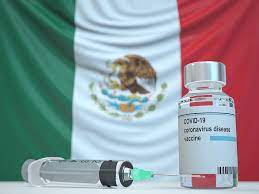 Total excess deaths in Mexico during the pandemic stood at 417,002 by the sixth week of 2021, according to the data. While new cases and deaths seem to be falling, the vaccine programme is being ramped up. It is unlikely that Mexico’s approximately six million vaccines delivered so far have played much of a role in the statistical reduction in deaths in recent weeks, and it is unclear how many Mexicans will take the shots. The Mexican government has been widely using two Chinese-made vaccines, but suspicion remains due to a lack of information on their effectiveness, something that could encourage already widespread scepticism.
In a poll conducted in early March, only 52 percent of the 1,000 Mexicans surveyed said they were willing to get vaccinated, according to the GEA-ISA polling firm; 20 percent said they were not sure, and 28 percent said they would not get vaccinated. The poll had a margin of error of plus-or-minus 3.1 percentage points. To help with the lack of vaccines available the USA has agreed to send 2.6 million vaccines to Mexico.
Whilst Mexico has been welcoming holiday visitors to its country all throughout the pandemic there are now signs that some previously sympathetic countries are having a change of heart. The latest country to suspend air travel to and from Mexico is Argentina. Any Mexicans able to arrive in Argentina via a third country will be required to take a PCR test before flying, on arrival in Argentina and a third after seven days of isolation, all at the person’s own expense.
Since the start of March, the land borders with the USA and now the southern border with Guatemala have been closed to try and combat the increase in immigrants trying to get to the USA since the start of the Biden Presidency. With the Easter holiday approaching, there is a fear of a fourth wave of infections unless people stay home and don’t mix with other family members over the Easter period. Meanwhile in Brazil, from where I have reported a number of times over the past few months, there is concern that the new variants are causing the younger age to catch Covid-19 and for some the consequences are fatal.
Covid-19 cases are on the rise among Brazil’s younger population, a Brazilian research institute has found, as the country grapples with a deadly resurgence of the virus.
“The country is in a situation of collapse of the health system. At the same time, the pandemic has been gaining new characteristics affecting younger age groups: 30 to 39 years, 40 to 49 years and 50 to 59 years,” according to the report published last Friday by Brazil’s Oswaldo Cruz Foundation (Fiocruz).
During the first part of Brazil’s struggle with the coronavirus, it was the elderly who made up the majority of those who were getting sick from Covid-19. But since the beginning of the country’s second wave of Covid-19 on November 2020, demand has increased for health services by symptomatic young patients in Brazil, Fiocruz researchers said.
The new report analyzed weekly data from the country’s Health Ministry from January 1st to March 13th, 2021. It found an increase of more than 500% in infections among people aged 30 to 39. There was a more than 600% increase among people 40 to 49 and more than 500% among people 50 to 59 in the same period.
Meanwhile, the total number of coronavirus cases nationwide among all age groups grew by 319% during that same window of time, the report found.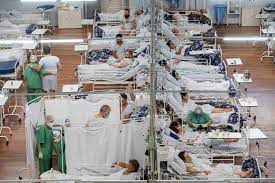 Although increasing numbers of younger people are becoming infected with the virus, Covid-19 deaths are still more common among older people, the report noted. The new analysis comes as the country struggles to contain the pandemic, and as local coronavirus variant P.1 rips through the country.
On Monday, Brazil’s President Jair Bolsonaro changed six top ministers, including officials charged with defence and foreign affairs, after officially ousting the country’s health minister last week.
Meanwhile Manaus, a Brazilian city of more than two million inhabitants that lies hundreds of miles from the Atlantic coast in the midst of the Amazon rainforest, has stood out as one of the world’s leading Covid-19 hotspots. Tragically, it continues to provide the wrong lessons about what should be done to ease the spread of SARS-CoV-2, the virus that causes the disease.
The city and Brazil as a whole have become an exemplar of what happens when a country pursues a strategy of denying the pandemic and embracing herd immunity by letting the virus spread unchecked, according to a report in the ‘Scientific American’ magazine. According to the writer, Luke Taylor, Brazil’s president Jair Bolsonaro has “promoted” the idea of letting the pathogen move throughout the population until most people have been infected. He described proposals for a lockdown in Manaus before a crushing second wave of infections hit as “absurd.” Plus he has downplayed the severity of the crisis, saying that the nation of 211 million has to recognize that death is an inevitability and so Brazilians should stop being “sissies.” The country is currently recording around a quarter of all weekly Covid-19 deaths despite being home to less than 3 percent of the world’s population.
Manaus was the first city to have its health system collapse in the new wave,” says Brazilian physician and neuroscientist Miguel Nicolelis. “But now there are many Manaus all over Brazil’s five regions. Brazil badly needs help from the international community to handle this situation, or new variants from here will continue to spread worldwide!”
After the first wave, infections were so prevalent that researchers at the University of São Paulo and their colleagues concluded that Manaus was the first city in the world to reach herd immunity—the point at which enough people are immune to a virus that the spread of new infections is hindered. Their preliminary preprint study estimated that 66 percent of the population had been infected with SARS-CoV-2 (they later revised their figure to 76 percent as of October). The threshold for Covid-19 herd immunity is unknown, but projections often cited range from 60 to 90 percent. Similarly, high rates of infection have also been found in the Peruvian and Colombian Amazon.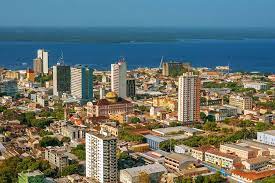 With many believing that herd immunity was happening, this produced a false sense of security which precipitated the new wave of infections, says Jesem Orellana, a Manaus-based epidemiologist at the Oswaldo Cruz Foundation (Fiocruz), a leading Brazilian public health institute and in December 2020 a second wave did hit. By January the city’s health system, which serves communities across the Amazon, had collapsed. ICUs were full to bursting, and oxygen supplies became exhausted. Some patients were airlifted to other regions of Brazil. However, many died of asphyxiation on makeshift beds in hospital corridors or their home, doctors say.
More severe than the first one, the new wave took Manaus by surprise. Wearing masks and practicing social distancing had been discarded in the belief the city had reached herd immunity. Caseloads surged out of control, and bleak milestones from last year were surpassed. Questions arose as to whether herd immunity had ever been achieved, the number of people infected had been overcounted or immunity to the virus had waned. Another disturbing prospect was that mutations to the virus in the Amazonian city that had spawned what is called the Manaus variant, or more formally P.1, could have caused reinfections in people who had earlier bouts or could have sped the rate of transmission among the still uninfected.
The scenario played out in Manaus will hopefully send a clear message: “Herd immunity through infection, instead of a vaccine, only comes with an enormous amount of illness and death,” according to William Hanage, an epidemiologist at the Harvard T. H. Chan School of Public Health.
To date more than 12,573,615 cases have been confirmed since the pandemic began, and 313,866 Covid-related deaths have been confirmed.
Until the next time, Stay Safe and Stay Home.
Total number of cases worldwide – 128,500,283
Total number of deaths worldwide – 2,808,454
Total number of recovered cases worldwide – 103,663,038
Active cases – 22,028,791 (17.1% of Total Cases)
Closed cases – 106,471,492
Information and statistics from:
https://www.worldometers.info/
https://www.nbcnews.com/news/
https://edition.cnn.com/
https://www.scientificamerican.com/
https://www.worldometers.info/coronavirus/#countries
Overseas Situation Report, Monday 29th March 2021.
“Worrying is a waste of time. It doesn’t change anything, it just messes with your mind and steals your happiness.” – Unknown
Today’s Overseas Report is starting across the world in Indonesia. The third most populated country in Asia with over 275 million people, they have, since the start of the pandemic, reported just under 1.5 million cases of Covid-19.  In terms of the death toll, Indonesia has seen 40,449 people succumb to the virus since the first death was reported on March 12th, 2020.
It is important to mention that, in terms of testing for the virus, Indonesia has one of the lowest testing regimes in the world so the actual figure of cases could be much higher. To date Indonesia has only tested 45,467 people per 1 million of population. To put this into perspective, the USA with a population of 337 million has carried out 1,198,000 tests per 1 million people.
Indonesia’s cases peaked at the end of January 2021, with a 7-day moving average of 12,476 cases and they have seen a decrease since to the latest figures showing the 7-day moving average at 5,172 per day. The country has seen the first cases of the UK variant, which they fear could prolong the infections in the country.
In addition to the pandemic, the region has also had to endure more natural issues like earthquakes. Following a 6.2 magnitude earthquake that occurred in West Sulawesi Province on 15th January 2021, the provincial Covid-19 Task Force reported significant increases of the number of Covid-19 infections in the province; on 6th January 2,020 Covid-19 confirmed cases were detected, and the number skyrocketed to 5,042 confirmed infected people on 19th February. Earthquake survivors, community and humanitarian responders were requested to strictly apply the health protocols of wearing masks, washing hands frequently and maintaining social distance.
As with the rest of the world, Indonesia has embarked on a vaccination programme. Indonesia has secured more than 420 million doses of the vaccine for 180 million people; for 2021 the total amounts to 340.5 million vaccines. Vaccinations for medical workers are ongoing, and the implementation of the second phase of vaccination targeting 21.5 million elderly people and workforce in selected sectors started in mid-February 2021.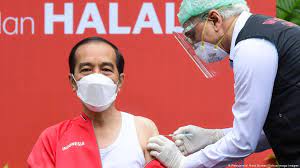 Controversially, Indonesia has a private vaccination programme running alongside the public programme. The private scheme will target employees, family members and other related individuals. Currently, more than 8,000 companies have signed up for the private scheme.
Another issue which many in the western world will find difficult to understand is the fact that in Jakarta, people can be fined up to 5 million rupiah ($450) for refusing Covid-19 vaccines, an unusually stiff penalty aimed at ensuring compliance, with a new regulation making jabs mandatory. Deputy Jakarta Governor, Ahmad Riza Patria, said city authorities were merely following rules and such sanctions were a last resort in Jakarta, which accounts for about a quarter of the archipelago nation’s more than 1.2 million coronavirus infections. “If you reject it, there are two things, social aid will not be given, [and a] fine,” Mr Riza told reporters, in what appears to be a world first in making the jabs compulsory.
Indonesia announced a presidential order in February 2021, stipulating anyone who refused vaccines could be denied social assistance or government services or made to pay a fine. The penalty would be determined by regional health agencies or by local governments.
The new regulation follows months of public scepticism and lingering doubts about whether coronavirus vaccines are safe, effective and halal, or permissible by Islamic beliefs.
Public health experts said public jitters about the vaccine could be a stumbling block, while health agencies in West Java, Indonesia’s most populous province, and West Nusa Tenggara said they had no plans to enforce sanctions. For the second part of this report, we come closer to home in Europe. A worrying trend is happening in the Eastern side of Europe. The countries with the highest Covid-19 mortality rates at the moment are all in eastern Europe, and some are still resisting the stricter lockdowns their doctors say are needed to stem the spread of the virus.
Nine of the ten worst hit nations globally, in terms of deaths per capita, are located in the region, according to data compiled by Bloomberg that cover the past week. The performance marks a stark turnaround from the early days of the disease, when the continent’s east suffered far fewer fatalities than places like the U.K. and Spain.
In a report looking at the past 7 days, Hungary had the highest mortality rate per 1 million people in the world at 157, followed by Czechia at 126.8 and then Bosnia and Hertzogovenia at 120.5. Bulgaria, Slovakia, Montenegro, Moldova and Romania all follow closely in this table.
The poor performance is due to several factors — from the slow pace politicians have acted during this latest wave to stuttering vaccination programs and dilapidated health-care systems. There’s also growing opposition to the restrictions across Europe as a whole. I reported on how Germany was forced into a U-turn on Wednesday over plans to lockdown more tightly at Easter in my last report.
Poland, the European Union’s largest eastern economy, is struggling to contain a record spike in new cases of the virus. However, expanded measures announced Thursday — including shutting nurseries — fell short of a full-blown lockdown even as Prime Minister Mateusz Morawiecki warned that the health-care system risks being overrun. While the government is hoping to avoid tougher restrictions by boosting its vaccination drive, less than a tenth of the 38 million population has been inoculated so far. Deaths, which rank 12th globally on a per-capita basis, hit the highest level since December on Wednesday and now exceed 50,000. A rapid vaccine rollout isn’t a bulletproof solution either. Hungary, which has immunized its citizens more quickly than almost any other EU state, became the planet’s most lethal Covid-19 hotspot this week. Hungary has signalled its plan to reopen schools may be delayed to April 12th, at the earliest. The country is waiting until at least 2.5 million people, roughly a quarter of its population, have been vaccinated. According to Cabinet Minister Gergely Gulyas “Since more than 80% of deaths are among older people, fatalities may drop radically once the elderly are vaccinated,” With doctors advocating a harsher lockdown to counter this increase, there doesn’t seem to be any appetite from the government to do anything more. On the contrary, the government is discussing a possible easing of rules for store openings.
Some eastern European countries are stricter; imposing curfews and travel bans. The Czech Republic, which has suffered more than most parts of the region, is set to prolong a State of Emergency on Friday.
The fear is that others aren’t doing enough. While Poland’s Morawiecki said Covid wards are at 70% capacity, other measures unveiled last Thursday by his government appeared to be very minor — including closing large furniture and building-construction stores for two weeks, and requesting that people limit their Easter travel.
Having seen the news that from Germany alone nearly 500 flights are due to operate between Germany and Majorca between the 26th March and the 5th April, following massive demand for a sunshine break over the Easter period, we can only hope that this does not manifest itself into another spike across the whole of Europe.
Until the next time, Stay Safe and Stay Home.
Total number of cases worldwide – 127,511,496
Total number of deaths worldwide – 2,792,452
Total number of recovered cases worldwide – 102,776,464
Active cases – 21,942,580 (17.2% of Total Cases)
Closed cases – 105,568,916
Information and statistics from:
https://www.worldometers.info/
https://www.abc.net.au/news
https://www.worldometers.info/coronavirus/country/indonesia/
https://www.bloomberg.com/news/articles/2021-03-25
Overseas Situation Report, Friday 26th March 2021.
“You’re going to go through tough times – that’s life. But I say, ‘Nothing happens to you, it happens for you.’ See the positive in negative events.” — Joel Osteen
As I am writing this report, we have seen that more than 125.5 million cases of Covid-19 have been reported worldwide, with over 101 million cases considered recovered, according to a tracking tool maintained by the US-based Johns Hopkins University. The global death toll stands at more than 2.7 million.
This report is giving a synopsis of what is happening across the world as far as both the virus and vaccinations programme is concerned. If we start close to home in Europe, the European Union is moving toward stricter export controls to ensure that there are more Covid-19 shot supplies for the bloc, which should boost its flagging vaccine drive at a time of another surge of the coronavirus pandemic on the continent. Currently the EU has vaccinated around 11% of its citizens which many feel is too low compared to other countries. The EU’s executive body said on the eve of a summit of the 27 leaders, that it has a plan ready to guarantee that more vaccines produced in the bloc are available for its own citizens before they can be shipped for exports.
The EU commission has been critical of the United Kingdom, which has received some 10 million doses from EU plants, while they say nothing came back from Britain. The EU now insists on reciprocity as it sees vaccination rates in Britain racing upwards, while the bloc proceeds at a crawl. In Germany, Chancellor Angela Merkel, meanwhile, has dropped plans for a five-day shutdown in the country over Easter, which had prompted confusion and criticism. She called the idea a mistake and apologized to Germans. Merkel announced the decision after calling a hastily arranged video conference with Germany’s 16 state governors, who are responsible for imposing and lifting restrictions. The plan was to make Thursday, the day before Good Friday, a “rest day,” with all shops closed, and only allow supermarkets to open on Easter Saturday.
In France, France’s culture minister has been hospitalized for Covid-19, the latest senior official to be infected as the nation faces a third surge of infections. France has reported 4,378,436 cases since the start of the pandemic with their death toll at 93,180. France has struggled to contain the rise in infections since the start of the year where they had an average of 13,144 cases a day to this week when their 7-day moving average was at 33,850.
In the past week they have seen cases of infection rising and the death toll is struggling to fall since the start of February. ICUs in the Paris region, as well as in northern and south-eastern France, are filling up. French President Emmanuel Macron, who was infected months ago but never hospitalized, announced on Tuesday an acceleration of the country’s vaccination campaign. Now all people over 70 are eligible to get a shot. Last week, the government in France imposed a month-long lockdown on Paris and parts of the north after a spike in cases. It is now considering adding the Rhone, Aube and Nievre regions to its list of Covid-19 high-risk zones which need careful monitoring and may need restrictive measures.
There are close to 27,000 people with Covid-19 in French hospitals and on Tuesday the number of people in intensive care with the disease rose to a four-month high of 4,634, compared to nearly 5,000 during the second lockdown in November and more than 7,000 in April 2020. In other Countries in Europe, Poland will likely have to toughen restrictions again after reporting what early figures suggest will be a record number of new infections. They recorded over 29,000 new cases on Wednesday (24th) and have seen a rapid rise since early February when they had around 5,000 cases a day. Meanwhile their death toll has also been rising. Over the same period, they have seen a 50% increase in daily deaths with the highest number in a day recorded on Wednesday since the start of the year.
 Meanwhile our closest neighbour Spain’s coronavirus infection rate edged up, highlighting concern that a long decline is in danger of reversing. Having seen both infections and deaths per day drop since the middle of January, Spain reported the highest daily death count since early February. The country has imposed a confinement to home during the Easter period with many district borders being closed to crossing traffic.
Across the Atlantic, In the USA, Dr. Anthony Fauci isn’t ready to say the United States has turned the corner on the coronavirus pandemic, despite about 2.5 million Americans getting vaccinated each day. At the White House coronavirus briefing on Wednesday, Fauci said the main challenge remains a stubbornly high level of new daily cases in the country. It’s hovering around an average of 55,000 and up slightly in recent days. While that is clearly much better than the 250,000 daily cases at the peak of the winter wave, it’s uncomfortably close to levels seen during the coronavirus wave of last summer. On the plus side, along with the growing level of vaccinations, Fauci underscored recent studies that show negligible rates of coronavirus infection among fully vaccinated people. There’s also been a significant drop in the number of people 65 and older going to the emergency room with Covid-19. That’s the age group most vulnerable to the disease.
More than 85.4 million people, or 25.7 percent of the U.S. population, have received at least one dose of a coronavirus vaccine, according to the Centres for Disease Control and Prevention. In India, cases had been plummeting since September and life was returning to normal. But cases began spiking last month and more than 47,000 new infections were detected in the past 24 hours, along with 275 deaths — the highest one-day death toll in more than four months.
The virus has been mutating throughout the pandemic. Most mutations are trivial, but scientists have been investigating which variations might make the virus spread more easily or make people sicker. The three variants first detected in South Africa, Britain and Brazil are considered the most worrisome and have been designated “variants of concern.”
The three variants were found in seven per cent of the nearly 11,000 samples that India sequenced since December 30th. The most widespread of these was the more contagious variant that was detected in the U.K. last year. The new variant found in India has two mutations in the spike protein that the virus uses to fasten itself to cells and that these genetic tweaks could be of concern since they might help the virus spread more easily and escape the immune system, but experts cautioned against linking the new variant to the surge.
Meanwhile health officials admitted that they were worried about upcoming festivals, many of which mark the advent of the spring. India’s government has written to states to consider imposing restrictions, but many celebrants have defied distancing and virus protocols. That lax attitude and the sluggish vaccine rollout are worrisome, said Dr. Vineeta Bal, of India’s National Institute of Immunology.
She said that, unlike last year, the virus was spreading through richer neighbourhoods, infecting families that had managed to stay protected in their homes earlier. Now, people are less fearful and are letting their guard down, and Bal said masks are being worn, “but the masks are protecting people’s beards, rather than their noses.”
On Tuesday, (23/3) it was announced that India will start vaccinating everyone over the age of 45 starting on April 1st.
So far, India’s vaccination has focused on the elderly or those over 45 with ailments such as heart disease or diabetes. The vaccine is being offered for free at government hospitals and sold at a fixed price of 250 rupees per shot at private hospitals. India has given the green light for the use of two vaccines — the AstraZeneca vaccine made locally by Serum Institute, and another by Indian vaccine maker Bharat Biotech. To end this report, in the Asia Pacific region, Pakistan is seeing a rise in infections and has just announced they will purchase one million doses of China’s Sinopharm vaccine and 60,000 doses of the vaccine made by Chinese company, CanSino Biologics.
Pakistan is currently facing a third wave of coronavirus infections. Although they have reported a relatively small number of infections since the start of the pandemic, (640,988), their testing regime has been very low with a rate of under 45,000 tests per 1 million of population. The surge in cases started in early February when they were recording around 1,200 cases a day to now over 3,500 cases a day.
As you will have seen the pandemic is not done with yet!
Until the next time, Stay Safe and Stay Home.
Total number of cases worldwide – 126,097,213
Total number of deaths worldwide – 2,767,917
Total number of recovered cases worldwide – 101,748,049
Active cases – 21,581,247 (17.1% of Total Cases)
Closed cases – 104,515,966
Information and statistics from:
https://www.worldometers.info/
https://www.cbc.ca/news/world
https://www.reuters.com/article/
Overseas Situation Report, Wednesday 24th March 2021.
“One day posterity will remember these strange times, when ordinary common honesty was called courage.” – Yevgeny Yevtushenko
The Overseas Report today is looking at Africa and how the pandemic is affecting the continent. With over 4.1 million reported cases, and it is estimated that this figure of actual cases could be a much as double this number, and over 110,000 deaths, the report is looking at both the infections and the vaccination programme. Since the first case was reported in February 2020, South Africa has been the country which has recorded the most cases. Currently of the 4.1 million cases reported in Africa, South Africa accounts for over 1.5 million of them. The next largest is Egypt at just under 500,000. Reporting amongst many of the nations has been at best sporadic so the true figure as mentioned at the start could be much higher.
The year-long battle against the virus, which has also claimed over 110, 000 lives, is now receiving a crucial boost with the arrival of vaccines through the COVAX Facility – a multi-partner vaccine procurement platform. Following a second wave which peaked at much higher numbers than Africa’s first surge, new case numbers declined for five weeks, and then plateaued during the past three weeks at around 70 000 cases per week. In the last week, there has been a slight ‘uptick’ in new cases and an upward trend in 12 countries, including in Cote d’Ivoire, Ethiopia and Cameroon.
While deaths reported have dropped by more than 50% over the past 28 days compared with the previous 28 days, the case fatality ratio or the proportion of deaths among confirmed cases is at 3.6% for the past 28 days. This is higher than the global average. With Covid-19 vaccine deliveries picking up speed, the response to the pandemic is getting a much awaited boost. More than 14.6 million vaccine doses have been delivered to 22 African countries since 24th February through COVAX, an effort co-led by the Coalition for Epidemic Preparedness Innovations (CEPI), Gavi, the Vaccine Alliance and the World Health Organization (WHO) in partnership with UNICEF. Ten countries have started vaccination using COVAX-funded vaccines, while another 10 began with vaccines procured outside the COVAX Facility – either bilaterally or through donations. More than 518,000 doses of COVAX-supplied vaccines have been administered.
While the rollout is good news the number of vaccines available at the moment are limited. Dr Matshidiso Moeti, WHO Regional Director for Africa says “It is important while doses remain limited that it’s critical that frontline health workers and other priority groups are at the front of the queue. Health workers deserve protection because without their pivotal role, efforts against the pandemic can go only so far.”
Covid-19 has heavily jolted the health workforce in the African region. Since the beginning of the pandemic, 267 health worker infections have been recorded on average every day, translating to 11 new health worker infections per hour. To date, more than 100,000 health workers have contracted Covid-19 in the African region. Health worker infections account for 3.5% of the total number of cases in the region. “The pandemic has nearly knocked loose the linchpin of the health systems in many countries,” said Dr Moeti. “We must further protect and equip our health workers to effectively contribute to the efforts to contain Covid-19.
Everyone’s wellbeing is at stake without an adequately supported health workforce.”
Africa’s health systems have been severely tested, with doctors, nurses and other health workers stretched to the limit. Several studies have identified lack of personal protective equipment, exposure to Covid-19 patients, work overload, poor infection prevention and control measures as the main risk factors associated with infections in health facilities. With partner organizations, WHO has shipped more than 6.4 million rapid diagnosis test kits to African countries to boost Covid-19 testing even in remote areas.
With many African countries, testing has been an issue especially in remote areas. Laboratory diagnosis of the virus in the African region has improved greatly over the past three months, with tests nearly doubling to 243 per 10,000 people up from 149 tests per 10,000 people. More than 27 million tests have been performed in the region to date. Cabo Verde, Botswana, Gabon, Mauritius, Seychelles and South Africa have registered the highest testing rates. 38 African countries have received more than 25 million Covid-19 vaccines and 30 have started vaccination campaigns. Through the COVAX initiative – which is co-led by the Coalition for Epidemic Preparedness Innovations (CEPI), Gavi, the Vaccine Alliance and the World Health Organization (WHO) in partnership with UNICEF – more than 16 million vaccine doses have so far been shipped to 27 countries.
Just two weeks after receiving COVAX-funded AstraZeneca vaccines, Ghana has administered more than 420,000 doses and covered over 60% of the targeted population in the first phase in the Greater Accra region – the hardest hit by the pandemic. In the first nine days, it is estimated the country delivered doses to around 90% of health workers.
In Morocco, more than 5.6 million vaccinations have taken place in the past seven weeks, while in Angola, vaccines have reached over 49,000 people, including more than 28,000 health workers in the past week. To ensure the most impact, initial vaccine doses are being limited to priority population groups including health workers, older people and people with health conditions placing them at higher risk of severe Covid-19 illness. While the rollout is going well, there is an urgent need for more doses as Ghana, Rwanda and other countries are on the brink of running dry.
In South Africa, the health minister announced that nine million doses of the Johnson and Johnson vaccine have been secured, with the first batch of 80,000 currently being rolled out to healthcare workers. Additionally, 20 million doses of the Pfizer vaccine are expected by the end of March 2021.
These vaccines will go a long way to reaching the target population, and with ongoing production and procurement the prospects of vaccinating all South Africans who need – and want – to be vaccinated are good. The government’s plan is to inoculate 60% of the population by 2022. In a surprise twist of the vaccine saga, South Africa has concluded the sale of AstraZeneca Covid-19 vaccines it had acquired but did not use, to other African Union member states, the health ministry said on Sunday. The country had paused AstraZeneca vaccinations last month because of a small trial showing the shot offered minimal protection against mild to moderate illness caused by the dominant local coronavirus variant.
At the time, South Africa had received 1 million AstraZeneca doses from the Serum Institute of India and the delivery of another 500,000 was pending. After pausing the rollout of the AstraZeneca vaccine, South Africa started inoculating healthcare workers with Johnson & Johnson shots in a research study. The government plans to vaccinate 40 million people, or two-thirds of the population, to achieve some level of herd immunity.
Until the next time, Stay Safe and Stay Home.
Total number of cases worldwide – 124,534,219
Total number of deaths worldwide – 2,739,476
Total number of recovered cases worldwide – 100,469,400
Active cases – 21,325,343 (17.1% of Total Cases)
Closed cases – 103,208,876
Information and statistics from:
https://www.worldometers.info/
https://www.afro.who.int/news/update-covid-19-22-march-2021
https://www.worldometers.info/coronavirus/#countrie
shttps://www.reuters.com/article/us-health-coronavirus-safrica-vaccine-idUSKBN2BD0K4
Overseas Situation Report, Monday 22nd March, 2021
“They say a person needs just three things to be truly happy in this world: someone to love, something to do, and something to hope for.” – Tom Bodett
With the world trying to get to grips of a possible 3rd, or for some a 4th, wave of infections from Covid-19, this report is looking at what is happening in South America.
In South America, the worst affected country still remains Brazil. Since the start of the pandemic, they have recorded just under 12 million cases and by the time you read this report, their death toll is expected to reach 293,000. All this under a President who originally dismissed the idea of a pandemic out of hand.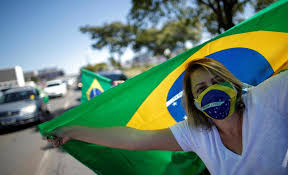 The Covid-19 crisis in Brazil has never been worse. Nearly every Brazilian state has an ICU occupancy of 80% or higher, according to a CNN analysis of state data. As of Friday, 16 of 26 states were at or above 90%, meaning those health systems have collapsed or are at imminent risk of doing so. The seven-day averages of both new cases and new deaths are higher than they have ever been.
In the last 10 days, about a quarter of all coronavirus deaths worldwide have been recorded in Brazil. If vaccines are the ultimate way out from this global pandemic, Brazil has a long way to go to seeing this through. As of the 19th March, less than 10 million people in the country of about 220 million had received at least one dose, according to federal health data. Only 1.57% of the population had been fully vaccinated.
This is due to a slow rollout of the vaccine programme. During the announcement of its distribution plan in early February, the government promised some 46 million vaccine doses to be available in March. It’s been repeatedly forced to lower that number, now estimating only 26 million by month’s end. In-country production of what the governments says will eventually be hundreds of millions of doses of the Oxford-AstraZeneca vaccine only just got off the ground. The first 500,000 doses were delivered and celebrated by top Ministry of Health officials in Rio de Janeiro this week, despite being months behind schedule. If vaccines are to remain in short supply for the foreseeable future, the only remaining ways to control the epidemic’s exponential growth in Brazil are the methods the world has heard ad nauseam — social distancing, no large crowds, restricted movements and good hygiene. But in many places throughout Brazil, that is just not happening. In bustling Rio de Janeiro, it is easy to find maskless crowds walking the streets, conversing in close quarters.
Though the city’s famed beaches are closed this weekend, restaurants and bars can still be open until 9 p.m., many likely to be filled to capacity. Many states have imposed much harsher restrictions, including night time curfews. President Jair Bolsonaro, a Covid-19 sceptic who has mocked the efficacy of vaccines and hasn’t publicly taken one himself, announced on Thursday that he would be taking legal action against certain states in the country’s Supreme Court, claiming the only person who can decree curfews is him — something he has promised never to do.
One of the factors behind the increase in cases is the new P1 variant. First discovered in Japan, Brazilian Health authorities detected the viral mutation in multiple travellers in January who were returning from Amazonas state, an isolated region in Brazil’s north replete with rainforest. Nearly two months later, more and more research points to the P1 variant as a crucial factor, not only in the Manaus outbreak but in the nationwide crisis Brazil faces today. The variant is widely agreed to be more easily transmissible, up to 2.2 times – that is more transmissible than the widely discussed B.1.1.7 variant first identified in the United Kingdom, which is up to 1.7 times more transmissible than the original strain.
To exacerbate the concerns, it is now thought that the different vaccines might not be as effective against the P1 variant. Also there are fears that this could be a bigger issue for their neighbours and other continents if it moves in the same way as the previous viruses have done.
With a lack of vaccines and a government unwilling to take the steps necessary to prevent that from happening, it is unclear how things can get better in Brazil anytime soon. Meanwhile in neighbouring Chile, it has reported its highest daily count of 7,084 coronavirus infections since the start of the pandemic despite widespread restrictions and progress on vaccinations.
The government on Saturday reported cases topping the previous record in June. It says coronavirus has become the country’s leading cause of mortality, causing 26% of deaths this year. Chile has given at least one vaccine shot to more than 29% of the population and both doses to 15% — far more than in other nations in the region. But Health Minister Enrique Paris says people should remain cautious since population-level immunity isn’t likely until about 80% are vaccinated, probably by the end of June.
Officials say hospital bed usage has reached 94%, with rising numbers among those below 60, as older Chileans have been inoculated. The government has imposed restrictions on three quarters of the country’s municipalities. Officials say on Saturday they are tightening limits on people entering from abroad, especially from Brazil.
With a population of just over 19 million, Chile has reported 925,089 cases since the start of the pandemic and has seen 22,180 of its citizens lose their lives. It has tested the most of all the countries of South America with a rate of 545,535 per 1 million of population. One of the reasons cited by Health officials for the increase is the policy that has been in effect of only having restrictions at weekends. To combat the increase, Santiago, and seven other municipalities in the metropolitan region of the capital, the coastal Viña del Mar or the distant Iquique, in the far north which incorporates 27 different towns, have all gone from a lockdown only on weekends – started on March 13th – to a permanent and indefinite blockade. In the metropolitan area of Santiago, where 7 of Chile’s 19 million inhabitants live, the lockdown is total. Since August 2020, the capital has not seen similar measures.
The reason for the hardening is the growing number of contagions, daily above six thousand cases, raising the level of occupancy in intensive care units to an average of 95% and leaving the country on the verge of a health collapse. Whilst they are ‘trumpetting’ the vaccine rollout, they are rightly concerned about these rising cases. The Government hope that with almost 90 percent of the population in lockdown they will see these higher numbers of infection reduce soon. We round up this report with news that Peru has seen the 2nd highest number of daily cases in South America. Peru recorded 9,134 cases and although they have reported a total of 1,460,779 cases since reports began, they have been very low in testing with only around 260,000 per 1 million citizens. The death toll in Peru is still the highest in South America at 50,085 when looked at as a percentage of population. The vaccination programme is rife with corruption and almost 500 civil servants, politicians, scientists and family members of those in charge of the clinical trial are facing prosecution and possible jail. To date they have administered just 21,378 doses of vaccine. This is just 0.06% of the population, so they have a long way to go.
In the meantime, Stay Safe and Stay Home.
Total number of cases worldwide – 123,655,505
Total number of deaths worldwide – 2,724,813
Total number of recovered cases worldwide – 99,630,233
Active cases – 21,300,459 (17.2% of Total Cases)
Closed cases – 102,355,046
Information and statistics from:
https://www.worldometers.info/
https://edition.cnn.com/
https://www.usnews.com/news/world
https://www.worldometers.info/coronavirus/country/brazil/
Overseas Situation Report, Friday 19th March 2021
“Dogs are how people would be if the important stuff is all that mattered to us.” – Ashly Lorenzana
It is generally accepted that the Covid-19 virus in its many forms or variants is going to be around for a long time to come. As vaccinations in countries across the world take place, it is still not known whether there will be the need for a “booster” jab each year or whenever the virus mutates and springs up again.
Scientists across the world are working to find solutions to the variants but, with little chance of being able to make it extinct in the foreseeable future, there are a number of other ways that people are trying to get one step ahead.
A few months ago I wrote about a small experiment in a couple of countries which were showing signs of working. This experiment was using dogs to sniff out coronavirus carriers at airports and where large numbers of people congregated. Little was heard of the experiment as funding for it seemed to be non-existent.
However, in Thailand, there seems to be a new drive to make use of “man’s best Friend” in the fight against the virus.
It has been reported by Reuters News Agency that Thai sniffer dogs trained to detect Covid-19 in human sweat proved nearly 95% accurate during training and could be used to identify coronavirus infections at busy transport hubs within seconds, the head of a pilot project said. Six Labrador Retrievers participated in a six-month project that included unleashing them to test an infected patient’s sweat on a spinning wheel of six canned vessels. “The dogs take only one to two seconds to detect the virus, within a minute, they will manage to go through 60 samples. Professor Kaywalee Chatdarong, the leader of the project at the veterinary faculty of Thailand’s Chulalongkorn University, told Reuters.
The dogs can detect a volatile organic compound secreted in the sweat of Covid-19 sufferers, even in the absence of  disease symptoms, the Thai researcher said.
The dogs would not need to directly sniff people, but could screen samples of sweat, a task that should not be difficult in a tropical country such as Thailand, she added.
Chile, Finland and India are other countries that have also launched efforts to get sniffer dogs to detect the virus, with a German veterinary clinic saying last month its sniffer dogs had achieved 94% detection accuracy in human saliva.
“The next step is we will put them out in the field,” said Kaywalee.“In the future, when we send them to airports or ports, where there is an influx of commuters, they will be much faster and more precise in detecting the virus than temperature checks.”
Thailand has been relatively successful in containing the virus, with a new wave of infections in the first two months of the year now levelling off and after recording just 89 deaths. To date they have reported 27,402 cases since the start of the pandemic and although their 7 day rolling average peaked at the beginning of February at 847 they are now at a low count of just 127 cases a day.
The southeast Asian nation has also started vaccinating front-line health workers and hopes to find a way to let visitors return in greater numbers after its tourism-dependent economy was battered by the pandemic. Thailand is one of the few countries currently on the list of safe countries which the EU deems as safe to fly to and from. Meanwhile across the world in the USA, Officials of NASCAR, the American Motor racing organisation are using sniffer dogs at an event this weekend to help in the fight to find people with Covid-19.
NASCAR will introduce dogs trained to detect Covid-19 as an additional screening measure this weekend at Atlanta Motor Speedway.
The sanctioning body is utilizing this approach as a trial method for potential future use for both competitors and guest areas of an event. NASCAR will work with 360 K9 Group, which has trained the animals to detect the novel coronavirus through its Bio Detection K9 operation, which uses a proprietary training method. A handful of prioritized personnel within the competition footprint will undergo this screening method after the standard pre-entry screening outside the track that has been used since the sport returned from the shutdown. If a dog indicates that someone might have Covid, that person will be isolated and undergo and extensive secondary screening by the NASCAR AMR Safety Team Medical Director or lead physician on-site, who will determine if the individual is cleared to compete. “We think that these dogs and this capability is going to allow us to rapidly confirm that all of those people entering the essential footprint on Sunday — that’s race teams, that’s NASCAR officials, that’s the vendors that work inside the garage — all those folks are Covid-free or not,” said Tom Bryant, NASCAR managing director of racing operations. “The ability to do that has kind of been the math problem that we have continuously tried to solve since March of last year.”
Bryant is a 20-year U.S. Army veteran who has witnessed dogs’ abilities to sniff out explosives and firearms in combat situations. Dogs have also been involved in isolating the scent of citrus canker, a bacterial disease harmful to crops in Florida, where Bryant resides.
The decision to use the dogs was reached alongside the U.S. Department of Agriculture. Studies provided by the 360 k9 Group have shown the same bio-detection capabilities can locate the presence of COVID-19 in humans at an accuracy rate of 98 percent. “They are amazing,” Bryant said. “This gives us essentially an ability to test that essential population on race day and know right away that those folks who have cleared this enhanced screening process with a very high degree of confidence are Covid-free. We’ll learn from what we do Sunday, and we’ll figure the ways to best employ this capability moving forward to ensure that we’re keeping the population as safe as we can, keeping the least amount of risk in the environment.”
As the United States nears closer to equal availability for the Covid-19 vaccine, NASCAR remains vigilant against new variants of the disease and its potential harm to competitors and spectators.
“As much as things are getting better, it’s still very much a challenge,” Bryant said. “So this tool is going to help us as the virus evolves, we’re evolving with our approach to how we minimize exposure and create the safest possible environment to race. Bryant believes that this approach and the way the vaccine programme is rolling along will help bring closer the time when they can have crowds again at NASCAR events.
Finally, another sport in the US, the NBA, has already used sniffer dogs this season at some of their Basketball games. The Miami Heat, enlisted Covid-19 detecting dogs to screen fans during last Thursday’s game, the dogs are said to be as accurate as a PCR test. They did not find any virus.
In the meantime, Stay Safe and Stay Home.
Total number of cases worldwide – 122,127,611
Total number of deaths worldwide – 2,696,832
Total number of recovered cases worldwide – 98,376,487
Active cases – 21,054,292 (17.2% of Total Cases)
Closed cases – 101,073,319
Information and statistics from:
https://www.worldometers.info/
https://www.reuters.com/article/
https://www.worldometers.info/coronavirus
https://www.autoweek.com/racing/nascar/
Overseas Situation Report, Wednesday 17th March 2021
“To my mind, the greatest reward and luxury of travel is to be able to experience everyday things as if for the first time, to be in a position in which almost nothing is so familiar it is taken for granted.” – Bill Bryson
With the news that Portugal has finally been removed from the UK government’s Red List of countries where compulsory quarantine in a government designated hotel was a requirement of entry, this report looks at what is happening on the Travel front in other parts of the world.
The pandemic has had a devastating effect on airlines across the world, with traffic down in some cases by almost 95% of what it was. At the same time, the shipping world has also been in a state of hibernation when it comes to Cruising. This has led to many in the Transport Industry fearing that many businesses will never recover.
However, there are signs that with the rollout of vaccination programmes across the world, we may be starting to see some “green shoots” in the aviation world. In the USA, air travel has risen to its highest level since the start of the pandemic. Across the United States, air travel is recovering more quickly from the depths of the pandemic, and it is showing up in longer airport security lines and busier traffic on airline websites.
The Transportation Security Administration screened more than 1.3 million people on Friday and Sunday last, setting a new high since the coronavirus outbreak devastated travel a year ago.
Airlines say they believe the numbers are heading up, with more people booking flights for spring and summer.
According to the CEO of American Airlines, Doug Parker, “Our last three weeks have been the best three weeks since the pandemic hit, and each week has been better than the one prior,”
This optimism has been seen across the other airlines as well with Airline stocks rising across the board. Shares of the four biggest U.S. carriers hit their highest prices in more than a year.
However, the airlines still have far to go before travel fully returns to pre-pandemic levels. While the number of people passing through airport checkpoints has topped 1 million for four straight days and the 7-day rolling average is the highest in the pandemic era, passenger traffic is still down more than 50% in March compared with the same period in 2019.
Parker said American’s bookings are now running just 20% below 2019 levels. A factor appears to be traveller confidence now that more people are getting vaccinated against Covid-19. About 70 million Americans, or 21%, have received at least one dose, and 37 million have completed their vaccination, according to the Centres for Disease Control and Prevention.
The USA has seen the 7-day moving average for cases drop dramatically since the early part of January 2021, when the rate was over 250,000 a day, to the latest 7 day average of just over 55,000 cases. Their vaccination programme since the new administration took office has risen sharply and to date they have administered over 109 million doses, which is just over 30% of the population.
Elsewhere the Aviation Industry is still well behind where levels were pre-Pandemic. In a report recently published by IATA, the Worldwide Aviation Association, they show that passenger traffic in January 2021 was down 72.0% compared to pre-crisis (January 2019) levels. In contrast to the trend observed since last year’s low point in April, this deterioration in traffic was primarily driven by domestic markets (down 47.4% versus January 2019), particularly in Asia. Domestic traffic in China was 33.9% below January 2019 levels in January, after falling 8.5% year-on-year in December. Japan and Australia were down by respectively 71.3% and 81.6% versus January 2019 after falling 50.6% and 60.8% in December. The Cruising Industry had, pre-Pandemic, been on a rise in popularity amongst all age groups but particularly the over 50’s as a great way to see the world and enjoy home comforts. All of this changed when publicity across the world highlighted Cruise ships as a big source of Covid-19 and we saw this when a Cruise ship was held in Australia in the early days of the pandemic and eventually when people were allowed off, the number of cases in Australia spiked. In February 2020, the largest Covid-19 outbreak outside mainland China was on a cruise ship, which has resulted in reputational damage to the cruise industry and falling share values. Cruise lines have also paid a substantial amount of money in refunds for cancellations and incurred costs associated with docking ships at ports where ships are quarantined. This led to a worldwide cancellation of all cruises and to date very few ships have ventured onto the seas since.
The largest Cruise market is the US and with the majority of ships owned by three main US companies who are estimated to control 75% of the world cruise market. The impact on the industry has been catastrophic with a number of smaller companies going bust. In 2019 the US market generated 55.5 billion dollars of revenue. This has almost been wiped out in 2020/21 with very little sight of a return to sailing before the end of the summer 2021.
The current Covid-19 environment has created a high degree of concern amongst the public surrounding the maintenance of health and safety onboard cruise ships. Ships will now require robust screening and monitoring protocols, implementation of comprehensive sanitation practices with regular inspections, expanded onboard medical facilities and increased medical staff. Also, cruise liners will be expected to work more closely with public health authorities worldwide and CLIA (Cruise Lines International Association) to enforce health requirements.
It is not just the Cruise Companies that are feeling the effect of the pandemic. Cruise Lines contribute a large amount of revenue to many places around the world. Many small island nations heavily rely on cruise lines, which in turn have a positive effect on their economy. Each year 2 billion USD are contributed to the Caribbean, 5.9 percent of the entire GDP to some nations.
As countries continue to address the increasing number of challenges arising from Covid-19, the impacts on business may change a number of industries for the foreseeable future. There is no clear timeline for cruise operations to start again. The biggest fixed cost for cruise lines is fuel, and as a result of the oil collapse during this downturn, cruise lines may benefit from these lower costs.
In an effort to gain customer support after travel restrictions are lifted, companies will likely want to consider advertising campaigns and reducing their prices in order to compete and draw demand back to the industry. Cruise lines have already started to advertise huge discounts on the packages for 2021 in their websites. Additionally, the industry will need to commit to new safety protocols that can dramatically reduce the risk of disease.
When the time comes for us all to start to enjoy holidays again it is expected that both the airline and cruise industries will have all the right protocols in place to make sure we are all safe to enjoy our holidays.
In the meantime, Stay Safe and Stay Home.
Total number of cases worldwide – 121,050,452
Total number of deaths worldwide – 2,676,735
Total number of recovered cases worldwide – 97,598,803
Active cases – 20,774,914 (17.2% of Total Cases)
Closed cases – 100,275,538
Information and statistics from:
https://www.worldometers.info/
https://apnews.com/article/travel-air-travel-coronavirus-pandemic-united
https://www.worldometers.info/coronavirus/country/us/
https://www.iata.org/en/iata-https://home.kpmg/xx/en/blogs
Overseas Situation Report, Monday 15th March 2021.
“Life has its ups and downs. When you are up, enjoy the scenery. When you are down, touch the soul of your being and feel the beauty.” ― Debasish Mridha
As Portugal starts its journey back to normality with the gradual relaxation of the rules of confinement, I start this report with a look at two other countries in Europe where the situation is not as positive as here. In my last report, I highlighted Italy and France but with the latest report from the ECDC, European Centre for Disease Control we see that all is not well in many parts of Europe when it comes to the rates of infections of Covid-19. Today I am looking at  Germany and its neighbour, Poland. A word of warning though. These figures are already a week old when this is published. Unfortunately, the ECDC takes a lot longer to bring out their analysis than some other organisations- a pattern seems to be appearing here!
By the end of week 9 (week ending Sunday 7th March 2021), 19 out of the 30 countries in the EU/EEA had reported increasing case notification rates and/or test positivity. Case rates in older age groups had increased in 10 countries, 14 countries reported increasing hospital or ICU admissions and/or occupancy due to Covid-19 and 9 countries reported increasing death rates.
Among the 28 countries with high case notification rates (at least 60 per 100 000), increases were observed in 18 countries (Austria, Bulgaria, Croatia, Cyprus, Czechia, Estonia, Finland, France, Greece, Hungary, Italy, Liechtenstein, Malta, the Netherlands, Norway, Poland, Romania and Sweden). Stable or decreasing trends in case rates of 1–7 weeks’ duration were observed in 10 countries (Belgium, Denmark, Germany, Ireland, Latvia, Lithuania, Luxembourg, Portugal, Slovakia and Slovenia).
Notification rates are highly dependent on several factors, one of which is the testing rate. Weekly testing rates for week 9, available for 29 countries, varied from 999 to 32,679 tests per 100,000 population. Cyprus had the highest testing rate for week 9, followed by Austria, Denmark, Luxembourg and Slovenia.
Among 24 countries with high 14-day Covid-19 death rates (at least 10 per million), increases were observed in eight countries (Bulgaria, Czechia, Estonia, Greece, Hungary, Luxembourg, Malta and Romania). Stable or decreasing trends in death rates of 1–10 weeks’ duration were observed in 16 countries (Austria, Belgium, Croatia, France, Germany, Ireland, Italy, Latvia, Lithuania, the Netherlands, Poland, Portugal, Slovakia, Slovenia, Spain and Sweden). Let’s start with Germany, who this week removed Portugal from the list of countries which had previously been barred from entering the country.
Up until the 14th February 2021, the rate of infection in Germany was fairly stable, and had been dropping since the Christmas spike which so many countries saw. At this time, the 7 day average per day was over 23,000 cases and this dropped down to just over 7,000 cases a day in mid-February. Since then though, they have seen a gradual rise in cases to now when the average daily rate is over 9,600. The Robert Koch Institute reported 12,674 new coronavirus infections in the 24-hour period to Saturday (13th March) – 3,117 more than in the same period one week ago.
Whilst their seven-day incidence rate for coronavirus infections on Saturday continued its rise of the past few days, reaching 76.1 cases per 100,000 residents, that represents a sharp increase over Friday, where the rate was 72.4, itself a marked jump from the day before.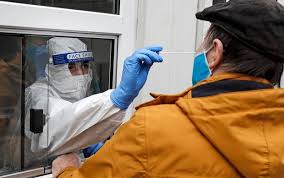 The figure is used as a guideline by German authorities to help determine when lockdown measures should be imposed. A week ago, the incidence rate was at 65.6. Last week, Germany eased some curbs but state premiers agreed the harshest measures would be automatically reimposed if the rate went above 100.
All of this is happening despite a general lockdown across the country and the Government had indicated that the restrictions would be eased. However, the head of Germany’s public health agency warned on Friday that the country is at the start of a third wave of the pandemic.
Stefan Pilsinger, a doctor and member of parliament for the sister party of Merkel’s ruling Christian Democrats, predicted that the spread of the British variant could cause a jump in cases like that seen around Christmas and said yesterday, “The previous lockdown measures were already insufficient to contain the more dangerous British Covid-19 variant,”
The German Chancellor, Angela Merkel and state leaders agreed a phased easing of curbs earlier this month along with an “emergency brake” to let authorities reimpose restrictions if case numbers spike above 100 per 100,000 on three consecutive days.
Leaders are due to meet again on March 22nd to discuss whether any further relaxation of the rules is possible. It remains to be seen if this will happen or the lockdown will be continued. Meanwhile across the Eastern border in Poland the rate of infection is also on the rise. For a country that until October 2020, had relatively low cases of infection they have also seen a big jump since February 2021. Their current 7-day average is over 15,000 compared to an average in October last year of just 1,700.
Poland reported 21,045 daily coronavirus cases on Thursday (March 11th), health ministry data showed, the highest tally since November, as the country faces a surge in infections driven by a highly contagious variant of the virus first identified in Britain.
Poland has reintroduced stricter measures in the worst hit regions of the country, and harsher restrictions could be announced shortly in other areas of the country, including the Mazowsze region where the capital Warsaw is located.
“We have exceeded the level of 21,000 infections, which shows that… the third wave is rising,” health ministry spokesman Wojciech Andrusiewicz told state-run news agency, PAP.
In total, the country has reported 1,849,424 cases of the coronavirus and 46,373 deaths.
Poland eased some restrictions last month, reopening ski slopes as well as cinemas, hotels and theatres for up to 50 per cent capacity, which initially resulted in massive tourist visits to popular ski resorts. The government then resumed curbs in the northern and northeastern regions, as they reported a higher infection rate per 100,000 people than other parts of the country. However, shops, shopping malls and retail parks are open. Customer numbers are limited in shops. This might mean you have to queue for entry. In all areas of Poland, a facemask must be worn inside shops and hand sanitiser must be used where provided. Petrol stations, car washes and car/motorbike repair centres remain open. Banks, insurance providers and post offices also remain open.
Restaurants, cafes and pubs are closed, and can only provide a takeaway/delivery service. Sporting events are not permitted with audiences, but may take place without an audience. Swimming pools, tennis courts and outdoor sports facilities, including ski slopes, are open. Gyms, sanatoriums and aqua parks remain closed. To try and reduce the rate of infection new measures are coming into effect today. Stricter lockdown measures will kick in, in the central Mazowieckie province, including Warsaw, and in the western Lubuskie province. Cinemas, museums, art galleries, hotels and sports facilities will be shut down until March 28th, along with non-essential outlets in shopping centres. Two other provinces have already been under the stricter regime to stem the infection’s spread.
With both of these countries rolling out their vaccine programmes, we can all hope that these spikes in all countries stop and we get to a stage where we are in control.
In the meantime, Stay Safe, Stay Home as much as possible.
Total number of cases worldwide – 120,269,889
Total number of deaths worldwide – 2,662,500
Total number of recovered cases worldwide – 96,830,250
Active cases – 20,777,139 (17.3% of Total Cases)
Closed cases – 99,492,750
Information and statistics from:
https://www.worldometers.info/
https://www.thefirstnews.com/article/
https://www.worldometers.info/coronavirus
https://www.ecdc.europa.eu/en
Overseas Situation Report, Friday 12th March 2021.
“In every crisis, doubt or confusion, take the higher path – the path of compassion, courage, understanding and love.”
― Amit Ray
For my Overseas Report today, with this week being notable for a number of anniversaries with regards to the Covid-19 pandemic, I am looking at two of the European countries where the virus is showing no sign of being contained, one year after it was first recognised by the World Health Organisation as a world pandemic. We take a close look at Italy and France.
According to the Worldometers.info website, the number of cases of Covid-19 has surpassed 35.5 million in Europe. The number of deaths since the start of the pandemic has reached 844,828. Now this figure should be taken warily, as they include Russia, where even their own internal ministry has admitted that their death figure of 90,275 is probably only about third of the true figure. If this is true, then this takes the number of deaths over 1 million. Let’s start though with Italy, where this week they reached the sombre milestone of 100,000 deaths since the start of the pandemic. One year on from locking down, Italy’s new Prime Minister yesterday described the country’s death toll of over 100,000 as a “terrible threshold”. It’s the second highest in Europe, after the UK, if we take the Russian figure as “accurate”.
While the Italian government scrambles to ramp up vaccinations, Italy is bracing itself for another strict lockdown, likely to be announced at the end of the week. It was a year ago that Italy became the first European country to impose a lockdown on its citizens. Now after months of a plateau in daily cases, there has been a steady climb in new infections.
In response, the authorities are placing three more regions under tighter restrictions. Two in the north of the country – Friuli Venezia Giulia and Veneto – will be raised to orange zones. While the Campania region, which includes Naples, will be re-classified as a red zone, the highest-risk level. And experts say Italy should be braced for a new peak of infections in about two weeks, warning that daily cases could reach as high as 40,000 unless more severe restrictions of citizens’ movement and activities are swiftly put into place.
At the same time as this is happening, passengers can now fly from the United States to Northern Italy’s biggest airport without quarantining, if they book a special ‘Covid-free’ flight.
Covid-tested flights, which require all passengers to test negative for coronavirus in the 48 hours before boarding, as well as taking another test on arrival, have already been operating between the US and Rome for just over two months.
Now the Italian Health Ministry has given permission for airlines to extend the service to Milan’s Malpensa airport, the second-biggest hub in Italy after Rome, Fiumicino. In a circular issued on March 10th, the ministry also extended the scheme until at least the end of June 2021, with the possibility of continuing it further. That means that until at least July, passengers will be able to fly from New York or Atlanta in the US to either Rome or Milan without having to quarantine for two weeks.
Italy’s international travel restrictions continue to apply, meaning that the only people eligible to fly from the US are those with an essential reason, such as returning to a permanent residence in Italy or to study or work.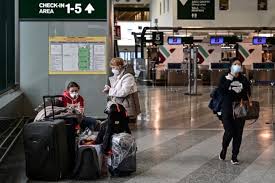 The first Covid-tested flights proved so popular that the Italian government recently said it wanted to extend the scheme to other countries. Italy’s last government had already signed off on Covid-tested flights between Italy and Germany, with Lufthansa originally planning to start running services from Frankfurt and Munich to Rome early this year, but those plans were put on hold when Germany went back into lockdown.
The scheme stands to make the biggest difference for travellers outside the European Union, who currently have to spend 14 days in quarantine if they come to Italy. People arriving from other countries within the EU or Schengen zone – with the exception of Austria – can instead simply show a negative test result from the 48 hours before travel.
All of this was happening while the rate of cases per 100,000 people stood at 341.01 on the 8th March, according to the ECDC figures. Italy currently has a tiered system of lockdown and the government is debating whether to bring in a national one. In a poll recently carried out only 38% were in favour of keeping the tiered system while 41% felt a national lockdown was required.
Meanwhile France reported 30,303 new coronavirus infections over the past 24 hours on Wednesday, rising above 30,000 for the first time in two weeks. Health Minister Olivier Véran is due to give his weekly Covid-19 briefing on Thursday but no major announcements are expected, even though some health experts say the hospital system in the greater Paris region is close to breaking point.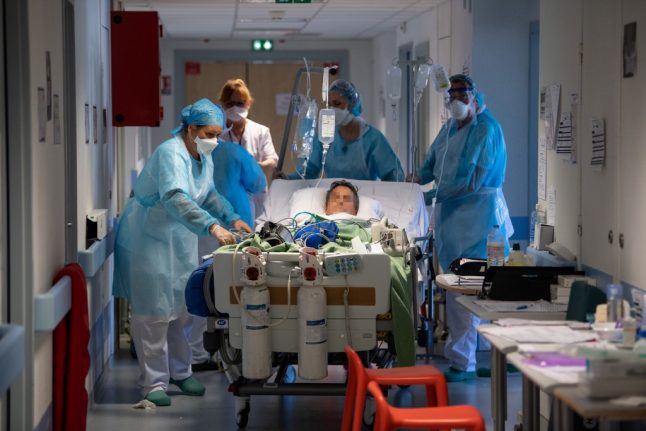 Hospitalised patients in the northern Hauts-de-France region were set to be transferred to facilities in Belgium, starting on Wednesday, local health authorities said. The city of Dunkirk and its surrounding area have been especially hard hit by the latest wave of the pandemic in France.
The seven-day moving average of new cases, which evens out daily reporting irregularities, stood at 21,836, above 21,000 for the 14th time in 15 days. The government says that average new cases figures should be under 5,000 for the pandemic to be considered to be under control.
Since the outbreak of the disease more than a year ago, France has reported 3.963 million cases, the sixth-highest total in the world. There were 264 new deaths over the past 24 hours, taking the total to 89,565, the seventh-highest in the world, versus a seven-day daily moving average of 289.
As intensive care units in parts of France including Paris and Nice are again coming under severe pressure, one clear trend has emerged – the average age of the worst affected patients is getting younger.
While France continues to increase its rate of vaccinations, with the older getting their vaccinations first, the number of younger people being infected has risen. Speaking last month, Health Minister Olivier Véran said: “The average age of patients admitted to hospital and of patients with severe forms in the emergency room or intensive care unit is falling by an average of 6 or 7 years, i.e. patients in intensive care seem to be moving towards an average age of around 55 (from 63 previously).“It doesn’t mean that the virus is more serious in young people, it means that there are fewer very old people who are sick because of the vaccination and the fact that they are protected.” The increase in cases has also had another consequence. This time it is regarding border travel with Germany. Cross-border travellers from France to Germany will be required to produce proof of a negative Covid-19 antigen or PCR test taken within the last 48 hours and an electronic declaration on their purpose of travel from March 2nd, according to new health measures to curb rising cases of virus variants from France’s northeastern Moselle region. This decision by Germany’s Robert Koch Institute, the government agency and research institute responsible for disease control and prevention, to add Moselle to the “virus variant area” list, requiring daily PCR testing for its inhabitants crossing the German border from March 2nd, has not gone down well with France. This rule will affect over 16,000 French people who travel daily across the border to work in Germany.
Both these countries have a long road to recovery and it does bring home the fact that we must all be aware that Covid-19 will not just disappear.
Until the next time Stay Safe and Stay Home.
Total number of cases worldwide – 119,133,518
Total number of deaths worldwide – 2,642,022
Total number of recovered cases worldwide – 94,744,506
Active cases – 21,746,990 (18.2% of Total Cases)
Closed cases – 97,386,528
Information and statistics from:
https://www.worldometers.info/
https://www.worldometers.info/coronavirus/country/france/
https://www.france24.com/en/europe
https://www.thelocal.it/
Overseas Situation Report, Wednesday 10th February 2021
“A problem is a chance for you to do your best.” – Duke Ellington
As the Portuguese Government starts to look at the way forward out of lockdown and to a more ‘normal’ way of life, we look at what another country is doing to find some form of normality and we see how a relatively poor South American country, Peru has ended up with one of the worst death tolls from Covid-19 in the world.
First up we go to Canada. As of Tuesday 9th March, Canada had reported 890,703 cases of Covid-19, with 30,332 cases considered active. Since the start of the pandemic, they have reported 22,276 deaths across the nation. A huge land area with just under 38 million citizens, Canada has fared pretty well overall compared to other countries with a similar population. Always overshadowed by its neighbour with regards to the pandemic, Canada has been in various state lockdowns for a while and only recently have some States started to relax some of the conditions.
In the capital city Quebec, The Prime Minister, Premier François Legault announced he was scaling back health restrictions in several regions, allowing Rioux restaurants to serve customers sitting inside for the first time in five months. Gyms and show venues will also be allowed to reopen, houses of worship will be able to take in as many as 100 people at a time. The government is also dropping the requirement that all primary school students must wear a medical grade mask. The nightly curfew remains, but will kick in at 9:30 p.m. instead of 8 p.m.
Whilst this is good news for restaurants and the public, it has not gone down well with everyone.
“I would have preferred to wait until at least one week after the holiday week, because then we would be able to see the impact of the vacation on the increase of cases everywhere in Quebec,” said Dr. Cécile Tremblay, a microbiologist and infectious diseases specialist at the Centre hospitalier de l’Université de Montréal. Further west in Alberta, retail stores and malls will be allowed to increase their capacity to 25 per cent of fire-code, and youth sports teams and activities will be allowed to resume with up to 10 participants, Alberta’s health minister announced on Monday. As with Quebec, there are some who feel it is too soon but the government is certain that this move will not impact on the number of cases currently being seen. The province will consider moving to Step 3 on March 22nd at the earliest, he said, which will give health officials time to see what impact, if any, these changes have.
Meanwhile in Ontario, 1,631 new Covid-19 cases were reported on the same day stay-at-home orders were lifted in three regions, including Toronto and Peel – which have consistently seen the province’s highest number of infections throughout the pandemic. Despite this, on Monday, Toronto’s stay-at-home order will be lifted and the city will emerge from the most restrictive measures to contain the pandemic since the initial shutdown in the spring of 2020.
Officially, the city remains under Ontario’s grey lockdown level, though the province has adjusted its rules to permit retail stores to open at 25 per cent capacity even under lockdown restrictions. Indoor dining, gyms, and personal care services will remain closed.
This is despite the Chief Medical Officer for Toronto, Dr. Eileen de Villa, noting that cases of variants of concern have doubled recently, though de Villa did recommend that Toronto be moved out of a stay-at-home order and into the less severe grey lockdown level.
The most recent figures show Toronto has a weekly Covid-19 case rate of 68.3 per 100,000 residents. Ontario has stipulated that public health units must record rates of less than 40 per 100,000 before being moved in the red-control level.
Underlying all of this activity is the fear that more than 200,000 Canadian businesses could close permanently during the Covid-19 crisis, throwing millions of people out of work as the resurgence of the virus worsens across much of the country, according to new research. The Canadian Federation of Independent Business survey said that one in six, or about 181,000, Canadian small business owners are now seriously contemplating shutting down. The latest figures, based on a survey of its members carried out between January 12th and 16th, come on top of 58,000 businesses that became inactive in 2020. In Peru, when the first signs of the pandemic were seen in the continent, Peru was praised for imposing swift pandemic measures early on, so why are its excess deaths so high?
In March 2020, as the financial pain caused by Peru’s national lockdown began to bite, thousands of families fled the capital of Lima for their rural hometowns. With small children and possessions strapped to their backs, they trekked up to hundreds of miles through the Andes to return to their families for shelter and support. By April around 170 000 Peruvians had requested support from their local government to return home to the countryside. Many had lost their jobs after businesses were closed and residents were ordered to stay at home on 16th March. Some of those who decided it was better to walk home than stay in the capital were repelled by police, who fired teargas in an attempt to stop them.
Peru’s government had acted swiftly, imposing a lockdown just 10 days after its first case was reported. It was hoped that the pain suffered by its citizens would be short term and eventually justified by a victory over the virus. Instead, the mass migration of Peru’s families has become symbolic of its failure to understand its people.
Valeria Paz-Soldan, who runs public health surveillance programmes in Peru for the US Tulane University. “There was so little consideration for the reality for people who were stuck in the wrong place at the wrong time. Why did the Ministry of Health not hire buses to get people to certain destinations and pay them to quarantine for two weeks?” A year on, Peru has the unenviable record of more than 2610 per million excess deaths among its population of 33 million – almost twice that of the US and the most of any large nation. At the time of writing, the government reported that 4, 000 Peruvians have died from Covid-19 so far – though excess death figures suggest that, because of undertesting, the actual total is closer to 85,000. The high death toll can be explained in part by the country’s weak health system. “For decades we’ve had an underfunded health system with poor primary care and hospitals that are outdated. By the time the pandemic hit, we had underpaid health professionals and very low numbers of intensive care beds,” says Patricia García, Peru’s minister of health in 2016-17.
Health expenditure has increased from 4.5% of gross domestic product (GDP) at the turn of the century to around 5% today (the Organisation for Economic Co-operation and Development average is 8.8% of GDP), but it is not enough to compensate for growing health burdens, like obesity, which have added strain to the health system.
Peru has similar features that many South American countries have encountered during the pandemic. These included deep poverty, cramped, multigenerational housing and a lack of laboratories for testing. The list is long and, in most cases, more severe in Peru than its regional neighbours. Other factors included a shortage of water and electricity and the fact that around three quarters of people work in informal jobs meant they had to risk either contracting Covid-19 or going hungry during lockdown.
Some experts say that Peru’s failure was caused by the expectation that just mirroring containment tactics applied in Europe and North America would stem the spread. Initial tactics there failed because of a Euro-centric response from international organisations sent to help. They didn’t consider local culture, such as how traditional funerals involved family washing of the body of the deceased. Once control measures were “adapted to context and grounded in local understandings of disease and these control measures,” they were more effective, As I write this report, Covid-19 cases are once again rising, with hospitals coming under more intense pressure. In much of Lima, and nine other regions, businesses were under government orders to close and people to work from home, as they had been since 1st February. It gave little information on financial support and cases continue to climb.
Let’s hope that they can bring this current spike under control soon.
Until the next time Stay Safe and Stay Home.
Total number of cases worldwide – 117,907,247
Total number of deaths worldwide – 2,614,842
Total number of recovered cases worldwide – 93,594,978
Active cases – 21,697,427 (18.4% of Total Cases)
Closed cases – 96,209,820
Information and statistics from:
https://www.worldometers.info/
https://www.cbc.ca/news/business
https://www.worldometers.info/coronavirus/#countries
https://www.bmj.com/content/372
Overseas Situation Report, Monday 8th March 2021
“If not us, who? If not now, when?” – John F. Kennedy
As cases of Covid-19 are dropping around the world, my report today looks at what is happening in other parts of the world with regards to the opening up of countries’ economies and infrastructure after the long lockdowns we have seen worldwide.
To put things into perspective though, we must all remember that this virus can come back. For many countries they are now experiencing their third wave and some fear a fourth. On the 8th January 2021 the number of new cases reported worldwide was at a peak of 844,742. The latest figure for the 5th March 2021 shows cases reported as 449,709. So daily cases have almost halved in an 8 week period. Around the world some countries have already opened up their economies. In Australia, where cases are very low, the country has seen economy grow by 3.1% in the December quarter as the domestic recovery from the pandemic-induced shock consolidated.
The continued bounce back in growth late last year as coronavirus restrictions eased followed a 3.4% increase in GDP in the previous quarter. The September result followed a record 7% fall in GDP in June, triggered by the public health measures. According to the Government Treasurer Josh Frydenberg, the December quarter figures indicated the economy had recovered 85% of its “Covid-induced fall, six months earlier and twice as fast as we expected in last year’s October budget”.
Its nearest neighbour, New Zealand, who in terms of the pandemic have fared probably the best in the world with their immediate lockdown when the first cases appeared, are also feeling bullish about their economy post Covid. At the moment, the headline economic figures are looking remarkably positive. Unemployment is down to 4.9 per cent, meaning its down 10,000 to 141,000 people. Employment was up by 17,000 over the last quarter. The Government is keen to point out how favourably this compares with an average 6.9 per cent across the OECD.
There is other good news: for those working, pay packets are looking fatter, with average hourly wages up by 4 per cent a year ago. But beneath the headline figures, the spread of economic opportunity is becoming more regionally based. The areas of New Zealand reliant on international tourism are starting to feel the pain. With no tourists for almost a year, this sector has been hard hit and with the peak season being March and April, there are many who feel unless the tourists trade is allowed to return many businesses may not survive another year.
If we switch continents to the Americas, where we are all aware of the devastating impact the pandemic has had on many countries, we can see that although there are still many cases of Covid happening, many places are starting to look at opening up again. In California, there is good news for some sports fans and those who love theme parks. California has cleared a path for fans to attend opening-day baseball games and for tourists to return to Disneyland, nearly a year after coronavirus restrictions shuttered major entertainment spots. The state on Friday relaxed guidelines for reopening outdoor venues as a fall and winter surge seemed to be ending, with Covid-19 infection rates, hospitalizations and deaths plummeting and vaccination rates rising.
New public health rules would allow live concerts at stadiums and sports arenas to reopen with limited attendance from 1st April. Amusement parks also will be permitted to reopen in counties that have fallen from the state’s purple tier – the most restrictive – to the red tier.
In all cases, park capacities will be limited and Covid-19 safety rules such as mask-wearing requirements will apply. The move followed a week of milestones, with California ramping up vaccinations for the poorest neighborhoods, counties reopening more businesses and Governor Gavin Newsom passing a measure aimed at encouraging schools that have restricted students to online learning to reopen classrooms this month.
Thousands of workers were laid off by Disneyland, Universal Studios Hollywood, Knott’s Berry Farm and other big locations. Ten thousand lost their jobs alone at Disneyland and its related attractions in Orange county, not to mention the knock-on effect to nearby restaurants and hotels.
The San Diego Padres, Los Angeles Angels and Oakland A’s all announced they will have fans in the stands for opening day on 1st April. The Los Angeles Dodgers and San Francisco Giants start their seasons on the road and said they would announce plans later.
It was a year ago, the Governor of California, Gavin Newsom imposed the statewide stay-at-home order that restricted travel, shuttered businesses and forced millions of people into unemployment. California still has among the most severe restrictions of any state and continues to discourage out-of-state visitors.
The state is pinning its hopes of a full reopening on inoculating enough of its 40 million residents to halt widespread infections. More than 10 million doses had been administered only three months since the first shot was given, the state department of public health said. Just over 3 million people have been fully vaccinated, or about 10% of the population aged 16 and older. In South America, Argentina, in the capital, Buenos Aires, on Friday night the doors of the Colón Theatre reopened for the first time in a year since being shut because of the coronavirus pandemic; a sign of how the capital of Argentina is slowly letting its hair down once again. It was not all back to normal however, many of the musicians still played with their masks on, while wind instrument players were inside transparent cubicles to avoid the potential spread of the virus. The audience was temperature checked and seating was spread out.
The symbolic opening of the opera house, which dates back as far as 1857 – though in a different building – comes hot on the heels of film buffs in the capital being able to return to cinemas at the start of this month. Authorities have also eased restrictions allowing restaurants and bars to stay open later, with indoor dining, bringing a buzz back to the city which had one of the region’s longest and toughest lockdowns last year.
This is in stark contrast to neighbouring Brazil. Sao Paulo and Rio de Janeiro have gone in the opposition direction, both announcing tighter restrictions this week, a reflection of how the two regional powerhouses are on completely different tracks battling the virus.
Sao Paulo state imposed a partial lockdown this week, underscoring mounting concerns about a surge in new infections. Rio de Janeiro, meanwhile, adopted new restrictions, including a nighttime curfew. “We’ve reached a grave moment of the pandemic. The coronavirus variants are hitting us aggressively,” Brazil’s Health Minister Eduardo Pazuello said on social media.
The divergence of the region’s urban nighttime revellers illustrates the different trajectories Argentina and Brazil are on in the race to tame Covid-19, even as inoculation programs are hit by delays.
Brazil’s President Jair Bolsonaro has long sought to diminish the gravity of the virus, while Argentina’s President Alberto Fernandez has taken a tougher stance.
Let us hope that we will all see an opening of amenities and events here in the very near future but only when it is safe to do so.
Until the next time Stay Safe and Stay Home.
Total number of cases worldwide – 117,199,686
Total number of deaths worldwide – 2,609,781
Total number of recovered cases worldwide – 92,748,471
Active cases – 21,849,434 (18.6% of Total Cases)
Closed cases – 95,350,252
Information and statistics from:
https://www.worldometers.info/
https://www.reuters.com/article
https://www.worldometers.info/coronavirus/#countries
https://www.stuff.co.nz/
https://www.theguardian.com/us-news
Overseas Situation Report, Friday 5th March 2021
“Oh! It’s Friday again. Share the love that was missing during the week. In a worthy moment of peace and bliss.” – S. O’Sade
The latest report from the World Health Organisation shows that whilst there is room for optimism with regards to the distribution amongst many nations of the Covid-19 vaccine, we should also be aware that there is still a long way to go before we can talk about the end of the pandemic. In their latest report, which takes in the week up to the 28th February, we see that over 2.6 million new cases were reported last week, a 7% increase compared to the previous week, following six consecutive weeks of declining numbers. The global case increase was driven by increases in the Eastern Mediterranean (14%), South-East Asia (9%), Europe (9%) and the Americas (6%).
Some possible reasons for this increase could be the continued spread of more transmissible variants of concern, relaxation of public health and social measures and fatigue around adhering to public health and social measures.
The number of global new deaths continues to decrease, with over 63,000 new deaths reported last week, a 6% decrease as compared to the previous week. New deaths decreased in four regions, Europe, Africa the Western Pacific, and the Americas (by 15%, 19%, 35% and 1%, respectively), and increased by 47% in the South East Asia Region, partly due to retrospective reporting of deaths from Nepal.
The Americas reported over 1.1 million new cases and nearly 34,000 deaths, which accounted for 42% of global cases and 53% of global deaths.
In the past week, the five countries reporting the highest number of new cases were the United States of America (472 904 new cases, a 2% decrease), Brazil (373 954 new cases, a 18% increase), France (149 959 new cases, a 14% increase), Italy (112 029 new cases, an 32% increase) and India (105 080 new cases, a 21% increase). The Covid-19 pandemic has had, and is having, a substantial impact on international trade and travel. In 2020, world passenger traffic fell by 2.7 billion passengers, or by 60% compared to 2019, causing a US$ 371 billion loss of gross passenger operating revenues of airlines. In addition to the economic loss, travel restrictions are also having a direct impact on the lives and livelihoods of transport workers, most notably in the maritime sector. The International Maritime Organization (IMO) estimates that around 400,000 seafarers have been stranded on board commercial vessels, long past the expiry of their contracts and have been unable to be repatriated. A similar number of seafarers urgently need to join ships to replace these individuals.
While many countries are vaccinating their citizens, there is concern that for the future travel vaccinations could become a part of everyday travel life. While this is to some just something that needs to be done to others it is seen as another issue around civil liberties. The EU is putting forward the idea of a vaccine passport. There are many who feel that this would be unfair on those people who are in countries where the vaccine programme is happening slowly and for others who have already had the virus.
The World Health Organisation is against this idea. At the present time, their view is that national authorities and conveyance operators should not introduce requirements of proof of Covid-19 vaccination for international travel as a condition for departure or entry, given that there are still critical unknowns regarding the efficacy of vaccination in reducing transmission, duration of protection offered by vaccination; whether vaccination offers protection against asymptomatic infection and possible exemption of people who have antibodies against SARS-CoV-2.
In addition, considering that there is limited availability of vaccines, preferential vaccination of travellers could result in inadequate supplies of vaccines for priority populations considered at high risk of severe Covid-19. WHO also recommends that people who are vaccinated should not be exempt from complying with other travel risk-reduction measures. We have seen a lot of talk in the media about the new variants of Covid-19. They have been given names like the UK variant, or the Brazillian Variant. Currently the WHO is monitoring three different variants, the two mentioned and a third variant first seen in South Africa. It is not uncommon for a virus to mutate and the pharmaceutical companies producing the vaccines are working to combat these variants.
How these variants move about the world is also being followed closely. The UK variant which was first recognised in September 2020 has now spread to 106 countries as of the 2nd March 2021. The Brazillian variant, first seen in December 2020 has now been located in 29 countries and the South Afican variant first seen in August 2020 has now reached 56 countries. It is these variants that have been partly blamed for the increase in cases over the past week or so.
Looking at two of these regions we can see where the increases in cases mentioned at the start of the report come from.
As mentioned earlier, in the Americas, just over 1.1 million new cases and just under 34,000 new deaths were reported in the Region of the Americas this week, a 6% increase and 1% decrease respectively compared to the previous week. This represents the first rise in new cases since the week ending 10 January. This week, new cases rose in 22 of 56 (39%) countries and fell in 24 of 56 (43%). This week, new deaths increased in 11 of 56 (20%) countries and declined in 20 of 56 (36%).
The highest numbers of new cases were reported from the United States of America (472 904 new cases; 142.9 new cases per 100 000 population; a 2% decrease), Brazil (373 954 new cases; 175.9 new cases per 100 000; an 18% increase) and Argentina (49 516 new cases; 109.6 new cases per 100 000; a 50% increase).
The European Region reported over 1 million new cases and over 21 000 new deaths, an increase of 9% and decrease of 15% respectively when compared to the previous week. This represents the first rise in new cases since the week ending 10 January, and reverses declines made over the previous two reporting weeks. This week new cases rose in 36 of 61 (59%) countries and fell in 22 of 61 (36%) while new deaths rose in 16 of 61 countries (26%) and fell in 30 of 61 (49%). The three countries reporting the highest numbers of new cases were France (149 959 new cases; 229.7 new cases per 100 000; a 14% increase), Italy (112 029 new cases; 185.3 new cases per 100 000; an 32% increase), and Czechia (82 321 new cases; 768.7 new cases per 100 000; a 26% increase).
When you digest these figures, it is obvious that there is still a way to go before we can get back to how things were so, until the next time Stay Safe & Stay Home.
Total number of cases worldwide – 116,248,288
Total number of deaths worldwide – 2,582,140
Total number of recovered cases worldwide – 91,913,341
Active cases – 21,752,807 (18.7% of Total Cases)
Closed cases – 94,495,481
Information and statistics from:
https://www.worldometers.info/
Overseas Situation Report, Wednesday 3rd March 2021
“Life is like riding a bicycle. To keep your balance you must keep moving” – Albert Einstein
When the pandemic was first reported on just over a year ago, we all wondered how it would affect us in our daily lives. For many the effects have been catastrophic with the loss of loved ones and livelihoods, as well as their personal freedoms to go around as they wish. As with all situations there are those who will always strive to counteract the negative and make a positive out of adversity. With many parts of the world being in a state of lockdowns and curfews, one of the commodities which we have all come to rely on, oil, has seen a dramatic drop in demand, especially when it comes to fuel to drive vehicles.
On this day exactly a year ago the USA, probably the biggest users in the world of petroleum products, declared the pandemic, a national emergency, a move that resulted in lockdowns across the country.
As economic activity slowed sharply across the globe, demand for petroleum and petroleum products plummeted. The drop in demand, coupled with an unexpected increase in supply, led to a collapse in crude oil prices and subsequent impacts on prices for refined petroleum products and other downstream items, notably petrol and aviation fuel.
With lockdown and more people working from home the chance for exercise was less than before the pandemic so people looked for other ways to exercise. One phenomenon to come out of the pandemic is the use of the Bicycle.
In Europe we have seen a huge surge in the use of the Bicycle. From Bucharest to Brussels, and from Lisbon to Lyon, the coronavirus pandemic has triggered unprecedented investment in cycling around Europe. More than €1bn (£907m; $1.1bn) has been spent on cycling-related infrastructure and 2,300km (1,400 miles) of new bike lanes have been rolled out since the pandemic began. But what has all this money been spent on? And what might the long-term impacts of this investment be? This is what two major cities have been doing.
In Italy, where the motor car has been “king of the roads” for so long, they started to build new cycling paths. Milan, the Industrial hub of the North, was one of the first cities in Europe to invest in cycling as a way to get people moving around again. There are 35km of new cycle paths, although many of these are temporary.
“Most people who are cycling used public transport before. But now they need an alternative,” Mr Maran says. “Before Covid we had 1,000 cyclists [on the main shopping street], now we have 7,000.
But this rise in popularity has put pressure on many bike-related businesses. Alessandro, a young apprentice at 92-year-old bike manufacturer Pepino Drali, says their business reopened in early May. “People were standing on the streets with their bikes in their hands and the line was right around the corner,” he recalls. “It’s been complicated to keep manufacturing our bikes; coronavirus meant we couldn’t find a lot of parts anymore,” he adds.
Despite the boost to businesses, not everyone is happy. Many think the changes don’t go far enough. “There have been a few lanes that have been built, but compared with the need and the necessity of this city and the will of people they are really a drop in the ocean,” Anna Germotta, an environmental lawyer,” says. She, like many others, believes this is a once-in-a-generation opportunity to redesign our cities so they’re suitable for all cyclists. “Coronavirus is a moment in which every policy maker can change their own cities,” she believes. “The failure to have the courage to change now, in a situation in which you have some time to prepare the people, could be really disastrous.”
In an attempt to prepare people, the regional government in this part of Italy has spent €115m to stimulate cycling. The government has pledged subsidies of up to €500 if citizens want to buy a new bike or an e-scooter in a bid to keep people off public transport and out of cars.
Meanwhile in Paris, whilst the city has long yearned to become the world’s No. 1 biking capital, it wasn’t until the coronavirus prompted widespread fears of transmission on public transport that Parisians really started to pedal. With the capital under strict lockdown and many people working from home it wasn’t until the capital came out of the first lockdown in May 2020 that the number of cyclists exploded – and both vendors and repair shops are struggling to keep up with demand.
By 08.30 the Place de la Bastille, a busy junction in central Paris, is seeing more bicycles than it is buses and cars. Although workers from the Vélib bike-sharing programme have refilled the nearby bike racks overnight, the stations are already starting to empty by nine o’clock. The city, with 50 kilometres of recently added “coronapistes” (corona bike lanes) and thousands of newly converted cyclists, is no longer dominated by cars – and it is mainly due to the coronavirus.
“Demand has completely shot through the roof,” Stein van Oosteren, spokesman for the bicycle association Vélo Île-de-France in the Paris region, told FRANCE 24. “Shock events have always paved the way for the ‘bicyclisation’ of many countries – in Denmark, for example, it was the economic crisis in the 1980s that made bigger infrastructure projects too expensive, and in the Netherlands it was the oil crisis of the 1970s. And today, the coronavirus is having exactly the same effect.”
While sporting chain Intersport has reported daily sales of 4,000 bikes per day – two-and-a-half times its normal sales figure – the online bike repair service network Cyclofix says demand has increased more than 10-fold since lockdown measures were first eased after nearly two months.
“It’s just enormous at the moment; we’ve doubled our network of independent repairmen during this period, but to meet a demand that is more than 10 times what it usually is, is tough,” says Stéphane Folliet, co-founder and director of the service.“People are turning to biking because they want to avoid public transport at all costs.”
“Paris isn’t yet the new Amsterdam when it comes to cyclists, but I think it might be on its way to becoming one,” he says, noting that the government-sponsored “corona subsidy” of €50 for bike repairs has also helped fuel demand. Mina, a 41-year-old marketing specialist, is one of the Parisians who is trading in her monthly Métro pass for a bicycle because of the coronavirus.
“I’ve always biked a lot, so it’s not as if it’s new to me. But since I moved to Paris from the countryside 20 years ago I haven’t felt safe because of the heavy traffic and the cars, so I used buses and the Métro instead. But after the lockdown I couldn’t see myself doing that again, so I bought myself an electric bike.” Mina says her bicycle purchase is a long-term commitment. Aside from using it to get to work, she plans to bring it with her pretty much everywhere she goes. “My bike is going to be an extension of myself. It’s going to be my friend, my companion, my boyfriend,”
For many who have got into bicycling for the first time the end of the pandemic will hopefully seed them and continue to cycle. This will be good news for a business nearer to home.
Portugal is Europe’s largest manufacturer of bicycles and had to shut its nearly 40 factories and put their 8,000-strong workforce on furlough to help curb the spread of Covid-19, but is now struggling to keep up with booming global demand. “When we closed on March 13th, we thought it would be a catastrophe, we were scared,” said Bruno Salgado, executive board member of RTE Bikes, which owns Europe’s largest bike factory, in the city of Gaia, in northern Portugal. “But it turned out to be a blessing in disguise for us,” said Salgado, standing between two busy production lines at the factory, which produced 1.1 million bicycles last year. Worldwide, people have been trying to avoid crowded trains and buses during the pandemic, preferring to cycle, walk or jog to work and other destinations.
More on this story later.
In the meantime Stay Safe, Stay Home until the next time.
Total number of cases worldwide – 115,172,086
Total number of deaths worldwide – 2,554,234
Total number of recovered cases worldwide – 90,843,270
Active cases – 21,774,582 (18.9% of Total Cases)
Closed cases – 93,397,504
Information and statistics from:
https://www.worldometers.info/
https://www.reuters.com/article
https://www.france24.com/en/europe
https://bbc.co.uk/news
Overseas Situation Report, Monday March 1st 2021
“A new month has come. Get set to retrieve all that you have lost. Get ready to gather all the treasures of blessings, help others by giving them smiles and happiness so everyone can smile and celebrate the good times ahead. Happy new Month!” – Unknown
As we start another month with our daily lives restricted for many across the world, today I report first on India. A country with almost 1.4 billion people, made up of 29 states and covering an area that is two thirds the size of all the EU countries. Since the start of the pandemic, India has reported the second highest number of cases in the world at just under 11.1 million and has registered over 157,000 deaths.
The first time that India reported cases was in early April 2020 and the infections were slow to catch on until the start of May, peaking in mid-September, when the average daily cases were over 92,000. This figure dropped over the months since to a low of around 9500 cases in the middle of February. However, since then they have seen a worrying return of more cases. This time though the increase in cases has come from a small number of states. The central government said on Sunday that six states are contributing 86.37% of the total number of infections.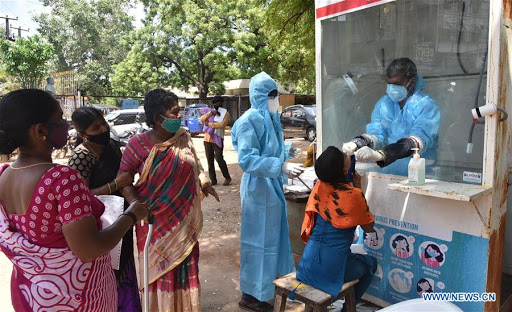 “Maharashtra, Kerala, Punjab, Karnataka, Tamil Nadu and Gujarat have shown a surge in new Covid-19 cases in the last 24 hours. 86.37% of the new cases are from these six states,” a spokesman for the government said. The Centre has told the states to follow effective surveillance strategies in respect of potential super spreading events. Need for effective testing, comprehensive tracking, prompt isolation of positive cases and quick quarantine of close contacts were also strongly emphasized,”
India registered a single-day rise of over 16,000 cases of the coronavirus disease (Covid-19) for the fourth day in a row and more than 100 deaths across the country, pushing the infection tally to 11,096,731, according to the Union ministry of health and family welfare on Sunday morning. The country’s active caseload went up to 164,511 after 24 days. There were 16,752 new Covid-19 cases, up from 16,488 infections a day before, and 113 related fatalities raising the death toll to 157,051.
On the 16th January 2021, India started one of the world’s biggest Covid-19 vaccination programmes, the first major developing country to roll out the vaccine, marking the beginning of an effort to immunise more than 1.3 billion people.
The first dose was administered to a health worker at All India Institute of Medical Sciences in Delhi, after the Prime Minister, Narendra Modi, kickstarted the campaign with a national televised speech.
The Indian health ministry has drawn up plans for 300 million people, almost the equivalent to the population of the US, to be vaccinated by August. Frontline healthcare workers, police and the army have been given priority, with those over 50 and with co-morbidity conditions to follow, all free of cost. Maharashtra, home to Mumbai and the state worst hit by coronavirus, plans to vaccinate 50,000 healthcare workers on the first day of the vaccine rollout.
Across the vast country, more than 200,000 vaccinators and 370,000 team members have been trained for the rollout. Large-scale trial runs have been conducted in at least four states and authorities have readied 29,000 cold storage units to transport and hold the vaccine safely.
Two vaccines have been given emergency approval for India’s immunisation programme: the Oxford/AstraZeneca vaccine, known in India as Covishield, and a domestic product, Covaxin, developed by the pharmaceutical company, Bharat Biotech.
Significantly, for ease of availability and low cost, both vaccines will be produced domestically. The Serum Institute of India, one of the world’s biggest vaccine makers, has already produced and stockpiled around 50m doses of Covishield.
The institute has billions in pre-orders from countries around the world also desperate for the vaccine. The Indian government is negotiating how much stock to release for export, given fears that it could lead to a domestic shortage.
Meanwhile across the Indian Ocean, in Australia, the federal government has established a “myth busting unit” to address what health minister, Greg Hunt, has called “plainly ridiculous” misinformation surrounding the rollout of the Covid-19 vaccine in Australia, amid increasing concerns about the spread of false information and conspiracy theories during the pandemic.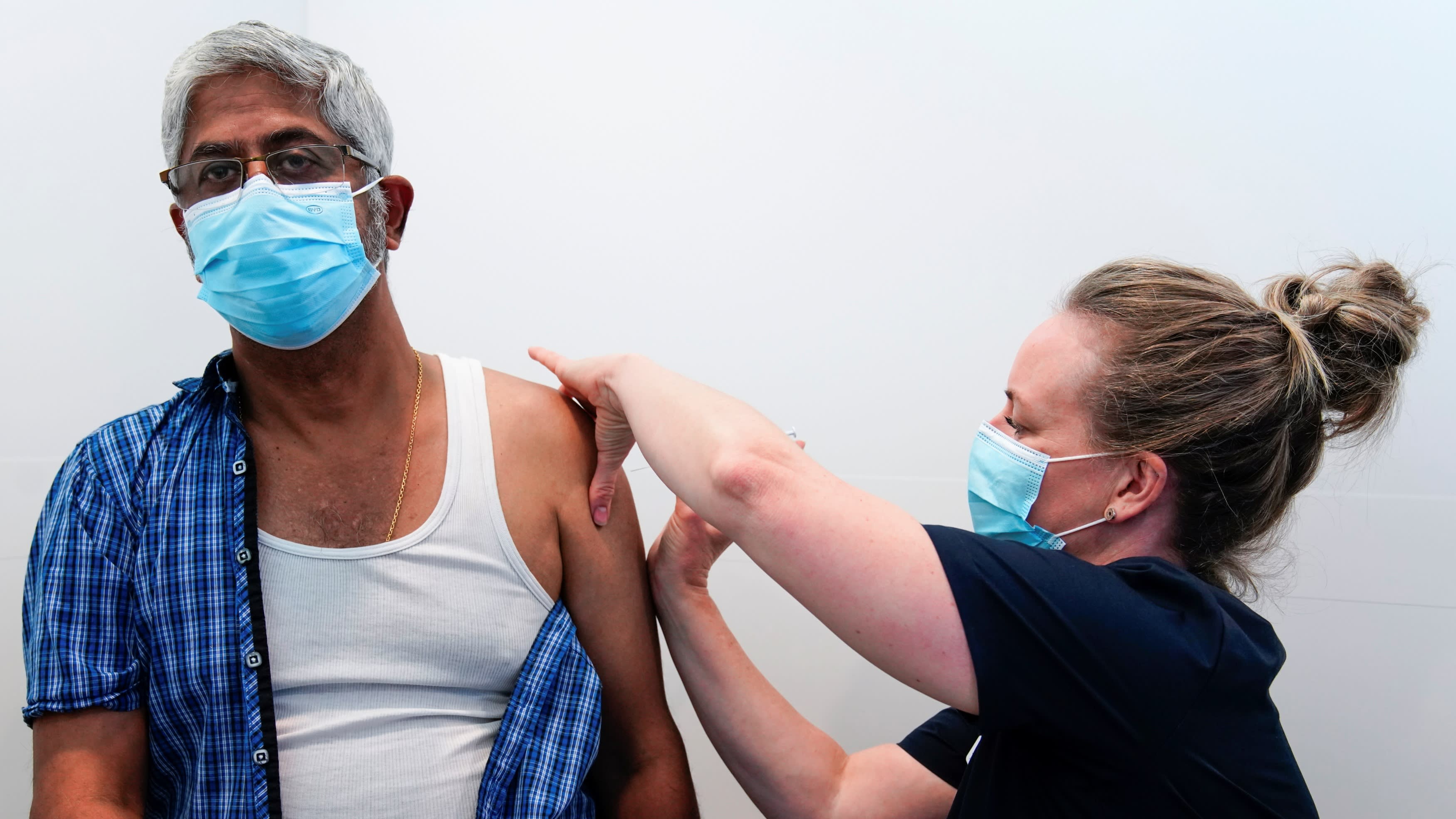 Announcing the arrival of the first 300,00 doses of the new AstraZeneca vaccine to Australia on Sunday, Hunt revealed the departments of Home Affairs and Health had “quietly” established the unit last year amid concerns about misinformation. “Some of these anti-vaxxers are peddling, frankly false and clearly irresponsible views. Whether it is about 5G and Bill Gates and mind control – ludicrous, ludicrous things,” he said. “We don’t want to give too much air to some of the silliest ideas, but we do want to provide public reassurance [we are] combatting the misinformation on those ideas which would in any way falsely have some impact on public confidence.”
Authorities are increasingly grappling with the growth and impact of conspiratorial thinking during the pandemic as vaccines, which depend on widespread take-up to stop the spread of the virus, are rolled out. Research released by the government earlier this month found only 64% of people said they would “definitely” get the vaccine, though authorities remained confident that figure would rise significantly as the rollout progressed.
But law enforcement agencies, in particular, are becoming more vocal in expressing their concerns about the rise of Covid-inspired misinformation. Recently it was reported that Victorian police had warned, in a submission to a new parliamentary inquiry into far-right and left radicalism, that extremist groups had “exploited” anger at Covid-19 lockdowns in order to recruit new followers during the pandemic. “For example, online commentary on Covid-19 has provided a recruiting tool for [right-wing extremist] groups, linking those interested in alternative wellness, anti-vaccination and anti-authority conspiracy theories with white supremacist ideologies,” the submission stated. It is hoped that this new unit will help provide intelligence to other government agencies and will help stem the flow of the false information.
Until the next time Stay Safe and Stay Home.
Total number of cases worldwide – 114,698,943
Total number of deaths worldwide – 2,543,532
Total number of recovered cases worldwide – 90,257,183
Active cases – 21,898,228 (19.1% of Total Cases)
Closed cases – 92,800,715
Information and statistics from:
https://www.worldometers.info/
 of Terceira University and by means of tests carried out in the scope of occupational medicine.
 Prohibition of pedestrian, car, motorized or similar circulation on public roads between 8:00 pm and 5:00 am the next day on weekdays and between 3:00 pm and 5:00 am the day after the weekend.
 From December 31st, last year, and March 21st, this year, 37,687 people were vaccinated in the Azores against Covid-19; 24,591 with the first dose and 13,096 with both inoculations.
 Borges, president of the Monitoring Commission of Fight Against Pandemic in the Azores, at a press conference.
 The captain of Port and Commander of the Maritime Police of Ponta Delgada, Fernando Horta, said that the alert was given to the Maritime Search and Rescue Coordination Centre (MRCC) at about 7:40 am, reporting that “A vehicle had fallen into the water”.
 Last Monday, marked the ‘one year’ anniversary of the first case of Covid-19 in the archipelago. The Regional Government plans to resort to the United States to accelerate the vaccination process in the region.
 This suspension is due to the “precautionary principle in public health”, while the safety of this vaccine is reassessed by the European Medicines Agency.
 Most of the new cases of Covid-19 infection detected last Thursday in the Azores belong to a transmission chain in which the English strain was detected, said the chairman of the Commission for Monitoring the Fight against Pandemic.
 On the island of Faial, the PSP detained 3 foreign citizens for disobedience and non-compliance with health standards related to fighting the pandemic. The arrests took place on Friday the 5th of March at a bar in the Porto Pim area. The owner of the bar accused the Horta PSP of excessive use of force but the police said that they acted on numerous complaints from nearby neighbours.
 intends to offer its customers “excellent health care”, with 50 consultation rooms, 96 beds and five operating theatres.
 The President of the Republic was going to travel to the autonomous regions of Madeira and the Azores to meet with representatives of the Republic, presidents of governments and regional parliaments.
 There have been some recoveries in the last few days, 16 in total. 13 on the island of São Miguel and 2 on Pico and 1 on Faial.
 The delivery of an equivalent amount is scheduled for March 15th for the Divino Espírito Santo Hospital in Ponta Delgada.
 Brigadier-general Eduardo Faria is the new president of the Regional Service of Civil Protection and Firefighters of the Azores, it was announced this Monday, by the regional secretary of Health.
 As of March 28th, 46,037 vaccine doses (30,426 first doses and 15,611 second doses) had been administered since Covid-19 vaccination started on December 31st. By that same day, 87% of the residents aged 80 or older had been vaccinated with the first dose of the vaccine and 50.7% (5,605 people) had been fully vaccinated. Inoculation of patients with trisomy 21 (59 patients) started on March 26th. And Rogério Correia, the director of the Porto Santo Health Centre (Centro de Saúde do Porto Santo) predicted that 25% of the Porto Santo residents will have been vaccinated by April.
 More than 2,200 students from Francisco Franco Secondary School (Escola Secundária de Francisco Franco) will be tested on April 5th. Testing will take place at the school’s sports hall. Students from over 100 classes have been assigned testing slots throughout the day and must be in school 15 minutes before the testing appointment. The meeting point will be at the astro turf sports pitch. The class director will welcome and walk them to the sports hall. The school also informed that students who had tested positive for Covid-19 in the last 90 days will be exempt from Covid-19 testing and from coming to school on that day, although they will first have to inform their class director of this situation.
 Madeira has been operating a green corridor for tourists who have either recovered from Covid-19 or who have been fully vaccinated against Covid-19.
 And on Friday, there were 31 new Covid-19 cases (from 4 passengers who had arrived from Poland, 1 passenger who had arrived from Lithuania and 26 cases of local transmission) and 43 recoveries. The number of patients in hospital decreased to 17, 4 of whom are were intensive care.
 Pedro Ramos, Madeira’s Health and Civil Protection Secretary, said Madeira was not only the first Portuguese region to resume vaccination with the AstraZeneca vaccine but also the first Portuguese region to start inoculating teaching and non-teaching staff.
 crew of 28 sailors (6 officers, 5 sergeants and 17 enlisted) and will replace NRP Douro, which has returned to Lisbon. It will ensure there is a continuous Navy presence in Madeira and will be patrolling Portuguese waters around the archipelago. It will also be providing an additional search and rescue capability and support to the regional authorities in the event of an emergency.
 had provided reassurance that it is “safe and effective”. Vaccination with this vaccine resumed at Madeira Tecnopólo, which is hosting Centro de Vacinação do Funchal (Funchal Vaccination Centre). As one of the priority groups for vaccination, vaccination for teaching and non-teaching staff, who are physically working in school premises, started yesterday. About 600 teaching and non-teaching staff from nurseries, kindergartens, primary schools and special education needs were inoculated yesterday. Pedro Ramos (Madeira’s Health and Civil Protection Secretary) and Jorge Carvalho (Madeira’s Education Secretary) visited the vaccination centre to witness the start of this vaccination campaign. Vaccination will also continue in the municipalities of Câmara de Lobos and Ponta do Sul.
 It is also estimated women will be called up according to the parish (freguesia) where they live: Machico (between the second fortnight of March and the second fortnight of May); Água de Pena (between the second fortnight of May and the first fortnight of June); Caniçal (between the first fortnight of June and the first fortnight of July); Porto da Cruz (between the first fortnight of July and the second fortnight of July); St da Serra (second fortnight of July).
 Empresa de Electricidade da Madeira (Madeira power supplier) announced there will be a power cut today due to planned work on the electricity supply network. This work cannot be postponed.
 The Municipality of Funchal informed there will be a water supply disruption due to scheduled work on the water supply chain in Caminho das Romeiras (Santo António). The disruption will take place from 09h30 until 12h00 and will affect water supply in the following areas: Caminho das Romeiras, Beco do Freitas and the stretch between Centro Cívico and the junction with Rua Dr. William Clode.
 from the AstraZeneca vaccine batch that may have caused some adverse reactions on some people who were inoculated with it. For instance, out of the 8,500 vaccine doses that had been delivered on March 5th, 2,400 doses have already been safely administered and without any issues.
 CAMPANÁRIO – 6th March – 09h00 to 11h30 (TODAY)
 The curfew is from 19h00 until 05h00 during weekdays and from 18h00 until 05h00 during weekends; commercial, industrial and service activities and businesses must close at 18h00 during weekdays and at 17h00 during weekends; take-away deliveries can take place everyday until 22h00 and individual sports practice is allowed.
 On Friday, there were 15 patients in isolation in a dedicated hotel, 759 patients in isolation in their own accommodation and 45 patients in Covid-19 units, 8 of whom were in the Covid-19 Intensive Care Unit.
 A shipment of 8,500 doses of the AstraZeneca vaccine arrived in Madeira last night after a delay. The Portuguese Air Force aircraft carrying the shipment had been forced to remain in Porto Santo due to windy weather. An Air Force Merlin helicopter then proceeded to carry the shipment to Funchal. After arriving at Funchal Airport, the shipment was immediately taken under police escort to the pharmacy at Hospital Dr. Nélio Mendonça.
 The two patients returned home after spending 30 days at Hospital Dr. Nélio Mendonça. They were enormously grateful for the Madeira health professionals and for all entities that had been involved in this process.
 José Manuel Rodrigues, President of the Legislative Assembly of Madeira (Madeira’s regional parliament) expressed his gratefulness, on behalf of all Madeira and Porto Santo residents, for the tireless work of all health professionals in fighting the Covid-19 pandemic in the region. He also thanked the staff responsible for the vaccination campaign. He expressed the view that Madeira’s vaccination plan is very well-structured and has been smartly implemented by health professionals, nurses and operational assistants. He advised the population to take all precautions to prevent being infected. He ended by praising Madeira for having been a pioneer in introducing the mandatory use of face masks and mandatory Covid-19 testing for passengers arriving in the Region, policies that prevented Madeira from having had more cases.
 Due to building work in the centre of Estreito de Câmara de Lobos, Águas e Resíduos da Madeira (ARM) informed that the general waste collection bin was moved from Rua Dr. António Vitorino Castro Jorge to Rua do Calvário (next to the recycling bins). This is a temporary move that will last until the building work is completed.
 The more measures are relaxed, the greater potentially the risk increasing in Portugal. At present the Rt on the mainland is 0.79 and incidence of 80 per 100,000 compared to the government threshold of Rt 1 and 120 per 100,000 respectively.
 Regarding sports, yesterday the Government decided not to take any chances and the Professional Leagues games will remain closed to the public at least until May, as well as the Portuguese GP and Formula 1 Grand Prix. In respect of the latter events. the de-confinement plan does not allow such major events to take place until after 3rd May with an audience present. This decision seems wise given the current situation and in line with the cautious approach that government is taking. Any exception for F1 would, in our view, be difficult to justify. This however came as a surprise to some including Regional Tourism Algarve and other entities as they did not receive any official communication from the Government regarding this decision. We await developments.
 It is especially important if you are planning to burn debris, that the burn is registered and approval sought. We emphasise the importance of following the safety guidelines which are very clear. As you can see from our earlier post today, the situation in the Algarve is highly conducive to rural fires with some seven municipalities on VERY HIGH level.
 According to official data, when only the territory of mainland Portugal is analysed, the incidence is 75.7 cases per 100,000 inhabitants and the Rt is 0.84.
 This situation can result, among others, in syncope or sudden death.
 The president of the Association of Hotels and Tourist Enterprises of the Algarve (AHETA), Elidérico Viegas, reacted thus to a news item from the newspaper Expresso, that points to the Government’s intention to prevent the presence of spectators at the Formula 1 Grand Prix, which takes place between 30th April and May 2nd, in the Algarve.
 Ana (fictitious name) worked at Faro airport, but was discharged in August and stopped earning the “little more than a thousand euros” she received each month. At the age of 40, with two children and bills to pay, she was forced to “live with family members” and ask for food support.
 virtual format”, RTA announced in a statement.
 Good morning. Today’s introduction is all about risk – in this case in three areas. The first of these is the decision by Portugal to what is now described (by the vaccination co-ordinator), as “a pause” for a short while in the administering of the AstraZeneca vaccine, following reports of 37 cases of severe blood clots in people overseas, discovered sometime after they had received the vaccine. This was taken as a precautionary measure and follows similar moves in 12 other countries. AstraZeneca said there have been 37 reports of blood clots out of more than 17 million people vaccinated in the 27-country EU and Britain. If correct, the chances of you having a blood clot are one in every 629,620. The drug maker said there is no evidence the vaccine carries an increased risk of clots.
 We therefore request people to read the “About Us” section on the use of our Facebook page, particularly with regards to unsourced comments and claims, personal argument, fake news and unrelated provocative comments, which detract from the topic and creates more work for us as ‘administrators’. We will remove these in the interests of the majority of readers, who are seeking accurate information and informed content. If the small minority wish to engage in personal argument there are Facebook groups available more suited for this purpose. “Words do Matter” so please bear in mind the feelings of others when commenting.
 “All the scientific evidence shows that the vaccine is safe and effective. I say this with the peace of mind that I am being vaccinated with the AstraZeneca vaccine. I already took my first dose and I am waiting for the second one in May”, he started by saying. “I hope that everything will be clarified and my conviction is that everything will be clarified. The available scientific information shows this and the Governments, including ours, have taken a preventive decision”, he continued.
 DGS confirms that these indicators will be: the incidence at 14 days, the national R (t) and by region, the number of patients in Intensive Care Units at national level, the proportion of national positivity (that is, the percentage of results positive in the total of tests performed), the proportion of case isolation and tracking of contacts by region, and also the proportion of virus variants considered most worrying (also by region).
 Ana Mendes Godinho watched the testing of some of the employees of the Centro Social Paroquial da Azambuja, which reopened on Monday, within the scope of the first measures of deflation, the valences of day care, pre-school and Leisure Activities (ATL).
 “I know how critical the second quarter is for the development of vaccination strategies in the Member States. These 10 million advance doses raise the total doses of the BioNTech-Pfizer vaccine in the second quarter to 200 million. This is excellent news, as it gives the Member States room for manoeuvre and possibly compensates for gaps in deliveries ”of other vaccines, commented Commission President Ursula von der Leyen.
 The coordinator of the vaccination plan against Covid-19 avoids expressing a position on the temporary suspension of administration of the AstraZeneca vaccine, but says he is confident of resuming the vaccination process in “five or six days”.
 CTT’s profit fell 42.9% last year, compared to 2019, to 16.7 million euros, in a year marked by the Covid-19 pandemic, the Correios de Portugal announced.
 positive epidemiological situation” in Portugal.
 In a statement the Municipality mentions that the Passeio das Dunas, the pedestrian part of Avenida Infante de Sagres and Calçadão de Quarteira, the footbridge of Forte Novo in Quarteira, the footbridges of Garrão, Ancão and Ludo, the bridge of Quinta do Lago, Queda do Vigário in Alte, the Local Protected Landscapes of Fonte Benémola and Rocha da Pena are the spaces that will be able to be visited again by the citizens and by all those who visit the municipality.
 The de-confinement plan has generally well been received. Thankfully, as it appears at present (without seeing the details in the decree law) the phased de-confinement, subject to bi-weekly risk assessments is relatively simple to understand, being based on two simple risk indicators; namely Rt (rate of transmission) and the number on cases per 100,000. There has been however an increase in Rt yesterday reported at 0.80. This is likely as a result of increased movements of people erven though there has so far been no relaxation of restrictions. Although this is still below 1.0, this is something that government and experts will be monitoring closely.
 Further good news came last night when Germany announced the removing of Portugal from the list of “countries with a high incidence of mutations in the coronavirus, with effect from next Sunday”, according to a note from the Portuguese Ministry of Foreign Affairs on the social network Twitter. This follows a similar move by Switzerland a few days earlier. With the massive decreases in cases in Portugal to levels below most of Europe, let’s hope this sets the lead for other countries to take similar action.
 And, secondly, “the plan is until May, which is good because it is not too long and is flexible in the indicators chosen in the way they are linked with the measures, to safeguard an idea that seemed important to me, from Easter with confinement ”, added Marcelo Rebelo de Sousa.
 More than 50,000 public school workers as well as employees of private establishments begin testing for Covid-19 on Tuesday, the Minister of Education announced this Friday.
 academic year 2020/2021, regarding the assessment and certification of learning.
 In a publication on social networks, Fernando Medina (PS) says he hopes that the equipment “is no longer needed”, but he points out that it could reopen “if so justified”.
 There are 400 patients recovering at home, plus 27 inpatients, 7 in the Intensive Care Units and 5 ventilated. The same source says that since the beginning of the pandemic, 341 deaths have been registered in the region.
 Through this action, the municipality of Portimão joined the National Authority for Emergency and Civil Protection and the Portuguese Institute for the Sea and the Atmosphere, as well as other entities throughout the national territory, to test the communication procedures to be implemented after the arrival of the tsunami warning message.
 He mentioned that “We will have to rebuild people’s lives,” says Marcelo. “It is more than returning to 2019”, defends the President for whom it is necessary “good management, transparency and efficiency” in public management.
 An important announcement for British nationals is that SEF have confirmed to the British Embassy that if you arrived in Portugal before 31st December 2020, and you are not resident or don’t intent to become resident, and you are still in Portugal due to Covid-19 travel restrictions, you do not need a visa or further authorisation to stay in Portugal longer than 90 days. SEF has told the Embassy that this is because you were exercising your right to free movement when you arrived and you are not subject to immigration control.
 This passport is intended to “boost the global economic recovery and facilitate” international travel, said a spokesman for the Ministry of Foreign Affairs.
 At the University of Beira Interior, work is being done on the creation of a nanovacin capable of preventing and treating the disease, the work of Dalinda Eusébio, and a PhD student in Biomedicine.
 Confederation of Tourism of Portugal (CTP).
 The objective is to prevent the consumption of products at the door of the establishment or in its surroundings, which is already prohibited, and not the sale, which only harms the already difficult situation of our companies”, says the association at a time when it is beginning talking about the model to follow in the deflation.
 At the origin of this alert are the more than two dozen complaints that came to the office of Maria Lúcia Amaral from people who, having seen their unemployment benefit end between June 30th and December 31st, 2020 and whose condition of resources did not allow them accessing social unemployment benefit, they fell into a situation of social deprotection since the automatic extension for another six months of the unemployment benefit provided for in the State Budget for 2021 (OE2021) includes only those who cease this benefit during the year of 2021.