Algarve Situation Report Wednesday 14th July 2021


Covid-19: 60% of people in the Algarve have already received a dose of the vaccine, 40% have a complete process.

60% of the population of the Algarve has already received at least one dose of a vaccine against Covid-19, while 40% has finished the process, according to the bulletin of the Directorate-General for Health (DGS) this Tuesday, 13 of July.

Last week, the region broke a new record, administering 50,763 doses, a number never before reached. Compared to the last report, the region has 5% more residents on one dose and 7% on both.

In total, since December, 413,045 vaccines have been given in the Algarve.

Covid-19: Delta variant responsible for 100% of infections in the Algarve.

The Delta variant of the SARS-CoV-2 virus continues to be dominant in all regions of the country, being already responsible for all cases of infections in Lisbon and Vale do Tajo and in the Algarve.

According to the report by the National Institute of Health Doctor Ricardo Jorge (INSA) released today, this variant, associated with India and considered more transmissible, has a prevalence of 86.6% in Portugal, while Alpha, and initially identified in the United Kingdom, only it was responsible for 10.2% of infections in the week of June 28th to July 4th.

The INSA further states that the Delta variant already has a prevalence of 100% in the Lisbon and Vale do Tajo and Algarve regions, 88.2 in the North, 81.8 in the Center, 95% in Alentejo, 62.5 % in the Azores and 79.2% in Madeira.

“Among other variants of interest in circulation in Portugal, the variant/lineage B.1.621 stands out, initially detected in Colombia, which has shown a relative frequency of around 1% in recent weeks”, says the study on diversity genetics of the new coronavirus in Portugal.

According to the document, this “variant of interest” has several mutations in the `spike’ protein that are shared with some “variants of concern”.

The World Health Organization (WHO) classifies the virus variants as “concern” (VOC) or “interested” (VOI), having assigned, at the end of May, the designation of letters of the Greek alphabet to facilitate understanding.

They came from Belgium just to clean up the Ria Formosa.

Despite all the constraints on the movement of people, resulting from the restriction measures imposed by the governments due to the health crisis caused by Covid-19, the Association for the Study and Conservation of the Oceans (AECO) once again received scouts from various regions of the country this year, including Belgium, to participate in their “traditional” awareness and clean-up campaigns in the Ria Formosa.

The association based on the University of Algarve’s Campus de Gambelas, informed that this year, the teams concentrated their efforts on Faro beach and managed to cover about 5 km outside the urbanized area, removing plastics and other non-biodegradable materials, such as masks, personal protection and single-use metal packaging.

“Nature conservation cannot wait” stressed Ricardo Barradas member of the AECO. After a year of stoppage, continuing “the support of the Municipality of Faro and Algar was essential for us to return to the field. Realizing that there is more and more to be done, it seems that instead of reducing we are producing more and more waste”.

In addition to garbage collection, the young people collaborated in activities to refurbish public facilities, painting rusty railings and gates or removing weeds from the soccer field on the beach.

Covid-19: Hospitals in the Algarve have 50% capacity for patients.

Hospitals in the Algarve have 60 patients in Covid-19 wards, 13 of which are in intensive care, which represents about 50% of the capacity of phase 2 of the contingency plan, said today a source at the Hospital Center.

“Right now, we have 50% of our total intensive care capacity destined for covid patients, which does not affect other services, with hospitals in normal operation,” said one of the members of the board of directors of the Centro Hospitalar Universitário do Algarve (CHUA), Paulo Neves.

According to the official, the 50% refers to the capacity of beds foreseen for phase 2 of the contingency plan, with the Algarve hospitals “still having room to increase this capacity, if necessary.”

“We have a contingency plan that can be adjusted and increased according to needs, but we have the perspective of not having a substantial increase in the number of cases of the disease”, he indicated.

According to Paulo Neves, the perspective “has to do with the number of cases registered on average in the last four days, given that, in that period, there was no significant variation in the number of admissions in hospitals in the Algarve”.

“Our forecast is that the trend that has been seen since the beginning of the month of people needing hospitalization will continue, although we are prepared to respond to a possible increase in severe cases of the disease”, he stressed.

In the official’s opinion, “vaccination coverage is playing an important role in the number of serious cases and deaths” related to the disease in the Algarve, exemplifying with the low number, four, of patients hospitalized in intensive care needing assisted ventilation”.


Madeira Situation Report Wednesday 14th July 2021


By our special correspondent, Daniel Fernandes

There were 56 new Covid-19 cases, 39 recoveries and no deaths from Covid-19 in Madeira since the previous Madeira Situation Report.

On Saturday, there were 14 new Covid-19 cases (from 3 passengers who had arrived from the UK, 2 passengers who had arrived from Spain and 9 cases of local transmission) and 13 recoveries. There were 2 patients in hospital, 1 of whom was in intensive care.

On Sunday, there were 8 new Covid-19 cases (from 1 passenger who had arrived from Botswana, 1 passenger who had arrived from Spain and 6 cases of local transmission) and 8 recoveries. There were 2 patients at Hospital Dr. Nélio Mendonça, 1 of whom was in intensive care.

On Monday, there were 16 new Covid-19 cases (from 1 passenger who had arrived from the Netherlands, 1 passenger who had arrived from the UK, 6 passengers who had arrived from the Lisbon and Tagus Valley Region, 1 passenger who had arrived from Northern Portugal and 7 cases of local transmission) and 7 recoveries. Once again, there were 2 patients at Hospital Dr. Nélio Mendonça, 1 of whom was in intensive care.

And on Tuesday, there were 18 new Covid-19 cases (from 2 passengers who had arrived from the UK, 9 passenger who had arrived from Northern Portugal, 1 passenger who had arrived from Southern Portugal, 1 passenger who had arrived from the Lisbon and Tagus Valley Region and 5 cases of local transmission) and 11 recoveries. The number of patients at Hospital Dr. Nélio Mendonça increased to 5, 2 of whom were in intensive care.

There were 120 active cases on Tuesday, of which 48 had been imported while the other 72 cases had been a result of local transmission. As of Tuesday, there had been 9,804 cases, 9,611 recoveries and 73 deaths.

On Tuesday, there were 30 patients in isolation in a dedicated hotel, 85 patients in isolation in their own accommodation and 5 patients in hospital, 2 of whom in intensive care.

On the same day, there were 64 suspected cases under epidemiological investigation and analysis, which were all linked to patients who tested positive for Covid-19, to calls made to the SRS24 helpline, to referrals by SESARAM (Madeira Regional Health Service) and to airport screening.

There were 30,520 travellers under monitoring by the health authorities. Monitoring is being carried out through the ‘MadeiraSafe’ app. There were also 446 people, who had contact with positive cases, being monitored by the health authorities of several Madeira municipalities and of Porto Santo.

As for Covid-19 testing on passengers who had arrived at Funchal and Porto Santo airports, 257,193 samples had been collected until Tuesday (at 15h30). By Tuesday, 515,421 samples from RT-PCR tests had been processed and 73,420 antigen rapid tests had been carried out in the Autonomous Region of Madeira.

The SRS 24 helpline (Regional Health Service – 800 24 24 20) received 461 calls from Friday to Tuesday. Overall, it had received 55,725 calls.

The Covid-19 mental health helpline (Linha de Acompanhamento Psicológico da Direção Regional de Saúde – 291 212 399 – available every day from 09h00 to 21h00), which was set up to provide emotional and mental support to anyone in Madeira received 11 calls from Friday to Tuesday . Overall, it has received 3,736 calls.

https://funchalnoticias.net/2021/07/11/14-novos-casos-de-covid-19-13-recuperados-66-suspeitos/

https://funchalnoticias.net/2021/07/11/8-novos-casos-de-covid-19-8-recuperados-41-suspeitos/

https://funchalnoticias.net/2021/07/12/16-novos-casos-de-covid-19-7-recuperados-58-suspeitos/

https://funchalnoticias.net/2021/07/13/18-casos-de-covid-19-11-recuperados-64-suspeitos/

Covid-19 vaccination update

As of July 11th, 251,573 Covid-19 vaccine doses (143,625 1st doses & 107,948 2nd doses/full vaccinations) have been administered in the Autonomous Region of Madeira. This means that 57% of the population have been administered the 1st vaccine dose, while 43% of the population have been fully vaccinated. The Covid-19 vaccination campaign started on December 31st.

In the week ending on July 11st, 19,319 Covid-19 vaccine doses were administered (12,436 1st doses & 6,883 2nd doses/full vaccinations). A highlight from the week was the fact that over 60% of the population of the municipalities of Calheta and Santana have been inoculated with the 1st vaccine dose. Over 70% of the population of the Municipalities of Porto Santo and Porto Moniz have already been inoculated with the 1st vaccine dose.

The aim for this week is to continue the Covid-19 vaccination campaign. The highlight is the start of vaccination for university students, which started on Monday at Centro de Vacinação do Funchal (Funchal Vaccination Centre), located in Madeira Tecnopolo. Pedro Calado (Vice-President of the Madeira Regional Government), Pedro Ramos (Madeira’s Health and Civil Protection Secretary) and Jorge Carvalho (Madeira’s Education Secretary) visited the vaccination centre, where they witnessed the start of vaccination of university students. Pedro Ramos revealed that 600 students had already been inoculated and that around 1,600 students had registered for vaccination. There are around 3,000 university students in Madeira, 5,000 Madeiran students studying in the mainland and over 1,000 Madeiran students studying abroad. He appealed for students to take up this opportunity to be vaccinated against Covid-19, and said the aim is for vaccination of university students to be complete by the end of the summer, before the start of the new academic year.

https://funchalnoticias.net/2021/07/13/mais-de-251-mil-vacinas-contra-a-covid-19-administradas-na-ram/

https://funchalnoticias.net/2021/07/12/iniciou-se-a-vacinacao-contra-a-covid-19-dos-estudantes-universitarios-na-ram/

https://www.jm-madeira.pt/regiao/ver/134715/Cerca_de_600_estudantes_universitarios_ja_foram_vacinados_na_Regiao

Clinic and pharmacy provide antigen rapid tests in Porto Santo

Clínica Arriaga (Clinic), in partnership with Farmácia da Ponta do Pargo (Pharmacy) have been carrying out antigen rapid tests on the car park at Restaurante Pé (Restaurant). According to the clinic, Porto Santo Line and Winter passengers can use a QR Code in order to fill in an online form that will enable the booking of a rapid test.

Passengers traveling between Madeira and Porto Santo islands must present a negative Covid-19 test, which had been carried out up to 48 hours before traveling, on each leg of the journey. This scheme makes it easier for passengers to be tested and helps them spend more time enjoying their holidays.

Both residents and visitors can be tested daily, between 09h30 and 18h30 and without booking. The venue is easily accessible, has free parking and people can await for the test results (15-30 minutes) on the terrace from which the beach can be seen.

According to the clinic, the antigen rapid test has a success-rate of 98%. This testing scheme will be in place until the end of September, which is when Madeirans and foreign tourists most travel to Porto Santo.

https://www.jm-madeira.pt/regiao/ver/134831/Clinica_e_farmacia_realizam_testes_rapidos_no_Porto_Santo

Search for missing Polish tourist suspended and PSP took over the investigation

The search for Michael Kopek, a Polish tourist who had gone missing while running on a trail was suspended on Saturday. Over 30 from several fire brigades, the Forest Police (Corpo de Polícia Florestal), the PSP police force (Polícia de Segurança Pública), the GNR police force (Guarda Nacional Republicana), the Regional Civil Protection Service (Serviço Regional de Protecção Civil), 5 rescue dogs, 2 drones and a multi-mission helicopter were deployed during the search.

The PSP police force have taken over the investigation into the disappearance of Michal Kozek, aged 35, who was on holiday with his family.

The emergency services had been informed on Thursday morning that the Polish citizen had left Porto Moniz at the end of Wednesday afternoon for a trail training session and had failed to return to his hotel.

His family has released a photograph of him and his brother flew into Madeira in order to search for him. He and several volunteers are continuing to search for Michal in several trails.

His relatives and friends have appealed for volunteers who own drones to join the search. They are even willing to pay them.

It is thought Michal was wearing a blue jersey, black shorts, purple Salomon running shoes and a Garmin Forerunner 945 running watch. Michal was on the trail between Porto Moniz and Calheta (through Pico da Urze). The route he took can be seen on the Strava app.


Portugal Situation Report Wednesday 14th July 2021


Introduction

Good morning, in the last few days there have been many figures regarding Covid-19 but probably the most important to put in perspective are the following. Portugal recorded, on Monday, 476 active outbreaks on the continent, of which 18 are in nursing homes and two in health institutions, according to data from the General Directorate of Health (DGS) announced yesterday.

Although this may seem high, these numbers contrast drastically with the maximum number of active outbreaks recorded in February 2021, when there were 921 active outbreaks in mainland Portugal. As you can see from our weekly comparison tables, that we publish on Mondays, the number of infections is also having some impact on the health service. Compared with the daily averages over three weeks, the numbers in ICU were up 57%, and in hospital they increased by 68%. Again to put this in context, at the beginning of February this year, those in hospital stood at near 7000, many times higher than at present.

There are various forecasts at the present from several experts, but there appears to be a consensus that the peak is likely to come in August before the situation improves.

With these increases, most taking place within the younger age group, one would think this would deter taking part in large gatherings. Yet a few days ago we saw reports of a gathering of a rave party with nearly 300 people and few days ago a similar party to the west of Albufeira with some 150 youngsters participating.  This maybe one of the reasons for the large new cases in the Algarve reach around 2000 in the last six days.

Turning to vaccinations, more than 42% of people already have full vaccination and 60% have taken at least one dose. This week 1,040,692 doses were administered, 231,000 more than the previous week – the highest since the start of the vaccination campaign against Covid-19.

Self-scheduling for those aged 23 years of age became available on Monday. The self- scheduling started with the 65 years of age, and over on 65s and over, on 23rd April and the process is the same.

People who have not received the second dose of AstraZeneca vaccine do not need to make an appointment for the second dose, they just need to go to the respective centre at the specific time for this type of vaccination. The time schedules can be downloaded here. https://covid19.min-saude.pt/antecipacao-das-2a-doses-de-astrazeneca/

We understand that there is some pressure at the vaccination centres in the Algarve, so please use the virtual traffic light system concerning queuing times.

Turning to the weather – well the temperatures did not reach the higher 40s forecast for last weekend, but it was still very hot, with temperatures around 39C and just over 40C recorded in some central and southern parts of the mainland. During this period we publish the Rural Fire Index which shows the rate by which fires can start and spread.

Compared with previous years, so far this year we have been fortunate in terms of the number of fires (around 300 in the last four days), given the weather conditions recently. This compares with over 330 a day during the worst periods of 2017. However it is important to remember that we are only at the start of the critical fire period that normally runs until 30th September. As the summer progresses, the vegetation becomes drier and in doing so it provides the fuel for fires to start and spread more easily. Some of the worst fires of 2017 were in October. The emergency services have responded very quickly to incidents, with most being brought to a conclusion within the initial attack phase of 90 minutes. However, one yesterday in the Algarve yesterday burned for some 3 hours even with the deployment of 4 aircraft/helicopters.

Much of the quick responses is due to the prepositioning of some fire vehicles e.g. at locations where the risk is extremely high, not necessarily at the fire station which maybe some distance from the areas concerned. Another area where we have been fortunate, is that we have not had significant multiple fires at the same time in the same region. When these occour in areas where access is difficult, more response is required, and any delay in bring the fire under control leads to fires spreading, the circumference of the fire becoming larger, burning with greater intensity. This then becomes far more difficult, with more firefighters becoming deployed with the risk of the fire becoming out of control – as in the case of the Monchique fire in 2018 which burned for 8 days!

This is why, as soon as you see signs of a fire call 112 immediately – every second counts

With that, please have a Safe Day.

Covid-19

The good news was from yesterday that both the number of active cases and the total in ICU decreased. The report published by DGS on Tuesday showed the following:

Confirmed Cases: 912.406 (+ 2650 / + 0.29 %)

Number of admitted: 742 (+ 13 / + 1.78 %)

Number of ICU admitted: 161 (-2 /-1.23 %)

Deaths: 17.173 (+ 9 / + 0.05 %)

Recovered: 850.034 (+ 3490 / + 0.41 %)

Active cases: 45,199 (+849/ -1.8%)

Safe Communities comparisons/trends show that deaths were double last week’s daily average (4); new daily cases were below the 3,000 mark seen last week; 43% of these were in Lisbon and Vale do Tejo a lower percentage than average of last week. In hospital, there was an increase but lower than last few days. Highest total since 23rd March 2021. In ICU there was a decrease, the first decrease for some days, and active cases also decreased.

Health

Covid-19 Incidence rate amongst young people increased five times in the last month.

Cases of new SARS-CoV-2 infections have increased in all age groups, however, less accentuated increases have been recorded in older groups as a result of vaccination, while the incidence in the 20 to 29 age group has shown a sharp ascent.

The cumulative incidence is increasing in all age groups, however, it is among the youngest that the incidence has been more pronounced. In the last month, the number of new cases per 100,000 inhabitants in 14 days increased six times in the age group from 0 to 9 years old and more than five times in the age group from 20 to 29.

This increase in cases, however, verifies the impact of vaccination on the increase in cases, since the increase in the number of cases has been less accentuated among the elderly. To Público, the mathematician Carlos Antunes, from the Faculty of Sciences of the University of Lisbon, stated that it is possible to verify a “gradual mitigation” of infections “in the higher aged groups”.

In the range from 0 to 9 years, the incidence increased from 59.15 cases at 14 days to 366.62. However, in the age group from 20 to 29 years, the increase in incidence rose from 142.43 cases per 100,000 young adults to 766.34, representing an increase of 439%.

Carlos Antunes explains to the publication that this increase has been similar in all regions of the country, highlighting, however, the “slower rate of increase and a much lower incidence rate” in Portuguese aged 50 or over, which he points out as a result of the advance in vaccination. “The groups that have the least vaccination coverage, under 50 years old, continue to be those with the highest rates of higher incidence and rate of increase. And all regions have the same pattern”, he says, adding that Lisboa and Vale do Tejo is beginning to see “a slowdown in almost all bands”, a trend that is seen mainly in the 50-59 group.

Mainland Portugal with 476 active outbreaks.

Portugal recorded, on Monday, 476 active outbreaks on the continent, of which 18 are in nursing homes and two in health institutions, according to data from the General Directorate of Health (DGS) announced this Tuesday.

According to the DGS this data contrasts drastically with the maximum number of active outbreaks recorded in February 2021, when there were 921 active outbreaks in mainland Portugal.

The majority of active outbreaks were registered in the Lisbon and Vele do Tajo Region, with 350, while the North Region had 46, Algarve 31, Alentejo 24 and Centro region 25.

According to data from the DGS, 84 active outbreaks were related to education and teaching establishments in the public and private sectors, which include schools, higher education, day care centers and other social facilities.

An active outbreak consists of two or more confirmed cases with an epidemiological link to each other in time and space, explains the DGS , adding that “only after 28 days have elapsed after the date of diagnosis of the last confirmed case (two incubation periods no new cases) is that the outbreak is considered closed”

Covid-19. More than six thousand daily cases expected in early August.

The peak of the new wave should be reached in the second half of August, forecasts the Covid-19 Insights platform

New cases of infection by Covid-19 are expected to exceed 6000 daily in the first week of August. The forecast is made by the “Covid-19 Insights” platform, which brings together specialists from Nova Information Management School and COTEC Portugal. The same platform estimates, according to “Jornal de Notícias”, that the peak of the new wave should occur after the second half of August.

“I don’t think these are scary numbers. Even six thousand cases today are not as serious as they were from January to March, because they translated into hospitalizations and deaths”, said the co-ordinator of the platform, Pedro Simões Coelho. The platform predicts that, on the same date, there will be 1101 hospitalizations – 213 in intensive care.

The red line monitoring report defines as a “critical threshold” the occupation of “245 beds in intensive care”. The latest DGS report registered 163 patients in the ICU.

Covid-19: Hospital Santa Maria in Lisbon registers 94% occupancy and foresees increased response.

Lisbon, 12 Jul 2021 (Lusa) – The Hospital de Santa Maria, in Lisbon, registers today 39 Covid-19 patients admitted to the ward and 18 to the intensive care unit (ICU), occupying 94% of the limit of available beds, the broadening of the “short term” response is foreseen.

A source from the University Hospital Centre Lisbon North (CHLN), which integrates the Hospital Santa Maria, said that the contingency plan for the response to Covid-19 patients, as of today, has 42 beds available in the infirmary and 19 in the ICU.

With readiness and capacity to anticipate the needs registered during the Covid-19 pandemic, the Hospital de Santa Maria has “in progress the expansion of its response, in the short term, in the ward and in the ICU”, pointing out as “very likely” that the reinforcement happens already during this week.

Speaking to Lusa agency, a CHLN source said that the opening of another ward, with 21 beds, is planned, which will join the two wards already available (each with the capacity to accommodate 21 patients), increasing to 63 the total number of beds.

Regarding the response to Covid-19 patients in the ICU, the capacity building will be “according to needs”.

As of today, Santa Maria Hospital has 39 Covid-19 patients admitted to the ward, which represents 92.8% of the available capacity, and 18 in the ICU, which corresponds to 94.7% of the occupancy limit, according to CHLN data, noting that “there are variations in the level of occupation throughout the day”, including due to medical discharges.

Regarding the age of hospitalised Covid-19 patients, the CHLN stated that “the average is 55 years old”, specifying that in the ward the average is 59 years old and in the ICU it is 50 years old, according to data recorded last week.

Covid-19: Guard Council asks emigrants to comply with recommendations and “don’t make it easy”.

Guarda, July 13, 2020 (Lusa) – The Mayor of Guarda appealed today to emigrants, who this summer are on vacation in the county, to comply with “the basic rules” recommended by the authorities and “do not make it easy”, to avoid possible contagion from Covid-19.

“There has to be immense rigour in what are the behaviours, defence and protection attitudes of themselves [emigrants] and the community where they are inserted, from the outset, complying with the basic rules of the national Health authority, with commitment and with this obligation, which today we all assume as natural, as a situation that is necessary to defend our health”, said Carlos Chaves Monteiro to Lusa agency.

The mayor appeals to emigrants who are already in the territory and to those who will soon come to visit their families, to comply with the recommendations in force.

The municipality of Guarda will inform them “to commit to this code of conduct, to this way of being, which is to sanitize, protect with gloves and masks, with everything that is already part” of the current experience and appeals “don’t make it easy”.

“Because, in fact, we cannot yet put out the victory cry, because the virus is more resistant, less vulnerable, more multi-adaptable than what we imagined. And, therefore, we have to give science time so that it can defend us more fully and totally and, for that, we need, until then, everyone’s contribution”, he declared.

Carlos Chaves Monteiro recognizes that the presence of emigrants in the territory, traditionally with greater expression in the month of August, will help to boost the local economy.

Covid-19: Alentejo with occupancy rates of 32.6% in infirmary and 28.6% in ICU.

Évora, July 12, 2021 (Lusa) – Hospitals in Alentejo recorded, on Sunday, a total occupancy rate by patients with Covid-19 of 32.6% in the infirmary and 28.6% in intensive care units, revealed today source of the Regional Health Administration (ARS).

“In hospitals in the Alentejo region, on 11 July, there was an occupancy rate in wards of 32.6% and in intensive care units of 28.6%”, indicated the source of the ARS do Alentejo, in written response sent to Lusa agency.

According to the same source, on Sunday, in all hospitals in the region, 15 patients were hospitalized with Covid-19 in the ward and another six in intensive care units.

“The current capacity of beds dedicated to Covid-19 is 46 in the ward and 21 in intensive care units”, he stressed.

The source of the ARS of Alentejo pointed out that “the response capacity will always be adjusted and the necessary measures taken” according to the evolution of the epidemiological situation.

The data refer to the Hospital do Espírito Santo de Évora (HESE) and the hospitals of the local health units (ULS) in the coast of Alentejo, North Alentejo and Baixo Alentejo.

AHRESP proposes plan with 10 measures to compensate accommodation and restaurant.

AHRESP sent the Government a plan to compensate tourist accommodation and the restoration of the effects of the pandemic with 10 measures, such as the reinforcement of the Apoiar program, a new simplified lay-off and credit and tax moratoria.

Entitled “Face the pandemic, ensure survival”, the plan is presented by the Association of Hotels, Catering and Similar Services of Portugal (AHRESP) as a “last attempt to save the most affected sectors” by the pandemic crisis.

The plan, released today, provides for 10 measures, advocating right away the replacement of the recently launched IVAucher program by the attribution of a “direct 50% discount”, applied directly at the time of consumption and with no limit on use.

This solution, argues AHRESP, would make it possible to overcome the fact that IVAucher does not have direct and universal access, “which could limit its scope”.

In line with the Government’s recent decision to allow restaurants to serve meals beyond 3:30 pm in high and very high risk municipalities, provided that customers do have a negative test for Covid-19 or present a digital certificate, this association advocates that tests and certificates be used to advance to a new level; that is, to allow tourist accommodation, restaurants and the like to no longer have time or capacity restrictions and for nightlife establishments to reopen.

Among the measures of the plan addressed to the Government, there is also a new stage of candidacies for the Apoiar program, providing support between 5,000 and 7,500 euros for self-employed entrepreneurs (ENI) without employees, with billing losses of between 15% and 50% or above 50%, respectively or between 12,500 and 18,750 euros for ENI in dependent workers, for the levels of invoicing breaks referred to.

Portugal sends Covid-19 vaccines to Guinea-Bissau.

On July 12, Portugal sends a first batch of 24,000 vaccines against Covid-19 to Guinea-Bissau to support the Guinean health authorities in implementing their national vaccination plan against this disease. Vaccines will be accompanied by the material necessary to enable their administration, including, in particular, syringes and needles.

This donation is part of the fulfilment of the political commitment assumed by the Portuguese Government to make available at least 5% of its batches of vaccines to Portuguese-speaking African countries and East Timor, and is part of the second phase of the Action Plan in the health response to Covid-19 pandemic between Portugal and Portuguese-speaking African countries and East Timor.

In this sense, the shipment of this batch of vaccines to Guinea Bissau follows others that have recently been sent to Cape Verde, Mozambique and São Tomé and Príncipe. Also during this month of July, new batches will be sent to Angola and East Timor.

This action is the result of the joint effort of the Ministry of Foreign Affairs, through Camões – Institute for Cooperation and Language and the Embassy of Portugal in Bissau, and the Ministry of Health, through the General Directorate of Health, of the National Medicines Authority and Health Products (Infarmed) and the Task Force of the National Vaccination Plan against Covid-19 in Portugal.
 

Overseas Situation Report Monday 11th July 2021


By Mike Evans

“You have no choices about how you lose, but you do have a choice about how you come back and prepare to win again.” – Pat Riley

As the virus moves in ever increasing ferocity around the world, and from country to country, it is increasingly difficult to know which countries one can travel to, as many governments change policy on travel on an almost daily basis.

This report looks at the general world of travel and what countries people can travel to and what restrictions are in place.

We will start with Europe and the area known as Schengen.

Despite the EU trying to work as “one” we are seeing many countries putting their own rules into place. Norway has imposed a mandatory quarantine requirement for arrivals from Luxembourg, due to an increase in the number of infections registered on the latter, Norway’s government has confirmed.
In addition, new changes have been applied to three regions in Finland and some European archipelagos. The new changes will take effect from July 12th and will be kept in place until further notice.

The Ministry of Foreign Affairs (MFA) continues to advise all travellers not to travel to countries outside the EEA/Schengen and the United Kingdom, unless absolutely necessary.

According to the announcement of Norway’s authorities, the following European countries will remain in the green category, which includes territories considered safe based on their epidemiological situation; Belgium, Estonia, Bulgaria, France, Greenland, the Faroe Islands, Greece, Italy, Iceland, Croatia, Lithuania, Liechtenstein, Malta, Romania, Poland, San Marino, Slovakia, Switzerland, Slovenia, the Czech Republic, Hungary, Germany, the Vatican City and Austria.

According to the authorities in Norway, the following countries belong to the category of countries considered as highly affected by the virus. Ireland, Latvia, the Netherlands, Monaco, Andorra, Spain, UK, Cyprus, and Portugal.

Fully vaccinated travellers can now freely enter the territory of Slovakia, as the country has changed its entry restrictions rules since July 9th, putting to an end the traffic light system, which determines the nationals of which countries could enter Slovakia, depending on country of origin infection rates.

According to a press release issued by the Slovak authorities, the new system depends on the traveller’s vaccination status, thus, border crossings will be open for fully vaccinated passengers,

For those wanting to travel to Slovakia, the border control authorities require a registration form to be filled out after arrival. Categories exempted from this requirement are as the following list indicates:

  • Children younger than 12
  • Passengers transiting through Slovak territory
  • Freight, bus and aircrews, train drivers, train crews and railway operators,
  • Medical service drivers and crews who are transporting a patient, organs for transplantation, blood or blood substitutes,
  • Funeral staff carrying deceased person or its remains

Each time a traveller enters the territory of Slovakia, he or she is obliged to register, with the following categories making an exception:

  • Fully vaccinated people, whose first registration is valid for the next six months
  • People who were recently vaccinated with the first dose of any vaccine
  • People from 12 to 18 years of age, whose first registration is valid until August 9th
  • People travelling for medical reasons, whose first registration is valid for seven days

Moreover, fully vaccinated travellers are considered those that have received the last dose of the Covid-19 vaccine 14 days before arrival but no longer than 12 months ago, whereas for single doses vaccinated travellers, at least 21 days need to pass since the dose was received.

Belgium’s government has decided to recognise the AstraZeneca vaccine manufactured in India, which is currently not recognised on the Digital Covid-19 certificate used by European Union Member States, in order to ease the travel process for vaccinated passengers.

The decision has been announced by Belgium’s Minister of Development Co-operation, Meryame Kitir

Even though the Digital Covid-19 certificate does not recognise the Covlishield vaccine, individual EU countries can decide if they want to recognise specific vaccines approved by the World Health Organization, such as the Covishield one.

With the number of cases increasing in France the cost of testing is now being put onto the person rather than the state. Tests used for detecting the Covid-19 will no longer be free of charge for tourists visiting France, as the government decided on July 7th.

Following authorities’ decision, tourists wanting to leave France will have to pay €49 for a PCR test or €29 for a Rapid Antigen test. Tests used for detecting the Covid-19 will no longer be free of charge for tourists visiting France, as the government decided on July 7th.

This decision has raised fears that travellers will forge certificates attesting to negative Covid-19 tests so they don’t have to pay the money. Travellers found guilty of falsifying, selling, or using fake documents can be sentenced to three years in prison and fined €45,000.

Starting from July 12th, the residents of several more third countries will be eligible to enter Sweden for non-essential purposes, as the authorities have decided to adopt a recommendation of the Council of the EU in this regard.

The decision was taken on July 8th, and as a result, travellers from the following countries will be eligible to enter Sweden even for tourism and visiting friends and relatives: Armenia, Azerbaijan, Bosnia and Herzegovina, Brunei, Darussalam, Canada, Jordan, Kosovo, Montenegro, Qatar, Moldova and Saudi Arabia.

The Finnish authorities have decided to extend the current internal border controls with several Schengen area countries for another two weeks, the country’s Ministry of Interior has announced.

According to a press release of the same Ministry, the Finnish government has decided to continue internal border controls, which were set to expire on July 12th, until July 25th. The move has been taken in order to make sure that municipalities and joint municipal authorities have the necessary time to prepare for the implementation of health security measures under the Communicable Diseases Act.
The countries affected by the prolongation of the internal border controls are Belgium, Denmark, Estonia, France, Greece, Latvia, Liechtenstein, Luxembourg, the Netherlands, Norway, Portugal, Spain, and Sweden.

On the other hand, the existing border controls with Lithuania, Slovenia, and Switzerland will end on Monday, July 12th.

The Ministry notes that Finnish citizens and residents always have the right to leave and return to the country.

As per the rest of the EU and Schengen nationals residing anywhere in the EU and Schengen area, the same will be permitted to enter if they:

  • Have been fully vaccinated, and the final shot has been administered at least two weeks before
  • Have been infected with Covid-19 and recovered within the last six months

And finally, for anyone dreaming of endless summers of the Costa del Sol, late-night buzz of the ancient towns and cities, fresh dishes, or wandering in the streets of Barcelona, Madrid, Grenada, and Seville, such dreams can now become a reality as Spain had decided to welcome vaccinated tourists since June 7th.

Spain is one of the European countries that has been seriously affected by Covid-19, and since the beginning of the pandemic, the country has reported a large number of cases and deaths. After having one of the most stringent lockdowns in Spring 2020, Spain reopened for summer in the same year. Still, in November, the latter entered a State of Emergency once again, leaving the country in continuous lockdown until May 9th, 2021.

Spain has not established a Covid-19 Passport yet, but the country is technically ready to connect to the EU Digital COVID Passport Gateway, With the vaccination rates increasing and the infection cases dropping day by day, Spain may only keep some of its restrictions in place. Travellers from most European Union and Schengen Area countries are allowed to enter Spain without being subject to the quarantine requirement, as long as they have low infection rates.

Almost all regions of Germany and Italy have just recently been excluded from the high-risk list of Spain due to the low infection rates prevailing in the countries. As such, Spain now allows entry for arrivals from these two countries without being required to present proof of vaccination, proof of recovery, or a negative Covid-19 test result. Likewise, all persons arriving from Covid-19 safe countries that have a reciprocal agreement with Spain but are non-EU Member States are also permitted to enter Spain.

So, to close, we can see that as many countries continue to allow tourists to enter, we must all be on our guard as the virus is still very much amongst us.

Until the next time, Stay Safe.

Total Cases Worldwide – 187,647,215

Total Deaths Worldwide – 4,049,350

Total Recovered Worldwide – 171,603,940

Total Active Cases Worldwide – 11,993,925 (6.4% of the total cases)

Total Closed Cases Worldwide – 175,653,290

Information and resources:

https://www.worldometers.info/coronavirus/

Portugal Situation Report Saturday 10th July 2021


Good morning – Safe Communities Portugal was set up originally to provide residents of Portugal and visitors with information regarding living safe and secure in this wonderful country. As time has gone on we have expanded our remit to give help and understanding to the rules and decrees that the Portuguese Government brings out that affect us and as many of our readers are foreign immigrants we have offered this service in English. We now have many nationalities who follow us so we have expanded to 9 different languages on our website.

However, we are still ostensibly an organisation offering a service to those who LIVE IN PORTUGAL or have close affiliation as visitors or those with second homes here. With an ever changing world due to Covid 19 we at Safe Communities have also had to change and whilst we encourage readership through our Facebook wherever a person may be, we are finding there are some who take the opportunity to promote their own agendas, which can in some cases be extreme and unhelpful in dealing with the health crisis we are facing. Often these appear to originate from those who appear to have little or no connection with Portugal.

Safe Communities is run for the benefit of residents of, and visitors to Portugal and we do not want to see such remarks being made by people who do not even live here during these very trying times. Unlike a Facebook group who can determine who can or cannot become a member, as well as remove those who do not comply with the rules, we operate an open page so the information can be shared as widely as possible to those it effects. As such we rely on the trust of those who comment to follow the rules and standards which we have clearly laid down.

Our admins have a very difficult job in answering many questions every day and it is not right or fair for them to be distracted in this important work. It is also not right that those who have genuine questions should have to wade through long threads of endless often totally unrelated and uniformed comment, making it more difficult to find the answers already given.  This is why we delete those that are unhelpful and detract from the main purpose of the information.

We would ask everyone to be thoughtful and respectful in what comments they post and if they cannot adhere to these standards then please do not post on our page as it is very counter-productive to running this organisation, which we must again reiterate is all run by volunteers. I am sorry to labour this point but I feel it necessary.

Some good news – More than 611,000 people were vaccinated in the last four days, the Vaccination Task Force confirmed yesterday. On Thursday, Portugal reached a new record in the number of vaccinations with 158,000 doses administered in one day.

Also a record was the fact that 364,380 Covid-19 tests were carried out in Portugal, which represents an average of more than 60,000 daily tests a day during the first week of July.

At the Olhão vaccination centre police were called to restore order after there were problems with the long waiting time and some people apparently “jumping the queue”. There is a traffic light system now in place that provides the waiting times at various centres which can be viewed here. Best to check so you can be prepared. The Prime Minister did forewarn of “some discomfort” to be expected given the push to get all those eligible for a vaccination processed quickly.

The Resolution of the Council of ministers was published yesterday evening following the Communique on Thursday. Some issues have caused some confusion and controversy particular with regards to the requirement for testing or the presentation of a Digital certificate at hotel accommodation or staying at hotels anywhere in the country. The President of  the Hotels and Touristic Enterprises of the Algarve has been quick to respond to this stating that this should be revoked adding that “hotel professionals are not health professionals, nor security forces, nor health authorities” and “are not qualified nor have conditions to comply with the measure announced by the Government”.

Clearly this presents a number of practical issues, such as what happens if someone tests positive at checking in? In the case of AL local lodging, in some properties people can check in themselves using a digital lock code sent to them beforehand.

Again with very little notice given between publication and implementation of some of these new laws and seemingly lack of understanding of the practicalities involved for those it effects, this places considerable pressures especially on businesses who have to make last minute adjustments which can be weekly depending on which municipality the company is based. This also makes it very difficult for the police who are required to enforce as well as of course, ourselves in having to try and answer peoples questions, without the full details being available to the last minute.

Reminder today is forecast to be the hottest day of the year so please take care in the heat, avoid rural fires and protect yourself particularly young children from the UV

Have a Safe weekend

Covid-19

The DGS report for Covid-19 yesterday reported the following figures
Confirmed Cases: 902.489 (+ 3194 / + 0.36 %)
Number of admitted: 617 (+ 18 / + 3.01 %)
Number of ICU admitted: 141 (+ 5 / + 3.68 %)
Deaths: 17.142 (+ 7 / + 0.04 %)
Recovered: 842.024 (+ 1727 / + 0.21 %)
Active cases: 43,323 (+1460/ + 3.9%)

Safe Communities comparisons/trends showed that deaths were nearly double last week’s daily average (4); new daily cases were the third highest since 11th February 2021 (similar to the previous day; of the new cases 46.3% (1482) were in Lisbon and Vale do Tejo a lower percentage than average of last week. In hospital there was an increase the highest total since 29th March 2021 and those in ICU were the highest since 28th March 2021.

Regarding active cases there was again a very large increase, the highest since 12th March

Health

Covid-19: One hundred and thirty municipalities with an incidence above 120 cases per 100,000 inhabitants

Lisbon, 09 Jul 2021 (Lusa) – One hundred and thirty municipalities record an incidence of new cases of infection by the SARS-CoV-2 virus above 120 per 100,000 inhabitants in the last 14 days, 43 more than last Friday.

According to data released today in the epidemiological bulletin of the Directorate-General for Health (DGS), Loulé (1,016) and Albufeira (997), in the Algarve, are the two municipalities with an incidence above the limit of 960 cases per 100,000 inhabitants.

The 130 municipalities with an incidence of more than 120 cases represent 42% of the total number of municipalities in the country.
According to the same data, 27 counties have a cumulative incidence in 14 days of more than 480 cases of infection, and 27 counties have an incidence of more than 240 cases per 100,000 inhabitants.
Another 58 municipalities have an accumulated incidence in 14 days of between 120 and 239.9 cases per 100,000 inhabitants, while 20 municipalities have zero cases in the last two weeks.

In municipalities with low population density, which represent more than half of the continental territory, the red line that forces municipalities to withdraw from the decontamination plan is set at 480 cases per 100,000 inhabitants in the last 14 days and the remaining municipalities are under alert when exceed 240 cases per 100,000 inhabitants in the same period.

Portugal set a record of more than 60,000 Covid tests per day in the first week of July

In the first six days of July alone, 364,380 Covid-19 tests were carried out in Portugal, which represents an average of more than 60,000 daily tests and the highest value since the beginning of the pandemic, according to data provided by the National Health Institute Dr. Ricardo Jorge (INSA) to ECO.

Given the rapid spread of the Delta variant, the Government has focused its strategy on strengthening vaccination against Covid, as well as on encouraging mass testing, in order to avoid heavier damage to the economy. Thus, and given that screening tests for the disease are necessary for access to more and more spaces, which led the Executive to contribute 100% to the performance of four tests per month , testing has increased in recent days.

“Between 1 and 6 July, 364,380 Covid diagnostic tests were carried out in Portugal”, of which 208,384 are PCR tests (57.2% of the total) and 155,996 are rapid antigen tests (42.8%), which places the country with a “daily average of 60,730 tests” , signals the entity led by Fernando de Almeida, in response to the ECO. This is, therefore, the highest daily average since the beginning of the pandemic, surpassing the threshold reached in January, at the peak of the third wave, with about 52,000 tests performed per day.


Covid-19. Meeting at Infarmed scheduled for the 27th

Specialists and political leaders will meet again on the 27th of this month for another “meeting at Infarmed”, as the meetings in which specialists and public health officials present data and predictions about Covid-19 to politicians and social partners.

The last meeting of this kind took place on March 28, when the hypothesis of a change in the risk matrix was more urgently put forward, defended by the President of the Republic, but generally rejected by specialists.

This Thursday, at the press conference that followed the Council of Ministers, the Minister of the Presidency had already given a sign that there could be a return to this model of meeting. “The Government is always available to hold meetings at Infarmed and, therefore, if that is the intention of all parties, we are available for this meeting”, said Mariana Vieira da Silva in response to a question from the Renaissance.

 

Covid-19: Lisbon and Tagus Valley reaches 99% of beds occupied in intensive care

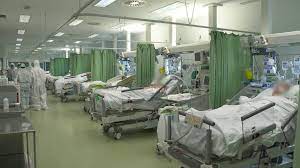
Lisbon, 09 Jul 2021 (Lusa) – Lisbon and Vale do Tejo, with 82 hospitalized patients, reached 99% of the limit of 84 intensive care beds destined to covid-19 in this region, indicates the report of the “red lines” of the pandemic today disclosed.

“The region of Lisbon and Vale do Tejo, with 82 patients admitted to the ICU, represents 60% of the total cases in the ICU [in the country] and corresponds to 99% of the regional limit of 84 beds in the ICU defined in the “red lines” report”, refers to risk analysis by the Directorate-General for Health (DGS) and the National Institute Doctor Ricardo Jorge (INSA).

cnn.com

According to data from health authorities, the Algarve region has 15 patients in ICU, which corresponds to 150% of the defined limit of ten beds for covid-19.

The “red lines” of pandemic control established by several experts predict 245 beds as the critical value in the set of hospitals in mainland Portugal, pointing to a regional distribution of 85 beds in the North, 56 in the Centre, 84 in Lisbon and Vale the Tagus, 10 in the Alentejo and 10 in the Algarve.

The document that established these “red lines” stresses, however, that the integrated management of the National Health Service’s capacity presupposes a network response, which means, in intensive care medicine, that regional needs can be met with the response of others regions with greater capacity.
According to today’s report, the daily number of covid-19 cases admitted to ICUs on the continent showed a growing trend, corresponding to 56% of the 245 beds, compared to 46% the week before.

In intensive care in national hospitals were, on Wednesday, 136 patients, with the age group with the highest number of people admitted to these units corresponding to the age group between 40 and 59 years, indicates the document of the DGS and INSA.


Covid-19: Chairman of the Doctors Advocates Replacing Self-Tests with Rapid Antigen Tests

Wikipedia

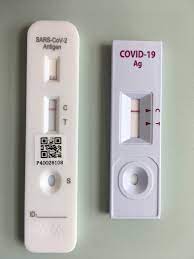
The Chairman of the Medical Association, Miguel Guimarães, said today that the use of self-tests “is not an adequate measure” of prevention and protection against covid-19 and defended that they should be replaced by antigen tests. “Self-tests are not feasible and can give false feelings of security as has happened in many family and social gatherings because self-tests fail so much. It is not an adequate measure”, Miguel Guimarães told journalists on the sidelines of the XIII National Congress of Mutualism.

jornalmedico.pt

The chairman of the Medical Association said that although the measures announced on Thursday by the government were “appropriate”, the use of self-tests “is not adjusted” and defended their replacement by rapid antigen tests. “The rapid antigen test was already legislated by the Government, that there was a contribution to this test. It is this test that people should use”, said Miguel Guimarães.

Along with the rapid antigen test, the president also recalled that the PCR tests provide guarantees that “the person is not infected for some time, about two to three days” and recalled the importance of the covid-19 digital certificate.

Restaurants in high or very high risk municipalities will now have to require a digital certificate or negative test to covid-19 from 7 pm on Fridays and on weekends and holidays for indoor dining.  The measure, approved on Thursday by the Council of Ministers, applies only to tables inside the restaurants, according to the Minister of the Presidency, Mariana Vieira da Silva, who clarified that the new requirement will start to be applied from 15:30 Saturday.


Madeira Situation Report Saturday 10th July 2021


By Daniel Fernandes

 Covid-19 update

There were 43 new Covid-19 cases, 19 recoveries and no deaths from Covid-19 in Madeira since the previous Madeira Situation Report.

On Wednesday, there were 7 new Covid-19 cases (from 2 passengers who had arrived from Spain, 1 passenger who had arrived from Italy and 4 cases of local transmission) and 2 recoveries. Once again, there were no patients in hospital.

On Thursday, there were 24 new Covid-19 cases (from 3 passengers who had arrived from Spain, 1 passenger who had arrived from Italy, 1 passenger who had arrived from Venezuela and 19 cases of local transmission) and 8 recoveries. There were 2 patients at Hospital Dr. Nélio Mendonça, none of whom were in intensive care.

And on Friday, there were 12 new Covid-19 cases (from 1 passenger who had arrived from Switzerland, 1 passenger who had arrived from Central Portugal and 10 cases of local transmission) and 9 recoveries. There were 2 patients at Hospital Dr. Nélio Mendonça, 1 of whom was in intensive care.

There were 103 active cases on Friday, of which 28 had been imported while the other 75 cases had been a result of local transmission. As of Thursday, most new cases were of people aged 30-39, and there were only 16 cases among those aged 60 or older. As of Friday, there had been 9,748 cases, 9,572 recoveries and 73 deaths.

On Friday, there were 32 patients in isolation in a dedicated hotel, 69 patients in isolation in their own accommodation and 2 patients in hospital, 1 of whom in intensive care.

On the same day, there were 65 suspected cases under epidemiological investigation and analysis, which were all linked to patients who tested positive for Covid-19, to calls made to the SRS24 helpline, to referrals by SESARAM (Madeira Regional Health Service) and to airport screening.

There were 28,599 travellers under monitoring by the health authorities. Monitoring is being carried out through the ‘MadeiraSafe’ app. There were also 437 people, who had contact with positive cases, being monitored by the health authorities of several Madeira municipalities and of Porto Santo.

As for Covid-19 testing on passengers who had arrived at Funchal and Porto Santo airports, 253,402 samples had been collected until Friday (at 15h30). By Tuesday, 509,373 samples from RT-PCR tests had been processed and 73,414 antigen rapid tests had been carried out in the Autonomous Region of Madeira.

The SRS 24 helpline (Regional Health Service – 800 24 24 20) received 374 calls from Tuesday to Friday. Overall, it had received 55,725 calls.

The Covid-19 mental health helpline (Linha de Acompanhamento Psicológico da Direção Regional de Saúde – 291 212 399 – available every day from 09h00 to 21h00), which was set up to provide emotional and mental support to anyone in Madeira received 11 calls from Tuesday to Friday. Overall, it has received 3,725 calls.

https://funchalnoticias.net/2021/07/07/7-novos-casos-de-covid-19-2-recuperados-106-suspeitos/

https://funchalnoticias.net/2021/07/08/24-novos-casos-de-covid-19-8-recuperados-82-suspeitos/

https://funchalnoticias.net/2021/07/09/12-novos-casos-de-covid-19-9-recuperados-65-suspeitos/

https://www.jm-madeira.pt/regiao/ver/134378/Faixas_etarias_mais_jovens_concentram_maioria_dos_casos

Covid-19 vaccination in Porto Santo delayed until Sunday

All people who had been scheduled to be inoculated today (July 10th) in Porto Santo will now be inoculated tomorrow (July 11th) at the same time as previously scheduled. No reason was provided for this delay.

https://www.jm-madeira.pt/regiao/ver/134510/Vacinas_no_Porto_Santo_adiadas_para_domingo


Covid-19 vaccination update

After the administration of 2nd doses of the AstraZeneca Covid-19 vaccine, the Region will still have about 6,000 vaccine doses in stock, which will enable around 3,000 people to be inoculated. The exact number of additional doses available will become clear in the 2 weeks and will be used to inoculate anyone who would like to be inoculated earlier than originally planned.

As of Friday, 244,471 Covid-19 vaccine doses (137,745 1st doses & 106,626 full vaccinations) had been administered in the Autonomous Region of Madeira.

https://www.jm-madeira.pt/regiao/ver/134473/Regiao_tera_seis_mil_vacinas_para_quem_quiser_ser_vacinado_mais_cedo

https://web.sesaram.pt/COVID19_INFO

Free antigen rapid tests available for Agriloja customers

Agriloja in Funchal informed that free Covid-19 antigen rapid testing will be available for its customers on Saturday mornings, from 08h30 to 13h00, without the need for booking. Testing will take place at its store and in partnership with Achada Fisioclinic. In a statement, Agriloja stated its intention to play a role in fostering a safe environment and in controlling the current pandemic situation. It stressed that its staff is regularly tested. Agriloja in Funchal is located at: Azinhaga do Poço Barral, number 23, -2 floor (next to Mercado Abastecedor de São Martinho). It is open from Monday to Saturday (including bank holidays), between 08h30 and 19h30.

https://www.jm-madeira.pt/regiao/ver/134432/Agriloja_disponibiliza_testes_covid-19_gratuitos_aos_clientes


Work started on the building of a Covid-19 monument

On Wednesday, building work started on the Covid-19 monument that will honour the professionals served on the frontline in the fight against Covid-19. The monument will be built next to the Legislative Assembly of Madeira. In April, José Manuel Rodrigues, the President of the Legislative Assembly of Madeira, had the idea of building this monument. The monument will be inspired by the work of Martim Veloza, a sculptor. Its inauguration had initially been scheduled for Portugal Day on June 10th. It is now likely to be inaugurated during the celebrations of the 45th anniversary of the Legislative Assembly of Madeira, which will be led by Marcelo Rebelo de Sousa (Portugal’s President).

https://funchalnoticias.net/2021/07/08/comecou-a-ser-instalado-o-monumento-de-homenagem-aos-profissionais-da-linha-da-frente-de-combate-a-covid-19/

Search continues for missing Polish citizen

A search and rescue operation is underway for a Polish citizen who went missing on Wednesday in the mountains in western Madeira. On Friday at 18h00, a total of 38 people and 12 vehicles from the Calheta, São Vicente, Porto Moniz and Funchal fire services, the Forest Police (Corpo de Polícia Florestal), the PSP police force (Polícia de Segurança Pública), the GNR police force (Guarda Nacional Republicana) and the Regional Civil Protection Service (Serviço Regional de Protecção Civil) were deployed on the operation. In addition, 5 rescue dogs, 2 drones and a multi-mission helicopter

The emergency services were informed on Thursday morning that the Polish citizen had left Porto Moniz at the end of Wednesday afternoon for a trail training session and had failed to return to his hotel. The last GPS data on his location suggested he was near Pico da Urze, in Paul da Serra.

https://funchalnoticias.net/2021/07/09/38-operacionais-e-12-veiculos-envolvidos-na-busca-pelo-cidadao-polaco/

https://www.jm-madeira.pt/regiao/ver/134344/Cinco_viaturas_e_16_operacionais_procuram_polaco_desaparecido_na_Madeira

High winds warning

A heavy winds warning has been issued for today and will be in place this morning. Heavy winds are expected on the coast. As such, vessel owners are advised to keep their vessels docked in harbours.

https://www.jm-madeira.pt/regiao/ver/134487/Capitania_do_Porto_do_Funchal_alerta_para_vento_forte_

Power cut

Empresa de Electricidade da Madeira (Madeira power supplier) announced there will be power cuts due to planned work on the electricity supply network. These works cannot be postponed and will take place in the following days and places:

FAJÃ DA OVELHA

July 13th – 09h00 to 09h30

– VE3 Raposeira/Fajã da Ovelha (including MEO phone masts)

July 13th – 09h40 to 10h10

– VE3 Fajã da Ovelha/Lombada dos Marinheiros (including MEO phone masts)

However, power could be restored during the time frame mentioned above. So, for safety purposes, it should be assumed that there will be power at any time during this period of time.

If necessary, customers can contact the free Customer Support Service (Serviço de Apoio ao Cliente): 800 221 187.

https://funchalnoticias.net/2021/07/10/publicidade-o-fornecimento-de-energia-sera-interrompido-nos-dias-horas-e-locais-abaixo-indicados-anuncio-59-2021/


Algarve Situation Report Saturday 10th July 2021


Covid-19: Algarve Hotels Association says test or certificate is “overkill” and asks for revocation

The main hotel association in the Algarve yesterday considered “an exaggeration” the obligation to present a covid-19 certificate or test to access the hotel business and asked the Government to “immediately revoke” the measure.

Speaking to Lusa agency, the president of the Association of Hotels and Touristic Enterprises of the Algarve (AHETA), Elidérico Viegas, was very critical of the decision announced on Thursday by the Council of Ministers to introduce a test or certificate requirement in hotels , in mainland Portugal, and within restaurants in high and very high risk municipalities, from 19:00 on Fridays and on weekends and holidays, a measure that currently affects nine of the 16 municipalities in the Algarve.

“An unnecessary exaggeration, an impractical measure of dubious effectiveness. Contrary to what the Government claims, that it promotes development, it further restricts people’s availability to take holidays and contributes decisively so that many Portuguese choose to spend holidays abroad, instead of choosing to do so in their own country. ”, stated Elidérico Viegas.

The same source considered that the “hotel professionals are not health professionals, nor security forces, nor health authorities” and “are not qualified nor have conditions to comply with the measure announced by the Government”.

“And, therefore, we vehemently appeal to the Government to quickly and urgently reverse this decision, because it is against the public interest, not only regional, but also national”, asked the leader of the Algarve business association.

Elidérico Viegas said that the decision announced on Thursday, at the end of the Council of Ministers, by the Minister of the Presidency, Mariana Vieira da Silva, “doesn’t make sense, it’s something without any nexus”, because, he argued, “hotels do not they are places where there are outbreaks of infection” and “there is no knowledge of outbreaks of infection since the beginning of the pandemic in hotels and developments”.

“Hotels are being bombarded with phone calls all the time from all the people who had made reservations, outraged by this decision”, he warned, clarifying that, for the time being, there is still no cancellation of reservations, but warning that the decision “it will not motivate people to vacation in the country”.

 Covid.19: Police calmed down heated spirits in the lines of the Olhão Vaccination Centre

The PSP and the Municipal Police were this morning at the Olhão Vaccination Centre to calm the spirits of some citizens and organize the waiting lines that are felt all over the country, as a result of the acceleration of the vaccination process, other age groups in conjunction with reducing the intake of the second dose of Astrazeneca vaccine from 12 to 8 weeks.

One of the most heard criticisms at the place, according to Algarve Primeira, was the waiting time, but also because some people passed the front in line, not respecting the order of arrival.

Taking into account the increase in the number of people visiting the Olhão Vaccination Centre, the Municipality provided awnings next to the building, for greater comfort for those who have to wait sometime in the street before being assisted.

The Chamber calls for the understanding of people who have to wait their turn before entering the pavilion, ensuring that the entities involved “are doing everything to reduce the waiting time for users”.

It is also advisable for those who have an appointment to go to the Vaccination Centre only at his time, helping to avoid unnecessary queues.

Covid.19: Câmara de Silves extends suspension of cultural events until 18 July

The Municipality of Silves decided to continue with all events of a cultural nature suspended until the 18th of July, given the worsening of the epidemiological evolution that is being experienced in the municipality and in the Algarve in general.

In a statement, the municipality explains that following the weekly review on the containment and mitigation measures for the covid-19 disease, released today, after the Council of Ministers, the measures will be adopted as indicated by the DGS.

The same document recalls the importance of adopting safety behaviours in the fight against the pandemic by the entire community.


Azores Situation Report Saturday 10th July 2021 


From our colleague in the Azores 


Public Events 

Public cultural and sporting events can take place in every municipality in the Azores from today and, at weddings and christenings, tests for SARS-CoV-2 will be required, announced the Secretary of Health.

“Public, cultural or sporting events can exist and with audiences at any risk level, only with limited capacity”, said the head of the Health in the Azores, Clélio Meneses.

Until now, in the Azores, the holding of “public events promoted by the regional administration, including public institutes and companies of the regional business public sector” was suspended in municipalities with medium, medium-high and high risk of transmission of the SARS-CoV-2 coronavirus, which provokes Covid-19, with the recommendation that autarchies and private sector entities follow the same measure.

From 00:01 on Saturday, it is possible to hold public events in all municipalities, but the maximum capacity depends on the level of risk.

“In very low-risk municipalities, there is a capacity limitation of half of the respective capacity. In low-risk municipalities, it is a third of the respective capacity and, in medium-risk or higher municipalities, a quarter of the respective capacity and subject to a plan of contingency”.

As for private events that involve a greater concentration of people, such as weddings or other religious festivals, they can also be held in all municipalities, regardless of the level of risk, but participants will have to undergo screening tests.

“Considering that there is evidence of a greater risk of contamination in festivities and gatherings, including weddings, baptisms and similar events, it is defined that they can take place at any risk level. However, with capacity limits, in accordance with the regulations. levels of risk, but also with mandatory testing to participate in this type of events,” said the regional secretary of Health.

“if they are PCR tests, they must be performed at most 72 hours in advance of the event”, if they are antigen tests, they must be performed 48 hours in advance and “self-tests can be performed at the time”.

The event organizer “will be responsible for identifying all those present and ensuring that the tests have been carried out”, so that, in the event of any type of contagion, it will be possible to identify the contacts.

He justified these measures with the inexistence of deaths by covid-19 in the Azores, claiming that the last recorded case was due to comorbidities, and to the reduction in the number of hospitalizations with this disease.

“In April 2020 we had 40 inpatients in one day, in January this year we had 28 inpatients. We have only four hospitalized currently with fewer hospitalizations and no deaths, it demonstrates that we are in a different time, our protection is being guaranteed by the ongoing vaccination process”.

From midnight on Saturday, on the island of São Miguel, the municipalities of Ribeira Grande and Lagoa will be at high risk, Ponta Delgada at medium high risk, Vila Franca do Campo at low risk and Nordeste and Povoação at very low risk.

Also the municipalities of the other islands of the Azores, where no community transmission of SARS-CoV-2 is identified, will be at very low risk.

7th July 2021 

45 new positive cases of covid-19 were diagnosed in the Azores , one on the island of Santa Maria, two on the island of Pico, one on the island of Terceira and 41 on the island of São Miguel, following 1,723 tests carried out in the reference laboratories of the Region.

On the island of Pico, two cases were diagnosed in the parish of Bandeiras, municipality of Madalena, resulting from tests upon arrival to non-residents.

On the island of Santa Maria, there was a new case in Vila do Porto of a non-resident, who tested positive on the 6th day.

A new case was also registered on the island of Terceira, in the parish of Porto Judeu, municipality of Angra do Heroísmo, of a resident, with a positive result on the 6th day test.

On the island of São Miguel, all cases are related to community transmission. Thus, there were seven new cases in the municipality of Ribeira Grande (two in Ribeirinha and one in each of the parishes of Pico da Pedra, Rabo de Peixe, Matriz, Conceição and Santa Bárbara). There were 10 new cases in the municipality of Ponta Delgada (five in Arrifes, two in Covoada, two in São Sebastião and one in Sete Cidades).  There were 24 new cases in the municipality of Lagoa (six in Água de Pau, eight in Rosário, nine in Santa Cruz and one in Ribeira Chã).

33 recoveries have been registered.

8th July 2021 

36 new positive cases of covid-19 were diagnosed in the Azores, one on the island of Pico, three on the island of Terceira and 32 on the island of São Miguel, following 2,953 tests carried out in the reference laboratories of the Region and three in an independent laboratory.

On the island of Pico, a new case was diagnosed in Bandeiras, municipality of Madalena, leading to a new primary local transmission chain.

On the island of Terceira, three cases were registered, one in the municipality of Praia da Vitoria, parish of Santa Cruz, and two in the municipality of Angra do Heroísmo (one in Sé and the other in Conceição). Of the total, one case remains to be assessed and two others are related to travellers, non-residents, one who tested positive on the 6th day and the other who was tested due to the appearance of symptoms. Since this new case now confirmed in the municipality of Praia da Vitória is a close contact to another positive case reported in previous press releases, a primary local transmission chain is now formed on the island of Terceira.

On the island of São Miguel, two cases concern travellers, residents, one who tested positive upon arrival and the other on the 6th day. All the other cases are the result of community transmission. Thus, in the municipality of Ribeira Grande there were six new cases (three in Ribeirinha, one in São Brás, one in Matriz and one in Conceição). In the municipality of Ponta Delgada, there were 15 new cases (three in Fajã de Baixo, three in São José, two in Arrifes, and one in each of the parishes of São Pedro, Santa Clara, Relva, Livramento, Fajã de Cima, São Sebastião and Remédios). There were 19 new cases in the municipality of Lagoa (11 in Água de Pau, four in Santa Cruz, three in Rosário and one in Cabouco). In the municipality of Nordeste, there was a new case in Vila de Nordeste.

41 recoveries were registered.

9th July 2021 

51 new positive cases of covid-19 were diagnosed in the Azores, with 44 on the island of São Miguel, six on the island of Terceira and one on the island of Flores, following 2,487 tests carried out in the reference laboratories of the Region and five in an independent laboratory.

On the island of São Miguel, six new cases concern travellers, non-residents (four who tested positive on the 6th day and two who tested positive upon arrival). All other cases are related to community transmission. Thus, there were 20 new cases in the municipality of Lagoa (13 in Santa Cruz, four in Rosário, two in Água de Pau and one in Cabouco). In the municipality of Ponta Delgada, 12 new cases were registered (three in Fajã de Baixo, two in São José, two in Arrifes and one in each of the parishes of São Pedro, São Sebastião, Capelas, Remédios and Pilar da Bretanha). There were eight new cases in the municipality of Ribeira Grande (two in Pico da Pedra, two in Rabo de Peixe, two in Conceição, one in Matriz and one in Maia). In the municipality of Vila Franca do Campo there were four new cases (three in Água de Alto and one in São Miguel).

On the island of Terceira, three of the six new cases concern travellers (one resident and one non-resident who tested d positive on the 6th day and one resident who tested positive upon arrival). One of the positive cases now diagnosed on the island has led to a new primary local transmission chain in Praia da Vitoria and two others are related to a previously identified chain. Thus, three new cases were registered in the municipality of Angra do Heroísmo (one in Sé, one in São Pedro and one in Santa Bárbara). There were three new cases in the municipality of Praia da Vitoria (two in Cabo da Praia and one in Lajes).

On the island of Flores, the new diagnosed case concerned an interisland traveller from São Miguel to Flores who tested d positive on the 6th day.

19 recoveries have been registered and six patients are hospitalised, five at the Divino Espírito Santo Hospital in Ponta Delgada and one at the Santo Espírito Hospital of Terceira Island. None of these patients are in intensive care unit.

The archipelago currently has 338 active positive cases: 311 on the island of São Miguel, 15 on the island of Terceira, six on the island of Pico, two on the island of Faial, two on the island of São Jorge and two on the island of Flores. Five primary local transmission chains are active in the archipelago, one on the island of Faial, two on the island of Pico and two on the island of Terceira. To date, 204 have been extinguished on all islands. There were 2,032 people under active surveillance yesterday.

Since the beginning of the pandemic, 6,631 positive cases of covid-19 have been diagnosed in the Azores and 6,118 people recovered from the disease. There were 34 deaths, 83 people who left the archipelago and 58 cases with history of previous cure. To date, 595,212 tests have been carried out for SARS-CoV-2, which causes covid-19 disease.

From 31st December 2020 to July 8th, 250,705 doses of covid-19 vaccines have been administered in the Azores, with 129.190 people who received the first dose (53.21 % of the population) and 121.515 people with complete vaccination (50.05 %), under the Regional Vaccination Plan.


Overseas Situation Report Friday 9th July 2021


By Mike Evans

“The secret of change is to focus all of your energy, not on fighting the old, but building on the new.” – Socrates

On Wednesday of this week, the world reached another chilling milestone in the Covid-19 pandemic – the official death toll from the virus surpassed 4 million.

In total, three countries account for more than a third of all global deaths. The United States, which has the highest number of fatalities at 606,000, accounts for 15% of the global total, followed by Brazil and India.

The grim milestone comes as new cases and deaths are dropping in the US and Europe, where significant numbers of residents have been vaccinated. But some developing countries, such as Indonesia, are still facing surging outbreaks, as authorities struggle to secure enough vaccines to protect citizens.

The Delta variant, a more transmissible and possibly more dangerous strain of coronavirus, is also contributing to an increase in cases in some countries and regions. In the US, the Delta variant now makes up more than half of all new infections, according to estimates from the US Centres for Disease Control and Prevention (CDC).

An average of 7,900 Covid-19 deaths were reported each day over the past week, according to JHU. That is 46% less than the global peak of more than 14,700 daily deaths in January, but 57% higher than the pace of about 5,000 daily deaths from this time last year.

The global death toll exceeded 1 million on September 18th, 2020, 191 days after the World Health Organization declared the novel coronavirus outbreak a global pandemic. It took 115 days for the global death toll to hit 2 million, 88 days to surpass 3 million, and another 89 days to reach 4 million.

Given the difficulty in accurately tracking the spread of the virus, especially in the developing world, many experts believe the global death toll is likely significantly higher than the officially reported number.

For the rest of this report, we are taking a look at the weekly trends across the world.

We start with Europe, where we saw reported cases rise by 43%, an increase of 164,655 cases. Just as concerning, Europe saw a rise of 3% in deaths attributed to Covid-19 in the past 7 days making a total of 6,348. Russia had the highest death count at 4,827 followed by Germany with 206 and the Ukraine with 197. Three other countries, the United Kingdom, France and Italy all had over 150 deaths in the past week.

Of new cases reported, the United Kingdom had the highest number with a figure of 190,868, followed by Russia with 168,035. In Europe, the worrying factor for the past 7 days is that of the 47 countries which record their figures, 35 of them all recorded increases in cases with 29 countries recording 10%+ increases.

Next, we go to North America, which for this context includes the countries of Canada, USA and all of Central America and the Caribbean.

The weekly trend here is a rise of 11% in reported cases, 213,346 compared to 192,819 in the previous week. In deaths we have seen a 13% drop in the last 7 days. Of the 35 countries represented, 18 have had increases in cases. One good factor to report is that only 15 of the 35 countries recorded 3 deaths or more in the past week.

By definition of its population, the USA recorded the highest number of new cases at 99,909, up 5% from the previous week. Next highest was Mexico with 36,698 and Cuba with 23,584. Only Cuba of these three had an increase in deaths during the 7-day period, while both the USA and Mexico showed a decrease of 20% and 11% respectively for deaths compared to the previous week.

In Asia over the past 7 days 1,080,832 new cases were recorded, an increase of 12% on the previous week. With regards to deaths in the region there was a 2% increase to 17,284 deaths.

While India showed a decrease in cases by 9% there were a number of notable increases across the region.

Indonesia saw a 39% increase in the week to record 201,125 new cases, a 52% increase. Bangladesh, China, Pakistan and Thailand all posted 30%+ increases and in Vietnam and Myanmar, infections more than doubled in the week.

Deaths in Asia were led by India, Indonesia and Bangladesh which, between these three countries, accounted for 65% of all the deaths in the region. On the plus side for India, they saw a 25% drop in fatalities in the past week compared to the previous week.

In South America, which for many weeks has been the hotbed of the pandemic, they have seen a drop of 13% in reported cases and a 9% drop in deaths.

Brazil, Columbia and Argentina lead the way with the highest number of infections in the week but all three are showing a drop in numbers compared to the previous week.

More signs that the current wave of infections is starting to recede in South America is that only Venezuela of all the countries has shown a small increase in reported cases this week. Every other country is showing a drop with some showing significant drops. Uruguay, Chile and Ecuador all showed drops of at least 30% compared to the previous seven days.

In terms of deaths reported in the last week only Venezuela and French Guiana have increased compared to the previous week, by just 8 and 6 deaths respectively.

To Africa next where the situation is not as positive.

In the past week there has been a 21% increase in record cases across the continent and more concerning a 25% increase in deaths.

As seen in previous waves, South Africa is bearing the brunt again of infections with an increase in the past 7 days of 23% recording 138,364 new cases. This is just under 50% of the total for the whole region with other countries, like Tunisia, Zimbabwe, Mozambique and Morocco all showing increases over 50% compared to the previous week.

South Africa, Tunisia and Zambia have recorded the most deaths in the past week, with South Africa recording 1,389 out of the total deaths in the region of 4,042. Vaccinations which according to every expert is the key to saving lives are few and far between in the Africa Continent and these figures bear this out with alarming clarity.

Finally, to Oceania, and in Fiji a big spike in infections this week shows they recorded 3,522 new cases compared to 1,878 the previous week, a massive 85% increase. Previously since the start of the pandemic in March 2020, Fiji has been almost clear of infections. In fact, since the start they have only recorded 8,661 cases, so to see 5400 new cases in just 14 days is a very worrying concern for the people of Fiji. This is shown up when looking at the death statistics. Fiji has lost just 48 people to Covid-19 and 29 of them have come in the past 14 days. Let us hope that the vaccine programme is happening now in Fiji and all the other countries where we are seeing these spikes in infections.

Until the next time, Stay Safe.

Total Cases Worldwide – 186,356,010

Total Deaths Worldwide – 4,026,894

Total Recovered Worldwide – 170,495,131

Total Active Cases Worldwide – 11,833,985 (6.4% of the total cases)

Total Closed Cases Worldwide – 174,522,025


Information and resources:

https://www.worldometers.info/coronavirus/

https://www.worldometers.info/coronavirus/weekly-trends/#weekly_table

https://edition.cnn.com/2021/07/07/world/global-covid-death-toll-4-million-intl-hnk/index.html


Overseas Situation Report Wednesday 7th July 2021


By Mike Evans

“Children are the living messages we send to a time we will not see.” – John F. Kennedy

In this report we look at the impact the pandemic has had on the lives and education of the young across the world. We focus on the report by the WHO and what they feel needs to be done to bring children back into the classroom.

In a recent report published by the WHO, they recommended that schools should remain open for as long as possible with adequate public health and social measures in place, and governments should use the summer months to implement measures that protect in-person schooling in the next school year, This report was from an international group of experts established by the World Health Organization’s Regional Office for Europe, in its latest recommendations on schooling during Covid-19.

The updated recommendations come against the backdrop of rising infection rates in some countries in the Region, primarily due to the combination of the relaxation of public health and social measures, increased social mixing and vaccine inequity across the Europe.

“The summer months offer a valuable window of opportunity for governments to put in place the right set of measures that will help keep infection rates down and avoid resorting to school closures, which, as we have seen, have such a harmful effect on the education, social and mental well-being of our children and youth,” said Dr Hans Henri P. Kluge, WHO Regional Director for Europe. “The spread of new variants, coupled with the presence of pockets of unvaccinated people in school settings, means that there is no time to lose. The time to act is now. We can’t allow the pandemic to rob children of their education and development.”

“Despite most countries offering remote learning, the learning loss and impact of not being in school have been challenging for children. This is particularly so for vulnerable and marginalized children. Over the past year, parents and caregivers have tried to adapt to their ‘new’ learning environment, but we can’t risk having another year of disruptions,” said Afshan Khan, UNICEF Regional Director for Europe and Central Asia. “We need to work together throughout the summer to ensure that children can go back to school safely and catch up with their learning.”

“We must get out of the Covid-19 caused crisis in education and health with more resilient education and health care systems, and pursue ambitious goals to recover education and transform it so that every student learns better, has stronger social and emotional skills, better health and well-being,” said Tao Zhan, Director of the UNESCO Institute for Information Technologies in Education (UNESCO-IITE). “We have to act now. The future of this generation is at stake.”

The updated recommendations focus on eight key points affecting children and schooling during the Covid-19 pandemic:

  1. The use of PCR or rapid diagnostic antigen tests in school settings;
  2. The need for studies that assess the effectiveness of risk-mitigation measures on infection control;
  3. The importance of safeguarding educational outcomes, mental and social well-being;
  4. The need to account for children living in vulnerable situations;
  5. Changes in the school environment that benefit child health and infection control;
  6. The importance of including children in all decision-making;
  7. Vaccination strategies in school settings; and
  8. Keeping schools open as the key overarching objective.

School closures should be considered only as a measure of last resort, if and when “large outbreaks occur or transmission in the community cannot be controlled by any other measures,” the TAG members note in their recommendations.

Across the WHO European Region, the pandemic had a dire impact on schooling during the 2020-2021 academic year. UNESCO’s monitoring of national distance learning solutions shows that 44 out of 53 countries in the WHO European Region closed their schools at the national level at the height of the pandemic in April 2020.

School closures have serious effects on the education, development and well-being of children and adolescents. In addition to depriving them of the necessary social interactions that support and promote their mental well-being, school closures led to remote learning arrangements that did not offer the same educational outcomes. In addition, even in the best settings, socially disadvantaged children and those in greater need of educational support have fallen behind, increasing social inequity between and within countries.

While most countries reopened their schools at the end of summer 2020, rising infection rates in the autumn and winter months led to more stringent measures across dozens of countries, including, in some areas, the closure of schools. However, research carried out in some Member States during the winter months of 2020 shows that SARC-CoV-2 incidence among students was lower than in the general population, with secondary infections in schools accounting for less than 1% of infections.

According to the report, in the 2020 to 2021 academic year, we saw the largest disruption to education in history. With these recommendations, we now have the evidence and tools to ensure that children and young people can return to in-person schooling safely.

Covid-19 is reported less frequently in children than in adults. Transmission in education settings can be limited if effective mitigation and prevention measures are in place. In school settings across the WHO European Region, more outbreaks are reported in secondary and high schools than in primary schools (settings with children up to 10–12 years of age).

Outbreaks in schools that involve only staff members are also observed. Data suggests that children and adolescents are followers, not drivers, of the pandemic, with a slower dynamic in younger children. There is, to date, no evidence that in-school transmission is a significant driver of increasing infection levels. However, the emergence of new variants of Covid-19, which have been shown to have increased transmissibility, require an ongoing risk assessment-based approach with appropriate in-school mitigation measures a pre-requisite to keeping schools open.

While precautions must be taken to control the spread of Covid-19 in the community, including through school-based measures, a balance must be struck between imposing such measures and ensuring that children are able to continue learning and socializing to the greatest extent possible.

All infection control measures have the potential to have adverse effects on educational outcomes, mental health, social well-being and health-related behaviours. It therefore is necessary to consider carefully the positive and negative effects of implementing them. Evidence suggests that learning loss and falls in school enrolment rates due to lockdown, school closures and even distance learning is several times higher in schools in the most deprived areas compared to those in less deprived areas.

Schools deliver essential functions beyond education that cannot be delivered online, including the opportunity for real-life interactions with peers, which is essential for healthy development. Online teaching therefore remains a suboptimal alternative. In addition, there is evidence that more children are experiencing food insecurity due to lack of school meals, and levels of violence against children increase when staying home during lockdowns and school closures.

In general, data shows that the factors influencing the impact of Covid-19 on learning proficiency are: adapting teaching to the new context; protecting child nutrition; and maximizing contact time.

The report finishes with a list of recommendations which include the following:

When closing schools, countries need to guarantee uninterrupted substitute and adapted services for those normally delivered in the school setting, such as special needs education, health services and school meals, where possible;

Countries should secure sufficient support for teaching to be adapted to the new situation and context to minimize learning losses;

Countries should guarantee affordable access to devices and facilities required for online learning and teaching, including functioning Internet connections for schoolchildren and teachers, regardless of whether schools are closed or open, and making sure students and teachers have sufficient digital skills; and Countries should establish hotlines for children and adolescents seeking psychological support.

The pandemic is a temporary thing while the education of the young is something that affects everyone in the future. Without the educated to fill the roles of industry and commerce in the future everyone and every country will suffer.

Until the next time, Stay Safe.

Total Cases Worldwide – 185,393,558

Total Deaths Worldwide – 4,009,289

Total Recovered Worldwide – 169,736,766

Total Active Cases Worldwide – 11,647,503 (6.3% of the total cases)

Total Closed Cases Worldwide – 173,746,055

Information and resources:

https://www.worldometers.info/coronavirus/

https://apps.who.int/iris/handle/10665/342075