
Portugal Safety and Security Report Wednesday 23rd July 2025
INE has published the crime rate figures for 2024. Albufeira had the highest crime rate last year, followed by Avis, Mourão, Loulé, and Porto. On the other side of the table, two municipalities in the autonomous regions of the Azores and Madeira, and Condeixa-a-Nova, stood out.
According to data from the National Statistics Institute (INE), published this month, 33 crimes per thousand residents were recorded in Portugal last year; of these, 17 were crimes against property and 5.4 against physical integrity. In 2023, the national crime rate was 35 crimes per thousand inhabitants.
Looking at the details, the municipality with the highest number of crimes recorded per thousand residents was Albufeira, with 78, more than double the national average (33). The previous year, the crime rate in this municipality had been even higher: 88. Some 12 years ago it was much higher.
Crime Rates are used worldwide to show the number of reported crimes per head of population. It does not take into account transient population, normally visitors and tourists. It is no surprise therefore that Albufeira has come out top for the very reason the mayor says as it receives some 400,000 to 500,000 visitors a year. This of course is a factor with all tourist destinations, but because Albufeira has a low residential population compared with a very high number of visitors, the crime rate is very high.
Local elections are approaching! Despite making up about 15% of the resident population, foreigners represented only 0.3% of registered voters in Portugal by late 2024, according to data from the Voter Portal of the Secretariat‑General of the Ministry of Internal Administration (SGMAI).
Eligible voters must sign up at the Junta de Freguesia corresponding to the address on their residence permit, presenting a valid residence document. Once registered, they will be added to the parish’s official electoral roll (Caderno Eleitoral) and informed of their assigned polling station. The registration process is mandatory and closes 60 days before election day, according to the National Election Commission (CNE), setting the registration deadline at August 11.
You only need to register once. Some Junta’s require an appointment to be made in advance for the registration.
https://www.portaldoeleitor.pt/en/Faqs/ER/Pages/default.aspx?area=ELECTORAL+REGISTRATION&criterio=
Turning to the weather! Climatologist Mário Marques explained yesterday that a heatwave starting 24th July, which is expected to last at least until the end of the month, will be longer-lasting than the last one – a few weeks ago – and also more widespread, as it is expected to affect the entire territory, including the islands. “There’s a substantial rise in temperatures across the country. This hot air mass will also affect Madeira and the Azores,” he says.
In addition to the maximum temperatures, which will exceed 40ºC in some regions of the country, the minimum temperatures will also rise, and tropical nights are expected between this weekend and next.
The expert also points out that, in the coming days, atmospheric conditions will contribute to a considerable increase in the risk of fire, especially due to very low humidity and strong winds during the early hours of the morning. “It’s the perfect cocktail, with ingredients that encourage the ignition and spread of fires and make fighting them more difficult.”
With that message it is important that we all following the precautions and warnings that are in place.
Have a good week ahead
News
Mosquito, flea, or bedbug? How to identify, prevent, and treat insect bites this summer
Each type of bite has its own characteristics, specific symptoms, and distinct treatments. Learn to distinguish them and how to relieve them. When seeking help, know which repellents actually work.
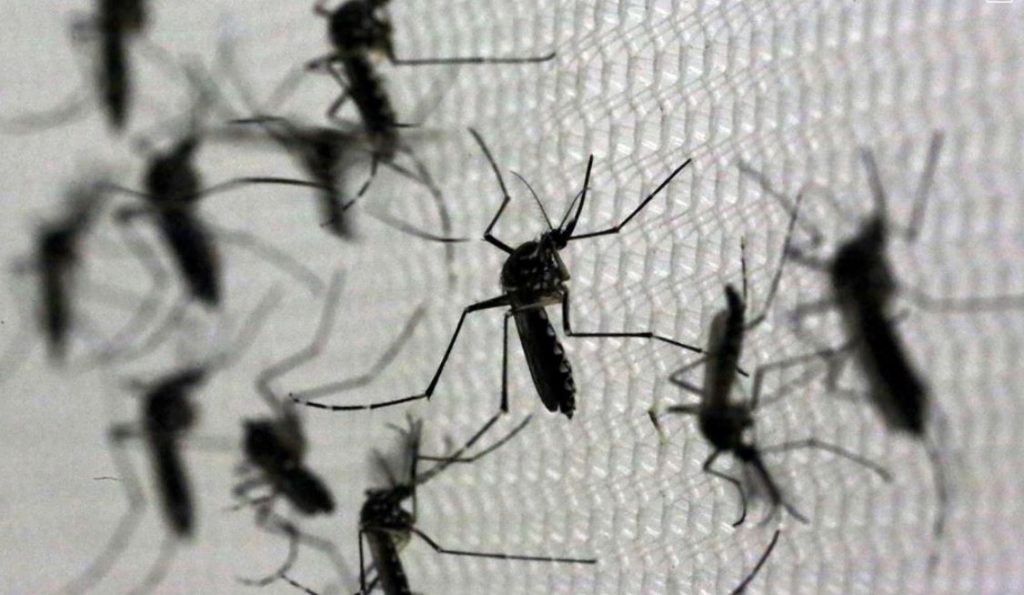 As the weather warms up, few can resist a pleasant late afternoon stroll through the park or a getaway to the countryside.
Summer can be wonderful, but we’re often forced to share these picturesque moments with unwanted companions. Insects like mosquitoes, bees, ticks, spiders, and fleas can turn a perfect day into an irritating—or even worrying—experience.
It’s common to notice a sudden itch or a mysterious swelling when returning home from a summer stroll. But the type of itch, its intensity, and appearance tell us a lot about the type of insect that bit us. These clues can indicate how to relieve symptoms and whether medical attention is necessary.
With the right information and taking appropriate precautions, we can avoid health scares, unnecessary doctor visits, and even more serious complications.
The most common bites
While there are clear similarities between many insect bites, there are also differences. In fact, each type has its own characteristics, specific symptoms, and distinct treatments. Here are some tips to distinguish six of the most common:
- Mosquitoes
Symptoms: redness, slight swelling, and intense itching. Mosquito bites usually go away on their own within three days, without complications.
Recommendations: wash the area with soap and water, apply cold compresses and antihistamines in gel or cream form in case of intense itching.
- Bees and wasps
Symptoms: immediate pain, slight swelling, intense burning sensation. Bees leave their stingers, but wasps do not.
Recommendations: remove the stinger (if necessary), apply ice, take oral antihistamines in case of a localized reaction and be alert for signs of an allergic reaction.
- Ticks
Symptoms: The peculiarity of ticks is that their bite can go unnoticed. The tell-tale sign is that, when they fall off, they leave a small red mark in the shape of a target.
Recommendations: Remove with tweezers, being careful not to twist or crush the insect’s body. Disinfect and monitor for fever or swelling in the following days.
- Fleas
Symptoms: Small, red spots, usually clustered, with intense itching. They usually appear on the ankles, legs, or areas where clothing is tight. The rash can last for several days, and there is a risk of infection if scratched excessively.
Recommendations: Wash the area with soap and water and use topical or oral antihistamines if the itching is intense. Also check pets and household textiles, as they are common sources of these insects.
- Bedbugs
Symptoms: multiple bites grouped together, with intense itching, especially at night.
Recommendations: Wash the affected area and apply antihistamine gel or cream. Inspect the environment and take steps to eliminate bedbugs from the home.
- Spiders
Symptoms: localized pain and redness, sometimes with two small visible dots left by the spider’s fangs.
Recommendations: Wash with soap and water, apply cold. Consult a healthcare professional in case of necrosis, fever, or malaise.
When should you worry?
Typically, any of the bites mentioned are just a mild discomfort that disappears after a few days. However, there are situations where they can trigger more serious health problems.
Here are three of the most serious complications caused by insect bites—and what to do in each case:
Severe allergic reaction (anaphylaxis): difficulty breathing, swelling of the lips and eyelids, dizziness, and loss of consciousness.
➤ Response: call 112 or SNS24. If the victim has an epinephrine pen (epipen), it should be administered immediately.
Infection: progressive redness in the affected area, local heat, pus, and possible fever.
➤ Response: Consult a healthcare professional. Antibiotic treatment may be necessary.
Tick-borne diseases, such as Lyme disease: red, target-shaped rash, fever, and muscle and joint pain, appearing days after the bite.
➤ Response: Contact a healthcare professional.
Which repellents work?
The best way to avoid the consequences of a bite is to prevent it from the start. One of the most effective methods is to use approved repellents containing DEET (diethyltoluamide) or icaridin.
These products are available in pharmacies and supermarkets. The variety can be confusing, but the secret is in the label.
The main ingredients to look for are:
DEET: The most studied and widely used repellent since the 1950s. Very effective against mosquitoes, ticks, and flies. Duration depends on the concentration—for example, 30% DEET provides about 6 hours of protection. Use with caution, as it can irritate the skin or damage synthetic fabrics.
Icaridin: A newer alternative with similar efficacy. A 20% concentration offers protection equivalent to 30% DEET. It has the advantage of being less oily, virtually odourless, gentler on the skin, and safe for fabrics. It lasts between 6 and 8 hours and is recommended for children or people with sensitive skin.
In high-risk areas for diseases such as dengue, malaria, or Zika, both compounds are effective — but the concentration must be adequate (at least 30% DEET or 20% icaridin).
IPMA Hot weather in Mainland Portugal and Madeira starting 24th July
Yellow warnings for hot weather already issued for July 25th
After an early start of the week with temperatures below normal for the time of year on the mainland, temperatures are expected to rise starting on July 24th, and especially from July 25th. Maximum temperatures will be above average for the time of year, contributing to a heat wave at least until July 30th.
In fact, the High pressure system (anticyclone) located southwest of the Azores region is expected to gradually move east/north eastward, intensifying and extending as a ridge toward the Bay of Biscay starting on July 24th, and eventually toward Central Europe from July 25th or 26th.
This, combined with a low pressure region between North Africa and the Iberian Peninsula, will cause hot, dry air masses to flow over mainland Portugal coming from inland Iberian Peninsula (east wind), which will also affect the Madeira archipelago starting on July 26th.
Therefore, a significant rise in air temperatures is expected starting on Thursday, July 24th, with maximum temperatures above 30°C in most of the mainland, reaching 40°C in some areas, particularly inland southern region and the Tejo Valley.
Minimum temperatures are expected to exceed 20°C in some inland areas, particularly in the southern region, the Tejo Valley, and Beira Baixa.
Hot weather warnings issued for this event starting on July 25th.
Furthermore, winds are expected to intensify along the western coastline and in the highlands from July 23rd to July 25th, which will be moderate to strong from the north/northwest, sometimes with gusts.
In the Madeira archipelago, starting on July 26th, maximum temperatures may reach or even exceed 30°C, especially on the southern slopes and in the mountainous regions.
There is still some uncertainty regarding its intensity and duration of this hot weather event. It is advisable to monitor the forecasts and weather warnings that will be issued in the coming days.
This statement will be updated as needed.