
Portugal Safety and Security Report Wednesday 3rd September 2025
Good afternoon. The very tragic earthquake in Afghanistan in the news at present with over 1400 deaths, it is timely reminder that Portugal is also in an earthquake risk zone. It is important therefore that everyone is prepared and knows what action to take should a strong earthquake take place. Thankfully these are rare, but the impact can be high.
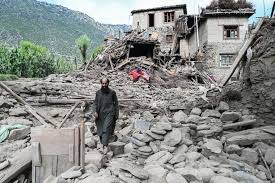 Although a Mag 6 earthquake in Portugal is unlikely to result in the same level of casualties and destruction as in Afghanistan, due to the fact that most modern buildings are built to earthquake standards, there are still many people living in older buildings that do not meet these standards. Also factors such as the timing of the earthquake, its location, and the depth of the earthquake are some of the factors that can determine the level of impact. Generally speaking earthquakes at night can result in higher casualties. It is important therefore to follow the posts we make on our Facebook concerning this topic as well as our website here: https://www.safecommunitiesportugal.com/find-information/environment-and-weather/earthquake-tsunami/
The Council of Europe yesterday reported that the top positions in the Portuguese government and security forces are receiving little scrutiny in terms of corruption prevention measures. The report by the Group of States against Corruption (GRECO) and the Council of Europe acknowledges that Portugal has made progress in adopting measures to prevent corruption, but believes that further action is needed. However as an example of progress is the introductory briefings and training sessions which have been organised for members of the new government, and confidential counselling is now available to all individuals with top executive functions, which is an important milestone. The report also welcomes the launch of an electronic platform for submitting declarations.
In a mid-term review of corruption prevention measures, GRECO concluded that Portugal has partially implemented 18 of the 28 recommendations made in the past by the Council of Europe. GRECO is a body of the Council of Europe that aims to improve its members’ ability to combat corruption. GRECO invites the Portuguese authorities to report on the progress achieved in implementing its recommendations by 30 September 2026.
With pickpocketing incidents rising by 12% in Portugal during 2024 (Portuguese Annual Internal Security Report), understanding effective prevention strategies has never been more critical for personal security. Portugal ranks 6th among European destinations for pickpocketing incidents (58 mentions per million visitors), trailing behind Italy’s staggering 478 per million. This positions us within a continent wide security challenge that demands coordinated prevention efforts (Source: European Pickpocketing Index, 2024). Although Portugal ranks highly in the Global Pace index there are some areas where pickpocketing is more prevalent especially at some tourist attracts particularly in Lisbon. It is wise therefore to take precautions.
Government is to review by the end of the year the structure of Civil Protection following the fires in August. It is felt however, that any changes to the Civil Protection system should only be made after the independent technical commission has produced its findings. There was much criticism among the public and even local authorities regarding the leadership in combating what was the largest fires ever recorded in Portugal. However, 93% of these fires were suppressed within 90 minutes, being the initial tack phase.
Apparently the government is even planning structural changes, but it is felt this should not come before the independent technical commission’s has presented its conclusions. For now, the priority is to analyse what went well and what didn’t during the fires, and if this means that there is a need for a structure change, this should follow in a separate review. Care is needed “not to put the cart before the horse”!
Our team at Safe Communities Portugal wishes you all a safe week ahead
News
Civil Protection wants to reorganize firefighting commands and advocates for additional firefighters
In an interview with Expresso, the president of Civil Protection suggests that it makes no sense for a country with 18 districts to have 29 fire-fighting commands divided into regions and sub-regions.
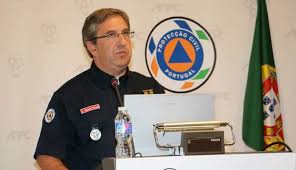 The head of Civil Protection wants to change the organization of firefighting commands. The Secretary of State for Civil Protection promises to make the change, but only after the fire season.
It was one of the most common criticisms heard during the recent fires: having someone outside the district in charge of the fires.
In an interview with Expresso, the president of Civil Protection suggests that it makes no sense for a country with 18 districts to have 29 fire-fighting commands divided into regions and sub-regions, and that he considers the argument that this helps to access community funds to be short-sighted.
José Manuel Moura participated in a meeting with mayors from the interior of the state this Friday morning, alongside the Secretary of State for Civil Protection. He heard the government representative assure him that the proposed amendment will be made by the end of the year.
“This is one of the topics that we will bring to the table after the device is passed, also with contributions from various stakeholders so that by the end of the year the Government can present its idea for amending the organic law,” says Rui Rocha, Secretary of State for Civil Protection.
In an interview with the weekly newspaper, the president of Civil Protection says that Portugal should have a special firefighting force with five times the number of personnel. The Secretary of State says this matter will also be discussed.
The ‘La Niña’ phenomenon could impact the climate again this month
The ‘La Niña’ phenomenon could once again impact climate and weather patterns from September onwards, estimates the World Meteorological Organization (WMO).
By definition, ‘La Niña’ corresponds to the periodic cooling of sea surface temperatures in the Pacific Ocean, associated with changes in tropical atmospheric circulation, including changes in wind, pressure and precipitation patterns.
Despite the temporary cooling influence of ‘La Niña’ from September onwards, temperatures are still expected to be above average across much of the world until November, the WMO estimates in a report released this Tuesday.
According to WMO forecasts, there is a 55% chance that sea surface temperatures in the equatorial Pacific will cool to La Niña levels between September and November.
The probability will be slightly higher, around 60%, if the period between October and December is considered.
According to the WMO, natural climate events like La Niña are occurring “in the broader context of human-induced climate change, which is increasing global temperatures, exacerbating extreme weather, and affecting seasonal precipitation and temperature patterns.”
The World Meteorological Organization notes that the rainfall forecast “resembles conditions typically observed during a moderate La Niña.”