Azores Situation Report Wednesday 2nd November 2022
From our colleague in the Azores
Covid-19
In the seven days from Friday 21st of October until Thursday 27th of October there were 55 new positive cases of Covid-19 registered in the Azores, and a total of 1,482 tests performed. 83 people have recovered, and no new deaths have been recorded with the total at 118. There are 109 active cases, 28 fewer than the previous week.
There are 6 patients in the region’s hospitals as of 28th of October with Covid, three of which are in hospital because of Covid. There are no patients in the ICU.
121198 people in the region have had Covid, that’s over 50% of the population.
Privatization of SATA Internacional foreseen in the 2023 Azores Budget
The privatization of the majority of SATA International’s capital is foreseen in the Azores budget proposal for 2023.
The “divestment of a controlling interest (51%) in Azores Airlines” is foreseen in the restructuring plan for the Azorean airline approved in June by the European Commission.
The Regional Budget for 2023 stipulates that, within the scope of the sale of SATA International, a special committee must be set up to monitor the respective process, which will be extinguished with its expiry, as well as the preparation of a “risk prevention plan”. of corruption”.
Through the legislative decree, the regional government is also “authorized to sell the shareholdings it holds in affiliated entities, with the exception of sectors considered strategic for the Autonomous Region of the Azores and of primary need for the populations”.
Ribeira Quente: 25 years ago, landslides caused the death of 29 people
It is 25 years since one of the geomorphological instability events that caused the highest number of fatalities and substantial material damage in the Azores.
After a particularly rainy month of October, in the early hours of October 31st, 1997, there was an episode of extremely intense rainfall that, together with strong winds from the southeast quadrant, particularly affected the municipalities of Povoação and Nordeste, Island of São Miguel. Throughout the island, numerous slope movements were triggered, most of which were very fluid detrital drains, the most serious of which occurred in the parish of Ribeira Quente, in the municipality of Povoação, causing the death of 29 people, seven injured and 69 displaced.
Several houses and bridges were partially or totally destroyed, basic infrastructure such as electricity, water supply and telecommunications were interrupted or damaged, and fertile land for various uses was covered by mud. Most of the island’s main roads were affected by landslides, and Ribeira Quente was isolated for more than 12 hours, due to its only access being impassable. Losses of around 21 million euros were estimated.
Azores Situation Report Wednesday 26th October 2022
From our colleague in the Azores
Covid-19
In the seven days from Friday 14th of October until Thursday 20th of October there were 111 new positive cases of Covid-19 registered in the Azores, and a total of 1,752 tests performed. 123 people have recovered, and one new death has been recorded with the total at 118. There are 137 active cases, 12 fewer than the previous week.
There are 7 patients in the region’s hospitals as of 21st of October with Covid, two of which are in hospital because of Covid. There are no patients in the ICU.
121143 people in the region have had Covid, that’s over 50% of the population.
There was a lack of electricity in several areas of the island of São Miguel last weekend
According to EDA – Electricidade dos Açores, the lack of electricity supply was due to a technical failure at the Caldeirão Power Station.
Several areas of the island of São Miguel were, at the beginning of this Sunday night, temporarily without electricity supply.
Isabel Barata, from EDA, explains that the lack of electricity was due to a technical problem at the Caldeirão Power Station, which forced 16 lines to be disconnected across the island.
The power supply, interrupted at 7:40 pm, was eventually restored at 8:01 pm. “At 20:01 the lines were all connected, and the line that was disconnected the longest was for 20 minutes”, said Isabel Barata.
The interruption of electricity supply affected areas in Livramento, Porto Formoso, Rabo de Peixe, Capelas and São Vicente, among other locations.
Azores create birth support of 1500 euros in municipalities with population loss
The Government of the Azores will create a birth support program, called “Nascer Mais”, to combat the depopulation of some municipalities in the region, through the attribution of support of 1,500 euros per child.
“The financial support translates into the provision of a ‘plafond’ of 1,500 euros to be used in any pharmacy in the region, for the purchase of a set of products and goods intended to promote the well-being of the child”.
Azores Situation Report Wednesday 12th October 2022
From our colleague in the Azores
Covid-19
In the seven days from Friday 30th of September until Thursday 6th of October there were 165 new positive cases of Covid-19 registered in the Azores, and a total of 1,744 tests performed. 245 people have recovered, and no new deaths have been recorded with the total still at 117 There are 167 active cases, 80 fewer than the previous week.
There are 2 patients in the region’s hospitals as of 7th of October with Covid, only one of which is in hospital because of Covid. There are no patients in the ICU.
120902 people in the region have had Covid, that’s over 50% of the population.
As from Monday the 10th of October it is no longer necessary to self-isolate because of Covid-19 in the Azores Region.
Here is the notice issued by the health authority: –
A circular issued by the Regional Health Directorate extinguishes in the archipelago, as of today, the prophylactic isolation by covid-19.
The circular explains that “regarding the repeal of measures for the prophylactic isolation of positive cases by SARS-COV-2, following the publication of Decree-Law No. validity of published decree-laws, within the scope of the covid-19 disease pandemic, the Regional Health Directorate comes to clarify that, in the Autonomous Region of the Azores, despite the validity of the Government Council Resolution No. On September 1, the prophylactic isolation measures of positive covid-19 cases are considered to apply in the region, as well as in the mainland, so that, as of the present date, there will no longer be prophylactic isolation of cases. positive for SARS-COV-2”.
Covid-19 | People aged 60 and over eligible for seasonal vaccination in the Azores
People aged 60 years and over, professionals and residents of nursing homes, health professionals and adults with pathologies are part of the eligible group for vaccination against covid-19 in the Azores, it was revealed.
In a circular published today by the Regional Government, it is read that people who are part of the eligible groups of the vaccination campaign against covid-19 autumn/winter 2022/23 “must be vaccinated as long as they have completed the primary vaccination schedule” with any one of them. of vaccines against SARS-CoV-2 infection.
Those people will be able to be vaccinated “regardless of the number of boosters performed previously” or whether they have already had covid-19.
The group eligible for seasonal vaccination includes people aged 60 years or over or citizens between the ages of 18 and 59 with “risk pathologies”, such as immunosuppression, diabetes, obesity, mental, cardiovascular, neurological, liver or kidney diseases.
“Professionals and residents in Residential Structures for Elderly People”, in health homes, in the “Regional Network of Integrated Continuing Care (RRCCI)”, in prisons, residential homes or occupational activity centres, are also eligible for seasonal vaccination.
Also, part of that group are health service professionals, students in “clinical internship” and “firefighters involved in transporting patients”.
The Regional Health Directorate says that the “recommended interval between the seasonal booster dose and the most recent event” (infection with covid-19 or the last dose of vaccine) is four to six months, being the “minimum interval” three months.
People who are part of the eligible group but who have an “incomplete primary vaccination schedule” must “take a booster dose”.
Those eligible who do not have the “recommended boosters” against covid-19, “only perform a booster dose” of the coronavirus vaccine.
Also today, an ordinance came into force that extends until December 31st the “validity of medical prescriptions in which flu vaccines are exclusively prescribed, for the 2022/2023 flu season, issued from July 1st, 2022”.
Azores Situation Report Wednesday 5th October 2022
From our colleague in the Azores
Covid-19
In the seven days from Friday 23rd of September until Thursday 29th of September there were 232 new positive cases of Covid-19 registered in the Azores, and a total of 1,856 tests performed. 237 people have recovered, and no new deaths have been recorded with the total still at 117 There are 247 active cases, 5 fewer than the previous week.
There are 6 patients in the region’s hospitals as of 30th of September with Covid, three of which are in hospital because of Covid. There are no patients in the ICU.
120737 people in the region have had Covid, that’s over 50% of the population.
Entrepreneurs worried about “serious insecurity” in the city of Ponta Delgada
Several business associations expressed “deep concern” with the “increase in poverty, begging, alcoholism and drug addiction” in the city centre of Ponta Delgada and will request meetings with regional authorities and the police.
The position was expressed at a meeting that brought together the Chamber of Commerce and Industry of Ponta Delgada (CCIPD), the Regional Association of Tourist Activities Companies of the Azores (AREAT), the Local Accommodation Association (ALA), the Azorean Houses and the delegations the Portuguese Association of Travel and Tourism Agencies (APAVT), the Portuguese Hotel, Restaurant and Similar Association (AHRESP), the Portuguese Hospitality Association (AHP) and the Car Rental Industry Association (ARAC).
In a statement, the Ponta Delgada Chamber of Commerce and Industry said that the business associations had decided to request meetings with the president of the Regional Government, José Manuel Bolieiro, with the mayor of Ponta Delgada, Pedro Nascimento Cabral, and the PSP Regional Command, in view of the “situation of insecurity and begging” in Ponta Delgada.
The businessmen considered that the competent authorities should take “urgent measures”, justifying that “the problems that are being verified” are “different from those that occurred a few years ago”.
“The behaviour and profile of beggars are very different, being more aggressive and closely associated with problems with alcohol and drugs. Faced with this new reality, old policies and measures persist to combat them, the results of which are unacceptable”, warned the businessmen.
According to the associations, the occurrences are mainly in the centre of Ponta Delgada, “but not only”.
There are, they say, “degrading situations carried out by homeless people”, others “alcoholic”, and still “drug addicts, who use public roads and spaces of commercial establishments for actions that jeopardize public health and safety”.
The businessmen also pointed to a “galloping begging” with “very aggressive and insistent behaviour towards local passers-by and visitors”.
In the opinion of businessmen, over the years there has been “an evident lack of accountability, cooperation and interconnection between the various entities that have the competence to combat these situations”.
Faced with the “serious situation we are currently experiencing” in terms of public health, public order, business associations are calling for urgent changes in social policies, because “they are not responding satisfactorily to the increase in poverty, begging, alcoholism and of drug addiction, with a view to helping and giving people greater dignity”.
“It is necessary for the Regional Government to do much more and better in this area”, reads the statement.
Entrepreneurs also ask for a concerted and integrated intervention by the PSP, the City Council and the Regional Government that allows “a joint action plan, in the short and medium term”.
They also ask for day and night policing by the municipal police, in cooperation with the PSP, which must also reinforce “active policing, on the street” and the awareness of judicial entities for law enforcement, which “takes this reality into account”.
Another of the measures proposed by the businessmen is the identification of critical places and a greater police presence in them, the restitution of public space (gardens, streets and squares) to families and tourists, who “have stopped using them, due to insecurity and the annoying constant aggressive begging”.
Eight crew members rescued after fishing boat fire.
Eight crew members were rescued about 555 kilometres from the island of São Miguel, in the Azores, after a fire broke out on the fishing vessel where they were traveling.
Health centres start flu vaccination and Covid reinforcement
Starting Tuesday, the 4th of October, health centres will have an open house for flu vaccination and seasonal Covid-19 reinforcement, but the Island Health Unit advises scheduling an appointment
Flávio Vieira, a nurse at the São Miguel Island Health Unit (USISM) responsible for vaccination, explains that the simultaneous administration of the fourth dose of the Covid-19 vaccine and the flu vaccine was initiated by the most vulnerable groups. vulnerable, namely by users and professionals of residential structures for the elderly (ERPI), but “from the 4th of October we will open the possibility to the rest of the eligible population”.
Each health centre will have, on its premises, a “vaccination centre”, operating during its working hours”, or if necessary during extended hours (decision will be made by each health centre according to needs), explains Flávio Vieira.
Vaccination against influenza and Covid-19 will take place in an open house regime, “but it will be limited to the daily vaccination capacity of each health centre”, since, “in one day, we can have more professionals at the service”. , and in another we may have less”, warns the official.
For this reason, “the population is advised to schedule the vaccination”, emphasizes the official.
.
It is necessary, however, to bear in mind that not everyone can take the fourth dose of the vaccine against Covid-19 – a circular from the Regional Health Directorate defined the groups eligible for the vaccine booster against Covid-19. It should also be noted that, while the fourth vaccine booster against Covid-19 can be taken by those over 60, only those over 65 are entitled to the free flu vaccine, along with pregnant women and people with certain pathologies (chronic and immunosuppressed patients), residents in ERPI and other institutions, and health professionals and other care providers.
Flávio Vieira stresses, however, that taking the flu vaccine is also recommended for those over 60 years of age, and below that age you can also get the flu vaccine, however the user must have a medical prescription and buy the vaccine at the pharmacy, then going to the health centre for administration. The person responsible for vaccination at USISM also leaves an alert for those who are not followed at the health centre and suffer from any of the pathologies in which the flu and Covid-19 vaccine is recommended: in these cases, you must bring a medical statement to certify who suffers from the pathology in question (there is a form available online), because in these cases the health centre’s computer system has not registered their pathology.
It should also be noted that the vaccine booster against Covid-19 can only be done three months after the last dose of the vaccine or a positive status.
USISM expects to receive a total of about 13,000 doses of the flu vaccine, reveals the nurse responsible for vaccination at USISM. The number of doses of the vaccine against Covid-19 has been progressively provided, as the shared services of the Ministry of Health become available. “It is based on the number of doses that we are given that we are establishing priorities and organizing the vaccination process”, emphasizes Flávio Vieira.
The nurse also explains that the Covid-19 vaccine gives immunity against the new variant, and that “this year, we are using two types of vaccines: one, more expensive, with a high dose specifically for home users and institutionalized elderly; and another vaccine for the general population”. Flávio Vieira says that the objective is to guarantee “greater immunity to a population group that in itself is more vulnerable, either individually or because it can be a focus of infection for other residents”.
Who can take the fourth dose of the Covid-19 vaccine?
People over 60 can be vaccinated, as well as health professionals, firefighters who transport patients, professionals from Residential Structures for the Elderly, Health Homes, Regional Network of Integrated Continuing Care, Prisons, Residential Homes, and Occupational Activities Centres. And even those over 12 and under 60 have certain risk pathologies, including diabetes, obesity, active malignancy, cardiovascular disease, transplantation, immunosuppression, neurological diseases, chronic kidney disease, chronic lung disease, mental illness, and chronic liver disease (between 18 and 59 years old).

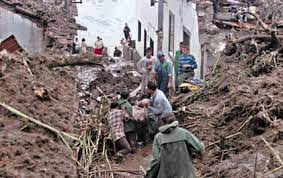 After a particularly rainy month of October, in the early hours of October 31st, 1997, there was an episode of extremely intense rainfall that, together with strong winds from the southeast quadrant, particularly affected the municipalities of Povoação and Nordeste, Island of São Miguel. Throughout the island, numerous slope movements were triggered, most of which were very fluid detrital drains, the most serious of which occurred in the parish of Ribeira Quente, in the municipality of Povoação, causing the death of 29 people, seven injured and 69 displaced.
 Isabel Barata, from EDA, explains that the lack of electricity was due to a technical problem at the Caldeirão Power Station, which forced 16 lines to be disconnected across the island.
 They also ask for day and night policing by the municipal police, in cooperation with the PSP, which must also reinforce “active policing, on the street” and the awareness of judicial entities for law enforcement, which “takes this reality into account”.