
Azores Situation Report Wednesday 3rd September 2025

Woman dies near Santo António fishing port

A 44-year-old woman died near the fishing port of Santo António, on the north coast of the municipality of Ponta Delgada, the National Maritime Authority reported.

The causes of the incident are currently unknown, according to a press release from the National Maritime Authority.

According to the statement, the Ponta Delgada Maritime Search and Rescue Coordination Centre (MRCC Delgada) received an alert at 4:39 p.m., immediately activating the crew of the Ponta Delgada Lifeguard Station, as well as members of the Ponta Delgada Maritime Police Local Command and the Ribeira Grande and Ponta Delgada Volunteer Fire Departments.

“Upon arrival at the scene, it was found that the victim, who was lying face down in the water, had been promptly removed by the Ribeira Grande Volunteer Fire Department. The Lifeguard Station crew subsequently transported her to the port of Ponta Delgada, where the Health Officer issued a death certificate,” the statement from the National Maritime Authority adds.

The Ponta Delgada Fire Department subsequently transported the body to the Divino Espírito Santo Hospital, after contacting the Public Prosecutor’s Office.

Hydrographic plans prohibit swimming in lagoons

Watershed management plans for the lakes on São Miguel Island—including Sete Cidades, the site of two deaths in the space of 12 days—expressly prohibit bathing. The Regional Secretariat for the Environment and Climate Change has placed several signs on the banks of the lakes warning of this prohibition. The Parish Council President appeals to the public for common sense and responsibility.

Two schools in the Azores with bilingual education

For the first time, in the 2025/26 academic year, two Azorean schools will begin teaching in Portuguese and English.

The new school year in the Azores brings with it a set of pedagogical innovations that mark a turning point in the regional education system.

According to Sofia Ribeiro, Regional Secretary for Education, Culture, and Sports, during the public presentation of the school year’s preparations, two Azorean schools—EB1 Praia da Vitória, on Terceira Island, and Escola Básica e Secundária de Velas, in São Jorge—will implement bilingual instruction in Portuguese and English for the first time. The project begins with three first-grade classes and aims to expose students to early exposure to English, integrating it naturally into their daily school life.

Another new development this year is the expansion of the Computational Thinking project, which now extends to the 4th grade of primary school. This measure means that all initial primary education, from 1st to 4th grade, will now be covered by this approach, which focuses on developing logic, programming, and problem-solving skills.

Also in the digital realm, the dematerialization of school textbooks takes a decisive step this year: all students from 5th to 12th grade will have access to digital textbooks, progressively replacing paper textbooks.
 

Azores Situation Report Wednesday 27th August 2025

25% more nursing consultations in the ICU

In 2024, the region’s nine Ilha Health Units (USI) performed more than 660,000 nursing consultations, a 25% increase compared to the previous year. Medical consultations saw a slight decrease.

Transinsular with new ship and weekly flight to the Azores from September

Shipping operator Transinsular will launch a new service and increase maritime transport capacity to the Azores, with a new vessel and weekly frequency starting in September.

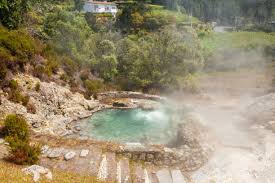
Azores thermal spas sought by 150,000 people in 2024

In 2024, Azorean thermal spas welcomed around 150,000 national and international users, demonstrating the “extraordinary success” of thermalism in the archipelago, according to the Azores Thermal Spa Association.

In the Autonomous Region of the Azores, 50 thermal phenomena have been identified, and there are eight active spas.

The association’s president, Luísa Pereira said that last year, “mainland spas registered around 80,000 users,” and in the Azores, around 150,000 were registered, demonstrating “the extraordinary success of thermalism” in the archipelago.

“In my opinion, this success is due to simple balneotherapy, which is the phenomenon well known as the Dona Beija phenomenon, the Caldeira Velha Park, or the Terra Nostra [Park],” in the municipalities of Povoação and Ribeira Grande, on the island of São Miguel, she explained.

Balneotherapy “consists of frequenting or using thermal water outdoors, in a pool or complex,” most of which are thermal tanks.

“And this value is truly what makes thermal spas in the Azores a true success,” resulting in the archipelago’s user numbers far exceeding those on mainland Portugal.

Luísa Pereira added that in the Azores, although thermal waters “are empirically recognized for their health benefits,” this completely different practice exists, which is already being replicated in thermal spas on mainland Portugal, demonstrating the practice’s success.

The president of the Azores Thermal Association emphasized that data on the use of thermal spas in 2025 collected so far could “surpass last year,” without providing specific figures.

Regarding the origin of visitors to Azorean thermal spas, they come from “various source markets.”

She added that “a large portion” of users are local residents, while the remainder are visitors from various countries, although there are times when more people from the United States and Canada visit, “due to Azorean emigration.”

“Our diaspora, whenever they come to the Azores, frequent the spas […] and then we have all our source markets. [At] certain times, we have the German market, we also have our Portuguese coming from the mainland, and so there’s a panoply, so to speak, of different cultures and different people.”

The director noted that there are also times when visitors are more French and English, “because thermalism is a global phenomenon, although it is more implicit in the culture of some countries.”

In Portugal, there is “a very vast and significant thermal culture,” she concluded.

According to the president of the Azores Thermal Association, 50 thermal phenomena have been identified in the region (on the islands of São Miguel, Terceira, Faial, Flores, and Graciosa), and there are eight active thermal resorts, three of which are spas (two on São Miguel and one on Graciosa).

There are still two inactive thermal spas: one on the island of Faial (Termas do Varadouro) and another in the municipality of Ribeira Grande (Termas da Ladeira da Velha).

São Miguel has thermal spas in the municipality of Ribeira Grande (Caldeiras and Caldeira Velha), Ponta Delgada (Ferraria, in the town of Ginetes), and in the municipality of Povoação, parish of Furnas (hotel, Terra Nostra Park, Poça da Dona Beija, and the Poça da Dona Silvina foot-washing phenomenon).

On Graciosa, in the municipality of Santa Cruz da Graciosa, the Carapacho spa is active (it reopened in late July).

A thermal spring has also been identified on the island of Flores, while on Terceira Island, with several recognized sites, the thermal spring is being used to produce geothermal energy.


Azores Situation Report Wednesday 20th August 2025

Construction work has begun on the drone track on Faial Island.

Construction work began this week on a drone runway on the island of Faial in the Azores, which the Regional Government intends to use for test flights by companies involved in innovative technologies.

“This is another step we’re taking today toward completing the drone track, which will support the Maritime Cluster we’re building,” emphasized Mário Rui Pinho, Regional Secretary for Maritime Affairs and Fisheries, speaking to reporters after a visit to the facility, which will cost approximately €300,000.

The Faial drone track, which will be 300 meters long and 20 meters wide, is being built on land donated by the Horta City Council, which was used as the island’s landfill in recent decades. This land will now be enhanced by an investment integrated into a broader plan.

“The research vessel is expected to arrive in Horta in December, the Tecnopolo-Martec (marine science research centre) should be ready in June, the coastal station is under development, and we’re working on implementing the Technological Free Zone,” explained the minister, referring to the investments the government is making to flesh out the Azores Maritime Cluster.

The Free Technological Zone (ZLT) is a space covering over 150 square kilometres, located north of Faial, which is intended to be used for all types of robotic equipment testing, both in the air and at sea, and which can be exploited not only by companies but also by the Portuguese Navy and Air Force.

This was emphasized in September 2023 by the then Chief of the Navy General Staff, Gouveia e Melo, during a visit to the land where the Faial drone runway is now being built.

“This runway and its significance, and what it can contribute, is a digital economy, focused on the sea, in which the product is not the value of the materials themselves, but the value of the knowledge associated with these materials,” the admiral explained at the time during a visit to the Azores, emphasizing that the infrastructure could have civilian, military, and, above all, scientific uses.

The new drone runway currently under construction in Faial will be managed by the Azores Maritime Development Association (ADAFMA), which also manages the Azores Maritime School. The school has received interest from companies and consortia interested in conducting test flights.

“There aren’t many runways like these available for testing, given the atmospheric variability we have here. Climate variability, surprisingly, is a very positive aspect, because it allows for very accurate proof-of-concept tests very quickly,” explained Ana Rodrigues, director of the Azores Maritime School.

Earthworks on the drone runway are expected to be completed within approximately a month, followed by a drone testing phase before final paving.

One dead and two injured in accident between two motorcycles in São Miguel

A collision between two motorcycles in the village of Água de Pau, in the municipality of Lagoa, left one fatality and two injured on Sunday, according to a firefighter source.

The fatal victim, a man whose death was confirmed at the scene, was the driver of one of the motorcycles involved in the accident, the commander of the Vila Franca do Campo Volunteer Fire Department, Tiago Santos, told Lusa news agency.

The injured, a man and a woman, were transported by firefighters to the emergency room at the Hospital do Divino Espírito Santo, in Ponta Delgada, he added.

The accident occurred on the expressway, in the direction of Ponta Delgada – Lagoa, at the exit that gives access to Pisão.

The alert for the occurrence was given to the firefighters at 10:16 am.

The circumstances in which the accident occurred are being investigated by the police authorities.

“I was told that the two motorcycles were traveling in the same direction. Something happened, and they collided, and then both ended up skidding off the road,” said the commander of the Vila Franca do Campo Volunteer Fire Department.

Members of the Volunteer Fire Department of Vila Franca do Campo and Ponta Delgada, as well as the PSP, were present at the scene.


Azores Situation Report Wednesday 13th August 2025 

The Azores managed to recover 76% of their urban waste

Around two-thirds (76%) of the waste generated in the Azores was recycled in 2024, a “very significant advance” compared to previous years, according to the regional secretary for the Environment.

According to data provided by Alonso Miguel, who was speaking at the presentation of the 2024 report on urban waste in Ponta Delgada, there were “improvements in packaging management and collection, with a rate of 83.5 kilograms per inhabitant in 2024,” a 4.8% increase compared to 2023.

The Minister of Environment and Climate Action highlighted two factors that he considered “very differentiating and prestigious for the region,” namely the rate of waste preparation for reuse and recycling, which reached 48% in 2024, 33% more than in 2023.

At the national level, he added, the rate of waste preparation for reuse and recycling was 23%, compared to 48% in the Azores.

Alonso Miguel also said that, in 2020, the rate “was only 31.2%, which represents a 54% increase” and leaves the region “very close to achieving the EU targets for 2025.”

According to the minister, one of the determining factors for this growth was the commissioning of the mechanical and biological treatment plant on the island of São Miguel.

“It has even been possible to achieve the EU target set for 2025, which was 55%, since São Miguel achieved a rate of 56%,” he stated.

Another “relevant statistic” highlighted by the regional secretary concerns the diversion of landfill waste, which in the Azores “reached a very significant 45% in 2020, reaching 24% this year.”

These results, he emphasized, demonstrate that the Azores are “on a very solid path to achieving the EU target for landfill waste disposal by 2035, which is 10%.

However, the Environment Minister also highlighted “less positive data that warrant additional efforts, particularly regarding waste management on Terceira Island, where the rate of preparation for reuse and recycling remains stagnant, with a slight reduction to 19%.

Communications traffic at MEO Monte Verde equal to 13 years of calls

The festival, which brought together around 40,000 people on Monte Verde beach, in Ribeira Grande, was also the first in the Azores to have sign language interpreters.

The MEO Monte Verde 2025 festival recorded communications traffic equivalent to more than 13 years of calls, MEO revealed in a press release.

Last weekend, around 40,000 people gathered on Monte Verde beach, in Ribeira Grande, for three days of music, sharing and innovation.

And as stated in a press release, for the first time in the Azores, a festival featured Portuguese Sign Language interpreters, ensuring that the music could be felt by everyone, complementing the mobility solutions already available at the venue and ensuring that everyone could fully enjoy the festival experience.

This initiative, part of the MEO Foundation’s “Music with Meaning” project, reinforced the event’s commitment to cultural accessibility and social inclusion, in a festival that also included the strengthening of technological infrastructure, ensuring that thousands of festivalgoers could share moments and stay connected quickly and safely.

Santa Clara makes its home debut on August 17th

The Portuguese Professional Football League (LPFP) released, last Friday, the schedule for the second round of the I Liga, where the “encarnados” from Ponta Delgada will play the first match at home, on August 17, against Moreirense.

The duel between the Azoreans and the “canons” is scheduled to start at 5 pm and will be played three days after Santa Clara plays the second leg of the third qualifying round of the Conference League, against Northern Ireland’s Larne.

The second round of the main Portuguese football competition starts next Friday (August 15), with AFS hosting Casa Pia, at 2:30 pm.

Three more matches follow on Saturday, with the clash between Tondela and Famalicão (2:30 pm), Vitória de Guimarães – Estoril (5:00 pm) and also Benfica’s visit to Estrela da Amadora’s home (7:30 pm), with the duel between the “tricolores” and “águias” being subject to changes, depending on the qualification of the “encarnados” for the Champions League play-off.

On Sunday, in addition to Santa Clara-Moreirense, there are three more matches to highlight, with Rio Ave hosting Nacional (2:30 pm), the duel between Alverca and Sporting de Braga (5:00 pm) and Sporting debuting, at 7:30 pm, the “renovated” Estádio José Alvalade, against Arouca, with the round concluding on Monday, from 7:15 pm, with FC Porto’s visit to Gil Vicente’s stronghold.