
The Overseas Report 19 November 2021 by Mike Evans
 As the COP26 conference finished in Scotland last week amid calls for countries to do more to combat climate change the pandemic has thrown up another issue which is having an effect on almost everyone’s daily lives. The Subject is Rubbish, Garbage or Trash depending where you come from. In this report we are looking at some of the issues that have come about due to the Covid 19 pandemic and what many countries are doing about it.The River Thames, the tidal artery that squiggles through central London, holds up a mirror to life on dry land: scraggly remains of fir trees float by after Christmas; in the first days of a fresh year, bobbing Champagne bottles hint at recent revelry.
Lara Maiklem, author of “Mudlark: In Search of London’s Past Along the River Thames,” scours the shoreline for artifacts such as coins, tokens, buckles and potsherds, some dating to the period of Roman rule. Loosed from pockets or heaped as infill, these are the flotsam of centuries lived on London’s streets. “I find stuff because humans are litterbugs,” Maiklem said. “We’ve always been chucking things into the river.”
But lately Maiklem is encountering a type of garbage she hadn’t seen there before: the remnants of COVID 19-era personal protective equipment (or PPE), particularly masks and plastic gloves bloated with sand and resting in the rubbly silt. Maiklem once counted around 20 gloves while canvassing 100 yards of shoreline. She wasn’t surprised; if anything, she had feared the shore would be even more inundated with pieces that had flown from pockets or trash cans or swirled into the Victorian sewers. Happily, Maiklem said, the carpet of COVID-inspired trash at the edge of the Thames wasn’t nearly as plush as it is elsewhere.
 PPE litter is fouling landscapes across the globe. Dirtied masks and gloves tumbleweed across city parks, streets and shores in Lima, Peru; Toronto; Hong Kong and beyond. Researchers in Nanjing, China, and La Jolla, California, recently calculated that 193 countries have generated more than 8 million tons of pandemic-related plastic waste, and the advocacy group OceansAsia estimated that as many as 1.5 billion face masks could wind up in the marine environment in a single year.
Since January, volunteers with the Ocean Conservancy’s International Coastal Cleanup have plucked 109,507 pieces of PPE from the world’s watery margins. Now, across the litter-strewn planet, scientists, officials, companies and environmentalists are attempting to tally and repurpose PPE — and limit the trash in the first place.
Todd Clardy, a marine scientist in Los Angeles, sometimes counts the PPE he sees on the 10-minute walk from his apartment in Koreatown to the Metro station. One day this month, he said, he spotted “24 discarded masks, two rubber gloves and loads of hand sanitation towels.” Sometimes he sees them atop grates that read, “No Dumping, Drains to Ocean.” Clardy suspects some masks simply slip from wrists. “Once it falls on the ground, people probably look at it like, ‘Huh, I’m not wearing that again.’ ” Breezes likely free some from trash cans, too. “The bins are always full,” Clardy added. “So even if you wanted to put it on top, it would fly away.”
Clardy’s accounting isn’t part of a formal project, but there are several such undertakings underway. In the Netherlands, Liselotte Rambonnet, a biologist at Leiden University, and Auke-Florian Hiemstra, a biologist at Naturalis Biodiversity Center, keep a running count of masks and gloves littering streets and canals. They track animals’ interactions with the castoff gear. Among their documented examples are an unfortunate perch trapped in the thumb of a phlegmy-looking latex glove, and birds weaving PPE into nesting materials, risking entanglement. “Nowadays it would be difficult to find a coot nest in the canals of Amsterdam without a face mask,” Rambonnet and Hiemstra wrote in an email.
The researchers maintain a global website, Covidlitter.com, where anyone can report animal and PPE incidents. Dispatches include sightings of a brown fur seal tangled in a face mask in Namibia; a mask-snarled puffin found dead on an Irish beach; and a sea turtle in Australia with a mask in its stomach. Back home, the researchers, who also lead canal cleanups in Leiden, worry PPE trash will increase now that the Dutch government has reinstated mask requirements. Every weekend we encounter face masks — new ones and old, discolored ones,” Rambonnet and Hiemstra wrote. “Some are barely recognizable, and blend in with autumn leaves.”
Cleanup efforts are also underway in London, where staff members and volunteers with the environmental group Thames21 count and collect trash from the river’s banks. In September, the group closely surveyed more than 1 kilometer of shore and found PPE at 70% of their study sites — and notably clustered along a portion of the Isle of Dogs, where 30 pieces picked a 100-meter stretch. “I don’t remember seeing any face masks until the pandemic; they weren’t on our radar,” said Debbie Leach, the group’s CEO, who has been involved since 2005. Leach’s team sends the PPE to incinerators or landfills, but small bits are surely left behind because the trash “releases plastics into the water that can’t be retrieved,” she said.
Researchers in Canada recently estimated that a single surgical-style mask on a sandy shoreline could unleash more than 16 million microplastics, far too small to collect and haul away. Roaming sandy swaths along Chile’s coast, Martin Thiel, a marine biologist at the Universidad Católica del Norte in Coquimbo, saw plenty of signs asking visitors to mask up — but few instructions about ditching used coverings. To his frustration, masks were scattered, swollen with sand and water and tangled in algae. “They act a little like Velcro,” he said. “They very quickly accumulate stuff.”
But a few beaches, including one in Coquimbo, had trash cans designated specifically for PPE. Unlike oil-drum-style alternatives nearby, some had triangular tops with tiny, circular openings that would deter rummaging and prevent wind from tousling the garbage.
In a paper published in Science of the Total Environment this year, Thiel and 11 collaborators recommended that communities install more purpose-built receptacles like these, as well as signs reminding people to consider the landscape and their neighbors, human and otherwise. “We think there is more to the story than, ‘just protect yourself,’ ” said Thiel, the paper’s lead author. Houston has already started. In September 2020, the city launched an anti-litter campaign partly aimed at PPE. Featuring images such as a filthy mask on grass, the posters read “Don’t Let Houston Go to Waste” and encouraged residents to “Do the PPE123,” choreography that entailed social distancing, wearing masks and throwing them away.
Early in the pandemic, “we weren’t sure if (PPE) was a safety concern and would spread COVID around the city,” said Martha Castex-Tatum, the city’s vice mayor pro tem, who spearheaded the initiative. As a clearer picture of transmission emerged, the effort “became a beautification project,” she said. The images were plastered on billboards, sports stadium jumbotrons and trash-collection trucks. Council members handed out 3,200 trash grabber tools and urged residents to use them.
As the pandemic bloomed across South Africa, shoppers grabbed fistfuls of wet wipes as they entered stores, draping the cloths over shopping cart handles while roaming aisles, said Annette Devenish, marketing manager at Sani-touch, a brand that supplies many national Shoprite Group supermarkets with wipes for customer use. Sani-touch found that usage soared 500% early on and has fallen, but still hovers above pre-pandemic figures.
Environmentalists often rail on wet wipes, many of which snarl sewer systems when they are flushed down drains and degrade into microplastics that drift through food webs. (Thames21, for instance, is backing newly proposed legislation that would ban all wipes containing plastic.)
Devenish said that manufacturers ought to focus on making them recyclable or compostable, and this fall Sani-touch launched a project to give used wipes a second life. Customers can drop off cloths before leaving the store; recycling companies will turn the polypropylene cloths into plastic pallets for use in Sani-touch’s manufacturing facilities. Fashioned from many materials, including metal and elastic, single-use masks can be harder to recycle, Devenish said, but she hopes they can be stuffed into plastic bottles to become “ecobricks,” low-cost building blocks of benches, tables, trash bins and more.
 PPE recycling schemes are also advancing elsewhere. In the Indian city of Pune, the CSIR-National Chemical Laboratory is teaming up with a biomedical waste facility and private companies to pilot ways to transform head-to-toe protective wear into plastic pellets used to manufacture other goods. (None are yet being made and sold, “but hopefully soon,” wrote Harshawardhan V. Pol, a principal scientist, in an email.)
In fall 2020, the Canadian government asked companies to pitch ideas for recycling PPE or making it compostable. The government may funnel up to $1 million each toward a few prototypes. Preventing PPE from polluting urban environments will be a boon to the spaces where residents have sought solace. “In stressful times, people seek out these places, but they’ve been pretty bad about taking rubbish and trash away with them,” said Leach of Thames21. “Masks blow hither and thither,” she added, “and finally come to rest when they hit a patch of water,” grass or sidewalk, where they too often remain.
It’s obvious that a lot is being done but as the covid 19 pandemic continues the world will need new ideas to combat the sheer amount of PPE which we all are using to stay as safe as possible.
Until the next time, Stay Safe but remember to pick up your trash!
 It is the first time the rate has surpassed 300 since the pandemic began and comes just one week after an unprecedented jump to over 200.
 Meanwhile their close neighbour Austria has imposed a lockdown on non vaccinated citizens.Anyone over the age of 12 who has not been double-jabbed is now only allowed to leave their homes for work, school, exercise and buying essential supplies – with the lockdown affecting about two million of Austria’s 8.9 million population. The revised restrictions came into force on Sunday at midnight and will remain for 10 days before being reviewed.
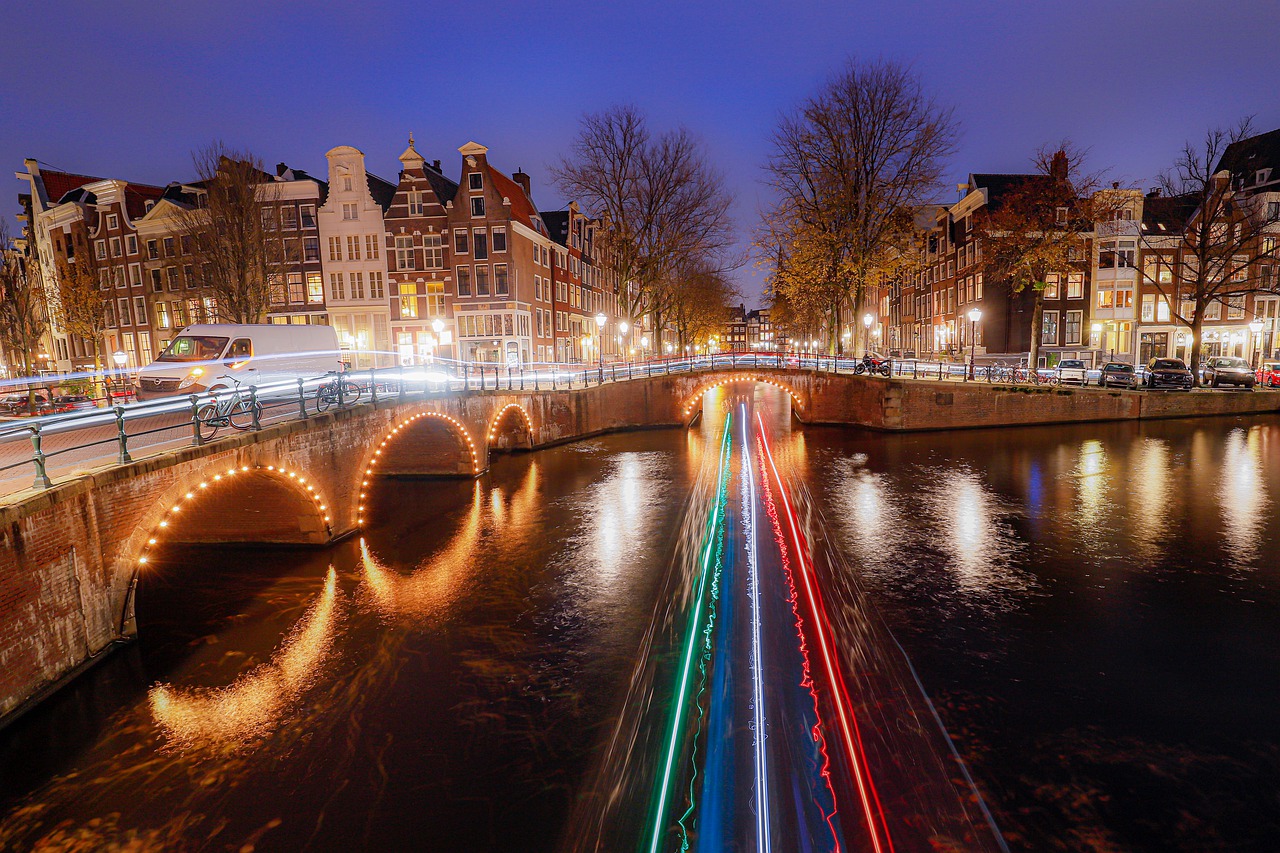 Gatherings at home would be limited to a maximum of four guests, all amateur and professional sporting events must be held behind closed doors, and home working was advised except in “absolutely unavoidable” circumstances, Rutte said.“We must reduce the number of contacts and infections as fast as possible,” Rutte said, calling the measures “unavoidable”. The healthcare system was already under such heavy pressure that knee, hip and even heart operations were being postponed.
 Meanwhile across the Atlantic Ocean to South America where the rate of infection had been falling after the region was one of the worst hit at the start of the pandemic. Cases have been rising steadily in the past week with a 13% increase in infections recorded across the continent. Brazil saw an increase of 11% in new cases in the past week and there were also big increases from Chile, Columbia and Peru, although it must be noted that the actual numbers are by far smaller than we saw at the start of the pandemic for these three nations.
 Yesterday the USA finally opened their borders for Europeans and other countries citizens to travel to the US as long as they are fully vaccinated. The order signed by President Biden says, “Vaccination requirements are essential to advance the safe resumption of international travel to the United States,” the order says. “These policies aim to limit the risk that Covid-19, including variants of the virus that causes Covid-19, is introduced, transmitted and spread into and throughout the United States.”
 Coronavirus infections in the Netherlands have been rising for a month after most social distancing measures were scrapped in late September, and reached their highest level since July in the past week. This has forced many hospitals to cut back on regular care again, to make room for urgent COVID-19 cases.
 In the UK where they are finally seeing a drop in new cases, new research has shown that unvaccinated people are 32 times more likely to die from coronavirus than those who have been double-jabbed, according to the figures from the Office for National Statistics.
 In the USA, There is a lot of resistance against the Vaccine mandate brought in by President Biden in September. In the mandate, it compelled public and private employees to get the coronavirus vaccine, requiring the majority of federal workers and contractors to be fully vaccinated against the coronavirus by Dec. 8, having completed either a one or two-dose vaccine regiment at least two weeks before the deadline. The requirements also direct the Labor Department to compel private sector companies with more than 100 employees to ensure workers get vaccinated or face weekly testing before going to work, which would affect around 80 million employees.
 Texas Gov. Greg Abbott called the requirement an “assault on private businesses,” while Nebraska Gov. Pete Ricketts called it a “stunning violation of personal freedom and abuse of the federal government’s power.” South Dakota Gov. Kristi Noem tweeted that her state will “stand up to defend freedom,” telling Biden, “see you in court.” And Republican National Committee Chairwoman Ronna McDaniel said the group will sue the Biden administration “to protect Americans and their liberties.” But more employees are in favor of vaccine mandates than opposed. According to a recent Gallup poll, 56% of employees would support their employer imposing a vaccine mandate in the workplace, up from 46% in May.