
Safe Communities Portugal Safety and Security Report 1st July 2026
Good morning everyone. We start with the increasing air temperatures and consequential increasing fire danger over the next days. The hot weather affecting Portugal will give rise to a heat wave that will last for eight to ten days and will affect practically the entire country, the Portuguese Institute of the Sea and the Atmosphere (IPMA) estimated this Tuesday.
Consequently the interior of Portugal could face one of the most dangerous fire periods of the summer in this period.
IPMA Forecasts indicate temperatures above 40ºC in several regions of the country, moderate to strong easterly winds, and a sharp drop in relative humidity in some areas as low as 11%, conditions that favour the rapid spread of fires.
The main concern regarding the current heat wave is not the possibility of breaking historical temperature records, but rather its “duration and persistence” of high maximum temperature values, explains meteorologist Patrícia Marques from the Portuguese Institute of the Sea and the Atmosphere ( IPMA ).
From Friday onwards, the entire country should be under an orange warning due to the heat, but IPMA (Portuguese Institute of the Sea and the Atmosphere) admits the possibility of the warning worsening to red in some districts due to the persistence of high temperatures, with an “extremely long heat wave”.
Given this scenario, a government source admits to considering declaring a situation of alert, as the country enters Phase Delta of the Special Device for Combating Rural Fires this Wednesday, the period in which the greatest fire danger.
Given the seriousness of the situation, the Ministry of Health has called a press conference today to detail the plan to respond to heat waves. The meeting will be headed by the Secretary of State for Health, Ana Povo, accompanied by officials from the DGS (Directorate-General of Health), DE-SNS (National Health Service Directorate), INSA (National Institute of Health), SPMS (Shared Services of the Ministry of Health) and INEM (National Institute of Medical Emergency).
The high temperatures are a result combined action between an anticyclone located northwest of the Iberian Peninsula and a depression in North Africa, which channel a mass of extremely hot and dry air over the continent.
With the start of this period, the year 2026 solidifies a worrying trend. IPMA confirmed that the country has already accumulated 59 days of heat waves since January, highlighting the waves in March (14 days) and those recorded consecutively in April, May and June (all with a maximum duration of 13 days). This compares with 80 days recorded in 2023 and data indicating 74 days in 2024. However, the impact is most felt during the summer period.
Delta phase of the DECIR wildfire readiness, comes into effect from today until 30th September with 15,149 operatives, 3463 vehicles from various civil protection agencies and 81 aircraft ready for deployment.
It is not only Portugal that has been affected by the heat. The heat wave affecting much of Europe has already caused more than 1,300 deaths since June 21, according to the World Health Organization (WHO), while several countries in Central and Eastern Europe are facing record temperatures.
Our team at Safe Communities Portugal wishes you a safe week ahead and take care in the heat.
News
Venezuela Earthquakes update
The latest death toll was released yesterday. National Assembly President Jorge Ramírez – the acting president’s brother – announced that at least 1,943 had died, an increase of about 200 from the day before, 68 of whom are Portuguese and of Portuguese descent. But the overall casualty figure is believed to be much larger. The US Geological Survey estimates there is a high likelihood that tens of thousands are dead. The United Nations’ Resident and Humanitarian Coordinator in Venezuela Gianluca Rampolla said Monday that the Venezuelan government and the UN are procuring 10,000 body bags in anticipation of more deaths.
The massive tremors probably damaged or destroyed 58,870 buildings, according to an initial assessment of satellite data from NASA.
Amongst all this devastation a three-year-old boy has been pulled alive from the rubble six days after the devastating earthquakes in Venezuela, a Jordanian rescue team has said. The rescue comes well after the initial three-day period immediately after the quake during which experts say people trapped under debris, in areas where this air have the best chance of being found alive.
On Monday, June 29th, the Portuguese Joint Operational Force (FOCON) located a survivor under the rubble of a shopping mall in Catia La Mar, in the state of La Guaira. Special equipment that detects heartbeats made it possible to identify the exact location of the person in the rubble. FOCON period of deployment is for 10 days for search and rescue operations, but could be extended if the situation so demands.
“Beginning of a new phase”: global sea surface temperature hits record highs.
“Current conditions may indicate the beginning of a new phase that will once again lead us into uncharted territory,” warns C3S director Carlo Buontempo. With ocean temperatures at high levels and the El Niño phenomenon on the horizon, new records could be broken.
Global sea surface temperatures (SSTs) have already surpassed record levels for this time of year, reached in 2023 and 2024, according to the latest data from the European Copernicus program, it was announced this Wednesday.
The European Centre for Medium-Range Weather Forecasts indicated in a statement that daily SST data recorded by the Copernicus Climate Change Service (C3S) exceeded 2024 levels on June 21, reaching 20.86°C, slightly above the 20.83°C observed in 2023 and 2024.
On the other hand, the Copernicus Marine Surveillance Service (CMEMS) also recorded record temperatures on June 21, when they reached 21ºC, exceeding the previous records of 2023 and 2024 by 0.1ºC.
“Current conditions may indicate the beginning of a new phase that will lead us, once again, into uncharted territory,” warned C3S director Carlo Buontempo.
Buontempo also mentioned that, with ocean temperatures at these levels and the El Niño phenomenon on the horizon, “it is likely that we will witness record-breaking temperatures in the coming months.”
In this regard, the director of C3S stated that the data provided by Copernicus “support policies aimed at protecting the marine environment,” although it remains to be seen whether this excess is “temporary or indicative” of conditions in the coming months.
Over the past three years, the global extrapolar ocean – which includes the marine waters between 60° south latitude and 60° north latitude – has recorded temperatures between 0.35°C and 0.73°C above the long-term average, and in June these anomalies reached record levels for this time of year.
This “unprecedented” level of warming reflects both climate change and an El Niño phenomenon whose intensity “will likely reach levels not seen in decades.”
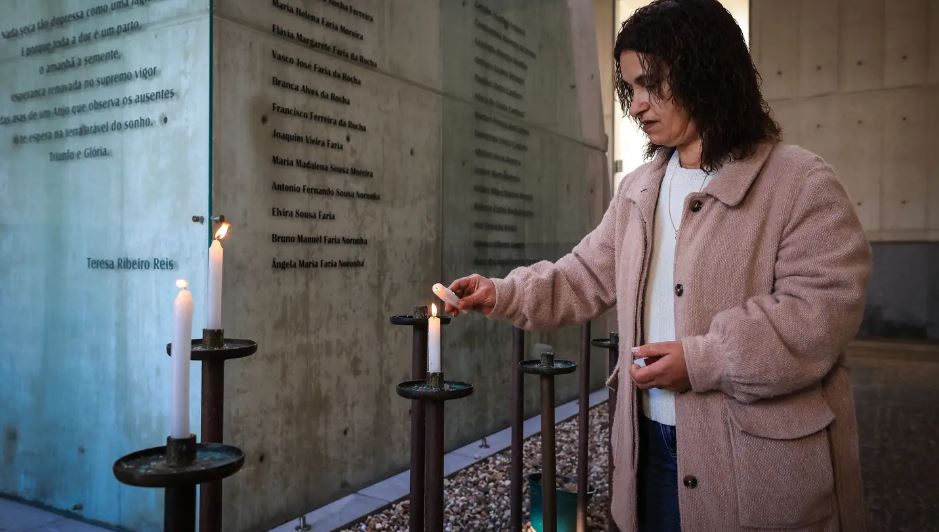 Sandra Torres, a lecturer at the Faculty of Psychology and Educational Sciences at the University of Porto, reflects on the difficulties of the grieving process in tragedies such as the collapse of the Entre-os-Rios Bridge in which the bodies of 36 victims were never found.