
Portugal Safety and Security Report Wednesday 26th November 2025
We start our weekly report with two disturbing developments. The first of these involves the arrest of 11 volunteer firefighters from the Fundão Volunteer Firefighters Humanitarian Association who are suspected of having committed “two rape crimes and one sexual coercion,” the Judicial Police revealed on Tuesday. The victim is a 19-year-old firefighter subjected to an initiation ritual involving “violent sexual acts.” In a statement, the PJ (Judicial Police) states that the crimes were committed at two different times, inside the barracks in Fundão and Soalheira. The suspects include individuals with responsibilities in the corporation’s hierarchy, including a chief and a deputy chief. Among the evidence gathered are images from CCTV cameras and videos made during the initiation ritual, showing the alleged crimes being committed by the firefighters. However, the Commander says they will not be suspended from their duties!
This a terrible ordeal for the young firefighter concerned. It is important that those responsible are held to account for such despicable criminal acts. Regardless of the commanders decision, the judicial authority at the first hearing can set conditions in the application of coercive measures, that would effectively prohibit those arrested from carrying out their duties – such as being placed in custody – house arrest etc. Apart from this investigation by the Judicial Police, we would call for a wider inquiry should be conducted into whether there have been previous occasions where similar “initiations” have been held, whether in this corporation or others.
 The second disturbing report involves the arrest of ten GNR and one PSP officer allegedly involved in a human trafficking network. The Judiciary Police is carrying out a large-scale operation in Beja, designated “Fair Harvest,” to dismantle an alleged human trafficking network. Approximately 300 PJ inspectors from Lisbon, Évora, and the Algarve are involved. Around 50 search warrants and 17 arrest warrants are being executed in Beja, Portalegre, Figueira da Foz, and Porto. The crimes under investigation are aiding illegal immigration, forgery, tax fraud, and money laundering.
Those arrested are expected to begin being questioned this Wednesday at the Central Criminal Court in Lisbon, according to the Lusa news agency. The National Republican Guard (GNR) says there is no place in that structure for military personnel who corrupt the honour and ethics of the guard. The military force says it repudiates acts that call into question dignity and human rights.
Turning to wildfires a report recently released by the OECD into the 2024 and 2025 wildfires in Portugal revealed “coordination failures” between the different forces on the ground, causing delays in response time and increasing their spread..
“Coordination failures between different forces delay response time to fires and increase their spread. The creation of forest firefighting forces in Portugal reinforced the rapid response to fires in forest areas. However, it also contributed to unclear command structures between civil protection, volunteer, and forest firefighting forces,” concludes the Organisation for Economic Co-operation and Development (OECD) in the report “Towards Integrated Management of Rural Fires in Portugal,” which Lusa had access to. The preliminary conclusions of this project, funded by the European Union and carried out in collaboration with the Agency for Integrated Rural Fire Management (AGIF), were presented by OECD technicians to Portuguese members of parliament in the Assembly of the Republic.
For the country to create “a stronger institutional framework,” the OECD recommends clarifying the roles and command structures among firefighters and strengthening their capacity. The organization also proposes the development of “a long-term financing strategy for forest fires, in order to increase the efficiency of expenditure on forest fire management.”
Our team wish you a safe and happy week ahead.
News
Food Bank holds another food drive this weekend.
The Food Bank against Hunger (BA) will hold a new food collection campaign in 2,000 stores, with the help of more than 41,000 volunteers, next weekend, the organization announced today.
In a statement, BA explains that “this solidarity action, well known to the Portuguese people,” is an “invitation to share food with those who need it most, so that they can have a more dignified life.”
 “The mechanics of participating in the campaign are simple and well known to the Portuguese: during the weekend of November 29th and 30th, simply accept the invitation from one of the more than 41,000 volunteers, distributed across more than 2,000 stores, place non-perishable food products (milk, canned goods, olive oil, sugar, flour, pasta) in the Food Bank bag and share them with those who need them most,” the statement reads.
The campaign, which runs until December 7th through the website www.alimentestaideia.pt and the purchase of product vouchers available at supermarket checkouts, “calls for participation in this real social network that is renewed to help bring food to those in need with food donations.”
Quoted in the statement, the president of the Portuguese Federation of Food Banks Against Hunger, Isabel Jonet, explains that the donated products will then be sent to the warehouses of the 21 Food Banks from north to south of the country, where they are weighed, sorted and packaged.
“The proceeds are distributed locally to people with food insecurity through more than 2,400 social solidarity institutions, previously selected and monitored in their daily activities,” the official stated.
According to available information, the 21 Food Banks distributed 27,448 tons of food last year (with an estimated value of 45 million euros) to 2,400 institutions, delivering the food to nearly 380,000 people with proven food needs, in the form of food baskets or prepared meals.
The Food Bank was created in Portugal in 1991 with the mission of fighting food waste and distributing support to those who most need food, in partnership with solidarity institutions and based on volunteer work.
There are currently 21 Food Banks (in the areas of Abrantes, Algarve, Aveiro, Beja, Braga, Castelo Branco, Coimbra, Cova da Beira, Évora, Leiria-Fátima, Lisbon, Madeira, West Zone, Portalegre, Porto, São Miguel, Santarém, Setúbal, Terceira, Viana do Castelo and Viseu).
Phone fraud using AI-generated voices is skyrocketing.
The number of scams using automated calls more than doubled by 2025. The use of artificial intelligence in voice cloning has made the schemes increasingly difficult to detect.
Scammers create urgent situations, claim problems with bank accounts or cryptocurrency wallets, and suggest immediate transfers to accounts controlled by criminals. Telephone fraud is becoming more sophisticated. In the Netherlands, the office responsible for combating fraud says that the use of artificial intelligence (AI) is causing more and more people to be deceived.
“People are called from an unknown number and, if they answer, they receive a proposal or instructions that seem legitimate.”
In 2024, approximately five thousand complaints of this type of fraud were registered. By 2025, that number had already surpassed twelve thousand. And the financial impact had also increased significantly.
 AI technology is being used to clone voices with alarming accuracy. Wouter van Dongen, founder of DongIT, a cybersecurity company, says that even experts are having difficulty distinguishing the real from the fake. AI systems are able to hold realistic conversations, responding coherently to human interactions.
“Personally, I can still tell the difference, but some people can’t. The voices are becoming increasingly credible. If you respond in a certain way, the AI will also respond appropriately.”
According to experts, the only way to protect yourself is to stay informed and, if in doubt, end the call immediately. Awareness is the best defense against this new generation of digital fraud.
 Black Friday which this year is 28th November is approaching, but in reality the sales have already started in the shops and on-line. Black Friday period is one of those that registers the greatest increase in digital scams, especially phishing scams. In this type of scam, criminals clone pages of well-known stores and create fake websites to steal data or money from consumers.
 The event includes daytime flights near the Benavila dam in Avis, and the ‘Night Glow’ night time show in Ponte de Sor, transforming the region’s skies into a palette of vibrant colors.
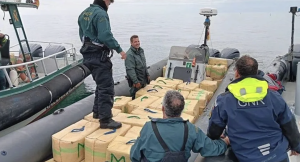 Also seized were 580,000 euros in cash, 10 vehicles, 21 cell phones, two satellite phones, two automatic weapons, five pistols, a shotgun, a revolver, three electric weapons, around 500 rounds of ammunition of various calibres, two speedboats, six boats, 21 high-powered engines, six luxury watches, around 15,000 litres of gasoline, video surveillance systems (CCTV), solar panels and communication inhibitors, the PSP announced this Tuesday.
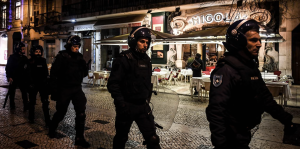 In the report released this Tuesday (October 21) on a visit to Portugal in 2024, the Council of Europe’s Committee for the Prevention of Torture (CPT) states that it observed “a decrease” in allegations of ill-treatment by law enforcement officials compared to previous visits to the country”, and that measures were also taken by the Portuguese authorities to address this issue.
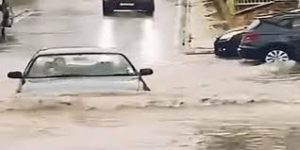 The best news is the announcement by Civil Protection is that no one is missing, a circumstance almost surprising given the magnitude of the storm and the images of the streets of several municipalities turned into flooded rivers. Despite this, 18 injuries have been reported, one of them seriously injured after falling, fracturing his hip, and being taken to the hospital. The rest received minor treatments. The Generalitat’s Fire Brigade responded to 340 calls between 17:30 on Sunday (Oct 12) and 7:00 (Oct 13). Thirty-one people were rescued, most of them in their cars on flooded roads.
 CP has opened an investigation, following “internal procedures”, to determine “possible causes and possible improvement actions” that led to Monday’s incident in which an Intercidades train lost one of its carriages midway through a journey between Lisbon and Faro.
 This is a successful case of prostate cancer resulting from a nuclear medicine therapeutic and diagnostic approach: theranostics. This is a highly personalized approach to the patient and the tumour. It’s only possible with highly qualified professionals and cutting-edge technology like this Gama Digital Camera. It’s been at the Porto IPO since July and is one of two in the entire country.