
Portugal Situation Report, Saturday 13th March 2021
Introduction
On Thursday there were some important developments with the announcement by the Prime Minster, following the meeting of the Council of Ministers; namely the outline of the long awaited de-confinement plan, which, as expected, will be undertaken in several phases starting 15th March 2021.
Also the Council of Ministers gave details of the extension of the State of Emergency which will commence 17th March to 23:59 hrs on the 31st March.
We have translated these measures and plans into English and published these through Facebook with links to our website.
 The de-confinement plan has generally well been received. Thankfully, as it appears at present (without seeing the details in the decree law) the phased de-confinement, subject to bi-weekly risk assessments is relatively simple to understand, being based on two simple risk indicators; namely Rt (rate of transmission) and the number on cases per 100,000. There has been however an increase in Rt yesterday reported at 0.80. This is likely as a result of increased movements of people erven though there has so far been no relaxation of restrictions. Although this is still below 1.0, this is something that government and experts will be monitoring closely.
With the implementation of the de-confinement plan, there will be an increase in movements by the public, resulting in an increased increasing risk of contagion. It is essential therefore, in order not to undo what has been achieved in decreasing the level of new cases, daily deaths, as well as those in hospital and ICU to levels not seen since October last year, to continue to follow the rules in place.
This means; wearing face masks, social distancing, hygiene and no social gatherings.
An unexpected development yesterday was the announcement, effective immediately, to allow the public to purchase from Pharmacies and other places that sell medicines, without a prescription, the rapid Covid-19 tests as a nasal swab, which can be undertaken in your home. These will start to be sold in Pharmacies today.
AstraZenena vaccine is in the news for the wrong reasons. It was reported yesterday that serious allergies are expected to be added to the list of possible side effects of the AstraZeneca Covid-19 vaccine, after the identification of likely links to these reactions in the United Kingdom, the European Medicines Agency warned today (EMA). This update is based on a study of 41 reports of anaphylaxis seen in about five million vaccinees in the UK, said the agency, in the summary of its committee that assesses the risks of the drugs.
 On Thursday, the European regulator indicated that it was investigating a problem related to the formation of blood clots following a few people who had been vaccinated, after Denmark’s health authority announced today it was suspending using the vaccine as a precaution. A move followed by eight other countries. The UN World Health Organization (WHO) said on Friday that it was aware of blood clot concerns linked to “a specific batch” of AstraZeneca/Oxford Covid-19 vaccine, but maintained that to date, no-one has died from any coronavirus vaccine.
The AstraZeneca vaccine is one of the three vaccines against the SARS-CoV-2 virus approved so far by the EMA and, as such, in use in Portugal.
Yesterday was again good news concerning the key Covid-19 figures, namely: the lowest daily death rate since 20th October 2020; 4th lowest daily new cases since 5th October; recovered nearly 10 times new cases and 40 consecutive days, the number of recovered patients exceeds that of new infections.
In hospital, it is the lowest number since 17th October. Covid-19 Patients 5,823 less compared to number in hospital on 1st February; lowest in ICU since 29th October 2020 – decreased by 69.2% since 1st February and a 10% reduction in active cases. Number of active cases lowest since 19th October, decreasing for 38 consecutive days and over 135,000 since 31st January.
 Further good news came last night when Germany announced the removing of Portugal from the list of “countries with a high incidence of mutations in the coronavirus, with effect from next Sunday”, according to a note from the Portuguese Ministry of Foreign Affairs on the social network Twitter. This follows a similar move by Switzerland a few days earlier. With the massive decreases in cases in Portugal to levels below most of Europe, let’s hope this sets the lead for other countries to take similar action.
With that please have a Safe weekend
Headlines
The President of the Republic commented yesterday that the plan of gradual de-confinement announced by the Government represents a “very reasonable and very prudent balance”, talking about convergence between the Assembly, the executive, the parties and the experts.
“It seems to me that a very reasonable and very prudent balance has been reached between what was the position of the experts, the parties and what the Government was studying and what the President of the Republic thought,” said Marcelo Rebelo de Sousa.
“[The plan] allows several things to be confirmed: first, coincidence and convergence, not only institutional but also strategic, which has involved the President of the Republic, the Assembly of the Republic and the Government, which continues and will continue until end of the pandemic”, he said.
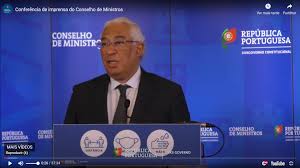 And, secondly, “the plan is until May, which is good because it is not too long and is flexible in the indicators chosen in the way they are linked with the measures, to safeguard an idea that seemed important to me, from Easter with confinement ”, added Marcelo Rebelo de Sousa.
Classifying the plan as “positive”, the Head of State welcomed the idea of it foreseeing “a confined Easter”.
For the Head of State, another important part of the plan is the “idea of a progressive opening, permanently accompanied by economic and social activities and the priority given to the schools”.
“It is prudent to make this balance [because] we never know what is happening in the circulation of people and the virus and this opening in Portugal is to be done gradually and that looks at what is happening in Europe, where a significant part has a panorama more negative than positive”, argued Marcelo Rebelo de Sousa, comparing the situation in the country with others, such as Italy, in which a reinforcement of restrictions was announced.
Covid-19
The daily report from DGS yesterday once again shows a continued decline in all key areas
Confirmed cases: 813,152 (+ 577 / + 0.07 %);
Number of admitted: 1,046 (-56 /-5.08 %);
Number of ICU admitted: 266 (-7 /-2.56 %);
Deaths: 16,650 (+ 15 / + 0.09 %);
Recovered: 749,770 (+ 5574 / + 0.75 %).
Active Cases: 46,732 (-5012 / -9.6%)
IMPORTANT NOTE:
Despite all this good news it is important not to let our guard down at this crucial time. Those in hospital and ICU remain high. This means complying with the rules in place, – wearing face masks, social distancing, hygiene and no social gatherings.
Health
Covid-19: Serious allergies among the possible side effects of the AstraZeneca vaccine.
In a statement released today, EMA announced that it “recommended an update of the product information to include anaphylaxis and hypersensitivity (allergic reactions) as side effects”.
“This update is based on a study of 41 reports of anaphylaxis seen in about five million vaccinees in the UK,” said the 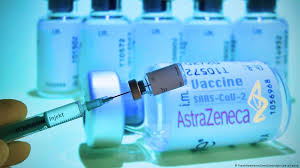 agency in the summary of its committee that assesses the risks of the drugs.
12th March 2021 (Lusa) – “After a careful study of The Hague, serious allergies are expected to be added to the list of possible side effects of the AstraZeneca Covid-19 vaccine, after the identification of likely links to these reactions in the United Kingdom, the European Medicines Agency warned today (EMA).
The European Medicines Agency clarified that anaphylaxis, which translates into severe allergic reactions, was already a “known side effect, although it rarely occurred with vaccines”.
Information about the vaccine from the Anglo-Swedish pharmaceutical company, AstraZeneca, states that citizens who receive it should be monitored at least 15 minutes after its administration, in case of allergic reactions.
Rapid tests from Pharmacies.
Rapid antigen tests to screen for Covid-19 will go on sale in pharmacies and can be purchased without justification or a prescription from today 13th March 2021.
The procedure is similar to that of the PCR test, but less invasive – just insert the swab via the nasal or oral route – and the result is then received in the next 10 to 30 minutes.
For Public Health Doctors this measure is a good step to implement the strategy of mass testing, but they leave a warning, since the sale of rapid tests in pharmaceuticals cannot be seen as a carte blanche excuse for a life without care.
Until now, rapid antigen tests have cost about 20 euros. For now, the price at which they will be sold for use by the general population is not yet known.
Screening tests start Tuesday at public and private schools.
Nurseries, pre-school and 1st cycle schools will reopen on Monday 15th March and the following day the testing campaign in those public and private schools begins.
 More than 50,000 public school workers as well as employees of private establishments begin testing for Covid-19 on Tuesday, the Minister of Education announced this Friday.
The day care centres, pre-school education and the 1st cycle reopen its doors on Monday and the following day start testing the campaign in those public and private schools.
“This new (testing) exercise begins on Tuesday with more than 50 thousand workers in the public system, plus workers from the private sector,” said Minister Tiago Brandão Rodrigues, during a press conference to present support measures to the sectors of Economy, Labour, Culture and Education.
According to Tiago Brandão Rodrigues, there will be a “sweep of all workers”, but “workers will not be tested at the entrance to find out whether or not they can enter the school”.
The testing campaign, he said, is more “a supplementary measure to slow the spread of the disease (Covid-19)” in a school setting.
“There was between 0.1% and 0.2% positivity in the tests” already done in the school community.
The screening tests are accompanied by the vaccination of teachers against Covid-19 and other older measures such as the use of a mask, the distance between students or the circuits of circulation within schools.
Tiago Brandão Rodrigues underlined the work done in schools to ensure that they are safe spaces, reminding of the test results to the school community that started on January 20th and involved about 65 thousand students.
Covid-19. Rt in Portugal Rises 0.8.
Updated this Friday, the value refers to an average between March 3rd and 7th and is already above the 0.78 referred to on Thursday. Contrary to what the Prime Minister said, the transmissibility indicator is not published every two days.
The indicator of transmissibility of the infection (the so-called Rt) is 0.84, according to the report published this Friday by the Dr. Ricardo Jorge Institute (INSA), referring to the period between March 3rd and 7th. The value is already above the 0.78 (between 1st and 5th March) mentioned by the Prime Minister on Thursday, when presenting the de-confinement plan. What this value means is that for now, as it is below 1, the number of cases continues to fall, but the closer it is to 1, the slower the descent.
INSA explains that since February 10th, there has been a “stabilization of Rt with a slight increase” from 0.61 to 0.84 (the value of March 7th), “which suggests a slowdown in the downward trend in incidence of SARS-CoV-2”.
Since the end of May last year, this indicator has been made public once a week by INSA. Contrary to what António Costa indicated, although INSA calculates the Rt every two days, this report is not made public: it is only shared internally with the Government and other institutions.
Education
Measurements, tests, exams and access with the same rules as last school year.
In view of the resumption of activities on a non-face-to-face basis and aiming to contribute to a framework of justice and equity, it was necessary, as in the academic year 2019/2020, to proceed with the approval of a set of exceptional and temporary measures of response to the Covid-19 pandemic in the scope of basic and secondary education, for the  academic year 2020/2021, regarding the assessment and certification of learning.
In this way, the educational community is given stability, security and certainty as soon as possible in the face of the unpredictability resulting from the evolution and impact of the pandemic.
The decree-law, approved this Thursday in the Council of Ministers, establishes:
The cancellation of the calibration tests and the final tests of the 9th year cycle.
Access to higher education, which is the responsibility of the Ministry of Science, Technology and Higher Education, and the completion of secondary education is done in exactly the same terms as in the past academic year.
Students finish secondary school with an internal classification, that is, they do not take exams for completion and certification.
Students register and take only the entrance exams they want.
In order to continue the diagnosis of learning that may have been lost, which is essential for planning future measures, a study is carried out sample, for which the measurement instruments are expected to be used on the scheduled dates.
Economy
It was in early March 2020 that the government approved the first measures to deal with Covid-19, when it was not yet considered a pandemic by the World Health Organization. This would only happen ten days later.
According to the survey carried out by the Technical Budget Support Unit (UTAO), the government adopted 110 measures (or set of measures) to combat the Covid-19 pandemic. The entity that provides support to the deputies of the Budget and Finance Committee divided between the emergency phase and the stabilization phase, following the designation of the executive.
During the first period, which continued until the end of June, 50 measures were adopted. The second will run until the end of 2020, during which 60 initiatives to combat Covid-19 were approved.
In between, there were many setbacks and successes in the measures, as was the case with support for self-employed workers or managing partners who were excluded from the first immediate aid package to maintain income. And many were already recaptured at the beginning of this year with the return of the second general confinement, after that of the spring of last year, as is the case of the simplified lay-off.
According to the figures reported in the budget execution for December last year, the Covid-19 measures had an estimated cost of 4.6 billion euros, which is equivalent to about 2.2% of the gross domestic product (GDP) ). In addition to this figure, this year’s costs, up until the end of January, amounted to 258 million euros, resulting in a total of 4.8 billion euros.
The largest share of this “cost” comes from the expense side of 3.4 billion euros, but there is also unpaid revenue, both tax and contributory. On this balance sheet are more than 1.4 billion euros.
In this figure, only measures with “budgetary expression in public administrations” are taken into account, that is, which aggravate the deficit. The Directorate-General for Budget does not account for “measures to support the financing of the economy that have no impact in terms of budgetary accounting.
Covid-19: Lisbon campaign hospital activity suspended as of Tuesday.
Lisbon, 12th March 2021 (Lusa) – The clinical activity of the field hospital at Estádio Universitário, in Lisbon, will be suspended as of Tuesday, the Mayor announced today, guaranteeing that the infrastructure “remains ready to reopen at any time”.
 In a publication on social networks, Fernando Medina (PS) says he hopes that the equipment “is no longer needed”, but he points out that it could reopen “if so justified”.
The mayor also said that a team of operatives from the Lisbon Firefighters Regiment carried out this morning the decontamination of the space.
On March 1st, 11 patients were hospitalized with Covid-19 in the campaign hospital in Lisbon, according to António Diniz, coordinator of the space.
Taking stock of the first month of activity (between 23rd January and 23rd February), the official said, at the time, that the field hospital received 148 patients.
The structure coordinator also mentioned that eight hospital centres and hospitals in Lisbon used this equipment, at a time when the Covid-19 pandemic worsened.
Last year, during the first confinement, the infrastructure had already been prepared, but it was never used.
 He mentioned that “We will have to rebuild people’s lives,” says Marcelo. “It is more than returning to 2019”, defends the President for whom it is necessary “good management, transparency and efficiency” in public management.
 Turning to civil protection there are two important exercises that are about to take place. The first of these is that the National Authority for Emergency and Civil Protection (ANEPC) and the Portuguese Institute for the Sea and the Atmosphere (IPMA) will carry out the NEAMWAVE’21 exercise today, March 10, between 8:30 am and 2:00 pm. NEAMWAVE’21 aims to test the effectiveness and readiness of the Tsunami alert system implemented in the Northeast Atlantic, Mediterranean and Connected Seas (NEAMTWS). There are no sirens or deployments
 An important announcement for British nationals is that SEF have confirmed to the British Embassy that if you arrived in Portugal before 31st December 2020, and you are not resident or don’t intent to become resident, and you are still in Portugal due to Covid-19 travel restrictions, you do not need a visa or further authorisation to stay in Portugal longer than 90 days. SEF has told the Embassy that this is because you were exercising your right to free movement when you arrived and you are not subject to immigration control.
 This passport is intended to “boost the global economic recovery and facilitate” international travel, said a spokesman for the Ministry of Foreign Affairs.
 The scientists who conducted the study say the effectiveness is almost identical to the effect the vaccine has on an earlier, less contagious version of the virus.
 At the University of Beira Interior, work is being done on the creation of a nanovacin capable of preventing and treating the disease, the work of Dalinda Eusébio, and a PhD student in Biomedicine.
 Confederation of Tourism of Portugal (CTP).
 The objective is to prevent the consumption of products at the door of the establishment or in its surroundings, which is already prohibited, and not the sale, which only harms the already difficult situation of our companies”, says the association at a time when it is beginning talking about the model to follow in the deflation.
 At the origin of this alert are the more than two dozen complaints that came to the office of Maria Lúcia Amaral from people who, having seen their unemployment benefit end between June 30th and December 31st, 2020 and whose condition of resources did not allow them accessing social unemployment benefit, they fell into a situation of social deprotection since the automatic extension for another six months of the unemployment benefit provided for in the State Budget for 2021 (OE2021) includes only those who cease this benefit during the year of 2021.
 Over the last two weeks we have reported four major earthquakes; one in Greece and three off the coast of New Zealand – the largest being 8.1 on the Richter scale 8.1 near Kermadec Islands Region on Thursday. Luckily these, in the case of the New Zealand ones, have not caused any damage, although extensive evacuation plans were put in place with people moving from the coastal areas along the north coast of North Island to higher ground. This was undertaken by all accounts calmly and in accordance the alerts and directions that were clearly in place.
 It was announced yesterday by the President and executive director of Formula 1 Stefano Domenicali, that the Portuguese Formula 1 Grand Prix, in Portimão, will take place on May 2nd, hoping “to be able to receive spectators in Portimão safely again this year and we are working with the promoter on the details of this plan”. The decision to hold the event again in the Algarve is if course very welcomed – the issue is with or without spectators.
 Speaking to the Lusa agency, Didier Cabanes, researcher and director of the testing center for Covid-19 created at the institute of the University of Porto, explained today that the project has “two strands”: one scientific and the other technical.
 Within the Coimbra academy, women “were the group most affected by the severity of the psychological and emotional effects associated with confinement, having reported more often feelings of anxiety, sadness, concern for the professional future and perceived lack of control over the situation” , said the UC, in a press release sent to the Lusa agency.
 Specifically with regard to masks, the Ministry of Education explains in a statement that, although mandatory use for 1st cycle students is not foreseen, the amount of the budget was defined in order to allow schools to buy enough masks to these students.
 At the end of the Council of Ministers (CM) dedicated to forests, which today took place in Monsanto, Lisbon, João Matos Fernandes highlighted that the largest share, of more than 20 million euros, will be destined to investments in public forests and in forest perimeters.
 He stated that “it was desirable that, more than learning from what went well, we all have the ability to learn lessons from what went less well. Improving the ability to plan and anticipate scenarios and responses, reacting more quickly and being more adapting to circumstances, are examples of areas that should be the focus of current and future attention from all of us”
 A reminder that the deadline for land cleaning for those living in rural areas still remains 15th March. The GNR began on 22nd February the Monitoring and Awareness phase by visiting those living in high-risk areas to raise fuel management awareness in order to ensure the safety of the population. This phase, will take place until March 31. The full details of land cleaning can be found on our website. Remember if your land includes holm oak trees then special permission is required before pruning or cutting down such trees. Failure to make the application will incur a large fine.
 “We cannot forget what happened because the idea that tragedies are not repeated is a false idea. Tragedies are repeated when the mistakes that resulted in these tragedies are repeated. It is good to keep your memory well because it is the best way to support excellent health professionals”, he added.
 On March 3rd, 2020, Hospital Curry Cabral, one of six hospitals that are part of CHULC, received the first patient diagnosed with Covid-19, one day after the first two cases were diagnosed in Porto, one at the Hospital of Santo António and the other at Hospital São João.
 “When we talk about essential services – and schools are in some way in our social approach an essential service – it may make sense that adults who work in these places have a differentiated vaccination,” said Marta Temido in an interview with Jornal da Noite da SIC.
 At the press conference after the meeting, at the Centro Cultural de Belém, in Lisbon, the Minister stressed that the Member States “identified the need to accelerate, together, the alignment between the response of science and the response of industry in the sense of the contracts concluded by the Commission can be fulfilled, guaranteeing the implementation of the National Vaccination Plans as soon as possible”.
 Hospital of Caldas da Rainha.