Portugal Safety and Security Report Wednesday 23rd July 2025


INE has published the crime rate figures for 2024. Albufeira had the highest crime rate last year, followed by Avis, Mourão, Loulé, and Porto. On the other side of the table, two municipalities in the autonomous regions of the Azores and Madeira, and Condeixa-a-Nova, stood out.

According to data from the National Statistics Institute (INE), published this month, 33 crimes per thousand residents were recorded in Portugal last year; of these, 17 were crimes against property and 5.4 against physical integrity. In 2023, the national crime rate was 35 crimes per thousand inhabitants.

Looking at the details, the municipality with the highest number of crimes recorded per thousand residents was Albufeira, with 78, more than double the national average (33). The previous year, the crime rate in this municipality had been even higher: 88. Some 12 years ago it was much higher.

Crime Rates are used worldwide to show the number of reported crimes per head of population. It does not take into account transient population, normally visitors and tourists. It is no surprise therefore that Albufeira has come out top for the very reason the mayor says as it receives some 400,000 to 500,000 visitors a year. This of course is a factor with all tourist destinations, but because Albufeira has a low residential population compared with a very high number of visitors, the crime rate is very high.

Local elections are approaching! Despite making up about 15% of the resident population, foreigners represented only 0.3% of registered voters in Portugal by late 2024, according to data from the Voter Portal of the Secretariat‑General of the Ministry of Internal Administration (SGMAI).

Eligible voters must sign up at the Junta de Freguesia corresponding to the address on their residence permit, presenting a valid residence document. Once registered, they will be added to the parish’s official electoral roll (Caderno Eleitoral) and informed of their assigned polling station. The registration process is mandatory and closes 60 days before election day, according to the National Election Commission (CNE), setting the registration deadline at August 11.

You only need to register once. Some Junta’s require an appointment to be made in advance for the registration.

https://www.portaldoeleitor.pt/en/Faqs/ER/Pages/default.aspx?area=ELECTORAL+REGISTRATION&criterio=

Turning to the weather! Climatologist Mário Marques explained yesterday that a heatwave starting 24th July, which is expected to last at least until the end of the month, will be longer-lasting than the last one – a few weeks ago – and also more widespread, as it is expected to affect the entire territory, including the islands. There’s a substantial rise in temperatures across the country. This hot air mass will also affect Madeira and the Azores,” he says.

In addition to the maximum temperatures, which will exceed 40ºC in some regions of the country, the minimum temperatures will also rise, and tropical nights are expected between this weekend and next.

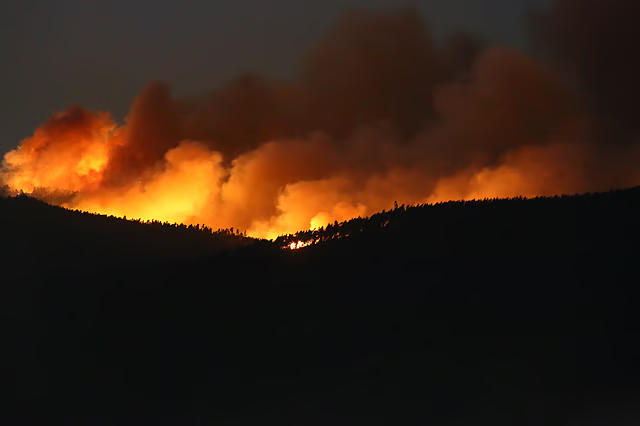
The expert also points out that, in the coming days, atmospheric conditions will contribute to a considerable increase in the risk of fire, especially due to very low humidity and strong winds during the early hours of the morning. It’s the perfect cocktail, with ingredients that encourage the ignition and spread of fires and make fighting them more difficult.”

With that message it is important that we all following the precautions and warnings that are in place.

Have a good week ahead

News

Mosquito, flea, or bedbug? How to identify, prevent, and treat insect bites this summer

Each type of bite has its own characteristics, specific symptoms, and distinct treatments. Learn to distinguish them and how to relieve them. When seeking help, know which repellents actually work.

As the weather warms up, few can resist a pleasant late afternoon stroll through the park or a getaway to the countryside.

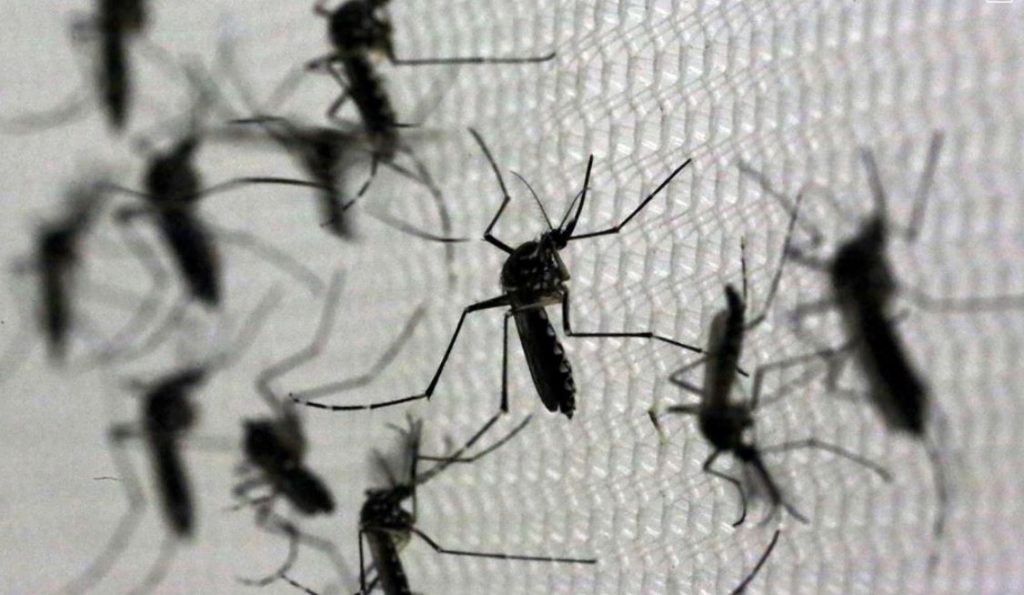
Summer can be wonderful, but we’re often forced to share these picturesque moments with unwanted companions. Insects like mosquitoes, bees, ticks, spiders, and fleas can turn a perfect day into an irritating—or even worrying—experience.

It’s common to notice a sudden itch or a mysterious swelling when returning home from a summer stroll. But the type of itch, its intensity, and appearance tell us a lot about the type of insect that bit us. These clues can indicate how to relieve symptoms and whether medical attention is necessary.

With the right information and taking appropriate precautions, we can avoid health scares, unnecessary doctor visits, and even more serious complications.

The most common bites

While there are clear similarities between many insect bites, there are also differences. In fact, each type has its own characteristics, specific symptoms, and distinct treatments. Here are some tips to distinguish six of the most common:

  1. Mosquitoes

Symptoms: redness, slight swelling, and intense itching. Mosquito bites usually go away on their own within three days, without complications.

Recommendations: wash the area with soap and water, apply cold compresses and antihistamines in gel or cream form in case of intense itching.

  1. Bees and wasps

Symptoms: immediate pain, slight swelling, intense burning sensation. Bees leave their stingers, but wasps do not.

Recommendations: remove the stinger (if necessary), apply ice, take oral antihistamines in case of a localized reaction and be alert for signs of an allergic reaction.

  1. Ticks

Symptoms: The peculiarity of ticks is that their bite can go unnoticed. The tell-tale sign is that, when they fall off, they leave a small red mark in the shape of a target.

Recommendations: Remove with tweezers, being careful not to twist or crush the insect’s body. Disinfect and monitor for fever or swelling in the following days.

  1. Fleas

Symptoms: Small, red spots, usually clustered, with intense itching. They usually appear on the ankles, legs, or areas where clothing is tight. The rash can last for several days, and there is a risk of infection if scratched excessively.

Recommendations: Wash the area with soap and water and use topical or oral antihistamines if the itching is intense. Also check pets and household textiles, as they are common sources of these insects.

  1. Bedbugs

Symptoms: multiple bites grouped together, with intense itching, especially at night.

Recommendations: Wash the affected area and apply antihistamine gel or cream. Inspect the environment and take steps to eliminate bedbugs from the home.

  1. Spiders

Symptoms: localized pain and redness, sometimes with two small visible dots left by the spider’s fangs.

Recommendations: Wash with soap and water, apply cold. Consult a healthcare professional in case of necrosis, fever, or malaise.

When should you worry?

Typically, any of the bites mentioned are just a mild discomfort that disappears after a few days. However, there are situations where they can trigger more serious health problems.

Here are three of the most serious complications caused by insect bites—and what to do in each case:

Severe allergic reaction (anaphylaxis): difficulty breathing, swelling of the lips and eyelids, dizziness, and loss of consciousness.

➤ Response: call 112 or SNS24. If the victim has an epinephrine pen (epipen), it should be administered immediately.

Infection: progressive redness in the affected area, local heat, pus, and possible fever.

➤ Response: Consult a healthcare professional. Antibiotic treatment may be necessary.

Tick-borne diseases, such as Lyme disease: red, target-shaped rash, fever, and muscle and joint pain, appearing days after the bite.

➤ Response: Contact a healthcare professional.

Which repellents work?

The best way to avoid the consequences of a bite is to prevent it from the start. One of the most effective methods is to use approved repellents containing DEET (diethyltoluamide) or icaridin.

These products are available in pharmacies and supermarkets. The variety can be confusing, but the secret is in the label.

The main ingredients to look for are:

DEET: The most studied and widely used repellent since the 1950s. Very effective against mosquitoes, ticks, and flies. Duration depends on the concentration—for example, 30% DEET provides about 6 hours of protection. Use with caution, as it can irritate the skin or damage synthetic fabrics.

Icaridin: A newer alternative with similar efficacy. A 20% concentration offers protection equivalent to 30% DEET. It has the advantage of being less oily, virtually odourless, gentler on the skin, and safe for fabrics. It lasts between 6 and 8 hours and is recommended for children or people with sensitive skin.

In high-risk areas for diseases such as dengue, malaria, or Zika, both compounds are effective — but the concentration must be adequate (at least 30% DEET or 20% icaridin).


IPMA Hot weather in Mainland Portugal and Madeira starting 24th July

Yellow warnings for hot weather already issued for July 25th

After an early start of the week with temperatures below normal for the time of year on the mainland, temperatures are expected to rise starting on July 24th, and especially from July 25th. Maximum temperatures will be above average for the time of year, contributing to a heat wave at least until July 30th.

In fact, the High pressure system (anticyclone) located southwest of the Azores region is expected to gradually move east/north eastward, intensifying and extending as a ridge toward the Bay of Biscay starting on July 24th, and eventually toward Central Europe from July 25th or 26th.

This, combined with a low pressure region between North Africa and the Iberian Peninsula, will cause hot, dry air masses to flow over mainland Portugal coming from inland Iberian Peninsula (east wind), which will also affect the Madeira archipelago starting on July 26th.

Therefore, a significant rise in air temperatures is expected starting on Thursday, July 24th, with maximum temperatures above 30°C in most of the mainland, reaching 40°C in some areas, particularly inland southern region and the Tejo Valley.

Minimum temperatures are expected to exceed 20°C in some inland areas, particularly in the southern region, the Tejo Valley, and Beira Baixa.

Hot weather warnings issued for this event starting on July 25th.

Furthermore, winds are expected to intensify along the western coastline and in the highlands from July 23rd to July 25th, which will be moderate to strong from the north/northwest, sometimes with gusts.

In the Madeira archipelago, starting on July 26th, maximum temperatures may reach or even exceed 30°C, especially on the southern slopes and in the mountainous regions.

There is still some uncertainty regarding its intensity and duration of this hot weather event. It is advisable to monitor the forecasts and weather warnings that will be issued in the coming days.

This statement will be updated as needed.


Portugal Safety and Security Report Wednesday 9th July 2025


Good morning. We are often asked whether this year is likely to be a hot year. The answer is most likely “yes”. As we know in heatwaves the number and severity of rural fires increases as was seen recently here where between 28th and 30th June there were some 323 fires., several burning for sever hours and one or two overnight.

Climatologist Carlos da Câmara warns that the conditions are ripe for a summer of serious forest fires. The researcher from the Dom Luiz Institute, at the Faculty of Sciences at the University of Lisbon, stresses that, in the long term, “heat waves tend to be more frequent, more intense and with greater territorial extension”.

Carlos da Câmara explains that, “having had a very rainy spring, we now have very abundant low-lying vegetation that dries out very easily. In other words, there is a lot of material that is prone to burning”. Therefore, he warns, “if we have a very hot and dry summer, the soil will be deprived of water”.

“Therefore, a heat wave that, in humid soil conditions, would have a moderate impact, will have a much more exacerbated impact”, which is why “this is one of those years in which we could have forest fires or serious rural fires”, says the expert.

Following the generally above-normal air temperatures throughout the first half of 2025, the sea response around Europe is significant. Mediterranean seas are the most anomalous across central and western portions of the region, specifically across the western parts, with temperatures 5 to more than 6 °C warmer than usual. This puts June at record-breaking historic values. The most intense warming was observed in the western Mediterranean basin, including the Balearic and Tyrrhenian Seas where in absolute terms the temperatures from 27 °C to nearly 29 °C at some spots. Most of the Mediterranean is warmer than 25 °C right now. Which is similar to the maximum recorded off the south coast of Portugal in the Atlantic.

The further concern of the record warm sea waters is the support for potential impacts on severe weather and flooding events through late summer and autumn months. High moisture translates into higher temperature dew points, thus more convective energy to fuel thunderstorms in the coming weeks and months.

IPMA maps show that the north Atlantic is experiencing record high temperatures as well. Forecasters within NOAA’s National Weather Service predict above-normal hurricane activity in the Atlantic basin this year, with above-average Atlantic Ocean temperatures setting the stage. NOAA’s outlook for the 2025 Atlantic hurricane season, which goes from June 1 to November 30, predicts a 30% chance of a near-normal season, a 60% chance of an above-normal season, and a 10% chance of a below-normal season.

The agency is forecasting a range of 13 to 19 total named storms (winds of 70 km/h or higher). Of those, 6-10 are forecast to become hurricanes (winds of 115 km/h or higher), including 3-5 major hurricanes (category 3, 4 or 5; with winds of 170/km/h or higher). NOAA has a 70% confidence in these ranges.

Of interest during the week is the Government approval of the national operational directive regarding the state of special readiness for entities forming part of the Integrated Protection and Relief Operations System (SIOPS). It is important that we are aware of the new directive as it shows the criteria upon which SIOPS form its state of readiness, based of forecast risk. The old system was colour coded, but the new system is more detailed in four levels. Then legislation in the form of a Resolution 3/2025, de 26 de maio, has been informally translated by Safe Communities and can be read here. https://diariodarepublica.pt/dr/detalhe/resolucao/3-2025-919368493

Two months into the 2025 Bathing Season, the National Maritime Authority recorded, between May 1st and June 30th, 208 rescues, 643 first aid actions and two fatalities on Portuguese beaches. Fatal accidents – 2 at Pedrogão Beach – Leiria, beach without lifeguards at the time of the accident (beach with lifeguards from June 7th to September 14th). Much of these are preventable and we ask people therefore to following beach warnings, respect the sea conditions and take rubbish with you when you leave

Our team wishes you a safe and happy week ahead.

News

There were 227 more deaths than expected on days of extreme heat

Due to the extreme heat, Portugal had 227 more deaths last week than would be expected for the time of year. The vast majority of deaths were of people over 70 years old.

Between June 30 and July 3, four days of extreme heat, 1,330 people died in Portugal, according to data from the Mortality Surveillance Porta, from the Directorate-General for Health (DGS).

The expected number of deaths, given the mortality rate in recent years, would be 1,103. However, 227 excess deaths were recorded in these four days. The number increases to 284 if we take into account the period from June 28, when the hot weather warning came into effect.

In a clarification sent to SIC, the DGS states that more than 70% of excess mortality concerns people aged 85 or over. “There was no excess mortality among those under 70 years of age, it assures.

“In the update of July 7, 2025, the Ícaro index for mainland Portugal – which estimates the impact of air temperatures on mortality – does not predict a significant impact of temperature on mortality for the following three days”, adds the DGS.

The exception is the Alentejo region. Therefore, the DGS reports, it is possible that there will be “a slight upward revision of the excess mortality values” currently estimated for mainland Portugal.

The Directorate-General for Health states that the impact of this episode of hot weather on excess mortality was “similar to that observed in previous years”.

According to data sent to SIC by the DGS, in 2024 (in the period between July 22 and August 4) there were 715 excess deaths – 19% more than expected – and in 2023 (from August 21 to 27), there were 384 excess deaths – which corresponded to 20% more than expected.

Heat broke record

Between June 30 and July 3, temperatures above 40ºC were recorded in several regions of the country. In the last month alone, there have been two heat waves in Portugal.

It was the third warmest June in the last 100 years and the highest temperature ever recorded for the month was 46.6ºC in Mora on the 29th.

The DGS recalls that it issued several recommendations to the population regarding protection against the heat and that it alerted health providers to the foreseeable impact of heat on the demand for health care, with contingency plans being activated.


Portugal Safety and Security Report Wednesday 2nd July 2025

Good morning. The weather has no doubt been in most minds particularly the effects of the high temperatures. Southern Europe experienced a persistent heatwave on Monday, which reached an unprecedented geographic extent in France and extended from the Balkans to England. This has led to rural fires including Portugal where there were serious and numerous fires recorded, 323 from June 28th-30th; several of which were classified as significant occurrences. At one stage on 30th June over one thousand operatives were fighting some 34 fires.

In addition to hail falling in some places in Portugal, the heat on Sunday led to the formation of a rare phenomenon of “roll clouds”, which accumulated in certain stretches of the coast. Images shared on social media show a huge horizontal cloud moving from the sea horizon towards the beaches.

Inland, the thermometer reached 46.6°C in Mora , Évora district, a value close to the absolute maximum in the country, on August 1, 2003, then 47.3 degrees in Amareleja (Beja), according t Due to the heat wave, IPMA placed seven districts on red alert , between Sunday and Tuesday. Records have been broken since the start of this extreme heat wave. Record maximum and minimum temperatures were also recorded for the month of June at several stations in Spain, according to the meteorological agency Aemet.

With an average of 26.01°C (degrees Celsius), according to data from the European Copernicus program recorded on Sunday and analysed by Météo-France, the Mediterranean Sea had never recorded such a high surface temperature. IPMA have forecast for 1st July sea temperatures of 21 – 24C off the south coast of Portugal.

Heatwaves are becoming more intense, starting earlier and occurring later in the summer due to climate change. I have prepared a feature on this topic and its relationship to rural fires which will appear in the Portugal Resident tomorrow 3rdJuly.

It is important during extreme weather, in this case very high temperatures, to follow the safety advice being issued by the authorities as well as that issued by Safe Communities. Over the last week therefore we have issued advice on: disposable BBQs; parking on dry grass; rip currents; safety on beaches; drowning prevention; beach flags; use of motorized gardening equipment; UV; safety when hiking and camping; burning cut and piled waste and fire prevention, etc, etc. We ask people to study and share this important information. Thank you.

DELTA Level of the Special Rural Fire Fighting Device (#DECIR) starts today extending until 30th September. Under this the following total resources are available 11,161 operatives, with the possibility of mobilizing 3,863 more, totalling up to 15.024; 2,417 vehicles from various civil protection agents, with the potential mobilization of more 994, making a total of 3,411; 71 aircraft. Of course it would be far better not to have to deploy these resources and this can best be done by exercising due care and attention to avoid any activity which may increase the risk of fires.

Late Saturday afternoon, another car caught fire while driving in the Cancela area and was completely burned. As reported by DIÁRIO, the same thing happened to a taxi van at the beginning of the month, on Rua Martha Telles Pintora, in the parish of São Martinho, which caused a great deal of commotion. Another was on the A22 last weekend and today 30th June on the A2 a car on fire near Grandola service area and in São Brás de Alportel a car on fire on the E.N. 270. However, these are not isolated cases and have occurred with some frequency.

Therefore, it is essential to know how to act quickly and safely in the event of a fire, as a fire in a vehicle can start suddenly and become uncontrollable within a few minutes. Firstly Stay calm and get out of the vehicle. In the event of a fire while the vehicle is moving, turn off the engine and stop immediately, without putting other road users at risk; If possible, stop the vehicle in a place with clean ground, free of dry leaves, paper, oil or other easily combustible materials; Turn your wheels to prevent the car from rolling away, apply your handbrake; Get everyone away from the vehicle and stay well away. Once all passengers are safely out of the vehicle, call 112; Make yourself as visible as possible. Use hi-vis clothing and wave your arms to warn oncoming traffic; Do not attempt to put out the fire unless you have the means to do so, namely if you have a fire extinguisher and never use water on an engine fire,

Our team wishes you a good day

News

State spending on diabetes medication doubles, minister wants new clinical guidelines

In 2024, public spending on diabetes medication exceeded 417 million euros. In addition to the increase in the disease in Portugal, the use of this type of medication for weight loss also comes into play.

Regardless of this growth, which is atypical, we must ensure that diabetic patients receive the treatment they need,” said the Minister of Health. “What is missing here are clinical guidance standards.”

Paula Martins says that a committee will be created to work on these standards, which aim to guarantee fair access to medicine. “Above all, to avoid inappropriate use of resources,” she stressed.

In the case of diabetes , and not taking into account costs with insulin , but , for example, with the substance semaglutide – present in the drugs Ozempic and Rybelsus – , Infarmed ‘s figures show that the expense rose from 7.5 million in 2021 to 40 million last year .

“I am convinced that increasing the co-payment will allow us to negotiate with the pharmaceutical industry to find a cheaper price”, says José Boavida, from the Portuguese Association for the Protection of Diabetics.

If prescribed to people without type 2 diabetes, Ozempic costs 120 euros. With co-payment, the cost is 12 euros. The drugs are also used for weight loss and have already led to stock-outs in pharmacies.

At the beginning of this year, and after a shortage in the market, Infarmed announced an audit process on medicines for diabetics, but there are still no conclusions.

Iranian hackers threaten to release 100GB of emails from close Trump aides

A group of hackers with links to Iran has threatened to release about 100 gigabytes of emails allegedly stolen from figures close to US President Donald Trump. Those targeted include White House chief of staff Susie Wiles and long time adviser Roger Stone, according to Reuters, which had access to direct communications with the cybercriminals, who operate under the pseudonym “Robert”.

According to the hackers themselves, the material obtained also includes emails associated with Lindsey Halligan, Trump’s lawyer, and actress Stormy Daniels, known for having signed a confidentiality agreement in exchange for $130,000 to not mention an alleged relationship with Trump. Although the hackers have not revealed when they plan to release the content, they say the material exists and could be released soon.

The U.S. Cybersecurity and Infrastructure Security Agency (CISA) called the attack a hostile propaganda attempt by a foreign power. “A hostile foreign adversary is threatening to exploit stolen and unverified material in an attempt to distract, discredit, and divide,” CISA spokeswoman Marci McCarthy said. She denounced the attack as part of a “calculated smear campaign” against President Trump.

FBI Director Kash Patel has promised a firm response, telling Reuters that anyone involved in a breach of national security will be “investigated and prosecuted to the fullest extent of the law.” The severity of the threat reignites debate over foreign interference in U.S. politics as Washington seeks to counter cyberattacks from Iran and other rival nations.

Some of the emails stolen by the “Robert” group have already been verified by Reuters in previous leaks. Among the documents released are alleged financial negotiations between Trump and lawyers for Robert F. Kennedy Jr., as well as exchanges of messages regarding a possible out-of-court settlement with Stormy Daniels. The hackers say they did not intend to release more material after Trump’s re-election, but changed their position after the escalation of the conflict between Iran and Israel, which prompted US intervention.

It should be recalled that in September 2024, the US Department of Justice indicted three members of Iran’s Revolutionary Guards for involvement in cyberespionage campaigns during the electoral process. Although Tehran has denied the accusations, suspicions about the Iranian regime’s involvement have persisted.


Portugal Safety and Security Report Wednesday 18th June 2025

Good morning. With the increasing temperatures and the decrease in relative humidity, the fire risk has increased considerably. It goes without saying therefore that we must all take every precaution possible to avoid starting a fire. Over 98% of fires have a human cause, the majority through negligence. It is extremely important to following the warnings in place. Yellow level warning are in place for the whole of the mainland except Bragança and Vila Real which are at Orange.

On Monday there were 89 fires one of the highest days so far this year. Over 700 operatives were fighting fires at around 1700 hrs supported by 20 aircraft, the latter being around 30% of availability. One of our observations is the larger number of fire than usual in the Évora district, which has been at extreme danger levels, according to the Fire Weather Index.

Yesterday was the day with the highest risk so far with over 95% on the mainland at “high” risk or above. This comes exactly eight years since what became known as the Pedrógrão Grande complex of fires,” occurred the first being a fire at Escalos Fundeiros e Regadas. This was one of five major fires, which occurred from 17th to 24th June 2017, causing the death of 66 people, injuring 253 more and devastating extensive areas of the municipalities of Pedrógão Grande, Figueiró dos Vinhos and Castanheira de Pera, also spreading to the neighbouring municipalities of Sertã, Alvaiázere, Ansião and Penela. Let us all hope we never experience such a fire again in our lifetime. We can must all work together to prevent this.

On the crime front an item that caught our eye this week was that the Judicial Police had launched an operation to comply with 15 search and apprehend warrants), which resulted in the arrest of six people, strongly indicted by the practice of crimes related to group and terrorist activities. The detainees are suspected of integrating the so-called Lusitanian Armed Movement (MAL), which intended to constitute itself as a political movement, supported by an armed militia, and are indicted for the practice of framing facts in crimes of terrorist offenses, violent change of the rule of law and possession of prohibited weapons.

Among the six detainees, one was a member of the PSP, while others had links to private security groups. The dismantling of this far-right armed militia constituted the largest operation of its kind ever in Portugal, with hundreds of ammunition, military weapons and explosives seized, the Judicial Police itself reported. Read more about this in our link below.

A reminder that a hot air mass is passing through Continental Portugal originating in North Africa and carries particles and dust that will be suspended. This affects the quality of the air, estimating that it can contribute to the increase of suspended particles (PM10) concentrations.

As long as this phenomenon persists, the General Directorate of Health recommends the following precautions: Avoid prolonged exposure, limit outdoor physical activity and exposure to risk factors, such as tobacco smoke and contact with irritating products; For their greatest vulnerability to the effects of this phenomenon, children, the elderly, patients with chronic respiratory problems, mainly asthma and patients with the cardiovascular forum, should, if possible, remain inside the buildings with the windows closed:

Chronic patients should keep their medical treatments current; In case of worsening symptoms, contact the Health Line 24 (808 24 24 24).

The sixth edition of the EU Focus Day on domestic burglary takes place on Wednesday 18 June 2025. With a prevention campaign and local preventive initiatives, the EUCPN, several European countries, Europol and the European Commission aim to step up the fight against this crime by informing citizens that they can secure their home against burglary.

Property crime, and more specifically burglary, affects many European citizens. Luckily, burglaries are preventable and it does not have to be expensive! Research clearly shows the effectiveness of improved window and door locks or external lights that pop on when their sensors observe movement and internal lightning on a timer. These measures increase the risk of being caught and/or the effort that would be needed to enter a home successfully. These improved security measures prevented a great deal of crimes and eventually led to a genuine crime drop. The takeaway for crime preventers, though, is not to sit back and relax. On the contrary! Many people are still victim of burglary. That is why 22 European countries, united in the EUCPN (European Crime Prevention Network) and EMPACT, have joined forces to launch this initiative.

We hope that you have a nice week ahead

News

Operation “Disarmament 3D”. Six members of the Lusitanian Armillary Movement arrested

The Judicial Police announced this Tuesday an operation that culminated in the arrest of six people, strongly indicted for the practice of crimes of infractions related to terrorist groups and activities, discrimination and incitement to hatred and violence and possession of a prohibited weapon. One of those arrested was a member of the PSP.

The operation, carried out by the National Counter-Terrorism Unit, aimed to execute 15 search and seizure warrants, both at home and abroad.

“As a result of the searches carried out, it was possible to make arrests in flagrante delicto and seize various types of explosive material, several firearms, some of which were produced using 3D technology, several 3D printers, several dozen rounds of ammunition, several bladed weapons, computer equipment, among other evidence”, said the PJ in a statement sent to the media. The Lusitanian Armillary Movement (MAL) intended to establish itself as “a political movement, supported by an armed militia.

The investigation began with the detection of indicators on the internet of extremist demonstrations by apologists for nationalist ideologies and radical and violent far-right movements, followers of an anti-system and conspiratorial ideology, which encouraged discrimination, hatred and violence against immigrants and refugees.

The detainees are suspected of being members of the so-called Lusitanian Armillary Movement (MAL). The movement intended to establish itself as “a political movement, supported by an armed militia”. The investigation began in 2021.

“They were indicted for committing acts that could constitute terrorist offences, violent alteration of the rule of law and possession of prohibited weapons”, says the Judiciary.

Among the six detainees, one was a member of the PSP, while others had links to private security groups.

The detainees will be brought to court this Tuesday for their first judicial interrogation.

Largest operation ever

The dismantling of this far-right armed militia constituted the largest operation of its kind ever in Portugal, with hundreds of ammunition, military weapons and explosives seized, the Judicial Police itself reported.

“The quality and diversity of what we seized was surprising,” said Manuela Santos, director of the National Counter-Terrorism Unit (UNCT) of the Judicial Police, at a press conference.

“It was surprising” to find in the group this “capacity to do something with some projection, with the means at their disposal,” added the PJ leader.

“They were arming themselves, recruiting people and developing actions”, stated Manuela Santos, highlighting that the seized material “has an origin and everything is open in that aspect”, with “new lines of investigation”.

The official did not rule out the possibility of “security and military force elements” being involved in the group.

The larger group includes elements that “belonged to old far-right structures that no longer exist”, such as the New Social Order, founded by the neo-Nazi Mário Machado.

In a video distributed by the PJ there were neo-Nazi books, propaganda and 3D printers that were used to make weapons or tamper with airsoft guns so that they would fire lethal ammunition.

“It’s not easy [to investigate], because it’s a difficult environment to penetrate. These types of individuals are very alert” to the actions of the authorities.

“There was no concrete plan yet” to “trigger criminal action”, explained the UNCT coordinator, but stressed that the objective was to “attack institutions”, in line with what other groups of this kind do internationally.

The PJ leader recalled the mega-operation by German authorities that in 2022 dismantled a group that was trying to carry out a coup d’état. “They are people from many backgrounds”, united by “discrimination based on gender identity, race, creed”.

The national director of the Judicial Police expressed concern about the increase in cases related to radical and violent far-right movements in Portugal, such as the armed group that was dismantled by the authorities.

“We are very concerned about the growth of this activity, which does not only occur on national territory”, Luís Neves said today.

The leader wanted to be present at the press conference to assess the situation, “given the relevance of the operation, given the associated violent phenomenon” that violates “human rights, equality, respect for diversity and respect for the Constitution”.

In addition to this operation, Luís Neves highlighted the increase in hate attacks in Portugal, giving examples of the violence of Sporting fans, who set fire to a vehicle carrying Porto fans, or the attack on an actor from the theatre company “A Barraca”, by a nationalist movement.

Regarding the presence of security forces in these far-right radical groups, Luís Neves stressed that this requires vigilance but should not contaminate the public perception of the institutions.

“It is not because there is one element or another that has these criminal indications that we can call into question the two great security forces” that “do their work selflessly every day”, he said.