
Azores Situation Report Wednesday 27th August 2025
25% more nursing consultations in the ICU
In 2024, the region’s nine Ilha Health Units (USI) performed more than 660,000 nursing consultations, a 25% increase compared to the previous year. Medical consultations saw a slight decrease.
Transinsular with new ship and weekly flight to the Azores from September
Shipping operator Transinsular will launch a new service and increase maritime transport capacity to the Azores, with a new vessel and weekly frequency starting in September.
Azores thermal spas sought by 150,000 people in 2024
In 2024, Azorean thermal spas welcomed around 150,000 national and international users, demonstrating the “extraordinary success” of thermalism in the archipelago, according to the Azores Thermal Spa Association.
In the Autonomous Region of the Azores, 50 thermal phenomena have been identified, and there are eight active spas.
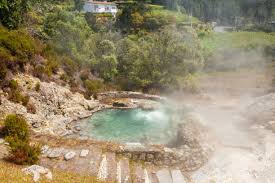 The association’s president, Luísa Pereira said that last year, “mainland spas registered around 80,000 users,” and in the Azores, around 150,000 were registered, demonstrating “the extraordinary success of thermalism” in the archipelago.
“In my opinion, this success is due to simple balneotherapy, which is the phenomenon well known as the Dona Beija phenomenon, the Caldeira Velha Park, or the Terra Nostra [Park],” in the municipalities of Povoação and Ribeira Grande, on the island of São Miguel, she explained.
Balneotherapy “consists of frequenting or using thermal water outdoors, in a pool or complex,” most of which are thermal tanks.
“And this value is truly what makes thermal spas in the Azores a true success,” resulting in the archipelago’s user numbers far exceeding those on mainland Portugal.
Luísa Pereira added that in the Azores, although thermal waters “are empirically recognized for their health benefits,” this completely different practice exists, which is already being replicated in thermal spas on mainland Portugal, demonstrating the practice’s success.
The president of the Azores Thermal Association emphasized that data on the use of thermal spas in 2025 collected so far could “surpass last year,” without providing specific figures.
Regarding the origin of visitors to Azorean thermal spas, they come from “various source markets.”
She added that “a large portion” of users are local residents, while the remainder are visitors from various countries, although there are times when more people from the United States and Canada visit, “due to Azorean emigration.”
“Our diaspora, whenever they come to the Azores, frequent the spas […] and then we have all our source markets. [At] certain times, we have the German market, we also have our Portuguese coming from the mainland, and so there’s a panoply, so to speak, of different cultures and different people.”
The director noted that there are also times when visitors are more French and English, “because thermalism is a global phenomenon, although it is more implicit in the culture of some countries.”
In Portugal, there is “a very vast and significant thermal culture,” she concluded.
According to the president of the Azores Thermal Association, 50 thermal phenomena have been identified in the region (on the islands of São Miguel, Terceira, Faial, Flores, and Graciosa), and there are eight active thermal resorts, three of which are spas (two on São Miguel and one on Graciosa).
There are still two inactive thermal spas: one on the island of Faial (Termas do Varadouro) and another in the municipality of Ribeira Grande (Termas da Ladeira da Velha).
São Miguel has thermal spas in the municipality of Ribeira Grande (Caldeiras and Caldeira Velha), Ponta Delgada (Ferraria, in the town of Ginetes), and in the municipality of Povoação, parish of Furnas (hotel, Terra Nostra Park, Poça da Dona Beija, and the Poça da Dona Silvina foot-washing phenomenon).
On Graciosa, in the municipality of Santa Cruz da Graciosa, the Carapacho spa is active (it reopened in late July).
A thermal spring has also been identified on the island of Flores, while on Terceira Island, with several recognized sites, the thermal spring is being used to produce geothermal energy.